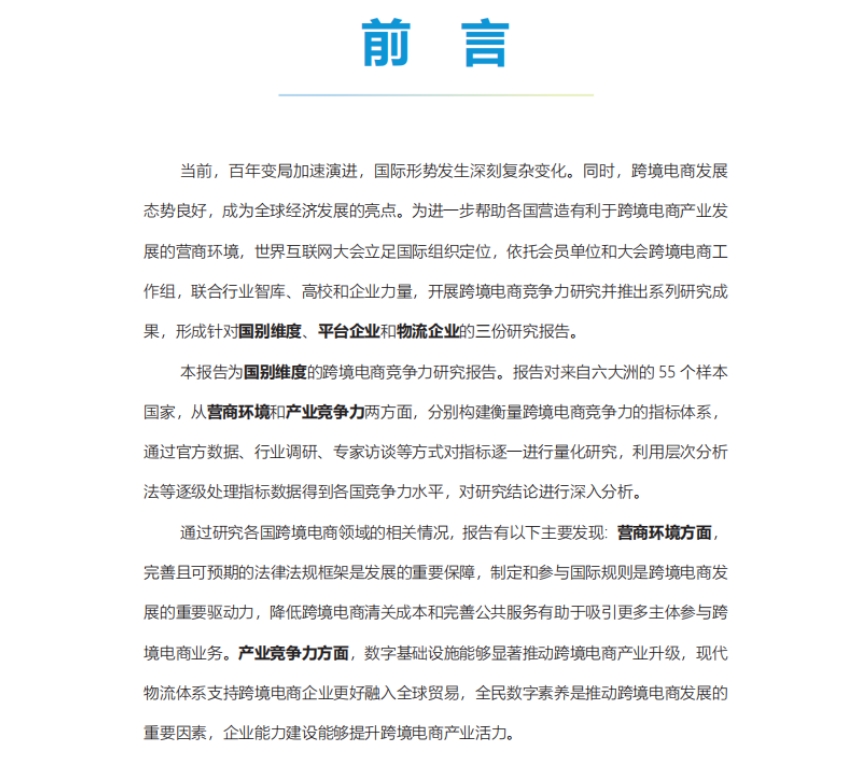
صدر "تقرير دراسة القدرة التنافسية للتجارة الإلكترونية عبر الحدود لعام 2024 (بُعد الدولة)" عن المؤتمر العالمي للإنترنت في نوفمبر 2024، بهدف مساعدة الدول على خلق بيئة أعمال مواتية وتعزيز تطوير التجارة الإلكترونية عبر الحدود. من خلال دراسة 55 دولة عينة، حلل التقرير القدرة التنافسية للتجارة الإلكترونية عبر الحدود في كل دولة، بما في ذلك بيئة الأعمال والقدرة التنافسية الصناعية، وخلص إلى استنتاجات وتوصيات ذات صلة.
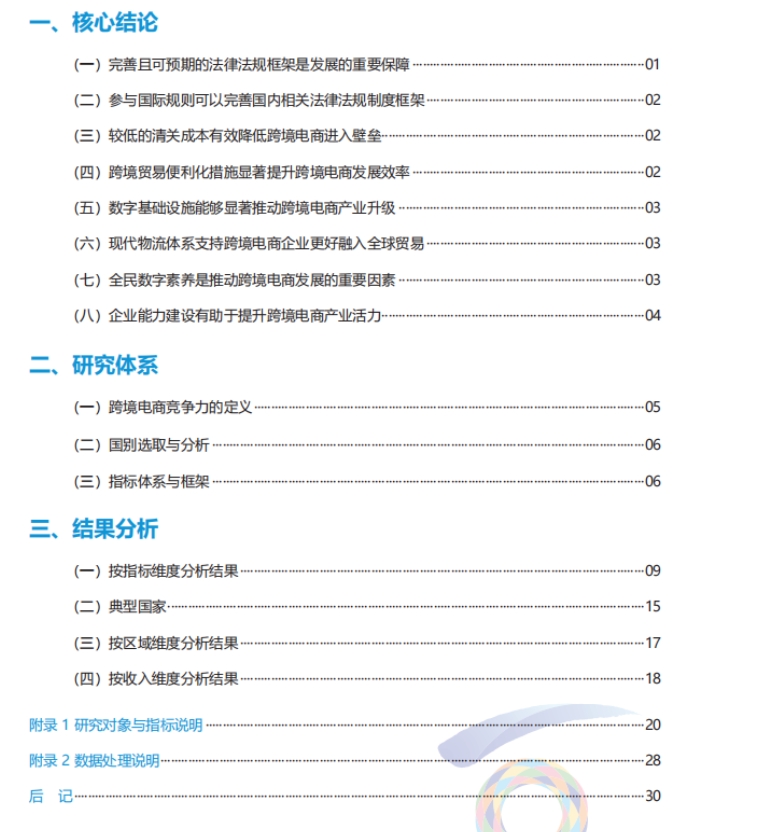
1. الاستنتاجات الأساسية
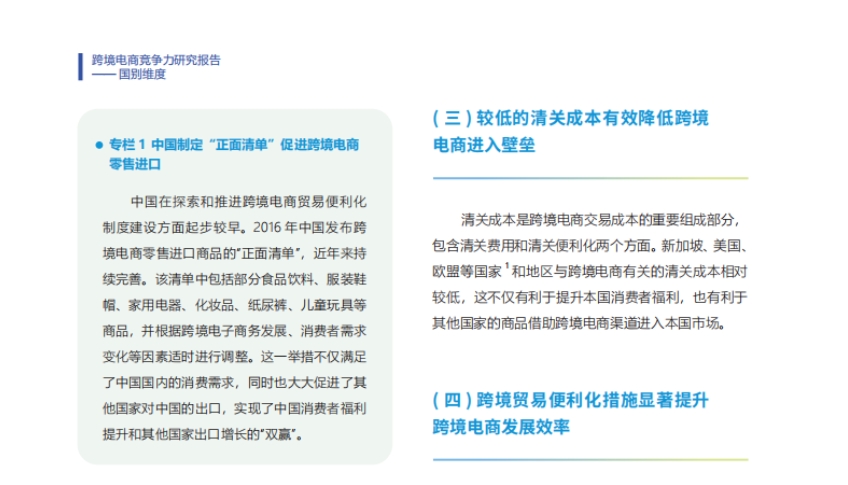
- الإطار القانوني والتنظيمي: الأطر القانونية والتنظيمية الكاملة والقابلة للتوقع ضرورية لتطوير التجارة الإلكترونية عبر الحدود، مثل إصدار الصين "القائمة الإيجابية" لتعزيز استيراد التجزئة للتجارة الإلكترونية عبر الحدود، ومشاركة معظم الدول العينة بنشاط في وضع القواعد الدولية لتحسين أطر القوانين واللوائح المحلية ذات الصلة.
- تكاليف التخليص الجمركي والتيسير: انخفاض تكاليف التخليص الجمركي يمكن أن يقلل من حواجز دخول التجارة الإلكترونية عبر الحدود، مثل انخفاض تكاليف التخليص الجمركي في دول ومناطق مثل سنغافورة والولايات المتحدة والاتحاد الأوروبي؛ وفي الوقت نفسه، يمكن لتدابير تيسير التجارة عبر الحدود أن تعزز كفاءة التطوير، وقد أنشأت معظم الدول العينة نظامًا قانونيًا وتنظيميًا لـ "النافذة الواحدة" للتجارة الدولية.
- البنية التحتية الرقمية ونظام اللوجستيات: البنية التحتية الرقمية تدفع الترقية الصناعية، مثل امتلاك الصين لنظام دفع عبر الهاتف المحمول رائد ونشر تجاري واسع النطاق لتقنيات الإنترنت عبر الهاتف المحمول؛ نظام لوجستي حديث يدعم الشركات للاندماج في التجارة العالمية، مثل تقدم الأنظمة اللوجستية في دول مثل ألمانيا واليابان.
- الثقافة الرقمية الشاملة وبناء قدرات الشركات: الثقافة الرقمية الشاملة عامل مهم، حيث يعزز المستهلكون ذوو الثقافة الرقمية العالية تطوير التجارة الإلكترونية عبر الحدود؛ بناء قدرات الشركات يساعد في تعزيز الحيوية الصناعية، مثل إنشاء الصين لمناطق تجريبية شاملة للتجارة الإلكترونية عبر الحدود، وتنفيذ دول مثل ألمانيا لخطط رقمنة للمؤسسات الصغيرة والمتوسطة.
2. نظام الدراسة
- تعريف القدرة التنافسية للتجارة الإلكترونية عبر الحدود: تحليل من بعدين: بيئة الأعمال والقدرة التنافسية الصناعية. تشمل بيئة الأعمال السياسات والقوانين، المشاركة في القواعد الدولية، تكاليف التخليص الجمركي، الخدمات العامة، إلخ؛ تغطي القدرة التنافسية الصناعية الأساس الصناعي، سوق التجارة، عوامل الإنتاج، إلخ.
- اختيار الدول وتحليلها: اختيار 55 دولة عينة، مع مراعاة عوامل مثل حجم الصناعة، الخصائص، التمثيل، ومنطقة الدولة، والوضع الاقتصادي.
- نظام المؤشرات والإطار: بناء نظام مؤشرات لقياس القدرة التنافسية للتجارة الإلكترونية عبر الحدود، بما في ذلك مؤشرات بيئة الأعمال (مثل السياسات واللوائح، كفاءة المعاملات، إلخ) ومؤشرات القدرة التنافسية الصناعية (مثل الاقتصاد الرقمي، سوق التجارة، إلخ).
3. تحليل النتائج
- التحليل حسب أبعاد المؤشرات
- مؤشرات بيئة الأعمال: الدول المتقدمة لديها أنظمة سياسات وقوانين أكثر اكتمالاً، وتشارك بنشاط في القواعد الدولية؛ الدول ذات الأسواق الناشئة تظهر أداءً بارزًا في سياسات وقوانين التجارة الإلكترونية عبر الحدود. فيما يتعلق بكفاءة وتيسير المعاملات عبر الحدود، توجد اختلافات كبيرة بين الدول، حيث تتمتع الدول المتقدمة بكفاءة تخليص جمركي عالية وتكاليف منخفضة، بينما تظهر الدول ذات الأسواق الناشئة أداءً جيدًا في الخدمات العامة.
- مؤشرات القدرة التنافسية الصناعية: الدول ذات الاقتصادات الكبيرة والقاعدة الصناعية القوية تظهر أداءً بارزًا في القدرة التنافسية للقاعدة الصناعية؛ الدول المتميزة لديها مجموعات استهلاكية ذات دخل مرتفع وموقع جغرافي جيد في القدرة التنافسية لسوق التجارة؛ الاقتصادات الكبيرة تميل إلى إظهار قدرة تنافسية قوية في عوامل الإنتاج.
- تحليل الدول النموذجية: مثل كندا ذات تكاليف التخليص الجمركي المنخفضة ومزايا واضحة في شبكة اللوجستيات؛ الصين تظهر أداءً بارزًا في جوانب متعددة مثل السياسات والقوانين والقاعدة الصناعية؛ ألمانيا ودول الاتحاد الأوروبي تعمل معًا على تحسين بيئة الأعمال، ولديها مزايا تنافسية في سوق الاستهلاك وعوامل الإنتاج، إلخ.
- التحليل حسب البعد الإقليمي: الدول ذات القدرة التنافسية القوية في التجارة الإلكترونية عبر الحدود تتركز بشكل رئيسي في آسيا وأوروبا وأمريكا الشمالية. الدول في آسيا وأوقيانوسيا تظهر أداءً ممتازًا في المشاركة في القواعد الدولية؛ الدول الأوروبية لديها نظام قوانين ولوائح موحد وكامل؛ دول أمريكا الشمالية تظهر خصائص تكامل المزايا.
- التحليل حسب بُعد الدخل: الناتج المحلي الإجمالي للفرد يرتبط ارتباطًا إيجابيًا كبيرًا بالقدرة التنافسية للتجارة الإلكترونية عبر الحدود، حيث تتمتع الدول ذات الدخل المرتفع بمستوى تطوير عام أعلى، بينما توجد فجوة كبيرة بين الدول ذات الدخل المتوسط والمنخفض والدول ذات الدخل المرتفع في مجالات السياسات والقوانين، كفاءة التيسير، والقدرة التنافسية لسوق التجارة، لكن بعض الدول ذات الدخل المتوسط والمنخفض لديها مزاياها الخاصة في تطوير التجارة الإلكترونية عبر الحدود، مثل الصين التي تسبق في السياسات والقوانين، والمكسيك التي تتمتع بقدرة تنافسية قوية في السياسات والقوانين وعوامل الإنتاج، وماليزيا التي لديها مزايا في كفاءة التيسير.