Dieser Bericht untersucht hauptsächlich die Hintergrundchancen, aktuellen Einblicke, Herausforderungen und Trendanalysen für die Expansion chinesischer Kultur- und Tourismusunternehmen sowie Hotelmarken ins Ausland, mit dem Ziel, relevanten Unternehmen umfassende Marktanalysen und strategische Leitlinien zu bieten.
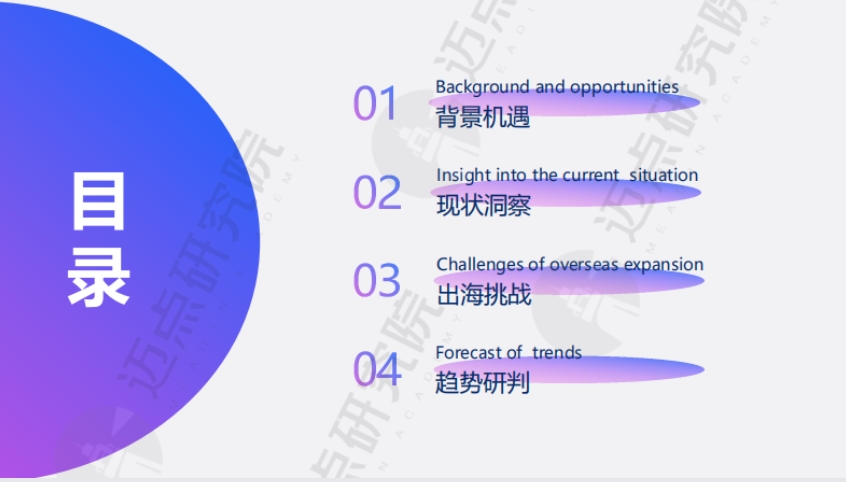
1. Hintergrundchancen
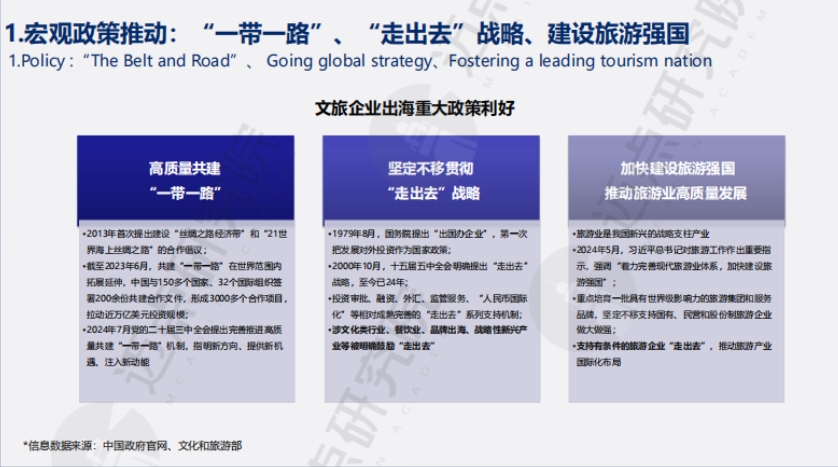
- Makropolitische Förderung: Maßnahmen wie die „Belt and Road“-Initiative, die „Going Global“-Strategie und der Aufbau eines tourismusstarken Landes unterstützen die Expansion von Kultur- und Tourismusunternehmen ins Ausland, z. B. durch Förderung der Tourismusentwicklung, Verbesserung der „Going Global“-Mechanismen und Ermutigung zur internationalen Unternehmensaufstellung.
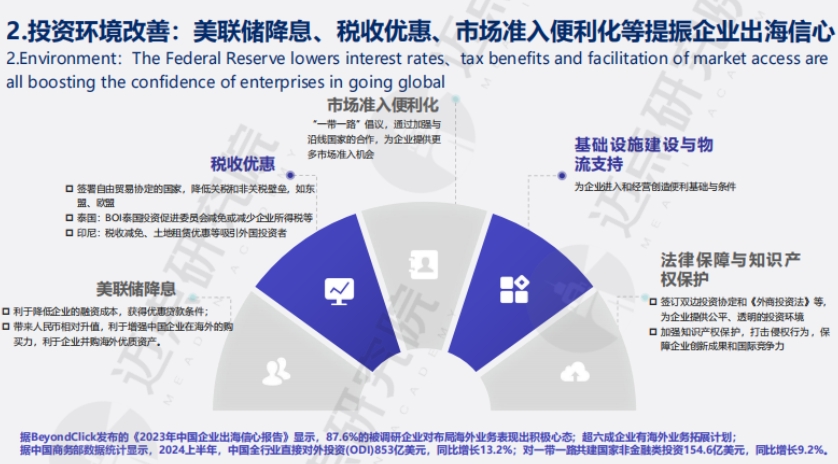
- Verbesserung des Investitionsumfelds: Zinssenkungen der US-Notenbank, Steuervergünstigungen und Erleichterungen beim Marktzugang stärken das Vertrauen der Unternehmen in die Expansion ins Ausland, einschließlich der Senkung der Finanzierungskosten, Steigerung der Kaufkraft und Bereitstellung rechtlicher Sicherheiten. Die Unternehmen zeigen eine hohe Bereitschaft zur Expansion, und die Auslandsinvestitionen nehmen zu.
- Antrieb durch den Auslandsreisemarkt: Die Erholung des globalen Reisemarktes und die schrittweise Wiederaufnahme des chinesischen Auslandstourismus – der internationale Reiseverkehr erholt sich 2024 vollständig, und die Zahl der chinesischen Auslandsreisenden wird voraussichtlich steigen – treiben die Expansion von Kultur- und Tourismusunternehmen ins Ausland an.
- Steigerung der Branchenstärke: Der Einfluss chinesischer Kultur- und Tourismusunternehmen wächst, und heimische Hotelgruppenmarken gewinnen an Bedeutung, wie die hervorragenden Platzierungen in globalen Rankings von Themenparkbetreibern und Hotelgruppen zeigen.
2. Aktuelle Einblicke
- Expansionsmodelle und -wege von Kultur- und Tourismusunternehmen
- Online-Reisevermittler: Unternehmen wie Ctrip, Fliggy, Tongcheng Travel und Meituan beschleunigen durch die Nutzung ihrer jeweiligen Stärken die globale Expansion und Zusammenarbeit, hauptsächlich durch Auslandsübernahmen und strategische Partnerschaften in Bereichen wie Visa, Kommunikationskarten, Reise und Freizeit, mit einer breiten geografischen Abdeckung.
- Themenparkbetreiber: Diese begannen früh mit der Expansion ins Ausland, vorwiegend mit einem asset-leichten Modell, wie Fantawild und Hong Kong China Travel Service – Splendid China. Einige Unternehmen verfolgen auch asset-schwere Investitionsmodelle, mit unterschiedlichem Fortschritt.
- Integrierte Kultur- und Tourismuskonzerne: Diese verfügen über starke Ressourcen, eine breite globale Präsenz und vielfältige Expansionsmodelle, wie die China Travel Service Group, Club Med, die Wanda Group, die OCT Group und Fosun International, die durch verschiedene Geschäftsbereiche Auslandsmärkte erschließen.
- Expansionsverlauf und -modelle von Hotelmarken
- Expansionsverlauf: Dieser durchlief vier Phasen – erste Versuche, Hotelkäufe, Übernahmen und Expansion sowie vertiefte Aufstellung – und erkundete kontinuierlich den Weg der Internationalisierung. Beispiele sind repräsentative Übernahmeereignisse von Unternehmen wie Jin Jiang und Huazhu in verschiedenen Phasen.
- Expansionsmodelle: In der ersten Runde standen Entwickler im Vordergrund, die ein asset-schweres Modell verfolgten, hauptsächlich in entwickelten Ländern. In der zweiten Runde standen Hotelgruppen im Fokus, die eher asset-leichte Modelle bevorzugten, wobei sich die Expansionsziele auf Südostasien und die aufstrebenden Märkte der „Belt and Road“-Länder verlagerten, mit Beteiligung vieler Hotelgruppen und Marken an der Auslandserschließung.
3. Herausforderungen bei der Expansion
- Mehrere Herausforderungen: Die Unternehmen stehen vor Herausforderungen wie internationalem Markenwettbewerb, kulturellen Unterschieden, Änderungen von Richtlinien und Vorschriften, Markteintrittsbarrieren, technologischer Anpassungsfähigkeit, Lieferkettenmanagement, wirtschaftlichen Schwankungen, internationalen Beziehungen und Arbeitsrechtssystemen, die den Expansionsprozess beeinflussen.
- Fallbeispiele und Lehren
- Fallbeispiel Disneyland: Disneyland Paris erlitt Verluste aufgrund von Fehleinschätzungen kultureller Unterschiede und Verbrauchergewohnheiten sowie betrieblicher Managementprobleme; Tokyo DisneySea erlebte Verzögerungen bei der Eröffnung aufgrund von Projektstopps, verlängerten Bauzeiten und logistischen Einschränkungen. Dies zeigt, dass die Expansion von Kultur- und Tourismusprojekten ins Ausland von verschiedenen Unsicherheitsfaktoren beeinflusst wird.
- Fallbeispiele für Auslandshotelübernahmen: Kultur- und Tourismusimmobilienentwickler wie Wanda und Greenland verkauften Auslandsvermögen aufgrund von Finanzierungsproblemen; Jin Jiang und Huazhu standen nach der Übernahme von Louvre Hotels Group bzw. Deutsche Hospitality vor betrieblichen Herausforderungen wie Nettoverlusten, was auf Schwierigkeiten beim nachhaltigen Betrieb und der Verankerung nach Auslandsübernahmen hindeutet.
4. Trendanalyse
- Expansion als unvermeidlicher Trend: „Nicht global zu gehen bedeutet, ins Hintertreffen zu geraten“ ist zur allgemeinen Erkenntnis geworden. Unternehmen verfügen über die Fähigkeit zur Expansion, angetrieben durch die Globalisierung des Kapitalflusses, die Attraktivität externer Märkte, politische Vorteile und interne Entwicklungsbedürfnisse, was den Expansionsprozess beschleunigt.
- Strategieempfehlungen für die Expansion: Bevorzugung asset-leichter Modelle, Nutzung des chinesischen Auslandsreisemarktes, Auswahl hochwertiger Partner, gründliche Marktforschung, Lokalisierung und Compliance-Management sowie Stärkung des Markenaufbaus und der Markenverbesserung, um Risiken zu begegnen und die Wettbewerbsfähigkeit zu steigern.
- Wahl der Expansionsregionen: Fokussierung auf aufstrebende Märkte in Ostasien, Südostasien, dem Nahen Osten und Afrika sowie anderen „Belt and Road“-Ländern, bei gleichzeitiger Erschließung von Chancenmärkten in Europa und Amerika, basierend auf Faktoren wie Kultur, Marktnachfrage, Politik und Kosten.
- Ausblick und Bedeutung der Expansion: Die Expansion der Unternehmen wird die globale Tourismusbranche antreiben. Sie sollten flexibel Expansionsmethoden wählen, die zu ihrer eigenen Situation passen, langfristige Strategien mit kurzfristigen Zielen in Einklang bringen und gleichzeitig zur kulturellen Ausstrahlung und Steigerung des internationalen Einflusses beitragen.