Das „Weißbuch für internationale Schönheitsprodukte 2024“ analysiert eingehend die Struktur des globalen Schönheitsmarktes und unterstützt Unternehmen dabei, Chancen im Auslandsgeschäft präzise zu nutzen. Es deckt zentrale Inhalte wie Marktumfeld, regionale Besonderheiten, Markenstrategien und die Vorteile von Magpie Insights ab und bietet eine umfassende Orientierung für die internationale Entwicklung von Schönheitsunternehmen.
1. Umfassender Einblick in den internationalen Markt
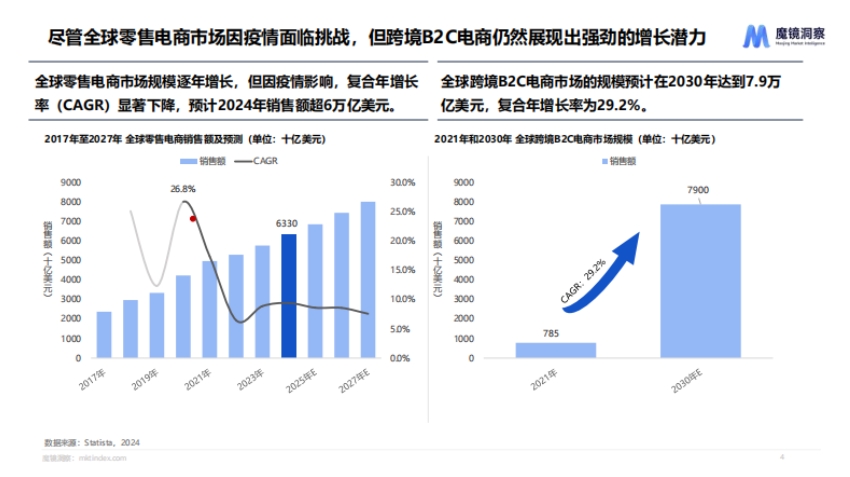
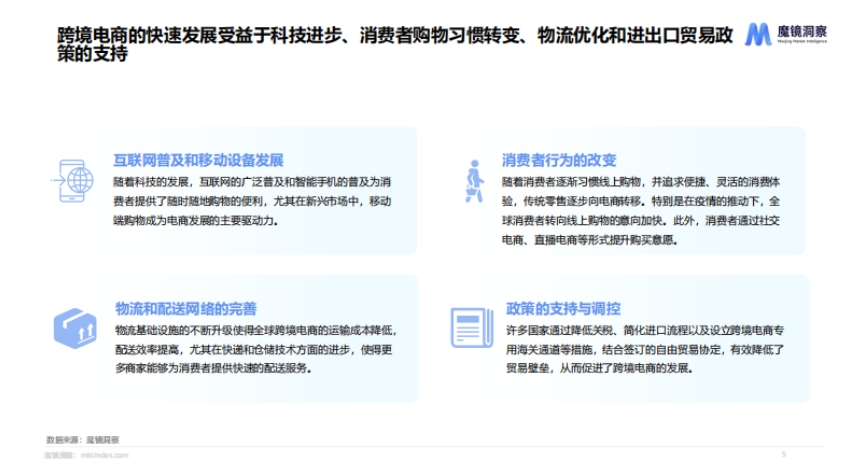
- Dynamik des E-Commerce-Marktes: Der globale Einzelhandels-E-Commerce wächst kontinuierlich und wird 2024 voraussichtlich über 6 Billionen US-Dollar erreichen. Der grenzüberschreitende B2C-E-Commerce verzeichnet ein starkes Wachstum und könnte bis 2030 auf 7,9 Billionen US-Dollar ansteigen. Trotz eines Rückgangs der durchschnittlichen jährlichen Wachstumsrate aufgrund der Pandemie ist die Gesamtentwicklung robust. Technologische Fortschritte, veränderte Konsumgewohnheiten, optimierte Logistik und politische Unterstützung treiben das Wachstum gemeinsam voran. Die Verbreitung des Internets und die Entwicklung mobiler Geräte bieten Bequemlichkeit, veränderte Verbraucherverhalten steigern die Nachfrage nach Online-Einkäufen, Logistik-Upgrades senken Kosten und steigern die Effizienz, und politische Maßnahmen reduzieren Handelshemmnisse. Allerdings bringen Unterschiede in der Politik, Cybersicherheit, Logistik und kulturelle Unterschiede auch Herausforderungen mit sich, wie komplexe Steuergesetze, hohe Kosten und geringe Effizienz in der Logistik, unzureichende Lokalisierung aufgrund kultureller Unterschiede sowie Bedrohungen der Cybersicherheit und Datenschutzprobleme.
- Regionale Marktstruktur: Der chinesische E-Commerce-Markt ist ausgereift und verlangsamt sich, der US-Markt ist stabil und wartet auf Durchbrüche, während Schwellenländer wie Indonesien ein enormes Potenzial bieten. China hat eine hohe E-Commerce-Durchdringung und einen gesättigten Markt mit langsamerem Wachstum, die USA haben eine hohe Reife, aber noch Raum für eine höhere Durchdringung, und Schwellenländer wie Indonesien haben trotz kleinerer Marktgrößen beachtliche Durchdringungsraten und Wachstumsraten, was viele Unternehmen anzieht.
2. Tiefgehende Analyse der Schönheitsbranche
- Überblick über den globalen Markt: Der globale Schönheitsmarkt übersteigt 300 Milliarden US-Dollar und wird bis 2026 voraussichtlich auf 404,7 Milliarden US-Dollar ansteigen. Die Hautpflege wächst stetig, Düfte und Make-up erholen sich, und Sonnenschutz wird zum Trend. Der Online-Schönheitsmarkt in China zeigt schwaches Wachstum und ist stark von Werbeaktionen abhängig, während der internationale Markt stabil ist. Amazon macht 77 % der Schönheitsverkäufe auf internationalen E-Commerce-Plattformen aus, während Shopee und Lazada den südostasiatischen Markt dominieren.
- Regionale Marktbesonderheiten
- Chancen in Südostasien: Im ersten Halbjahr 2024 stiegen die Schönheitsverkäufe um 63 %, wobei Vietnam mit 125 % das höchste Wachstum verzeichnete. Shopee ist der Hauptkanal, Indonesien und Vietnam machen 60 % des südostasiatischen Marktes aus und wachsen stark. Verbraucher suchen nach einem guten Preis-Leistungs-Verhältnis, die Gesichtspflege steht an erster Stelle, Sonnenschutz hat großes Potenzial, und viele einheimische Marken schneiden hervorragend ab.
- Analyse des US-Marktes: Der Markt ist reif und stabil, mit einem monatlichen Durchschnittsumsatz von 7,5 Milliarden US-Dollar und hohen Durchschnittspreisen. Hautpflege dominiert und wuchs im ersten Halbjahr um 17 %, während einige kleine Make-up-Kategorien rückläufig waren. Der Markenwettbewerb ist fragmentiert, der Anteil koreanischer und chinesischer Produkte steigt, und die Verbraucherpräferenzen unterscheiden sich von denen in China, z. B. bei Gesichtsseren mit unterschiedlicher Nachfrage nach Aufhellung und Reparatur.
- Überblick über den japanischen Markt: Für 2024 wird ein Marktvolumen von 32 Milliarden US-Dollar erwartet. Der Offline-Konsum bleibt wichtig, und der Anteil von Online-Parfümkäufen ist hoch. Internationale Marken dominieren bei Make-up und Düften, während lokale und koreanische Marken in der Hautpflege bevorzugt werden. Verbraucher kaufen Hautpflegeprodukte gerne online auf Vorrat, der Schönheitstrend wandelt sich hin zu natürlicher Transparenz, und Parfüms zeigen eine Polarisierung.
3. Praktischer Leitfaden für den Markenexport
- Exportmotive und -strategien: Der intensive Wettbewerb im Inland und das Potenzial internationaler Märkte treiben Unternehmen zum Export. Häufig werden multinationale oder mehrstaatliche Strategien verfolgt, die „Online + Offline“-Modelle kombinieren und über Drittanbieterplattformen, eigene Plattformen und soziale Medien verkaufen. Beispielsweise erzielt Anker Innovations durch tiefe E-Commerce-Kenntnisse, professionelle Teams und vielfältige Kanäle 70,3 % seiner Einnahmen aus dem internationalen Online-Geschäft und hat sich so zu einer globalen Marke entwickelt.
- Wege für den Export von Schönheitsprodukten: Einheimische Schönheitsmarken haben beim Export deutliche Vorteile: erschwingliche Preise passen zur Kaufkraft in Südostasien, ähnliche Kultur und Nachfrage senken die Hürden für die Markteinführung, und die „Belt and Road“-Initiative schafft ein günstiges Handelsumfeld. Die steigende Anzahl von Marken, die breitere Produktpalette, das verbesserte Image und das gute Preis-Leistungs-Verhältnis werden vom Markt anerkannt. Viele Marken schneiden in Südostasien hervorragend ab, wie z. B. Skintific.