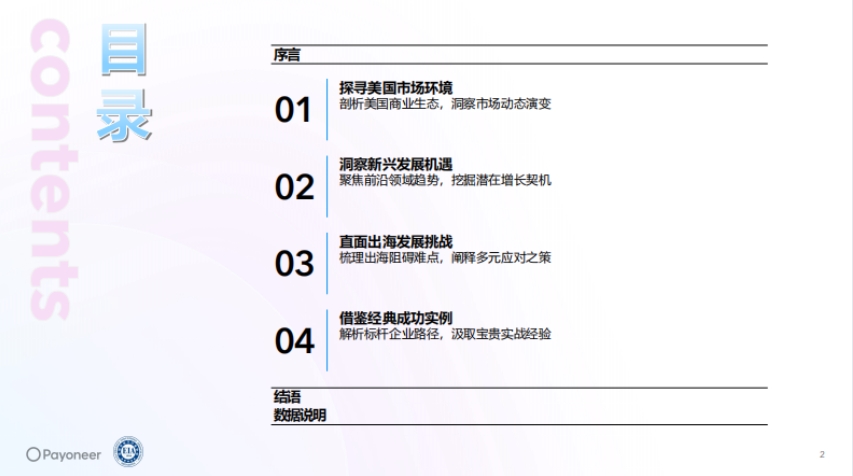
Dieses Dokument ist das von Payoneer veröffentlichte „Weißbuch zu den Trends der US-amerikanischen Unterhaltungselektronikbranche 2025“. Es untersucht hauptsächlich den Wachstumspfad chinesischer Unternehmen auf dem US-Markt und umfasst Themen wie Marktumfeld, Chancen, Herausforderungen und Gegenstrategien. Die Einzelheiten sind wie folgt:
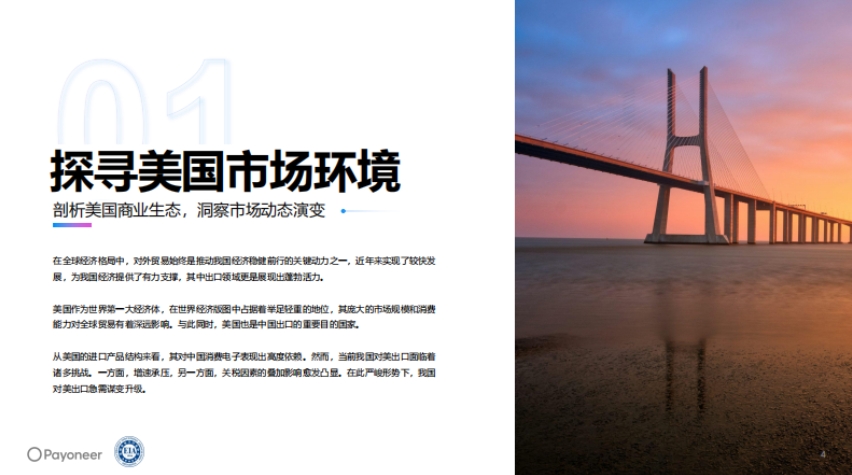
- US-Marktumfeld: Die USA sind der größte Konsummarkt der Welt. Im Jahr 2024 waren 26 % ihrer Importe von elektrischen/elektronischen Geräten von der chinesischen Lieferkette abhängig. Politische Maßnahmen wie die Erhöhung von Zöllen setzen die Exporte chinesischer Unternehmen kurzfristig unter Druck, fördern aber langfristig auch deren Transformation und Aufwertung. China ist der zweitgrößte Importpartner der USA. Im Jahr 2024 stammten 26 % der US-Importe von elektrischen/elektronischen Geräten aus China, wobei die Importwachstumsrate Schwankungen unterlag.
- Neue Entwicklungschancen:
- Wandel der Verbrauchergruppen: Die Generation Z und die Silver Ager werden zu neuen Konsumtreibern. Die Generation Z strebt nach Personalisierung und technologischem Flair, während die Silver Ager sich auf altersgerechte und gesundheitsfördernde Produkte konzentrieren. Ihre Konsumbedürfnisse fördern die Diversifizierung des Marktes.
- Veränderte Konsumtrends: Angesichts der Inflation legen Verbraucher mehr Wert auf ein gutes Preis-Leistungs-Verhältnis, achten aber auch auf Nachhaltigkeit, Gesundheit und Bequemlichkeit. Beispielsweise glauben 34 % der Verbraucher, dass Umweltprobleme ihre Gesundheit beeinträchtigen, und die Generation Z legt noch mehr Wert auf nachhaltige Produkte.
- Richtung der Produktinnovation: KI-Technologie treibt die Entwicklung der Unterhaltungselektronik hin zu „Alles ist intelligent vernetzt“ voran, wie z. B. die Vernetzung von Huawei Smart Screens mit Smart-Home-Geräten. Produkte wie Projektoren und Drohnen werden in Nischenszenarien innoviert, um die vielfältigen Bedürfnisse der Verbraucher zu erfüllen. Das Produktdesign vereint Ästhetik und Technologie, wie z. B. Bildschirmfernseher und Kunstlautsprecher.
- Neugestaltung der Kanalintegration: Die Online-Durchdringungsrate für Unterhaltungselektronik in den USA ist hoch, während Offline-Kanäle durch ein verbessertes Einkaufserlebnis wieder aufleben. Soziale Medien beeinflussen Kaufentscheidungen; so verzeichnen Transaktionen auf TikTok Shop ein schnelles Wachstum, und kleine und mittlere Händler nutzen Social Commerce, um sich durchzusetzen.
- Herausforderungen bei der Expansion ins Ausland: Chinesische Unternehmen stehen vor Herausforderungen wie sich ändernden Zollpolitiken, kulturellen Unterschieden, Wechselkursschwankungen, intensivem Wettbewerb und strengen technischen Standards. Beispielsweise können die Zölle auf einige Waren bis zu 145 % betragen, und lokale sowie internationale Marken haben bereits Markteintrittsbarrieren errichtet.
- Gegenstrategien und Fallbeispiele:
- Produkt und Marke: Präzise Erfassung lokaler Bedürfnisse, Fokussierung auf Innovation in Schlüsselbereichen wie Intelligenz und Umweltschutz, Förderung der lokalen Markenaufwertung. Ein Technologieunternehmen konzentriert sich beispielsweise auf markenstarke Premiumprodukte.
- Kanäle und Marketing: Aufbau eines Omnichannel-Vertriebs, Nutzung von E-Commerce-Plattformen und sozialen Medien. Das „Olivenzweig-Programm“ von Payoneer hilft Unternehmen, auf wichtigen Plattformen Fuß zu fassen.
- Lieferkette und Finanzen: Aufbau eines „China + N“-Lieferkettennetzwerks, Einsatz technologischer Tools zur Optimierung des Finanzmanagements. Payoneer bietet Lösungen für grenzüberschreitende Geldflüsse und Währungsabsicherung.
- Fallbeispiel: Am Beispiel eines von Payoneer unterstützten Unternehmens für intelligente Wearables werden Lösungen für die E-Commerce-Markteinführung, Währungsmanagement und Zahlungsabwicklung aufgezeigt.
- Der Wandel des US-Marktes bringt sowohl Chancen als auch Herausforderungen mit sich. Chinesische Unternehmen müssen die Resilienz ihrer Lieferketten neu gestalten, von „Kostenwettbewerb“ zu „Wertschöpfungspartnerschaft“ übergehen und durch präzise Markteinsichten, Innovation und ökologische Synergien eine globale Entwicklung erreichen.