 2230
2230Im riesigen Traffic-Pool von TikTok, das täglich über 1,5 Milliarden aktive Nutzer verzeichnet, eröffnen sich für vertikale Nischenbereiche beispiellose Chancen.
Während Massenkonsumgüter im roten Ozean des Traffics hart konkurrieren, schreiben Marken, die sich auf bestimmte Zielgruppen konzentrieren und präzise Bedürfnisse lösen, mit ihren differenzierten Content-Strategien ein Erfolgsmärchen: „Große Geschäfte in kleinen Nischen machen“.
Wie können Marken also auf TikTok einen Durchbruch finden und die Kurve kratzen?

Quelle: Aus dem Internet
Präzise Verankerung der Schmerzpunkte der Kernnutzer
Die präzise Verankerung der Schmerzpunkte der Kernnutzer ist das oberste Gebot für den Durchbruch von Nischenmarken.
Am Beispiel der US-amerikanischen Fitnessbekleidungsmarke Gymshark: Durch Datenanalyse wurde festgestellt, dass traditionelle Fitnessinhalte oft zu sehr auf Professionalität setzen, was bei normalen Nutzern Distanz erzeugt.
Daher starteten sie kreativ die „Imperfect Fitness Challenge“ und luden Nutzer ein, echte Momente wie Trainingsfehler oder verschmiertes Make-up durch Schweiß zu teilen. In Kombination mit dem Hashtag #gymshark zog dies in nur einem Monat über 500.000 Creator an. Diese unkonventionelle Content-Strategie ließ die Followerzahl des Markenaccounts auf über 5,7 Millionen steigen und trieb den Umsatz deutlich in die Höhe.
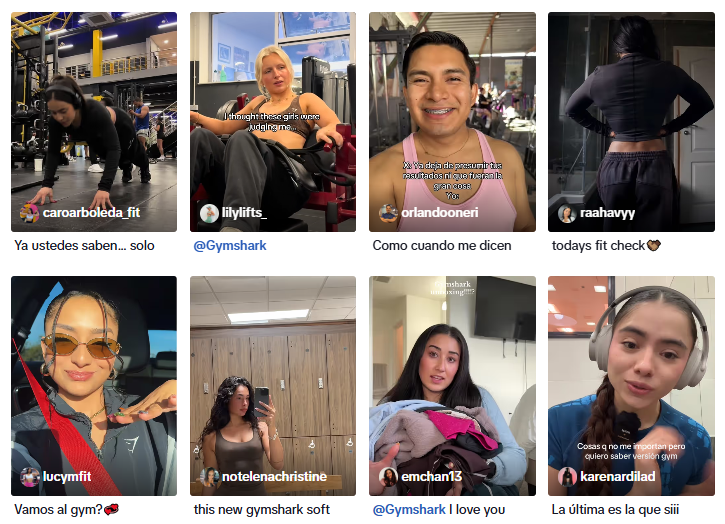
Quelle: TikTok
Mit visuellen Effekten Algorithmus-Barrieren durchbrechen
Mit visuellen Effekten Algorithmus-Barrieren zu durchbrechen bedeutet, die Darstellung visueller Inhalte zu optimieren, um deren Attraktivität und Verbreitung zu steigern und so die Einschränkungen der Algorithmus-Empfehlungssysteme für die Content-Exposition zu überwinden.
Der Erfolg der britischen Reinigungsmarke The Pink Stuff bestätigt die eiserne Regel: „Visuelles ist Traffic“. Die Marke verknüpfte ihre rosa Reinigungspaste tief mit entspannenden Reinigungsszenen und schuf durch starke visuelle Inhalte wie Vorher-Nachher-Vergleiche und Nahaufnahmen von Schaumbildung das Symbol „Rosa = Tiefenreinigung“.
Ihr Betriebsteam initiierte zudem den Hashtag #PinkStuffChallenge und ermutigte Nutzer, Videos vom Reinigen hartnäckiger Flecken mit dem Produkt zu drehen. Mit der weiten Verbreitung dieser Videos stieg die Bekanntheit der Marke deutlich.
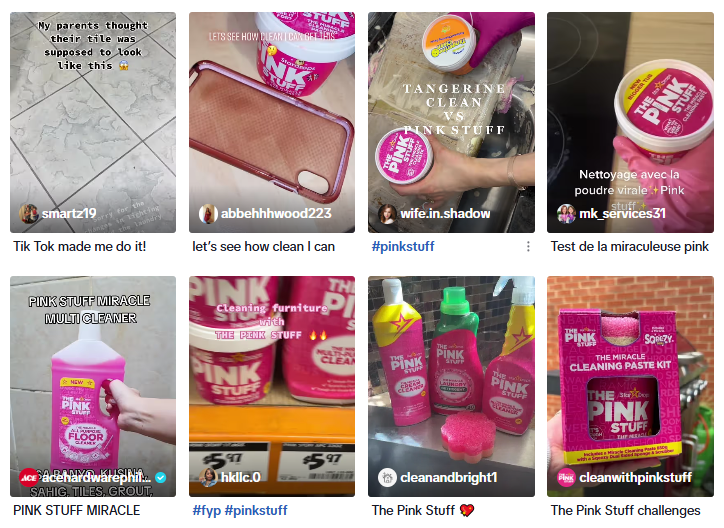
Quelle: TikTok
Mit Partizipationsökonomie die Markenbeziehungskette neu gestalten
Marken können durch tiefe Nutzerbeteiligung die emotionale Verbindung und Interaktion zwischen Nutzern und Marke stärken und so die traditionelle einseitige Beziehung zwischen Marke und Verbraucher aufbrechen.
Die Spielzeugmarke Jazwares erschloss sich durch User Co-Creation eine neue Nische auf TikTok.
Als sie die Plüschtiere Squishmallows auf den Markt brachte, setzte sie nicht auf traditionelle Werbung, sondern startete das #squishmallows-Kreativprogramm, das Nutzer dazu ermutigte, Hintergrundgeschichten für jedes Plüschtier zu entwerfen. Diese Strategie, das Produkt zu einem emotionalen Träger für Nutzer zu machen, führte zu einem explosionsartigen Umsatzwachstum für Jazwares.
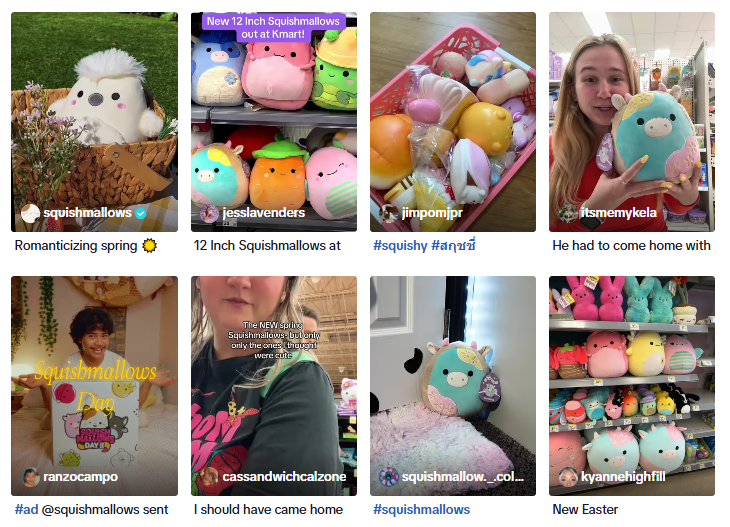
Quelle: TikTok
Fazit
Aus der zugrunde liegenden Logik dieser drei Marken wird deutlich: Der Durchbruch in vertikalen Nischen ist keine einfache Content-Masse, sondern der Aufbau eines kognitiven Monopols in einer bestimmten Nische durch präzise Zielgruppendurchdringung, Besetzung visueller Symbole und Neugestaltung der Nutzerbeziehung.
Während traditionelle Marken noch damit beschäftigt sind, Traffic-Vorteilen hinterherzujagen, haben die Vorreiter in Nischenbereichen auf TikTok bereits erfolgreich ihren eigenen Geschäftskreislauf aufgebaut. Durch die tiefgehende Erschließung und präzise Erfassung vertikaler Nischen haben sie einen vollständigen Geschäftszyklus von Traffic-Gewinnung über Nutzerkonvertierung bis hin zur Steigerung der Markenloyalität realisiert.
In der heutigen Zeit der fragmentierten Aufmerksamkeit kann extreme Fokussierung die Barrieren der Plattformalgorithmen durchbrechen und im Nutzerbewusstsein eine exklusive Traffic-Schlucht erschließen.