 2099
2099Der Haustierbereich ist schon längst nicht mehr so, wie wir ihn uns vorstellen.
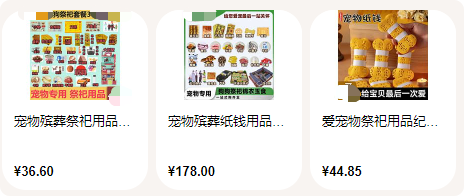
Von grundlegenden Haustierfuttermitteln und Leinen über die in den letzten Jahren aufgetauchten intelligenten Trinkbrunnen für Haustiere und beruhigende Halsbänder bis hin zu Nischenprodukten wie Bestattungspapiergeld für Haustiere und Geburtstagskuchen – die Breite dieses Bereichs wird ständig erweitert.
Bildquelle: Internet
Gleichzeitig, mitTikTok als führender sozialer Medienplattform wird ebenfalls zu einem neuen Schlachtfeld für das Marketing in der Haustierbranche.
LautTikTok-Daten verzeichnen ein exponentielles Wachstum der Aufrufe zu haustierbezogenen Themen; Themen wie Haustierpflege, Haustiergesundheit und Haustierspielzeug werden zu ständigen Trends.
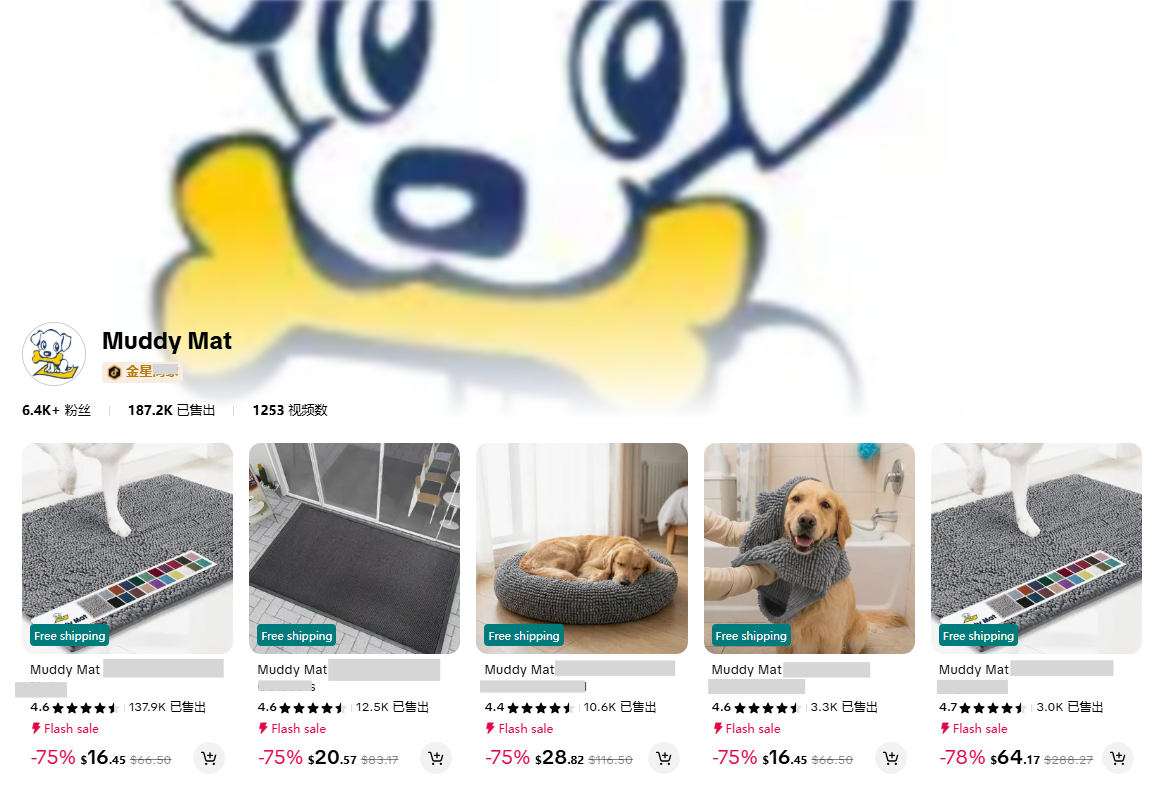
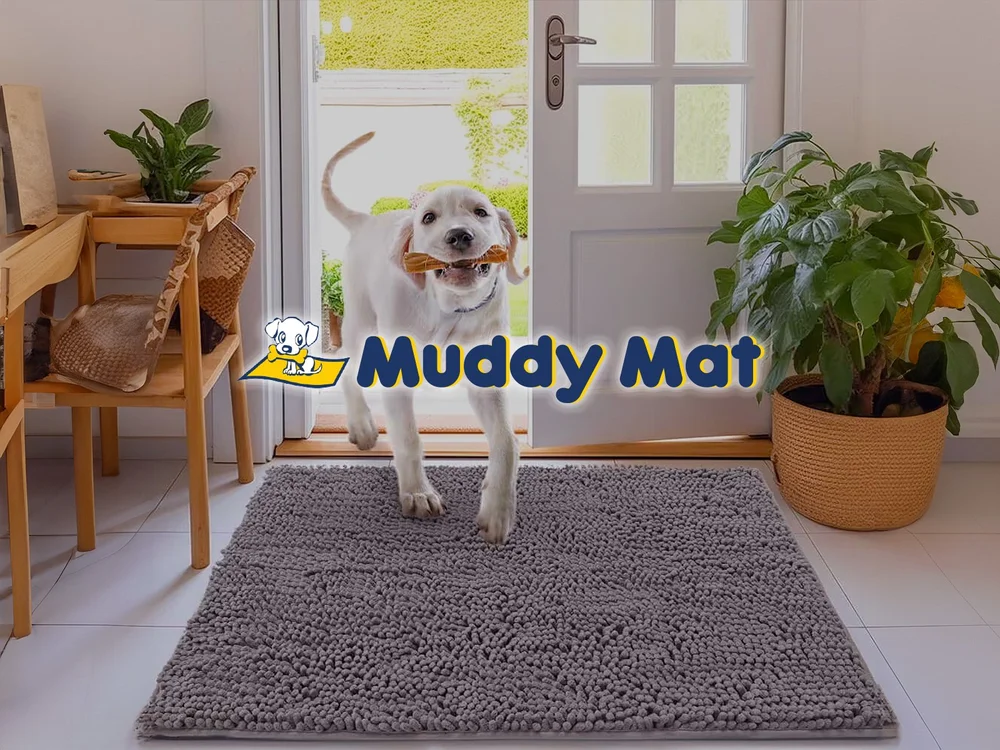
In diesem Umfeld hat die aufstrebende Haustier-HaushaltsmarkeMuddy Mat mit präziser Produktpositionierung und effektiven Marketingstrategien auf TikTok USA einen Umsatz von über 4,27 Millionen US-Dollar (ca. 29,22 Millionen RMB) erzielt und sich zu einer beliebten Marke in der Kategorie Haustierhaushaltsartikel in den USA entwickelt.
Bildquelle: TikTok Shop
Noch interessanter ist der enorme Preisunterschied. Ein gewöhnlicher schmutzabweisender Bodenläufer kann, wenn er mit Haustierattributen und einem bestimmten Nutzungsszenario versehen wird, im Stückpreis schnell ansteigen.
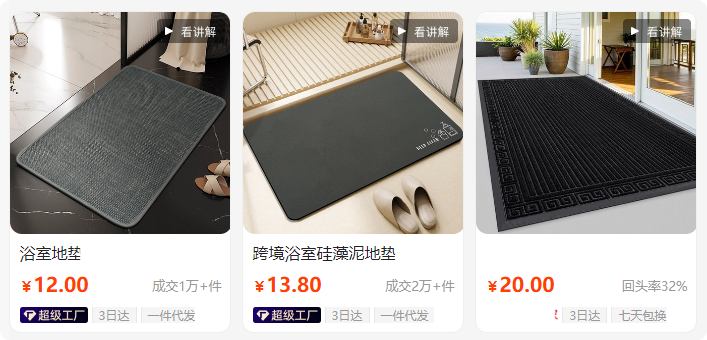
Genauso wie Bei der Größe 18" * 28" treibt Muddy Mat mit dem Verkaufsargument ‚schmutzabweisend‘ den Verkaufspreis auf 20 US-Dollar; während auf der vorgelagerten 1688-Plattform derselbe Chenille-Bodenläufer ohne jegliches Marketing-Paket nur einen Fabrikpreis von etwa einem Dutzend RMB hat.
Der mehrere Dutzendfache Aufschlag beruht keineswegs nur auf dem Material selbst.
Bildquelle: 1688
Nur wenn man die Schmerzpunkte trifft, kann man eine gute Marke aufbauen.
Öffnet manden Lebenslauf von Muddy Mat, so ist sein Entwicklungsweg recht pragmatisch.
Die Marke lässt sich bisum 2020 zurückverfolgen, angetrieben vom Catch Creation-System. CEO Matthew Squillace führte das Team in den E-Commerce- und Großhandelsbereich.
Der Markendesigner arbeitete remote mitdem Catch Creation-Team zusammen, um für Muddy Mat ein visuelles Markenidentitätssystem und eine E-Commerce-Website zu entwickeln. Dieses Produkt, das als ‚schmutzabweisende Bodenmatte speziell für Hundebesitzer‘ positioniert ist, wurde schnell zum Flaggschiffprodukt von Catch Creation.

Bildquelle: harley design studios
BisIm Jahr 2026 gab Muddy Mat offiziell bekannt, dass das Sortiment von der Fußmatte vor der Tür auf waschbare Teppiche, Cloud K9-Hundebetten, Treppenrutschmatten und eine vollständige Reinigungs- und Pflegeproduktlinie erweitert wird – vom „Problem des Eintretens lösen“ zur „kompletten Haustier-Lösung für das ganze Zuhause“.
Auf Datenebene,Auch die Suchpopularität von Muddy Mat bestätigt das Wachstum. Laut Daten des Trendbeobachtungsplattform Exploding Topics wurde die Marke im Mai 2025 als „explosives Wachstum“ eingestuft, mit monatlichen Suchanfragen von 201.000 und einer Steigerung von 9000%.
Die Verknüpfung von Social-Media-Hype und E-Commerce-Conversion wird zur Standardstrategie für pet-Exportmarken.
Bildquelle:harley design studios
VonTikTok bis ins stationäre Regal – wie werden die Kanäle aufgebaut?
Die Strategie von Muddy Mat im Kanalmanagement ist eine Analyse wert. Es geht nicht einfach um „wo verkaufen“, sondern um die Verknüpfung von Marke und Kanälen basierend auf dem Konsumverhalten von Haustierhaushalten.
-TikTok-inhaltsgetriebenes explosives Wachstum
AufAuf TikTok, einer Plattform, die auf emotionale Werte und visuelle Wirkung setzt, ist „Empathie“ tatsächlich eine gute Waffe.Muddy MatDie Inhalte basieren genau auf diesem Punkt.
Ein Beispiel:
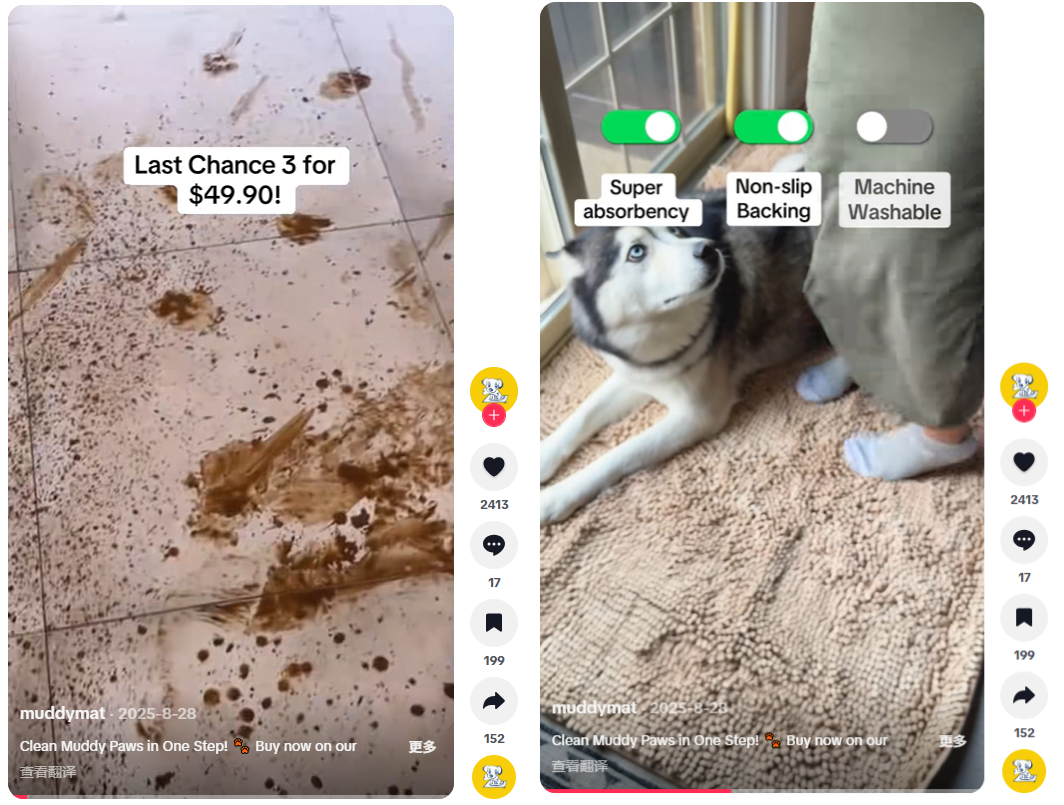
Nachdem der Hund in eine Schlammpfütze gefallen ist, rennt er im Haus herum und hinterlässt überall Schlammspuren. Angesichts dieser Szene würde wohl jeder Hundebesitzer verzweifeln.
Wenn dann ein Produkt auftaucht, das dieses Problem leicht lösen kann, steigt die Kaufbereitschaft dann nicht sprunghaft an?
Das Video erreichte2,7 Millionen Aufrufe – das gibt die Antwort.
Bildquelle:TikTok
Nicht nur die Sorgfalt bei den Inhalten,Muddy Mat behandelt den Kommentarbereich tatsächlich als Kundenservice-Front.
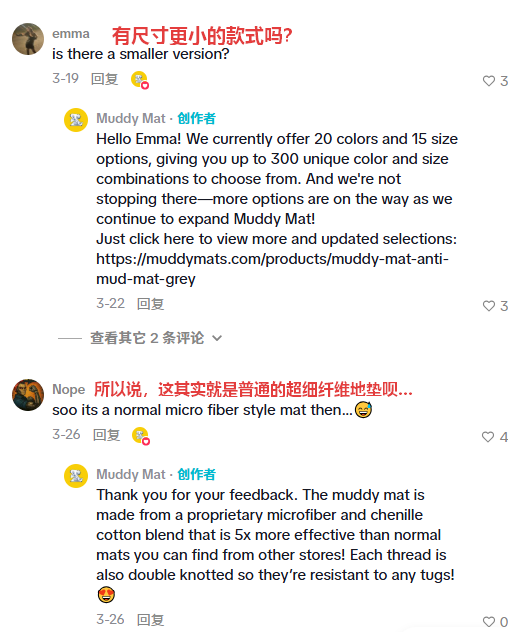
Ein Blick in den Kommentarbereich zeigt, dass die Marke auf fast jeden Kommentar antwortet. – jemand fragt nach Größen, die Marke listet Farben und Spezifikationen detailliert auf und fügt einen Link hinzu; jemand zweifelt an: „Ist das nicht einfach eine normale Fußmatte?“, die Marke weicht nicht aus, löscht keine Kommentare, sondern erklärt direkt die Unterschiede im Material und die Leistungsvorteile; ein Influencer zeigt Kooperationsinteresse, sofort wird zu Direktnachrichten geleitet.
Das Vertrauen wird durch das Hin und Her der Antworten allmählich aufgebaut, und die Verweildauer der Nutzer, die Wiederkaufbereitschaft und die aktive Weiterempfehlungsrate steigen natürlich ebenfalls.
Bildquelle:TikTok
Allerdings sind diese Dinge nur die grundlegende Frontend-Arbeit des Content-Managements. Der wahre Treiber des Traffic sind bezahlte Anzeigen.
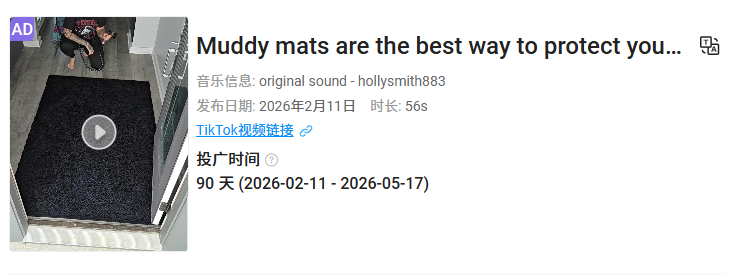
Am Beispiel dieses56-sekündigen viralen Videos (@hollysmith883 veröffentlicht, 90 Tage Werbung geschaltet) wird bei der Aufschlüsselung der Daten klar:
Obwohl die organischen Aufrufe aufüber 3,7 Millionen angewachsen sind, beträgt der Anteil der Werbeumsätze satte 79,28 %, fast 80 % der Bestellungen stammen aus bezahltem Traffic. Für dieses Video hat die Marke etwa 14.800 US-Dollar Werbeausgaben investiert und damit letztlich einen Umsatz von 50.400 US-Dollar erzielt, was einem ROAS von 2,7 entspricht.
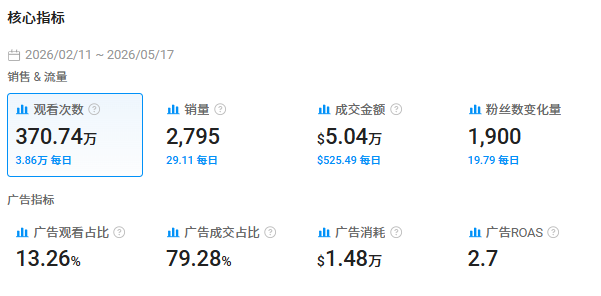
图源:kalodata
Mit anderen Worten: Die Inhalte sorgen für Resonanz und sammeln Aufrufe, während die Anzeigen gezielt die Nutzer abfangen, die am wahrscheinlichsten bestellen.Muddy Mat blieb nicht auf der Ebene 'Das Video ist viral gegangen' stehen, sondern nutzte die stark interagierenden Inhalte schnell für die Anzeigenverstärkung und zielte mit bezahltem Traffic auf die Haustierhalter ab.
Bei einem Haushaltsartikel wie einer Fußmatte mit niedrigem Durchschnittsbestellwertreicht ein ROAS von 2,7 bereits aus, um eine skalierte Werbung zu tragen. Ohne Anzeigen wäre das virale Video wahrscheinlich nur eine kurzlebige Sensation gewesen.
PS: Werbung bedeutet nicht blindes Vorgehen, sondern sollte auf der tatsächlichen Situation des Produkts basieren!
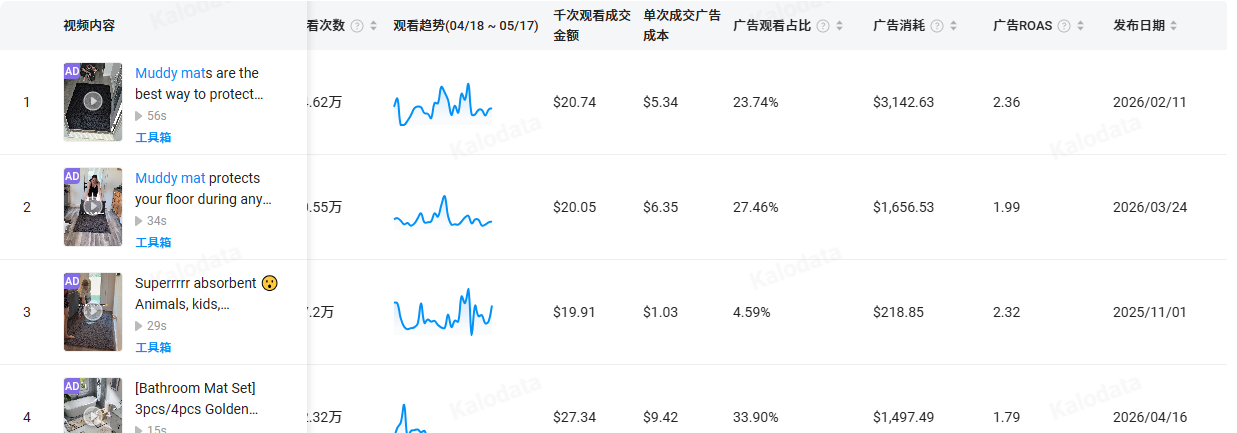
图源:kalodata
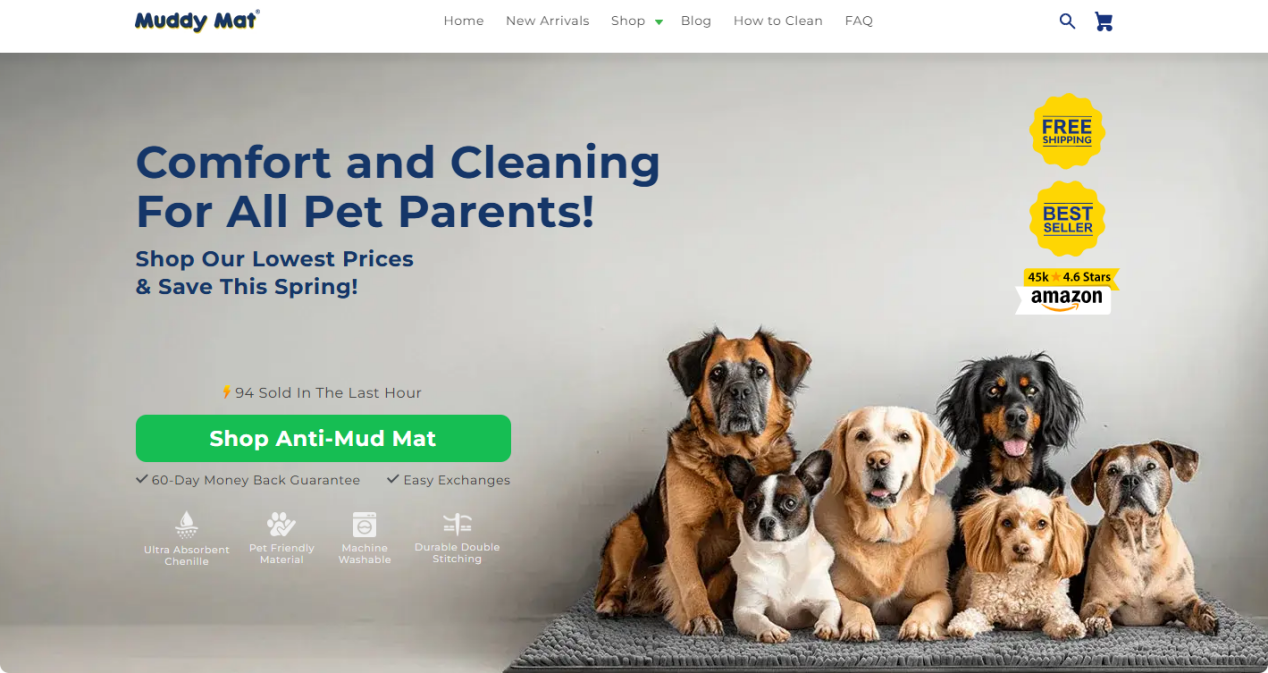
– Eigenständige Website: Das Fundament der MarkeDas eigene Terrain
Im Gegensatz zu vielen Verkäufern, die sich nur auf eine einzelne E-Commerce-Plattform verlassen,hat Muddy Mat schon früh eine eigene Marken-Website aufgebaut.
Diese Marken-Website basiert aufShopify und dient einerseits dazu, Besucher von Plattformen wie TikTok, Facebook und Instagram aufzunehmen, die sowohl aus bezahltem Traffic als auch aus organischen Social-Media-Quellen kommen. Andererseits überzeugt sie die Nutzer durch die Darstellung des gesamten Produktsortiments, Materialinformationen und Anwendungsszenarien ein zweites Mal und führt die endgültige Konvertierung durch.
Bei Marken mit höheren Durchschnittsbestellwerten und mehrerenSKUs ist eine eigene kontrollierte Kaufmöglichkeit eine gängige Kanaldiversifizierungsstrategie, um die Abhängigkeit von einer einzigen Plattform zu verringern.
Szenen-Prämie, Markenbarriere
Eine Chenille-Fußmatte, die auf 1688 weniger als 10 Yuan kostet, wird nach der Szenendefinition 'Schutz vor Schlamm von Haustieren' und dem Branding durch Content-Management im Ausland für fast 20 US-Dollar verkauft. Die enorme Preisdifferenz ist im Wesentlichen die 'Szenen-Prämie'.
Für chinesische Händler, die den Schritt ins Ausland erwägen,sendet der Fall Muddy Mat ein klares Signal: In einer Zeit extrem ausgereifter Lieferketten und hochgradig homogener Produkte wird es immer schwieriger, allein durch niedrige Preise und Massenware erfolgreich zu sein.
Eine Prämie entsteht nie aus dem Nichts. Zuerst musst du klären, ob dein Produkt in diesem Szenario wert ist, dass die Leute ein Vielfaches dafür ausgeben. Für Händler, die einen Weg ins Ausland suchen, lohnt es sich wirklich, dies gründlich zu untersuchen.
In welche Szenarien kann dein Produkt gelangen? Wie hoch ist die Kaufkraft der Nutzer in diesem Bereich? Wenn du dir unsicher bist, kannst du gerne mit uns diskutieren.~