Der Bericht „Neue Perspektiven des digitalen Handels 2024: Die Dividende der Internationalisierung nutzen und einen entscheidenden Sprung machen“, veröffentlicht von Deloitte, untersucht die Entwicklung des digitalen Handels im asiatisch-pazifischen Raum, einschließlich grenzüberschreitender Handelstrends, neuer Merkmale des chinesischen Handels, des Potenzials des digitalen Handels für die Internationalisierung, einer Umfrage zur Internationalisierung von Unternehmen sowie der Schlüsselfaktoren für die zukünftige Entwicklung. Er bietet der Branche umfassende Markteinblicke und eine Richtungsvorgabe für die Entwicklung.
1. Anhaltend hohe Dynamik des grenzüberschreitenden Handels im asiatisch-pazifischen Raum
- Handelswachstum und verstärkte regionale Zusammenarbeit: Der Handel im asiatisch-pazifischen Raum wächst weiter. Im Jahr 2023 machten die Warenimporte und -exporte 40 % des weltweiten Handels aus, mit einem Volumen von fast 18 Billionen US-Dollar. Für 2024 wird ein Anstieg auf 18,5 Billionen US-Dollar erwartet. Regionale Freihandelsabkommen wie die RCEP schöpfen kontinuierlich politische Dividenden aus, fördern die zunehmende Perfektionierung des Kooperationssystems innerhalb der regionalen Wertschöpfungskette und machen den asiatisch-pazifischen Raum zu einer Region mit lebhaftem Handels- und Investitionsaustausch sowie enger Zusammenarbeit in der Wertschöpfungskette.
- Digitale Technologien treiben die Neugestaltung der Wertschöpfungskette voran: Digitale Technologien befähigen die reale Wirtschaft, bieten mehr Marktteilnehmern die Möglichkeit, an globalen Wertschöpfungsketten teilzunehmen, fördern Innovationen in den Bereichen Forschung und Entwicklung, Produktion und Vermarktung von Unternehmen, erhöhen die Wertschöpfung und die differenzierten Wettbewerbsvorteile der Unternehmen und beschleunigen die Neugestaltung und Aufwertung der Wertschöpfungskette. Die digitale Entwicklung in den Ländern des asiatisch-pazifischen Raums ist jedoch ungleichmäßig. Einige Länder haben Probleme wie unzureichende digitale Infrastruktur, was die digitale Transformation der regionalen Wertschöpfungskette behindert. Es ist notwendig, innovative Technologieplattformen und den regionalen Austausch und die Zusammenarbeit zwischen Regierungen zu verstärken.
2. Chinas Handel zeigt ein neues Bild, während er sich weiterentwickelt
- Vom Produktexport zur globalen Geschäftstätigkeit: Der Internationalisierungsprozess chinesischer Hersteller und Händler ist in eine neue Phase eingetreten. Immer mehr Unternehmen beginnen mit einer tiefergehenden Internationalisierung, bewegen sich vom Produktexport zur Geschäftstätigkeit im Ausland und realisieren eine durchgängige Auftragsabwicklung mit „lokaler Einheit, lokalem Betrieb und lokaler Lieferkette“. Grenzüberschreitende E-Commerce-Unternehmen vertiefen kontinuierlich ihren Lokalisierungsgrad und werden sich in Zukunft von chinesischen Unternehmen, die ins Ausland gehen, zu lokalisierten Unternehmen entwickeln, die vor Ort verwurzelt sind.
- Markeninternationalisierung und Erschließung neuer Märkte: Chinesische Produktexporte bewegen sich in Richtung der Transformation und Aufwertung zur „intelligenten Fertigung in China“. Der Anteil der Exporte mit hoher Wertschöpfung steigt, und die Markenbildung wird zum Trend. Der grenzüberschreitende E-Commerce bietet chinesischen Unternehmen die Möglichkeit, ihre Marken international zu vermarkten. Die aufstrebenden Märkte in Südostasien, dem Nahen Osten und Lateinamerika verzeichnen ein starkes Wachstum und ziehen chinesische Unternehmen an, um Geschäftsmöglichkeiten zu erschließen. Ihr E-Commerce boomt, und die Nachfrage der Handelsakteure nach hochwertigen lokalen Dienstleistungsökosystemen steigt. Die Verbesserung der unterstützenden Infrastruktur trägt dazu bei, die Handelsdynamik und das Aufwertungspotenzial freizusetzen. Gleichzeitig zeigt der grenzüberschreitende E-Commerce eine Vielzahl von Akteuren. Plattformen, Verkäufer und Dienstleister optimieren durch Spezialisierung und Zusammenarbeit kontinuierlich ihre Rollen und Funktionen und fördern so die blühende Entwicklung des grenzüberschreitenden E-Commerce.
3. Potenzialindex für die Internationalisierung des digitalen Handels im asiatisch-pazifischen Raum
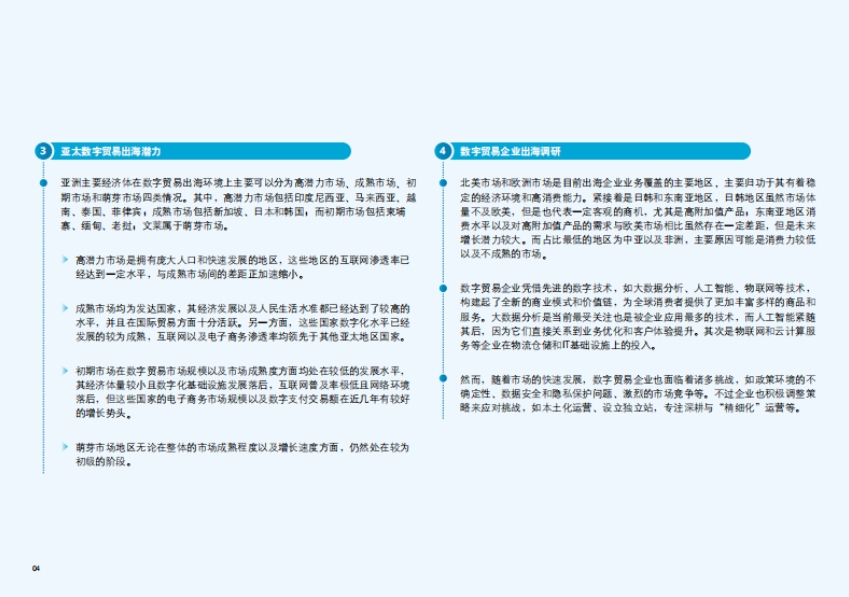
- Bewertung des Internationalisierungsumfelds und Marktklassifizierung: Das Umfeld für den digitalen Handel der wichtigsten Volkswirtschaften im asiatisch-pazifischen Raum wird anhand der beiden Dimensionen Wachstumspotenzial und Marktgröße bewertet und in vier Kategorien eingeteilt: Märkte mit hohem Potenzial (z. B. Indonesien, Malaysia usw.), reife Märkte (z. B. Singapur, Japan, Südkorea), frühe Märkte (z. B. Kambodscha, Myanmar, Laos) und aufkeimende Märkte (z. B. Brunei). Märkte mit hohem Potenzial haben eine große Bevölkerung, eine schnell steigende Internetdurchdringung und ein starkes E-Commerce-Wachstum; reife Märkte sind wirtschaftlich entwickelt, haben ein hohes Digitalisierungsniveau und einen aktiven internationalen Handel; frühe Märkte haben eine geringere Größe und Reife des digitalen Handels, wachsen aber schneller; aufkeimende Märkte haben eine insgesamt langsamere Marktreife und Wachstumsgeschwindigkeit.
- Analyse der wichtigsten Zielländer für die Internationalisierung
- Malaysia: Die digitale Wirtschaft treibt das Wachstum des grenzüberschreitenden Handels an. Der E-Commerce-Markt wächst rasant, das digitale Zahlungssystem ist gut ausgebaut, und die Einrichtung einer digitalen Freihandelszone fördert die Beteiligung kleiner und mittlerer Unternehmen am digitalen Handel. Malaysia hat das Potenzial, ein Drehkreuz für Rechenzentren in Südostasien zu werden.
- Thailand: Der Ausbau der digitalen Infrastruktur wird verstärkt, um Investitionen globaler Technologiegiganten anzuziehen. Die Regierung schafft ein Umfeld für digitale Innovationen und nutzt fortschrittliche digitale Technologien in großem Umfang, um den grenzüberschreitenden E-Commerce zu unterstützen und die Entwicklung des digitalen Handels voranzutreiben.
- Vietnam: Die digitale Wirtschaft wächst überdurchschnittlich schnell. Die Regierung hat Maßnahmen zur Förderung der Digitalisierung ergriffen. Der Verwaltungsmechanismus für den grenzüberschreitenden E-Commerce wird kontinuierlich verbessert, während das Niveau der Logistikdienstleistungen noch verbessert werden muss. Vietnam hat das Potenzial, das Wachstum des digitalen Handels in Südostasien anzuführen.
- Singapur: Dank seiner Position als globales Geschäftszentrum und internationales Logistikdrehkreuz fördert es den Wohlstand des digitalen Handels, baut aktiv ein digitales Handelssystem auf, nutzt die Vorteile der Hauptstadtwirtschaft und passt die Zahlungspolitik an, um die Wettbewerbsfähigkeit im digitalen Handel zu steigern.
- Japan: Die digitale Strategie der Regierung treibt die Entwicklung des digitalen Handels voran. Japan spielt eine wichtige Rolle bei der Gestaltung globaler Regeln für den digitalen Handel. Die E-Commerce-Durchdringung hat noch Potenzial für eine Steigerung. Die Regierung fördert massiv das bargeldlose Bezahlen, um die Grundlage für das E-Commerce-Wachstum zu schaffen.
- Südkorea: Die Einführung einer digitalen Strategie zur Steigerung der globalen Wettbewerbsfähigkeit. Der grenzüberschreitende E-Commerce-Markt wird voraussichtlich weiterhin schnell wachsen, obwohl ausländische E-Commerce-Unternehmen dominieren. Die südkoreanische Regierung beteiligt sich aktiv an der Ausarbeitung von Regeln für den digitalen Handel und vereinfacht die Zahlungsprozesse.
4. Umfrage und Analyse zur Internationalisierung von Unternehmen im digitalen Handel
- Unternehmensprofil und Marktverteilung: Kleinst- und Kleinunternehmen sind die Hauptbestandteile der Unternehmen, die im grenzüberschreitenden E-Commerce international tätig sind. Der Wettbewerb in der Branche ist intensiv. Die Geschäftstätigkeit der international tätigen Unternehmen konzentriert sich hauptsächlich auf die nordamerikanischen und europäischen Märkte, gefolgt von Japan, Südkorea und Südostasien. Die Anteile der Märkte in Zentralasien und Afrika sind relativ gering. Zu den gängigen Nachfragekategorien gehören Haushaltsmöbel, Bekleidung und Schuhe, digitale 3C-Produkte usw. Der Markenaufbau ist in den Kategorien Tierbedarf und medizinische Gesundheitsprodukte relativ gering ausgeprägt.
- Branchentrends und Strategiewahl der Unternehmen
- Trendbeobachtung: Die meisten Unternehmen sind optimistisch hinsichtlich der Zukunftsaussichten des grenzüberschreitenden E-Commerce und sehen die Markenbildung und Premiumisierung von Produkten, die Entstehung neuer Nischensegmente und die Kanalvielfalt als Wachstumstreiber für die Zukunft; einige Unternehmen sind pessimistisch, hauptsächlich aufgrund externer Faktoren wie Marktwettbewerb, politische Regulierung und Betriebskosten.
- Markenaufbau: Unternehmen legen im Allgemeinen Wert auf den Markenaufbau und halten ihn für wichtig für die langfristige Geschäftsentwicklung. Produktqualität und die Anpassung an lokale Bedürfnisse sind Schlüsselfaktoren. Die meisten Unternehmen planen, ihre Investitionen in den Markenaufbau zu erhöhen. Der intensive Wettbewerb ist die größte Herausforderung beim Markenaufbau.
- Anwendung digitaler Technologien: Big-Data-Analyse und künstliche Intelligenz sind die am häufigsten von Unternehmen eingesetzten digitalen Technologien. Die Priorität der Technologieanwendung hängt mit den Geschäftsanforderungen zusammen. Unternehmen legen Wert auf Datenschutz und -sicherheit und ergreifen verschiedene Maßnahmen zum Schutz der Daten.
- Trend zur Lokalisierung im Ausland: Die Unternehmen stehen der Lokalisierung ihrer Geschäftstätigkeit im Ausland optimistisch gegenüber. Die meisten planen, ihre Investitionen beizubehalten oder zu erhöhen. Hauptgründe sind Compliance-Anforderungen, Erreichen von Verbrauchern, Plattformanforderungen usw. Unternehmen legen Wert auf lokalisierte Abläufe, wobei der Schwerpunkt auf der Lokalisierung von Produkten und Teams liegt. Sie glauben, dass die Lokalisierung den Umsatz steigern kann, aber einige Unternehmen haben aufgrund von Faktoren wie Betriebsgröße und Kosten noch keine lokalisierte Geschäftstätigkeit aufgenommen.
- Unternehmensstrategiewahl: Die meisten grenzüberschreitenden E-Commerce-Unternehmen planen, eigene unabhängige Websites aufzubauen. Die Strategiewahl ist vielfältig: Einige konzentrieren sich hauptsächlich auf Plattformen, andere kombinieren Plattformen und unabhängige Websites, und eine Minderheit konzentriert sich hauptsächlich auf unabhängige Websites. Unternehmen legen Wert auf „verfeinerte“ Abläufe, definieren Zielgruppen, optimieren Produktseiten, verfolgen Kundenfeedback usw. Einige Unternehmen entscheiden sich für die konzentrierte Nutzung einzelner Plattformen oder die Masseneröffnung von Geschäften auf mehreren Plattformen, wobei sich der Geschäftsschwerpunkt auf Kernmärkte oder eine Multi-Markt-Aufstellung konzentriert.
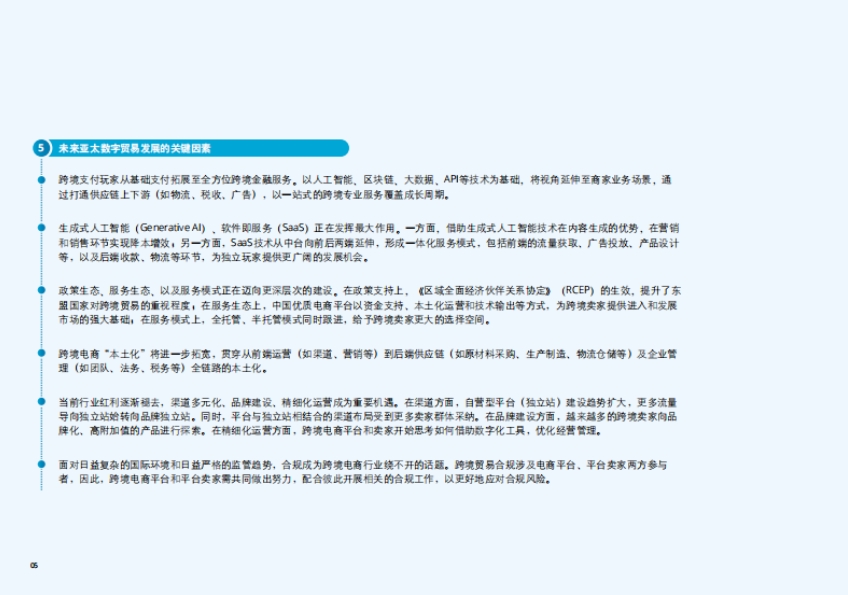
5. Schlüsselfaktoren für die zukünftige Entwicklung des digitalen Handels im asiatisch-pazifischen Raum
- Optimierung grenzüberschreitender Handelsprozesse durch digitale Technologien: Digitale Technologien wie generative künstliche Intelligenz und SaaS spielen in allen Bereichen des grenzüberschreitenden E-Commerce eine wichtige Rolle. Grenzüberschreitende Zahlungsdienste erweitern sich zu umfassenden grenzüberschreitenden Finanzdienstleistungen und optimieren das Verkäufererlebnis. Generative KI hilft, Kosten zu senken und die Effizienz in den Bereichen Marketing und Vertrieb zu steigern. SaaS-Dienste bieten Spielern mit unabhängigen Websites Entwicklungsmöglichkeiten. Die Anwendung von Branchentechnologien wird kontinuierlich erweitert und vertieft.
- Kontinuierliche Optimierung des Branchenökosystems zur Förderung der Entwicklung: Im Bereich der politischen Ökologie hat das Inkrafttreten der RCEP die Bedeutung des grenzüberschreitenden Handels für die ASEAN-Länder erhöht, und die Länder formulieren und verbessern relevante Richtlinien. Im Bereich des Dienstleistungsökosystems bieten chinesische E-Commerce-Plattformen grenzüberschreitenden Verkäufern Unterstützung, z. B. in Form von Finanzmitteln, lokalisierten Abläufen und Technologietransfer. Im Bereich der Servicemodelle wird das Verwaltungsmodell diversifiziert. Neben der Vollverwaltung wird eine Teilverwaltung eingeführt, die den Händlern mehr Wahlmöglichkeiten bietet.
- „Lokalisierung“ wird zur vorrangigen Entwicklungsstrategie: Die „Lokalisierung“ im grenzüberschreitenden E-Commerce durchzieht die gesamte Kette vom Frontend-Betrieb über das Backend der Lieferkette bis hin zum Unternehmensmanagement, einschließlich der Lokalisierung von Teams, Produkten, Marketing, Logistik und Betrieb, um die unterschiedlichen Verbraucherpräferenzen und Marktanforderungen in den ASEAN-Ländern besser zu erfüllen und die Wettbewerbsfähigkeit zu steigern.
- Branchenakteure bewegen sich in Richtung Diversifizierung, Markenbildung und verfeinerte Entwicklung: Die Entwicklung des grenzüberschreitenden E-Commerce veranlasst Unternehmen, sich von „mikro-multinationalen Unternehmen“ zu „grenzüberschreitenden kleinen Giganten“ zu wandeln. Markenstärke, Kanalkraft und Betriebsfähigkeit werden zu den entscheidenden Wettbewerbsfaktoren. Unternehmen legen Wert auf die Diversifizierung der Kanäle, z. B. durch den Ausbau unabhängiger Websites und die Kombination von Plattformen und unabhängigen Websites. Sie treiben die Markenentwicklung voran und erhöhen die Investitionen in den Markenaufbau. Sie vertiefen das Konzept der „verfeinerten“ Abläufe, einschließlich der Verfeinerung von Produkt, Marketing, Kundendienst und Management.
- Datenschutz, -sicherheit und Compliance-Trends: Die Länder legen großen Wert auf Datenschutz und beschleunigen die Gesetzgebung. Grenzüberschreitende E-Commerce-Unternehmen müssen die gesetzlichen Vorschriften der Zielländer im Auge behalten, ihr Daten-Compliance-Niveau verbessern und rechtliche Konsequenzen vermeiden. Sie können Maßnahmen ergreifen wie die Aufarbeitung von Geschäftsdaten, die Anpassung der Serverbereitstellung, die Zusammenarbeit mit externen Sicherheitsunternehmen und die Schulung von Mitarbeitern. Gleichzeitig ist der grenzüberschreitende E-Commerce mit Compliance-Beschränkungen auf der Ebene des internationalen Handels und des Unternehmensbetriebs konfrontiert. Plattformen und Verkäufer müssen gemeinsam daran arbeiten. Plattformen sollten die Kommunikation mit den Zielmärkten verstärken, interne Systeme einrichten und Verkäufer schulen. Verkäufer sollten die Plattform- und lokalen Vorschriften einhalten, um Compliance-Risiken zu vermeiden.