Der Bericht „Einblicke in die Expansion chinesischer Unternehmen ins Ausland und Ausblick auf globale Trends 2024“ analysiert hauptsächlich den Hintergrund, den aktuellen Stand, die Trends, die Risiken und Herausforderungen sowie die Strategien zur Bewältigung der Expansion chinesischer Unternehmen ins Ausland und bietet umfassende Referenzen und Anleitungen für Unternehmen.
1. Analyse des Hintergrunds der Expansion chinesischer Unternehmen ins Ausland
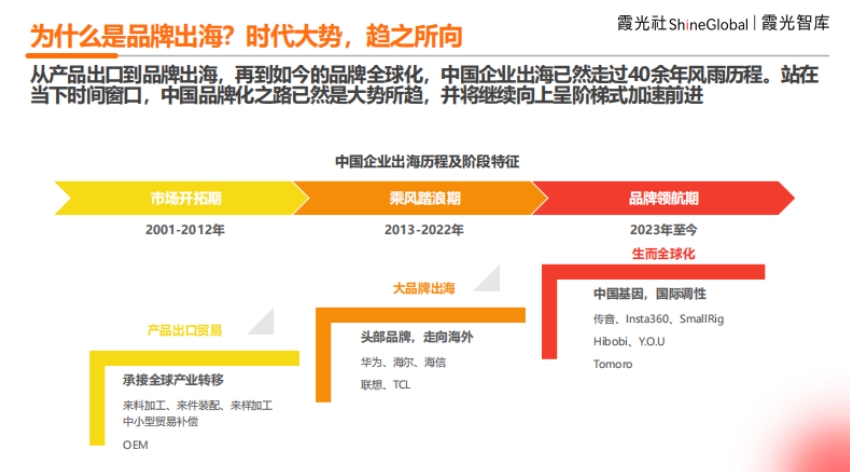
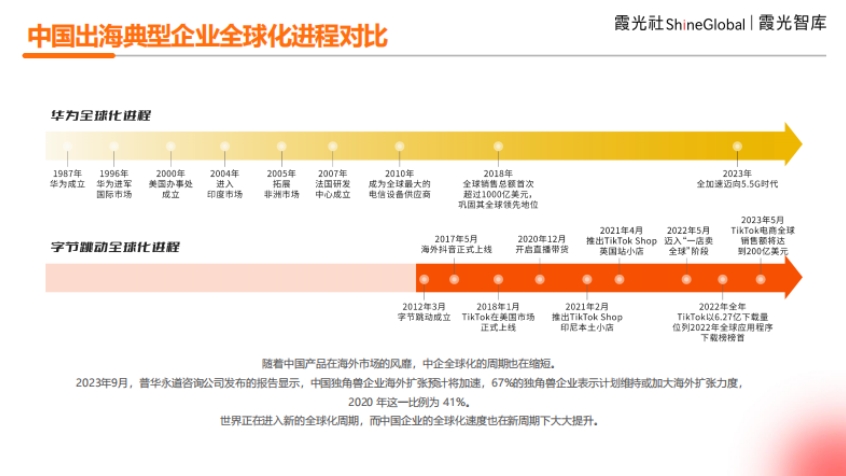
- Verlauf und Phasenmerkmale der Expansion: Die Expansion chinesischer Unternehmen ins Ausland durchlief drei Phasen: die Markterschließungsphase (2001–2012), die Phase des Aufschwungs (2013–2022) und die Phase der Markenführung (2023 bis heute). Sie entwickelte sich vom Produktexporthandel zur globalen Markenbildung. Typische Unternehmen wie Huawei und ByteDance haben im Globalisierungsprozess bedeutende Fortschritte erzielt, und die Expansion chinesischer Einhorn-Unternehmen ins Ausland wird voraussichtlich beschleunigt.
- Treiber der Expansion
- Politische Unterstützung: Inländische und ausländische Politik treiben die Expansion an. Der Staatsrat und verschiedene Ministerien haben mehrere Maßnahmen zur Unterstützung der Expansion von Unternehmen ins Ausland erlassen, wie die Förderung des Markenaufbaus, die Unterstützung von Außenhandelsunternehmen bei der Erweiterung von Vertriebskanälen und die Entwicklung eigener Marken. Gleichzeitig haben auch viele Überseeländer entsprechende politische Pläne, um chinesischen Unternehmen beim Aufbau der Marke „Made in China mit Intelligenz“ zu helfen.
- Neugestaltung der mentalen Markenbesetzung: Die Nachfrage zwingt das Angebot. Überseeische Verbraucher wählen chinesische Marken aus verschiedenen Gründen, darunter Preis, Vertrauen, Bedürfnisbefriedigung und Werbeaktionen. Dies veranlasst Unternehmen, sich in den Bereichen Rohstoffe, Produkte und Marken zu verbessern, wodurch ein zirkulärer Antrieb von „Nachfrage und Angebot“ entsteht.
- Neue Produktivkräfte: Die „vier Säulen“ Produktstärke, Lieferkette, Technologie und Vertriebskanäle bilden die neue Fähigkeit für den Markenaufbau im Ausland. Unternehmen wie Ecovacs und DJI haben mit ihren entsprechenden Vorteilen auf den Überseemärkten Erfolge erzielt.
- Analyse des Überseemarktumfelds
- Wirtschaftliches Umfeld: Die globale Wirtschaft zeigt insgesamt einen Abwärtstrend, wobei für 2025 eine zyklische Korrektur erwartet wird. Die BIP-Wachstumsraten der Welt und der wichtigsten Regionen haben sich von 2021 bis 2025 verändert.
- Demografisches Umfeld: Indien ist ein bevölkerungsreiches Land, aber nicht die erste Wahl für die Expansion chinesischer Unternehmen ins Ausland. Die Bevölkerungszahlen und Wachstumsraten der zehn bevölkerungsreichsten Länder der Welt im Jahr 2023 variieren.
- Finanzinvestitionen: Gesundheitswesen, intelligente Hardware und neue Energien sind zu neuen Gesichtern der Globalisierung geworden. Die Finanzierungssituation der entsprechenden Unternehmen in den Jahren 2022–2023 zeigt ihre Bedeutung unter den ins Ausland expandierenden Unternehmen.
2. Aktueller Stand und Trends der Expansion chinesischer Unternehmen ins Ausland
- Einblicke in expandierende Unternehmen
- B-Seite-Analyse: Mehr als die Hälfte der chinesischen Unternehmen plant den Eintritt in Überseemärkte, hauptsächlich um neue Kanäle zu erschließen und das Geschäft auszuweiten. Dabei stehen sie jedoch vor Herausforderungen wie Produktinnovation und Lokalisierung, Nutzerakquise und Verkaufskonversion sowie Kanalaufbau und lokaler Betrieb. Die Herausforderungen variieren je nach Unternehmenstyp.
- C-Seite-Analyse: Europäische und amerikanische Verbraucher haben eine starke Konsumbereitschaft und Kaufkraft und neigen zu personalisierten Produkten; Japaner und Koreaner haben eine hohe Zahlungsbereitschaft; die Bevölkerung Südostasiens ist jung und aufnahmefähig für neuartige Produkte.
- Branchenlandschaft: Sie umfasst zahlreiche Unternehmen aus Branchen wie Automobil, Fertigung, Internet, E-Commerce und Konsumgüter und zeigt die industrielle Verteilung der Expansion chinesischer Unternehmen ins Ausland.
- Konsumgüterbereich
- Markensituation: Konsummarken, die ins Ausland expandieren, erweitern sich von traditionellen „großen Marken“ zu neuen „kleinen Marken“. Verschiedene Markentypen wie Huawei und Maikuku zeigen auf den Überseemärkten unterschiedliche Leistungen.
- Lokalisierungsstrategie: Marken müssen sich bei ihrem Eintritt in Überseemärkte anpassen, einschließlich Produkt-, Personal-, Marketing-, Produktions-, Kanal- und Zielgruppenanpassung. Erfolgreiche Beispiele sind Unternehmen wie Mixue Bingcheng und Midea.
- Native Überseestrategie: Unternehmen müssen basierend auf ihren langfristigen strategischen Zielen einen Expansionspfad und eine Globalisierungsstrategie entwickeln. Expansionsmethoden umfassen Produktexport und Geschäftsmodellreplikation, während die Globalisierung den Aufbau eines an die Überseemärkte angepassten Systems erfordert.
- Gastronomiebranche
- Kernfaktoren der Expansion: Südostasien ist das bevorzugte Ziel für die Expansion der chinesischen Küche ins Ausland, da das makroökonomische Umfeld und das Angebot-Nachfrage-Verhältnis vorteilhaft sind, wie politische Unterstützung, geeignete Bevölkerungsstruktur und hohe Konsumkraft.
- Marktsegmentierung und Lieferkettenmanagement: Fast Food ist das größte Marktsegment im südostasiatischen Kettenrestaurantmarkt, aber das Segment mit dem höchsten Marktanteil chinesischer Restaurantmarken in Singapur ist Hot Pot. Chinesische Kettenrestaurantmarken in Südostasien müssen ein integriertes Lieferkettenmanagement betreiben.
- Grenzüberschreitender E-Commerce: Die „Vier kleinen Drachen der Expansion ins Ausland“ – SHEIN, Temu, AliExpress und TikTok Shop – verändern die Landschaft des Übersee-E-Commerce-Marktes. Nordamerika macht über 30 % des chinesischen Übersee-E-Commerce-Marktes aus. Das US-Einzelhandelswachstum im E-Commerce ist schnell, und Plattformen und eigenständige Websites haben jeweils ihre Vor- und Nachteile.
- Unterhaltungsindustrie
- Verlauf und Merkmale der Expansion: Von der Nachahmung inländischer Produkte über die Einführung nativer Anwendungen bis hin zur Integration von sozialen Medien und Unterhaltung durchlief sie drei Phasen. Soziale Formen und Nutzermärkte entwickeln sich ständig weiter.
- Typen und Marktsituation: Die Unterhaltungsbranche ist vielfältig und umfasst viele Typen nach verschiedenen Kriterien. Die Nutzernachfrage ist groß, das Marktwachstum stark und zeigt eine vertikale und diversifizierte Entwicklung. Es gibt viele soziale Nischensegmente und typische Produkte.
- Spieleindustrie: Die Expansion chinesischer Spiele ins Ausland durchlief vier Phasen: Keimphase, Anfangsphase, Explosionsphase und stabile Phase. Zukünftig sind globale Forschungs- und Betriebsfähigkeiten sowie differenzierte Marktstrategien die Durchbruchspunkte. Spiele-IPs mit traditionellen chinesischen Kulturelementen sind im Ausland beliebt.
- Cloud-Dienste: Der Schwerpunkt der Cloud-Nutzung für die Internet-Expansion ins Ausland wird sich von Europa und Amerika nach Südostasien verlagern. Spiele und Audio/Video sind die Hauptbereiche. Der südostasiatische Markt hat großes Potenzial. Derzeit dominiert die öffentliche Cloud-Bereitstellung bei der Internet-Expansion ins Ausland.
- Neue Energie-Fahrzeugindustrie
- Expansionsmodell: „Lokale Produktion + Marken-Direktvertrieb“ wird allmählich zum Mainstream. Dazu gehören Modelle wie Fahrzeugexport, lokale Produktion, Investitionen und Übernahmen sowie Marken-Direktvertrieb, die jeweils ihre eigenen Merkmale und geeigneten Unternehmen haben.
- Marktaufteilung und lokale Produktion: Europa und Südostasien sind die Kern-Exportmärkte. Die chinesische Automobilindustrie ist im Ausland weit verbreitet. Lokale Produktion ist eine unvermeidliche Wahl für Automobilhersteller, um im Ausland Fuß zu fassen. Chinesische Neue-Energie-Fahrzeughersteller beschleunigen den Bau von Fabriken weltweit.
- Ladeinfrastrukturbranche
- Europäischer Markt: 2024 ist ein Wendepunkt mit Chancen und Herausforderungen. Es müssen Aspekte wie Netz-Upgrades und Geräte-Upgrades beachtet werden. Chinesische Unternehmen stehen vor Herausforderungen wie Protektionismus und Lokalisierung.
- US-Markt: Der Rückstand beim Aufbau der Ladeinfrastruktur ist ein Entwicklungsengpass. Es gibt Unterschiede zwischen China und den USA bei neuen Energiefahrzeugen und öffentlichen Ladeeinrichtungen.
- Südostasiatischer Markt: Die EV-Bestände und Durchdringungsraten der wichtigsten Länder variieren, und die politischen Maßnahmen zur Ladeinfrastruktur unterscheiden sich von Land zu Land.
- Intelligente Hardware-Industrie: Unternehmen nutzen ihre Vorteile in Technologie und Lieferkette, wie Xiaomi und Pudu Technology, um auf internationalen Märkten Erfolge zu erzielen.
- Rekrutierung von Talenten für Überseeaktivitäten
- Managementteam: In der Struktur des Übersee-Managementteams zeigt die Kombination aus chinesischen Verantwortlichen und ausländischen Geschäftsleitern eine starke Gesamtleistung und hat in vielen Bereichen Vorteile.
- Flexible Beschäftigung: Unternehmen können je nach Bedarf verschiedene Beschäftigungsformen wählen, die jeweils ihre Vor- und Nachteile haben.
- Compliance im Ausland: Die Compliance-Risiken im Ausland nehmen zu, einschließlich Datenschutz, geistiges Eigentum, Qualitätssicherung und technische Standards. Das Compliance-Management chinesischer Automobilunternehmen im Ausland ist komplexer.
3. Zusammenfassung der Globalisierung chinesischer Unternehmen
- Externe Risiken und Herausforderungen: Chinesische Unternehmen stehen bei ihrer Expansion ins Ausland vor acht großen Risiken und Herausforderungen: Geopolitik, Kultur und Sprache, Compliance-Risiken, Wettbewerbsdruck, Markenmarketing, Organisation und Talente, Kapitalsicherheit sowie Öffentlichkeitsarbeit und öffentliche Meinung.
- Überwindung von Schwierigkeiten: Unternehmen müssen eine umfassende Expansionsstrategie und klare Geschäftspfade entwickeln sowie lokale Anpassungen und dynamische Anpassungen vornehmen, einschließlich Zielmarktanalyse, Risikoidentifikation und -minderung.
- Produkttrends: Die Expansionskategorien werden vertikaler und spezifischer. Technologie-Exportprodukte werden aufgewertet. Der Wettbewerb bei neuen Energien und sauberen Technologien verlagert sich auf die „Besetzung von Szenarien“. Der Wettbewerb bei Internet- und Digitalprodukten ist intensiv. Das Potenzial für intelligente Mobilität und Smart-City-Bau ist groß. Technologieunternehmen könnten einen „Karpfeneffekt“ bei der Web3.0-Expansion auslösen. Der Markenaufbau im Ausland wird zum „strategischen Motor“.