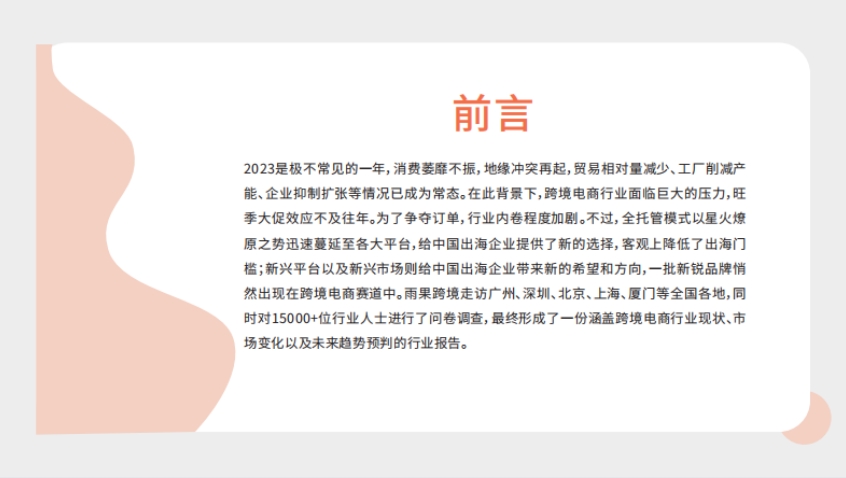
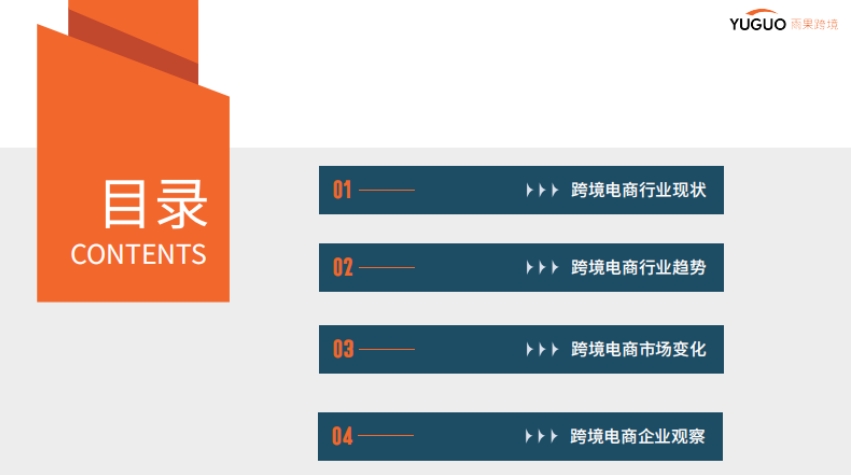
Der Bericht "Hugo Cross-Border: Trendbericht zur grenzüberschreitenden E-Commerce-Branche 2024" analysiert hauptsächlich die Entwicklung der grenzüberschreitenden E-Commerce-Branche im Jahr 2023 und prognostiziert die Branchentrends für 2024. Der Bericht deckt mehrere Aspekte ab, darunter die Geschäftslage der Verkäufer, Veränderungen bei grenzüberschreitenden Plattformen, die Logistiksituation, Marktveränderungen und Unternehmensbeobachtungen, und bietet Fachleuten im grenzüberschreitenden E-Commerce umfassende Brancheninformationen.
1. Aktuelle Situation der grenzüberschreitenden E-Commerce-Branche
- Geschäftslage der Verkäufer
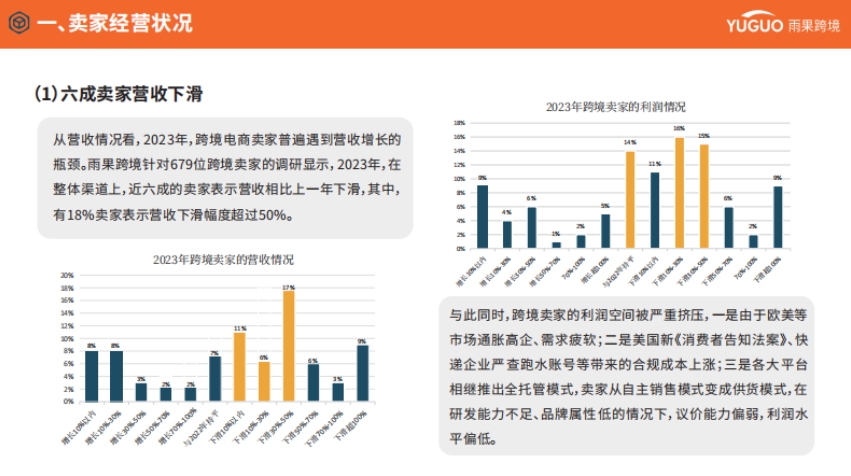
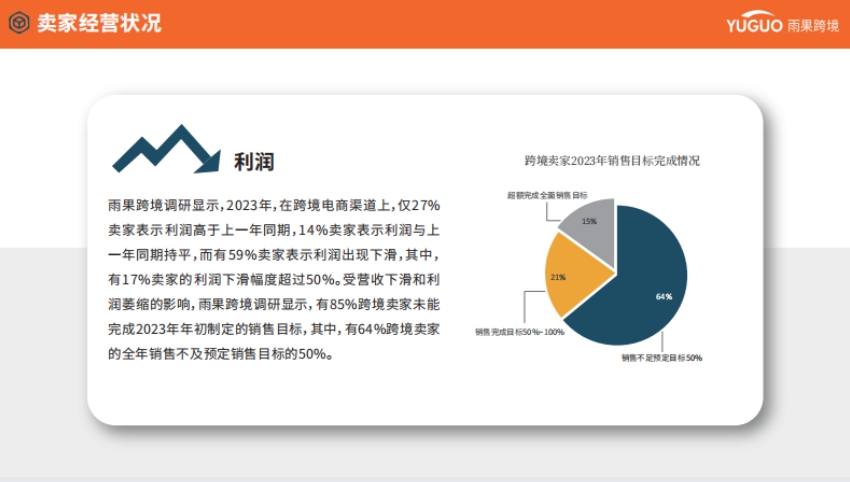
- Umsatz- und Gewinnrückgang: Im Jahr 2023 verzeichneten fast 60 % der Verkäufer einen Umsatzrückgang, die Gewinnmargen wurden eingeschränkt, und die meisten Verkäufer erreichten ihre Verkaufsziele nicht.
- Kostensteigerung: Obwohl die Verkäufer Maßnahmen zur Kostensenkung ergriffen, stiegen die Gesamtkosten aufgrund von Faktoren wie höheren Plattformgebühren und Compliance-Kosten weiter an.
- Personalabbau: Aufgrund der Umsatz- und Gewinnentwicklung reduzierten die meisten Verkäufer ihre Personalstärke.
- Schwache Leistung in der Hochsaison: Die langsame Erholung des Konsums in den Märkten der USA und Europas sowie der intensive Preiswettbewerb auf den Plattformen führten dazu, dass die Leistung der Verkäufer in der Hochsaison am Jahresende hinter den Erwartungen zurückblieb.
- Breite Anwendung von KI-Tools: Über 70 % der Verkäufer nutzen KI-Tools zur Unterstützung des Betriebs und zur Steigerung der Effizienz.
- Erschließung neuer Kanäle: Die Multi-Plattform-Aufstellung der Verkäufer ist normalisiert, mit einem Schwerpunkt auf der Erschließung neuer Kanäle wie Temu.
- Erhöhte Investitionen in den Markenaufbau: Einige Verkäufer erhöhen ihre Investitionen in den Markenaufbau, um sich an die Plattform-Compliance und den Marktwettbewerb anzupassen.
- Überlegungen zur Plattformwahl: Bei der Auswahl einer Plattform legen Unternehmen, die ins Ausland gehen, den größten Wert auf die Marktgröße.
- Schwacher DTC-Finanzierungsmarkt: Im Jahr 2023 gab es weniger Finanzierungsereignisse für DTC-Marken, die sich hauptsächlich auf Start-ups und bestimmte Kategorien konzentrierten.
- Veränderungen bei grenzüberschreitenden Plattformen
- Amazon: Die Shop-Überprüfung erhöht die Compliance-Kosten, die Optimierung der Frontend-Funktionen ist vorteilhaft für neue Verkäufer, es wurden mehrere neue Logistik- und Lagergebühren hinzugefügt, und die Registrierung von Einzelunternehmen wird nicht mehr akzeptiert.
- TikTok Shop: Einführung des Full-Management-Modells, offizieller Start des E-Commerce-Dienstes in den USA, Wiederaufnahme des indonesischen E-Commerce-Geschäfts nach vorübergehender Schließung.
- Pinduoduo Temu: Einführung von sechs Standorten in Europa, Erschließung des asiatischen Marktes über Standorte in Japan und Südkorea, Zusammenarbeit mit Reedereien zur Einführung von Seefrachtdiensten.
- Aktuelle Situation der grenzüberschreitenden E-Commerce-Logistik
- Deutlicher Rückgang der Seefrachtpreise: Vorteilhaft für den Export sperriger Konsumgüter, aber die Krise im Roten Meer hat die kurzfristigen Frachtraten in die Höhe getrieben.
- Verstärkte Verdrängung kleiner und mittlerer Spediteure: Aufgrund von Faktoren wie rückläufigen Kundenaufträgen verzeichneten kleine und mittlere Spediteure im Jahr 2023 allgemein einen Umsatzrückgang, und die Branche trat in eine Phase der Verdrängung ein.
2. Trends in der grenzüberschreitenden E-Commerce-Branche
- Verschärfter interner Wettbewerb: Aufgrund von Lagerdruck, dem Einfluss neuer Plattformen, Unterschieden in der Nutzung von KI-Tools und dem Einfluss des Full-Management-Modells wird sich der interne Wettbewerb in der Branche verschärfen.
- Fokus auf den lateinamerikanischen Markt: Verkäufer und Plattformen werden ihre Investitionen in den lateinamerikanischen Markt erhöhen, dessen E-Commerce-Umsätze voraussichtlich schnell wachsen werden.
- Steigende Compliance-Kosten: Verkäufer müssen Compliance-Fragen mehr Aufmerksamkeit schenken, und es wird erwartet, dass die Compliance-Kosten im Jahr 2024 erheblich steigen werden.
- Entwicklung des Full-Management-Modells: Es wird die Transformation des traditionellen Außenhandels beschleunigen, und mehr neue Plattformen könnten es übernehmen, wodurch die Einstiegshürden für Verkäufer im Auslandsgeschäft gesenkt werden.
- Kurzvideos unterstützen den Markenaufbau im Ausland: Soziale Medien bieten Chancen für den Markenaufbau im Ausland, und die Dividende von Kurzvideos wird die Entstehung neuer, aufstrebender Marken fördern.
- Trend zur Integration von Online und Offline: Einige Verkäufer haben bereits Offline-Kanäle im Ausland erschlossen oder planen dies, um ein Omnichannel-Marketing zu erreichen.
3. Marktveränderungen im grenzüberschreitenden E-Commerce
- Rückgang der Kaufkraft im US-Markt: Inflationsdaten und Verbraucherumfragen zeigen, dass US-Verbraucher besorgt über die Preise sind und möglicherweise vorsichtiger konsumieren.
- Erholung des E-Commerce-Wachstums in Europa: Das Wachstum der Internetnutzer und der Anstieg des Anteils der E-Commerce-Konsumenten treiben die Ausweitung des europäischen E-Commerce-Marktes voran.
- RCEP unterstützt den E-Commerce in Südkorea: Chinesische Waren haben einen relativ hohen Anteil am südkoreanischen grenzüberschreitenden E-Commerce-Markt. Das Inkrafttreten des RCEP wird den bilateralen Handel fördern und die Entwicklung des E-Commerce in Südkorea vorantreiben.
- Herausforderungen und Chancen für den E-Commerce in Südostasien: Höhere politische Hürden, Dringlichkeit von Lokalisierung und Compliance, aber auch Chancen für den B2B-Außenhandelsmarkt.
4. Beobachtungen zu grenzüberschreitenden E-Commerce-Unternehmen: Branchenakteure sind der Meinung, dass der Markenaufbau im Ausland von Kapital und Marketing abhängt, der Aufstieg von Kurzvideos dem Markenaufbau zugutekommt; der interne Wettbewerb in der Branche verschärft sich, was Kostensenkung und Effizienzsteigerung sowie eine Verbesserung des Preis-Leistungs-Verhältnisses erfordert; das Full-Management-Modell ist vorherrschend, und die Markenbildung ist der Schlüssel zur Bekämpfung des internen Wettbewerbs; man sollte eigene Marken aufbauen, die Personalproduktivität steigern und KI-Tools nutzen; die US-Region und der indonesische Markt von TikTok Shop haben Entwicklungspotenzial.