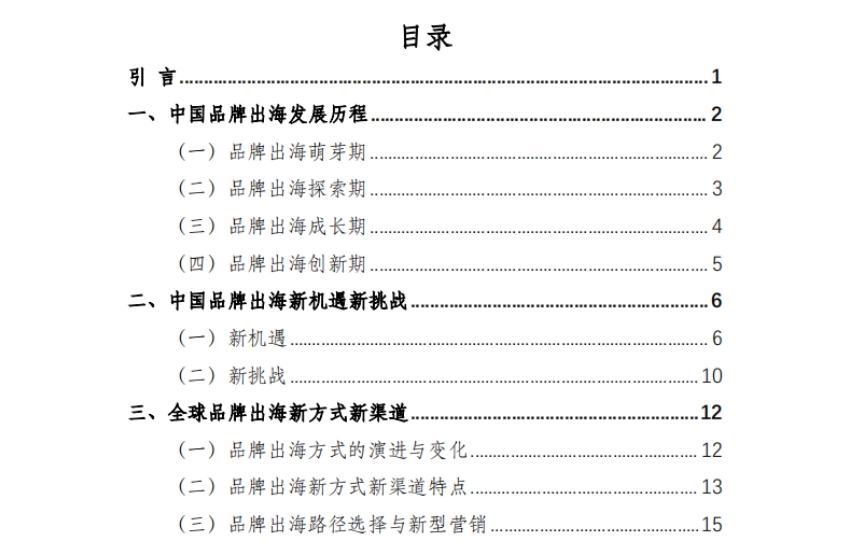
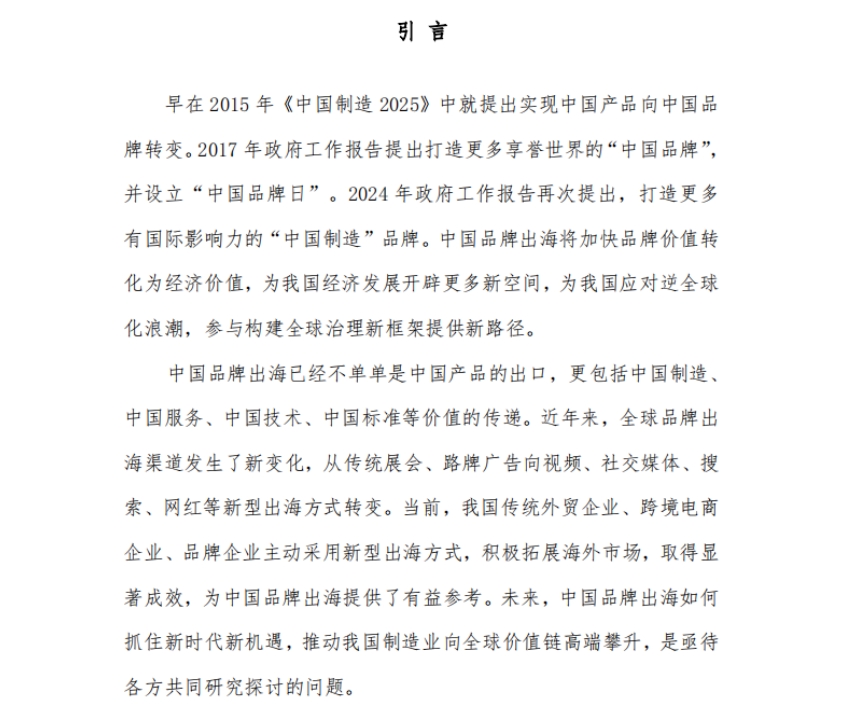
Dieses Dokument wurde vom Institut für E-Commerce der Chinesischen Akademie für Internationalen Handel und wirtschaftliche Zusammenarbeit des Handelsministeriums veröffentlicht und behandelt verschiedene Aspekte der Internationalisierung chinesischer Marken, darunter Entwicklungsgeschichte, Chancen und Herausforderungen, Internationalisierungswege, praktische Fallbeispiele sowie Handlungsempfehlungen.
1. Entwicklungsgeschichte: Die Internationalisierung chinesischer Marken durchlief vier Phasen: die Keimphase (1978–1999), die Erkundungsphase (2000–2007), die Wachstumsphase (2008–2019) und die Innovationsphase (2020 bis heute). Der Fokus verlagerte sich schrittweise vom „Produktexport“ hin zum „Aufbau globaler Marken“.
2. Chancen und Herausforderungen: Zu den neuen Chancen zählen die vielfältige Entwicklung von Marketingmethoden, die steigende Online-Nachfrage im Ausland und die verbesserte Produktqualität im Inland. Zu den neuen Herausforderungen gehören kulturelle Unterschiede, externe politische Anpassungen und unzureichende Markenfähigkeiten, die die Entwicklung chinesischer Marken im Ausland beeinflussen.
3. Neue Wege und Kanäle für die globale Markeninternationalisierung: Die Internationalisierungsmethoden haben sich von traditionellem Warencxport und Vertrieb über Agenten hin zur Gründung von Auslandsniederlassungen sowie zur Nutzung von E-Commerce-Plattformen und sozialen Medien entwickelt. Die neuen Wege und Kanäle zeichnen sich durch Vielfalt und Innovation aus. Unternehmen müssen basierend auf ihrer eigenen Situation geeignete Internationalisierungspfade und Marketingmethoden wählen.
4. Neue Praktiken und Erkenntnisse zur Internationalisierung chinesischer Marken: Traditionelle Außenhandelsmarken, E-Commerce-Marken und traditionelle Markenhersteller setzen ihre Globalisierungspraktiken jeweils durch digitale Transformation, präzise Positionierung und Lokalisierungsstrategien um. Die Internationalisierung chinesischer Marken sollte sich auf lokalisierte Abläufe, datengesteuertes Marketing, Compliance-Management und Markenaufbau konzentrieren.
5. Handlungsempfehlungen für eine hochwertige Entwicklung: Um die hochwertige Entwicklung der Internationalisierung chinesischer Marken zu fördern, müssen die Entwicklung neuer Marketingmodelle unterstützt, das Markenbewusstsein der exportierenden Unternehmen gestärkt, die digitale Infrastruktur verbessert und die finanzielle Unterstützung erhöht werden.