 4248
4248In recent years, the global children's clothing market has been steadily and continuously expanding in scale.
According to data from verifiedmarketresearch, the estimated market size of global children's apparel in 2024 is $261.98 billion, and it is expected that between 2024 and 2031, the market's compound annual growth rate will reach 4.80%.
By 2031, the global children's apparel market size will grow to about $368.34 billion.

Image source: verifiedmarketresearch
There is such a company that, 10 years ago, when the global children's apparel market had not yet shown its current huge scale and strong growth momentum, insightfully saw the great business opportunity in this niche field due to a personal experience of its founder. Targeting the low- and middle-income groups and young families in Europe and the US as a breakthrough, it adopted a low-price strategy and successfully entered overseas markets.
It is reported that in 2020, the brand's annual revenue exceeded 1.4 billion RMB.
According to the latest data from the "2025 Global Unicorn List", in 2025, the brand's total valuation has reached 21 billion RMB, making it a veritable overseas bestseller.
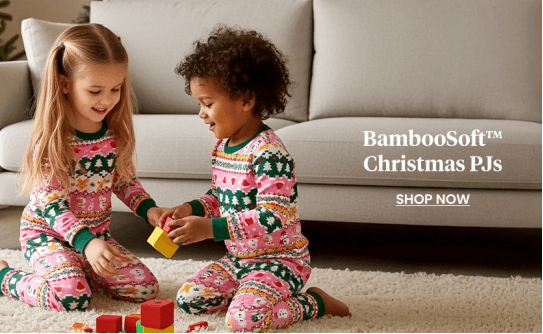
It isShenzhen's cross-border children's clothing brand PatPat.

Image source: PatPat
Discovering the Niche Market: Opening European and American Family Wardrobes with Cost Performance
It is understood that the entrepreneurial story of the PatPat brand began in 2014.
At that time, when founder Mr. Wang was picking out clothes for his soon-to-be-born child in the US, he found that children's clothing in the local market was either expensive or had traditional designs and single functions, making it difficult to meet the needs of beauty, practicality, and cost performance at the same time.
Meanwhile, with the rise of cross-border e-commerce in China, the country's supply chain capabilities were strengthening, especially in the field of apparel manufacturing, with a large number of factories with flexible production and rapid response capabilities clustered in the Pearl River Delta region.
Inspired by this, he decided to pull in his friend Mr. Gao, whom he met at Carnegie Mellon University (CMU), to start a business together. Targeting young families with low and middle incomes in Europe and the US, they directly connected the Chinese supply chain with overseas consumers through cross-border e-commerce, creating a DTC cross-border children's clothing brand focused on overseas markets.
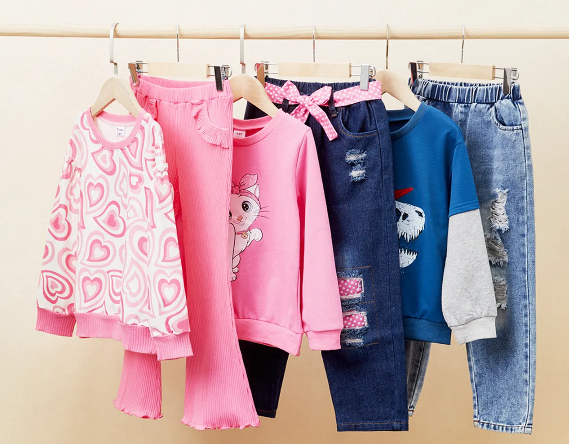
Image source: PatPat
In 2014, the PatPat brand was officially established in California, USA.
In the early days, the brand adopted a small-batch trial sales model, making samples through factories in Shenzhen and surrounding areas to quickly test market response. With a price only 1/3 to 1/2 of European and American brands, high cost performance, and cute designs, it quickly attracted a group of American moms.
In 2016, the PatPat brand established locations in Shenzhen, Foshan, Guangzhou, and Hangzhou, building supply chain advantages to solve the problem of insufficient back-end supply.
By 2018, it had established partnerships with more than 800 domestic suppliers, gradually expanding its market to Europe, the Middle East, and other regions, and adding mother and baby product categories.
In 2020, due to the surge in online demand during the pandemic, PatPat's sales increased by 300% year-on-year, and annual revenue exceeded 1.4 billion RMB.
In 2021, the brand completed a $510 million Series D financing led by SoftBank Vision Fund, showing strong growth momentum.
Nowadays, PatPat serves more than 21 million overseas users, covering more than 140 countries and regions worldwide, and has become a unicorn brand in the mother and baby segment of the highly competitive apparel industry.

Image source: PatPat
Social Media: Layered Operations, Deep Cultivation of User Groups
As an emerging brand, a low-price strategy can indeed attract users, but relying solely on low prices cannot sustain customer acquisition. It is necessary to establish brand awareness and emotional connection through content communication.
For example, the PatPat brand chose to use mainstream social media platforms such as TikTok and Facebook to penetrate the lives of overseas families.
TikTok: Driving Communication with Authentic Content and Influencer Collaboration
PatPat does not pursue high-frequency posting on TikTok, but focuses on collaborating with vertical influencers to launch short video content that fits the platform's tone.
As of now, its official TikTok account @patpatclothing has 230,500 followers and 793,900 likes.

Image source: TikTok
The video content posted on the account is mainly divided into two categories: one is daily children's outfit displays, and the other is creative and funny short videos.

Image source: TikTok
Take for example a TikTok video on the account with 502,300 views and 37,100 likes. This video is a daily outfit sharing video co-produced by the brand and TikTok parenting influencer @_thehudsonfamily, who has 2.7 million followers.
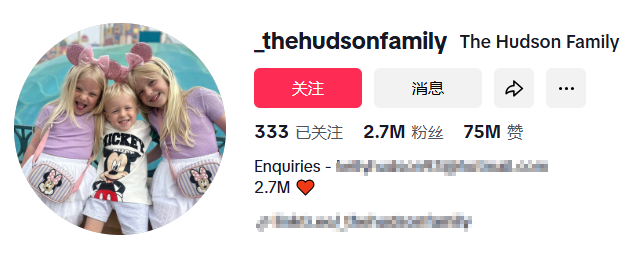
Image source: TikTok
In this short video, which is only 9 seconds long, two twin sisters showcase six sets of PatPat clothing. The clothing types are diverse, including comfortable sweatshirts and pants for home, trendy jumpsuits, and playful and cute suspender skirts.
Many users expressed their love for the clothing styles and the children in the comments section:
"Lovely girls."
"Cute, I love these clothes."
"They are so cute."
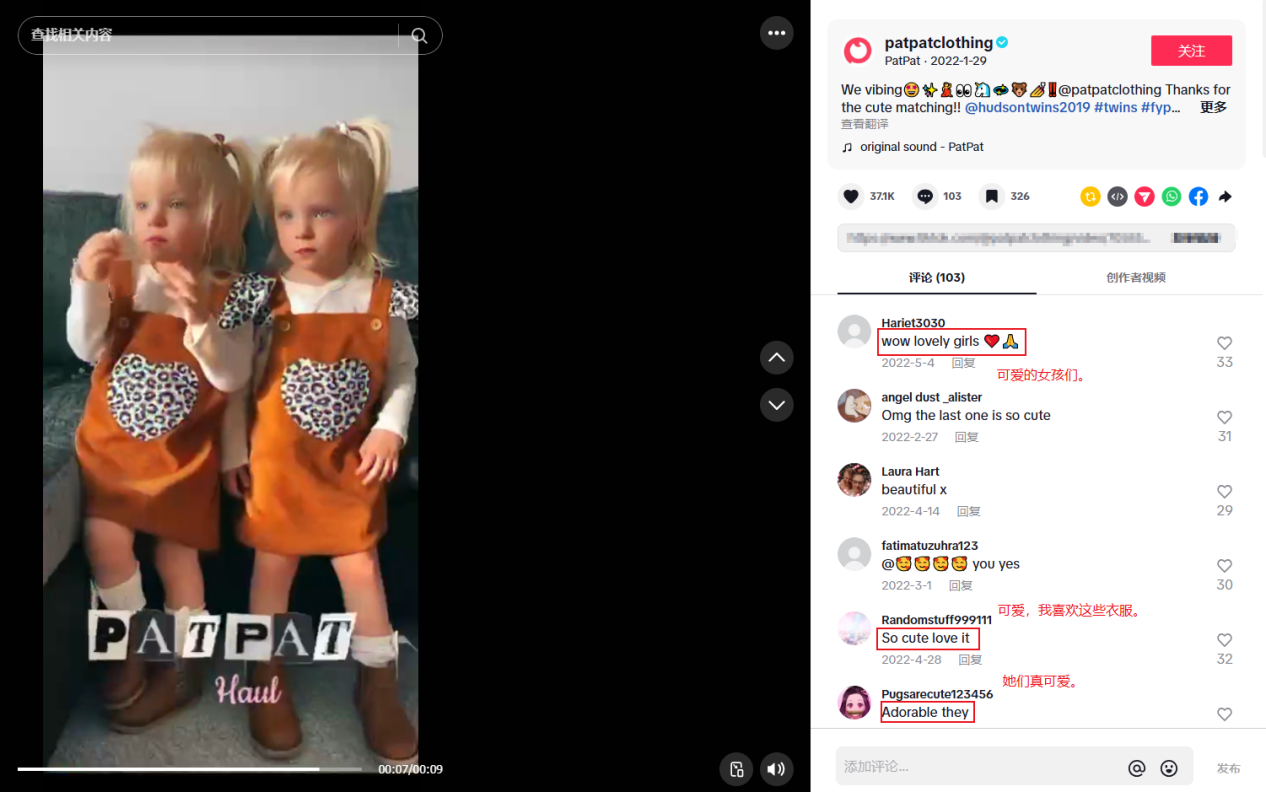
Image source: TikTok
Facebook: Building Private Communities and Strengthening User Loyalty
Facebook is PatPat's most important marketing base. As early as the brand's initial stage in 2016, it settled on the platform.
As of now, its main Facebook account @PatPat has 6.85 million followers, and the total number of likes has exceeded 6.6 million.
Specifically, PatPat's content matrix on Facebook is roughly divided into three sections: image building, product seeding, and community operations.
The PatPat brand will regularly push the brand's latest news, limited-time offers and mother and baby knowledge science, and will also use a combination of graphics and text to seed products, sharing new children's clothing with diverse styles and bright colors to increase the impulse to buy among viewers.
Moreover, PatPat also created a mom community on Facebook, providing moms with an exclusive space to share parenting experiences and shopping tips, which greatly helps to increase user stickiness.
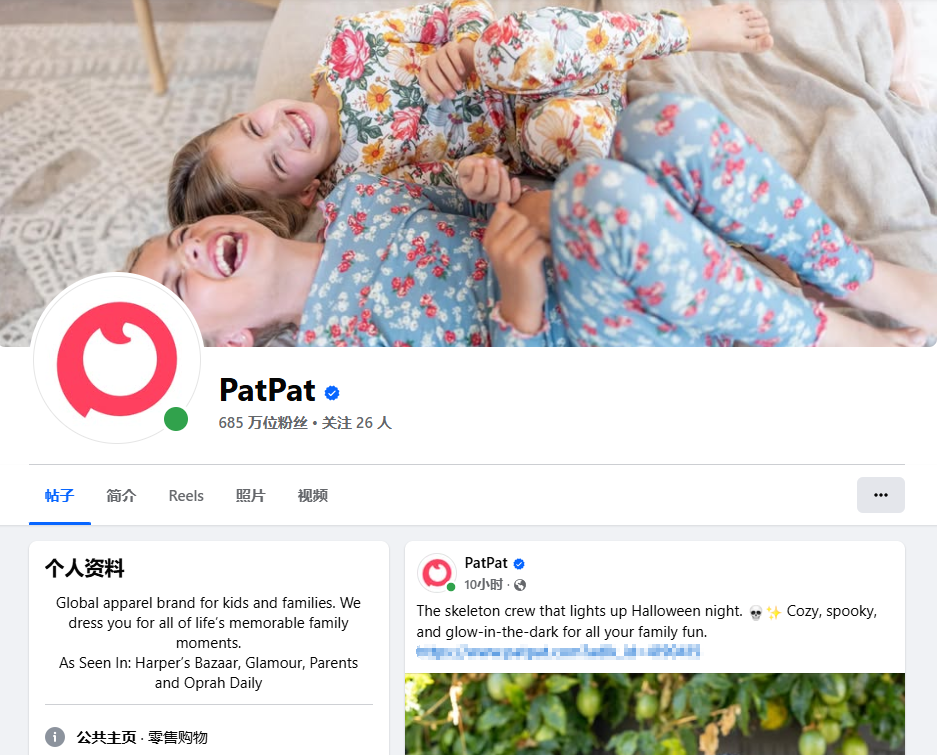
Image source: Facebook
Independent Website: Not Only a Sales Channel, but Also a Brand Experience Center
In the process of expanding into the global market, PatPat, in addition to vigorously marketing on social media platforms, has also made good arrangements in terms of sales channels.
It is reported that, unlike many cross-border sellers who rely on platforms such as Amazon, as a DTC cross-border children's clothing brand that started with an independent website, PatPat has established its independent website as its main sales base since its inception.
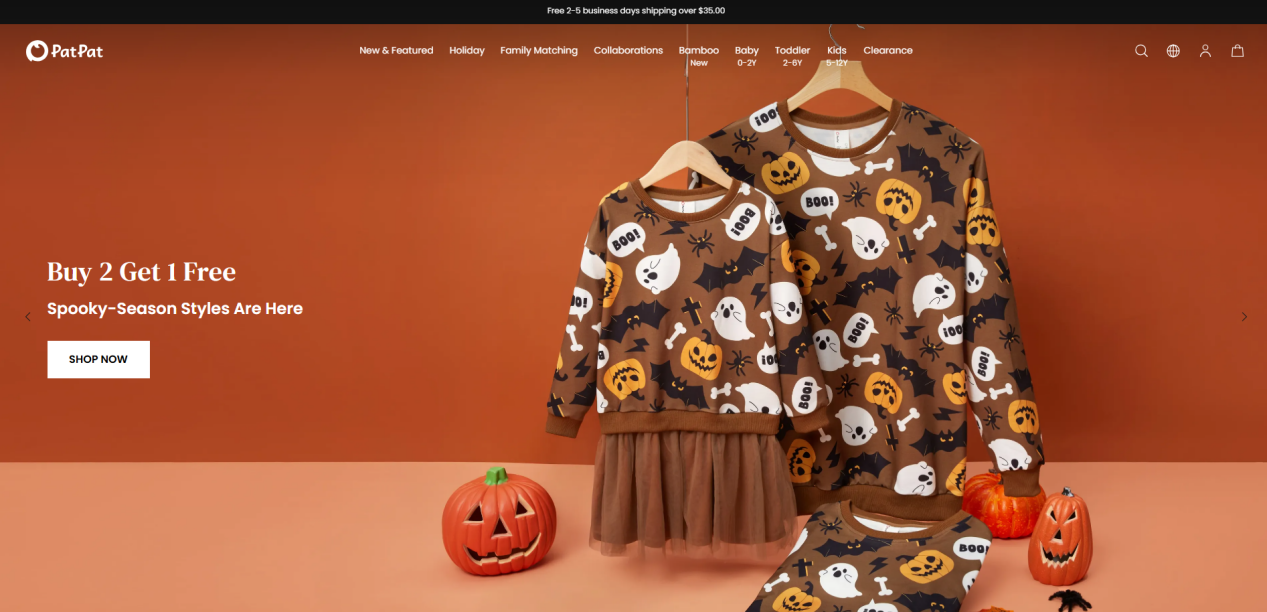
Image source: PatPat
On the independent website, the brand divides sections according to holidays, gender, age, category, and popular IP collaborations, making it easy for users to quickly find the clothes they want to buy.
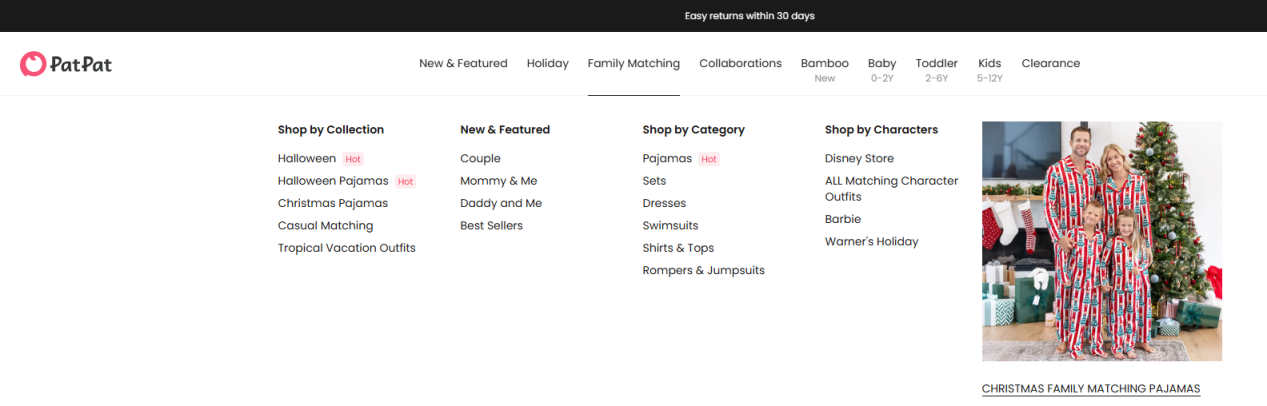
Image source: PatPat
The independent website also has a special discount section, catering to the preference of European and American consumers for discounts, which greatly helps to promote conversions.
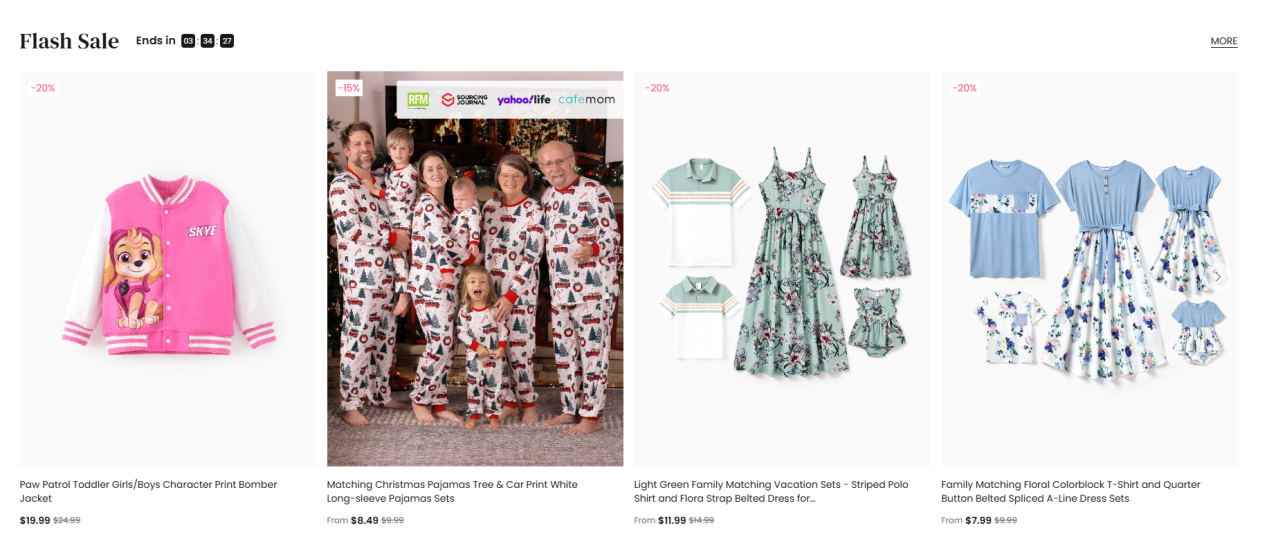
Image source: PatPat
In addition, PatPat brand has also created a "Fan Journey" section on the site, where users can browse the brand's blog to gain valuable insights, tips, and inspiration on maternity and baby fashion, and keep up with the latest trends.
This makes the website not just a place for transactions, but also a content platform for obtaining practical information and brand stories. This lightweight community operation can enhance user stickiness and retention, which greatly helps promote the brand's long-term and stable sales.
From this, we can see that PatPat has done a good job in building and operating its independent website, which other domestic brands wishing to go overseas or already going overseas can learn from and apply.
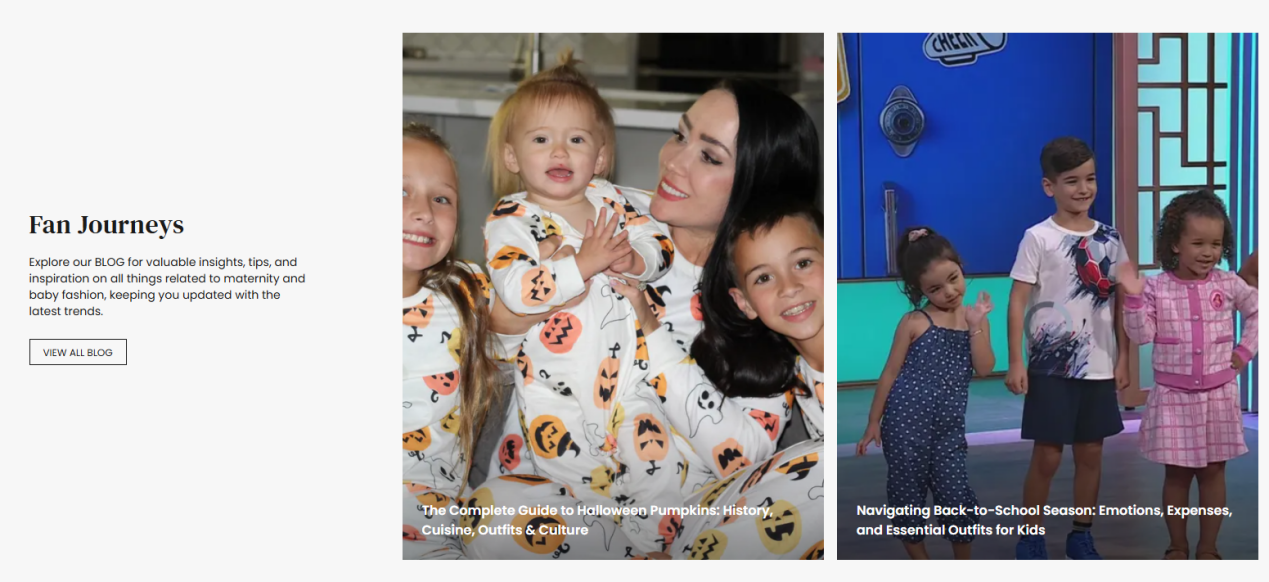
Image source: PatPat
Conclusion: Domestic Brands Going Overseas Can "Copy" the Homework
Through the case of PatPat, it is not difficult to see that going overseas as a brand does not necessarily require a huge budget or top resources. The key is whether you can accurately identify market gaps, efficiently integrate the supply chain, and truly understand the consumption psychology of overseas users.
At present, there are still many niche segments in overseas markets that have not been fully developed. Differences in consumption habits in different regions and the growth potential of emerging markets all provide broad expansion space.
For domestic brands intending to market overseas, it is better to seize the opportunity now, start with a small entry point, and gradually expand the boundaries of the brand's overseas presence, so as to find their own place in the global market.