2499
2499With Christmas approaching,the Tuke US platform is experiencing a surge in holiday shopping.
A purple anime model set priced at only $11.97 sold nearly 50,000 units in just 7 days, generating sales of about $580,000 and topping the Tuke US toy category GMV chart.
Meanwhile, a Christmas limited edition skincare gift set closely followed with sales of 48,000 units.
The emergence of these hot-selling products not only demonstrates the strong selling power of Tuke Shop, but also reveals a new trend in the US Christmas consumer market—cost-effectiveness, emotional value, and social sharingare becomingthe key factors in Gen Z's consumption decisions.
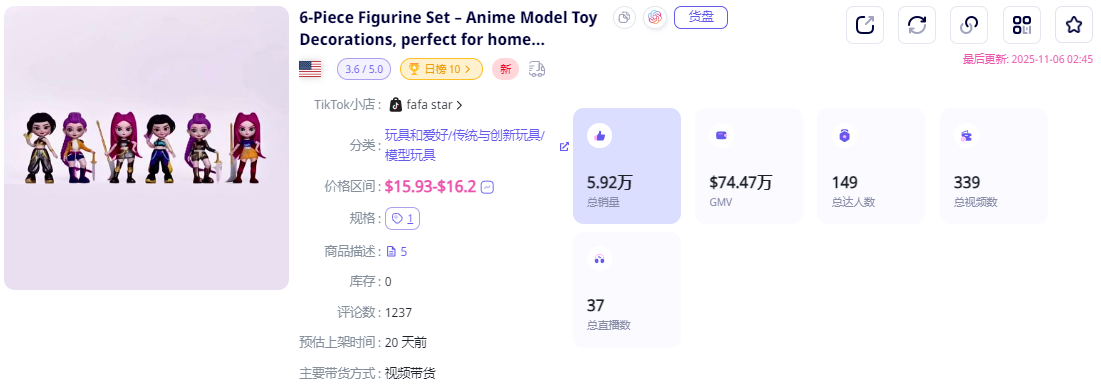
Image source:echotik
In the United States, Christmas gift-giving is a sweet burden.
On average, people need to prepare 15 to 20 gifts, about 40% of which are small items for stuffing Christmas stockings, with a budget between $10-20.
This year,a purple anime model set from the US local store fafa star (@jingjingjung6) became the star product during the Christmas pre-sale period.
This 6-piece model set, priced at $11.97, costs less than $2 per piece. Its cost-effectiveness far exceeds similar toys in offline stores, which often cost more than $20, making gift-giving stress-free.

Image source:echotik
If it were just cheap, it would not be enough to make it a phenomenal hit. The cleverness of its design lies in accurately hittingGen Z's aesthetics and emotional needs.
This model uses a dreamy purple tone and Japanese anime style, with character designs covering warriors and magical girls. In the eyes of Gen Z, this is no longer just a simple toy, but an "emotional accessory."
The emotional triggers of Tuke content are strikingly similar to Black Friday shopping—scarcity, urgency, entertainment, and social identity. These elements are now seamlessly integrated into users' carefully curated feeds through precise algorithmic delivery.
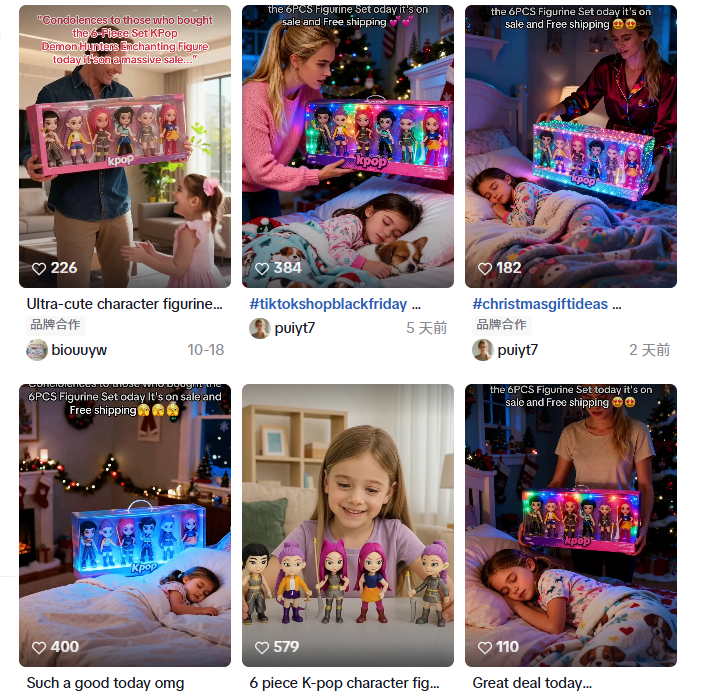
Image source:Tuke
The same logic for hot-selling products also applies to other categories. A Christmas limited edition skincare gift set, relying on"holiday packaging" and "practical self-love" as its two trump cards, also sold51,200units on Tuke US.
The latest report from the National Retail Federation (NRF) reveals a significant trend: beauty and skincare products have historically risen to become one of the top five popular categories for holiday gifts.
In the current economic environment, this change highlights that consumers' gift-giving philosophy is shifting to a smarter balance—they pursue practical, rational high cost-effectiveness, while also longing to bring a tangible sense of emotional pleasure to friends, family, or themselves.
Whether it's a small toy that brings a smile or skincare that nourishes body and mind, they all point to a core: maximizing emotional satisfaction within budget.
The popularity path of this model clearly outlines the formula for Tuke viral products: precise pricing + emotional design + viral content = instant conversion.
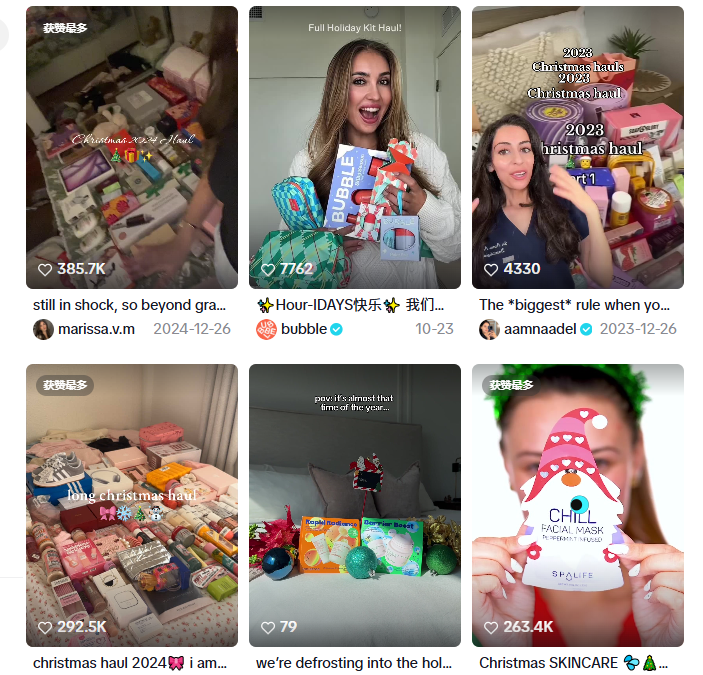
Image source:Tuke
Now,Tuke's rise is changing the holiday shopping landscape.
In 2025, Tuke Shop US sales achieved a year-on-year growth of 120%, proving its huge potential and explosive power in the US market.
Joint research by the platform and GlobalData provides strong evidence: 83% of users said they discovered new products on Tuke Shop, and 70% of users got to know new brands through it.
Live shopping plays a key role in this. In 2024 alone, in the US, the total live streaming time by brands and influencers exceeded 8 million hours, and 76% of viewers placed orders directly during the live broadcast.
For sellers,Tuke is not only a stage for brands to tell stories and amplify product advantages, but also a powerful springboard for businesses.

Image source: Internet
Tuke Shop is reshaping the US holiday shopping landscape. From the single node of Black Friday to today's season-long content e-commerce, consumers no longer need to wait for annual promotions—they can discover "irresistible" products in their feeds every day.
As holiday shopping shifts from planned behavior to emotionally triggered consumption, successful companies will be those that skillfully blend content, context, and emotion to create surprises between scrolling screens.