 3029
3029This summer seems to have arrived especially early.
The alarm for Super El Niño has already sounded, and meteorological agencies in multiple countries predict that this round of El Niño will run through 2026 to 2027, with the probability of extreme high temperatures rising significantly.
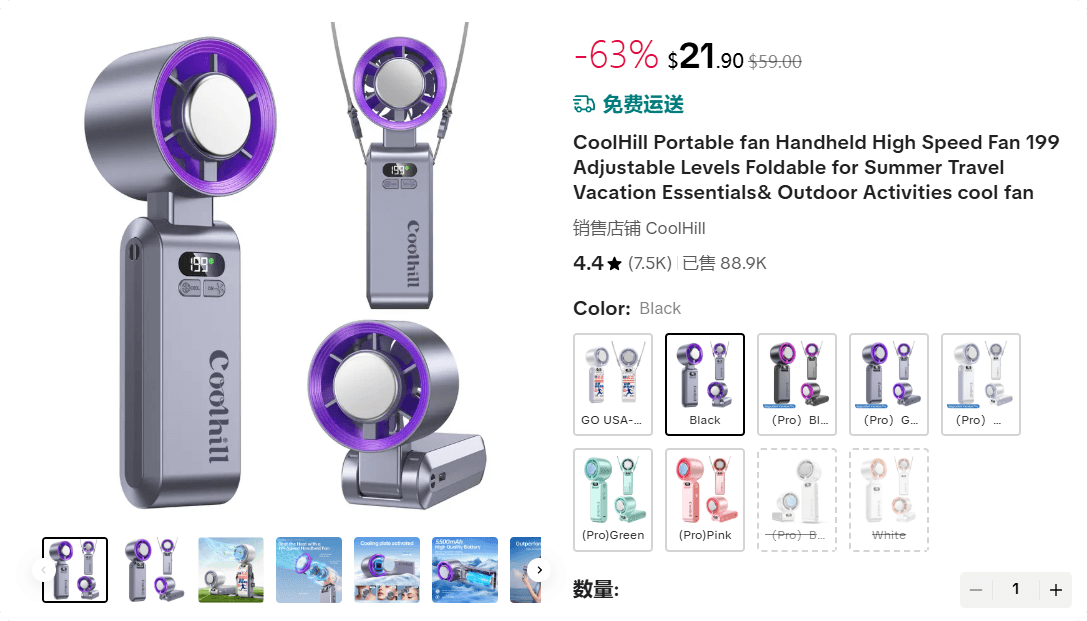
Against this backdrop, a portable cooling fan launched by a seller from Shenzhen, China—CoolHill—has become a striking dark horse in the US region of TikTok.
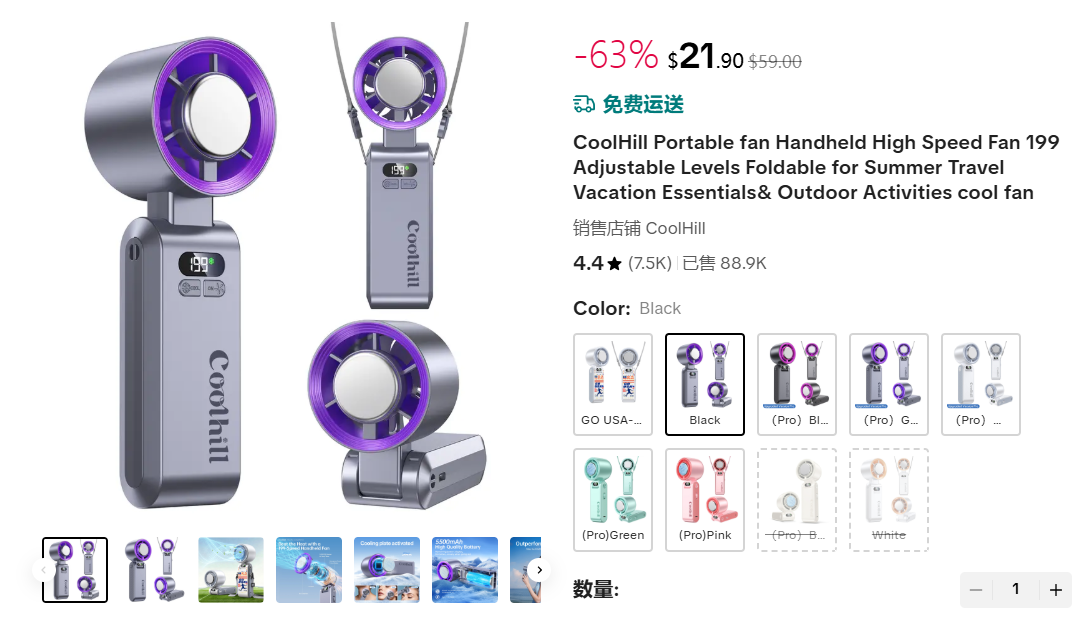
Image source:TikTok Shop
According to platform data, a handheld cooling fan under the CoolHill brand sold 19,000 units in the past 28 days, with sales reaching $406,300 (about RMB 2.76 million), strongly ranking as the TOP2 weekly sales in the home appliance category in TikTok US region.
In a track like fans, where competition has long been fierce, achieving such a report card is somewhat unexpected.

Image source:fastmoss
Let's briefly get to know this brand
CoolHill is essentially a cross-border native brand incubated from the Shenzhen supply chain system, backed by the small home appliance industry chain in the Pearl River Delta, using the “micro-innovation + content-driven” approach to directly build its brand on TikTok Shop.
The core of the product that made it explode is just one thing: it doesn’t just blow air, it can actually cool.
The problem with traditional handheld fans in hot weather is well-known: when the ambient temperature is 35℃+, the wind from the fan is basically “accelerated hot air,” the more you blow, the stuffier it gets.
CoolHill’s solution is to pack a set of TEC semiconductor cooling chips (commonly known as Peltier cooling modules) + high-speed brushless motor turbocharging inside, so the outlet temperature actually drops.
And its price is only21dollars,which happens to hit the golden range for small impulse purchases by users on TikTok.
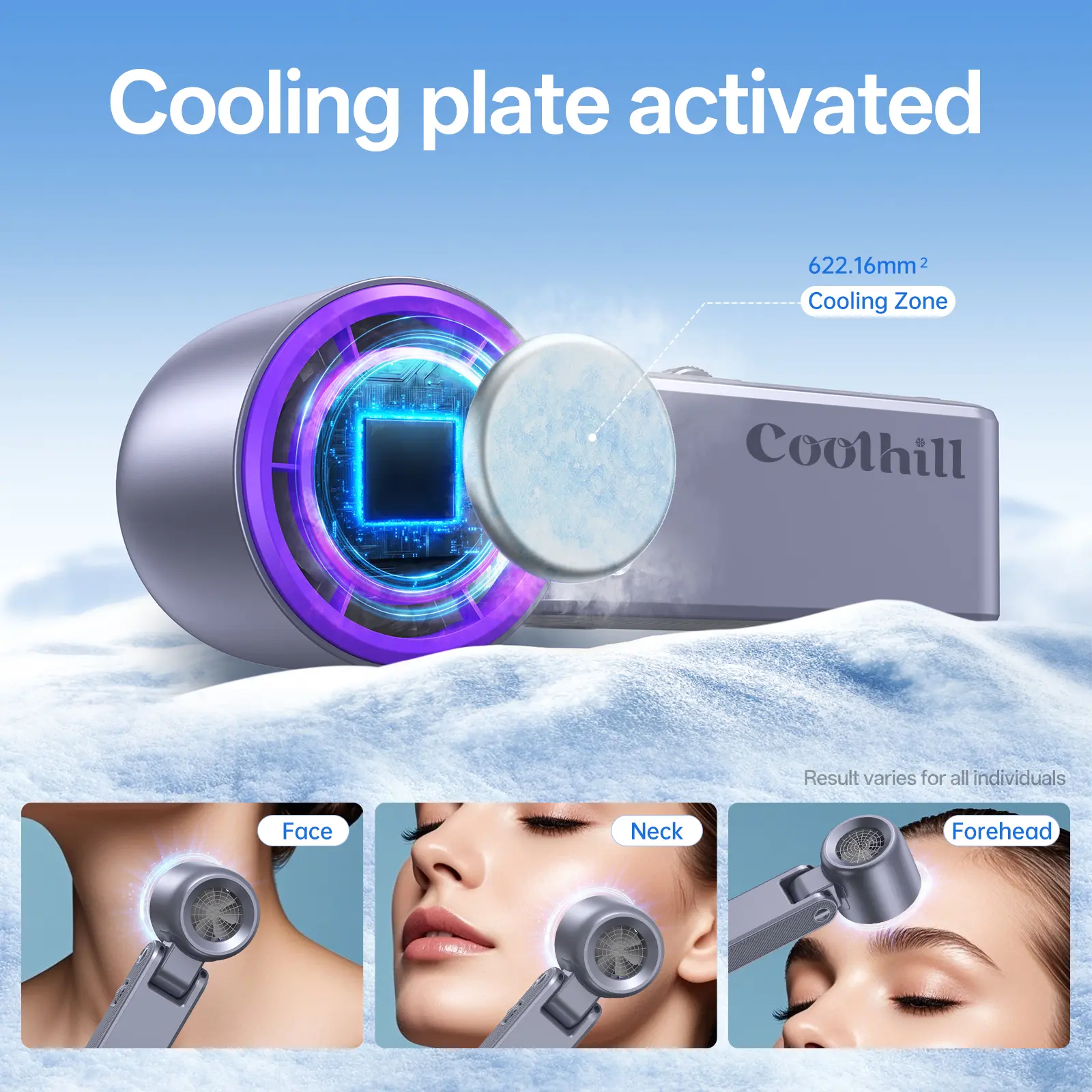
Image source:TikTok Shop
Why now? What industry trends are helping it?
Looking beyond a single product, portable cooling/cooling small appliances are turning from a “nice-to-have” to a quasi-essential category in the North American market, and the forces supporting the growth of such products are accelerating.
The US handheld fan market size reached $129.1 million in 2024, and China, as the global core consumption and production base, is expected to reach $131.7 million by 2030, with a compound annual growth rate of about 8.8%.
In March 2026, the western US saw extreme high temperatures breaking 70-year records, with Arizona’s temperature surpassing 43.3℃. Such abnormal heat activated consumer demand for portable cooling products ahead of schedule.
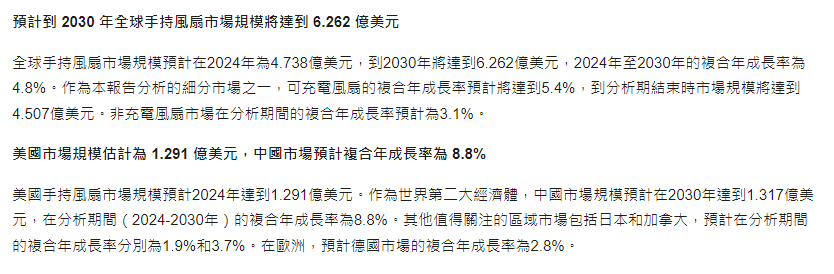
Image source:Gii
Structural changes on the demand side are also happening simultaneously. The global personal portable fan market is valued at about $620 million in 2026, expected to grow to $1.32 billion by 2035, with a compound annual growth rate of 8.1%.
In the US, about 64% of households own at least one portable fan, and the peak season from May to August contributes nearly 70% of annual sales. Consumer demand for low noise (below 40dB) and long battery life is increasingly prominent, which coincides with CoolHill’s technical direction of semiconductor silent cooling.
In other words, the market itself is expanding, and the normalization of high temperatures and the rise of the outdoor economy further broaden the demand scenarios.What CoolHill needs to do is let the right people see the right product at the right time, which is exactly what TikTok excels at.
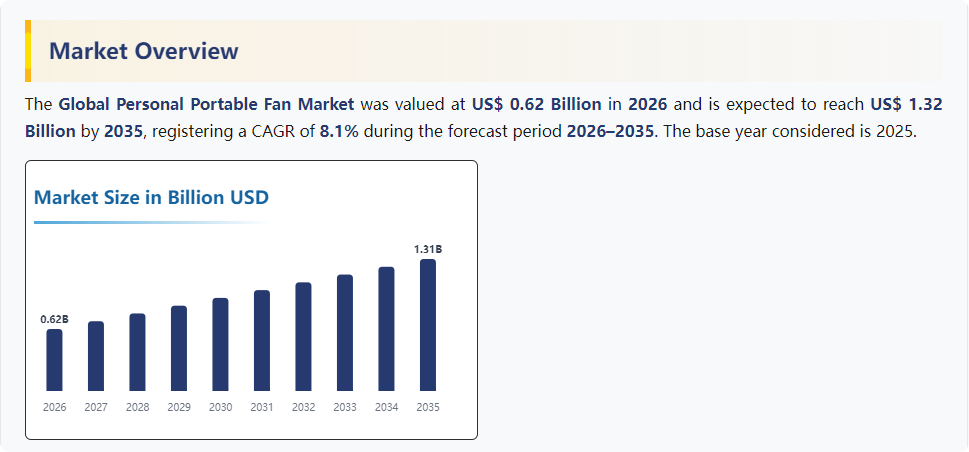
Image source:econ market research
The self-cultivation of a big seller
No matter how good the product is, on TikTok you have to play by TikTok’s rules.
For fan products, users care about two things: is the wind strong, is it cool. If you make these two points clear, more than half the conversion is done. But the problem is, text and static images hardly convey a sense of coolness.
To address this, CoolHill’s approach is to make “cool” visible.The video released by the brand on March 5 is a great example; it has received over 4.3 million views so far, driving sales of $75,300.
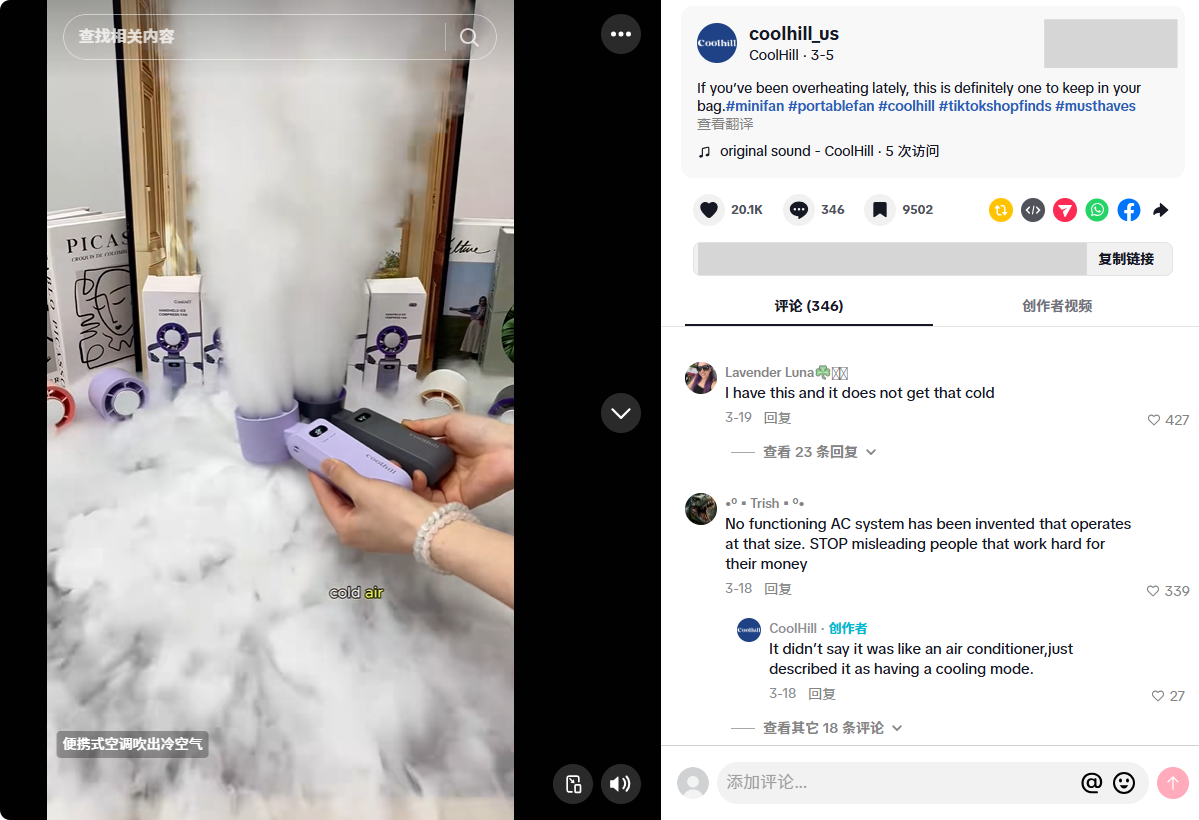
Image source:TikTok
Next, let’s break down this viral video:
This video can be divided into a three-part “scene + demand + product” content, with the “scene” part being especially important.
In the first scene, the ice mist effect created by dry ice not only demonstrates the fan’s powerful wind, but also maximizes visual stimulation and greatly attracts user attention.
As shown below, this part only takes about 4 seconds, but those few seconds play the biggest role. That’s because portable fans are low-ticket, highly seasonal, and easy for impulse purchases, and platforms like TikTok are especially suited for grabbing attention and driving interaction in a short time. That’s why we always say short videos must capture users in the first few seconds.
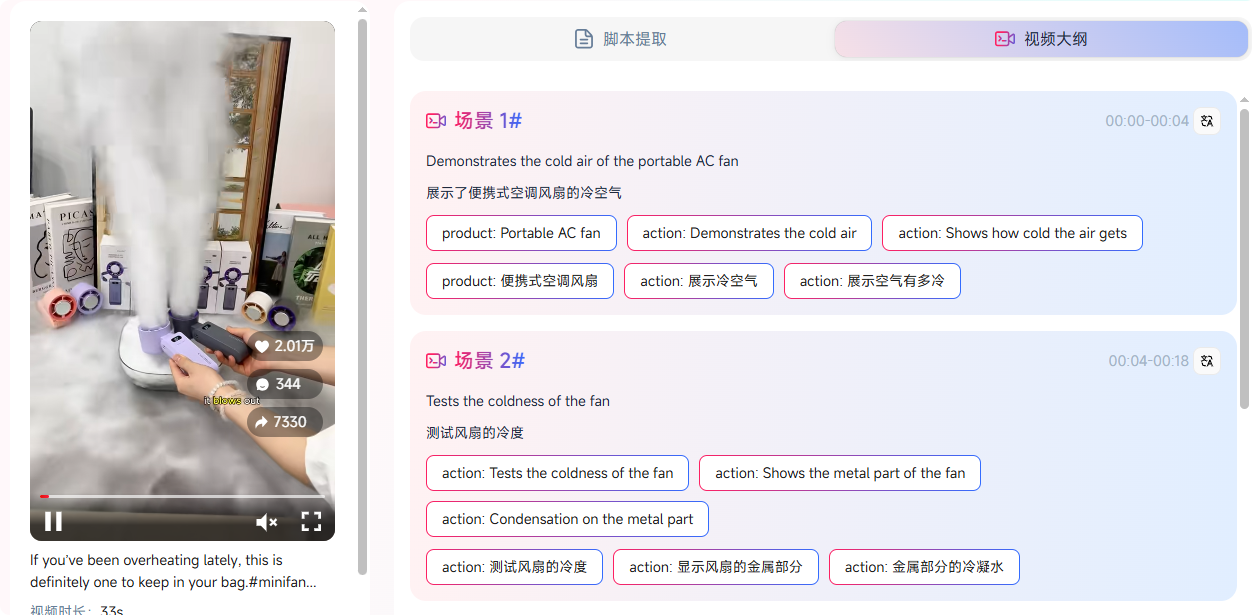
Image source:fastmoss
Similar content logic has been repeatedly validated in CoolHill’s brand-owned account. Since its launch, the account has received 19.1 million views, sales of $60,100 in the past 28 days, and cumulative sales of $291,900.
For a non-leading Tuke brand, this result in TikTok US region’s competitive environment is already quite impressive.
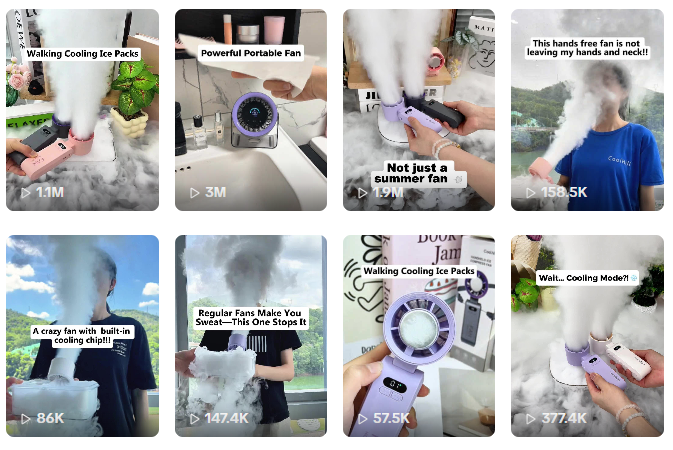
Image source:TikTok

Image source:fastmoss
However, the content of the brand’s own account is limited by brand tone and style, so the scope for innovation is limited. Content from influencers is much more flexible, without so many constraints.
In CoolHill’s influencer sharing, the most active content form is comparative:
“Ordinary fan vs. CoolHill cooling fan” blowing thermometer/blowing mist/blowing back of hand AB comparison.
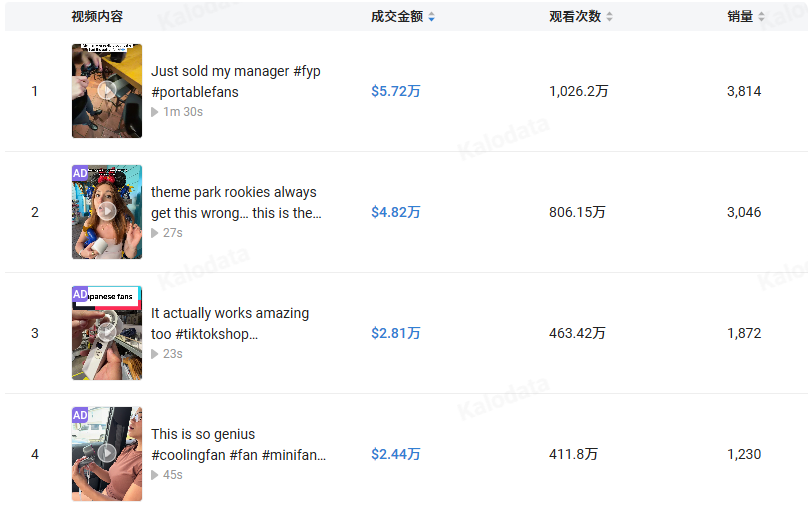
Image source:kalodata
TikTokinfluencer@movie00850is a great example. In the video, he compares convenience, wind power, and battery life, highlighting the advantages of CoolHill fans.
This comparison method has a low threshold but is highly persuasive. For ordinary viewers, there’s no need to understand semiconductor technology; “this is much cooler than that” is the most direct reason to buy.
This video was released on May 10 and has now received over 10.5 million views—the views are the best answer.

Image source:TikTok
Summary
Back to the matter of domestic enterprises going Tuke. Many times, Tuke companies easily fall into an inertia: once the product is good enough, marketing is just about spending money on ads.
But CoolHill’s case suggests another path—at a time when global competition is still fierce, relying solely on product strength is no longer enough to build a deep moat. The real barrier may be shifting from the front-end R&D to the back-end “content understanding” and “localized expression.”
In 2026, TikTok Shop’s global GMV reached $27.453 billion, up 95% year-on-year.Among them,the US site ranked first globally with $6.985 billion. The platform’s incremental dividend is still being released, and categories like home appliances and 3C with clear functional attributes are best suited for “effect demonstration” conversions via short videos.
For Chinese companies wanting to go Tuke, this window won’t stay open forever. The core question is: what kind of content are you ready to use to connect with your target users?