 1723
1723
Lighting was once merely a functional existence: illumination, brightness, lifespan, price, and nothing more.
But today, it is becoming a spatial expression, an emotional medium, and even part of social content and lifestyle.
according toGrand View Research data shows that the global smart home market size has reached $162.8 billion in 2025; it is expected to climb to $887.4 billion by 2033.
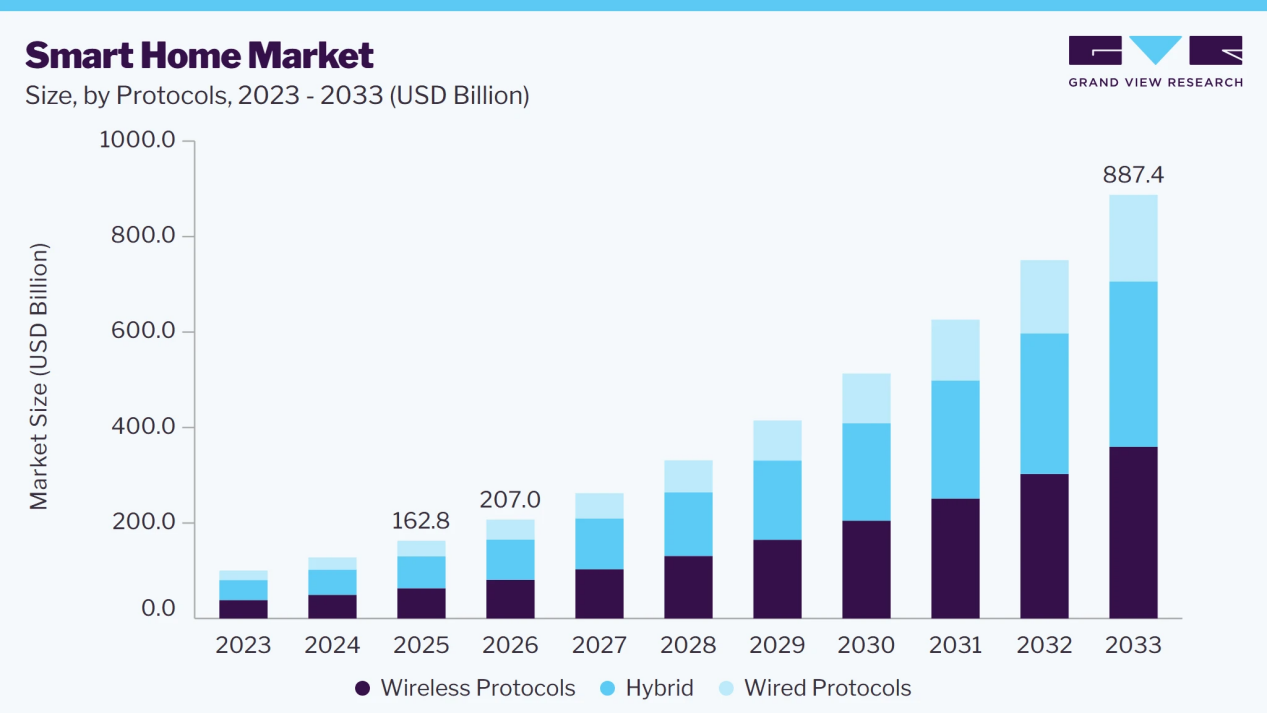
Image source:Grand View Research
And in this wave of smart home, there is a brand from oneStarting with "the world's most energy-efficient light bulb," it took over a decade to grow into an iconic player in the smart lighting field — that is Nanoleaf.
Today, we will review its path to breakthrough and victory in the niche segment.
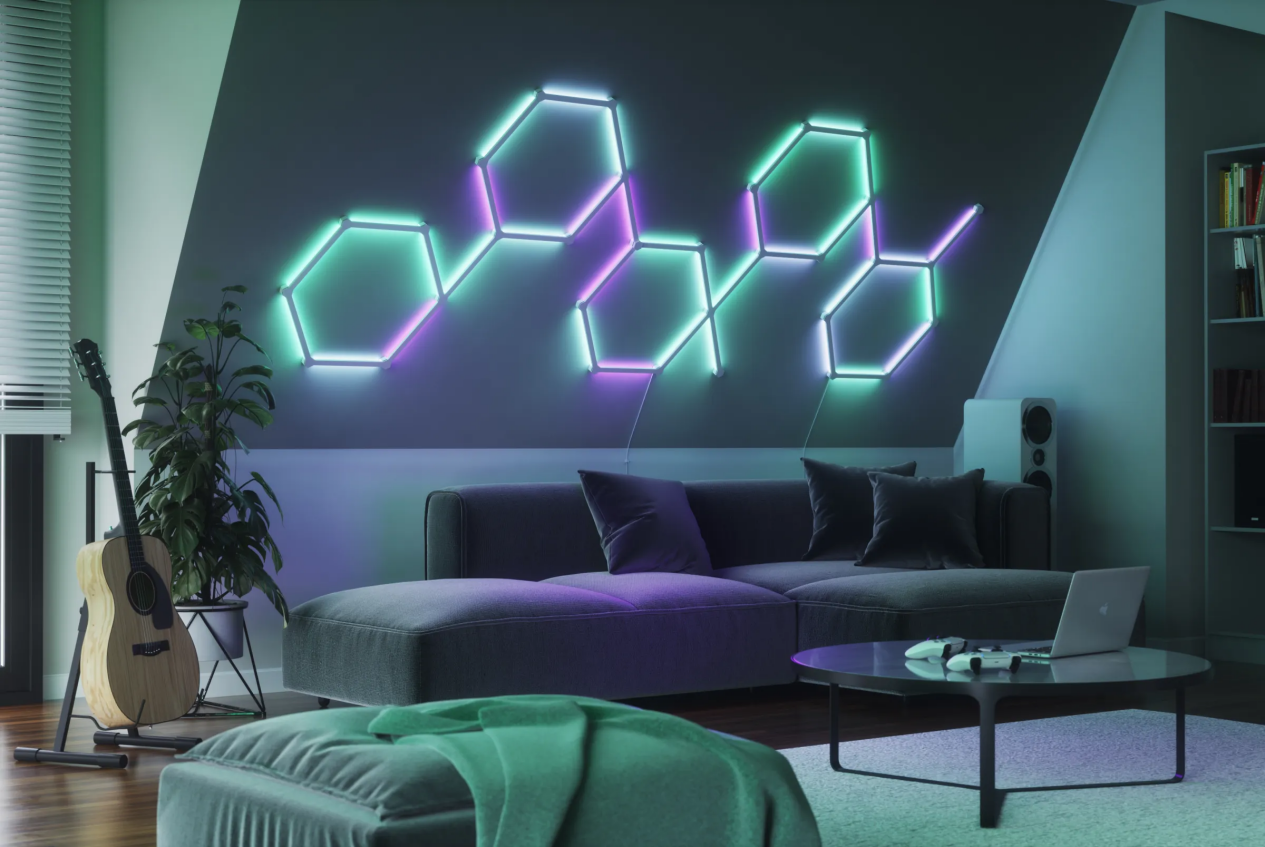
Image source:Google
A rags-to-riches story that began with a light bulb
Nanoleaf's story began in an engineering lab at the University of Toronto.
It is reported that the three founders met through a seemingly unrelated project: the development of solar racing cars.
During that period, the challenge they faced every day was how to extract every milliwatt of power under conditions of extreme energy scarcity. This forced energy-efficiency mindset later becameNanoleaf's fundamental product logic.
In 2012, they noticed that while LED lighting was already becoming widespread, the design of bulbs on the market was basically imitating the shape of traditional incandescent lamps, and the technical efficiency was far from reaching the theoretical limit. They thought, since there are better technical solutions, why still make things that look similar?
Thus, a unique dodecahedron origami structureThe LED light bulb—Nanoleaf One—has arrived. It is described as "the world's most energy-efficient light bulb" and was launched as a crowdfunding campaign on Kickstarter in January 2013. Ultimately, this campaign, which initially aimed for a goal of just $20,000, raised over $270,000.
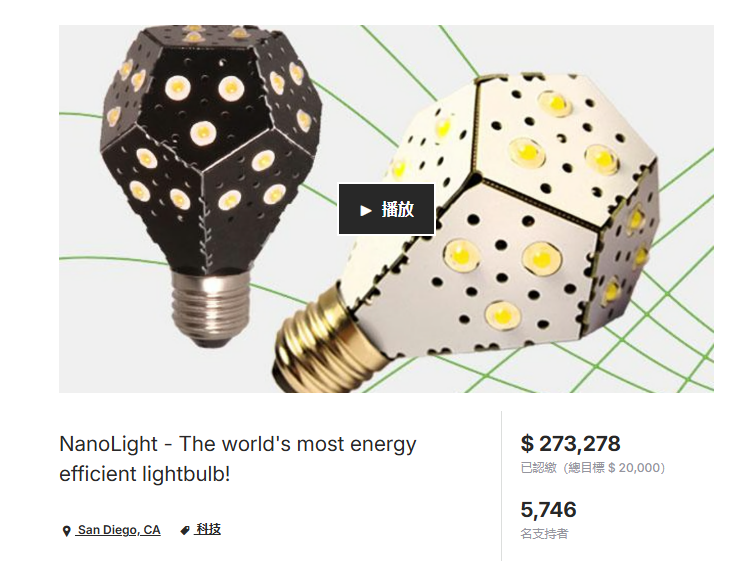
Image source:Kickstarter
Review the brand startup phaseNanoleaf did two things right.
First, a choice in positioning; from the very beginning, it never classified itself as.Instead of being categorized as a "lighting company," it leans toward a "tech brand," emphasizing environmental protection, design, and a sense of the future, rather than simply stacking parameters. Second, its community gene awakened early—it had an internet community gene from the very beginning. On Reddit and YouTube, the earliest batch of users spontaneously discussed products and uploaded unboxing videos before the brand actively promoted anything. Organic traffic took off on its own.
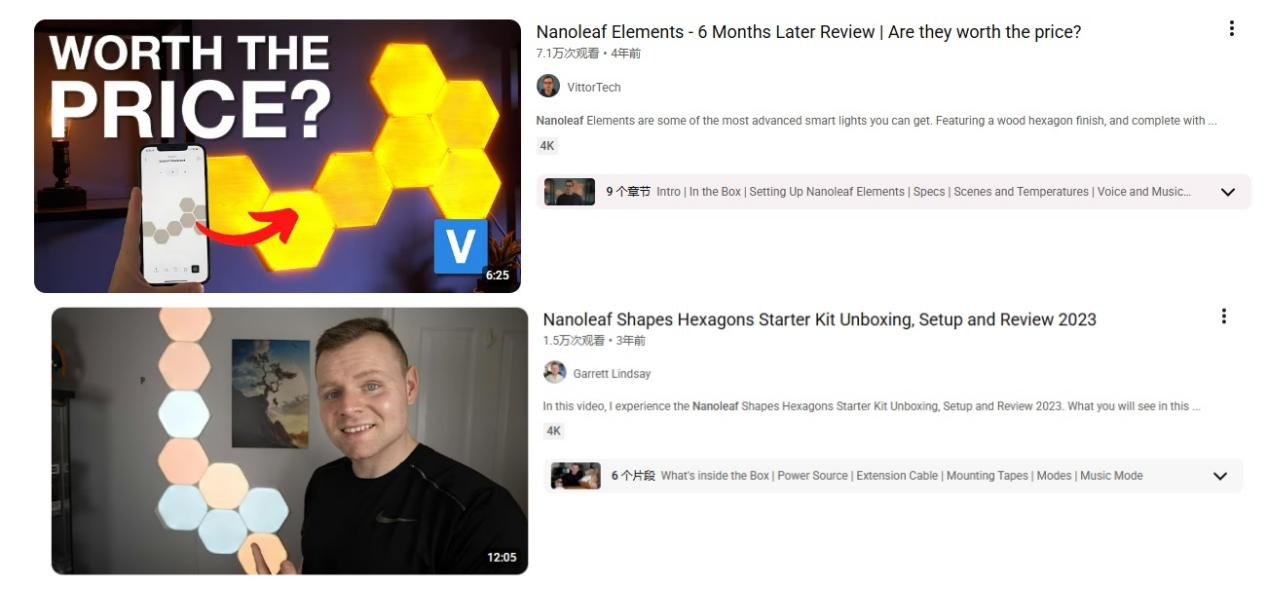
Image source:YouTube
As word-of-mouth grew, capital came knocking. Through the introduction of the University of Toronto’s president, Li Ka-shing’s Horizons Ventures and a veteran Silicon Valley venture capital firm...Kleiner Perkins successively entered the scene. After the funding was secured, Nanoleaf's global footprint was quickly established: on the production sideplaced inthe core city of the global electronics supply chain— Shenzhen, China; the Toronto headquarters continues to handle design and software development; the two branches in Hong Kong and Paris cover the Asia-Pacific and European markets respectively.
Public data shows that as of2021, the brand's annual revenue exceeded $80 million, products were sold in over 100 countries, and it could be seen on the shelves of Apple Store and Best Buy.

Image source:Google
Traffic loop from independent site to social media
Nanoleaf's success in overseas markets is inseparable from its precise understanding of omni-channel sales. The brand is not limited to a single platform but has built a multi-dimensional network covering independent sites and multiple social media platforms.
In building the independent site,Nanoleaf's website design is modern and minimalist, with a white color scheme that highlights the product's smart feel and tech aesthetics. The page structure is clear, from product displays to scenario applications to user reviews, each step guides consumers along the path from curiosity to placing an order.
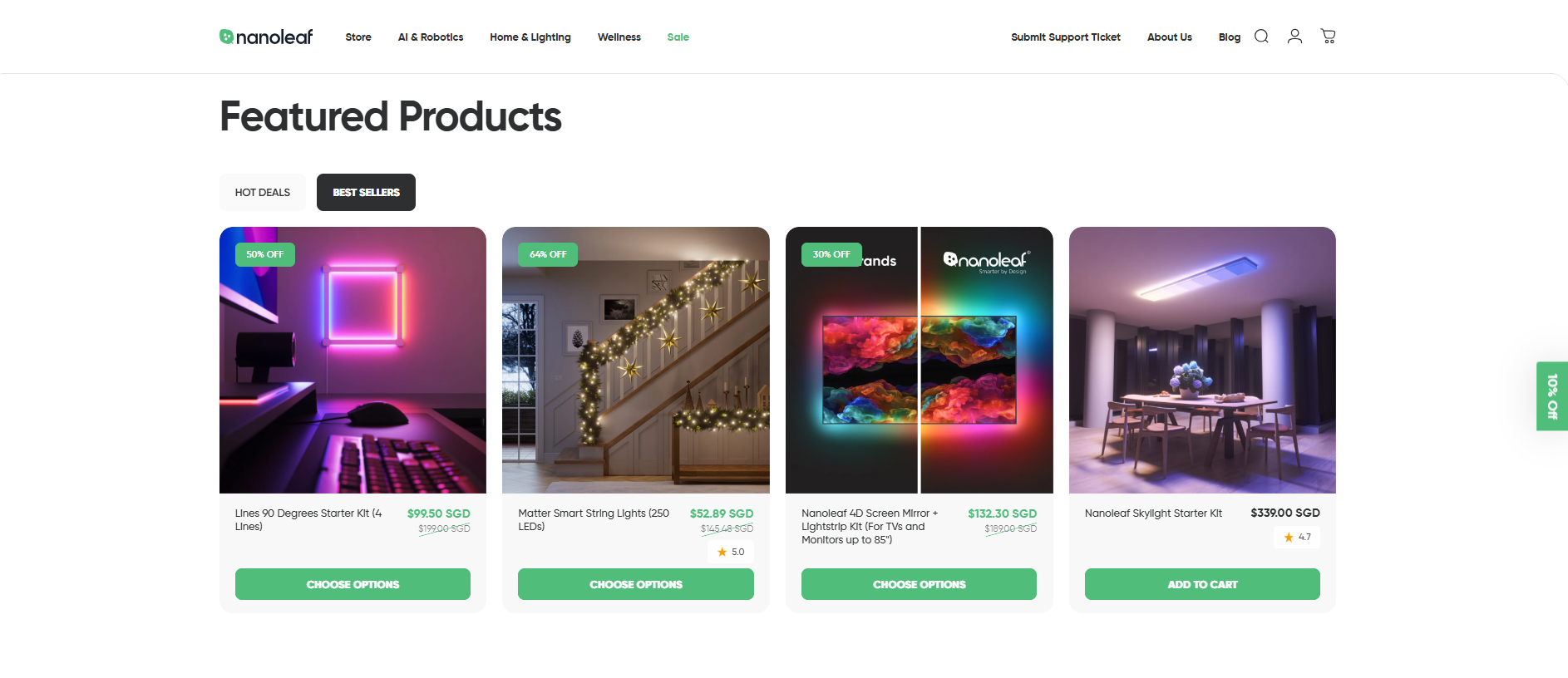
Image source:Nanoleaf
In terms of social media,Nanoleaf is mainly active on platforms such as Instagram, Facebook, Twitter, and YouTube. The brand publishes content that includes technical product introductions and usage tutorials, as well as a large amount of user-generated creative works and lifestyle sharing. Users spontaneously show off their bedrooms, gaming rooms, or living rooms decorated with Nanoleaf light panels. These real scenes are more convincing than any advertisement.
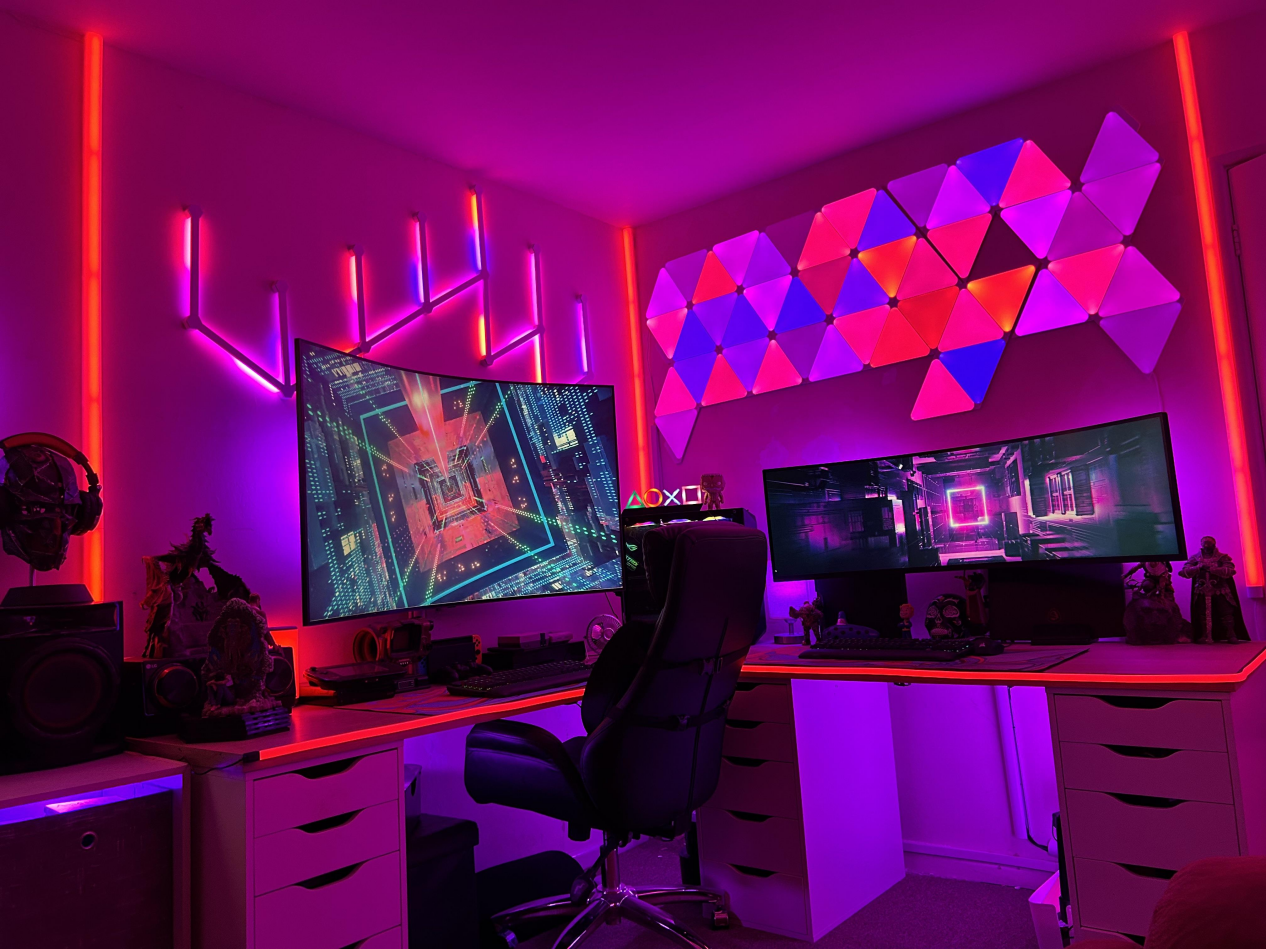
Image source:Google
LeveragingTikTok, turning lighting into a 'visual language'
On all socialmediaplatforms,TikTok is the direction Nanoleaf has focused its efforts on in recent years.
OnTikTok, Nanoleaf has set up its official main account @Nanoleaf, currently with a total of 67.5K followers and 176.5K cumulative likes. It also operates regional sub-accounts for Malaysia, Thailand, and others.

Image source:TikTok
Content strategy focus"Beauty economy" and "immersive experience", lighting is packaged as a shaper of spatial atmosphere, not just a lighting tool.
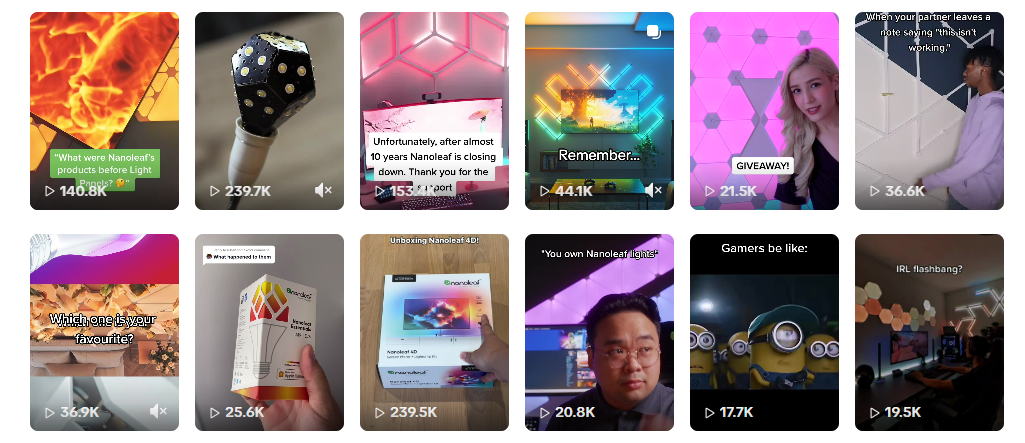
Image source:TikTok
withinfluencerscollaboration videoThe creative direction also follows the same logic.
With25.4K fans tech influencer @Brent the 5percentgamer shot a video showcasing his cyberpunk-style gaming room. The walls were paired with Nanoleaf smart ambient light panels and linear light strips, giving a full sci-fi vibe. The video received 1.1 million views and 66.2K likes.
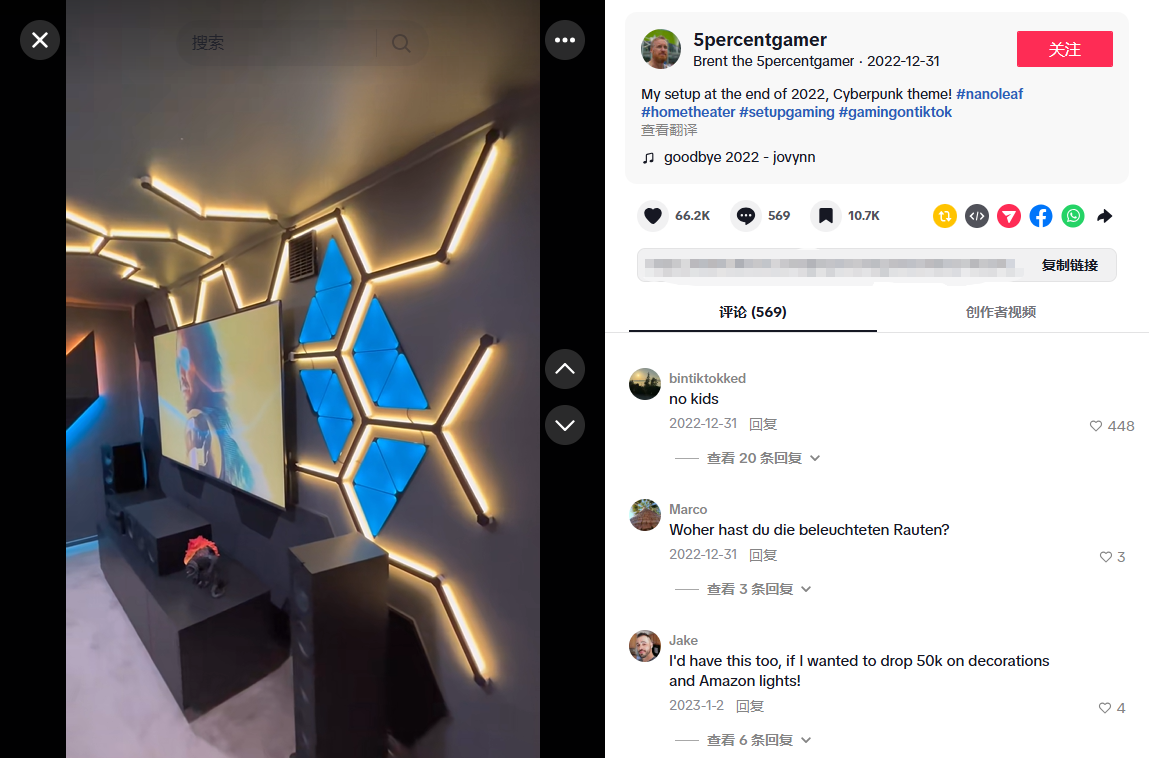
Image source:TikTok
Another influencer with34K fans influencer @Abdullah took a warm home route. He unboxed the Nanoleaf floor lamp and showed the cozy corner of his home bathed in warm lighting. The video got 1.2 million views and 114.4K likes.
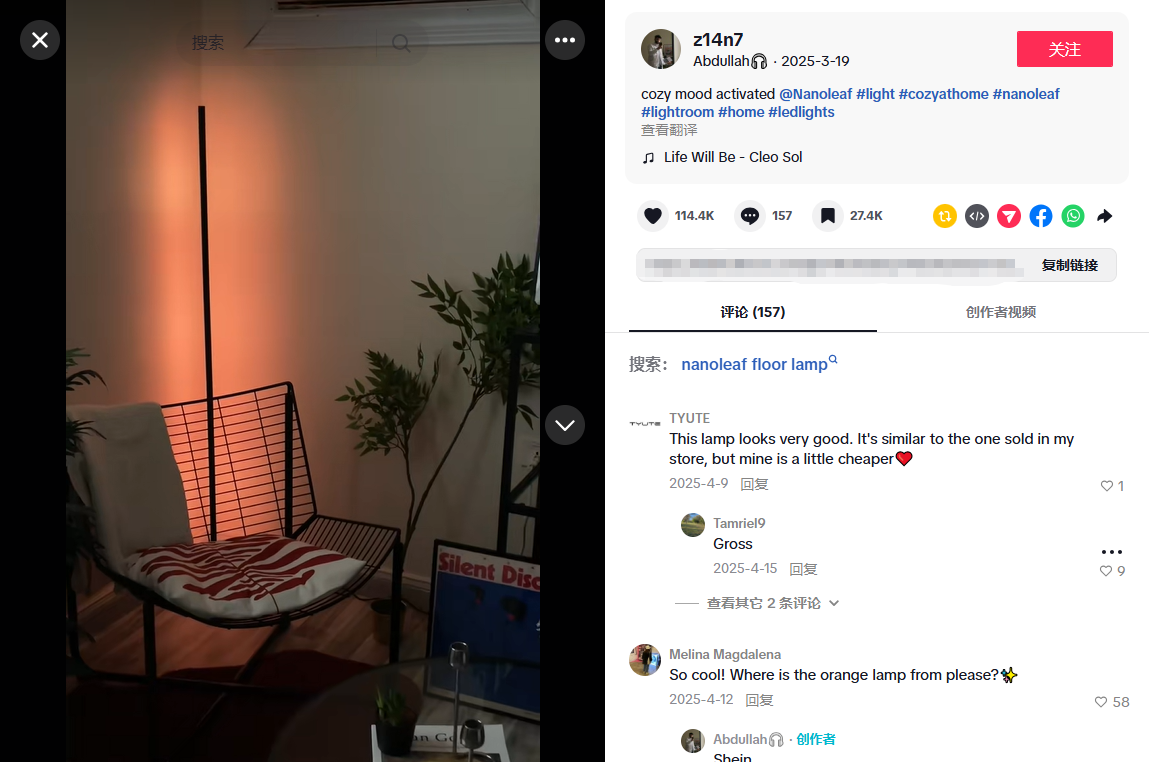
Image source:TikTok
What do these two videos have in common? No complex shooting techniques, no lengthy feature introductions, just putting the product in real life scenarios, lettingusersthemselvesexperience. InUnder TikTok's recommendation algorithm, this kind of content with strong visual impact and high completion rate is naturally easy to be amplified.
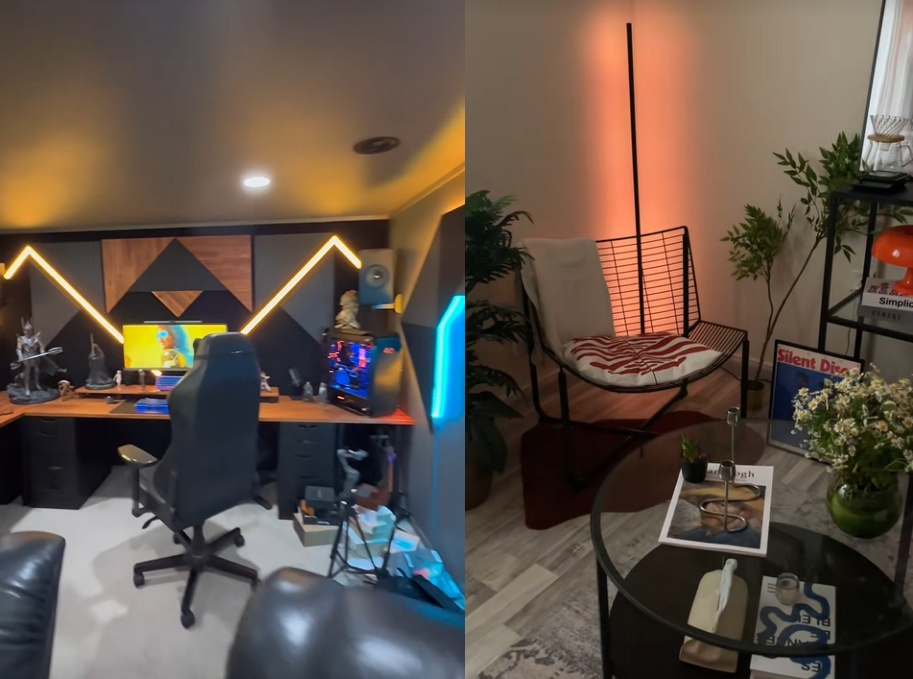
Image source:TikTok
From function to expression, the next opportunity for Chinese brands
In the past, brands competed on function and supply chain.
Now, more and more products are beginning to take onthe role of 'expression'. Who uses it, in what scenario, and what emotion it conveys often influence purchasing decisions more than specifications.
China does not lack high-quality supply chains and products; what is lacking is a renewed understanding of overseas user needs. Instead of competing on price within a single channel, it is better to clearly define the role your product plays in users' lives, and then use the right combination of channels to reach that context. This isthe insight provided by Nanoleaf, and also the most worthwhile thing to figure out for brands going global today.