 1347
1347If your product has extremely high visual contrast and can let users intuitively perceive 'change' within seconds, but you don't know how to run a complete closed loop from seeding to conversion on TikTok, you might as well look at Vacbird's approach.
This brand from Shenzhen achieved a transaction volume of $5.1988 million on TikTok US in the past year. In just the past 30 days, transaction volume increased by another $543,700.
Not only TikTok, Vacbird also sells on Amazon, Walmart, eBay, and its brand independent site (vacbird.com) to markets such as North America and Europe. Why can a brand that makes vacuum compression bags achieve such scale on TikTok?
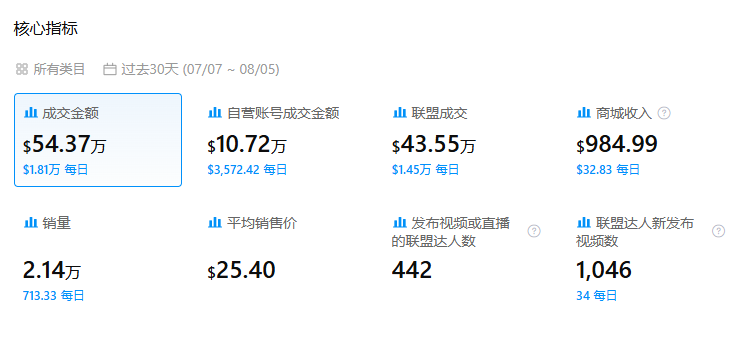
Image source: kalodata
Discover life pain points and create portable storage products
The operating entity behind Vacbird is Shenzhen Yuanfang Chuangxiang Technology Co., Ltd. In the early days of the brand, it did not choose the highly competitive large categories in the traditional home storage track, but instead focused on the vacuum compression storage niche.
In the past, when consumers used vacuum storage bags, they often had to rely on household vacuum cleaners to extract air, or use manual air pumps. Although this method can save space, it has obvious limitations: the devices are inconvenient to carry and the operation steps are complex. Especially in scenarios such as travel, camping, and business trips, it is difficult to meet the needs of consumers to organize their luggage at any time.
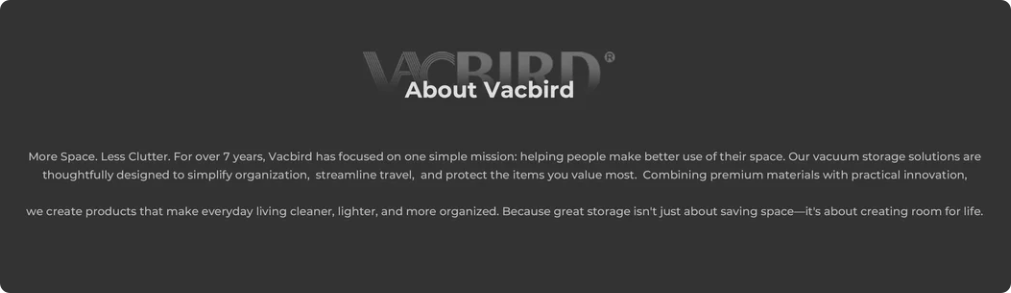
Image source: Vacbird
Vacbird saw this pain point precisely, combined traditional vacuum storage products with portable electric devices, and launched a compression storage solution paired with a wireless vacuum pump, allowing consumers to quickly compress clothes during travel.
Currently, the product page of Vacbird on TikTok Shop shows that its main promoted products include a travel compression bag set with a wireless pump, and it has received a large amount of consumer feedback.
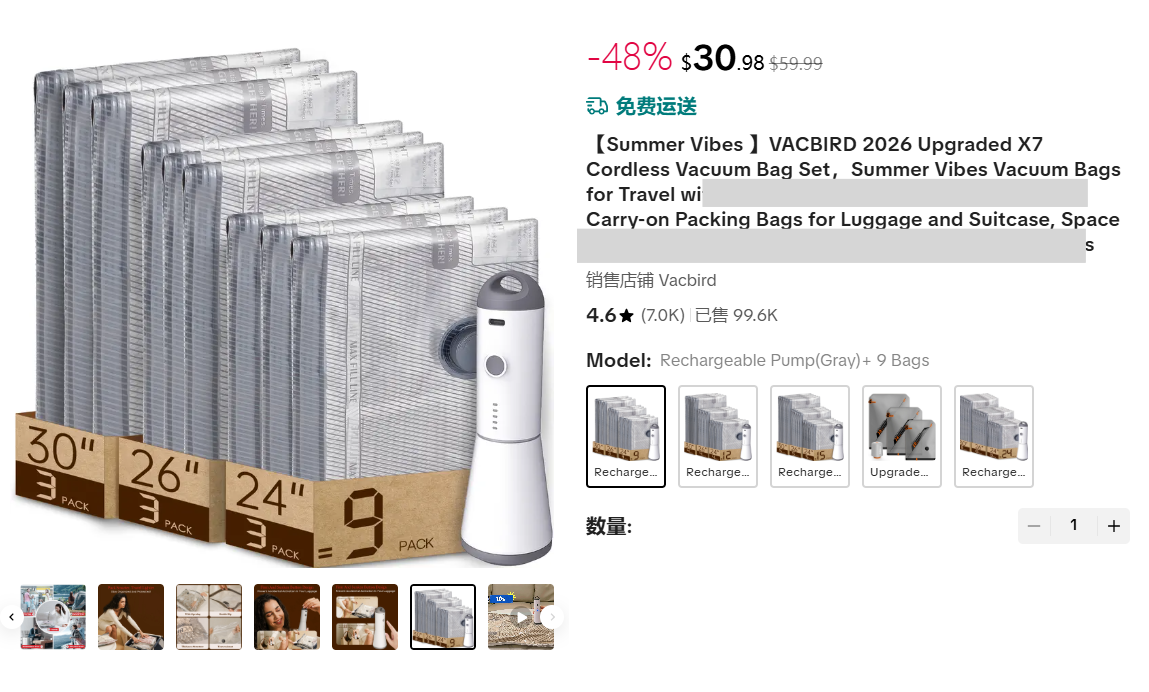
Image source: TikTok Shop
The rise of space economy brings new market opportunities for storage products
The fact that Vacbird has entered the vision of overseas consumers is not accidental, but closely related to global lifestyle changes.
In recent years, the shrinking of urban living space, the improvement of consumers' organization awareness, and the recovery of travel demand have all promoted the development of space management products.
From the vacuum packaging market, industry data shows that the global vacuum packaging market size will grow from $32.91 billion in 2025 to $56.88 billion in 2034, with a CAGR of 6.34% from 2026 to 2034. The market continues to expand, and demand covers scenarios such as home storage, travel organization, food preservation, and long-term storage of items.
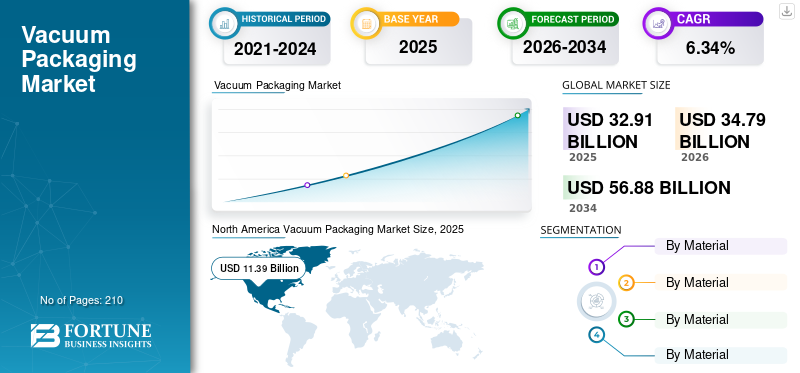
Image source: fortune business insights
At the same time, consumers' demand for storage products is also changing.
In the past, storage tools mainly served a 'storage' function, but today consumers pay more attention to efficiency and experience. For example, young consumers hope to improve the utilization of living space with simple tools; travel users hope to reduce the space occupied by luggage; camping and RV enthusiasts need lighter and more portable daily items suitable for mobile environments.
This has also led to a new upgrade direction for traditional storage products—from purely functional products to more intelligent, portable, and scenario-based ones.
Vacbird chose exactly the niche opportunity under this trend. Through product innovation of 'electrification + portability', it lowered the usage threshold of traditional vacuum storage products, allowing products originally oriented to family scenarios to enter the travel and outdoor markets.
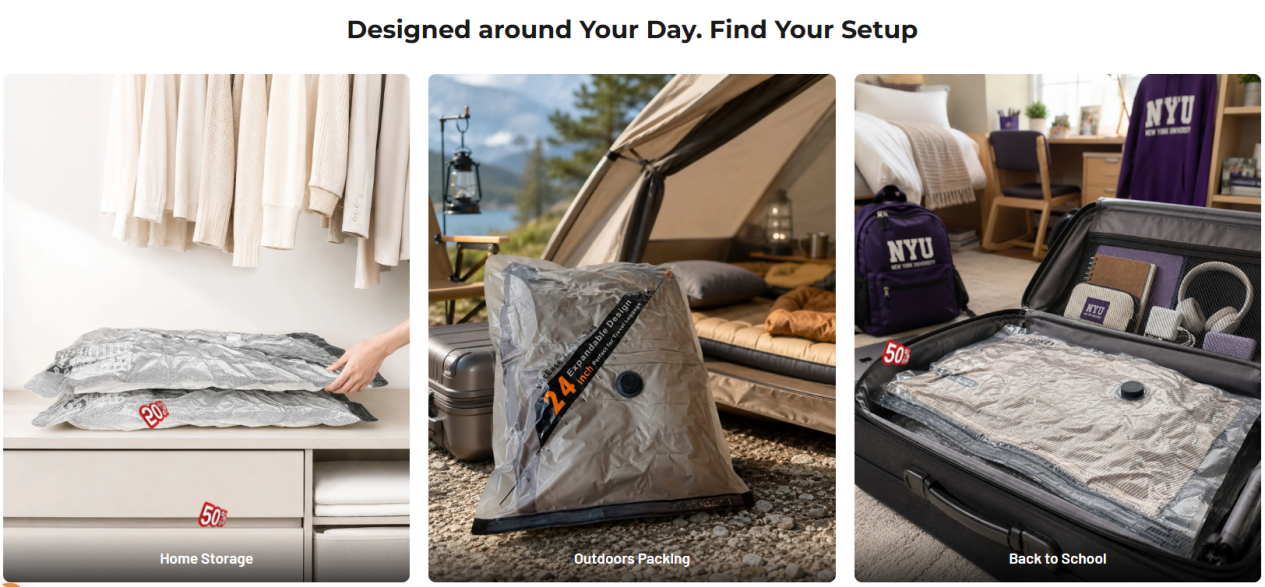
Image source: Vacbird
TikTok, an important growth gateway for brands going overseas
For Vacbird, TikTok is not only a sales channel, but also an important platform for the brand to show product value.
The biggest advantage of vacuum compression bags is that they are naturally suitable for short video expression.
Ordinary consumers may find it difficult to understand the value of “saving space” through images, but in short videos, only a few seconds can create a strong contrast.
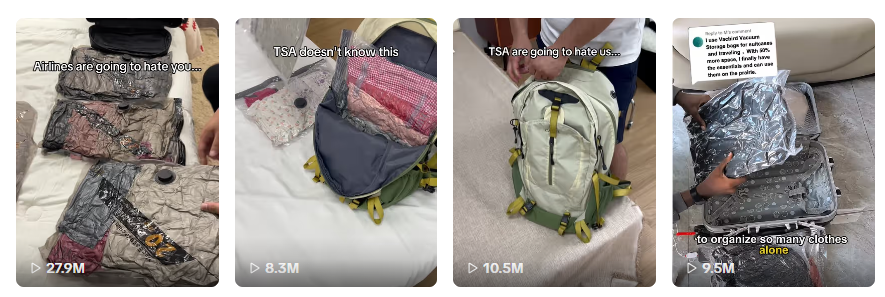
Image source: TikTok
For example, in a video posted by the brand's official account @vacbirdusa, the process of using a portable vacuum pump to compress storage bags was shown, quickly compressing clothes that originally occupied a large amount of space, intuitively presenting the product's space-saving effect.
The video has received 12,200,000 views. The strong before-and-after contrast and the simple, easy-to-understand operation process allow users to quickly understand the product's value.
This visual change aligns with TikTok's content dissemination logic. Compared with complex introductions, a simple before-and-after comparison can quickly make consumers understand the product's value.
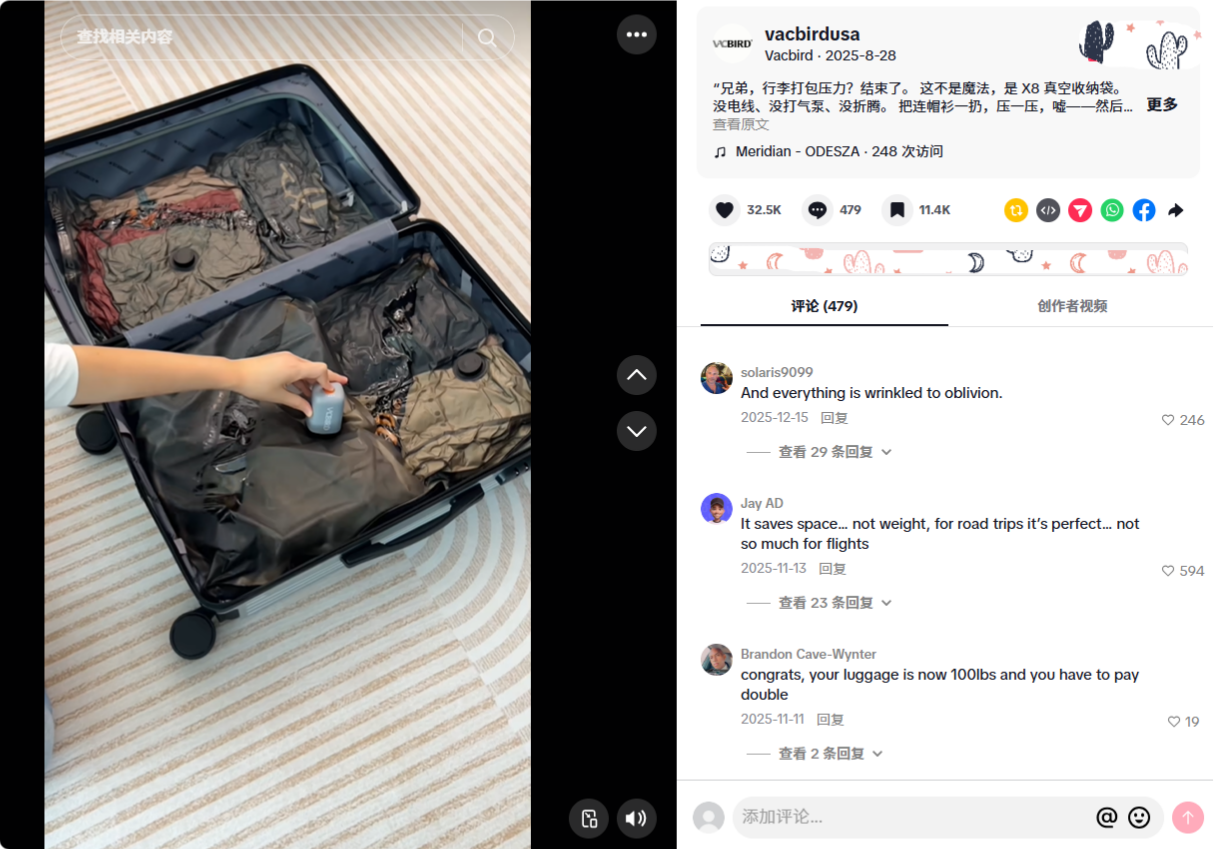
Image source: TikTok
Video source: TikTok account @vacbirdusa
In addition to showcasing the product's effects, Vacbird also carries out content marketing based on common life scenarios of overseas users.
For example, in travel scenarios, the brand creates content around topics such as “how to pack a week's clothes in one carry-on suitcase” and “travel packing tips,” naturally integrating the product into consumer needs.
In family scenarios, it uses themes like seasonal sorting, wardrobe makeovers, and home storage to attract users who care about lifestyle.
This content approach reduces the sense of advertising, allowing consumers to first develop interest and then complete the purchase decision.
At present, Vacbird's TikTok Shop store has accumulated a fairly large amount of content assets. Public data shows that the store has about 96,800 followers, has published more than 2,465 videos, and has achieved more than 240,000 product sales.
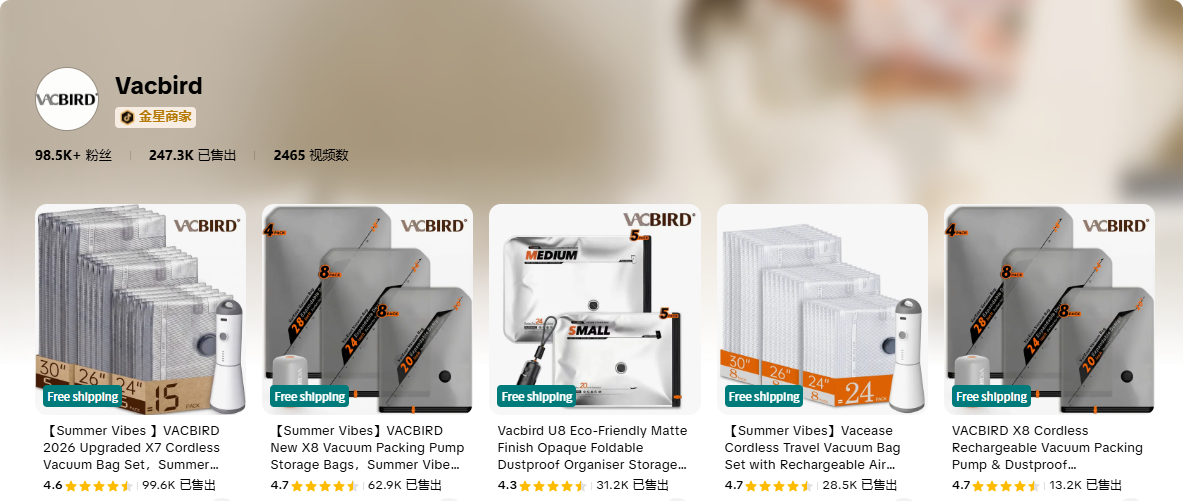
Image source: TikTok Shop
In addition to the brand's own content operations, Vacbird also uses the TikTok Shop affiliate marketing system to cooperate with different types of creators.
Compared with traditional advertising, the biggest advantage of influencer content is authenticity.
For storage and organization products, consumers care more about “whether it actually works after others use it.” Therefore, travel bloggers, lifestyle influencers, and home-organizing creators have all become important forces in brand promotion.
By covering different consumption scenarios with different types of creators, Vacbird is able to make its products reach more potential users.
This way of driving sales through content seeding is also an important feature of the TikTok Shop ecosystem in recent years. Brands no longer just place one-way advertisements, but instead allow products to be discovered in real life scenarios through the participation of a large number of creators.
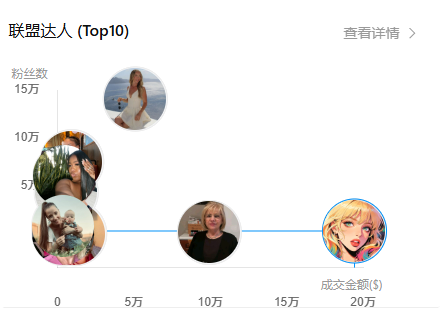
Image source: kalodata
TikTok creator @registerednursesydney is a good example. As a lifestyle UGC creator, her account content mainly revolves around daily sharing, travel packing, and recommended products on TikTok Shop.
Data shows that during the cooperation with Vacbird, this creator brought in a total of $159,000 in transaction value, and the videos received a total of 14,393,300 views, demonstrating strong content-driven sales ability.
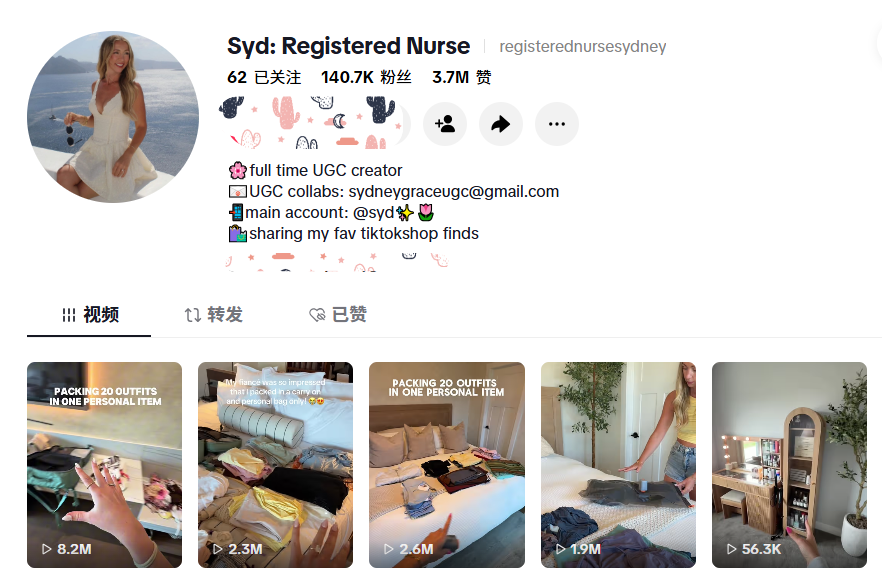
Image source: TikTok
Among them, a particularly outstanding collaboration video focused on the theme “how to pack 20 outfits in one suitcase,” showing the process of using Vacbird compression storage bags to organize travel clothes. The video received 8,200,000 views and brought in $84,800 in transaction value.
Through the high-frequency scenario of travel packing, @registerednursesydney intuitively presents the product's space-compression effect, making it easier for consumers to understand the practical value of Vacbird in solving the problem of “insufficient luggage space.”
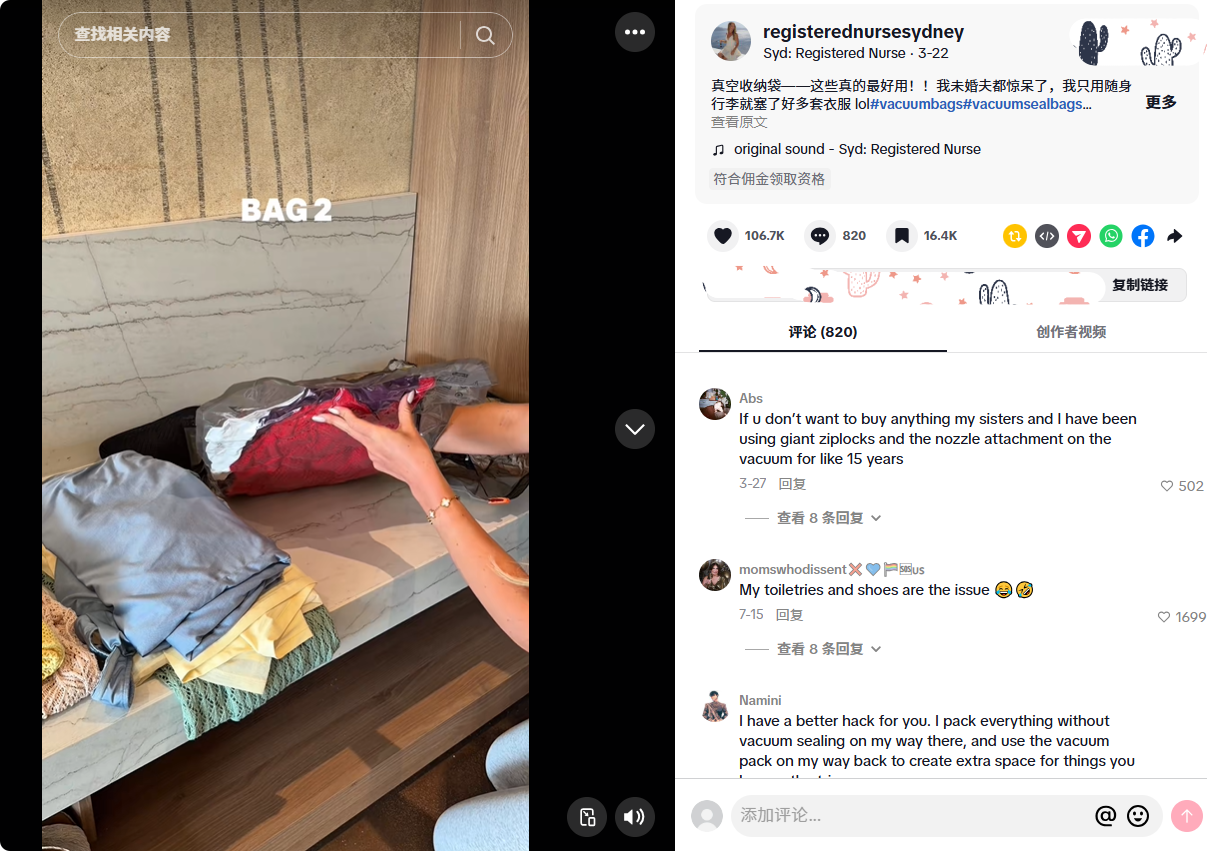
Image source: TikTok
Chinese enterprises need to re-understand overseas markets
The development of Vacbird actually reflects the changes of more and more Chinese brands going overseas.
In the past, when Chinese enterprises entered overseas markets, they relied more on supply chain advantages and platform sales. But now, as overseas consumers' shopping habits change, brands need to simultaneously possess product innovation capability, content marketing capability, and localized operation capability.
For domestic enterprises, there are still many opportunities in overseas markets. Consumers in different countries have differences in lifestyles, consumption scenarios, and product needs, and these differences also mean new market space.
In the future, companies going overseas is not just about selling products abroad, but more importantly understanding why local consumers buy, where they discover products, and how to build long-term trust.