 1580
1580Just how hard is it to make money from young people in Southeast Asia? If the unit price is too high, nobody buys; if it is too low, it gets treated as junk.
Anyone who has done small home appliance business on TikTok in Southeast Asia knows that what local consumers lack most is not a 'premium feel,' but an 'extremely intuitive sense of satisfaction.' The function should be understandable at a glance, the price should feel worth it as soon as they calculate it, and the product must arrive within three days of ordering. Not many brands can do all three things well at the same time, and YOTEX is one of them.
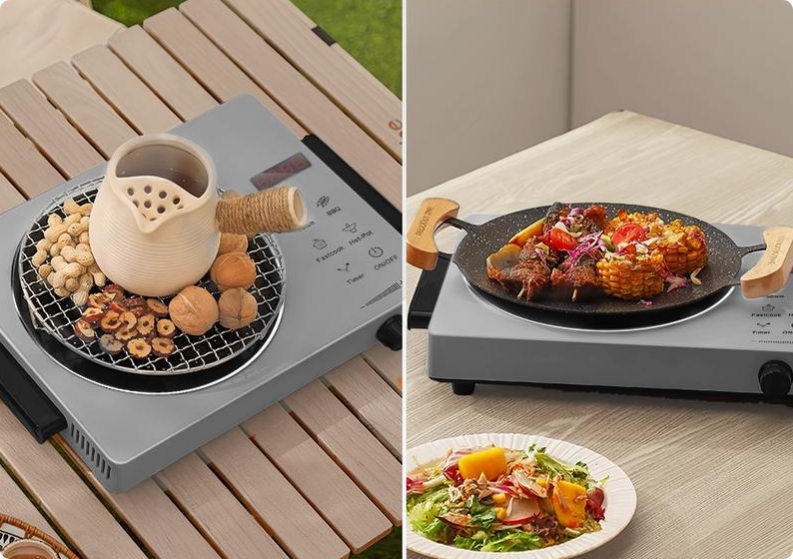
Image source: TikTok Shop
Data shows that in August 2026, Yotex's monthly transaction value on TikTok (Thailand) reached 1.32 million US dollars. As of that time, its cumulative total transaction value on the TikTok channel had reached 25.6526 million US dollars.
For a small appliance brand that has not been in the Thai market for very long, this figure shows that it has indeed found its own rhythm.
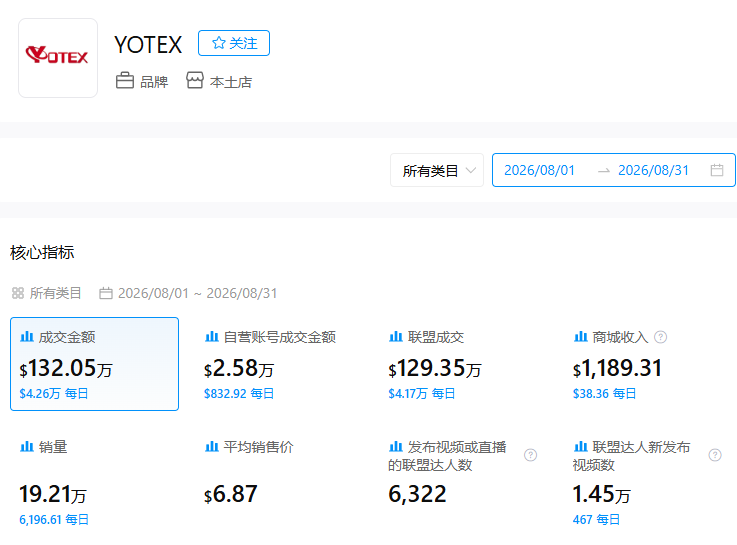
Image source: Kalodata
From entering with a single product to forming a small appliance matrix
Yotex's public brand profile is not particularly rich, but judging from its products and sales records, the brand's development path is fairly clear.
It did not initially confine itself to one highly niche category; instead, it gradually built a small appliance product matrix around consumers' daily life needs. At present, its products cover three major segments: kitchen appliances, household appliances, and personal care, including rice cookers, air fryers, juice extractors, blenders, handheld mini fans, hair dryers, straightening brushes, and a 2-in-1 oven and air fryer product.
Among these, a 5L smart rice cooker has accumulated about 37,900 units in sales over the past year; the product page also specifically emphasizes Thai-language operation, local shipping, and fast delivery.
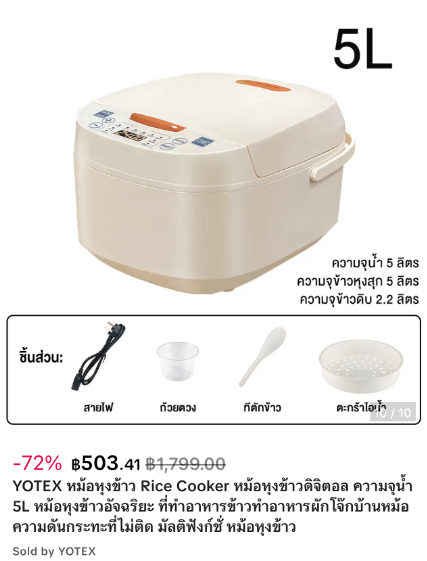
Image source: TikTok Shop
This actually reveals Yotex's fairly evident business approach: rather than simply pursuing products that 'look premium,' it tries to lower consumers' purchase threshold as much as possible.
At the same time, it is also continuously expanding its product range. A Yotex handheld fan focuses on multiple wind speed levels, an LED display, and portable use; the hair dryer highlights 1250W power, negative ions, and hot and cold air functions; the straightening brush emphasizes quick styling and multi-level temperature adjustment.
In other words, Yotex's development more closely follows a route of 'product validation - hit product expansion - category extension.'
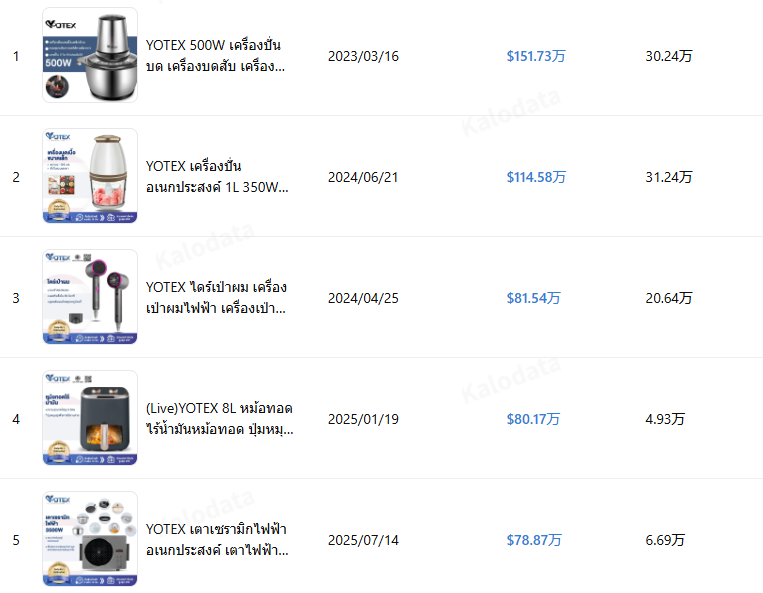
Image source: Kalodata
Why Southeast Asia?
Yotex was able to find opportunities in the Thai market not only because local consumers like inexpensive small appliances. From a market size perspective, Thailand itself is a consumer market worth paying attention to.
Data shows that Thailand's e-commerce market was about 21.83 billion US dollars in 2024 and is expected to reach 23.45 billion US dollars in 2025. The popularization of the internet and smartphones, the logistics system, and the development of electronic payments are all continuously lowering the threshold for consumers to shop online.
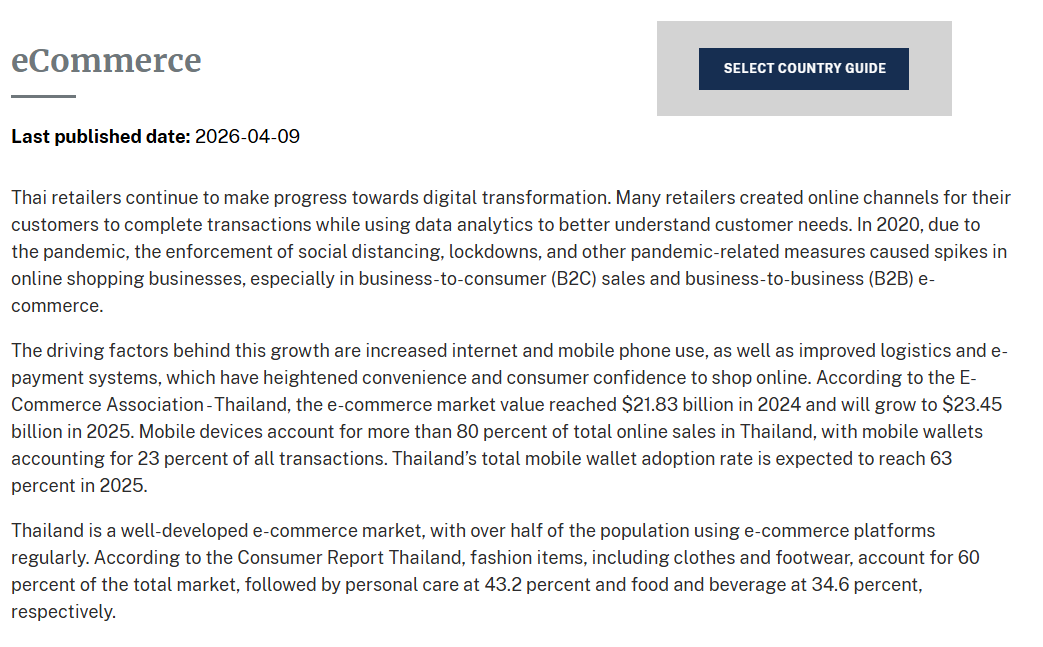
Image source: trade
At the same time, Thailand's home appliance market is also maintaining growth. Grand View Research data shows that Thailand's household appliance market was about 4.25 billion US dollars in 2024, with a projected compound annual growth rate of 8.1% from 2025 to 2030. Rising consumer incomes, replacement of old equipment, and demand for products with more advanced functions are important factors driving continued market growth.
For a brand like Yotex, this market environment means a very practical opportunity: consumers do not lack demand; they are looking for products that are 'reasonably priced, functional enough, and convenient to buy.'
This also explains why products such as rice cookers, air fryers, blenders, and fans easily become important items in content e-commerce. They are used frequently, and their product effects are relatively easy to demonstrate through video.
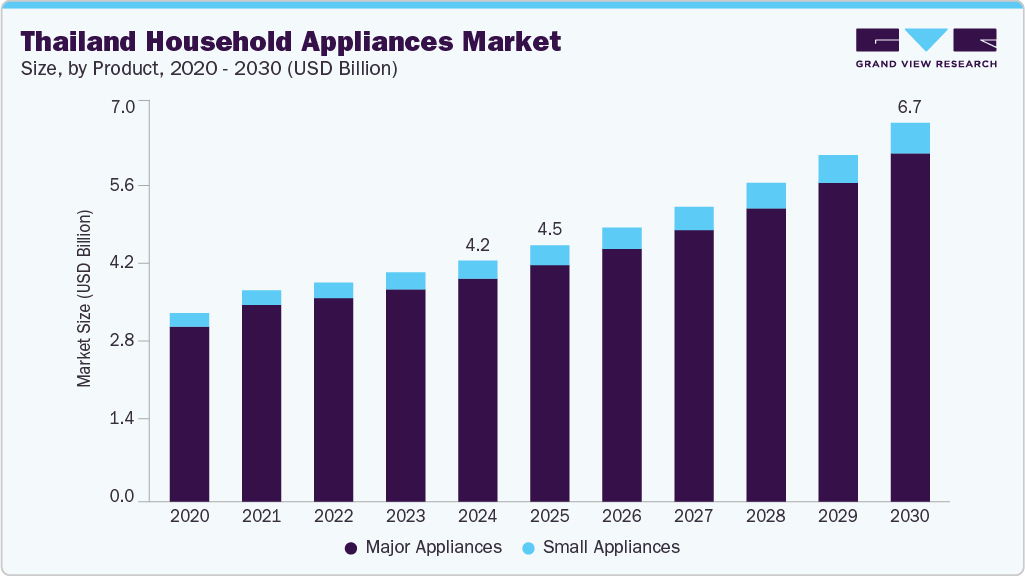
Image source: Grand View Research
TikTok is becoming Yotex's growth amplifier.
If traditional e-commerce relies more on consumers actively searching, then TikTok Shop's advantage lies in that it lets consumers see content first, and then develop a purchase need.
This is especially important for Yotex, because small home appliances are themselves products very suitable for 'demonstration'.
For example, an air fryer can directly show the changes after ingredients are placed inside; a blender can show the process from raw materials to finished product.
Yotex's TikTok strategy is essentially turning product functions into content.
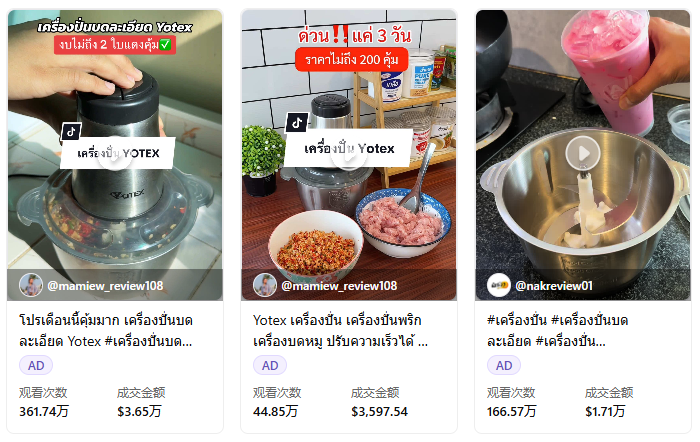
Image source: kalodata
For example, the video of this Yotex portable blender posted by @nakreview01 does not use the common product display approach. Instead, it starts with preparing ingredients, puts the ingredients into a container, adds seasonings, and then directly starts the machine to blend. As the camera zooms in, the originally whole ingredients quickly turn into a fine sauce, and the product's effect can be understood with almost no extra explanation.
From 'adding ingredients' to 'finishing blending', the whole process itself is a functional demonstration, and it also has strong visual changes, which makes it easier for the video to capture users' attention.
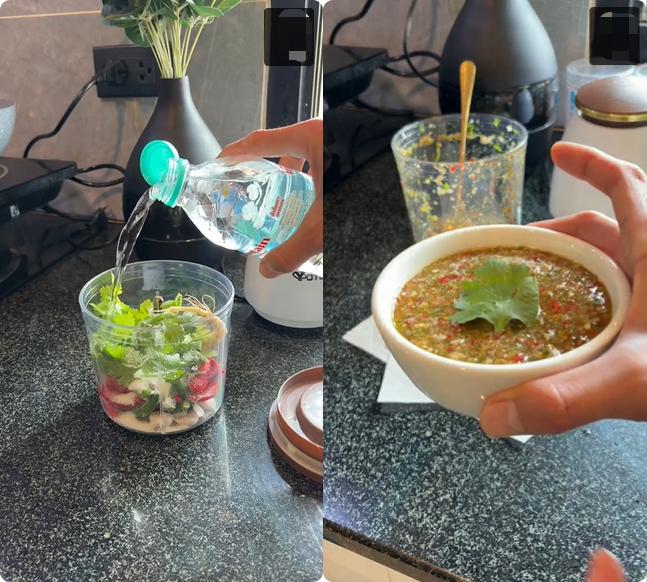
Image source: Kalodata
And this content ultimately produced impressive results, accumulating 13.3 million views and generating USD 84,300 in transaction value.
For small home appliances, the value of this kind of content lies in that it does not deliberately package the product as a 'home appliance' that requires careful study, but instead places it into cooking scenarios that consumers may encounter every day.
This content format, with its low comprehension cost and strong result demonstration, also exactly matches TikTok short videos' characteristic of moving directly from content exposure to product conversion.
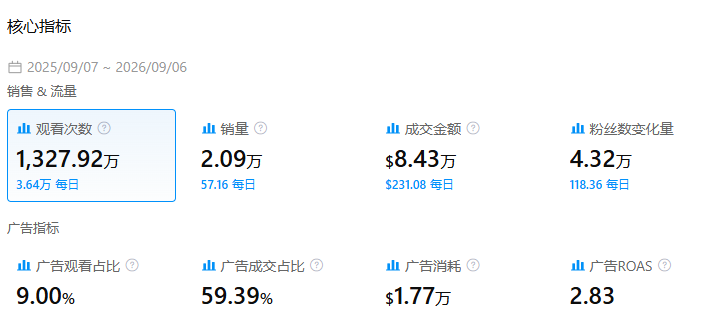
Image source: kalodata
In addition, judging from the product pages of TikTok Shop Thailand, the brand has formed relatively complete localized operations.
Product information is in Thai, products are shipped directly from Thailand, and some product pages show that orders are usually processed within 24 hours, with delivery times emphasized at around 2–3 days.
This localization is actually very important.
Because for small home appliances, how much consumers are willing to pay for the product itself is one thing, while whether they are willing to bear risks such as long waits and uncertain after-sales service is another. Only by addressing fulfillment, language, and after-sales together can purchase friction be truly reduced.

Image source: TikTok Shop
Another noteworthy point is that Yotex does not put all its hopes on its official brand account, but instead lets its products enter influencer content and short-video distribution systems.
According to data from the past 30 days, Yotex's affiliate transaction value reached USD 1.3226 million, with a total of 6,991 influencers participating in video or livestream sales, and 15,900 related new videos and livestreams published during the period.
Among them, top affiliate influencers @nongneew2 and @guntouch contributed USD 47,900 and USD 43,700 in transactions respectively, showing that influencers have become an important channel for Yotex to acquire orders.
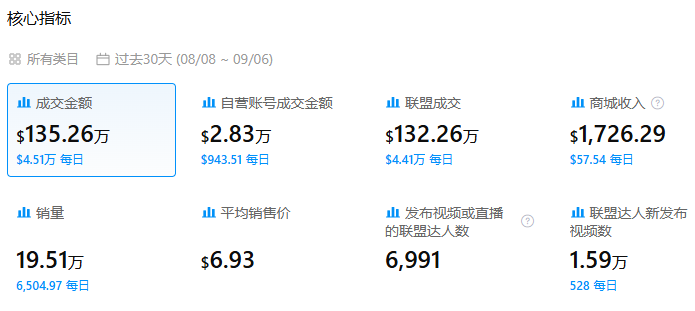
Image source: kalodata
It is worth noting that Yotex does not simply look at follower counts when selecting influencers, but rather pays more attention to the fit between content scenarios and products.
For example, @aut.sophie mainly focuses on home and lifestyle content and has sold Yotex blenders through long livestreams; while @mamiew_review108 leans more toward daily review content, covering multiple areas such as home and electronic products.
Such an influencer mix allows different products to enter specific scenarios such as kitchen, home, and daily life, turning the influencers' original content into the product usage scenario. This reduces the dissonance caused by pure hard advertising and lets affiliate distribution truly play the role of 'content seeding + sales conversion'.
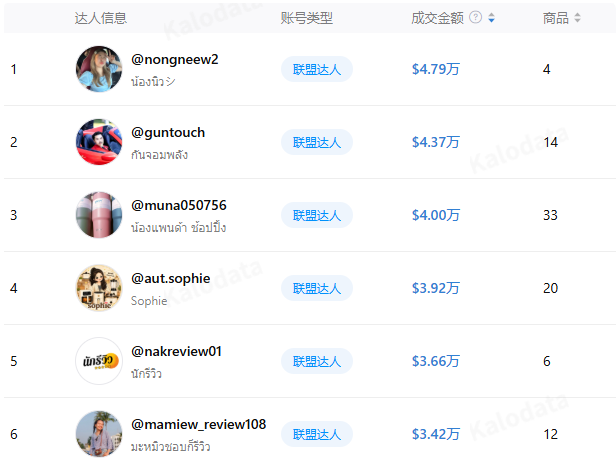
Image source: Kalodata
In Conclusion
The emergence of Yotex is, in fact, just a microcosm of enterprises entering overseas markets.
The overseas market environment has changed. Overseas consumers will not naturally buy a product just because it comes from China, nor will they be willing to pay a higher price simply because a brand tells a grand story. What companies truly need to do is re-understand the consumption habits of different markets, and then consider product, price, channel, and content within a unified framework.
Different markets, different consumers, and different platform rules.
What is truly worth investing in is turning mature domestic supply chains and product capabilities into goods that local consumers can understand and are willing to accept.
The overseas market has never been a short-term traffic game. Being able to settle down and study a market, then build products into it step by step, may be the real lesson that a growing number of companies need to learn after going global.