 19
19Today's young people are inherently fond of going against the grain.
This trait is not only reflected in personality, but also permeates their consumer choices. They actively break free from stereotypical labels and reject conventional standard answers.
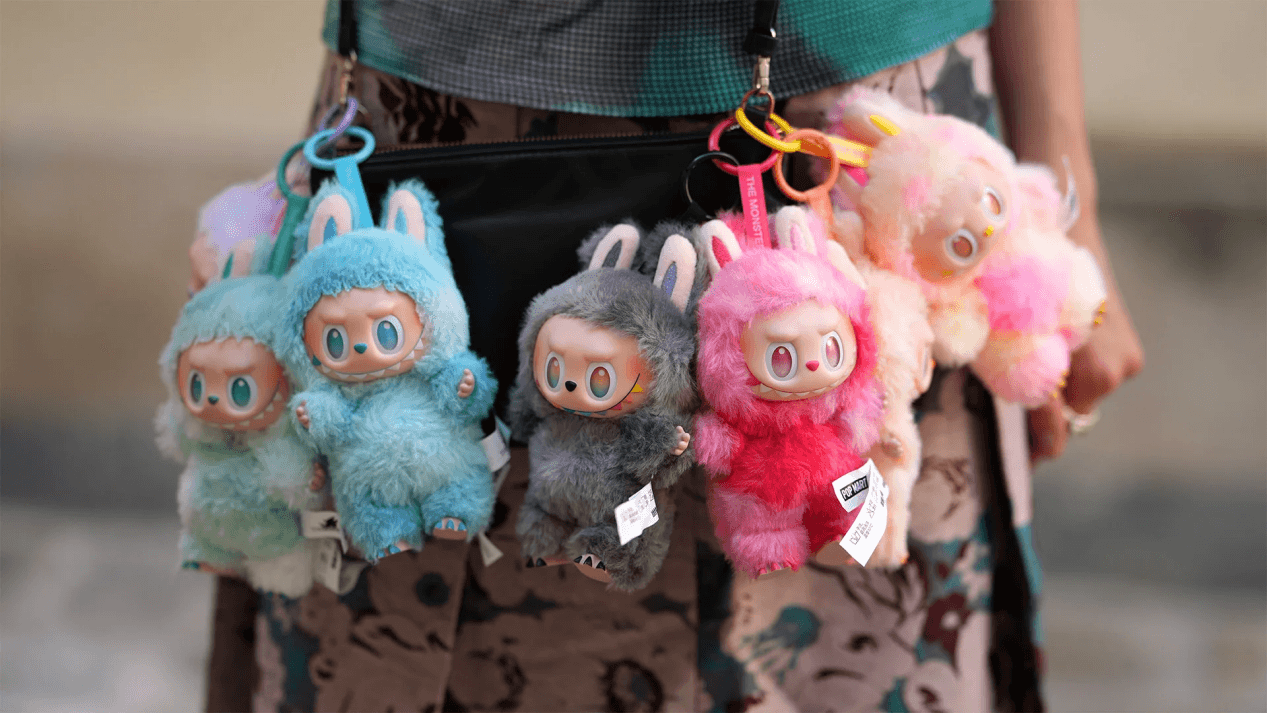
Take the Labubu blind boxes that have swept the world in recent years as an example. When the market generally assumed that trendy toys had to follow a soft and cute route, its explosive popularity fiercely shattered established perceptions.
This quality of not deliberately pandering to mainstream aesthetics happened to hit Gen Z's preferences, and at its peak, it was hard to get even one figure.
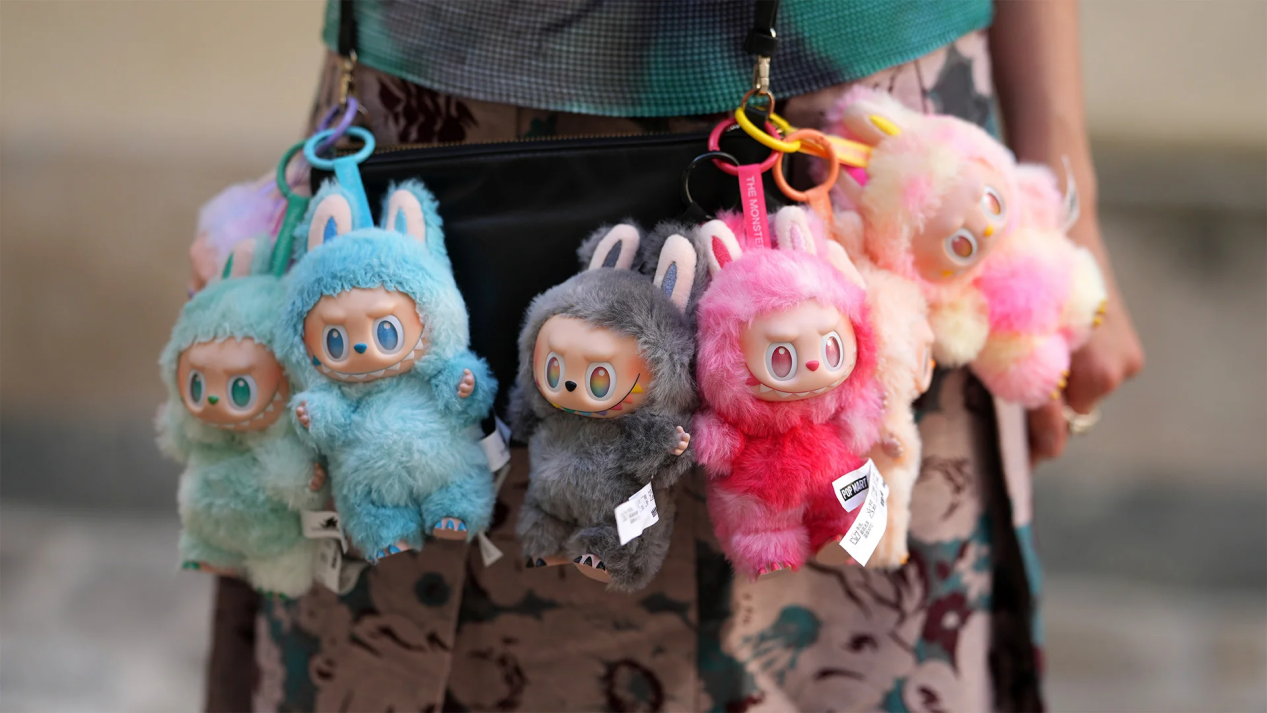
Image source: Google
Seeing this, many businesses may already have been inspired:In many cases, daring togo againstestablishedofperceptionssing a different tune, but insteadcan gainnew money-making opportunities.
In this track,StarfaceTuke is a highly representative case.
No one ever expected that this startup brand, initially not favored, would break out with just a tiny pimple patch,growing into an annualrevenueof over 600 million, a leadingseller。
Its breakthrough path is far more exciting than many people imagine.
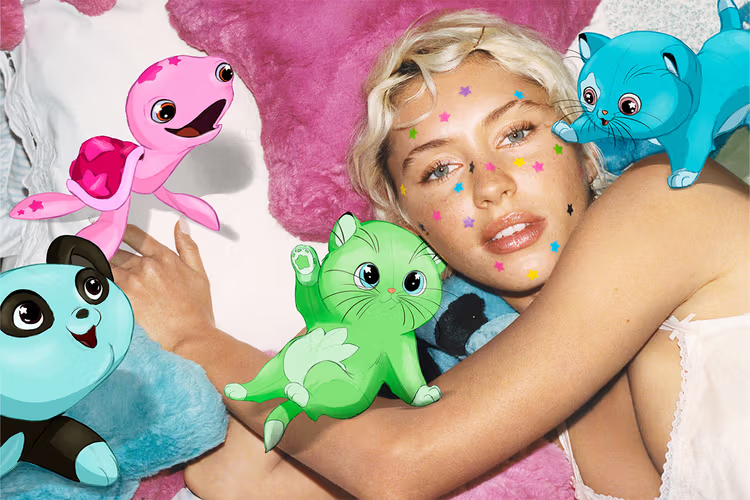
Image source: Google
Go against the grain and turn hiding into showing off
According to public information, Starface was co-founded by former ELLE beauty editor Julie Schott and business operations lead Brian Bordainick.
Julie Schott herself has long suffered from acne, and while working at the magazine, she found that the entire beauty and skincare industry generally treated acne as an embarrassing thing that needed to be strenuously concealed.
Influenced by this notion, acne treatments have long been trapped in the selling points of invisibility and concealment, and most acne patches on the market are transparent or skin-colored.
This inherent product logic of the industry made her think: why can't treating acne become relaxed and fun?
With this idea, she joined hands with partner Brian Bordainick to embark on an entrepreneurial journey, transforming acne patches that should be hidden into a trendy vehicle for expressing one's attitude, and Starface was born.
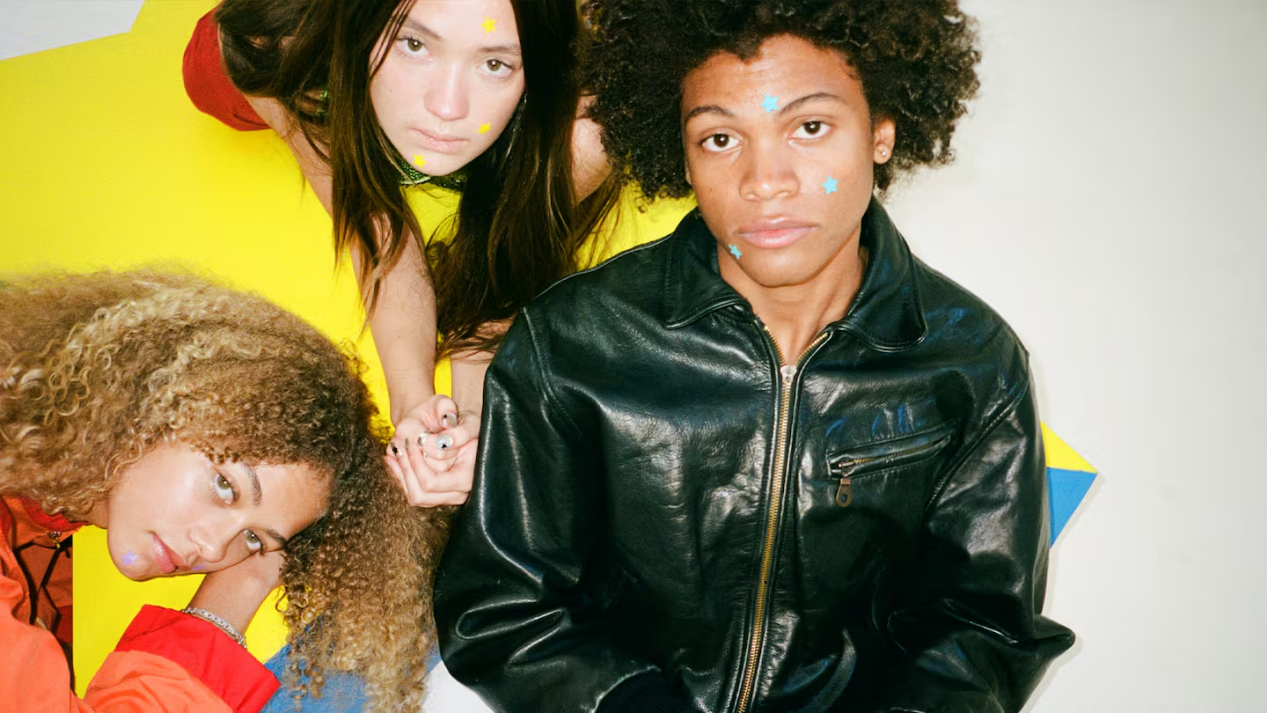
Image source: Google
IP collaborations+Expand the product line,Spark a consumer craze
In September 2019, Starface's first acne patch Hydro-Stars was officially launched.
The product abandoned low-key color schemes and chose vivid candy colors such as bright yellow, pink, and blue, with playful star patterns printed on the surface.
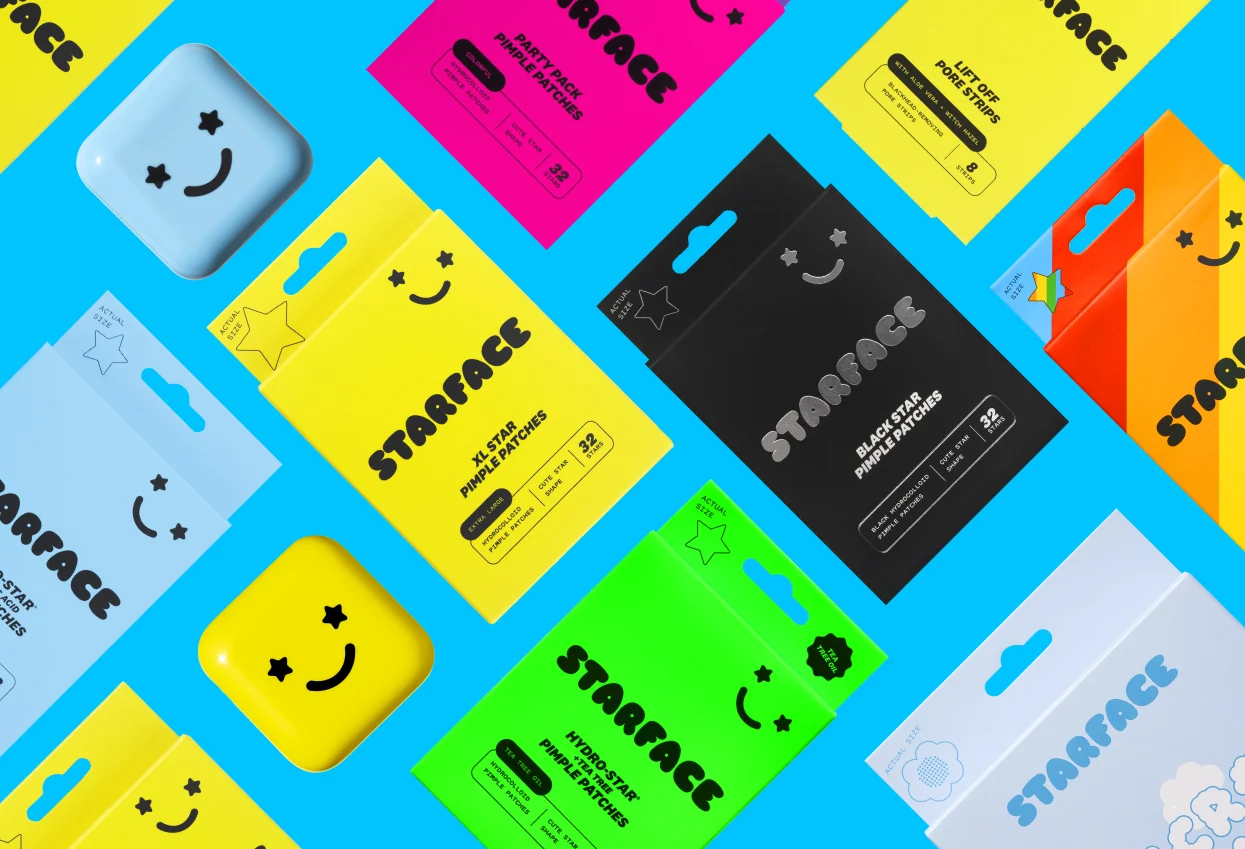
Image source: Google
It conveyed a brand-new concept of not needing to cover up acne, openly accepting breakouts, and treating acne patches as accessories, completely overturning the industry principle of invisibility above all. This unconventional approach quickly sparked discussion and also won Starface the affection of a large number of target users.
By 2023, the brand officially became profitable and, building on its original star acne patches, continued to expand its product line, successively launching new products such as lip balm, cleanser, and moisturizer.
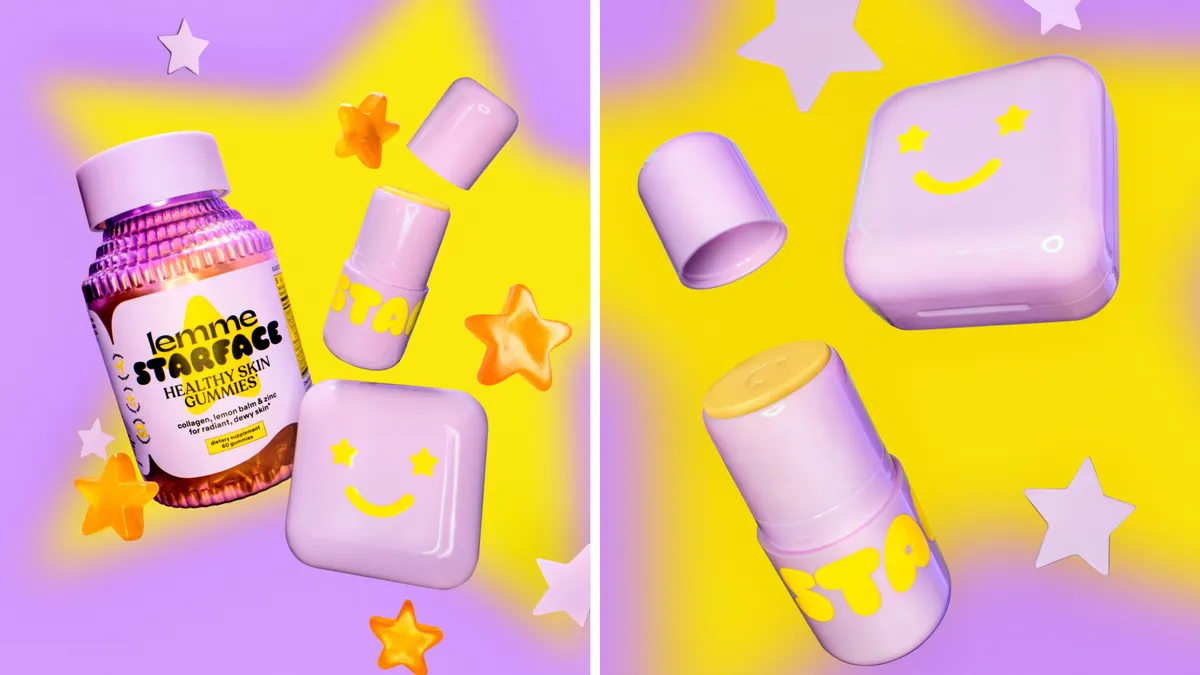
Image source: Google
At the same time, Starface also launched an IP collaboration consumer trend, releasing collaborative products with popular IPs such as Hello Kitty, My Melody, Kuromi, and Snoopy, allowing its products to break out of the skincare category's limitations and attracting many people without acne to buy them as trendy stickers, continuously expanding its user pool.
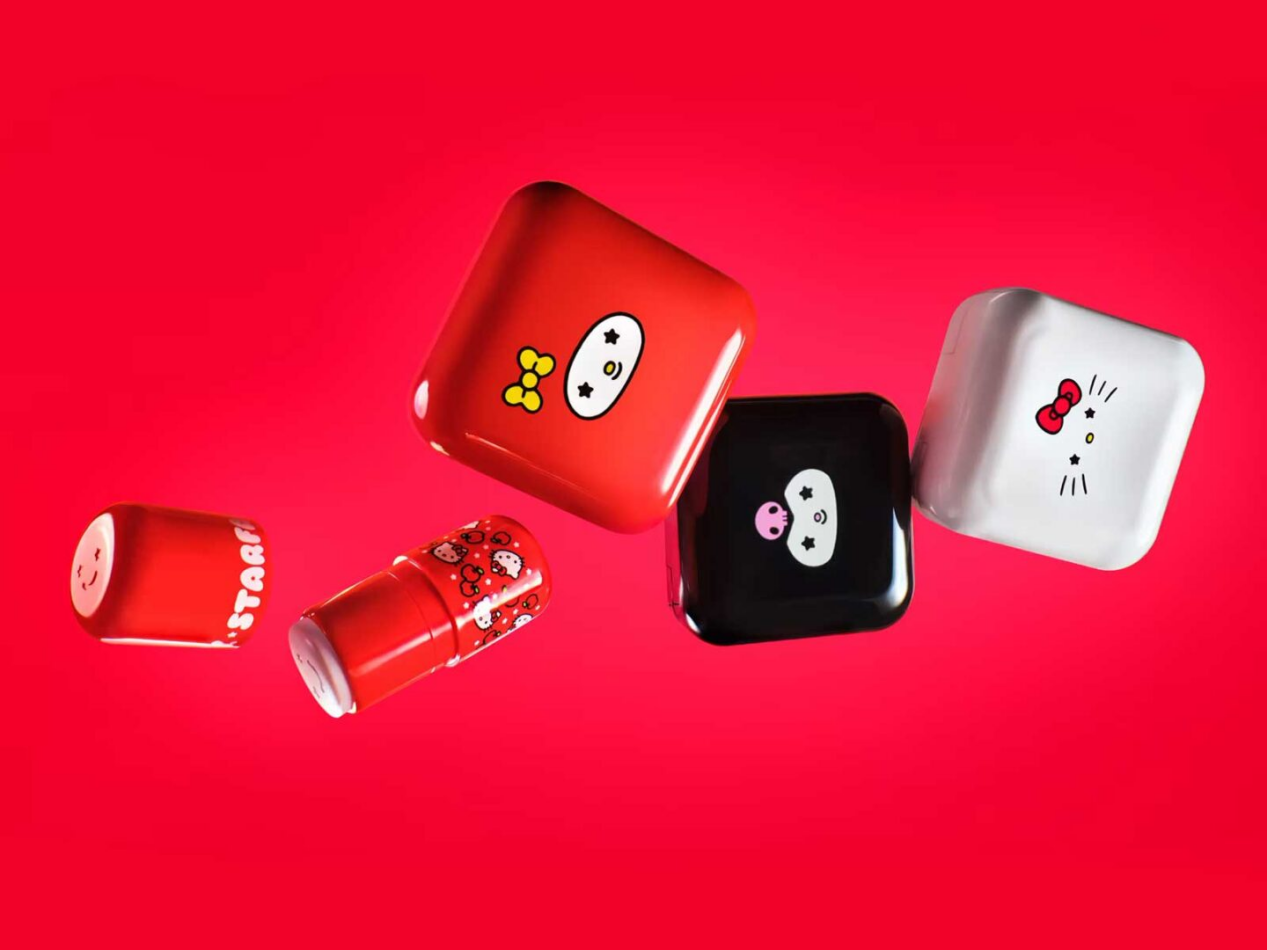
Image source: Google
According to relevant CNBC reports:
Since Starface was founded in 2019, as of December 17, 2024 (the time the report was published), the brand has cumulatively sold more than 1 billion Hydro-Stars acne patches.
In all of 2024, Starface achieved approximately 90 million USD (equivalent to over 600 million RMB) in revenue from this core single product, becoming an extremely popular phenomenon-level bestseller in the category.
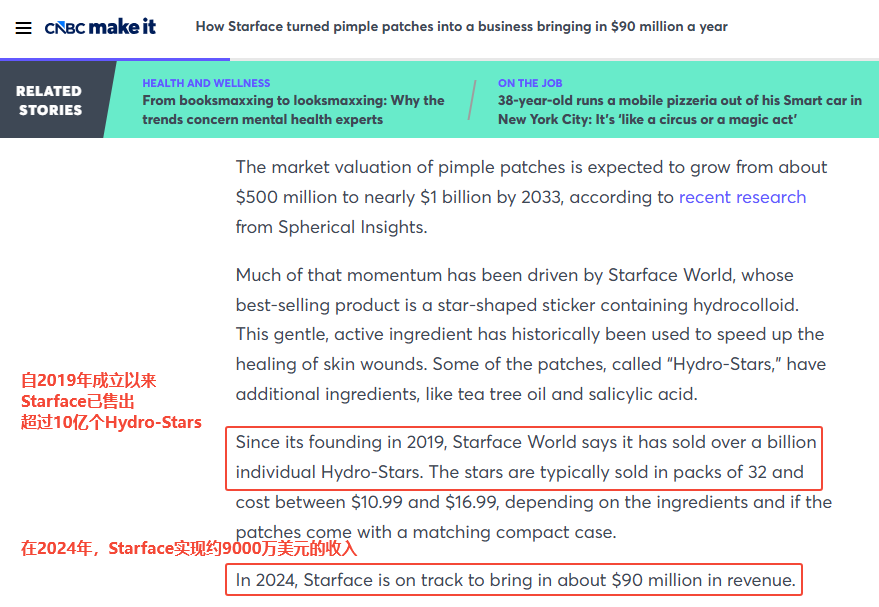
Image source: CNBC
Build the brand online and scale offline, using a combined channel playbook to connect the consumer journey
No matter how novel the product concept is, it must ultimately land on real sales channels.
Starface's overseas expansion path is very clear:It uses its direct-to-consumer site as the core brand stronghold, relies on third-party e-commerce to complete transaction conversion, and then lands in offline drugstore beauty channels, forming a complete online-and-offline closed loop.
On the online side, the direct-to-consumer site undertakes the core function of brand image building. It not only debuts new products and limited-edition IP collaborations, but also fully communicates the brand values of embracing flaws and accepting oneself, becoming a stronghold for in-depth communication between the brand and consumers.
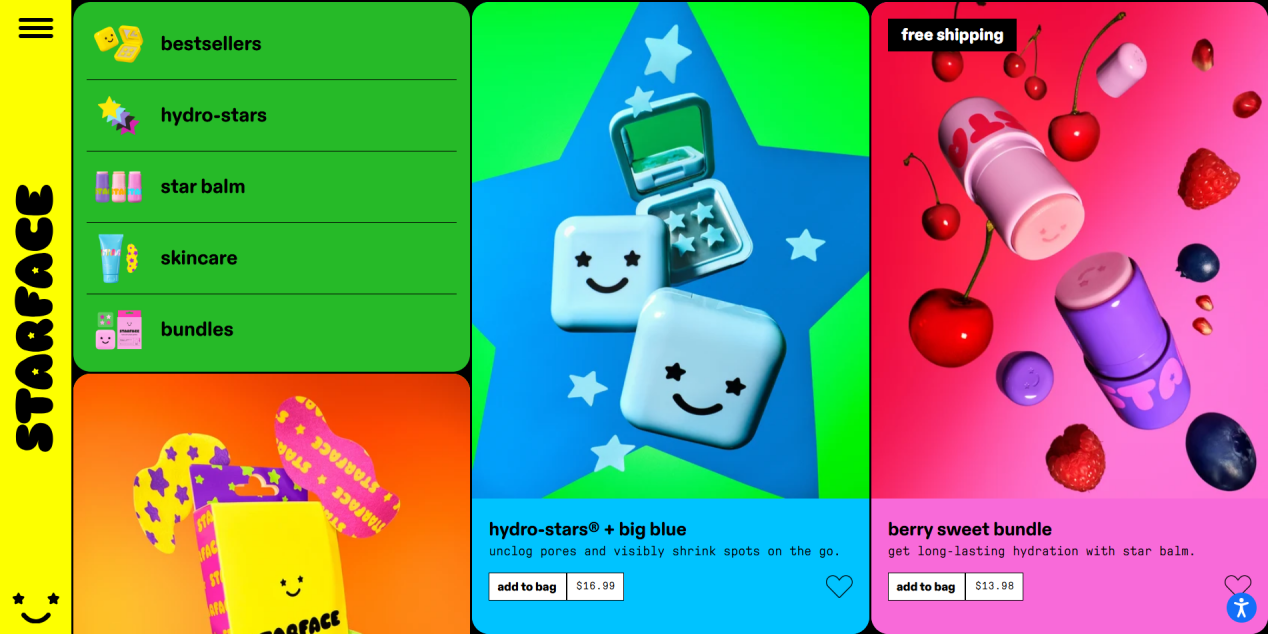
Image source: Starface
After that, Starface also entered third-party e-commerce platforms such as Amazon and Walmart, mainly promoting regular staple products to reach the massive customer base inherent to the platforms.
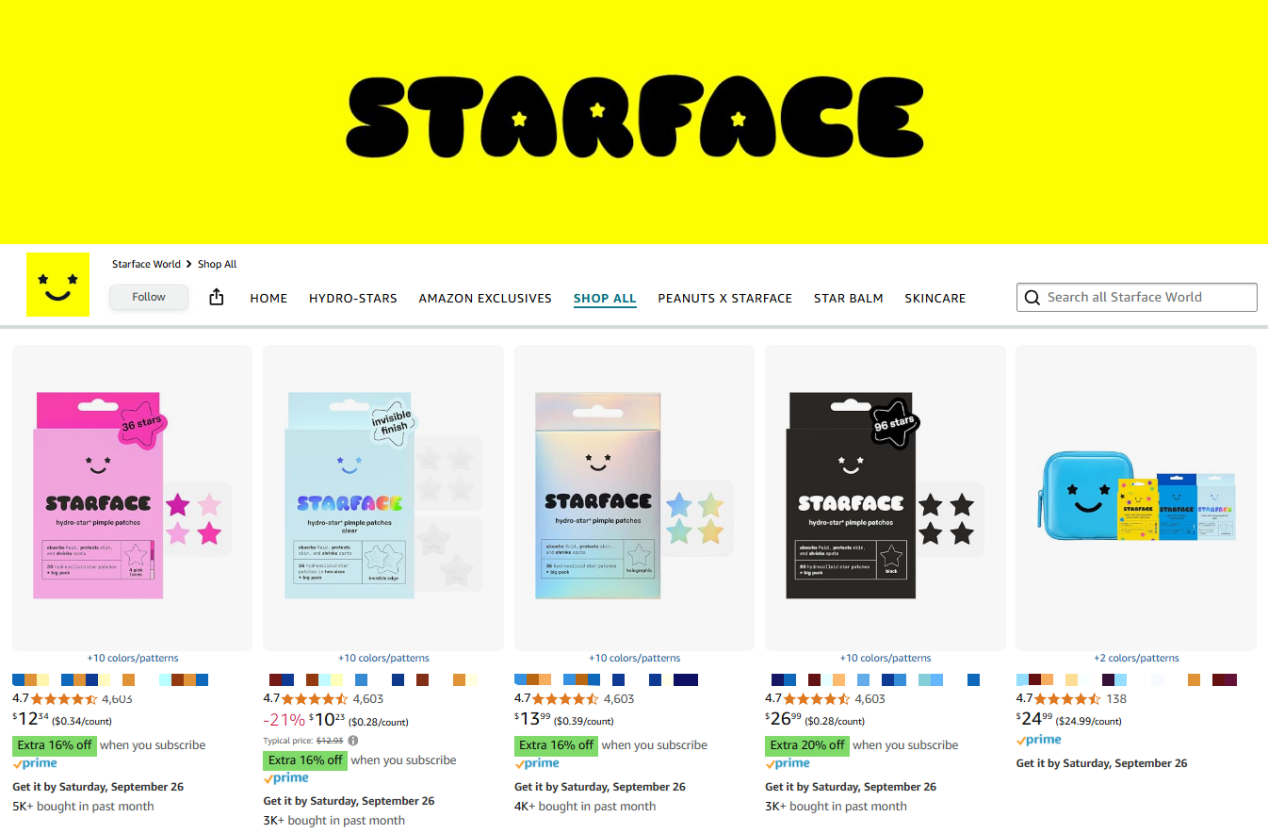
Image source: Amazon
Offline channels were a key step for Starface to open up scale.
Its products entered more than 20,000 retail stores including Target, Walmart, and Ulta Beauty. The highly recognizable colorful packaging forms a sharp contrast with the ordinary off-white medical acne patches on the market, and has a traffic-driving effect when placed on shelves.
Not only in the U.S. market, the brand also leveraged mature overseas drugstore beauty chains such as the UK's Boots and Superdrug to achieve rapid distribution and further open up sales.
Through online and offline coordination, it built a comprehensive sales network, allowing consumers to buy products anywhere.
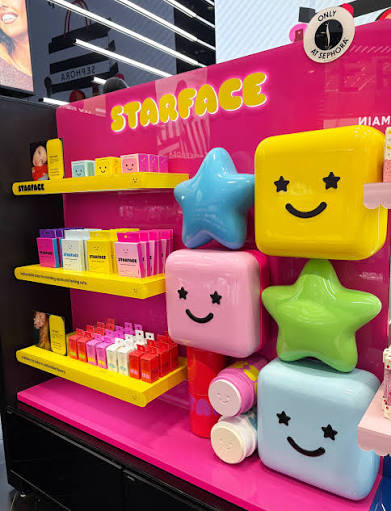
Image source: Google
A single TikTok account drives 45.7 million likes, with content precisely hitting young people's preferences
When users put colorful, personalized acne patches on their faces and share them through social media platforms, they carry a highly recognizable symbol, making every user a walking “living advertisement” for the brand.
For this reason, relying on social media such as TikTok for marketing and achieving breakout spread has become Starface's core playbook for capturing overseas markets and continuously gaining followers.
On TikTok, Starface did not set up a matrix of accounts, but concentrated resources on operating a single official account, @Starface World. Currently, it has 3.2 million followers and total likes as high as 45.7 million.
The account can gain such a huge follower base and number of likes because the content precisely hits the preferences of the target audience. Its content can be roughly divided into four major directions:
1. New product release category
Whenever it launches a brand-new product series or releases an IP collaboration, Starface will post short videos through the account to build momentum and warm up.
For example, the video announcing the new collaboration with Sanrio has exceeded 13.1 million views and received 280,800 likes since its release, fully warming up for the new product launch and effectively driving early buzz.
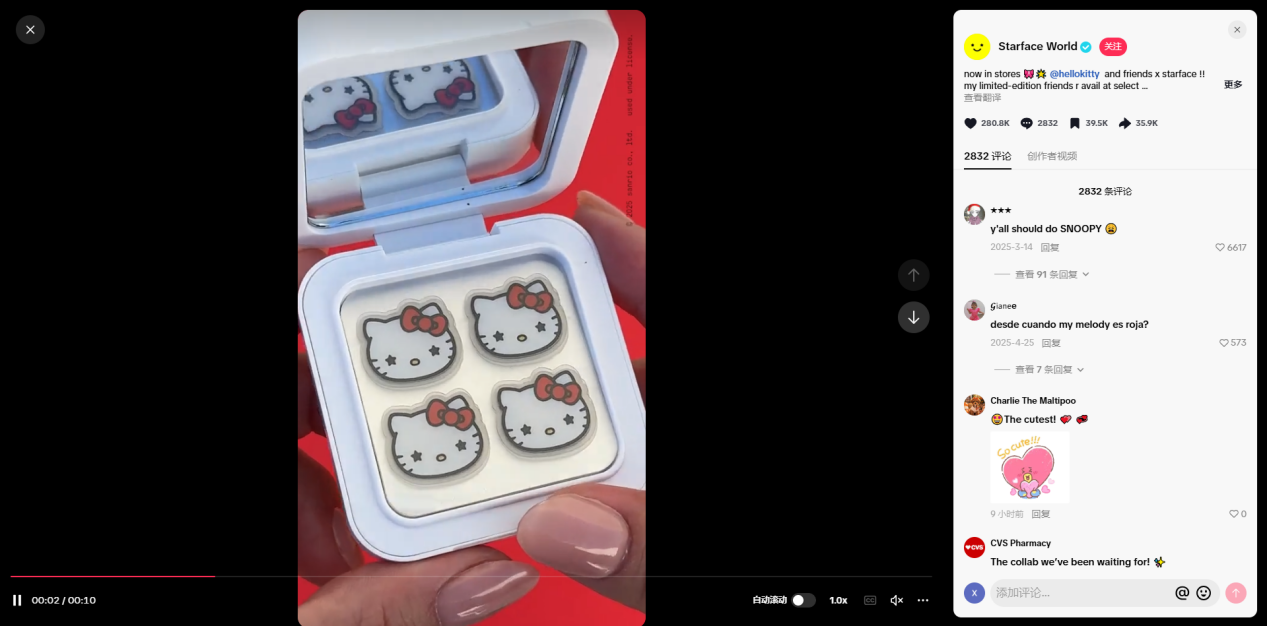
Image source: TikTok
2. Daily use category
In order to integrate into young people's lives, the account posts a large number of short videos recording ordinary girls' real daily routines of using acne patches after getting acne.
This confident attitude of accepting imperfection and calmly facing skin problems precisely hits Gen Z's values and has won the favor of a large number of users.
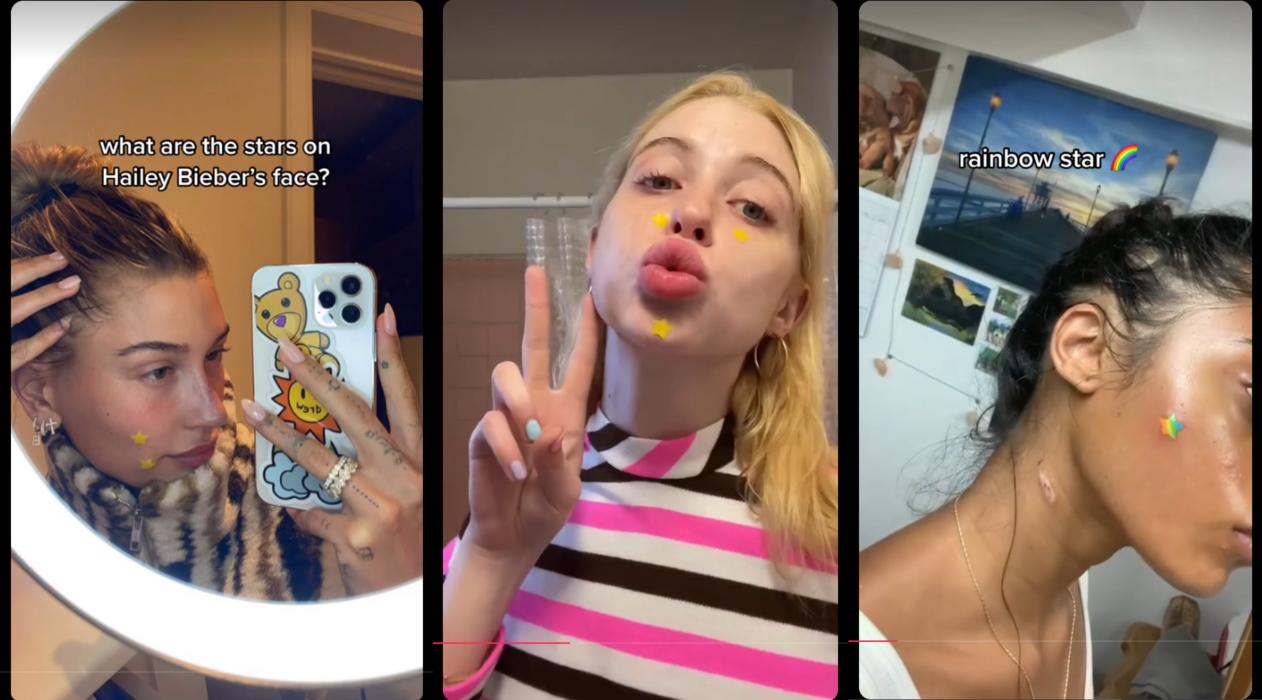
Image source: TikTok
3. Offline Store Promotion Category
Every time the brand enters a new offline store, it posts a short video through @Starface World for promotion, using social media traffic to empower offline channels and drive in-store conversion.
For example, not long ago, the account posted a video about entering a Sephora store in the Middle East. In the comments section, a large number of users proactively shared the products they had purchased, and many overseas netizens left questions, looking forward to the brand launching in Europe, Greece, and other places.
This shows clearly that online popularity can fully mobilize users' expectations for offline consumption.
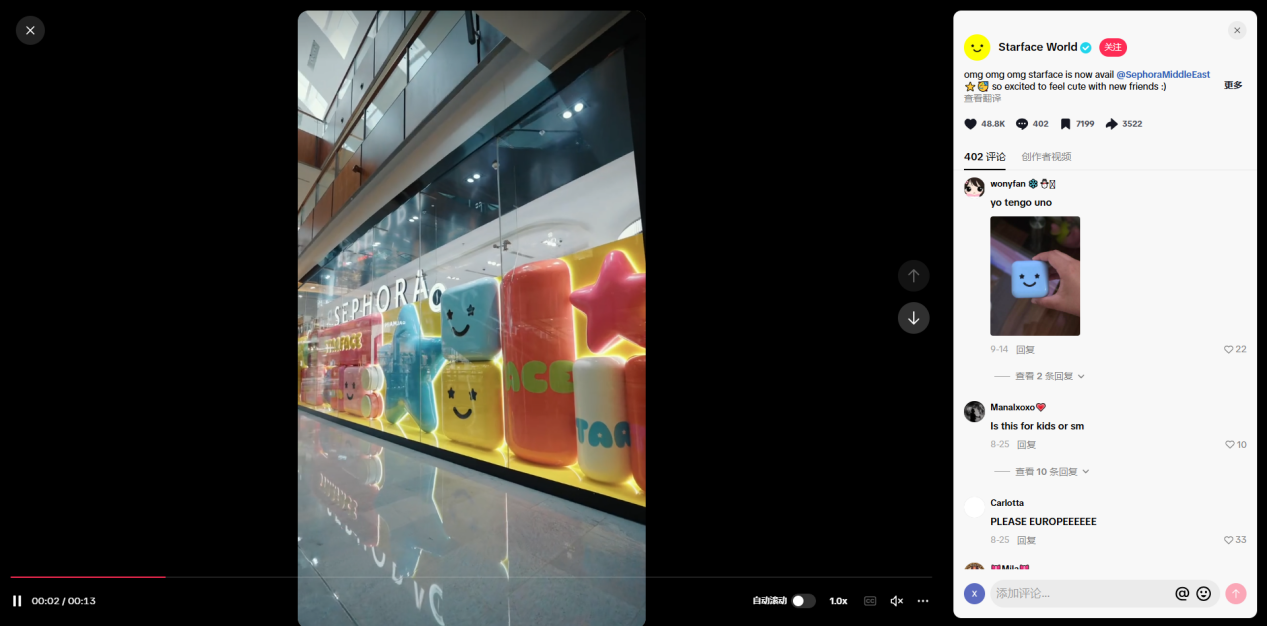
Image source: TikTok
4. Leveraging Celebrity Influence Category
To further expand its fame in overseas markets, Starface captures materials of celebrities and public figures sharing its products, then re-edits and distributes them.
For example, Rosé (Park Chae-young), a member of the globally popular K-pop girl group BLACKPINK, once recommended Starface's star pimple patches in a what's-in-my-bag video for French Vogue.
This clip was also posted by the brand on its official account for secondary dissemination, leveraging the idol's influence to broaden brand awareness.
Many of Rosé (Park Chae-young)'s fans placed orders after seeing the idol's same item, bringing the brand spontaneous sales growth and word-of-mouth spread.
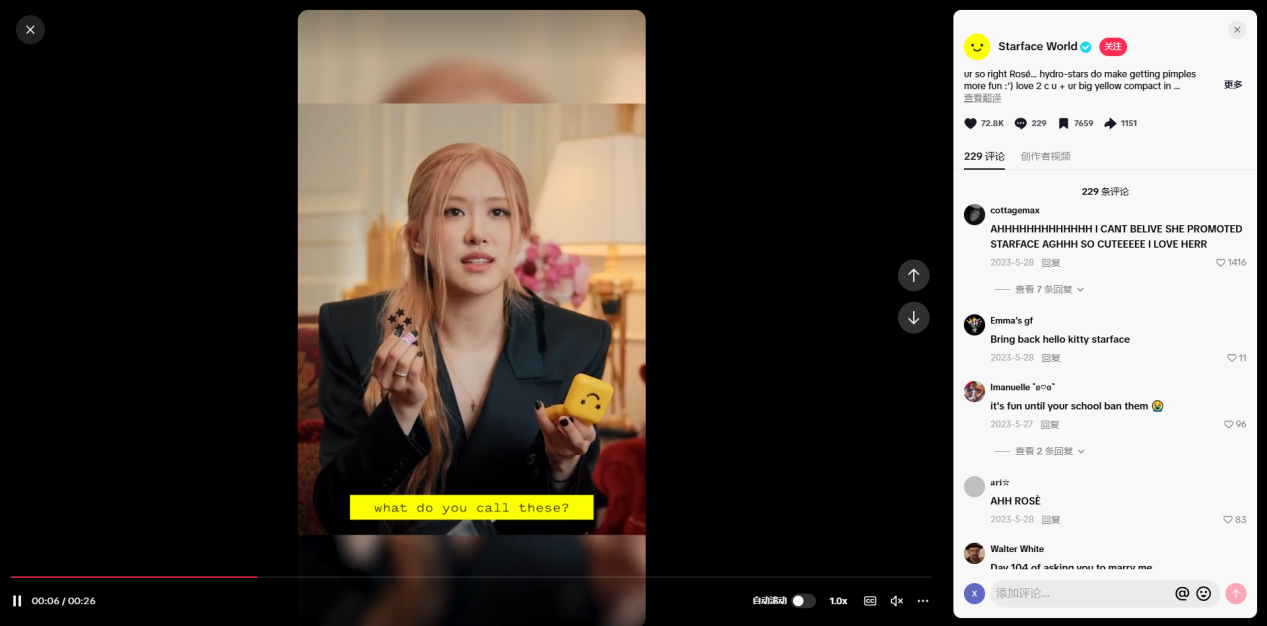
Image source: TikTok
Conclusion
At this point in Starface's story, it is no longer just a case of a niche brand making a comeback.
It is more like a mirror, reflecting the changes taking place in overseas consumer markets:Young people are no longer satisfied with cookie-cutter product logic; they are willing to pay for individuality and for attitude.
And this change has precisely left room for domestic companies. A category that seems ordinary in China, if approached from a different angle and expressed in a different way, may become a hit overseas.
The key is whether your brand dares to go global and is willing to understand the real preferences of consumers in different markets.