 24
Quietly $28 Million! Xiamen Established Company's Overseas Comeback
Sales of about $28 million in half a year, with more than 333,000 items sold.
These results come from a bag brand from Xiamen, China - BAGSMART.
According to Particl statistics, from January to June 2026, the brand's online sales revenue reached about $28 million, with product sales exceeding 333,000 units. In June 2026 alone, sales reached about $2.8 million.
A brand selling backpacks, makeup bags, and travel storage bags has neither complex technology concepts nor a novel category, yet it can achieve such sales scale in overseas markets, which is indeed worth studying.

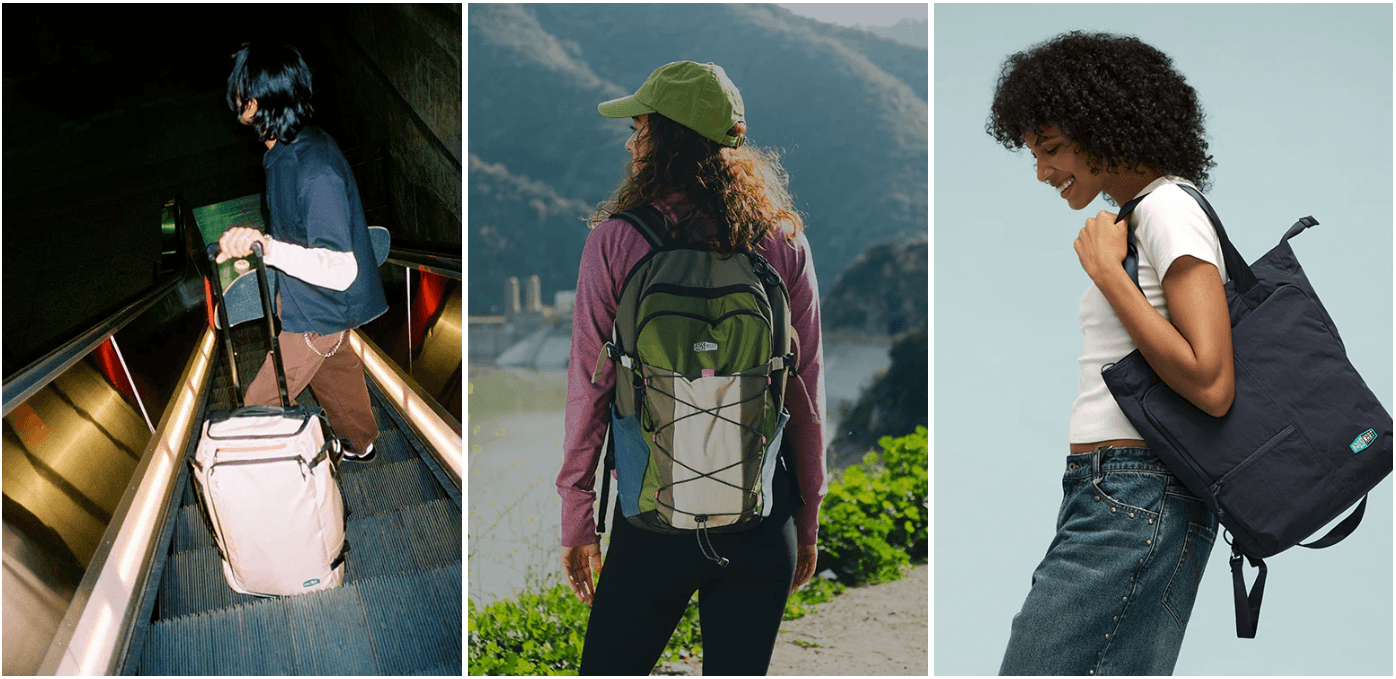
Image source: BAGSMART
From OEM to brand, all for a feeling of 'not being resigned to it'
The company behind BAGSMART is Xiamen Weifa Co., Ltd., founded in 2005.
Like most factories of that era, it took orders, produced, and delivered goods, earning the thinnest layer of profit in the industrial chain. Over time, the drawbacks became exposed: relying solely on OEM made it difficult to obtain higher brand-added value.
So in 2012, the company began shifting from traditional foreign trade to cross-border e-commerce and officially entered the Amazon platform. After several years of development, it gradually incubated independent brands such as BAGSMART and the women's bag brand ECOSUSI.

Image source: BAGSMART
In 2017, Amazon business revenue already accounted for 90% of the company's total sales, and it became a top seller in Amazon's storage bag category, receiving related Amazon seller awards.
However, selling well on the platform does not mean the brand has truly been established.
In 2018, the company began building its own independent website, trying to reach consumers directly through its official website, social media, and influencer marketing. After that, they also gradually set up operations centers in Germany, Japan, the United States, and the United Kingdom to explore a more complete overseas brand operation system.
From OEM to cross-border e-commerce, then to independent websites and brand operations, the brand's development was not a sudden shortcut, but a step-by-step transformation of manufacturing capabilities into consumer-facing operating capabilities.

Image source: BAGSMART
It looks inconspicuous, but it hides many business opportunities.
The travel storage market that BAGSMART initially entered was not a new track.
Toiletry bags, makeup bags, backpacks, and luggage storage bags have existed for many years. The question is, do consumers really lack a bag?
Not necessarily.
What they really need may not just be a container for holding things, but a more convenient way to organize.
BAGSMART gradually enriched its product line around this demand, extending from early travel toiletry bags and makeup bags to laptop bags, commuter backpacks, tote bags, camera bags, and travel luggage, etc.
These products have one characteristic: their functions are not difficult to understand, but consumers need to see them to truly feel the difference.
This also provided an entry point for BAGSMART's subsequent content marketing on short-video platforms.
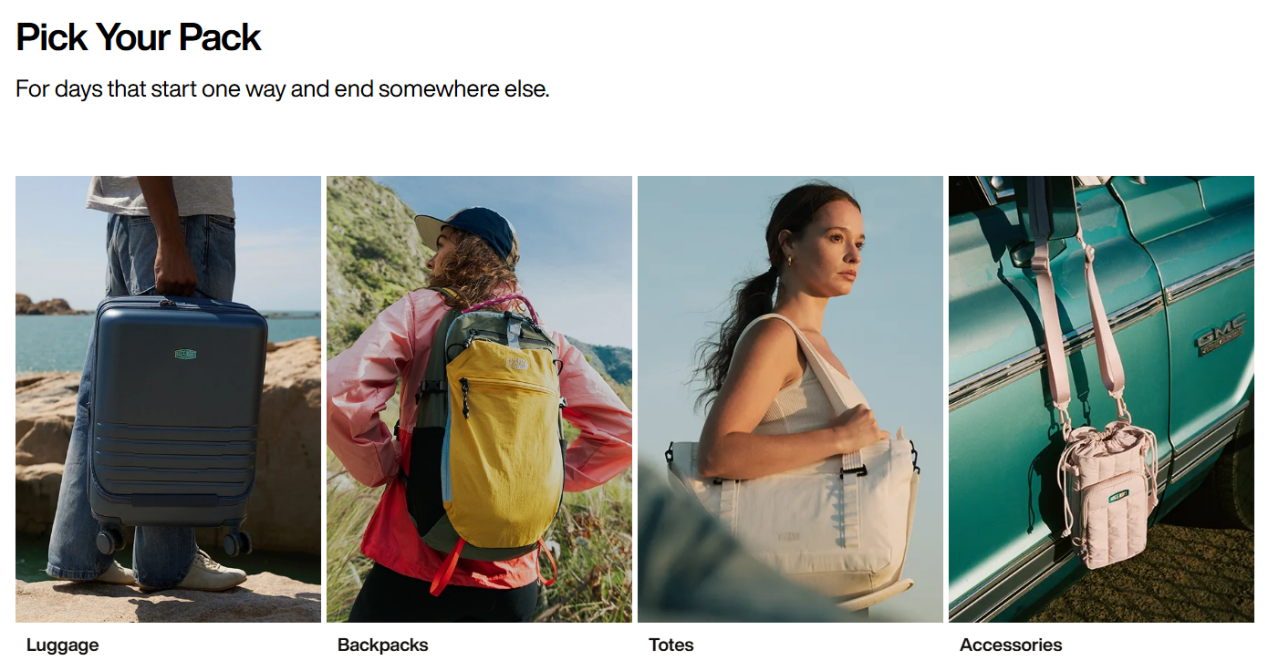
Image source: BAGSMART
Short videos turn a single bag into different lifestyles
If Amazon helped BAGSMART complete early product sales and market accumulation, then TikTok provided it with another way to reach consumers.
According to a brand analysis released by Modash in October 2026, among the BAGSMART creator collaboration content it tracked over the past 12 months, about 10,100 pieces of commercial collaboration content were tracked, of which TikTok accounted for about 82.3%.
It can be seen that TikTok has become an important front for BAGSMART's creator marketing.
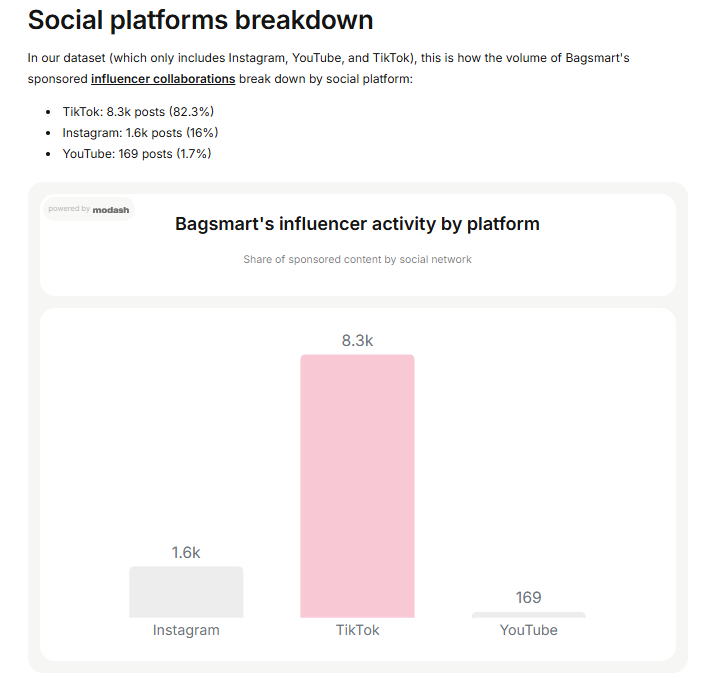
Image source: Modash
1. Not just displaying products, but letting creators put the bag into their own lives
BAGSMART's creator collaborations are not simply asking creators to hold the bag and introduce the product to the camera.
Creators with different lifestyles can provide completely different display angles for the same product.
For example, on January 16, 2026, TikTok creator @alyssa.waldron posted a BAGSMART collaboration video centered on the brand's 4-in-1 toiletry bag. This video received about 8.3 million views and generated about $49,800 in sales.
The toiletry bag itself is not a particularly novel product, but when it appears in scenarios such as travel preparation and daily organization, consumers can intuitively see how much it can hold, how the interior is divided, and whether it is convenient to use in practice.
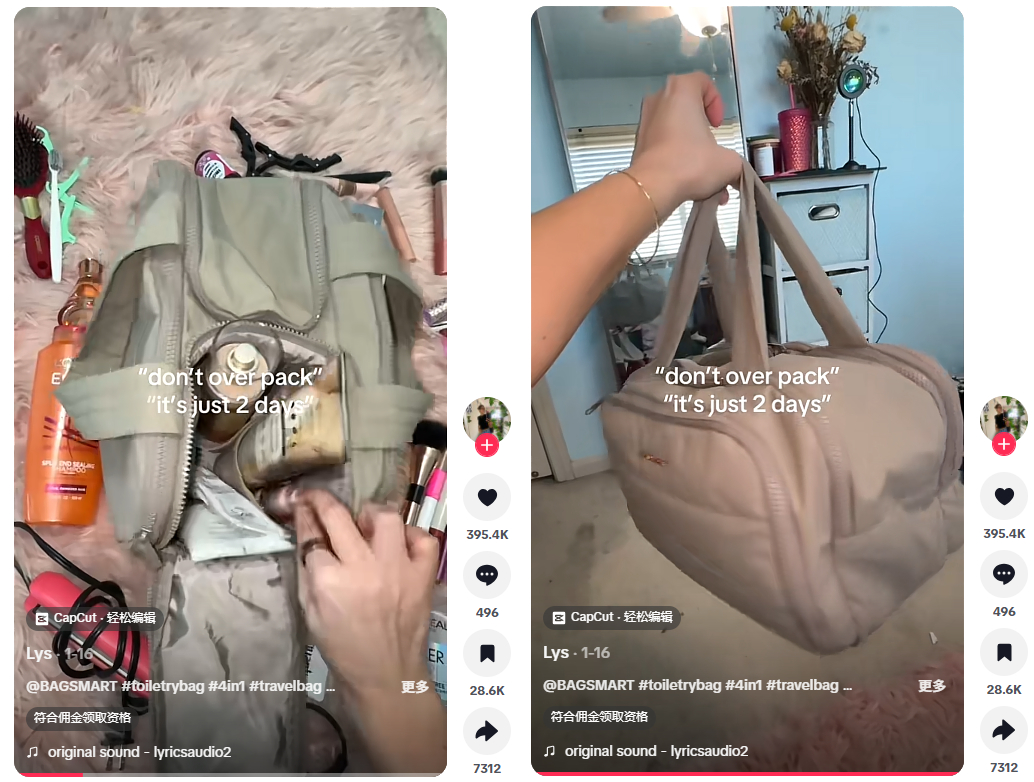
Image source: TikTok
For another example, on April 24, 2026, creator @becky_da_1987 posted BAGSMART makeup bag-related content, which received about 5.6 million views.
This type of content does not need to spend a lot of time explaining the product's design philosophy; instead, through real usage demonstrations, it lets viewers quickly understand what problems the product can solve.
For bag brands, this content approach is very valuable.

Image source: TikTok
2.Creator marketing should not only pursue single viral hits, but also form sustained exposure
Judging from the data, BAGSMART had about 10,100 pieces of creator collaboration content in the past 12 months, involving about 5,700 creators, and the collaborations were not concentrated at a single point in time.
Among them, Modash also tracked 323 creators who had collaboration content with the brand in at least 3 different months.
This shows that BAGSMART's creator marketing is not centered only on one-off promotions, but has formed a relatively continuous collaboration network.
Of course, the number of creator collaborations does not equal actual sales, and views cannot be directly converted into orders. But for a bag brand that needs to build consumer awareness over the long term, continuously appearing in different creators' content can allow the brand to gain repeated exposure in different scenarios and among different groups of people.
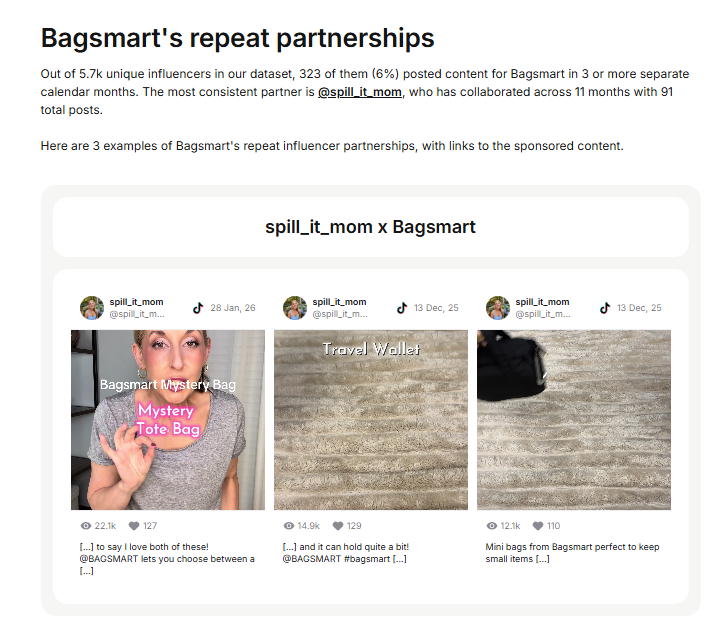
Image source: Modash
Conclusion
From starting as an OEM in 2005, to transforming into cross-border e-commerce in 2012, and to today's building out of its own DTC site and social media, BAGSMART's development has gone through no short period of time.
Its story does not have many dramatic twists, yet it illustrates exactly one point: traditional manufacturing enterprises do not have to rely only on low prices and orders to participate in global competition.
A bag can be a commuting tool, a travel companion, or part of how consumers express their lifestyle. The product itself has not undergone earth-shaking changes, but the way the brand understands consumers and the channels through which it reaches them can keep changing.
For Chinese cross-border enterprises, what is truly worth investing in when going global may not just be finding a platform that can sell goods, but gradually building a set of operating methods that enable consumers to know, understand, and continuously choose them.