 84
“Can’t the ‘Made in China’ on the packaging be less conspicuous?”
A Shenzhen boss who runs an OEM business making hair styling tools once received this request from a client.
The product came out of his workshop, and the quality was not bad, but when it reached overseas shelves, his name could not appear, and instead “Made in China” became something that needed to be downplayed.
Later, he made a decision. In 2021, the own brand Wavytalk was born.
Three years later, this brand had cumulatively sold more than 3 million products in the US market, with revenue approaching $200 million, and it took first place in the hair styling tools category on TikTok Shop.
The story of Chinese brands starts to become a little different from here.
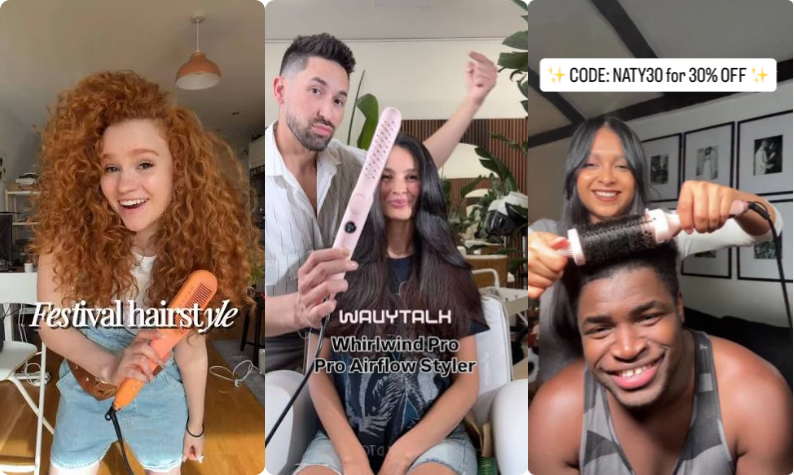
Americans began bringing hair salons home
As is well known, the United States is a place where “goods are not expensive, services are very expensive, and the gap between cities is huge.”
Most low- and middle-income Americans share a consensus: labor is expensive, so if you can avoid hiring someone, you do. Especially since they also have to pay extra tips for these services.
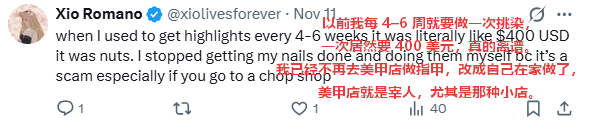
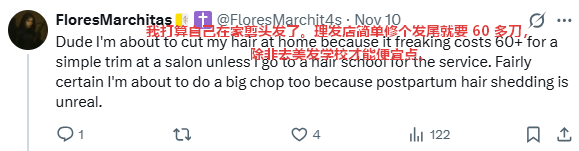
Image source: x
This is also why, in recent years, many DIY self-service tools and household consumables have been selling better and better in the US cross-border sector.
Many people teach themselves DIY, fixing their own plumbing, painting walls, and cutting hair; the essence is actually avoiding high service fees.
The 2026 US beauty consumption survey released by Zenoti shows that 45% of respondents reduced the frequency of booking professional beauty services, and 43% began dyeing their hair at home to replace some salon services.
Rather than frequently booking salons, it is better to buy a curling iron and a hot air brush and complete daily curls, volume, and straight styling at home. For consumers, professional styling and daily grooming were never an either-or choice.
What Wavytalk targets is precisely this demand: allowing ordinary consumers to complete relatively professional hair styling at home without spending too much.
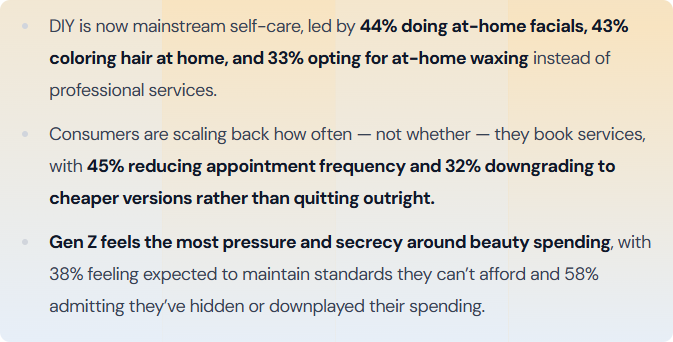
Image source: Zenoti
A 6-second video sold 1,000 curling irons
Bringing the perspective back to the brand itself, Wavytalk’s explosion on TikTok Shop actually came from just one seemingly ordinary short video.
In 2023, a US creator named Julissa posted a video using a curling iron. There was no complicated script and no lengthy product explanation; she just picked up a strand of hair and showed how the curling iron quickly completed the style.
In just 6 seconds, the video drove sales of about 1,000 products.
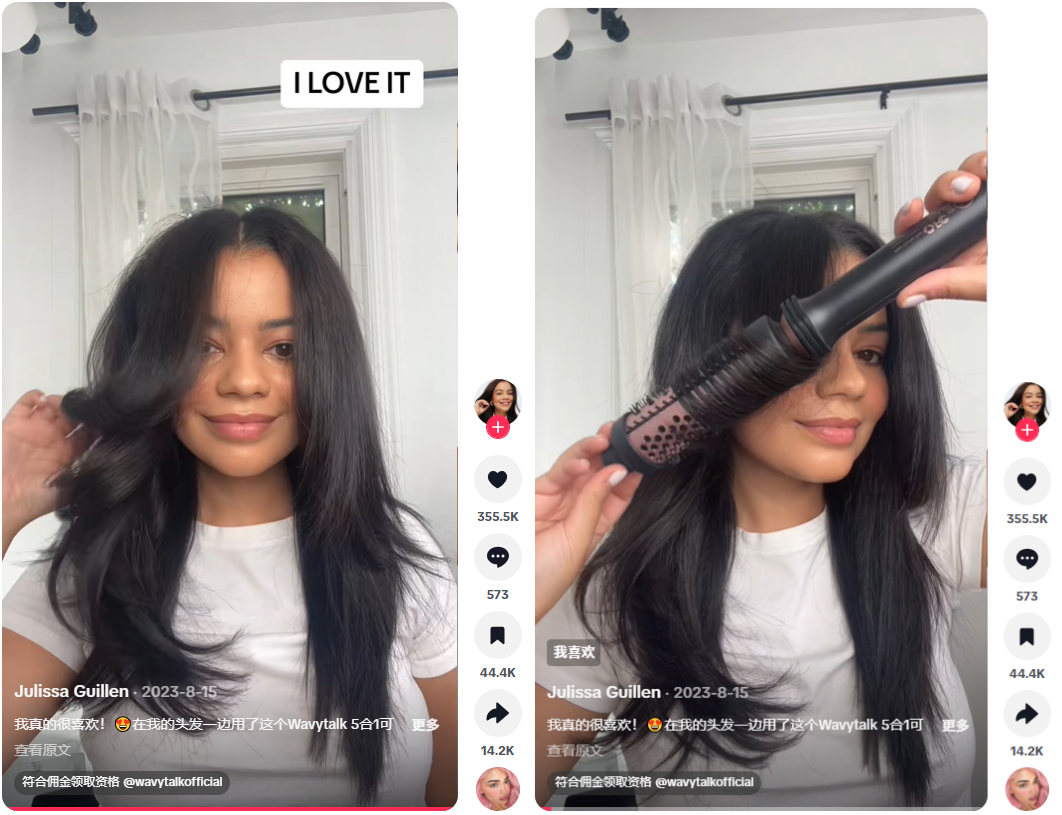
Image source: TikTok
This explosion made the team realize that TikTok was not only a social platform for showcasing the brand, but could also become a channel that directly drives business growth.
Subsequently, the brand rapidly increased investment in marketing and team resources, making creator content an important business direction.
According to a May 2026 report by China Newsweek, Wavytalk had operated in the US market on TikTok Shop for three years, with cumulative sales exceeding $200 million.
Looking again at the third-party store data, we can see that its scale is still continuing to expand.
According to Fastmoss data, Wavytalk's main US store has cumulative total sales volume of approximately 4.5705 million units, total sales revenue of approximately $153 million, 91 products on sale, and the number of influencer sellers has reached 61,300.
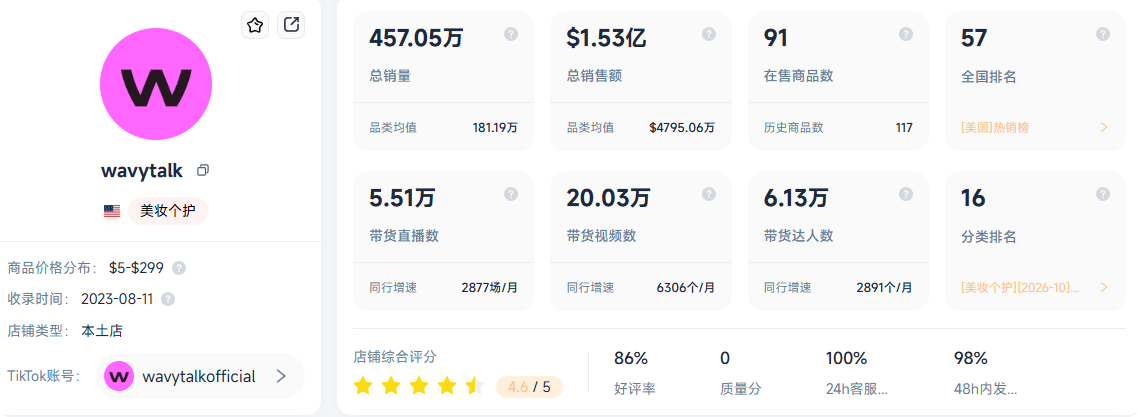
Image source: Fastmoss
It should be noted that this set of data comes from third-party store monitoring and cannot be directly treated as the brand's annual revenue. But combined with the three-year cumulative sales performance disclosed by the media, it is already enough to show its competitiveness in the US TikTok Shop beauty tools category.
So what exactly did Wavytalk do right?
What consumers can see is the selling point
First, Wavytalk found a way of presenting its products that is suited to short-video dissemination.
Hair styling tools have one advantage: their effects are immediately visible.
What changes before and after curling, and whether the hair can become fluffy and smooth—when filmed into a short video, consumers can easily grasp the product's selling points.
In related interviews, the brand further summarized this characteristic as a “Golden 6 Seconds” content strategy:
Open by directly showing the styling effect to attract users to stay, then use a simple operation demonstration to let consumers clearly see how the product is used and how the effect is.
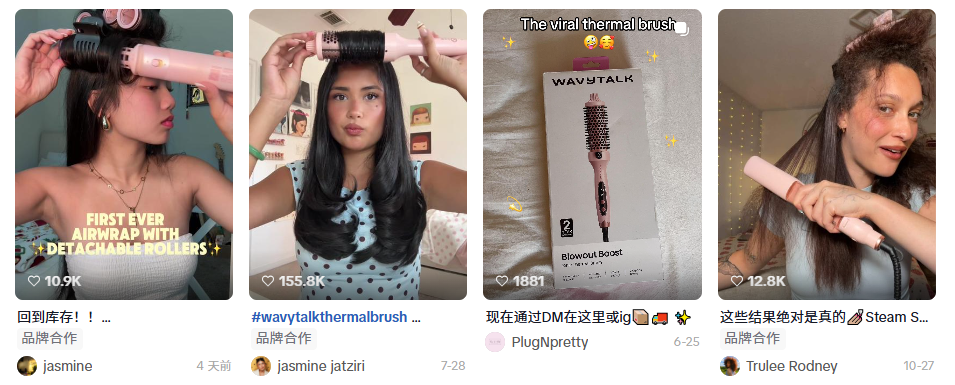
Image source: TikTok
Compared with repeatedly introducing functions, this intuitive display method is obviously more likely to spark purchase interest.
If you are still not quite clear what this content playbook looks like, take a look at this video by creator @vvalcortess.
The creator just holds a pink hot air brush, styles the hair in front of the forehead, and then shows the finished curled effect.
The whole process is very simple, only 17 seconds long, and not a single word is spoken, yet the view count has exceeded 7.8 million. And it has been less than three months since it was posted.
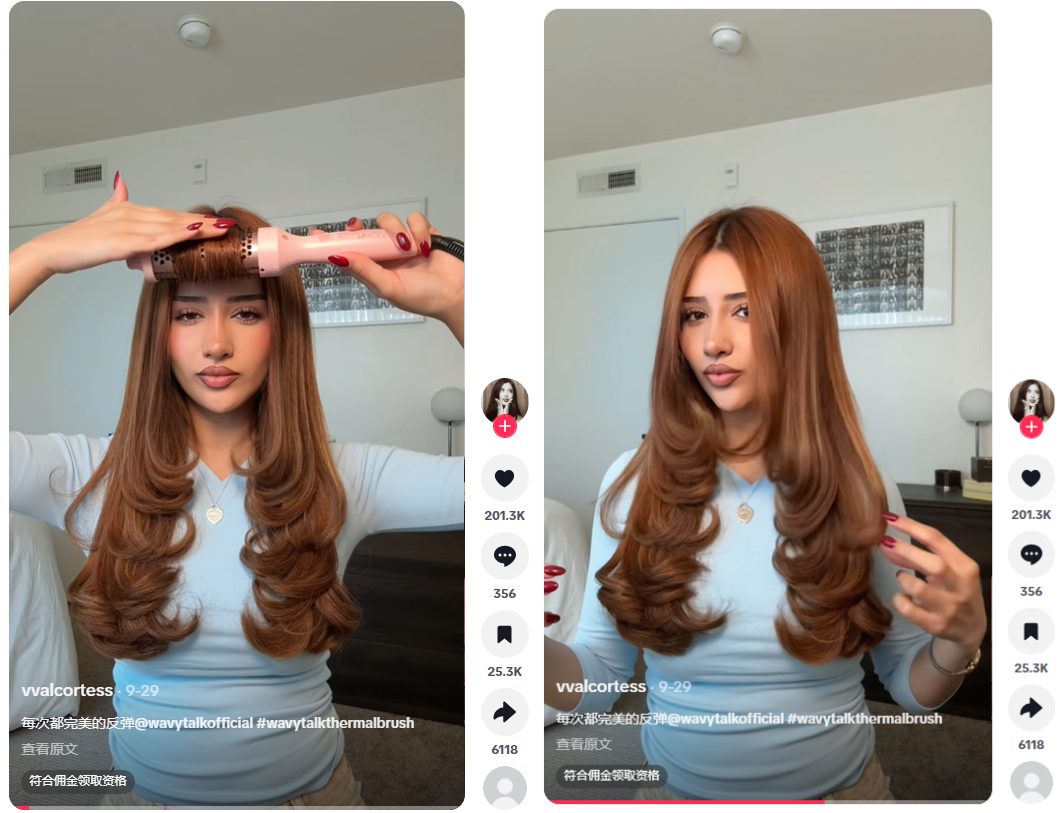
Image source: TikTok
Second, Wavytalk did not rely only on its own accounts for content, but turned creator collaborations into a scaled marketing system.
As mentioned earlier, the main US store has more than 60,000 influencer sellers.
In addition, TokConnect data also shows that in October 2026, the creator alliance contributed about 92% of the brand's estimated sales, of which short videos contributed about 88%.
It can be seen that creators have become a very important sales force for Wavytalk on TikTok.
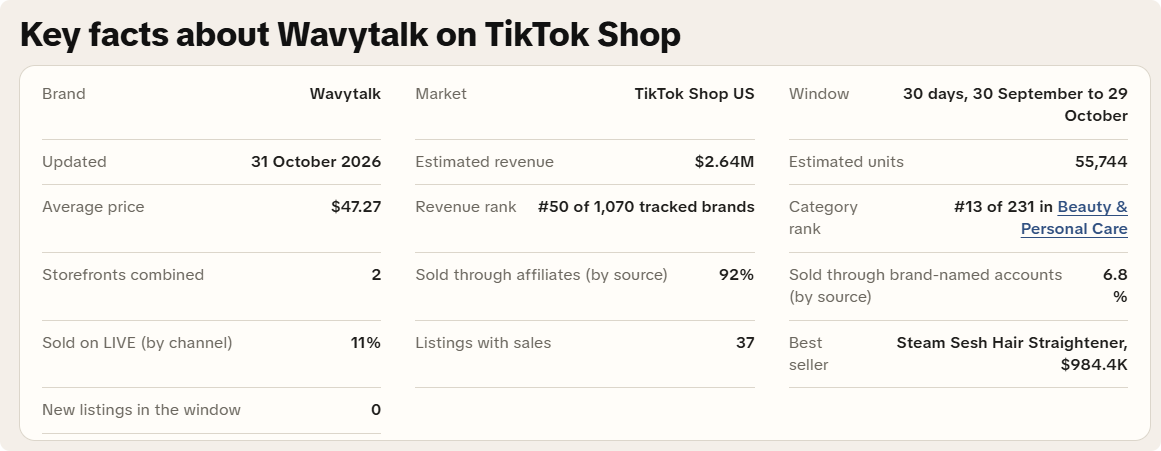
Image source: TokConnect
It is worth noting that Wavytalk's creator collaborations are not limited to top creators.
Below is a brief analysis by the platform of the brand-related creator data for the month:
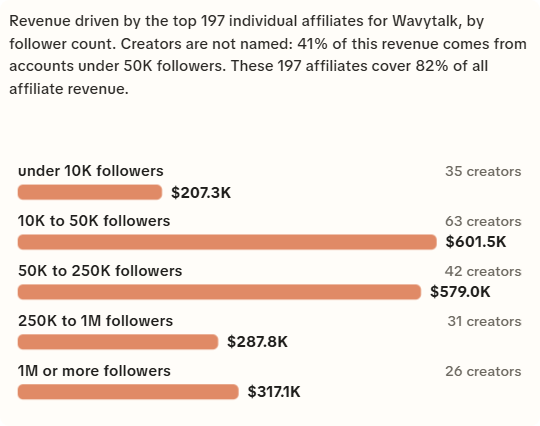
Image source: TokConnect
It can be seen that the brand did not simply chase big influencers; instead, it brought creators with different follower counts into its collaboration system, enabling more small and mid-sized creators to become a sales force.
Behind this is actually related to the content characteristics of hair styling tools. The same product, placed in different creators' content, can show different ways of use and reach consumers with different styling needs.
This is also a point that TUKE MARKETING often emphasizes: rather than how many followers an influencer has, the brand should focus more on what content the influencer usually makes, whether they are good at showing hairstyle changes, and whether they can clearly film the product's results.
What other opportunities are there for home hair styling tools going global?
Returning to the market itself, American consumers have not given up spending on beauty; they have simply begun to allocate their budgets more rationally. Salon services still have irreplaceable professional value, but there is indeed room for home tools to take over everyday curling, straightening, blow-drying, and voluminous styling.
For overseas players who want to enter this track, Wavytalk's experience is worth learning from, but success is not simply a matter of copying a curling iron and finding a group of influencers.
Specific problems still require specific analysis.
Image source: Wavytalk
From a Shenzhen contract manufacturer to a leading hair styling tool brand on TikTok Shop in the US, the path Wavytalk has taken at least shows that competition in Chinese supply chains going global is extending beyond manufacturing and price into product definition, consumer communication, and brand management.
The next overseas hit product may not require particularly complex technology. Whether one can see unmet consumer needs and solve them with a truly easy-to-use product may be the most worthwhile thing to ponder in this business.