6095
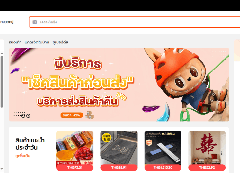
6095Thailand's e-commerce market is experiencing explosive growth.
According to the latest market data, the transaction volume of Thailand's e-commerce market in 2024 has reached 1.1 trillion baht (about 34.1 billion USD), a 14% increase compared to 2023. Industry forecasts show that this growth trend will continue, and by 2027 the market size is expected to exceed 1.6 trillion baht (about 49.6 billion USD). Behind this strong growth momentum is a profound shift in Thai consumers' shopping habits and the rapid popularization of social e-commerce models.

Image source: marketingoops
From the perspective of consumer behavior, price discounts and convenient services are still the primary considerations for Thai consumers when shopping online. The latest survey data shows that 54% of consumers choose online shopping because of coupons and discounts, an increase of 5 percentage points over last year. Free shipping ranks second with an acceptance rate of 51.8%, and another 40.4% of consumers prefer cash on delivery or payment after inspection. These data indicate that Thailand's e-commerce market is shifting from a pure price war to a direction that pays more attention to the overall shopping experience.
Currently, Thailand's e-commerce market has formed a stable pattern of three major players. Shopee maintains its lead with a 75% market penetration rate, holding advantages in fashion apparel and home furnishing categories. Lazada follows closely with a 67% market share, performing outstandingly in electronics and children's products. It is worth noting that although TikTok Shop entered the market relatively late, it has quickly seized a 51% market share, especially showing strong competitiveness in the beauty and personal care sector.

Image source: Google
The growth rate of TikTok Shop is indeed astonishing. The platform's Thai operating entity, TikTok Shop (Thailand) Co., Ltd., was only officially established in November 2023, with an initial registered capital of just 200 million baht. But within just one year, the platform's revenue exceeded 12 billion baht, demonstrating amazing market explosiveness.
The rapid growth of Thailand's e-commerce scale is inseparable from the local people's consumption habits. Data shows that 96.2% of Thais aged 16 and above shop online at least once a week, far higher than the global average (55.8%), and also higher than developed markets such as South Korea (64%) and the UAE (63.6%). In other words, in Thailand, online shopping has become a part of young people's daily lives.

Image source: bangkokpost
Thais spend an average of 2.31 hours per day on TikTok, Facebook, and YouTube, ranking 17th in the world. Therefore, if you want to sell goods in Thailand, social media marketing is almost a must.
More importantly, influencer recommendations have a huge impact on Thai consumers. 83% of Thais will buy products because of influencer recommendations, especially beauty and fashion products. This means that if a brand can find suitable influencers to cooperate with on TikTok or Facebook, sales may directly double.

Image source: Google
Of course, although social media marketing is effective, you can't rely on it alone. Many sellers, in order to achieve explosive sales in the short term, invest heavily in traffic, but if the product and after-sales service can't keep up, it will eventually damage their reputation. Those who can truly gain a foothold in the Thai market are often brands that excel in product, marketing, and service.
Overall, Thailand's e-commerce market is still growing rapidly, with many opportunities, but competition is also becoming fiercer. Shopee and Lazada are still mainstream, but the rise of TikTok Shop has brought new variables to the market landscape. For sellers, it is necessary to seize the dividends of social e-commerce, but also to prepare in advance for possible policy changes in order to go further.