 1856
1856Starting from July 7, 2026, TikTok Shop Southeast Asia cross-border store will officially update its community guidelines on weight management and muscle building content.
This is not a simple revision of terms, but a precise strike against marketing rhetoric in the health category. The platform has clearly delineated five types of prohibited expressions as 'red lines', covering everything from efficacy claims to usage guidance.
For sellers deeply engaged in beauty, health, and equipment categories, this is undoubtedly a compliance turning point that requires immediate response. As the traffic dividend period enters the deep waters of standardization, adapting to the new rules will be key to survival and differentiation.
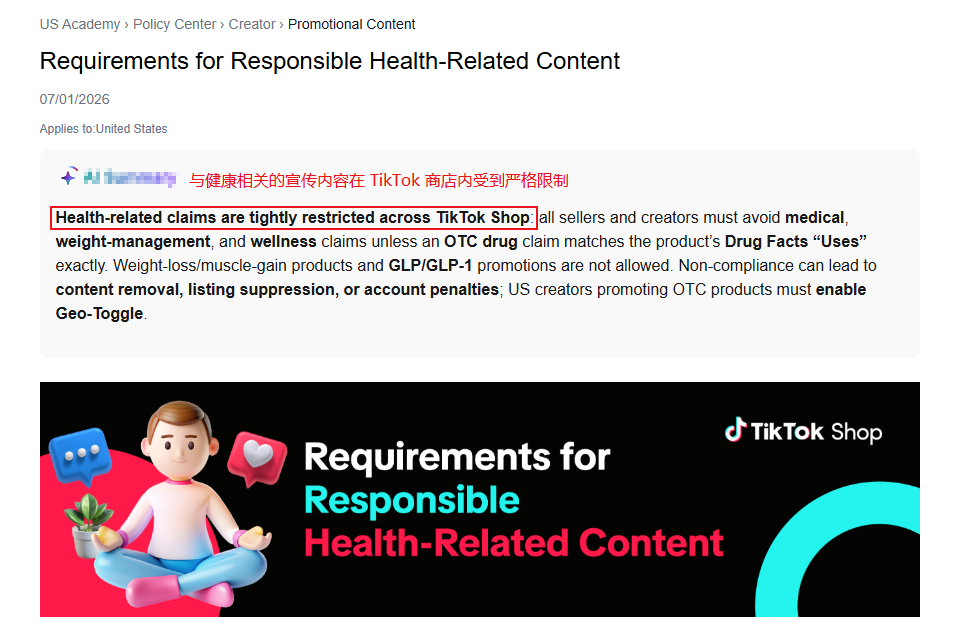
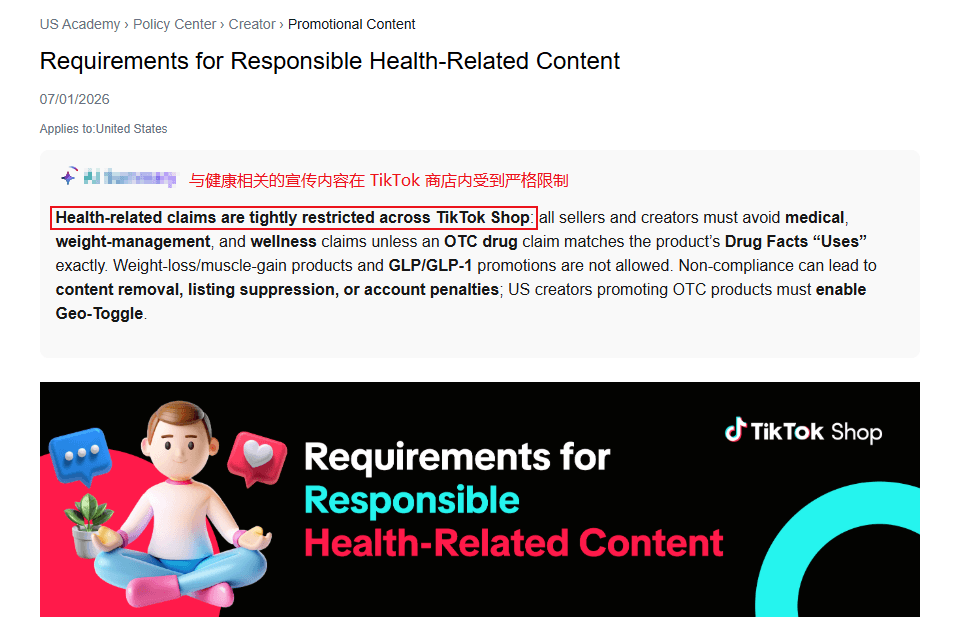
Image source: seller-us.tiktok
Farewell to shortcuts, platform compliance upgraded again
In the past, in the ecosystem of short videos and live streams, some merchants and influencers, in pursuit of extreme conversion rates, were accustomed to using exaggerated comparison images and sensational efficacy promises to stimulate consumers. This new rule by TikTok Shop is precisely a thorough correction of that old logic.
The core of the strict regulation in the new rules is anti-misleading. Specifically, the five prohibited behaviors cover multiple dimensions from content to action:
First, it is strictly forbidden to package ordinary products as 'miracle tools' with effects similar to 'natural Ozempic' or 'GLP-1 enhancers';
Second, in content guidance, it is prohibited to encourage users to 'persist in exercising to burn fat while injured or ill', and also prohibited to incite excessive product consumption for quick results;
Finally, for auxiliary products such as waist trainers and weighing scales, the new rules emphasize that they must not claim to achieve weight loss through 'changing internal body structure', or use idealized body comparison images for high-risk implications.
This series of actions indicates that TikTok Shop is attempting to guide the industry towards conveying scientific and rational health concepts.
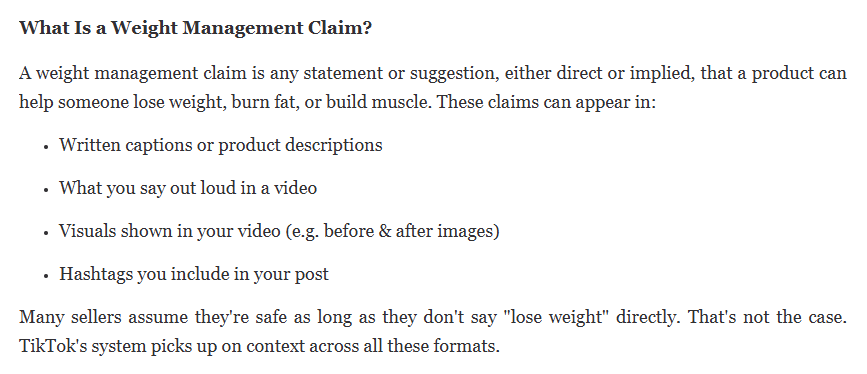
Image source: bigseller
Strategic shift from persuasion to empathy
Facing the new rules, sellers' response should not be passive patching, but an active strategic upgrade.
Facing the need for a complete transformation of content creation logic, instead of dwelling on what cannot be said, it is better to deeply explore what should be said. The role of influencers should shift from efficacy promoters to sharers of healthy lifestyles.
For example, when promoting fitness supplements, the focus should shift to supporting scientific diet and training plans, aiding body function recovery; when promoting exercise equipment, emphasizing the correctness and safety of usage methods is far more persuasive than showing extreme comparison images.
Second, strengthen product qualifications and scientific endorsements. Compliance is the baseline, professionalism is the highline. Introducing the scientific principles of product ingredients, third-party testing reports, professional nutritionist recommendations, etc., into content will become the new infrastructure for building trust.
Sellers should actively collaborate with influencers with professional backgrounds, replacing efficacy promises with knowledge popularization. At the same time, leverage TikTok's community attributes to encourage real users to share their usage experiences based on reasonable expectations.
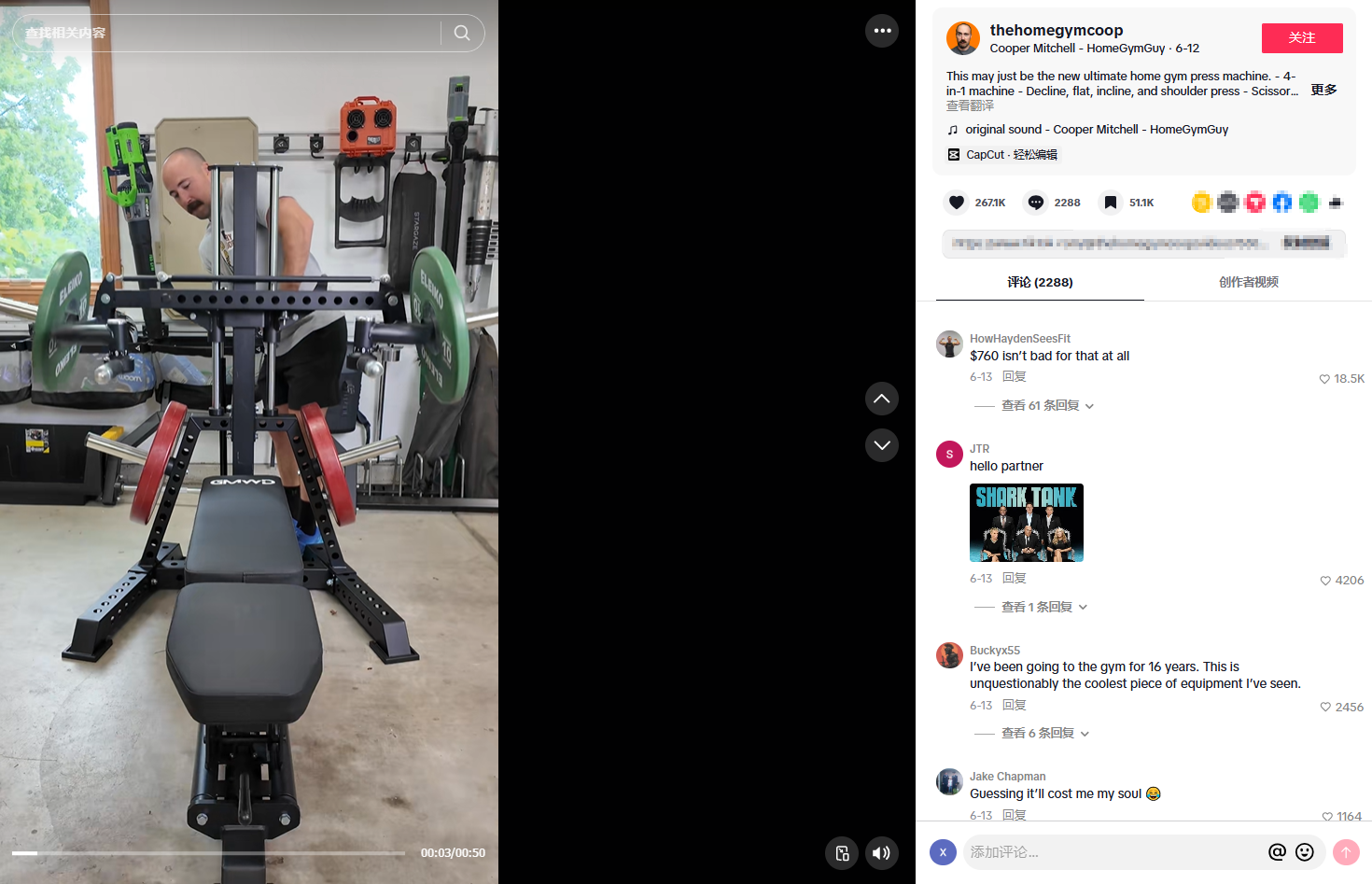
Image source: TikTok
Conclusion
TikTok Shop Southeast Asia's strict regulation on weight loss and muscle building is a threshold leading to high-quality development, signaling that the era of relying solely on traffic tactics and rhetoric tricks is coming to an end.
For sellers, this is not so much a restriction as an opportunity for forced evolution. When the halo of promotion fades, the value of the product itself will once again become the center of the stage.
Embracing compliance as soon as possible and reshaping genuine, professional content communication methods is not just to pass the immediate review, but to accumulate trust assets that can go further in the future long-distance race of Southeast Asian e-commerce.