 1176
1176The hottest topic in cross-border seller circles recently is the removal of 'Baozi Squeezy Toy' from all Amazon categories. If you're not aware of this yet, here's the gist: a stress-relief toy that had been trending on social media for a while disappeared almost overnight from all Amazon sites in the US, Canada, and Europe.
Source: AMZ123
It's not just a single listing issue—the entire category was wiped out.
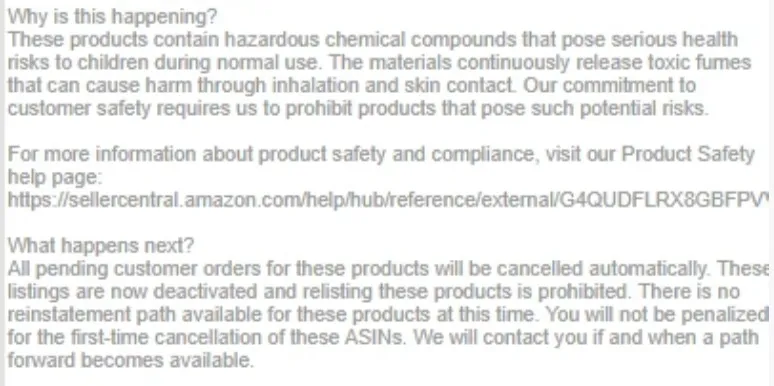
Many sellers initially thought it was a problem with their own listings when they received removal notices. Only later did they realize the entire 'Baozi Squeezy Toy' category was cleared. Removed listings were permanently suspended and could not be reinstated; all pending orders were canceled; FBA inventory was given only 60 days for removal, and any inventory not handled within that period would be destroyed by the platform at the seller's expense. Some sellers had just stocked up for the second half of the peak season, only to have their goods stuck unsold.
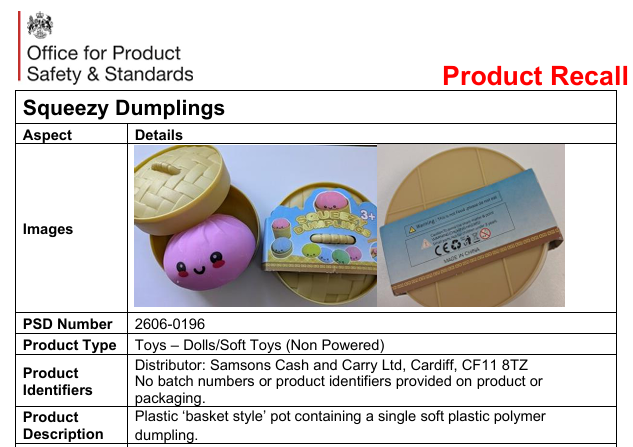
Source: UK Government
Why the sudden action? Two direct reasons.
Amazon's move was not without cause. There were two triggers.
First, starting in May this year, a trend emerged on overseas social media where people microwaved Baozi Squeezy Toys, and many children imitated this, resulting in severe burns. After reports in mainstream media, regulators stepped in.
Second, on June 25, the UK Office for Product Safety and Standards (OPSS) issued a recall notice, stating that the outer layer of Baozi Squeezy Toys had seriously excessive benzene levels—up to 20 times the UK's legal limit. Benzene is a harmful chemical, and children could face health risks through skin contact or inhalation of volatile gases while playing with the toys.
These two factors combined led to regulatory action, and the platform took it seriously.
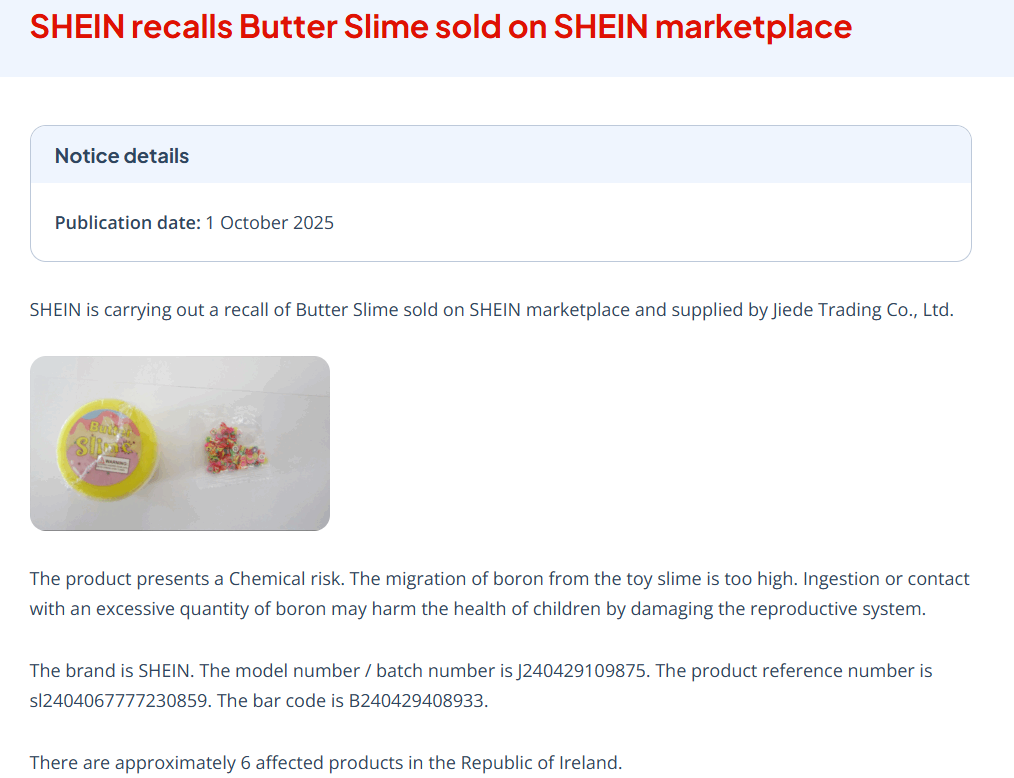
Source: CCPC
Why was the entire category affected? The collective punishment mechanism at work.
Some may ask: If only a portion of the products had issues, why were all sellers of 'Baozi Squeezy Toys' removed?
Behind this is Amazon's 'high-risk category collective punishment mechanism.' Once a category faces an official recall or a safety incident reported by mainstream media, Amazon's system automatically marks the entire category as high-risk and initiates a full category screening. Note: It doesn't only check listings with complaints—it screens all similar products uniformly.
This scenario is not new in the stress-relief toy circle. From fidget spinners to slime to Pop Its, each product followed the same path: social media hype, sellers rushing in, safety issues exposed, official recalls, and platform crackdowns. The whole process can take as little as two to three months.
Source: Internet
A reminder for sellers
The 'Baozi Squeezy Toy' incident serves as a warning for cross-border sellers.
Internet viral products are always a high-risk, high-reward business. When they're hot, everyone wants to jump in and make a quick profit, but regulatory crackdowns often spread faster than the hype. Latecomers who just placed goods in warehouses land right in the crosshairs of the platform's net, becoming the last bag holders.
Certification is not a talisman; only by keeping an eye on each batch of production can you be sure. If you gamble before regulators act, you might get away with it. But if you rush in after a recall, you're just asking for trouble.
The profit from ten quick wins may not cover the losses from a single full-category removal. Compliance is a string that must never be loosened.