![¿[las empresas deben ver cuando van al mar] la marca Ai + va al mar, ¿ cómo se debe jugar?](/_next/image?url=https%3A%2F%2Fadmin.tktk.com%2Fuploads%2Fallimg%2F250611%2F1-250611150Z70-L.png&w=1920&q=75)
 2337
2337La internacionalización de marcas está entrando en una nueva fase.
En los últimos años, las empresas chinas han transformado su capacidad de fabricación en cuota de mercado global, pero la competitividad central futura ya no se basa solo en el producto, sino en la capacidad de contenido, la capacidad de difusión y la capacidad de conexión con el usuario.
Y la IA, precisamente, ofrece una palanca sin precedentes en estos tres puntos. La IA + internacionalización de marcas ya no es un eslogan, sino una tendencia, y la clave no está en "hacerlo o no", sino en "cómo jugarlo".

Fuente: Internet
Las tendencias de marketing han cambiado, y las tácticas también deben actualizarse
El informe "Innovación y Desarrollo del Marketing de Internacionalización Impulsado por IA para PYMES en 2025" publicado por OneSight señala que, en la era post-pandemia, el marketing global ha entrado en una etapa de doble motor: "captación incremental + activación de clientes existentes".
El declive del dividendo demográfico, la desaceleración del crecimiento económico y la diversificación del consumo se han convertido en la norma. Tanto las marcas B2C como las B2B enfrentan el desafío de una menor eficiencia en la captación de clientes. Al mismo tiempo, la fragmentación del contenido y la polarización de las plataformas continúan intensificándose, y el marketing está pasando de un modelo de "éxito en una sola plataforma" a una colaboración multicanal + operación refinada.
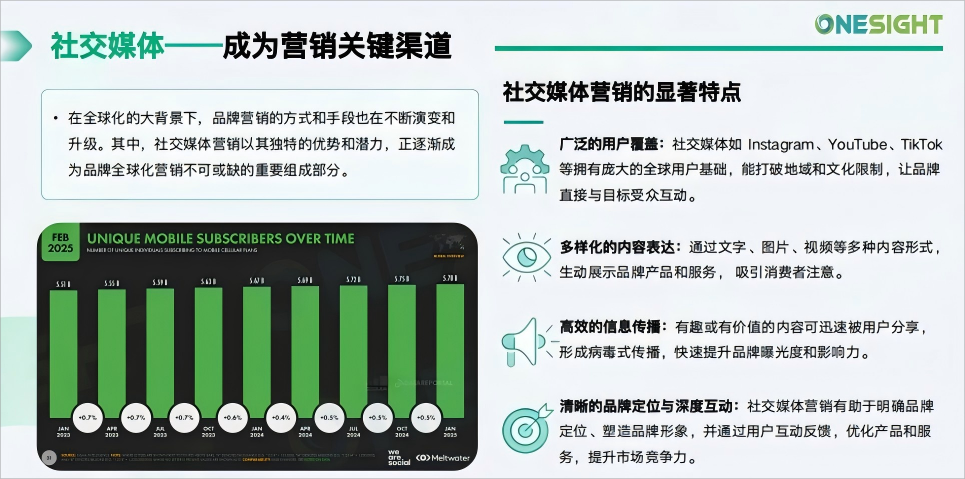
En este contexto, los puntos de contacto de las marcas aumentan, pero la atención del consumidor disminuye. Las plataformas sociales se están convirtiendo en el campo de batalla principal para la internacionalización de marcas, pero bajo la lógica dominante de "contenido + algoritmo", las marcas que buscan una influencia a largo plazo no pueden lograrlo solo con grandes presupuestos.
Hasta la fecha del informe, entre las principales plataformas sociales globales, TikTok tiene más de 2000 millones de usuarios activos mensuales y un tiempo promedio de uso de 47 minutos, ocupando el primer lugar mundial; YouTube Shorts supera los 15 mil millones de visitas diarias; Instagram, Snapchat y otras también han fortalecido sus módulos de video corto y contenido interactivo.
Detrás de estas plataformas, hay algoritmos de recomendación y reconocimiento de contenido basados en IA como soporte. Si las marcas quieren obtener exposición en ellas, deben "adaptarse a la IA y aprovechar la IA".
Fuente: OneSight "Informe de Innovación y Desarrollo del Marketing de Internacionalización Impulsado por IA para PYMES en 2025"
La IA está remodelando el sistema de contenido y difusión de la internacionalización
El primer paso para que una marca salga al exterior es "ser vista", y la producción de contenido es precisamente donde la IA puede desplegar todo su potencial.
El informe menciona que TikTok Shop ha lanzado una herramienta de generación de videos cortos con IA. Los comerciantes solo necesitan cargar palabras clave del producto para generar automáticamente anuncios en video corto adaptados al mercado local, con soporte para múltiples idiomas, textos localizados e incluso ajustes en el tono emocional.
En un proceso tradicional, un equipo de contenido podría necesitar dos semanas para completar un material de video. Ahora, con la ayuda de herramientas de IA, se pueden generar automáticamente múltiples versiones en cuestión de horas, ahorrando mucho tiempo y esfuerzo.
El anuncio AIGC de Coca-Cola es un caso clásico de marketing de marca impulsado por IA. Este anuncio combina modelado 3D, generación de imágenes con Stable Diffusion y contenido real, convirtiéndose en la primera creatividad de comunicación global impulsada por IA.

Fuente: Anuncio AIGC de Coca-Cola
La capacidad de toma de decisiones basada en datos es la ventaja central que aporta la IA
El marketing no es un juego de creatividades puntuales, sino un juego de eficiencia en toda la cadena. Otro gran valor de la IA es que puede conectar los eslabones originalmente fragmentados (creatividad, publicación, retroalimentación, conversión, recompra) en un ciclo cerrado que puede predecirse y optimizarse.
El informe señala que los dueños de marcas están adoptando una actitud más racional hacia la IA: el 90% de los anunciantes considera que la IA es una oportunidad de negocio, pero el 45% también cree que conlleva riesgos competitivos, siendo el núcleo que "los competidores podrían usar la IA más rápido que nosotros". En esencia, se trata de una competencia de capacidad de toma de decisiones tecnológicas: quien pueda usar la IA para predecir tendencias, ajustar estrategias y optimizar la publicación con mayor precisión, podrá avanzar más rápido.
Actualmente, plataformas como TikTok y Meta están integrando profundamente la IA en sus sistemas publicitarios. Meta ha aumentado la relevancia de los anuncios en un 20% utilizando motores de recomendación de IA; TikTok, por su parte, utiliza filtrado colaborativo y predicción de comportamiento para fortalecer el mecanismo de distribución de "recomendaciones personalizadas", ayudando a las marcas a encontrar usuarios de alto potencial. Para las marcas pequeñas y medianas, esto significa que la publicación ya no es cuestión de gastar dinero para obtener volumen, sino de calcular con precisión el ROI.
Fuente: Internet
Múltiples plataformas, múltiples mercados: la IA ayuda a las marcas a "encontrar el ritmo adecuado"
En diferentes mercados, plataformas y contextos culturales, la aceptación del contenido y las dinámicas sociales varían enormemente. Un valor clave de la IA es ayudar a las marcas a comprender más rápido a su público objetivo, diciendo lo que quieren escuchar en el momento adecuado y de la manera correcta.
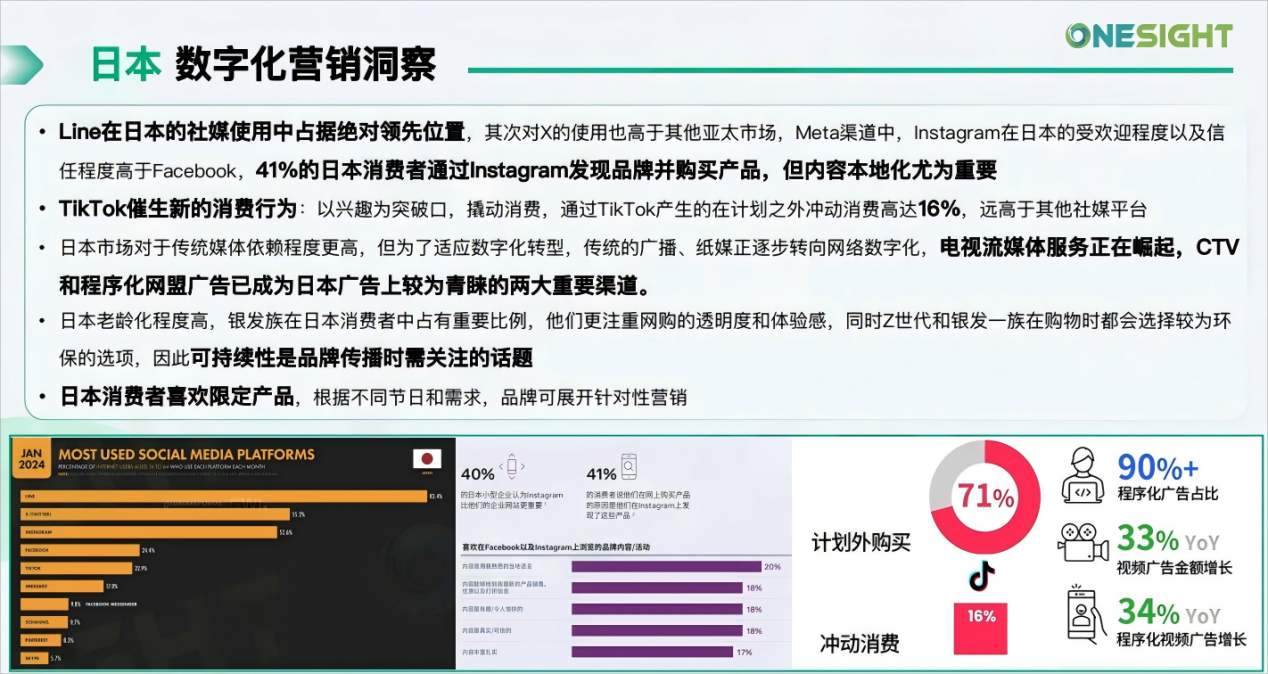
Al respecto, el informe también proporciona información basada en datos para varios mercados regionales:
En Estados Unidos, TikTok tiene la mayor cantidad de usuarios a nivel mundial, con más de 110 millones de usuarios de comercio social, lo que representa el 42% de los internautas estadounidenses; en el Sudeste Asiático, la penetración del comercio electrónico supera el 60%, siendo la región de más rápido crecimiento global durante tres años consecutivos; en Japón, el comportamiento de "descubrimiento de intereses" impulsado por TikTok ha generado un 16% de compras impulsivas, muy por encima de otras plataformas; y en India, el 52% de los hogares ya utiliza televisores conectados, con un crecimiento vertiginoso de la publicidad en CTV.
En estos mercados, si las marcas siguen utilizando el método antiguo de "una versión para todo el mundo" para crear contenido, pronto quedarán obsoletas. La IA puede lograr una "localización rápida" en la distribución de contenido y la adaptación al contexto de la plataforma, ayudando a las marcas a experimentar rápidamente con bajo costo y encontrar el ritmo adecuado con alta eficiencia.
Fuente: OneSight "Informe de Innovación y Desarrollo del Marketing de Internacionalización Impulsado por IA para PYMES en 2025"
Casos prácticos demuestran que la IA no es una teoría vacía, sino una capacidad tangible
El caso de internacionalización de Chacha Melonseeds nos proporciona un paradigma claro de la combinación de IA + localización. En el mercado de Indonesia, Chacha lanzó semillas de melón con sabor a coco adaptadas al gusto local y colaboró con el influencer líder en bricolaje @ahan.zm para promocionar el producto. El video corto que grabaron juntos obtuvo finalmente 3.5 millones de reproducciones y 200,000 interacciones, impulsando un aumento de ventas de hasta el 15%.
El enfoque de exportación cultural de Moutai es otro ejemplo típico. Moutai utilizó la IA para ayudar a su equipo de contenido a fusionar la cultura de las estaciones, festivales, poesía y vino con las preferencias estéticas de los usuarios extranjeros, publicando imágenes y videos personalizados en Facebook y la plataforma X, estableciendo así un sentido de identificación cultural entre los usuarios de la época.
En estos dos casos, la IA no solo es una herramienta para mejorar la eficiencia en la creación y difusión de contenido, sino también un puente clave para conectar culturas, comprender mercados y lograr una comunicación localizada.

Chacha Melonseeds en Indonesia
La lógica subyacente de la internacionalización no ha cambiado, pero las herramientas sí
No es difícil ver que la esencia de la internacionalización de marcas siempre ha sido conectar con las personas y transmitir valor. Pero cuando la IA se convierte en una nueva herramienta tecnológica, las marcas no solo necesitan seguir la tendencia, sino utilizar el método correcto.
La IA no es una solución universal ni una fuente de impulso a corto plazo. Su verdadero valor radica en: ayudar a las marcas a establecer un camino de crecimiento sostenible en mercados globales complejos y cambiantes, con menor costo, mayor eficiencia y una capacidad de adaptación más fuerte.
Es decir, hoy en día, la internacionalización de marcas ya no es un juego de grandes presupuestos, sino un proceso de "competencia interna". En el futuro, pertenecerá más a aquellos que realmente entienden la IA, la utilizan bien y saben cómo ponerla al servicio de la marca.