
 1840
1840Chaque année, le Black Friday, en tant que festival mondial du shopping, est devenu un moment clé pour les ventes annuelles des vendeurs de commerce électronique transfrontalier. La frénésie du Black Friday 2024 est arrivée comme prévu, et les données de vente de diverses plateformes ont atteint de nouveaux sommets. Pour les vendeurs, le Black Friday n'est pas seulement un défi, mais aussi une excellente opportunité de croissance. Comment maximiser les ventes dans le temps restant et atteindre le véritable pic de « commandes explosives » ? Voici le guide de dernière ligne droite pour le Black Friday.
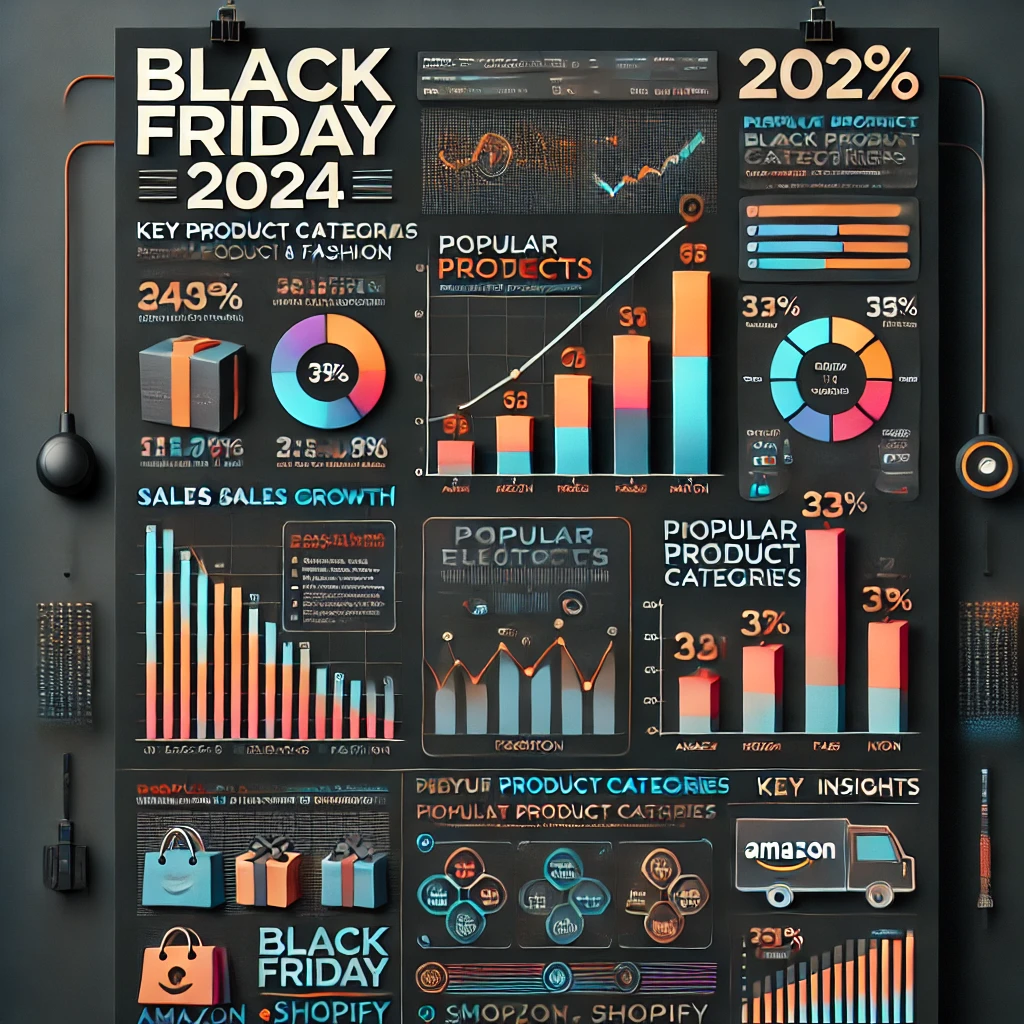
Données préliminaires du Black Friday 2024
Selon les données globales, d'après Adobe Analytics, les ventes en ligne du Black Friday aux États-Unis en 2023 ont atteint 9,8 milliards de dollars, soit une augmentation de 7,5 % par rapport à l'année précédente, battant le record historique. Cette tendance à la hausse laisse présager une frénésie d'achats encore plus intense pour le Black Friday 2024. De plus, un rapport de Bain & Company prévoit que les ventes au détail aux États-Unis entre le Black Friday et le Cyber Monday 2024 augmenteront de 5 % par rapport à l'année précédente, pour atteindre 75 milliards de dollars.
Contrairement aux années précédentes, le Black Friday 2024 n'est pas seulement le « terrain de jeu » d'Amazon ; des grands détaillants comme Walmart et Target ont également intensifié leurs promotions en ligne.
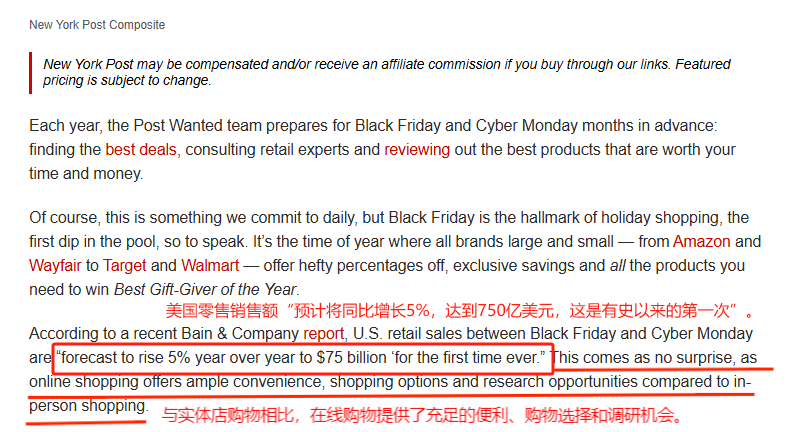
Source : New York Post
Concentrez-vous sur les catégories de produits populaires et allouez les ressources avec précision
Cette année, pendant le Black Friday, des catégories telles que les produits électroniques, les articles ménagers, les vêtements de mode et les soins de beauté et personnels continuent d'être privilégiées par les consommateurs. En particulier, des produits comme les montres intelligentes, les casques de réalité virtuelle, les appareils de transformation des aliments et les outils de coiffure connaissent une demande en forte hausse. De plus, les appareils électroménagers, les articles d'amélioration de l'habitat et les produits de santé et de soins personnels montrent également une forte dynamique de vente.
Petits conseils pour optimiser la sélection de produits :
Suivez les tendances : Surveillez en temps réel la demande des consommateurs via les mots-clés tendance des plateformes (comme Amazon ou Google Trends). Par exemple, cette année, les produits liés à la « protection de l'environnement », comme les couverts biodégradables et les bouteilles réutilisables, ont connu une augmentation significative des ventes.
Priorité aux marges élevées : Allouez le budget et les ressources promotionnelles en priorité aux produits avec une marge brute élevée et un stock suffisant.
Créez des offres groupées : Augmentez le panier moyen via des offres comme « achetez A, recevez B gratuitement » ou « kits combinés », tout en écoulant les stocks dormants.
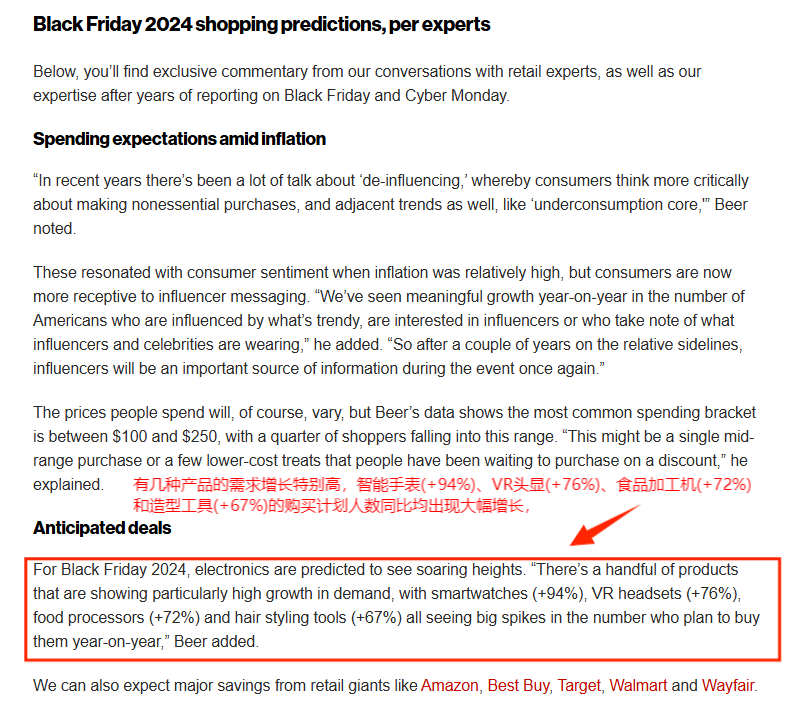
Source : New York Post
Gestion des stocks et de la logistique : éviter les ruptures de stock et les invendus
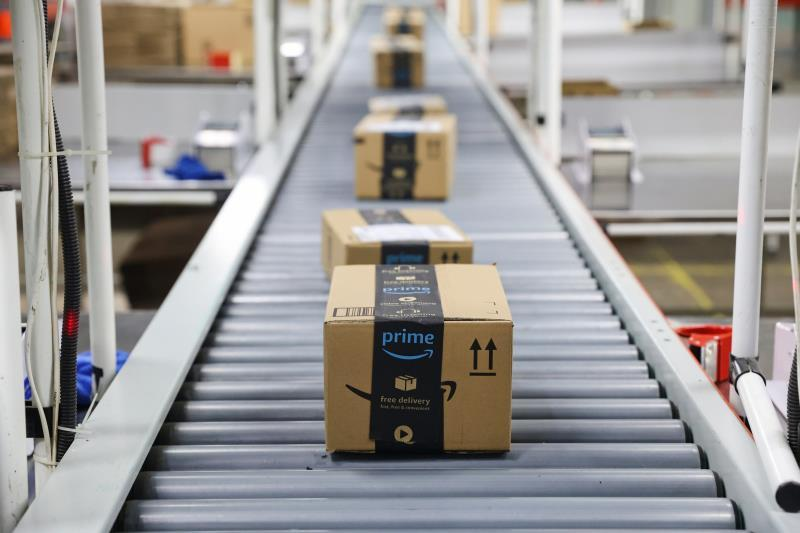
Le pic des ventes du Black Friday s'accompagne souvent de pressions sur les stocks et de défis logistiques. Les données montrent que pendant le Black Friday 2023, le taux de rupture de stock des produits populaires a atteint 23 %, tandis que le taux d'invendus dû à un surstockage était de 15 %. Ces problèmes ont directement affecté la rentabilité des vendeurs.
La clé pour résoudre les problèmes de stocks réside dans des prévisions scientifiques et une surveillance en temps réel. Les vendeurs utilisant des outils d'optimisation des stocks pour l'analyse des données ont vu leur taux de rotation des stocks moyen augmenter de 18 %, tandis que les coûts de préparation des stocks ont diminué de 12 %. Côté logistique, la tolérance des consommateurs aux retards de livraison a considérablement diminué pendant la période des fêtes. Pendant le Black Friday, le taux d'annulation de commandes dû à des retards logistiques a atteint 8 %, tandis que le taux de conversion des commandes expédiées à temps a augmenté de 32 %.
Prolonger l'élan du Black Friday pour améliorer la valeur client à long terme
La valeur du Black Friday ne réside pas seulement dans les commandes explosives, mais aussi dans la transformation des ventes à court terme en points de croissance à long terme pour la marque. Les données montrent que pendant la Cyber Week suivant le Black Friday 2023, les ventes quotidiennes moyennes des plateformes de commerce électronique américaines sont restées à plus de 70 % du pic du Black Friday.
Pour les consommateurs qui ont manqué les réductions du Black Friday, cette période est un moment clé pour « se réapprovisionner ». Pour ces consommateurs, vous pouvez concevoir des offres spéciales limitées dans le temps, comme « prolongation des offres du Black Friday » ou « réductions exclusives de la Cyber Week », puis toucher les utilisateurs qui ont consulté mais n'ont pas commandé via le marketing par e-mail. En même temps, n'oubliez pas l'importance des clients réguliers ; leur envoyer un coupon personnalisé à ce moment-là peut à la fois augmenter le taux de réachat et renforcer la fidélité à la marque.

Conclusion
Le Black Friday 2024 n'est pas seulement une frénésie de trafic et de ventes, c'est aussi une opportunité de construction de marque. Les nouveaux utilisateurs attirés pendant la période de pointe peuvent être transformés en clients à long terme grâce à une expérience d'achat de qualité et un service après-vente attentionné.
Sur le champ de bataille du Black Friday, la victoire n'appartient pas seulement à ceux qui vendent le plus, mais à ceux qui parviennent à retenir le plus de clients.