 2688
2688Lors de la finale de l'Open d'Australie 2024, Novak Djokovic a dévissé une bouteille d'eau et l'a versée dans une tasse en métal qu'il avait apportée.
Le plan se rapproche : un petit cube bleu au fond de la tasse se dissout rapidement, et tout le public voit le logo sur la paroi — waterdrop.
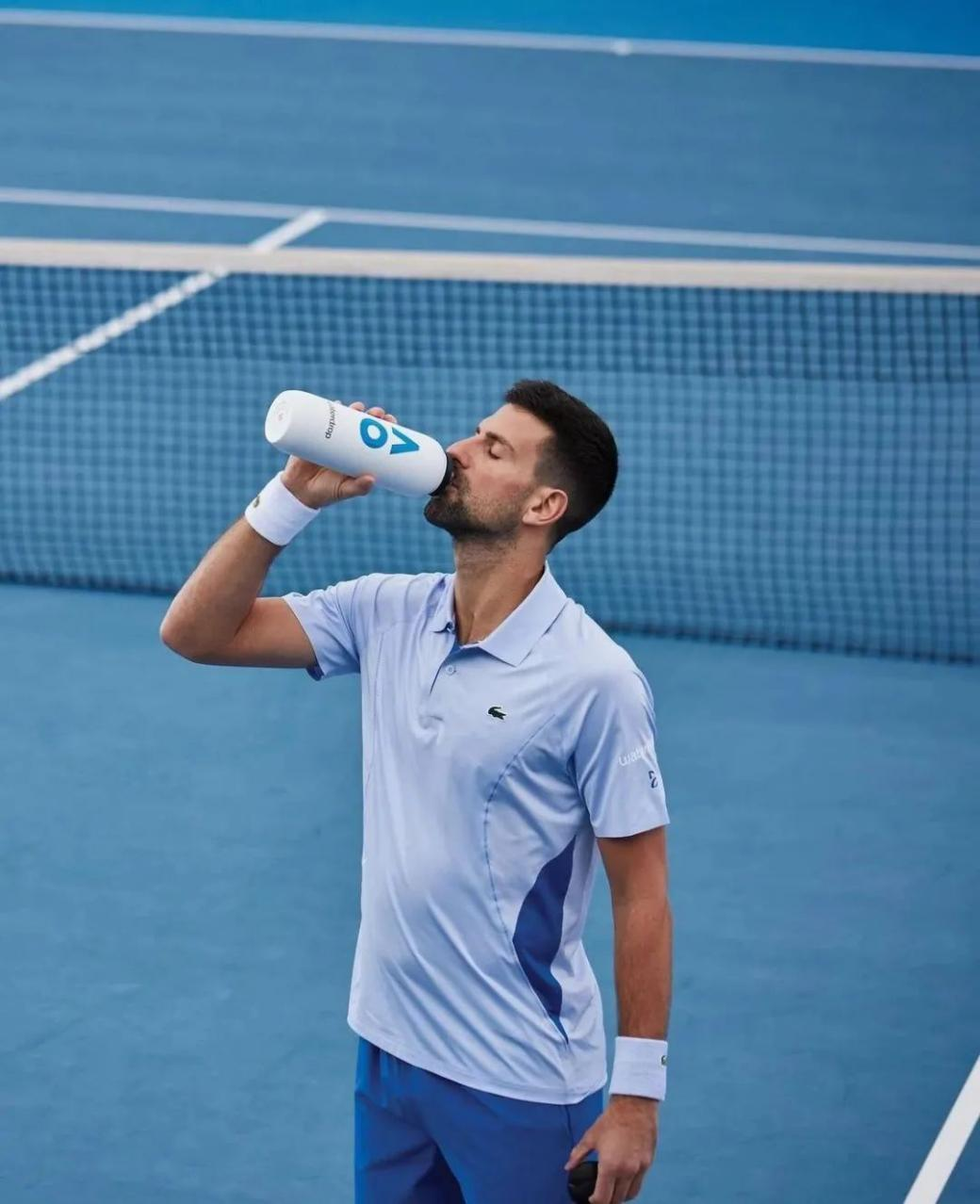
Source : Compte officiel waterdrop sur les réseaux sociaux
Cette image a suscité des débats sur les réseaux sociaux : « Que boit vraiment le roi du tennis ? »
La réponse est dévoilée ! Il s'agit d'une « micro-boisson » de la taille d'un ongle, qui se dissout dans l'eau et peut donner 12 saveurs comme le citron ou la myrtille, le tout sans sucre ni calories.
C'est ce petit cube qui a permis à la marque autrichienne waterdrop, fondée il y a seulement 8 ans, d'atteindre des ventes annuelles de plus de 100 millions, de conquérir 40 pays, et même de décrocher une place de choix chez Walmart.
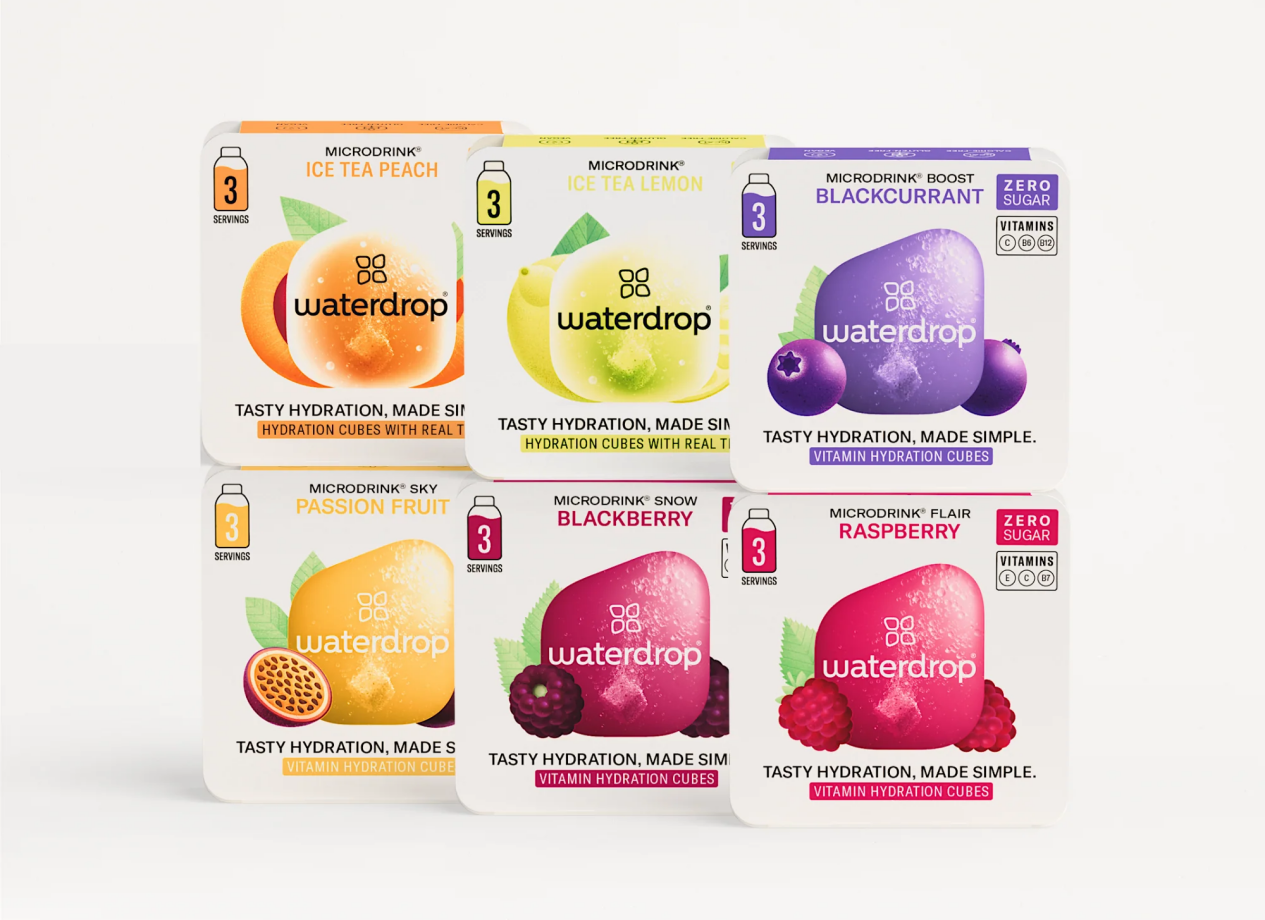
Source : waterdrop
L'inspiration à 30 000 pieds d'altitude
L'histoire de waterdrop commence au printemps 2016.
Sur un vol pour Singapour, l'Autrichien Martin regarde une bouteille en plastique dans sa main et réfléchit :
Pourquoi les boissons saines doivent-elles être emballées dans des contenants lourds ?
Et si on pouvait concentrer les extraits de fruits et de plantes en un « petit cube » qui, une fois plongé dans l'eau, deviendrait instantanément une boisson, à la fois écologique et pratique ?
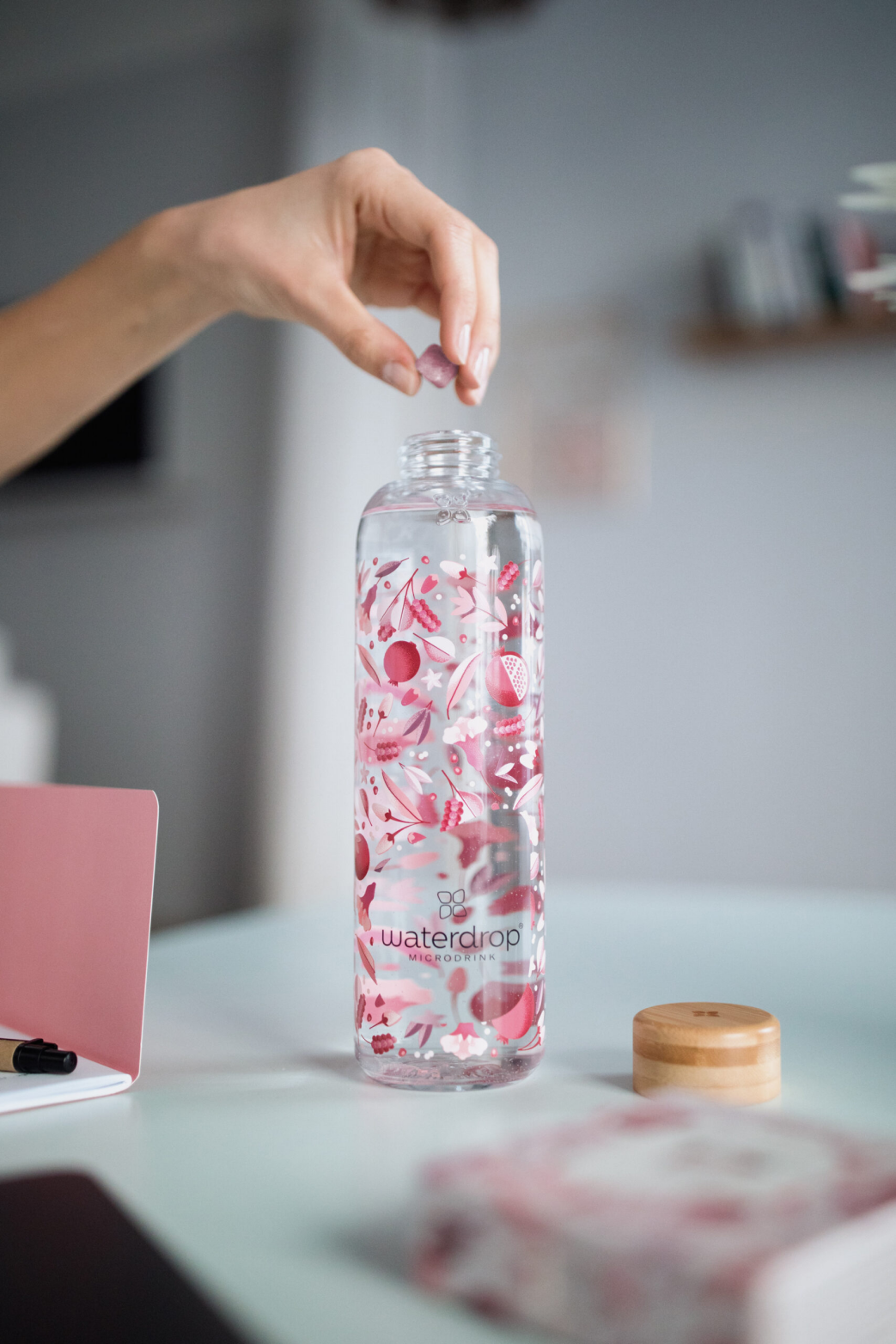
Source : waterdrop
Cette idée l'a poussé à recruter immédiatement son frère Henry et son ami Christoph. Tous trois se sont entassés dans un petit bureau à Vienne pour commencer d'innombrables expériences.
Ils ont essayé de réduire des myrtilles en poudre, ajusté des dizaines de proportions de recettes, et ont même perdu temporairement le goût à force de goûter trop d'échantillons.
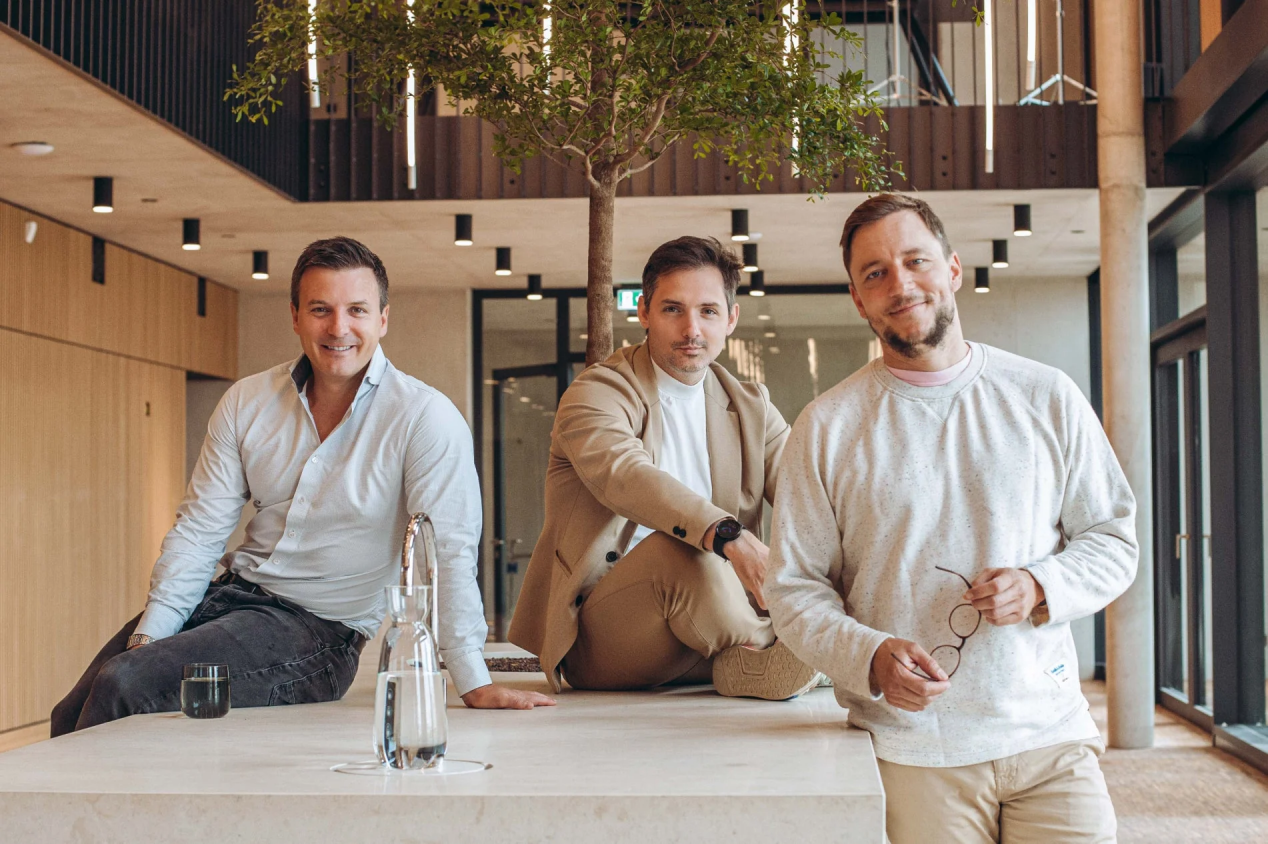
Équipe fondatrice de waterdrop Source : Internet
Jusqu'au jour où un cube de la taille d'un ongle, plongé dans l'eau, s'est rapidement dissous en un liquide violet clair fruité : la première génération de « micro-boisson » était née.
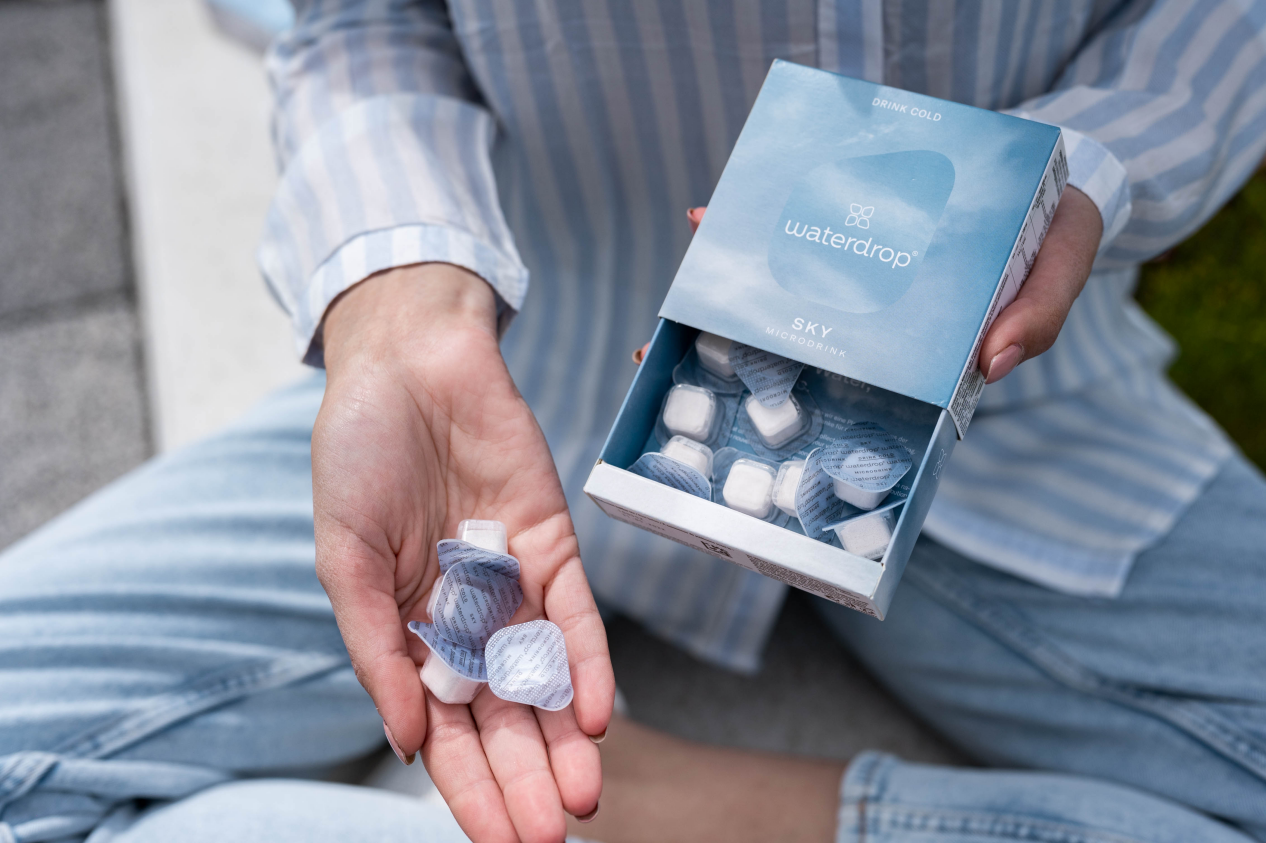
Source : waterdrop
Du pop-up store au géant mondial
Depuis ses débuts dans un petit bureau en 2016, la marque a su saisir chaque opportunité.
En 2017, dans un pop-up store, des clients curieux demandaient aux vendeurs : « C'est vraiment fait avec de l'eau plate ? »
En 2018, ils sont montés sur une émission de start-up allemande, et les juges, voyant ces « cubes de boisson » pouvant tenir dans une poche de chemise, se sont exclamés : « Ça va changer les rayons des supermarchés. »
Le véritable tournant a eu lieu en 2021. Lorsque les consommateurs américains ont découvert ces petits cubes colorés dans les rayons de Walmart, c'était en pleine vague de télétravail post-pandémie, et de plus en plus de gens en avaient assez de stocker de grandes bouteilles de boissons.
La même année, ils ont signé leur millionième client, soit l'équivalent de 274 nouveaux utilisateurs par jour essayant la magie de « transformer l'eau en boisson ».
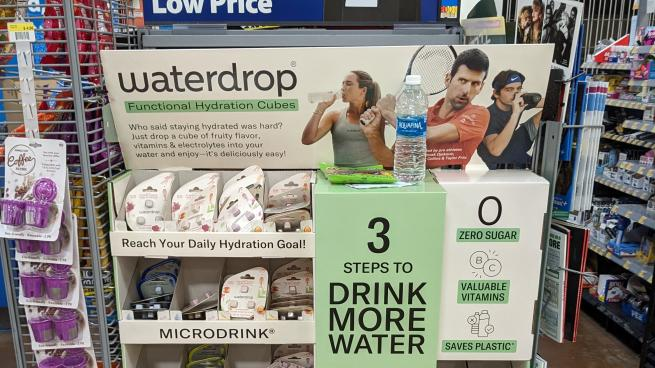
Source : Internet
Lors de l'Open d'Australie 2024, quand Djokovic a levé sa tasse marquée du logo Waterdrop, ce « petit cube » était devenu une affaire présente dans 45 pays.
Les derniers rapports financiers montrent qu'en 2022 seulement, ils ont vendu pour 96 millions de dollars de produits, soit l'équivalent de 18 « cubes de boisson » dissous chaque minute dans des tasses à travers le monde.
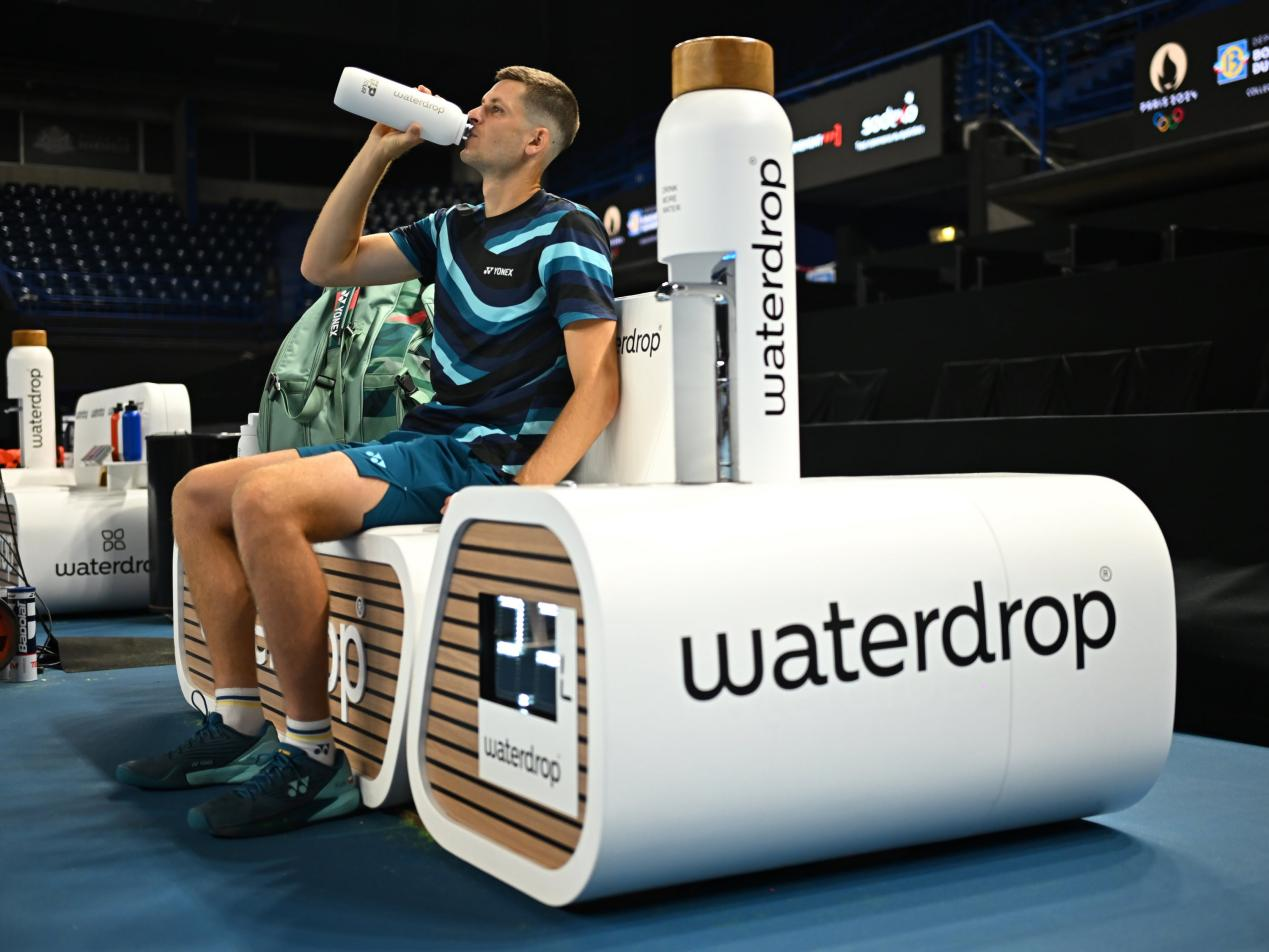
Source : waterdrop
La recette du succès viral de Waterdrop sur les réseaux sociaux
Au début de la marque Waterdrop, ils comptaient principalement sur leur site en ligne et quelques boutiques physiques pour vendre, suivant une approche DTC.
Pour attirer plus de clients cibles, ils ont aussi investi beaucoup d'argent dans des collaborations avec des influenceurs sur les réseaux sociaux pour du marketing d'influence, avec des résultats plutôt positifs.
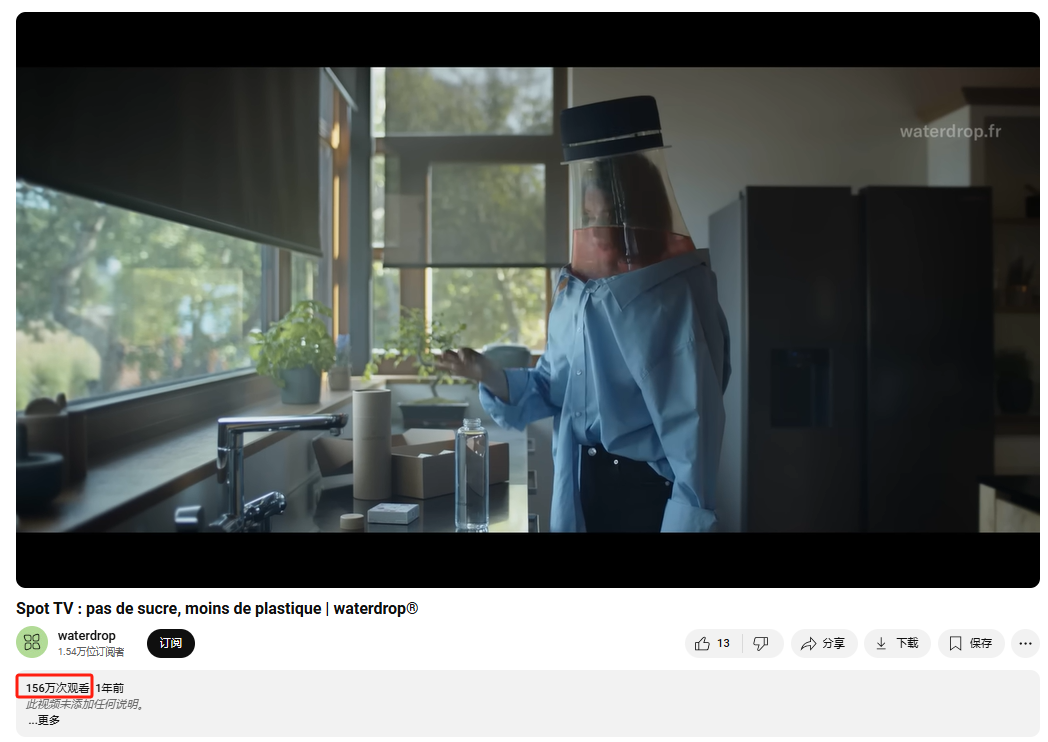
Par exemple, sur YouTube, Waterdrop a brillé.
Une courte vidéo publiée le 12 mai 2023 a atteint directement 1,56 million de vues. Cette vidéo mettait en avant les concepts d'« écologie » et de « sans sucre », avec une idée créative accrocheuse, dépeignant chacun comme « vivant avec une bouteille de boisson », ce qui pousse à la réflexion.
Source : YouTube
En plus du contenu officiel, Waterdrop accorde une grande importance au marketing de bouche-à-oreille, en collaborant avec de nombreux KOC et KOL pour des vidéos de test.
Par exemple, ils ont travaillé avec le blogueur tchèque connu @Rozum v troubě pour une vidéo de test de 7 minutes et 24 secondes, qui documentait l'expérience d'utilisation du produit Waterdrop, du déballage à la dégustation.
Le titre de la vidéo était également très astucieux : « Waterdrop : eau gazeuse hors de prix ou boisson miracle ? » Ce titre plein de suspense a attiré un large public, et la vidéo a finalement dépassé les 190 000 vues, obtenant un bon effet de diffusion.

Source : YouTube
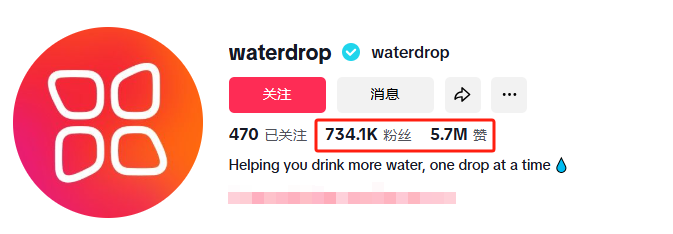
Sur TikTok, leur compte officiel @waterdrop a également attiré 734 100 fans, avec un total de 5,7 millions de likes sur les vidéos.
Source : TikTok
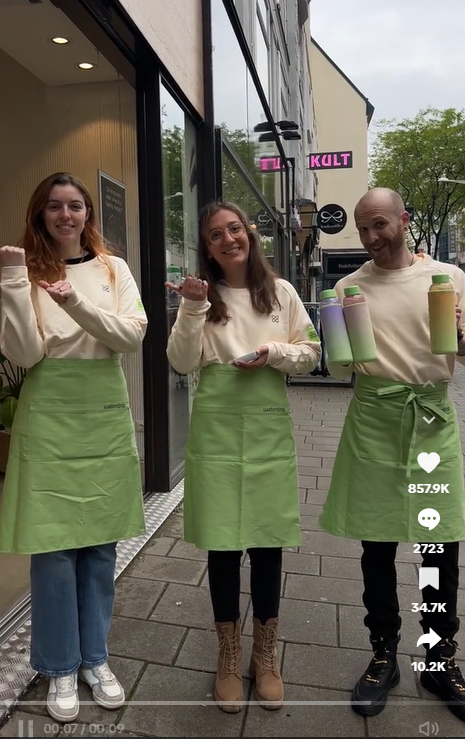
Une vidéo TikTok sur un pop-up store a particulièrement bien marché, atteignant actuellement 53,3 millions de vues et près de 860 000 likes, des chiffres plutôt impressionnants.
Source : TikTok
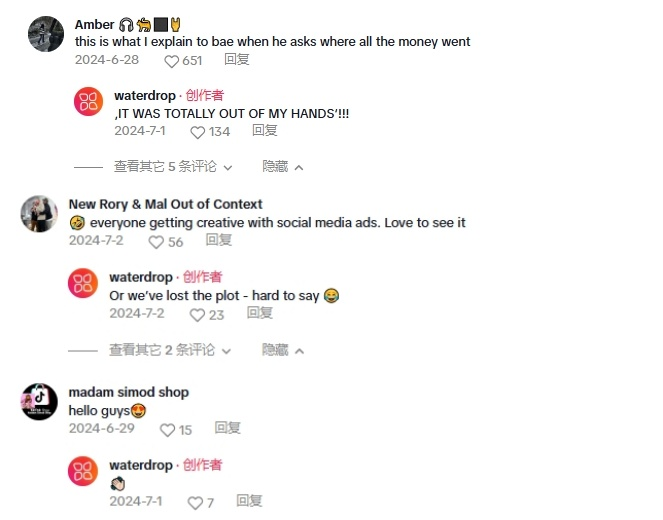
Waterdrop répond régulièrement aux messages et commentaires des utilisateurs, interagissant avec eux, ce qui contribue à renforcer la proximité de la marque, à accroître la fidélité des utilisateurs, et à créer un cercle vertueux d'interactions positives.
Source : TikTok
On voit que le compte TikTok de Waterdrop est maintenant dans une phase stable, avec un contenu qui ne se limite plus à montrer simplement le produit, mais qui est plus riche et plus structuré. Cette gestion fine incite les utilisateurs à rester, renforçant ainsi la fidélité.
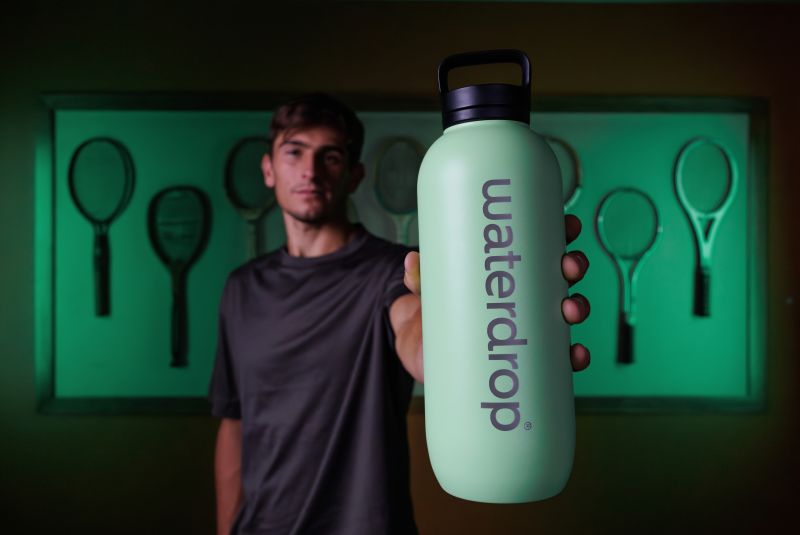
Selon le fondateur Martin Murray, Waterdrop investit chaque année plus de six chiffres dans le marketing d'influence. Au vu des résultats, cet investissement semble en valoir la peine, avec des effets marketing positifs.
Source : waterdrop
Pourquoi même boire de l'eau peut-il devenir une grande affaire ?
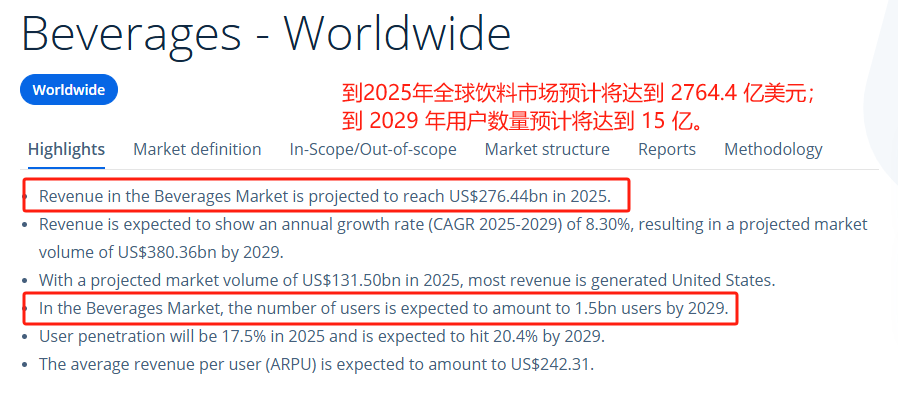
Regardons ces chiffres pour comprendre : aux États-Unis, chaque personne consomme en moyenne 657 canettes de boissons par an, dont la croissance des catégories sans sucre est trois fois plus rapide que celle des boissons traditionnelles. D'ici 2025, le marché mondial des boissons devrait atteindre 276,44 milliards de dollars ; d'ici 2029, le nombre d'utilisateurs devrait atteindre 1,5 milliard.
Source : statista
Derrière cela, « l'anxiété liée à la santé » est également un moteur clé.
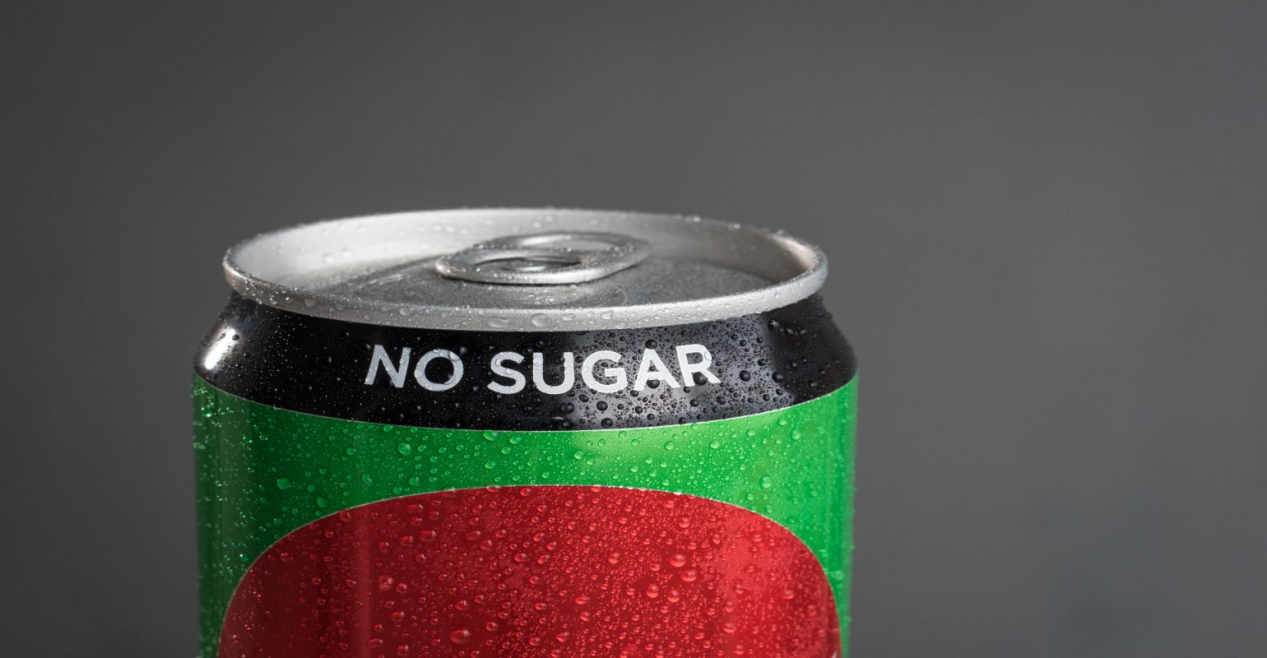
Les données des plateformes de e-commerce montrent que les recherches du mot-clé « sans sucre » ont augmenté de 740 % en trois ans, tandis que les ventes de sodas traditionnels ont connu leur première baisse en 20 ans.
Source : Internet
En conclusion
L'expansion de Waterdrop sur les marchés étrangers est essentiellement un décodage profond des habitudes de consommation mondiales.
De l'Europe à l'Amérique du Nord, puis au marché asiatique, son succès ne repose pas sur une simple innovation produit, mais sur une compréhension précise de la psychologie des consommateurs dans différents marchés.
Cette voie d'expansion est particulièrement pertinente pour les entreprises chinoises. Le marché étranger n'est pas un tout, mais un puzzle composé d'innombrables segments de marché. Chaque marché a sa propre culture, ses habitudes de consommation et ses exigences réglementaires, et copier simplement le modèle de succès national ne fonctionne souvent pas.
Pour les entreprises chinoises, le défi de l'expansion à l'étranger ne réside pas seulement dans le produit lui-même, mais aussi dans la compréhension et l'adaptation aux règles et aux besoins des marchés étrangers.
La mondialisation ne se fait pas du jour au lendemain ; c'est un processus qui demande de la patience, de la concentration et un apprentissage continu.