 2385
2385En parcourant récemment les réseaux sociaux, j'ai remarqué un phénomène intéressant :
Sur dix blogueurs déco, au moins six utilisent un robot aspirateur.
Ce produit autrefois de niche est désormais entré discrètement dans les foyers du monde entier. Selon les données de Global Market Insight, le marché mondial des robots aspirateurs a atteint4,5 milliards de dollars en 2023, soit unecroissance de près de 25 % par rapport à 2021, et devrait maintenir untaux de croissance annuel de 6,5 % d'ici 2032.
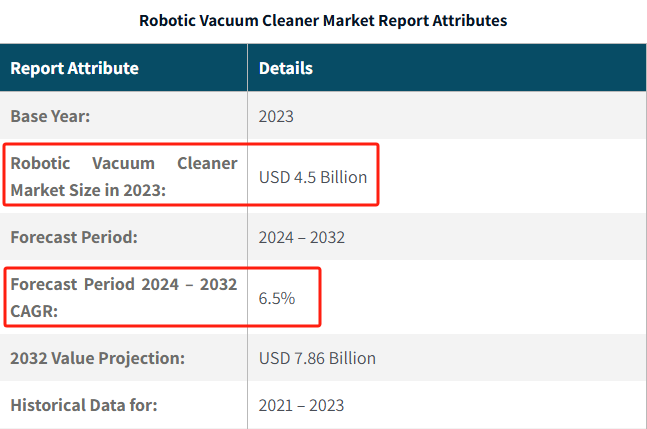
Source : Global Market Insight
Derrière cela, outre les progrès technologiques, la présence mondiale d'une série de marques chinoises est également essentielle.
Parmi elles, la stratégie d'expansion internationale deRoborock, basée à Pékin, est particulièrement instructive.
Dans 14 pays, dont l'Allemagne et l'Espagne, leurs produits occupent régulièrement les trois premières places du marché. Sur Amazon, un modèle haut de gamme, le S8 Pro Ultra, vendu à 1 399,98 dollars, maintient des ventes mensuelles stables de plus de 1 000 unités un an et demi après son lancement, ce qui est une anomalie dans le secteur du commerce électronique transfrontalier, souvent axé sur le rapport qualité-prix.
Ce bilan cache de nombreuses astuces qui méritent d'être analysées.
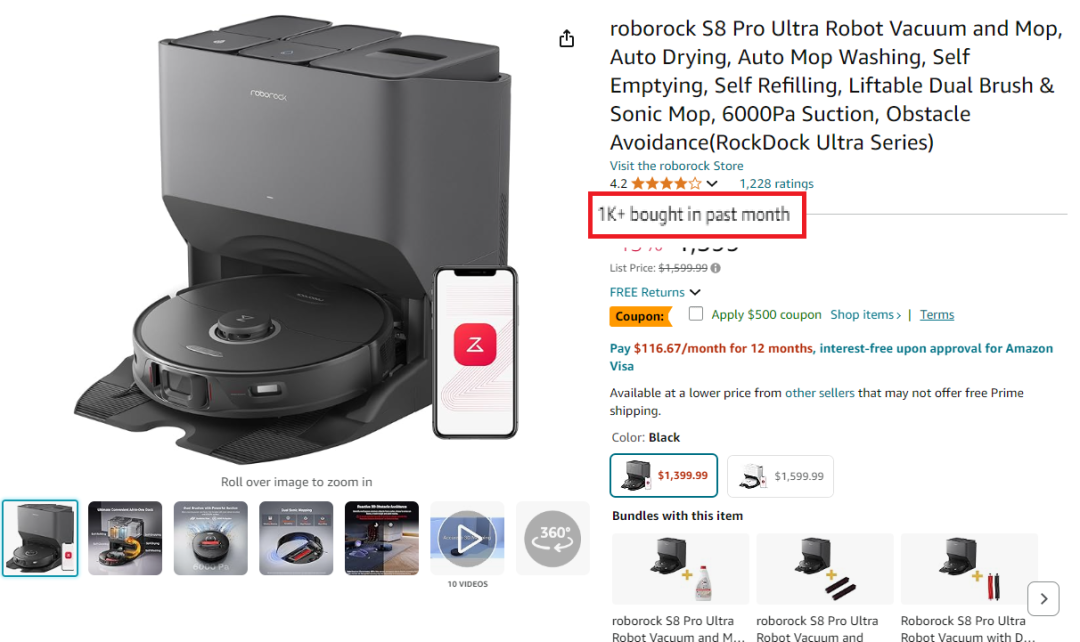
Ventes mensuelles sur Amazon dépassant 1 000 unités Source : Amazon
Le parcours d'un programmeur et d'un robot aspirateur vers la notoriété
Après avoir obtenu une maîtrise en informatique de l'Université de technologie de Chine du Sud en 2006, la carrière de Chang Jing a presque coïncidé avec chaque étape de la vague Internet.
Il a gravi les échelons chez Microsoft, Tencent et Baidu, jusqu'à ce qu'en2014, il décide enfin de fonder Roborock.
À l'époque, le concept de maison intelligente commençait tout juste à émerger, et les robots aspirateurs en étaient encore à un stade primitif, avec des problèmes courants comme les collisions, les blocages et les nettoyages incomplets.
Chang Jing a réalisé qu'en résolvant les problèmes de planification de trajectoire et d'évitement d'obstacles, ce secteur avait un potentiel énorme.
Ainsi, au début de l'entreprise, toute l'équipe a travaillé sans relâche dans un bureau à Haidian, Pékin. En 40 jours, ils ont produit le premier prototype, ce qui a même surpris les investisseurs :« Cela ne ressemble pas du tout au travail d'une start-up ! »
Source : Internet
L'entrée de Xiaomi en 2015 a été un tournant. Grâce aux ressources de chaîne d'approvisionnement et de distribution de Xiaomi, Roborock a lancé en 2016 son premier robot aspirateur Mi Home, qui a démocratisé la technologie de navigation laser LDS à un prix abordable, avec plus d'un million d'unités vendues cette année-là.
Mais Roborock savait que la fabrication sous contrat restait une contrainte. En 2020, Roborock a été cotée sur le STAR Market, avec unecapitalisation boursière dépassant les 100 milliards de yuans, marquant le véritable début de l'ère de sa marque propre.
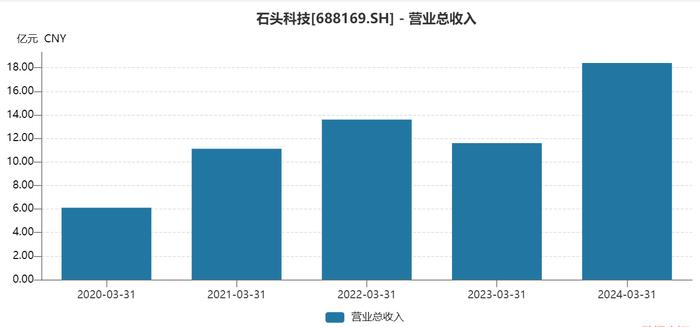
Chiffre d'affaires de Roborock Source : Internet
Trois plateformes, une combinaison gagnante
L'équipe de Roborock savait que pour conquérir les marchés étrangers, la force du produit ne suffisait pas ; il fallait aussi comprendre les spécificités de chaque plateforme sociale.
Ils ont donc mis en place unestratégie différenciée sur les trois grandes plateformes sociales : TikTok, YouTube et Instagram.
TikTok
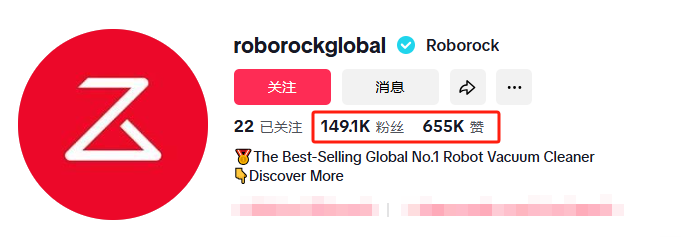
Sur TikTok, le compte officiel de Roborock, @roborockglobal, a accumulé149 100 abonnés, avec plus de655 000 likes au total.
Source : TikTok
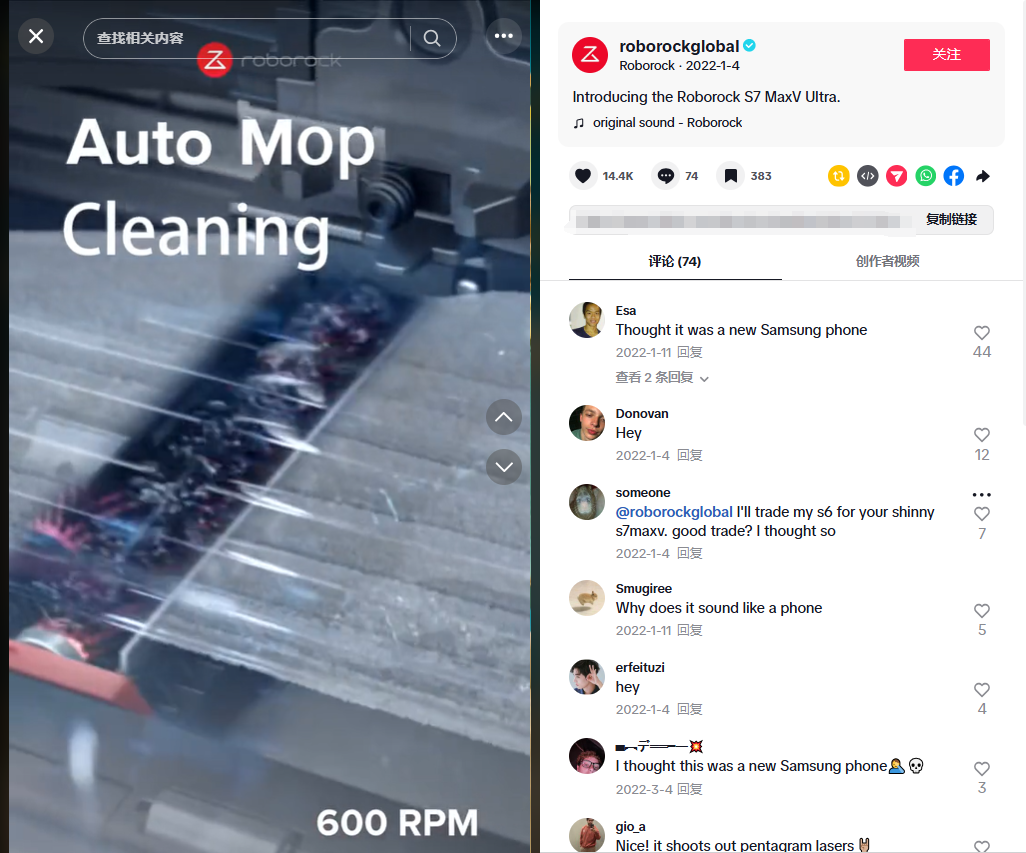
La vidéo la plus populaire a atteint près de7,9 millions de vues. Son contenu est simple : elle montre directement les performances du robot aspirateur, ce qui est facile à comprendre pour les utilisateurs et suscite rapidement leur intérêt.
Source : TikTok
En plus du compte officiel, Roborock a également utilisé le hashtag de marque#roborock pour accumuler7,956 millions de vues, élargissant ainsi l'influence de la marque.

Source : Chaodianyoushu
De plus, ils ont collaboré avec de nombreux influenceurs TikTok, comme le blogueur animalier@tuckerbudzyn (11,7 millions d'abonnés), qui a publié une vidéo montrant comment le robot aspirateur nettoie les poils d'animaux, obtenant939 300 likes, attirant l'attention de nombreuses familles avec animaux.
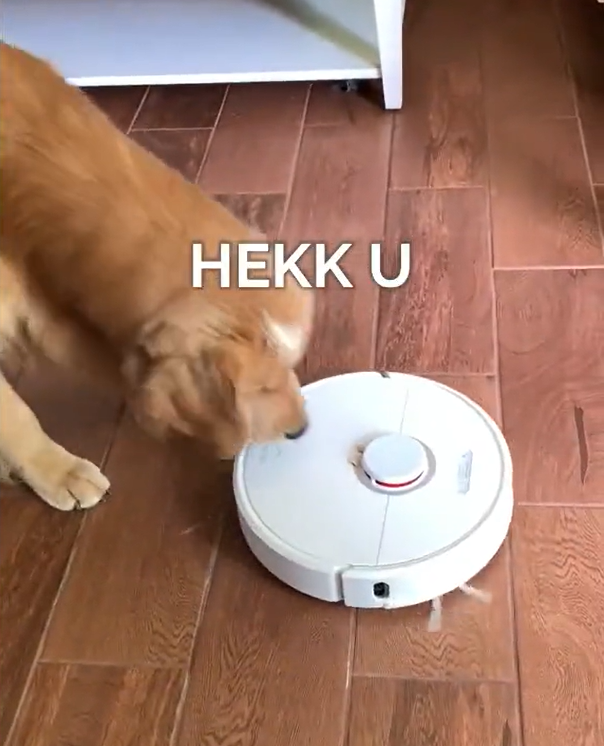
Source : TikTok
Il y a aussi le blogueur couple@nicocaponecomedy (28,4 millions d'abonnés), qui a mis en compétition le robot aspirateur avec des outils de nettoyage traditionnels, montrant les avantages du produit de manière légère et amusante. Cette vidéo est rapidement devenue virale après sa publication, obtenant plus de1,3 million de likes, suscitant des discussions et des partages animés parmi les internautes.
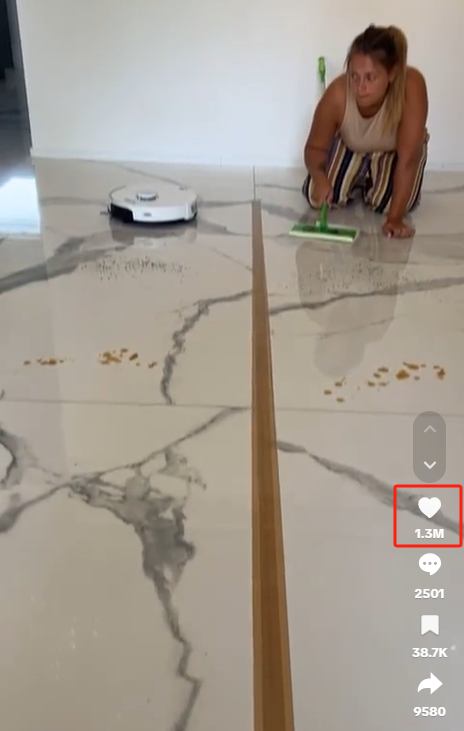
Source : TikTok
YouTube
Sur YouTube, la stratégie de Roborock devient immédiatement plus « technique ».
À ce jour, le compte officiel de Roborock, @Roborock Global, compte31 500 abonnés, et sa vidéo la plus populaire a dépassé les5,48 millions de vues. La marque collabore principalement avec des blogueurs tech sur YouTube, présentant les performances des produits via des tests approfondis.
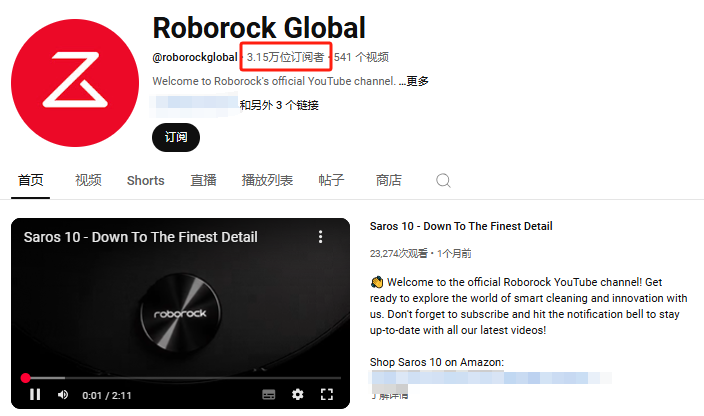
Source : YouTube
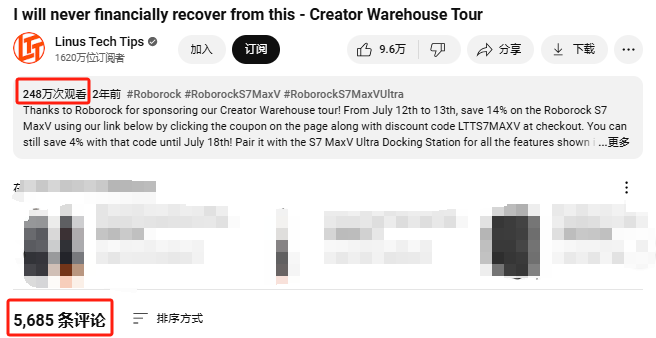
Par exemple, en 2022, Roborock a collaboré avec le célèbre blogueur techLinus Tech Tips pour tester le nouveau S7 MaxV Ultra. Dans la vidéo, le blogueur commence par une scène de rangement de studio, montrant la capacité de nettoyage du robot dans un environnement complexe.
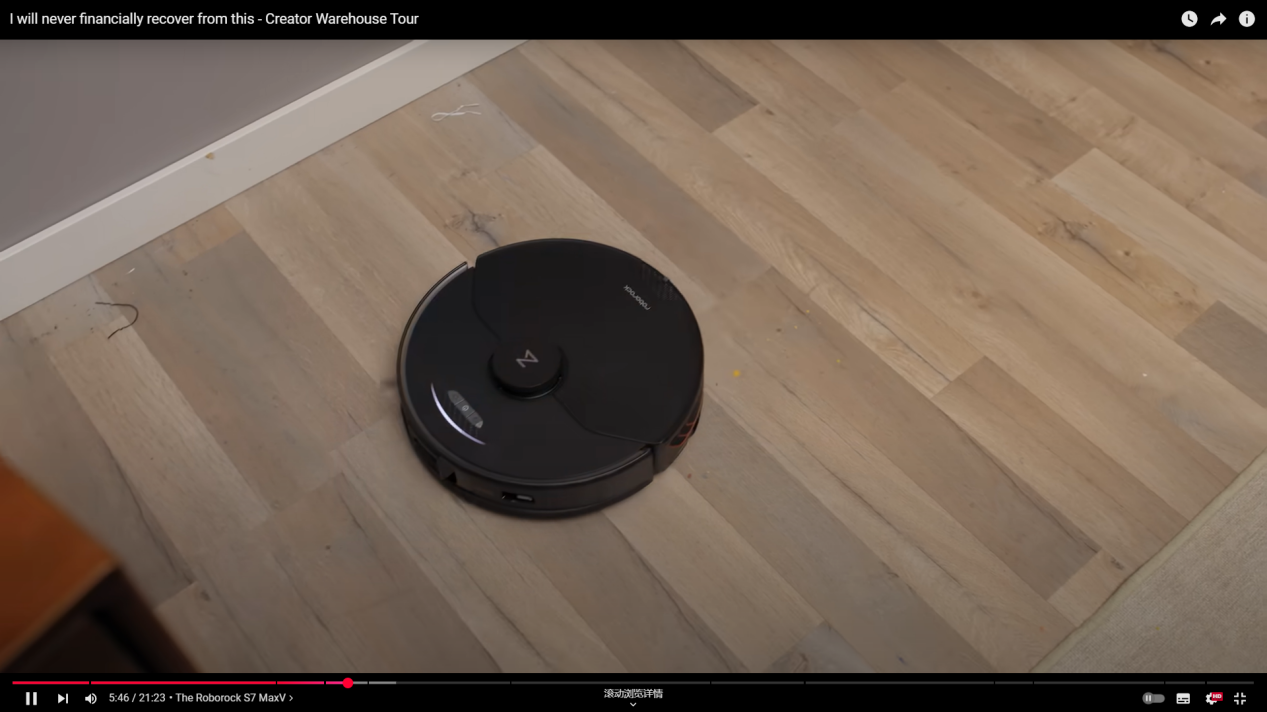
Source : YouTube
Cette vidéo a finalement obtenu2,48 millions de vues et5 685 commentaires, avec un taux d'engagement élevé.
Source : YouTube
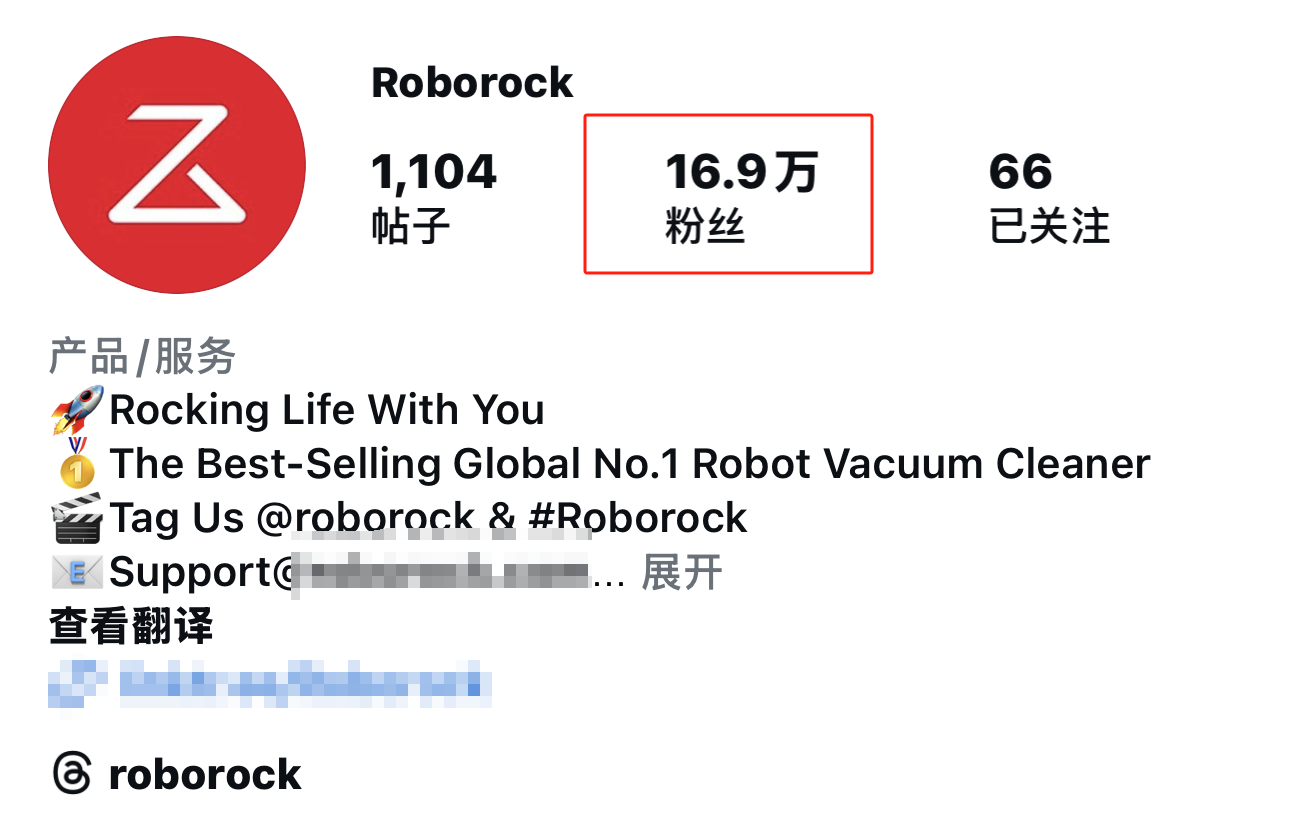
Sur Instagram, Roborock adopte un tout autre style. À ce jour, son compte officiel compte169 000 abonnés.
Source : Instagram
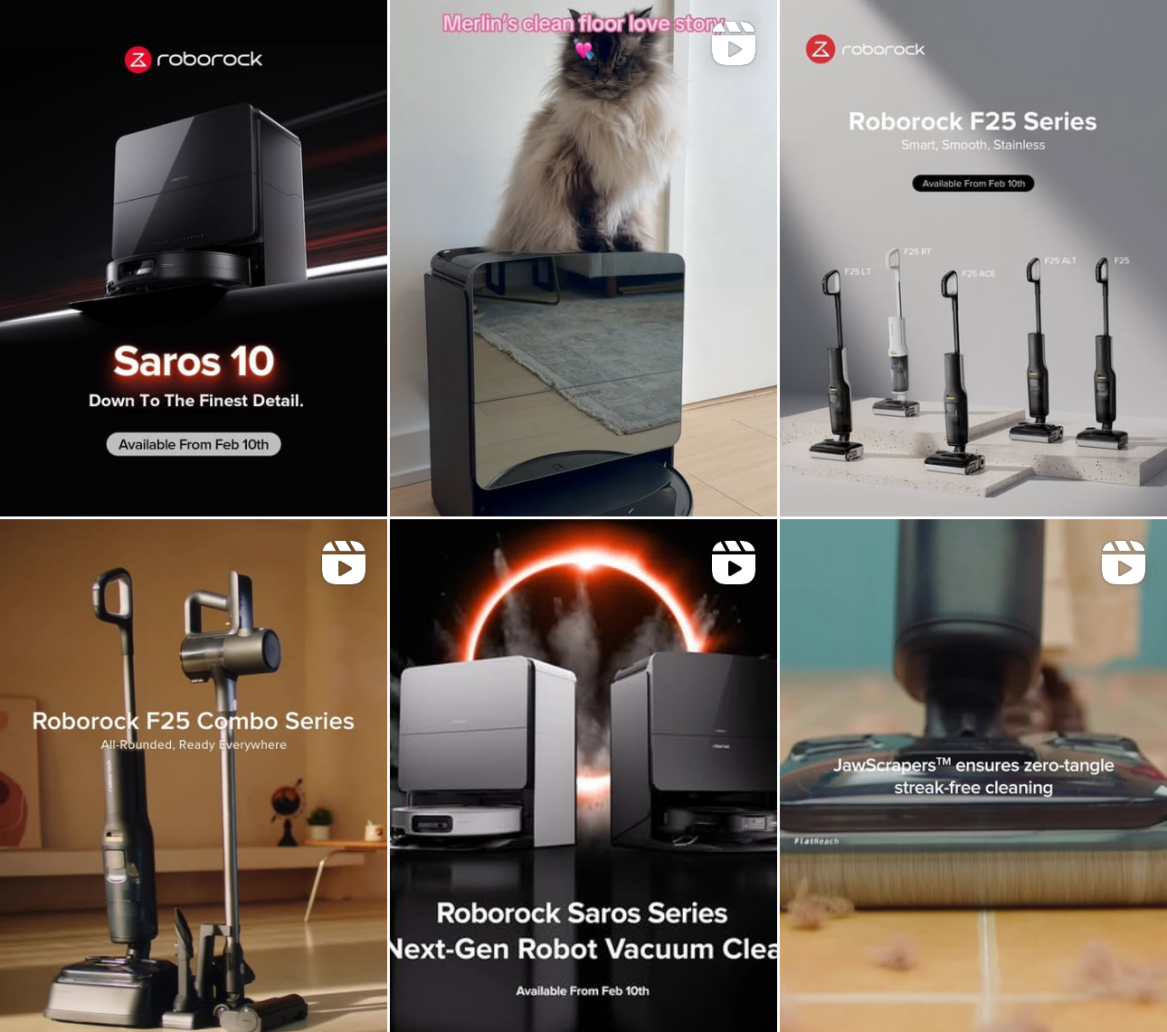
Le contenu est principalement axé sur uneprésentation minimaliste des produits, associée à des décors domestiques soignés, transmettant l'idée que « la technologie intelligente améliore la qualité de vie ». Grâce à des images de haute qualité et des vidéos courtes, Roborock attire avec succès les consommateurs haut de gamme en quête d'une vie de qualité.
Source : Instagram
Construire un site indépendant façon « musée du produit »
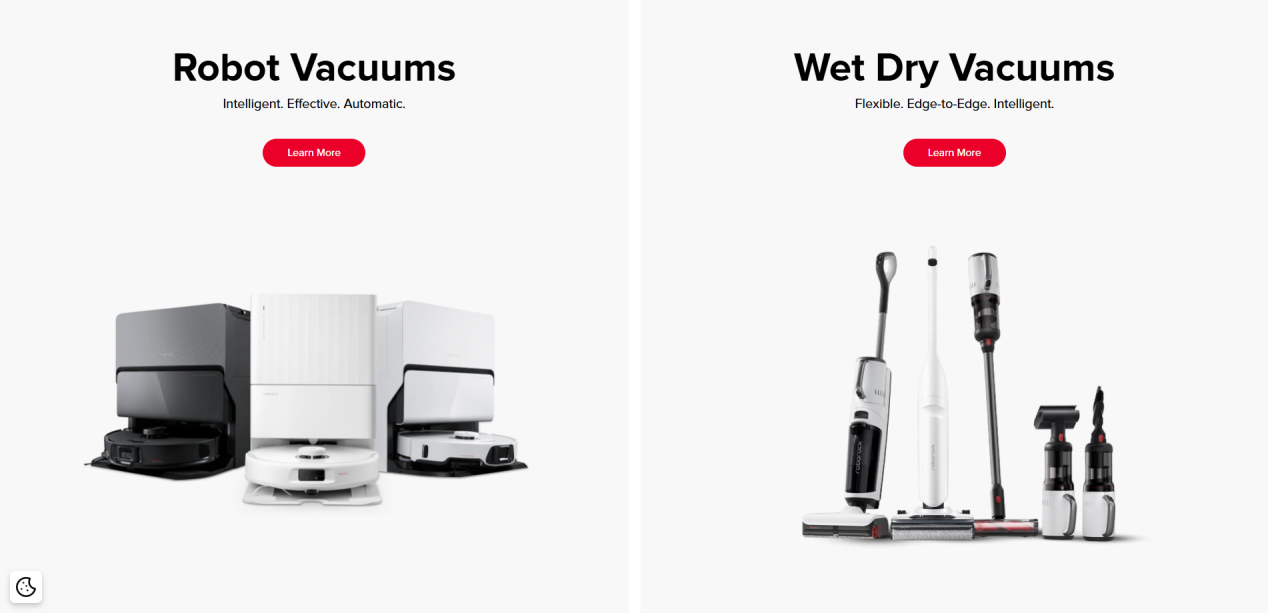
Plutôt que de dépendre des plateformes tierces, le site indépendant de Roborock ressemble davantage à une salle d'expérience de la marque.
En ouvrant la page d'accueil, chaque gamme de produits est accompagnée d'images haute définition et de descriptions fonctionnelles détaillées, facilitant la navigation et la comparaison. Dans les pages produits, les robots aspirateurs, les nettoyeurs de sols et les aspirateurs sont classés par scénario d'utilisation, les spécifications techniques étant cachées dans les pages de détails, tandis que les descriptions frappent en une phrase :« Le temps de nettoyage quotidien pour les familles avec chats passe de 35 à 5 minutes. »
Source : Site indépendant de Roborock
Le plus ingénieux est lasection forum. On y trouve à la fois une zone d'aide pour les débutants et des discussions techniques sur les mises à jour algorithmiques, et même des photos de modèles anciens utilisés depuis cinq ans. Ce contenu UGC, apparemment informel, transforme le site officiel d'un canal de vente en une communauté d'utilisateurs. Lorsque les consommateurs commencent à défendre spontanément la marque, la fidélité au produit augmente naturellement.
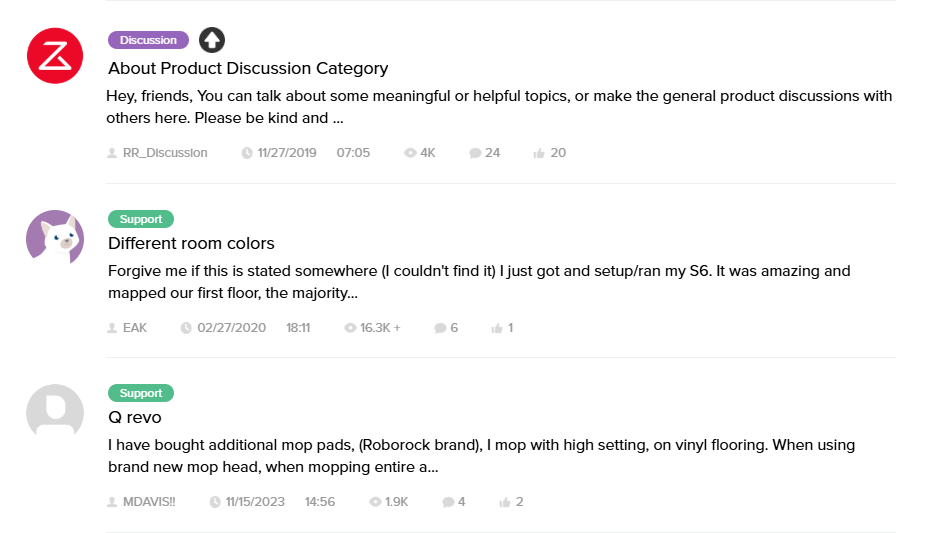
Discussions des utilisateurs sur le forum Source : Site indépendant de Roborock
La prochaine étape du « Made in China »
L'histoire de Roborock est un avertissement pour les entreprises nationales souhaitant s'internationaliser :
Les marchés étrangers ne recherchent pas seulement un bon rapport qualité-prix, mais aussi une reconnaissance de valeur.
La mondialisation ne consiste pas à copier-coller les succès nationaux, mais à trouver les« angoisses invisibles » de chaque marché.
Celui qui capte ces points de douleur subtils en premier pourra planter son drapeau avant la naissance du prochain géant des robots aspirateurs.