When it comes to drones, almost everyone immediately thinks of DJI, whose huge market share has created a formidable industry barrier. However, the market is not monolithic. In recent years, many emerging brands have gradually come to the fore with unique positioning and innovative products, and HoverAir is one of them.
In 2024, its new product X1ProMax launched on the US crowdfunding platform Indiegogo, breaking $2 million in pre-sales on the first day and ultimately setting an annual record with $4.7 million.
This brand, born out of the Stanford AI Lab, reveals a new path to overseas expansion that is quite different from the typical technology rat race.
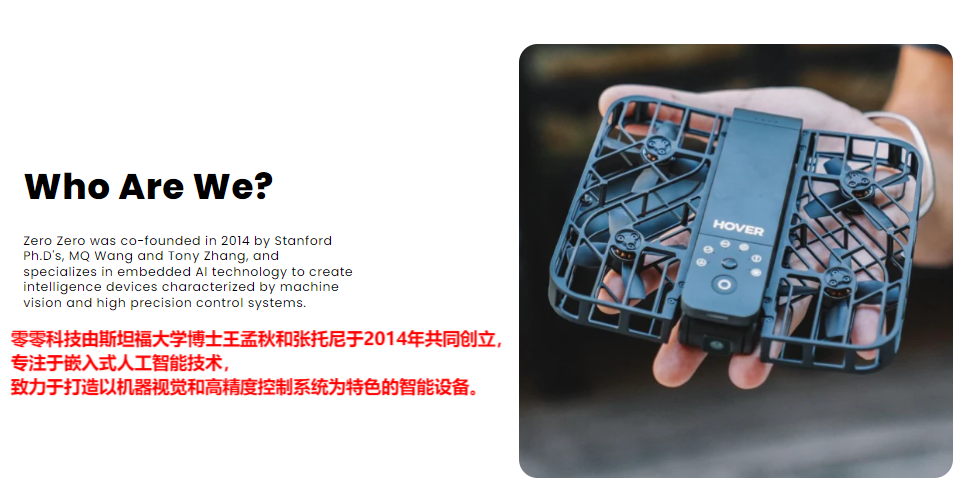
Image source: HoverAir
Stanford DNA + Scenario Revolution
According to available information, HoverAir is a brand under Shenzhen Zero Zero Robotics Co., Ltd., founded in 2014 by Dr. Wang from Stanford University's Artificial Intelligence Lab.
Unlike DJI's pursuit of "full-stack technology," HoverAir has focused on users' daily shooting needs since its inception, and even put forward the disruptive idea that "90% of aerial photography needs can be solved within 500 meters," cleverly avoiding direct competition with DJI.
Image source: HoverAir
In 2022, HoverAir began its globalization journey using crowdfunding platforms as a springboard, with impressive results in overseas markets. Especially in March 2024, after HoverAir X1 launched on Indiegogo, it attracted over 5,000 supporters in just a few months, raising more than $1.8 million and becoming the world's second largest fundraising project of the year.
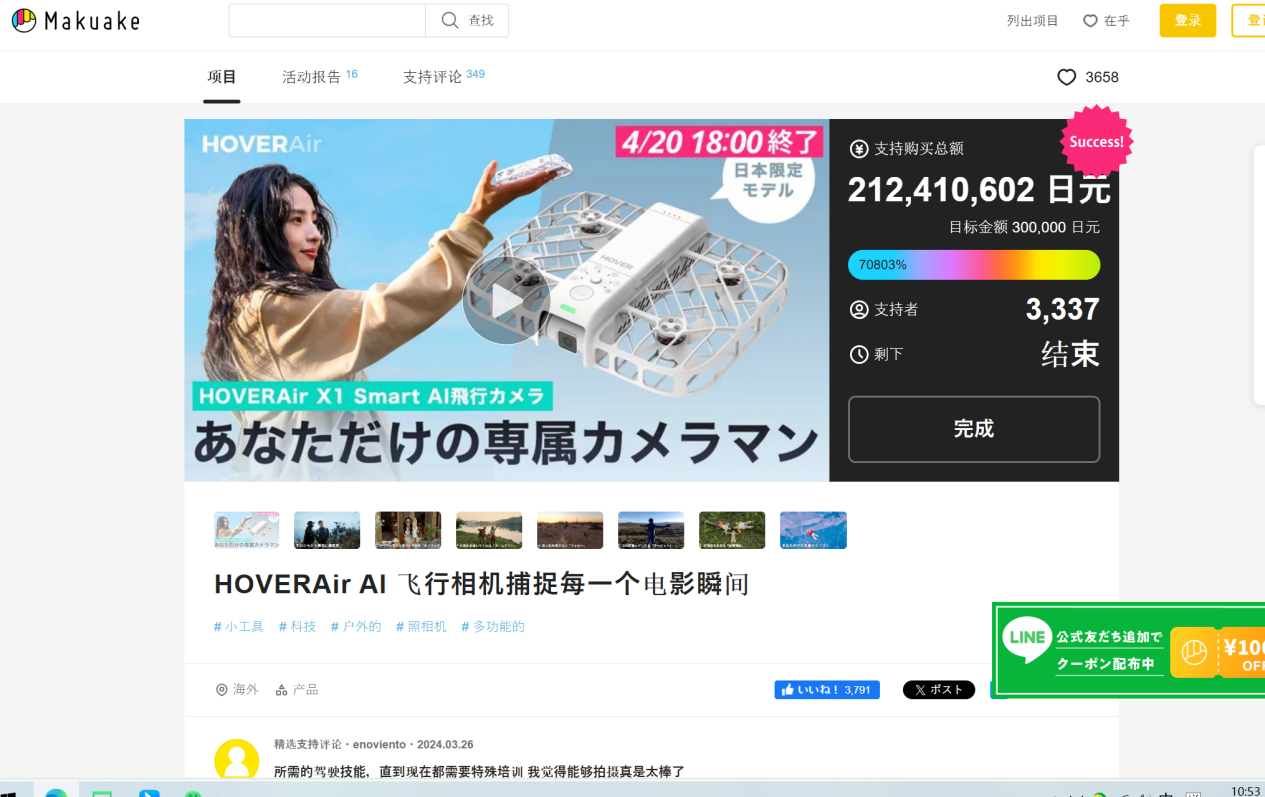
Simultaneous localization crowdfunding in markets such as Japan and Taiwan further validated its global capabilities. For example, data from Japan's Makuake platform shows that the X1 Smart project closed with 212 million yen (about $1.41 million), becoming the highest crowdfunded camera project in the platform's history.
Image source: Makuake
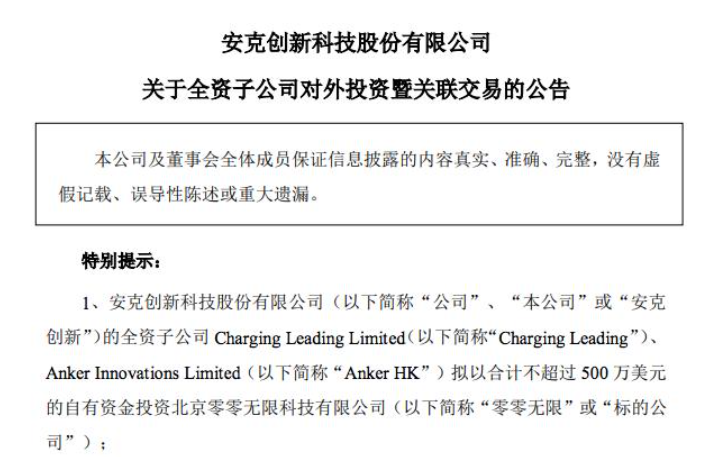
It is worth mentioning that Anker Innovations' subsidiary Anker HK invested no more than $5 million in HoverAir's parent company, Beijing Zero Zero Robotics, showing capital's favor. To date, Anker still holds about 5% of the brand's shares.
Image source: Internet
Multi-Platform Channels: A "Three-Dimensional Battle" from Traffic to Retention
HoverAir's explosive success in overseas markets owes much to its multi-platform marketing strategy. On mainstream overseas social media platforms such as TikTok, YouTube, and Facebook, they use a combination of "scenario marketing + influencer collaboration + community dissemination" to build a multi-layered, multi-channel brand communication matrix.
1. TikTok
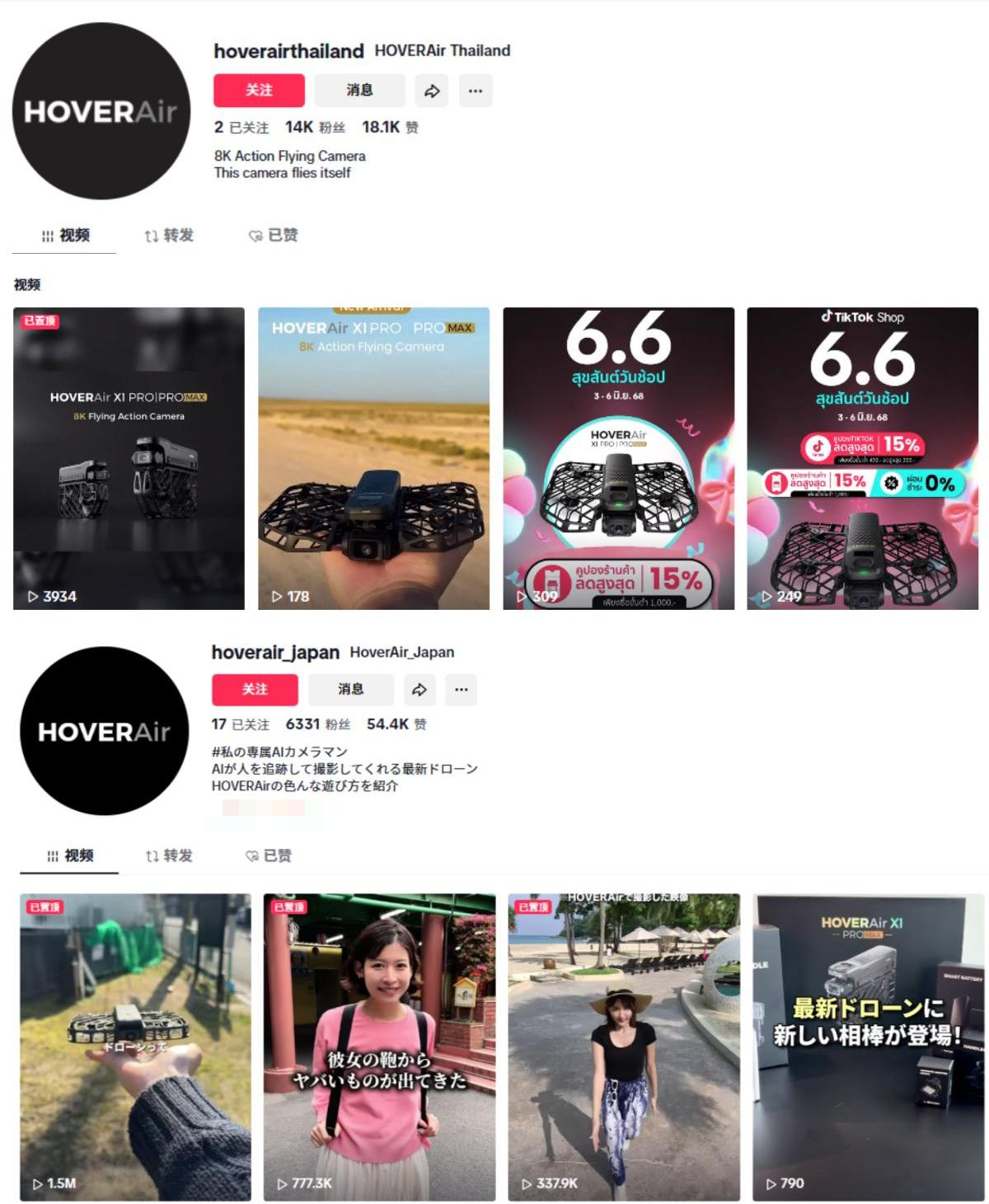
To cater to different regions' content consumption habits and platform characteristics, HoverAir adopts a localized matrix account strategy on TikTok, such as operating dedicated Japanese account @hoverair_japan and Thai account @hoverairthailand.
Thai account (above), Japanese account (below) Image source: TikTok
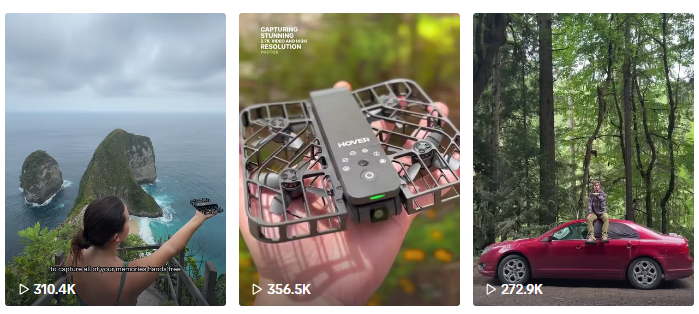
The content posted by these accounts mainly focuses on showcasing the product's best practical uses, such as automatic tracking while cycling or capturing exciting moments while skiing, using short videos to intuitively demonstrate core functions.

Image source: TikTok
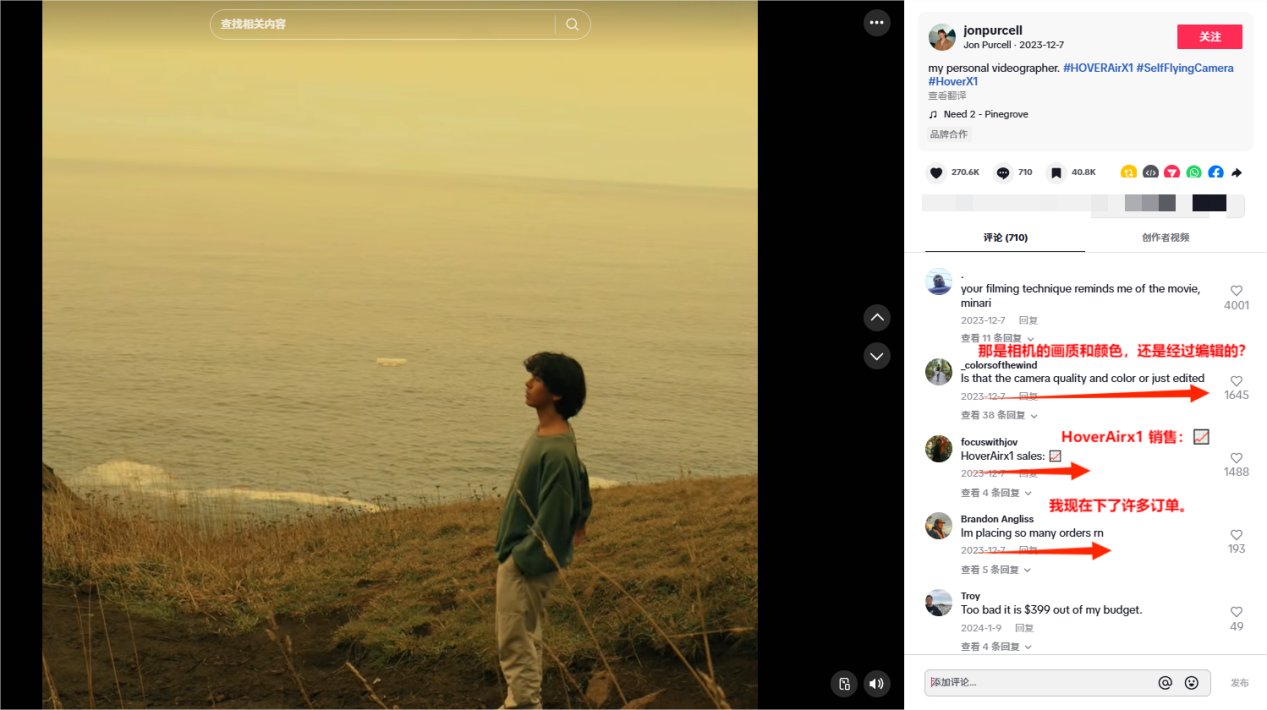
Meanwhile, HoverAir also actively collaborates with local niche influencers for promotion, leveraging their influence and the platform's recommendation algorithm to quickly reach target audiences and boost brand awareness and interest.
For example, TikTok influencer @jonpurcell (photography category) is a typical case. During his collaboration with the brand, he posted a "My Personal Cameraman" video, bringing the brand over 2.3 million views.
Such direct effect demonstration videos also generated good inquiry results in the comments section, with many users expressing interest in the HoverAir brand.

Image source: TikTok
2. YouTube
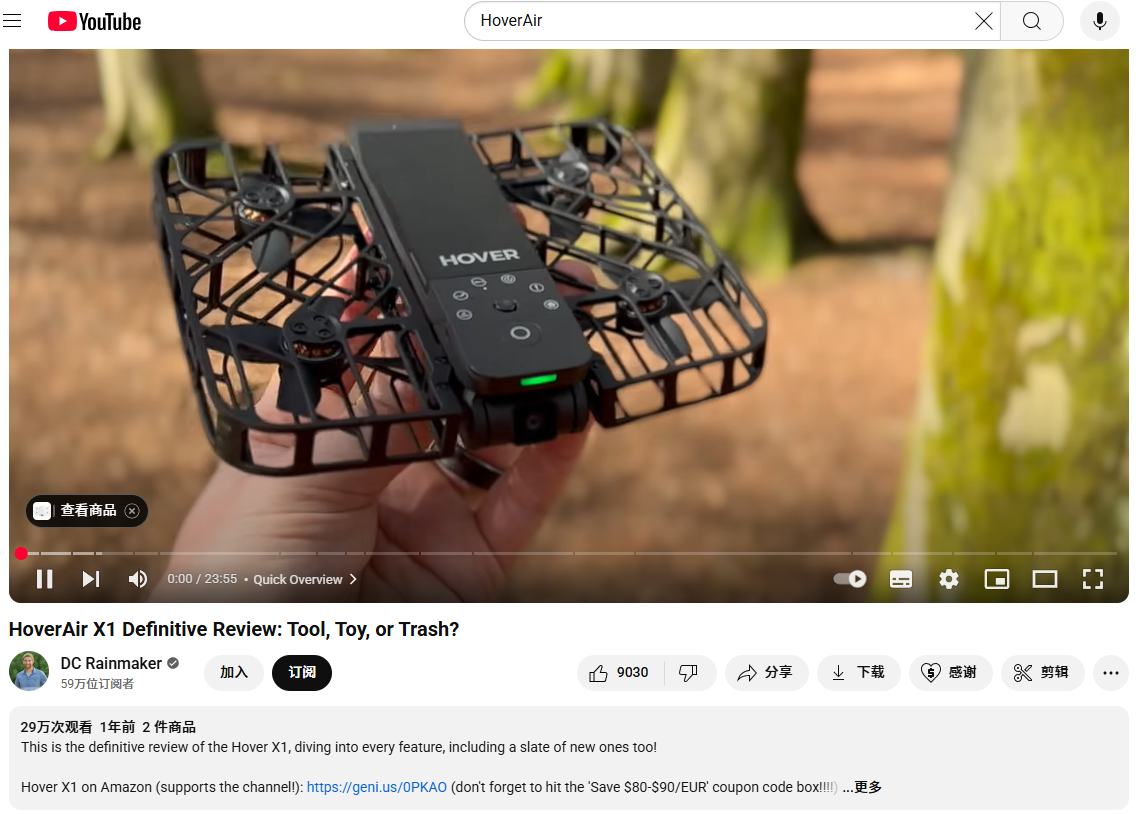
On YouTube, HoverAir not only collaborates with traditional tech influencers but also invites many outdoor cycling and skiing influencers to create content.
Take the collaboration with outdoor reviewer @DC Rainmaker as an example. The blogger is a seasoned cycling enthusiast with extensive outdoor shooting experience. In the collaboration video, he conducts in-depth product reviews from multiple angles and tests the product in different environments, ultimately bringing the brand 280,000 views.

Image source: TikTok
3. Facebook
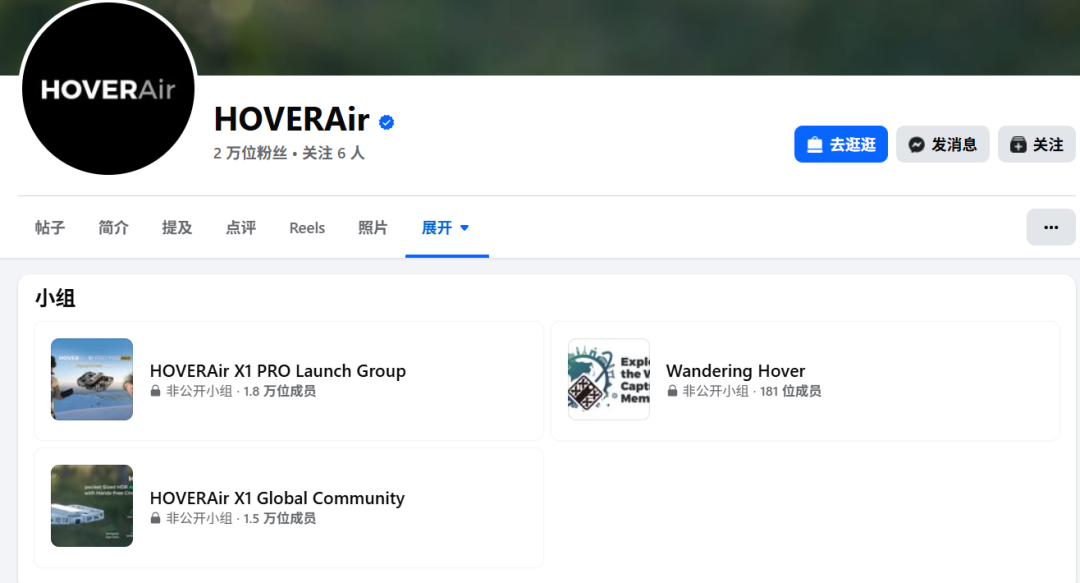
On Facebook, HoverAir does not simply focus on content delivery, but rather emphasizes community building and user interaction.
They have established at least two active communities with tens of thousands of members. In these communities, HoverAir boosts user engagement and brand recognition by initiating topic discussions, soliciting user-generated content (UGC), and encouraging users to share their experiences.
This operational model effectively enhances user stickiness and creates a virtuous cycle of user-driven recommendations and content dissemination, becoming a key part of building brand loyalty.
Image source: Facebook
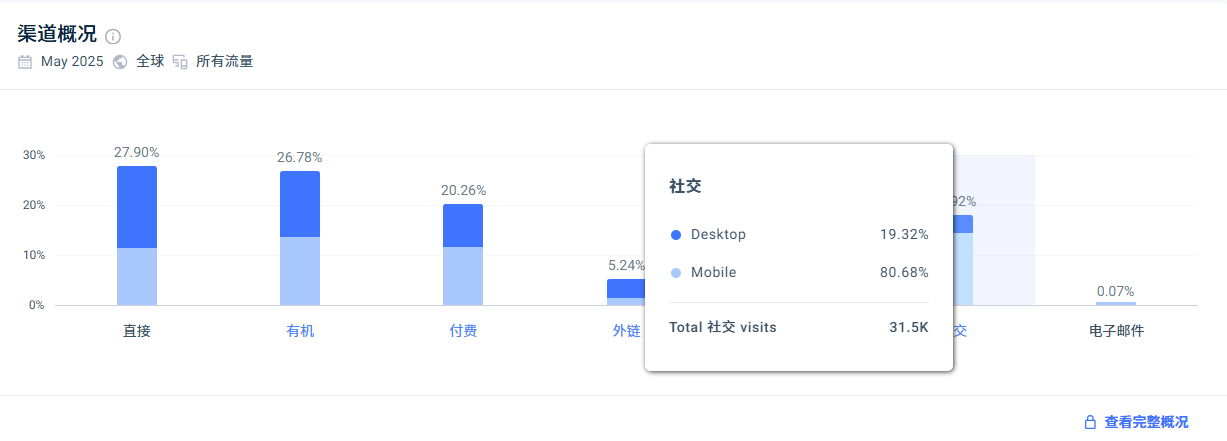
Of course, this ongoing investment in social media has also produced tangible results. According to data (as of May 2025), HoverAir's independent site reached nearly 180,000 monthly visits, with 17.92% driven by social media, strongly validating the effectiveness of its multi-platform traffic strategy.

Image source: Similarweb
Industry Trend Dividend: The Boom of Low-Altitude Economy and Scenario-Based Consumption
Looking back at HoverAir's overall development, it is clear that the brand's rise coincided with an industry turning point. The market increasingly needs products that solve specific scenario problems, rather than "all-purpose flying platforms."
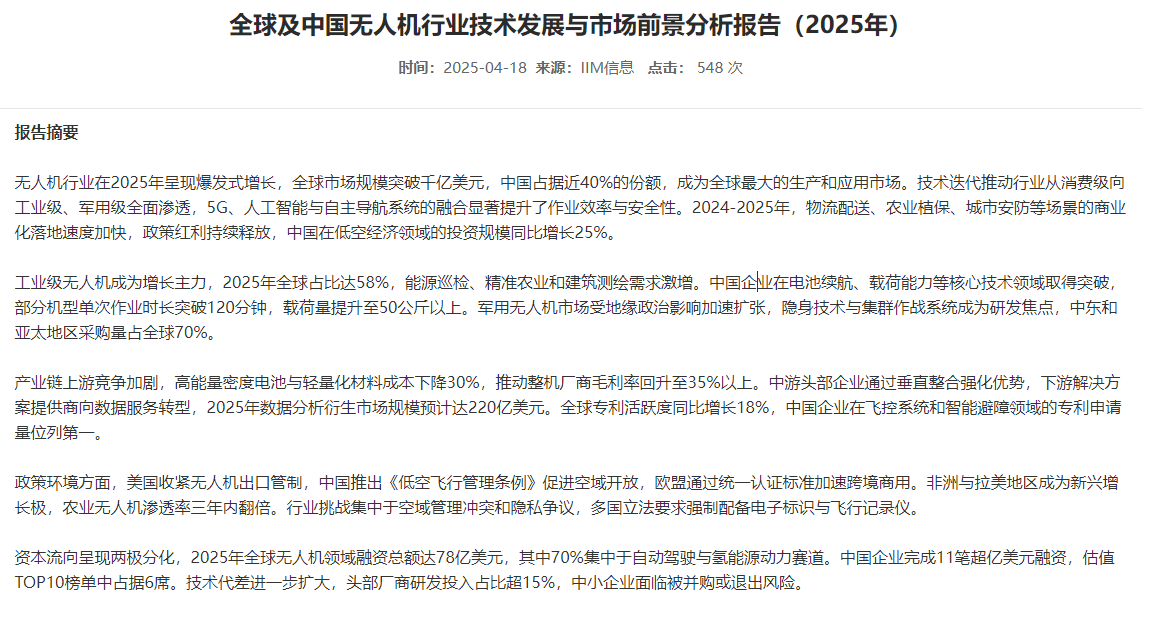
According to data, the global drone market will exceed $100 billion by 2025, but consumer-grade growth is slowing, while industrial-grade (agriculture, logistics) accounts for 58%.
For ordinary consumers, complex operation, safety risks (obstacle avoidance, regulations), and inconvenience of carrying have gradually replaced "flying high and far" as the main pain points.
"Drones are no longer geek toys, but life tools."
—This trend has provided fertile ground for HoverAir's "subtractive innovation."
Image source: IIM Information
Finding Their Own Sky Under the Shadow of Giants
HoverAir's path reveals another possibility for Chinese brands going global: avoiding the giants' "firepower range" and excelling in niche scenarios. DJI dominates "flight performance," while HoverAir occupies the "life recording" mindset.
Today, global low-altitude economy policies continue to open up, and cities like Shenzhen and Hangzhou have seen daily drone takeoffs and landings surge by dozens of times. For small and medium-sized enterprises, instead of competing on specs in a red ocean, it's better to ask:
"What specific problem does my user really need solved?"
As HoverAir founder Mr. Wang said: "Two zeros together make infinity—starting from zero, but with infinite possibilities." This may be exactly the imagination that Chinese brands need most when going global.