In recent years, with the continuous growth of the global economy and the gradual acceleration of urbanization, the demand for short-distance commuting has increased significantly. Electric bicycles, as convenient and environmentally friendly means of transportation, have become highly favored.
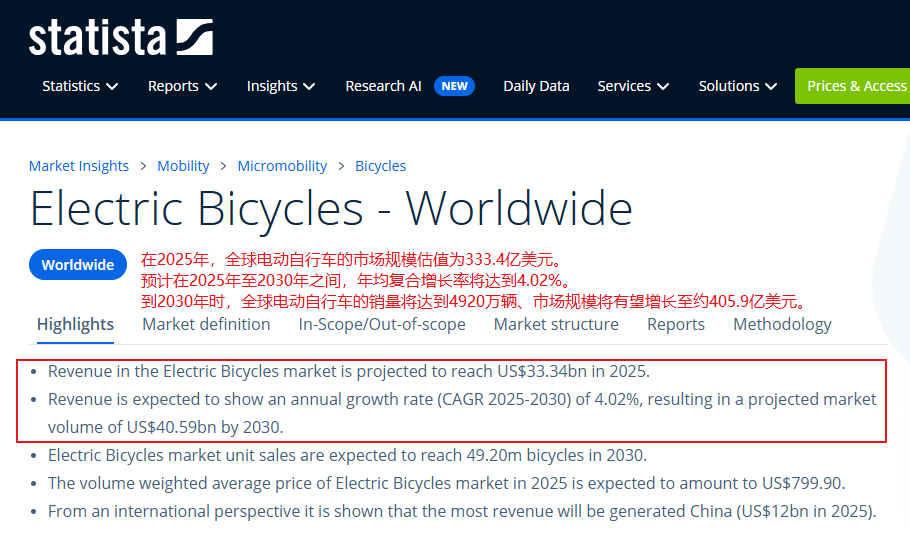
According to data from Statista, the global electric bicycle market is estimated to be worth $3.334 billion in 2025. It is expected to maintain steady growth at a compound annual growth rate of 4.02% between 2025 and 2030. By 2030, global sales of electric bicycles will reach 49.2 million units, and the market size is expected to grow to about $4.059 billion.
Image source: Statista
Based on this market background, many domestic electric bicycle brands have begun to expand overseas, bringing their products to international markets and gaining broad development space. Shenzhen brand Engwe is one of them.
Reportedly, in 2022, the brand's X26 model raised over one million dollars on the INDIEGOGO crowdfunding platform, ranking among the top ten global technology crowdfunding projects.
In 2023, the brand's total annual revenue exceeded 850 million yuan, with the European and American markets contributing more than 80%.
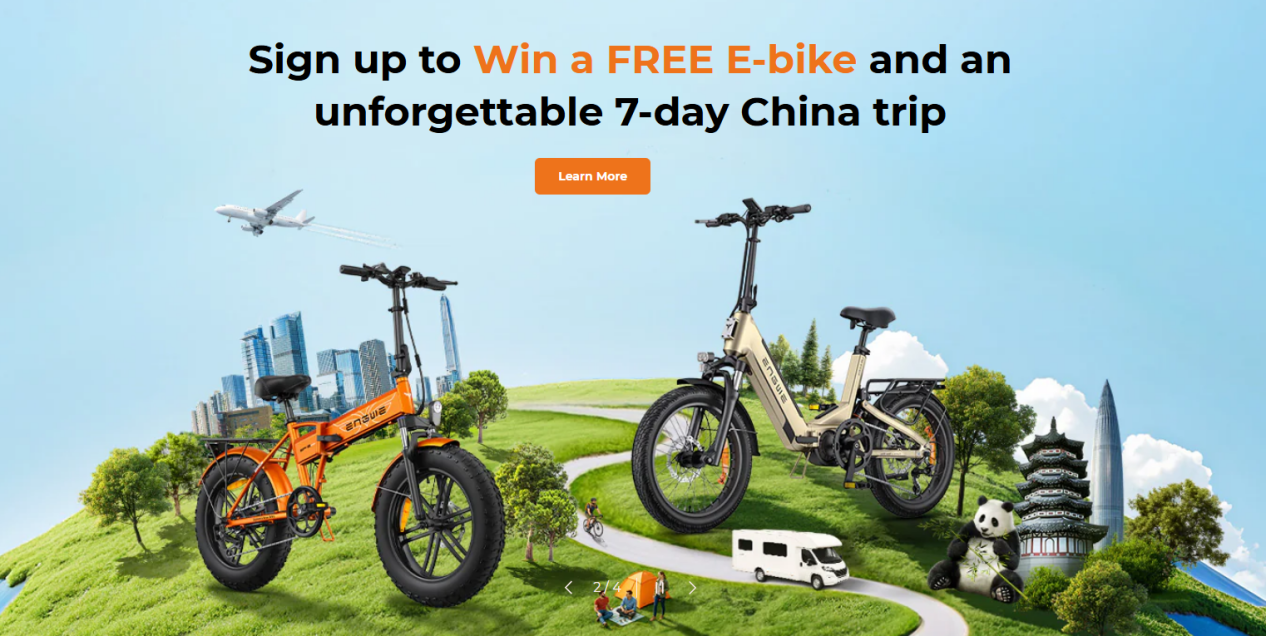
So far, Engwe's products have covered more than 50 countries, serving over 300,000 users in total, becoming a representative case of Chinese electric bicycles going global.
Image source: Engwe
The Birth of the Engwe Brand
It is understood that Engwe is a brand under Shenzhen Dayu Sports Technology Co., Ltd., established in 2014.
Its entrepreneurial story is quite special, originating from an adventure experience of three cycling enthusiasts. They planned to complete a 38-mile mountain ride in 5 hours, but encountered uphill terrain throughout the journey. In the end, the remaining 16 miles could only be completed by pushing the bike. This poor experience inspired the three cycling enthusiasts to develop electric assist bicycles.
Later, through a technology innovation and entrepreneurship competition held by their school, the electric bicycle idea of the three founders was favored by the organizing committee. They then began to research electric bicycles and officially founded the Engwe brand five years later.
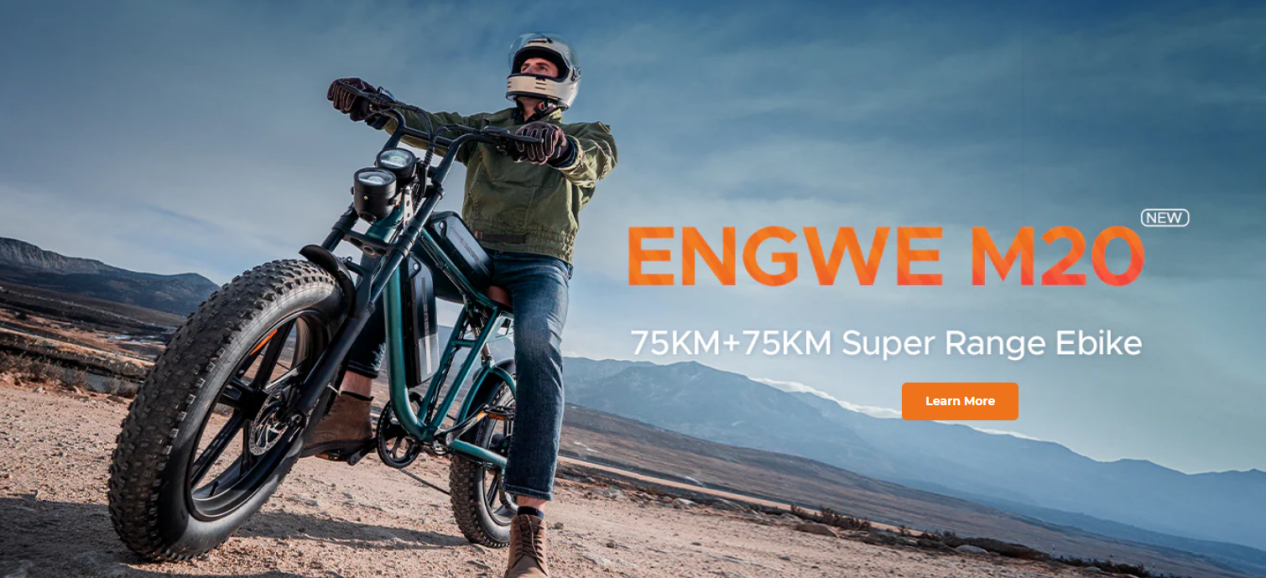
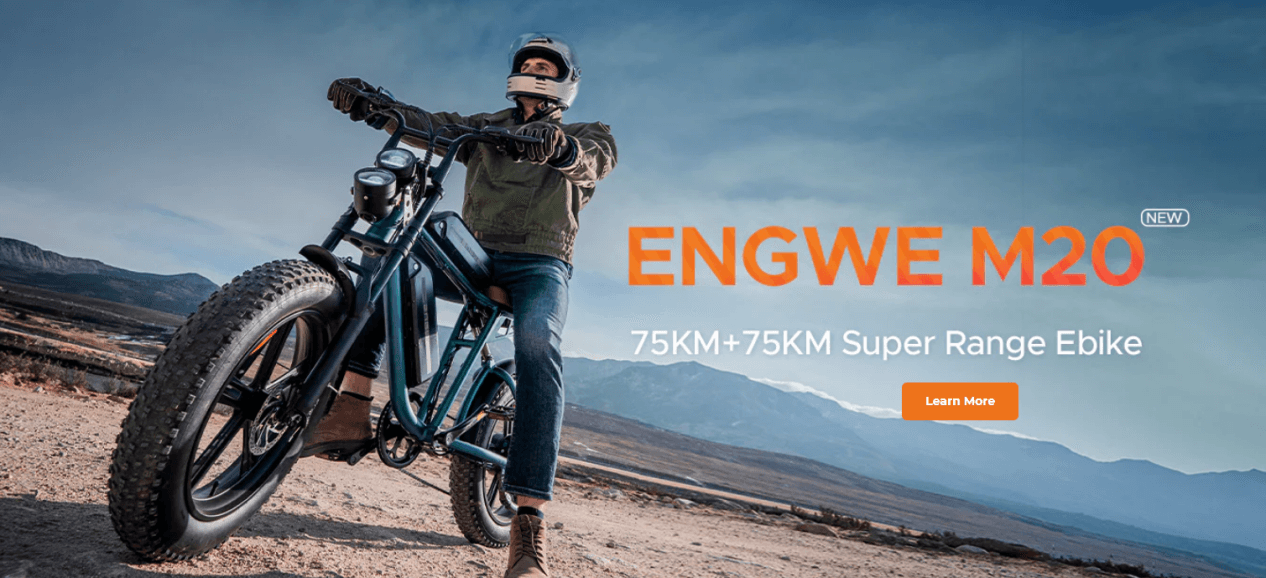
With deepening R&D and gradual accumulation of technology, Engwe has now launched multiple electric bicycle products, including folding models, chainless models, and all-terrain off-road e-bikes, meeting thediverse needs of different consumers. It has developed from an industry newcomer to a leading electric bicycle brand recognized by mainstream markets in Europe and America.
Image source: Engwe
Social Media Marketing: Attracting Consumers with Real-Life Scenarios
In the era of digital communication, social media has become an important bridge between brands and consumers. Engwe has established a presence on platforms such as TikTok and YouTube, and, in line with overseas users viewing electric bicycles as "lifestyle products," focuses on two types of content scenarios to further close the distance between the brand and users.
1. TikTok: Influencer Recommendations + Function Visualization
On TikTok, Engwe values influencer marketing, collaborating with several vertical TikTok influencers to release creative short videos that quickly showcase the core selling points of the products.
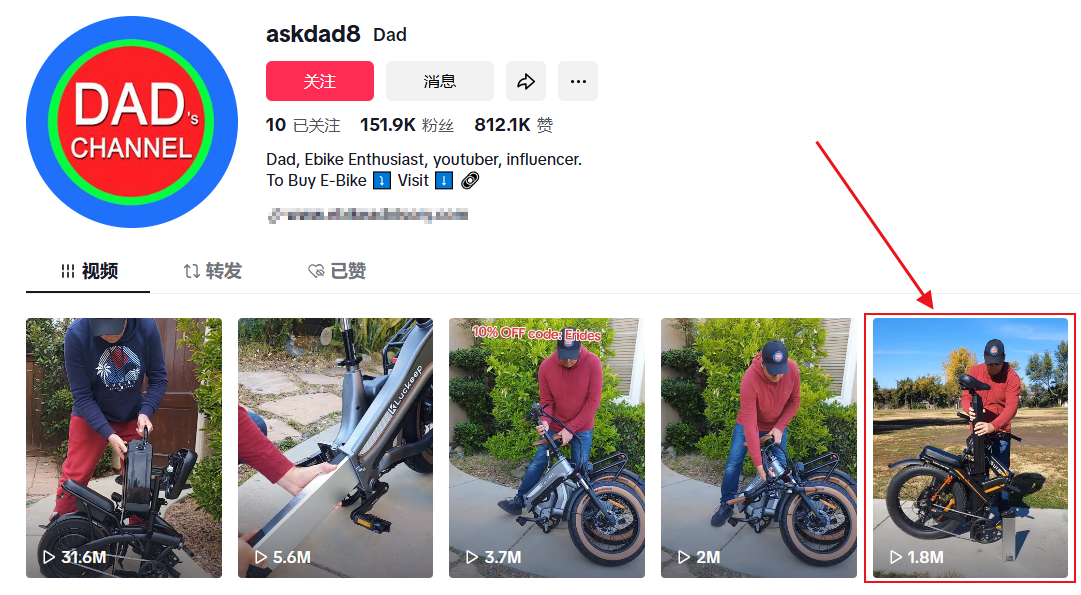
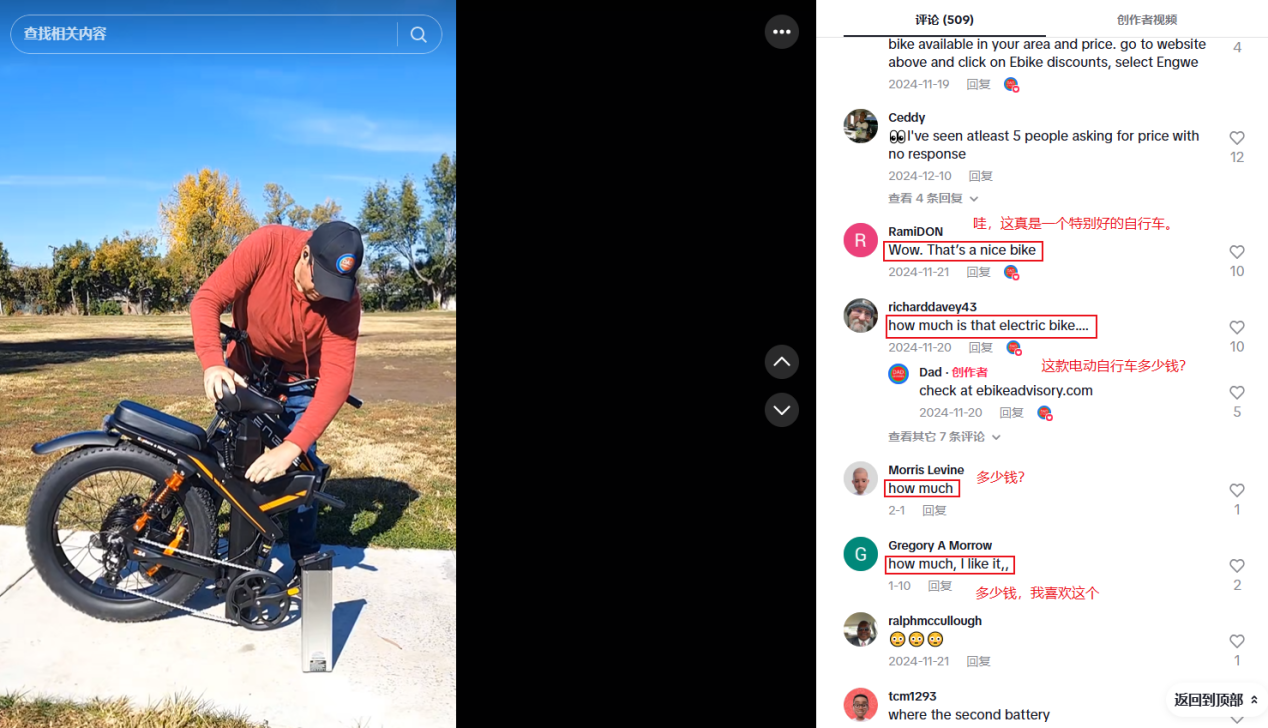
Tech influencer @askdad8, who has 151,900 followers on TikTok, filmed a promotional short video for Engwe's x24 electric bicycle.
Image source: TikTok
In the video, the influencer first demonstrates the quick process of assembling the Engwe electric bicycle from its folded state, then highlights three major advantages of the product: powerful performance; a built-in high-brightness LED headlight for clear night riding visibility; and, through repeated dropping and heavy pressure tests, showcases the impact resistance of the wheels and frame.
By integrating product features into real-life scenarios, potential users gain a deeper understanding of the product's capabilities.
Although this influencer does not have a huge following, this promotional short video achieved good results. So far, it has surpassed 1.8 million views and received 20,100 likes. Many users were attracted after watching the video and left comments asking about the price:
"Wow, this is a really great bike."
"How much is this electric bike?"
"How much? I like this."
Image source: TikTok
2. YouTube: Professional Reviews Increase User Trust
On YouTube, targeting the preference of European and American users for real-world testing, Engwe collaborates with professional cycling bloggers. Through outdoor field reviews, they test product performance and dispel potential consumers' doubts.
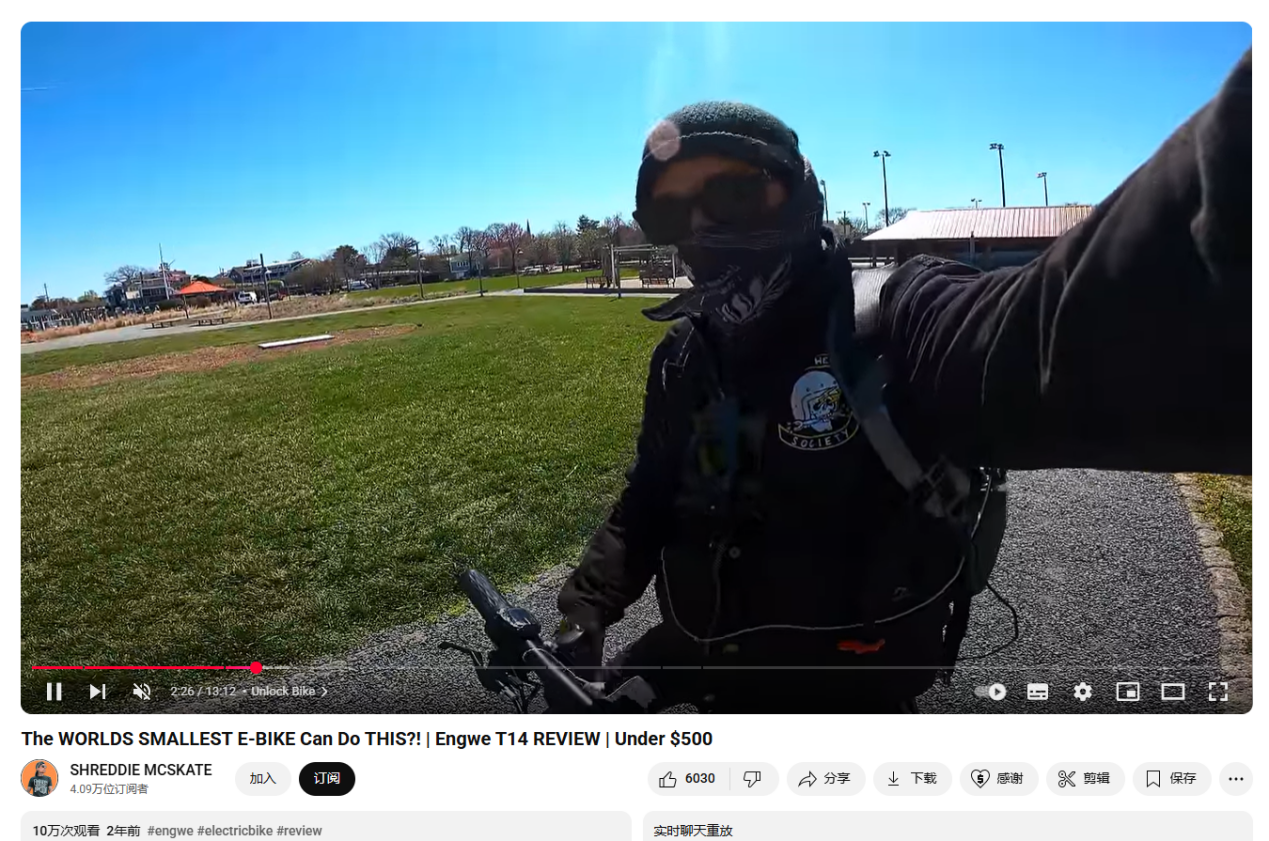
Tech blogger SHREDDIE MCSKATE, who has 40,900 subscribers, is one of the brand's partners. He filmed an outdoor riding test video for the Engwe T14, a small and lightweight electric bicycle, which has reached 100,000 views so far.
In the test video, SHREDDIE MCSKATE specifically rode this electric bicycle to the countryside and tested it on five types of roads: smooth asphalt, bumpy gravel, wooden paths, grass, and sand, intuitively demonstrating the practicality and adaptability of Engwe electric bicycles in various complex road conditions.
Image source: YouTube
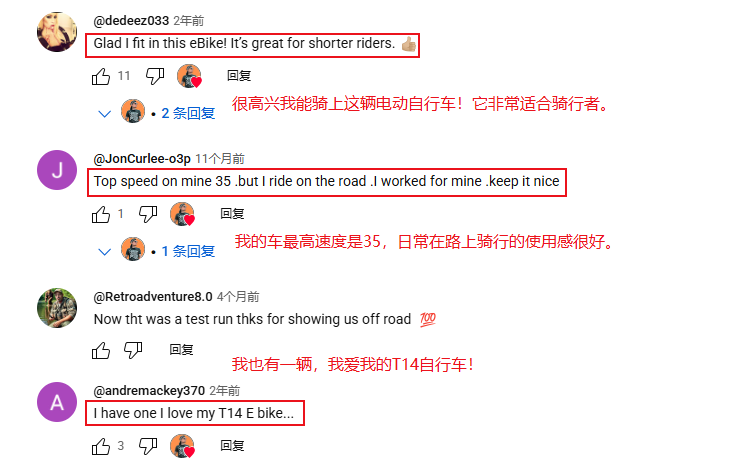
Many users expressed their love for the Engwe T14 electric bicycle after watching the video:
"I'm glad I can ride this electric bike! It's perfect for riders."
"My bike's top speed is 35, and the riding experience on the road is great."
"I also have one, I love my T14 bike!"
Image source: YouTube
Channel Strategy: Dual Track, Deep Cultivation of Overseas Markets
During market expansion, in addition to continuously delivering content through social media, Engwe has built a diversified channel network as a growth engine.
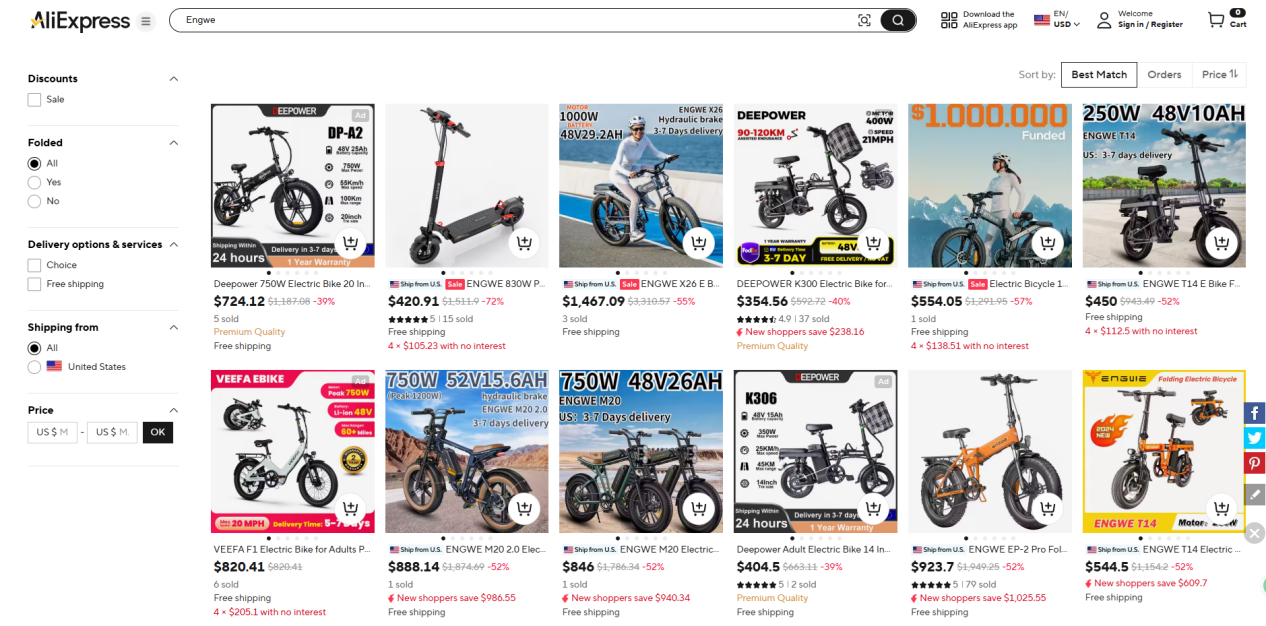
It adopts a dual-track channel strategy of "third-party platforms + overseas independent sites," leveraging the traffic advantages of mainstream e-commerce platforms such as AliExpress, Wish, and eBay to quickly reach mass consumers, while also building its own brand base through independent sites.

Image source: AliExpress
The existence of independent sites helps Engwe effectively buffer operational risks caused by changes in third-party e-commerce platform rules, and also allows the brand to accumulate assets through long-term content and user interaction. This dual-channel model of traffic + brand has become an important support for Engwe's steady expansion in overseas markets.
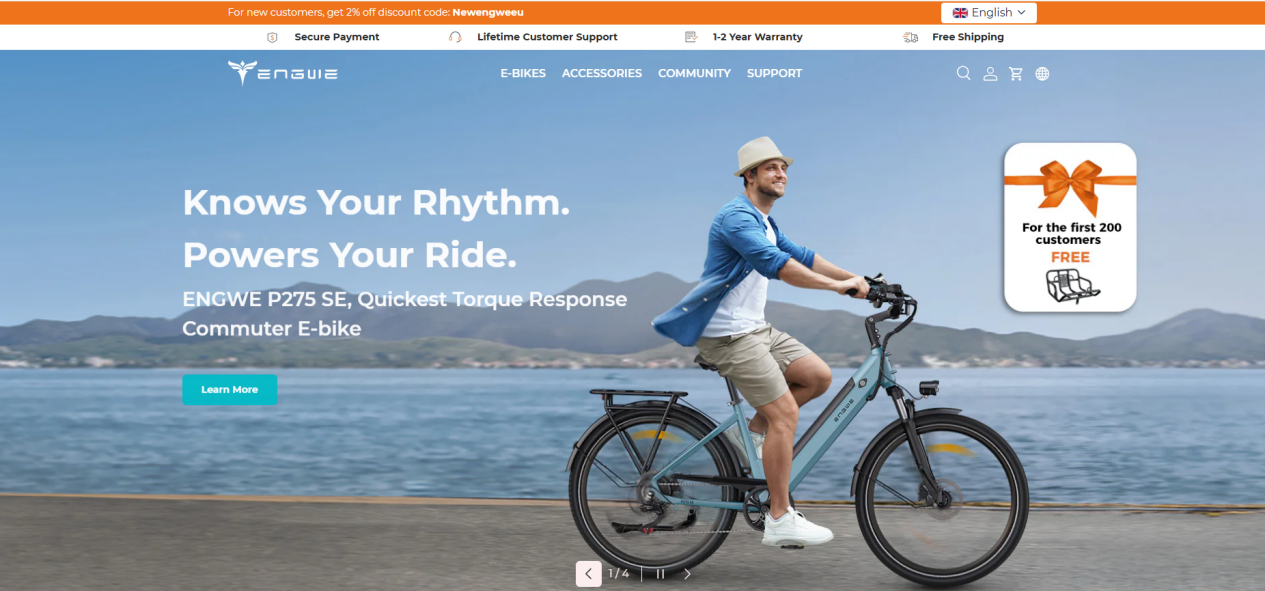
Image source: Engwe
Conclusion
In summary, we can see that the success of the Engwe brand does not rely on a single advantage, but is the result of synergy between product strength, channel strength, and marketing strength.
Currently, there are still segmented opportunities in the overseas electric bicycle market. For example, the demand for snow models in Northern Europe and the preference for foldable portable styles in Southern Europe. If domestic brands can leverage their supply chain advantages and flexibly adjust to regional characteristics, there is every opportunity to replicate Engwe's success.
There is never a shortage of participants in the global market competition, but there is always a need for problem solvers. The story of electric bicycles going global has only just begun!