The year-end shopping season is approaching, and merchants are ushering in the annual sales peak.
This year, TikTok Shop has made several key adjustments to its return policy, especially optimizing aspects such as the return period, return logistics, and refund review. These changes not only directly affect the shopping experience of consumers, but may also bring new challenges and opportunities to merchants' after-sales processes.
More “tolerance” for consumers, more “pressure” for merchants
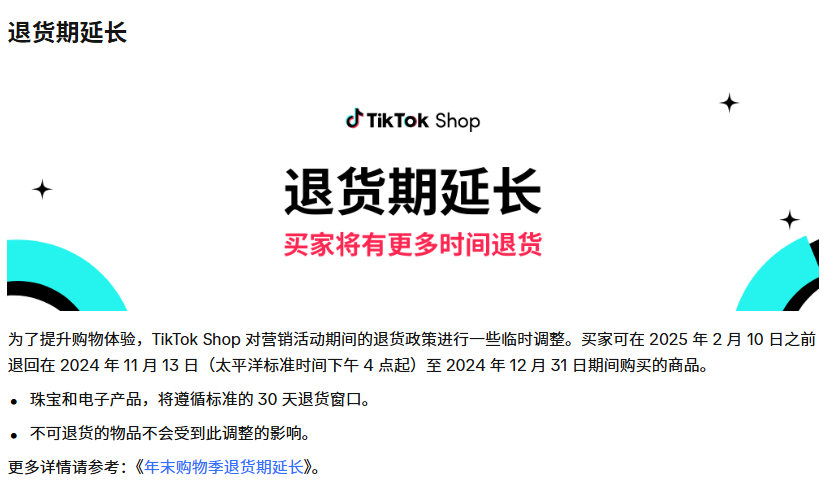
TikTok Shop announced that for orders placed between November 13, 2024 and December 8, 2024, the return period will be extended to February 10, 2025. That’s right, consumers now have more time to decide whether to return their purchases—which means they can take their time after the holidays, and even make a final decision during the post-holiday “shopping cooling-off period.”
But for merchants, this undoubtedly means greater after-sales pressure. The extension of the return period, especially in the months following major promotions, may lead to more return and refund requests. If you want to turn this challenge into an opportunity, the most crucial step is to ensure the accuracy of product descriptions and the completeness of images and text, to avoid unnecessary returns caused by unclear information.
Image source: TikTok shop
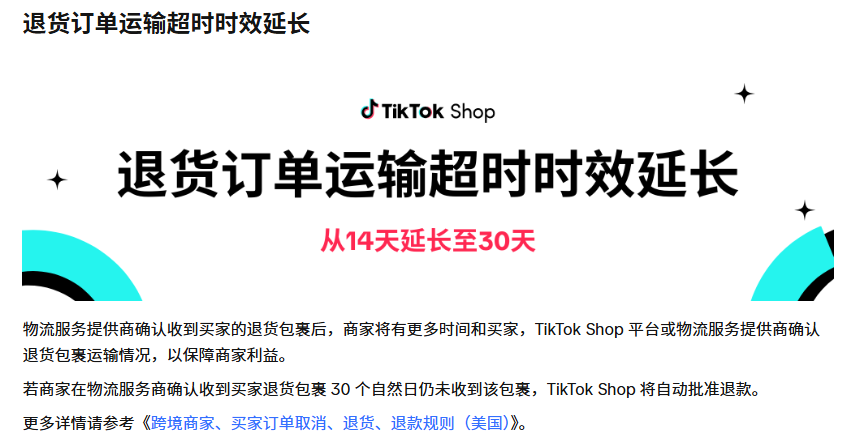
Extended in-transit time window for return orders: a “buffer zone” in logistics
In addition to the return period, TikTok Shop has also adjusted the “in-transit time” for return parcels, giving merchants more time to process these “returned” goods. Simply put, when consumers return products, the logistics time will be appropriately extended, providing a greater “grace period” for transportation delays during peak times.
For merchants, although this means you have more time to receive returned goods, you also need to be fully prepared to prevent a backlog of returns from affecting warehouse and return review efficiency.
Image source: TikTok shop
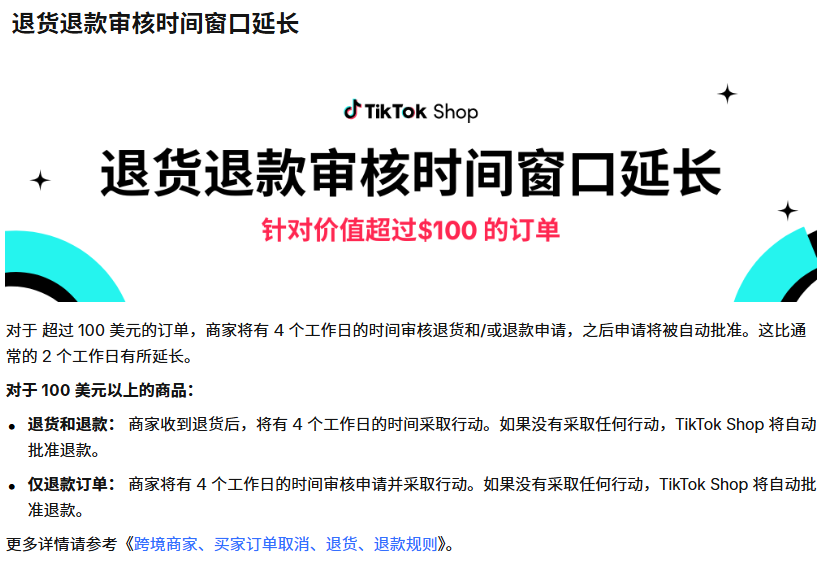
Extended review time window for return and refund: more flexibility in after-sales processing
Finally, TikTok Shop has also extended the review time for return and refund requests. Merchants will have a longer time window to process returns and complete refunds, which undoubtedly provides greater flexibility, especially during peak periods, avoiding the need to rush through each return. While extending the review time helps ease the pressure, merchants should also pay attention to processing refund requests in a timely manner to avoid negative reviews caused by delays.
In this regard, it is recommended that merchants use automation tools to help handle the return and refund process. TikTok Shop has already provided some automated tool solutions to help merchants manage after-sales requests more efficiently and reduce the pressure of manual processing.
Image source: TikTok shop
Summary
In this shopping season with extended return periods and longer review times, merchants’ after-sales service will be the key to determining customer satisfaction. Although policy changes bring more challenges to merchants, they also provide more opportunities to break the conventional after-sales service model. Optimizing customer service response, improving return management efficiency, and even regularly checking inventory and order status to reduce potential issues are all effective measures merchants can take.
Most importantly, as the shopping season arrives, it’s not only about making consumers feel happy when shopping, but also ensuring that they feel the merchant’s care and responsibility when encountering any after-sales issues. This not only helps you handle returns better and improve customer satisfaction, but also allows your store to stand out in the competition.
In short, the adjustment of the return policy for the year-end shopping season of 2024 is both a challenge and an opportunity. Merchants should plan ahead, respond flexibly, and maintain efficient service and communication to achieve true success in this shopping frenzy.