Recently, Amazon announced the launch of more than 20 innovative initiatives at the "Global Opportunity Forum," aiming to comprehensively simplify the global expansion process for sellers. This series of changes not only covers core aspects such as logistics, product selection, and brand promotion, but also provides unprecedented development opportunities for cross-border sellers through data-driven approaches and cost optimization.

Image source: Internet

Data Empowerment: Precise Navigation for Global Layout  

In the field of cross-border e-commerce, blind expansion often means wasted resources and opportunity costs. Amazon's newly launched data-driven solutions provide sellers with scientific grounds for precise layout. The upgrades to the two major tools, "Product Selection Compass" and "Business Opportunity Detector," visualize market demand and help sellers break free from the dilemma of selecting products based on intuition.

In addition, the Sell Globally tool has also been comprehensively upgraded. It is no longer just a simple sales channel, but has evolved into an intelligent global expansion advisor. By providing sales forecasts and cost analysis for European and Japanese sites, sellers can predict the business prospects of each site as easily as checking the weather forecast. This data transparency will completely change the traditional trial-and-error expansion model, helping sellers focus their limited resources on the most promising markets.  

Image source: Google

Process Revolution: Intelligent Operations that Simplify Complexity  

The biggest pain point in global operations is complex process management. The intelligent tools launched by Amazon this time directly address the real pain points sellers face in multi-site operations.

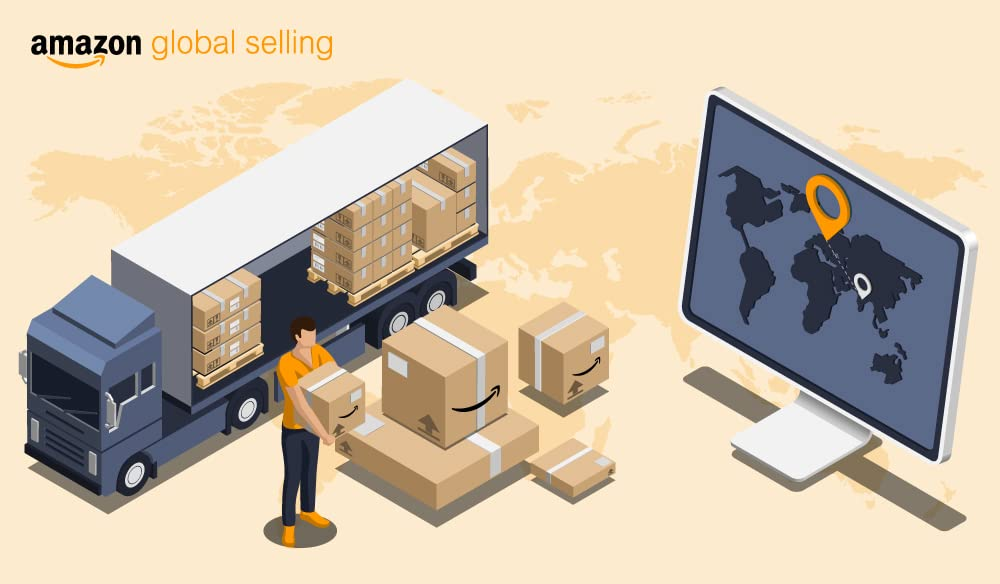
Logistics innovations represented by the China-Japan sea freight test and China-US air freight trial operation not only enrich transportation options, but also, through the addition of new pickup cities and intelligent cabin space estimation, realize the transformation from sellers adapting to the platform to the platform serving sellers. This refined operation of the logistics network can significantly reduce sellers' inventory pressure and transportation costs, providing more efficient and convenient logistics solutions for sellers.  

Image source: Google

After solving the logistics challenges, Amazon has further focused on the localization challenges of brand globalization. In the traditional model, brands need to redesign stores, translate content, and adjust product displays for each new market, a process that consumes a lot of manpower and resources. However, Amazon's newly launched Global Quick Expansion tool will completely change this situation.

This tool simplifies the complex localization process into "one-click copying" through intelligent translation and automatic filtering of unsellable products, greatly reducing the operational difficulty of brand globalization. At the same time, its keyword automatic translation function boasts an accuracy rate as high as 98.4%, which means that the biggest challenge of language barriers in cross-border business is gradually being overcome by technology.

In addition to logistics and localization optimization, Amazon has also introduced the Global Account Management model (GAM), marking a comprehensive upgrade of its service philosophy.

Through official dedicated consultants integrating brand building, site expansion, and channel development, the GAM model frees sellers from running between different departments. This "one-stop" service model is especially suitable for rapidly expanding medium-sized sellers, helping them avoid growth bottlenecks caused by management chaos and providing a solid backing for sellers' global business expansion.

Image source: Google

Cost Restructuring: Inclusive Policies Unleash Growth Potential  

Against the backdrop of increasing global economic uncertainty, cost control has become one of the sellers' top concerns. Amazon's newly launched regional subsidy policies precisely target the development stages and characteristics of different markets, reflecting a refined operational approach of "site-specific policies."

For example, shipping rewards in the Middle East, FBA fee reductions for the Mexico site, and preferential delivery rates for the Brazil site are not simply price discounts, but carefully designed market cultivation strategies aimed at reducing the risks and costs for sellers entering new markets.

In addition, policy adjustments in the European market are particularly noteworthy. Up to 55% local delivery fee reduction for the Poland site and VAT service support for the Ireland site both demonstrate Amazon's expectations for secondary growth in mature markets. These policies will encourage sellers who have already established themselves in Europe to penetrate emerging sites, thereby forming a virtuous cycle of "mature sites ensuring profits, emerging sites driving growth."

Image source: Google

Conclusion: The Beginning of a New Era in Global E-commerce  

The more than 20 innovative initiatives launched by Amazon are by no means merely functional upgrades or policy adjustments, but mark a systemic restructuring of the global e-commerce ecosystem. In the future, global e-commerce competition will no longer be just a contest of scale, but a competition of the comprehensive strength of ecosystems.

In this new era of global connectivity, true opportunities will belong to the pioneers who can deeply integrate Amazon's innovative initiatives with their own advantages. The next golden decade of cross-border e-commerce is thus unfolding.