 2442
2442In den letzten Jahren haben Outdoor-Aktivitäten wie Camping und Wandern einen Konsumboom ausgelöst. Besonders in Europa und Nordamerika steigt die Zahl der Nutzer, die einen Outdoor-Lebensstil bevorzugen, stetig an. In den USA beträgt die jährliche Zahl der Outdoor-Sportler bis zu 160 Millionen.
Diese starke Marktnachfrage hat viele Nischenmarken in den Mainstream katapultiert, die sich durch einzigartige Produktpositionierungen und flexible Marketingstrategien hervorheben. Dazu gehört auch die DTC-Marke Rumpl, die mit dem Konzept der „Schlafsackdecke“ einen Jahresumsatz von 4 Millionen US-Dollar erzielt.
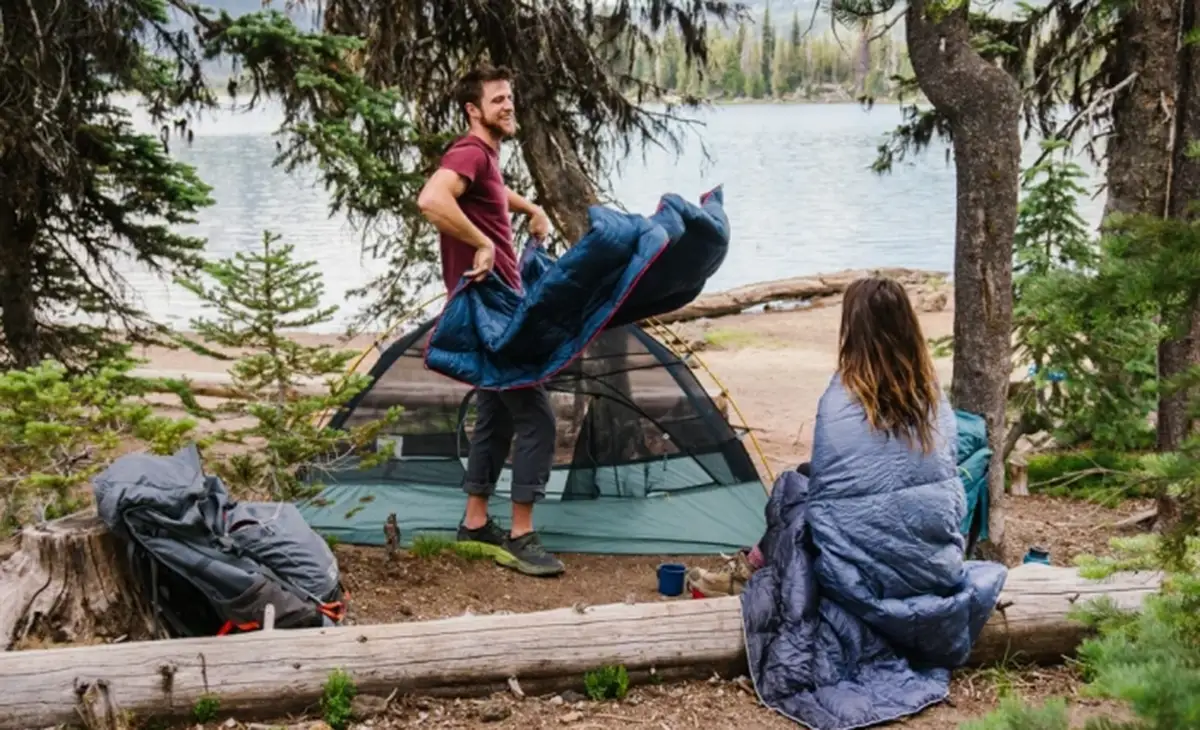
Nutzer zeigt Rumpl Schlafsackdecke Quelle: Google
Die aus einer Ski-Panne geborene „Schlafsackdecke“
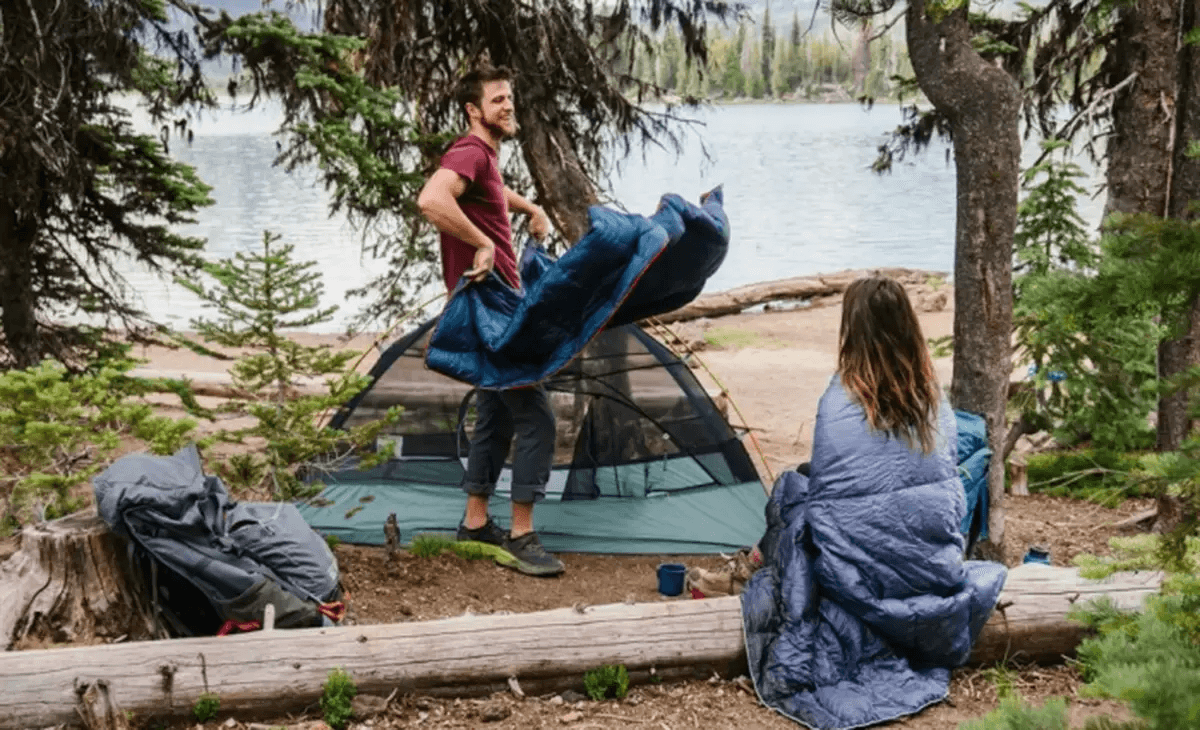
Die Entstehung von Rumpl geht auf einen Skiunfall zurück. 2014 waren die Gründer Nick Polinko und Wylie Robinson auf einer Skireise in ihrem Auto eingeschlossen. Während sie in ihren Schlafsäcken auf Rettung warteten, kam ihnen plötzlich die Idee: Warum können alltägliche Decken nicht auch wasserdicht und wärmend sein wie ein Schlafsack? Aus dieser Idee heraus gründeten sie Rumpl, das sich auf die Herstellung von „Schlafsackdecken“ spezialisiert hat, die Outdoor-Funktionalität mit häuslichem Komfort verbinden.
Rumpl-Decken verwenden hochwertige Outdoor-Materialien, die wasserdicht, schmutzabweisend und reißfest sind, und bleiben gleichzeitig leicht und tragbar. Sie können als Umhang, Decke oder sogar als Outdoor-Picknickdecke verwendet werden.
Optisch bricht Rumpl mutig mit Konventionen und integriert Farbpaletten der nordamerikanischen Naturlandschaft, wie die Serien „Arizona Sonnenuntergang“ und „Rocky Mountains“, die einzigartig und auffällig sind. Dieses Design, das die traditionelle Definition von Decken sprengt, hat Rumpl schnell eine große Fangemeinde eingebracht, insbesondere bei jungen Nutzern, die Outdoor- und Wohnszenen kombinieren möchten.
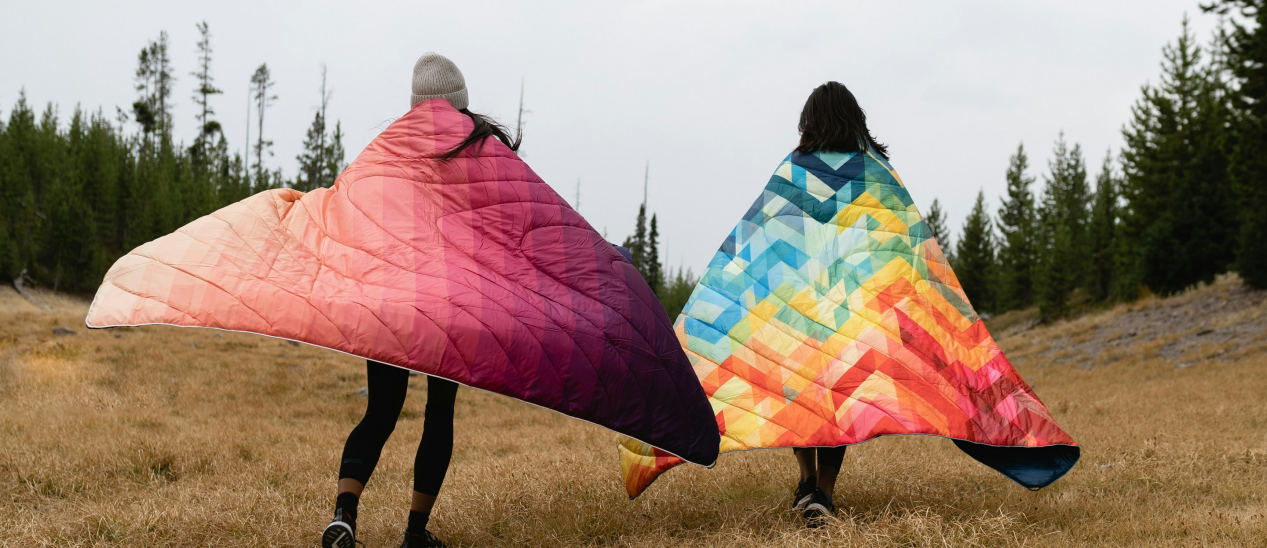
Nutzer zeigt Rumpl Schlafsackdecke Quelle: Google
Mit einer schlanken Produktlinie die Kernbedürfnisse adressieren
Um die Bedürfnisse von Outdoor-Nutzern besser zu erfüllen, hat Rumpl drei Produktserien entwickelt: Original, NanoLoft und Down, die auf verschiedene Szenarien und Anforderungen zugeschnitten sind.
Die Original-Serie ist langlebig und wasserdicht und für die meisten Outdoor-Szenarien geeignet; die NanoLoft-Serie ist leicht und warm, ideal für leichtes Wandern; die Down-Serie verwendet hochwertige Daunen, um in kalten Umgebungen warm zu halten. Diese schlanke Produktlinie erleichtert nicht nur die Auswahl für die Nutzer, sondern unterstreicht auch die Professionalität der Marke Rumpl und ihre „weniger ist mehr“-Philosophie.
Darüber hinaus legt Rumpl Wert auf Umweltverantwortung und ist der Organisation „1% for the Planet“ beigetreten, um 1% des Umsatzes für Umweltzwecke zu spenden. Für Outdoor-Enthusiasten bedeutet die Unterstützung von Rumpl nicht nur den Kauf eines Produkts, sondern auch ein Bekenntnis zum Umweltschutz. Diese emotionale Identifikation stärkt zweifellos die Markentreue und hilft Rumpl, das Vertrauen der Verbraucher zu gewinnen.
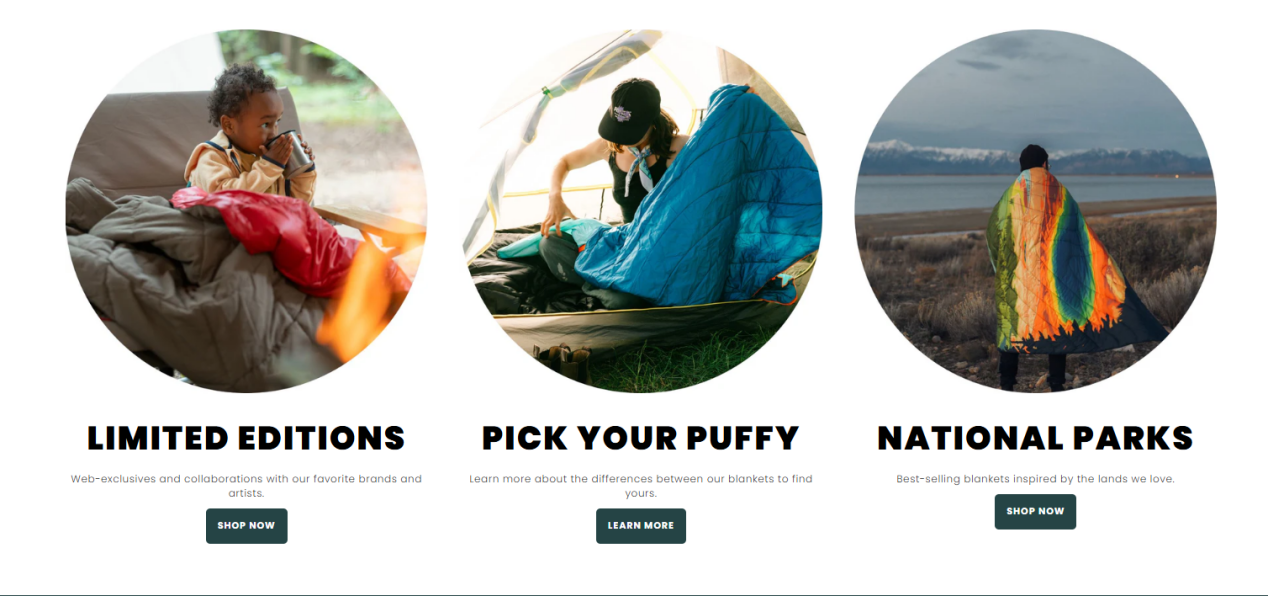
Quelle: Rumpl-Website
Multiplattform-Social-Media-Vernetzung für schnelle Markenbindung
In der Content-Strategie setzt Rumpl auf eine Multiplattform-Social-Media-Präsenz, um Zielgruppen über verschiedene Kanäle präzise anzusprechen. Auf YouTube arbeitet Rumpl mit KOLs zusammen, um Testvideos zu veröffentlichen, in denen Outdoor-Experten die tatsächliche Leistung der Produkte in Outdoor-Szenarien zeigen, was potenzielle Nutzer effektiv anzieht und das professionelle Image der Marke stärkt.
Auf Twitter und Instagram konzentriert sich die Marke auf visuelle Wirkung, indem sie Naturlandschaften und Outdoor-Szenarien nutzt, um die Umweltphilosophie der Marke zu vermitteln und die emotionale Bindung der Nutzer weiter zu stärken.
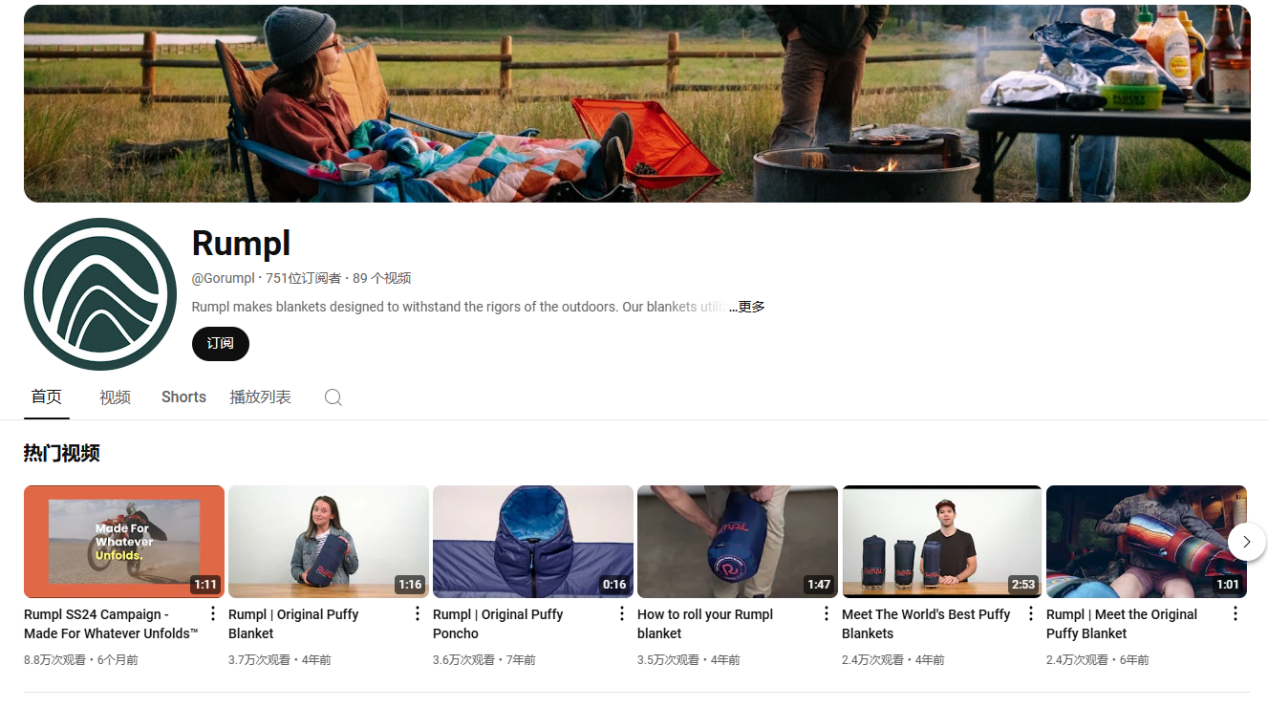
Quelle: YouTube
Auf TikTok verfolgt Rumpl eine einzigartige „Spaß + Nutzen“-Strategie, die die Herzen junger Nutzer erobert. Die Generation Z legt Wert auf Interaktion und mag lockere, unterhaltsame Inhalte.
Aus diesem Grund hat Rumpl mehrere Video-Content-Themen mit hoher Interaktionsrate entwickelt, wie die Serie „Brauchst du eine Rumpl?“, die durch einfache Handlungsstränge die Vielseitigkeit der „Schlafsackdecke“ zeigt und den Nutzern schnell den Wert des Produkts vermittelt.
Gleichzeitig hat Rumpl Challenge-Tags wie #RumplAdventure ins Leben gerufen, um Nutzer einzuladen, ihre Erfahrungen zu teilen und so eine breitere Markendiskussion anzuregen.
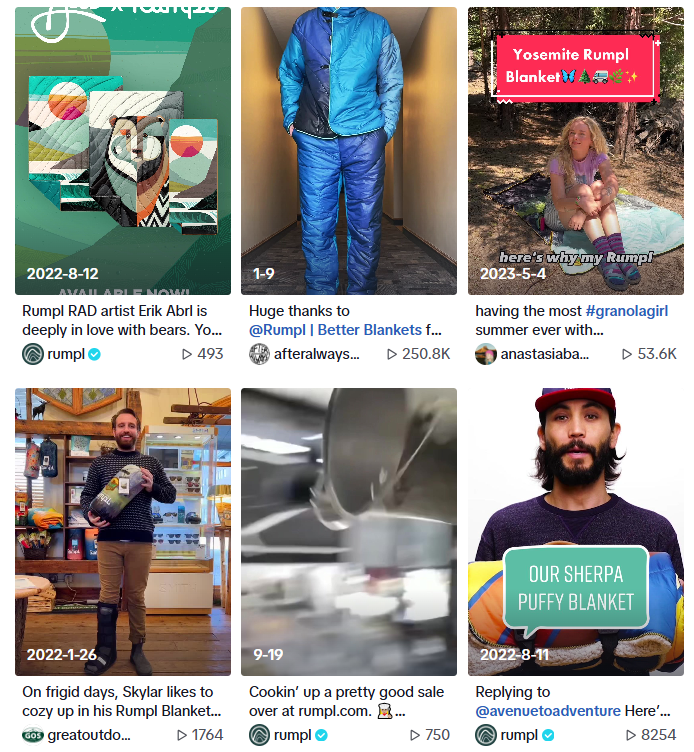
In den Videos von Rumpl wird die Funktionalität und Tragbarkeit der Produkte auf lockere und humorvolle Weise präsentiert, was die Vorliebe der Generation Z für unterhaltsame Kurzvideos bedient. Ein besonders beliebtes Video zeigt beispielsweise, wie man die Rumpl-Decke in verschiedenen Szenarien schnell zusammenfalten kann, was zu zahlreichen Interaktionen und Diskussionen führte. Indem Rumpl die Verwendung der Decke in Szenarien wie Camping, Strand und zu Hause zeigt, vermittelt es einen Lebensstil, der „überall und jederzeit dabei“ ist, und erfüllt damit die Bedürfnisse junger Nutzer nach flexiblen und praktischen Produkten.
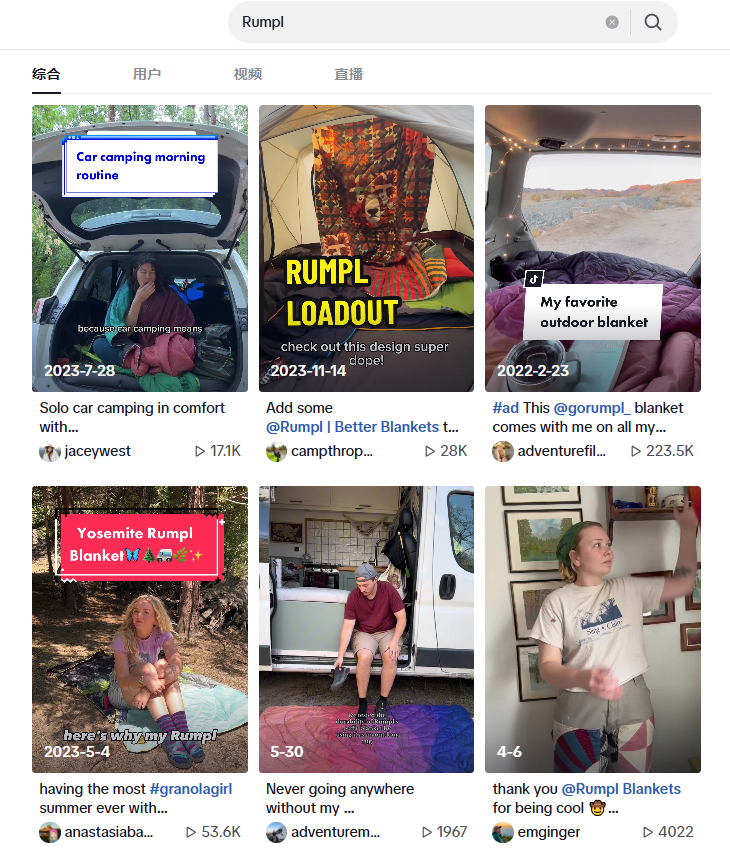
Darüber hinaus erweitert Rumpl auf TikTok seine Reichweite durch Kooperationen mit Creatorn aus den Bereichen Outdoor und Lifestyle. Durch die praktischen Erfahrungen dieser Creator werden die Produktfunktionen von Rumpl lebendig dargestellt, was besonders für Outdoor-Neulinge geeignet ist, die schnell einsteigen möchten. Solche Kooperationen steigern nicht nur die Glaubwürdigkeit der Marke, sondern führen auch zu einer effektiven Produktplatzierung.
Die eigene Website stärkt das Markenerlebnis und optimiert Konversion und Wiederkauf
Als DTC-Marke übernimmt die eigene Website von Rumpl nicht nur Verkaufsfunktionen, sondern ist auch ein wichtiger Bestandteil der Marken-Community.
Laut Daten von Similarweb hat die eigene Website von Rumpl eine monatliche Besucherzahl von bis zu 350.000, mit einem stabilen organischen Traffic von 65.000 pro Monat und etwa 13.000 durch bezahlte Werbung. Die Absprungrate ist niedrig, was die Attraktivität des Produkts und die präzise Strategie der bezahlten Werbung widerspiegelt.

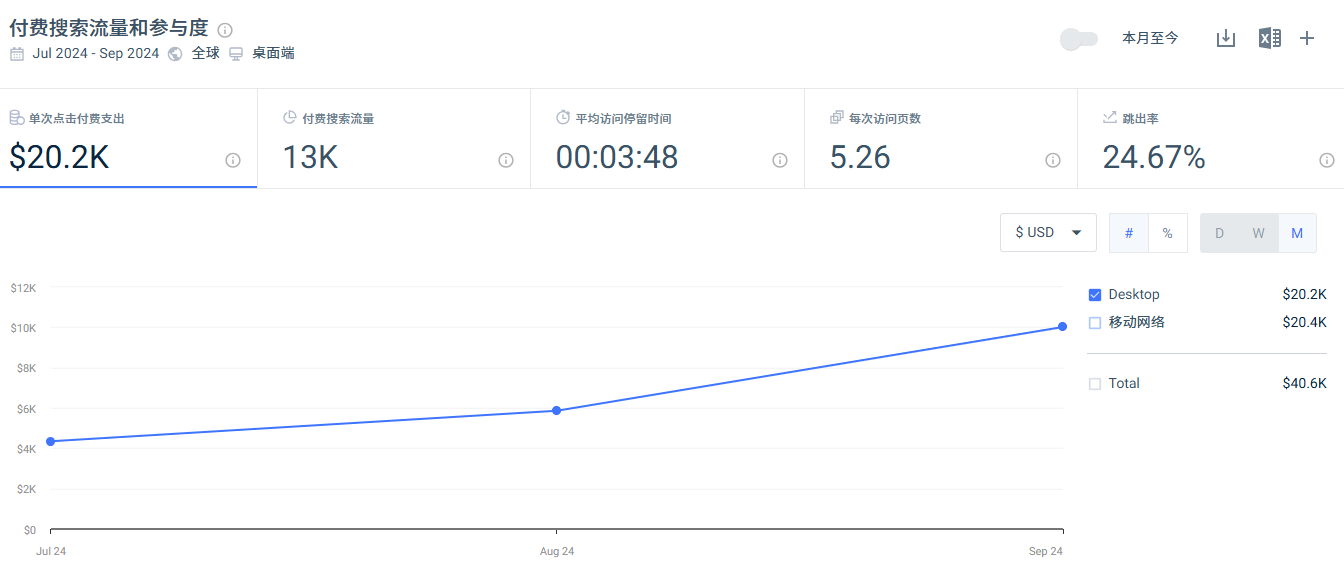
Quelle: Similarweb
Auf der eigenen Website schafft Rumpl ein immersives Outdoor-Lebensgefühl. Neben der Produktpräsentation werden auch die Umweltversprechen der Marke, Nutzergeschichten und Social-Media-Inhalte hervorgehoben. Nutzer können die Produkte direkt auf der Website kennenlernen und eine emotionale Verbindung aufbauen. Die Strategie der eigenen Website von Rumpl ist nicht nur ein Verkaufskanal, sondern auch eine Plattform zur Vermittlung von Markenwerten und -kultur, die durch erhöhtes emotionales Engagement die Wiederkaufrate steigert.
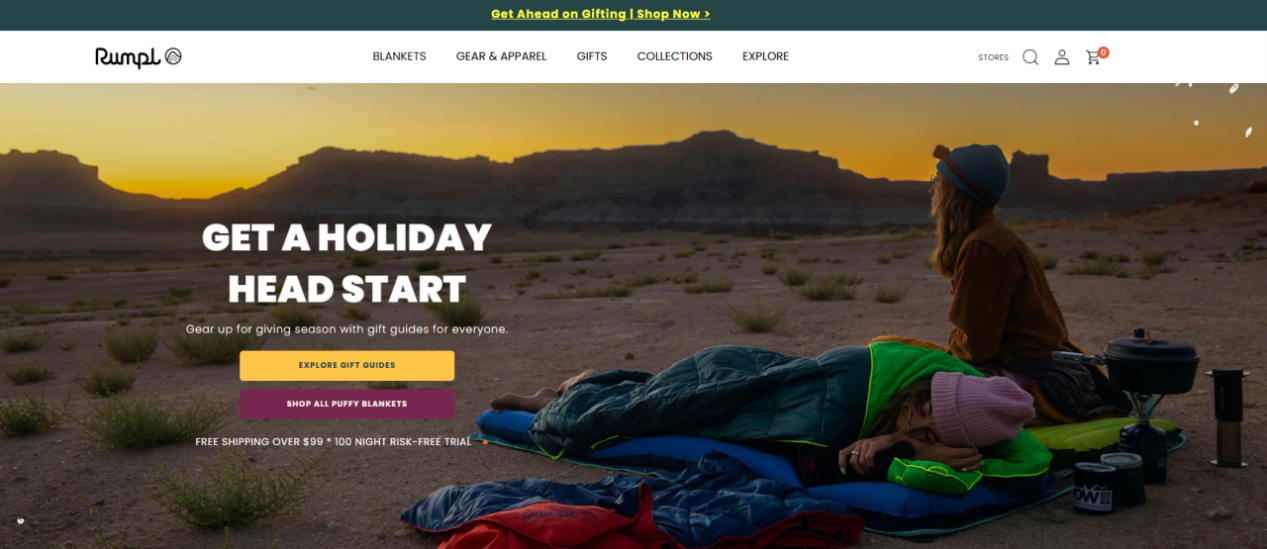
Quelle: Rumpl-Website
Unbegrenztes Potenzial auf dem globalen Markt
Statista prognostiziert, dass der globale Markt für Outdoor-Produkte bis 2027 ein Volumen von 109 Milliarden US-Dollar erreichen wird, wobei die Märkte in Europa und Nordamerika weiterhin das Wachstum dominieren werden. Mit seinem innovativen Design, seiner Umweltphilosophie und seiner Multiplattform-Content-Strategie hat Rumpl seinen Einfluss in diesem wettbewerbsintensiven Markt stetig ausgebaut.
Nicht nur Rumpl, sondern auch Outdoor-Marken wie Mobi Garden, Flextail und Yayi Technology haben sich zu den wenigen Millionen-Dollar-Marken in diesem Bereich entwickelt und erschließen in verschiedenen Nischen noch größere Geschäftsmöglichkeiten.
In Zukunft wird das Wachstumspotenzial des Outdoor-Sektors weltweit weiter zunehmen, da die Verbraucher den Outdoor- und Umwelt-Lebensstil weiter verinnerlichen. Es liegt noch eine lange Phase des blauen Ozeans vor ihm.