 1803
1803Mit den Veränderungen im globalen Wirtschaftsumfeld steigt die Nachfrage der Verbraucher nach preiswerten Gebrauchtwaren stetig. Um diesem Trend gerecht zu werden, baut Amazon sein Gebrauchtwarengeschäft kontinuierlich aus und hat kürzlich auf der belgischen Website einen Gebrauchtwarenservice eingeführt. Dieser Service ermöglicht es Verkäufern, gebrauchte und retournierte Artikel zu reduzierten Preisen zu verkaufen, was die Entwicklung des Gebrauchtwarenmarktes weiter vorantreibt. Über diese Plattform können belgische Verbraucher je nach Zustand der Ware passende Gebrauchtartikel auswählen.
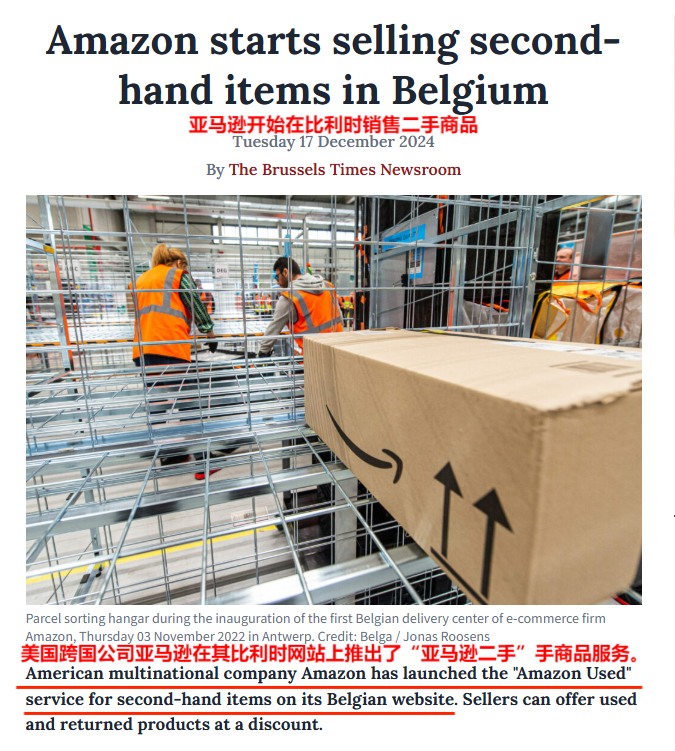
Bildquelle: the brussels times
1. Der „Amazon Used“-Service
Mit dem in Belgien eingeführten „Amazon Used“-Service können Verbraucher je nach Zustand der Ware wie „Neu“, „Wie neu“, „Sehr gut“, „Gut“ und „Akzeptabel“ wählen. Der genaue Zustand dieser Artikel wird vom Verkäufer angegeben, sodass die Verbraucher die Qualität jedes Produkts klar verstehen können.
Dieser Service ist nicht Amazons erster Vorstoß in den Gebrauchtwarenmarkt. Bereits 2015 führte Amazon ähnliche Dienste in europäischen Märkten wie Deutschland, Frankreich, Italien und Spanien ein, um die Nachfrage der Verbraucher nach Gebrauchtwaren zu decken und die Entwicklung in diesem Bereich schrittweise voranzutreiben. Neben dem Handel mit Gebrauchtwaren ermutigt Amazon die Verbraucher auch zur Reparatur, zum Austausch und zum Recycling alter Artikel, um nachhaltigen Konsum weiter zu fördern.

Bildquelle: Internet
2. Einführung der verbesserten Gebrauchtwarenplattform „Amazon Resale“
Um die Qualität der Gebrauchtwaren und das Verbrauchererlebnis weiter zu verbessern, führte Amazon im August dieses Jahres die verbesserte Gebrauchtwarenplattform „Amazon Resale“ ein. Diese Plattform führt vor der Listung der Artikel strenge Qualitätskontrollen durch, um sicherzustellen, dass alle gelisteten Produkte den Standards entsprechen, und unterteilt sie detailliert nach Zustand. Dieser Schritt erhöht das Vertrauen der Verbraucher in Gebrauchtwaren und stärkt gleichzeitig Amazons Wettbewerbsfähigkeit auf dem Gebrauchtwarenmarkt.
Die Einführung von „Amazon Resale“ optimiert nicht nur die Verwaltung von Gebrauchtwaren auf der Plattform, sondern bietet den Verbrauchern auch eine höhere Auswahlqualität. Amazon hofft, durch diese Plattform ein stärkeres Qualitätssicherungssystem aufzubauen, um das Vertrauen der Verbraucher zu gewinnen und den Marktanteil im Gebrauchtwarensektor zu vergrößern.

Bildquelle: About Amazon
3. Starker Anstieg der Nachfrage auf dem Gebrauchtwarenmarkt: Wachstum in Europa und den USA
Die Nachfrage nach Gebrauchtwaren steigt nicht nur in Belgien, sondern in ganz Europa deutlich. Laut Forschungsdaten von Amazon neigen 66 % der europäischen Verbraucher dazu, Gebrauchtwaren zu kaufen, während 32 % beim Einkaufen eher zu gebrauchten oder generalüberholten Artikeln greifen.
Bis 2025 wird der Marktwert der europäischen Gebrauchtwarenwirtschaft voraussichtlich auf 120 Milliarden Euro steigen, was die bedeutende Rolle und Wichtigkeit von Gebrauchtwaren auf dem europäischen Markt unterstreicht. Auch in den USA wächst die Nachfrage nach Gebrauchtwaren rasant. Laut einem Bericht des Verbraucheranalyseunternehmens Consumer Edge wird erwartet, dass die Ausgaben für den Weiterverkauf von Gebrauchtwaren in den USA im Jahr 2024 die traditionellen Einzelhandelsausgaben übersteigen und dieser Wachstumstrend bis 2025 anhalten wird.

Bildquelle: About Amazon
4. E-Commerce-Plattformen verstärken ihr Engagement im Gebrauchtwarenmarkt
Der Boom auf dem Gebrauchtwarenmarkt zieht immer mehr E-Commerce-Plattformen an, und der Wettbewerb wird intensiver. Die weltweit führende Gebrauchtwaren-E-Commerce-Plattform eBay arbeitete im September dieses Jahres mit dem Luxusgüterhändler Luxe Collective zusammen, um in Großbritannien einen Konsignationsservice für hochwertige Artikel einzuführen. Gleichzeitig kündigte eBay eine neue Richtlinie an, die Verkaufsgebühren für private Verkäufer in fast allen Produktkategorien auf der britischen Website abschafft, um mehr Verkäufer zum Handel mit Gebrauchtwaren zu ermutigen.
Darüber hinaus entstehen zunehmend lokalisierte Gebrauchtwaren-E-Commerce-Plattformen. Diese Plattformen ziehen durch optimierte Benutzererfahrungen und personalisierte Dienstleistungen eine große Anzahl von Verbrauchern an und treiben das Wachstum des Gebrauchtwarenmarktes weiter voran.
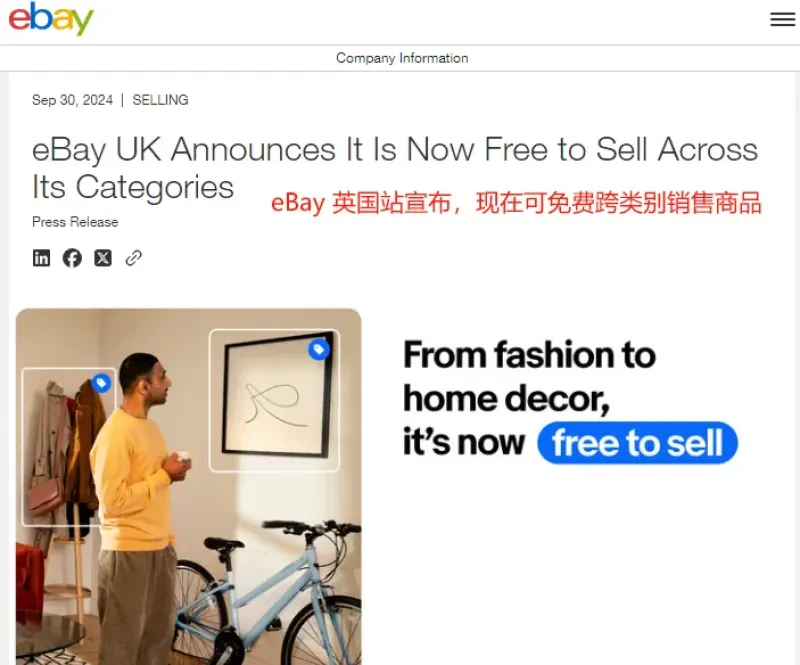
Bildquelle: eBay
Fazit
Mit der steigenden Nachfrage auf dem Gebrauchtwarenmarkt markiert die Einführung des „Amazon Used“-Service in Belgien eine weitere Expansion von Amazon auf dem globalen Gebrauchtwarenmarkt. Die verbesserte Plattform „Amazon Resale“ stellt einen wichtigen Schritt zur Verbesserung der Produktqualität und des Verbrauchererlebnisses dar. Weltweit ist das Potenzial des Gebrauchtwarenmarktes enorm, und die steigende Nachfrage in Regionen wie Europa und den USA treibt das dynamische Marktwachstum voran.
Angesichts dieser Marktchancen verstärken E-Commerce-Plattformen und grenzüberschreitende Verkäufer ihr Engagement im Gebrauchtwarensektor. Mit zunehmendem Wettbewerb wird die Optimierung der Produktqualität, die Senkung der Betriebskosten und die Steigerung des Verbrauchervertrauens jedoch zum Schlüssel für den Erfolg. In Zukunft wird sich der Gebrauchtwarenmarkt weiter ausdehnen und zu einem wichtigen Bestandteil des globalen Einzelhandelsmarktes werden.