 2693
2693Im September 2021 kam es auf der US-amerikanischen Crowdfunding-Plattform Kickstarter zu einer „digitalen Revolte“:
Ein 12,8-Zoll-3D-Drucker namens „Jupiter“ sammelte innerhalb von weniger als 48 Stunden 3,2 Millionen US-Dollar an Vorbestellungen ein und erreichte schließlich eine Crowdfunding-Summe von 4,74 Millionen US-Dollar (etwa 34,51 Millionen Yuan), womit er direkt den globalen Rekord für 3D-Drucker-Crowdfunding brach.
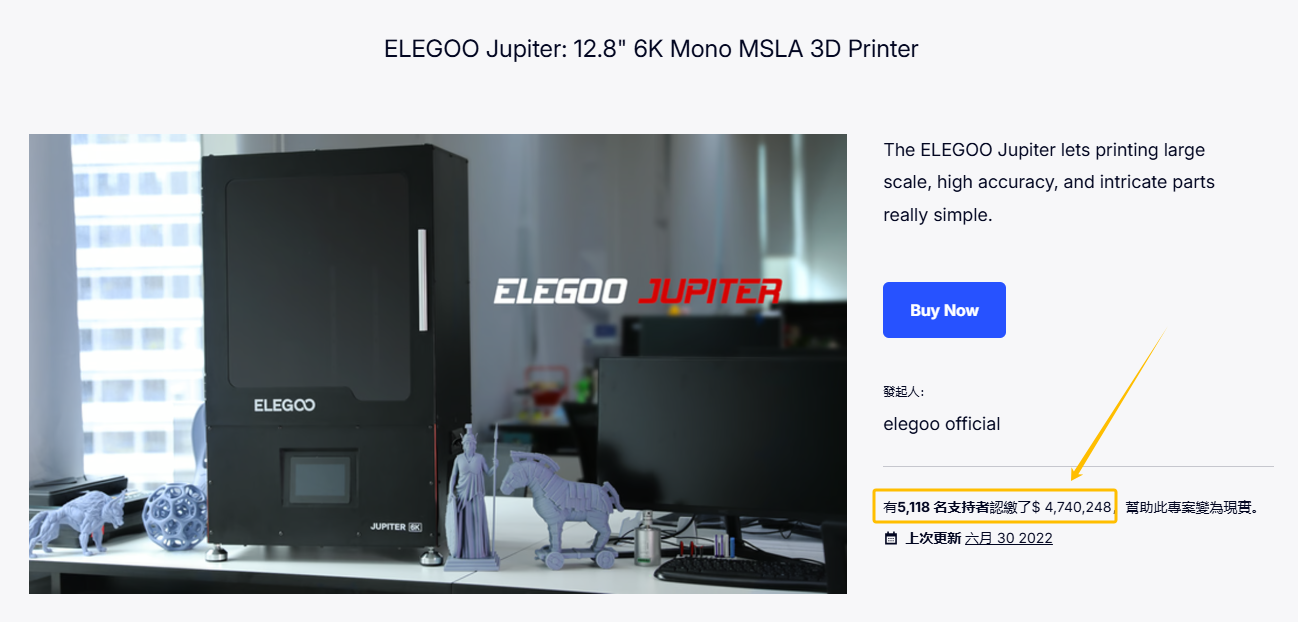
Quelle: Kickstarter
Dieser „Jupiter“-Drucker stammt von der Marke ELEGOO aus Shenzhen.
Von einer kleinen Werkstatt, die Leiterplatten-Kits verkaufte, zum Branchen-Überraschungskandidaten mit einem Jahresumsatz von 1,2 Milliarden Yuan.
Seine Geschichte ist noch fantastischer als ein 3D-gedruckter Transformer.
Quelle: Kickstarter
Harte Transformation nach dem Verlassen des Staatsunternehmens
Die Gründer von ELEGOO, Chen Bo und Hong Yingsheng, waren ursprünglich „eiserne Reisschalen“-Angestellte der China Post Group.
2013 beteiligten sich diese beiden Kommilitonen aus dem Marketingstudiengang der Jinan-Universität an einem Cross-Border-E-Commerce-Projekt. Das Projekt scheiterte, aber sie entdeckten zufällig eine Geschäftschance: Die Nachfrage von Ausländern nach chinesischen elektronischen Komponenten war enorm.
2015 kündigten sie ihre Jobs und gründeten Smart-Pai Technology. Sie kauften Widerstände und Sensoren in Huaqiangbei, Shenzhen, verpackten sie als STEM-Bildungskits und verkauften sie ins Ausland. Mit einer Gewinnspanne von 300% erreichten sie schnell den ersten Platz in ihrer Kategorie bei Amazon.
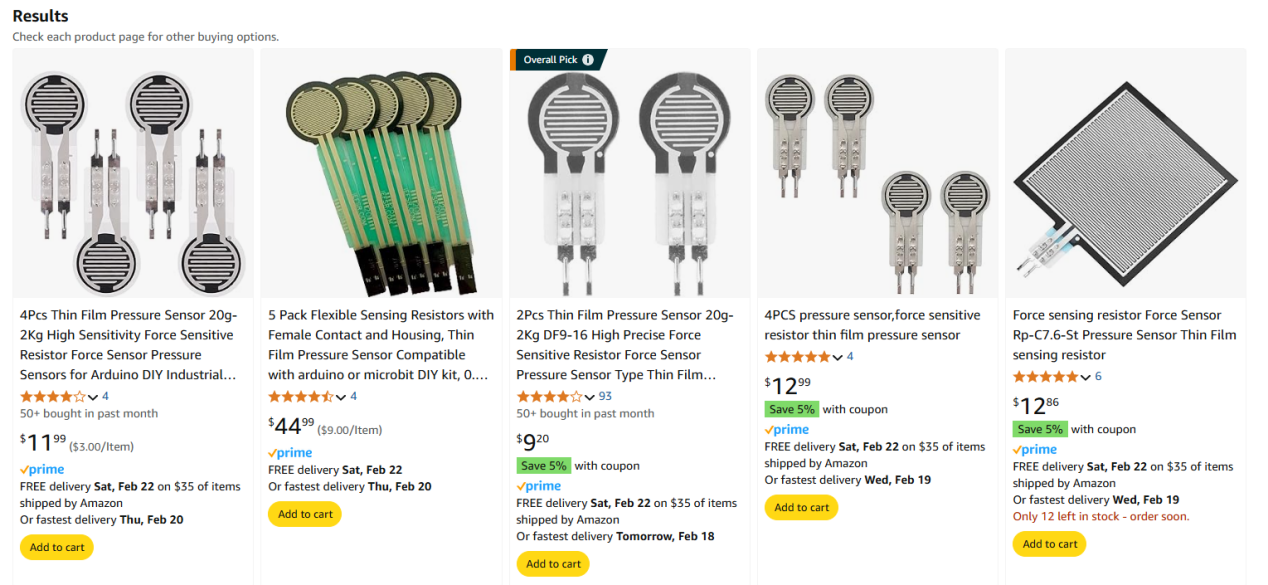
Andere verwandte Produkte auf Amazon
Aber das Glück währte nicht lange. 2018 stagnierte der STEM-Markt, und die Leistung blieb auf der Stelle stehen.
Das Team diskutierte drei Tage lang in seinem Büro in einem Dorf in Shenzhen und entschied sich schließlich, in den 3D-Drucker-Markt einzusteigen.
Zu dieser Zeit konzentrierten sich die inländischen Hersteller auf Industrieanlagen, während der Verbrauchermarkt von europäischen und amerikanischen Marken dominiert wurde.
Aber Chen Bo rechnete: „Ein importierter Harz-3D-Drucker kostet 3.000 US-Dollar, die chinesische Lieferkette kann die Kosten auf ein Drittel senken.“
Von da an begann ELEGOO einen stetigen Aufstieg und etablierte sich allmählich im Bereich der 3D-Drucker.
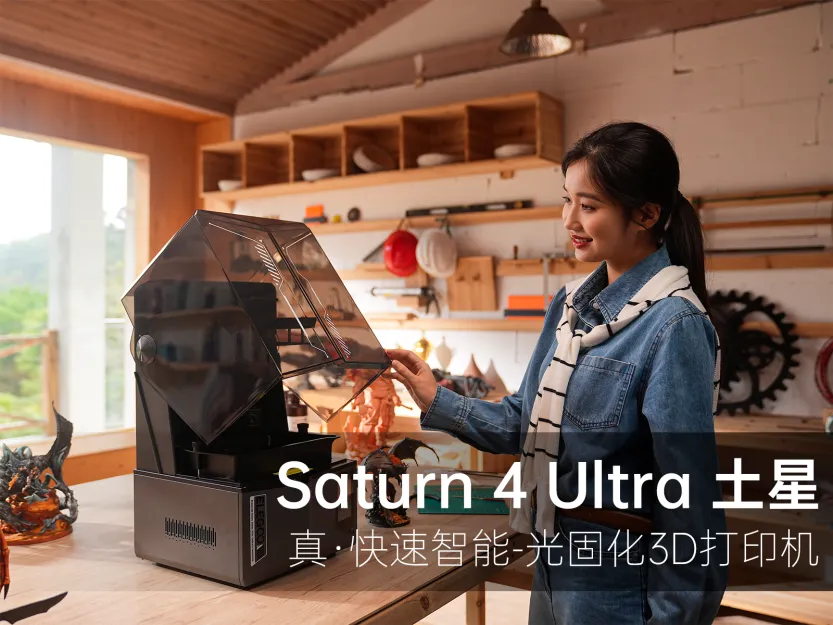
Smart-Pai Harz-3D-Drucker Quelle: Internet
Drei entscheidende Transformationen: Vom „Leiterplattenhändler“ zum Technologie-Schlachter
Der Wachstumsweg von ELEGOO war nicht immer reibungslos, sondern durchlief mehrere wichtige strategische Transformationen:
2019 brachte ELEGOO seinen ersten Verbraucher-Harz-3D-Drucker, den Mars, zum Preis von 299 US-Dollar auf den Markt, der jedoch eine 2K-Druckgenauigkeit bot. In einem US-amerikanischen Nerd-Forum postete jemand: „Haben die Chinesen einfach eine Industriemaschine verkleinert?“ Das Ergebnis: Ein Benutzer druckte eine Ringform mit einer Genauigkeit von 0,05 mm und widerlegte damit die Zweifel.
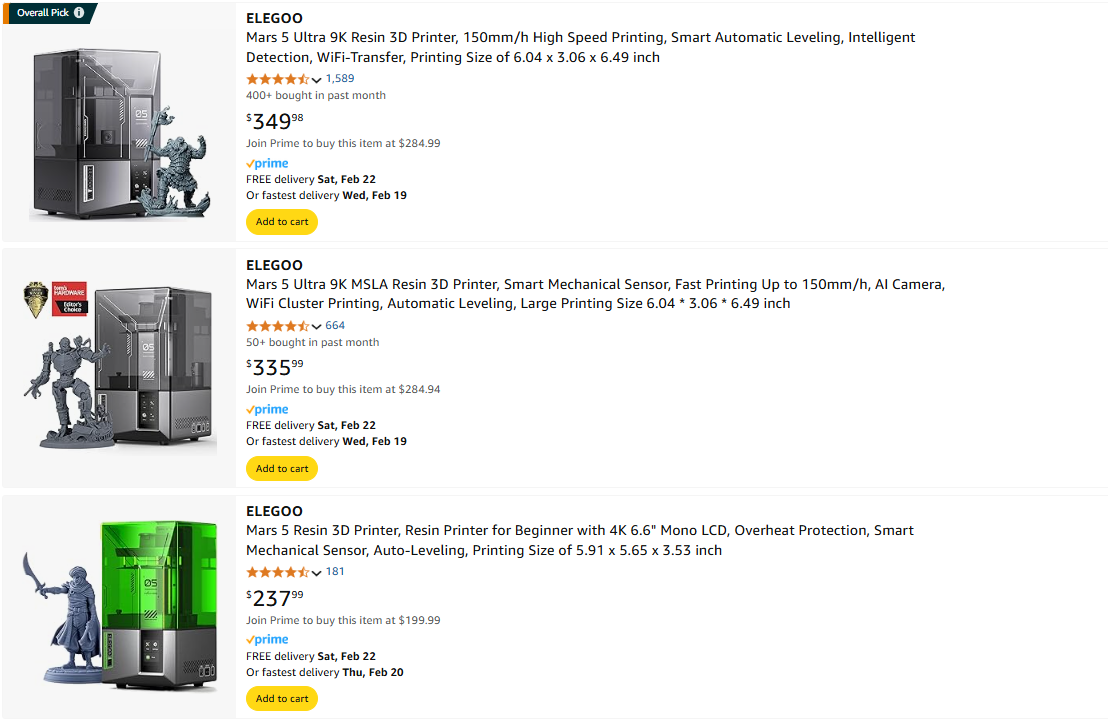
ELEGOO Mars Serie Quelle: Amazon
2020 veröffentlichte ELEGOO den weltweit ersten 4K-Drucker unter 500 US-Dollar, den Saturn. Der Vorverkauf auf der offiziellen Website erzielte in einer Minute einen Umsatz von über zehn Millionen Yuan. Dieser Drucker erfüllte nicht nur die Anforderungen von Zahnärzten zum Drucken temporärer Kronen, sondern ermöglichte es auch Figuren-Enthusiasten, detailgetreue Modelle nachzubilden, und gewann schnell breite Anerkennung.
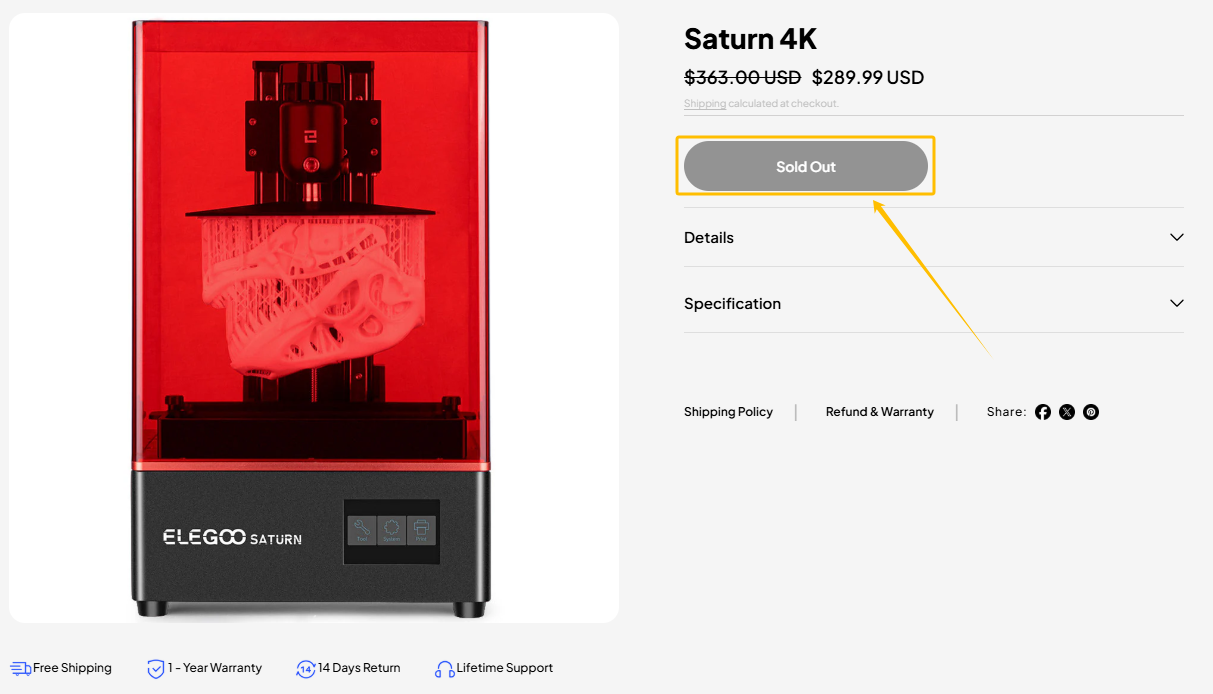
ELEGOO Saturn 4K auf der offiziellen Website ausverkauft
2021 landete ELEGOOs 12,8-Zoll-6K-Drucker „Jupiter“ auf Kickstarter und sammelte innerhalb von 48 Stunden 3,2 Millionen US-Dollar per Crowdfunding.
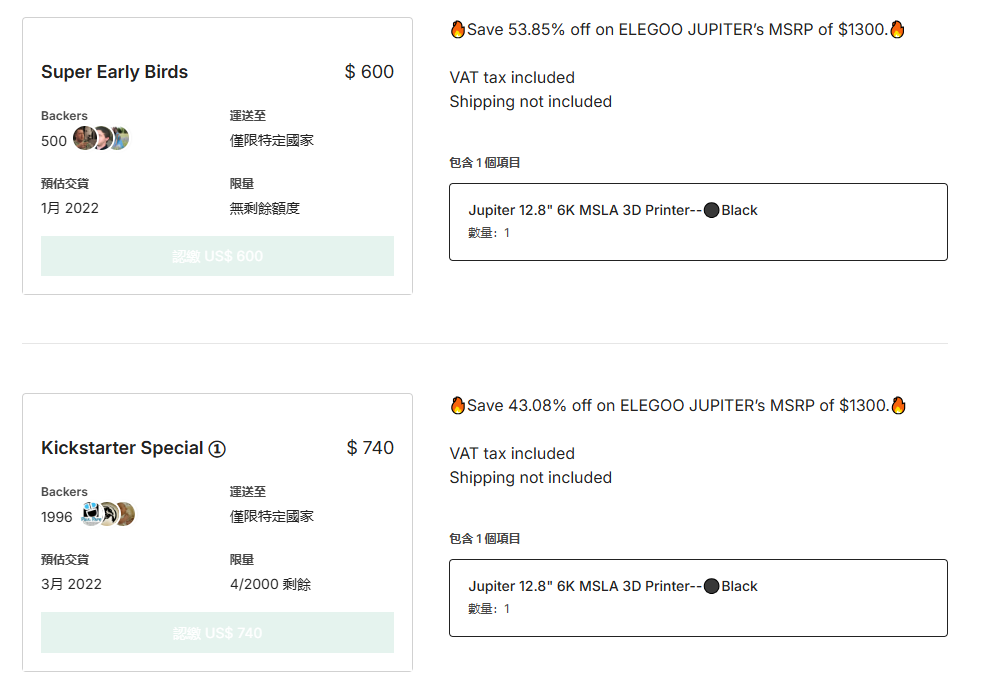
Ein Teil der am Crowdfunding beteiligten Communitys Quelle: Kickstarter
Bis 2024 erreichte der Jahresumsatz von ELEGOO 1,2 Milliarden Yuan, wobei der nordamerikanische und europäische Markt den Großteil ausmachten. Wenn man bei Amazon nach „3D-Drucker“ sucht, sieht man in den Top Fünf immer das blaue Logo des Unternehmens.
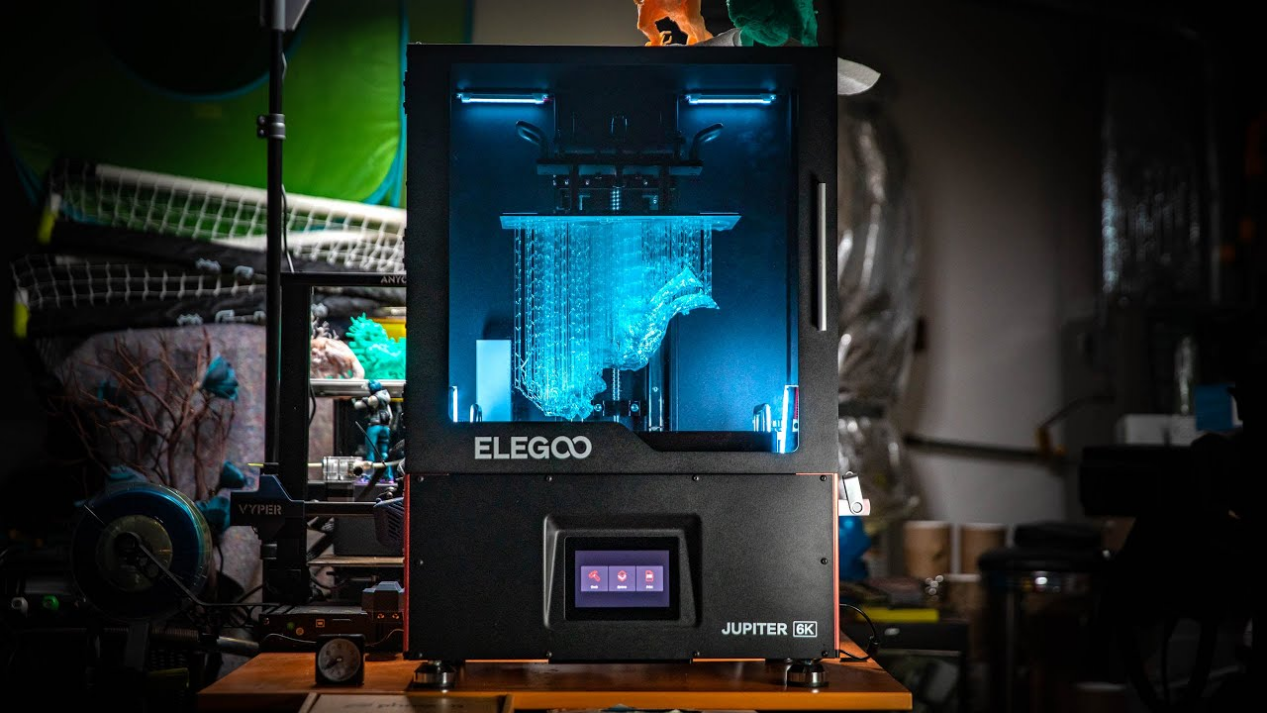
Quelle: Internet
Unabhängige Website + TikTok: Der Traffic-Code der Nerd-Community
ELEGOOs internationaler Durchbruch beruhte auf zwei „Trumpfkarten“: der Community auf der unabhängigen Website und der Härte auf TikTok.
Auf der unabhängigen Website ist das Design von ELEGOO wie eine Tech-Produktbibliothek. Jedes Produkt hat 3D-Modelle, Parametervergleiche und Benutzerprojekte. Diese Inhalte ermöglichen es interessierten Nutzern, auf einen Blick das zu sehen, was sie wollen, und sich von den Kreationen anderer inspirieren zu lassen.
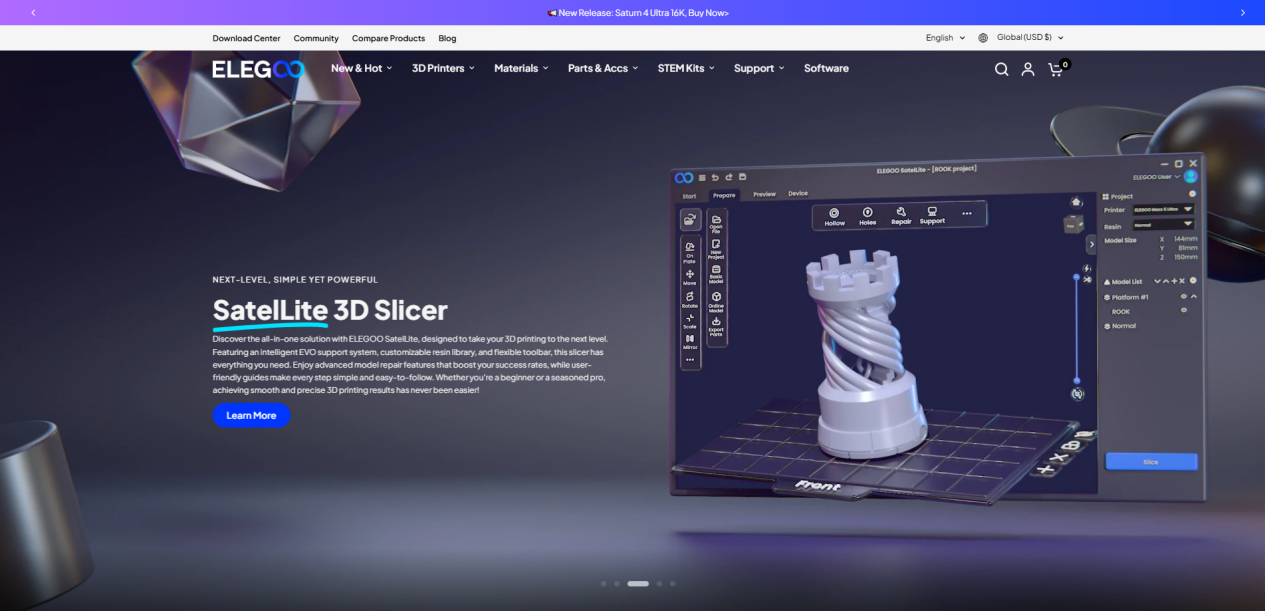
ELEGOO Unabhängige Website
Am krassesten ist der Community-Bereich. Jemand lädt ein Tutorial zum Drucken des Rings aus „Der Herr der Ringe“ hoch, ein anderer teilt, wie man aus Abfallharz einen Handyhalter macht.
Durch dieses Modell der „Nutzer-Mitgestaltung“ steigert ELEGOO nicht nur das Engagement der Nutzer, sondern erhöht auch effektiv den organischen Traffic. Die Leute kommen nicht nur zum Stöbern, sondern interagieren und teilen gerne auf dieser Plattform, was schließlich zu Käufen und langfristigen treuen Nutzern führt.
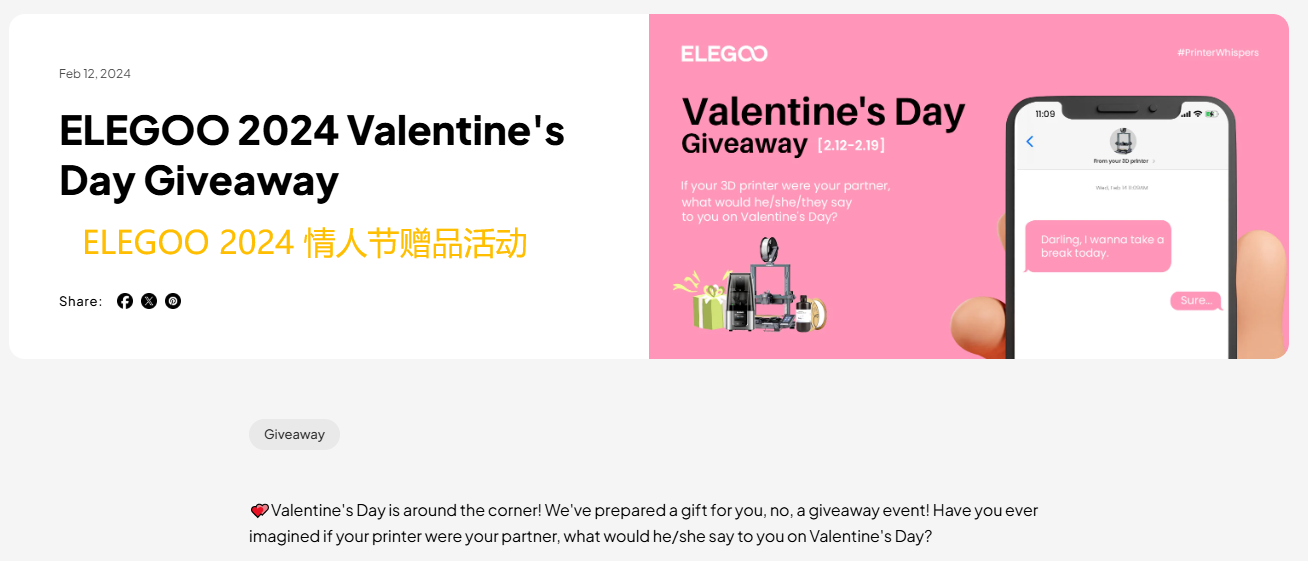
Von ELEGOO zuvor geplante Valentinstagsaktion Quelle: ELEGOO Unabhängige Website
TikTok ist ein weiteres Trumpf-Ass von ELEGOO. Der offizielle Account (@elegoo3dofficial) hat derzeit 177.900 Follower und über 1,3 Millionen Likes. Obwohl er nicht zu den Top-Influencern gehört, hat er mit einer Reihe von extrem harten 3D-Druckvideos erfolgreich eine große Fangemeinde von Nerds angezogen.
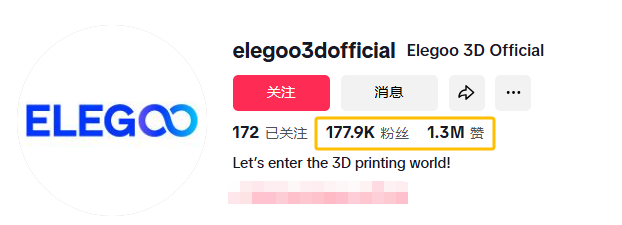
Quelle: TikTok
Zum Beispiel zeigt ein Video mit satten 3,1 Millionen Aufrufen eine niedliche rote Figur, die mit 3D-Drucktechnologie hergestellt wurde, und erhielt 75.800 Likes, was direkt Diskussionen und Shares der Nutzer auslöste.
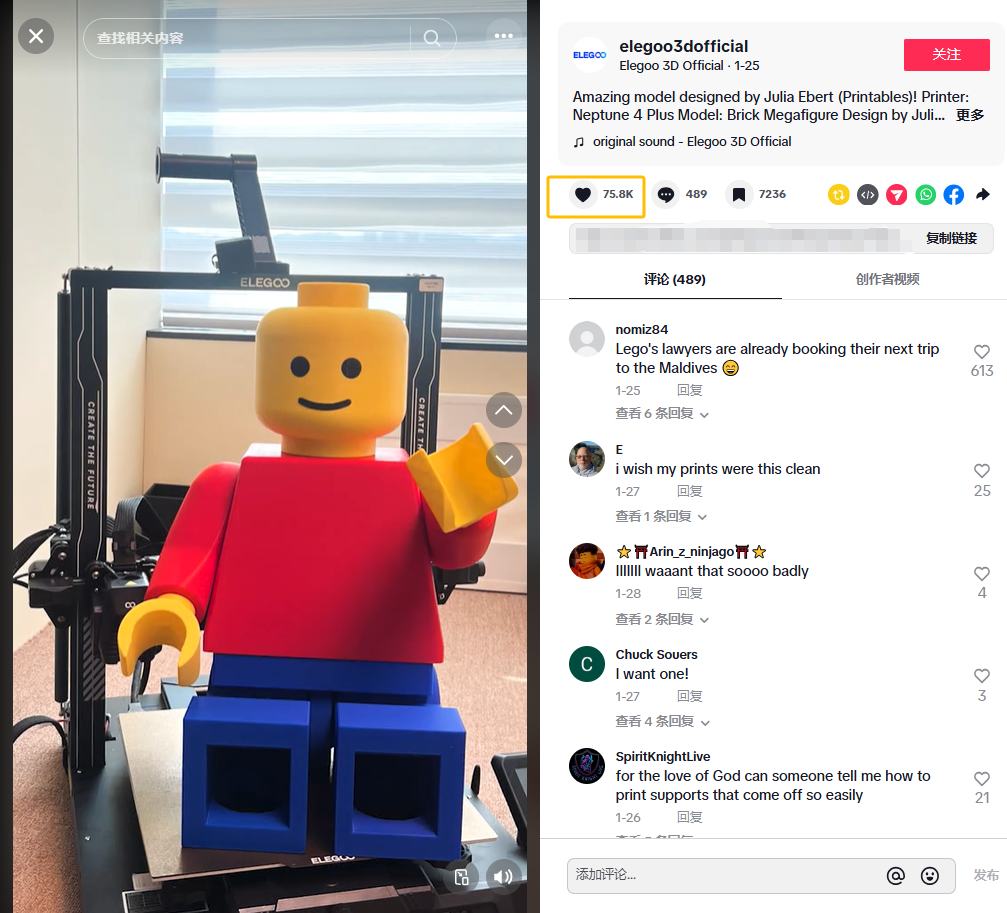
Quelle: TikTok
Inhaltlich sind die Videos von ELEGOO sehr „geradlinig“. Sie zeigen hauptsächlich, wie ihre 3D-Druckprodukte einige lustige oder praktische Kleinigkeiten drucken. Diese Art von Inhalt spricht Nutzer an, die sich für 3D-Druck interessieren und gerne selbst Hand anlegen. Obwohl der Inhalt nicht ausgefallen ist, ist er ziemlich authentisch und bodenständig und zieht diejenigen an, die den 3D-Druck kennenlernen und ausprobieren möchten.
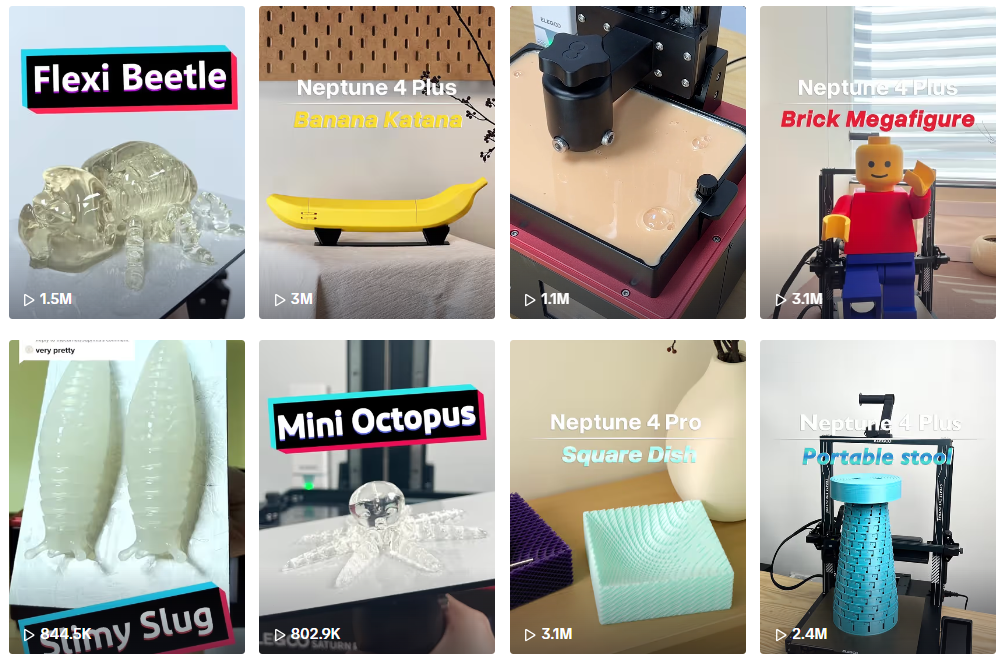
Quelle: TikTok
Das Geheimnis hinter 27,3 Milliarden Aufrufen
Tatsächlich ist der 3D-Druck zu einem großen Traffic-Code auf TikTok geworden.
Wenn man nach #3dprinting sucht, sieht man 2 Millionen verwandte Beiträge. Die Gesamtaufrufe belaufen sich auf 27,3 Milliarden, die Likes auf fast 590 Millionen.
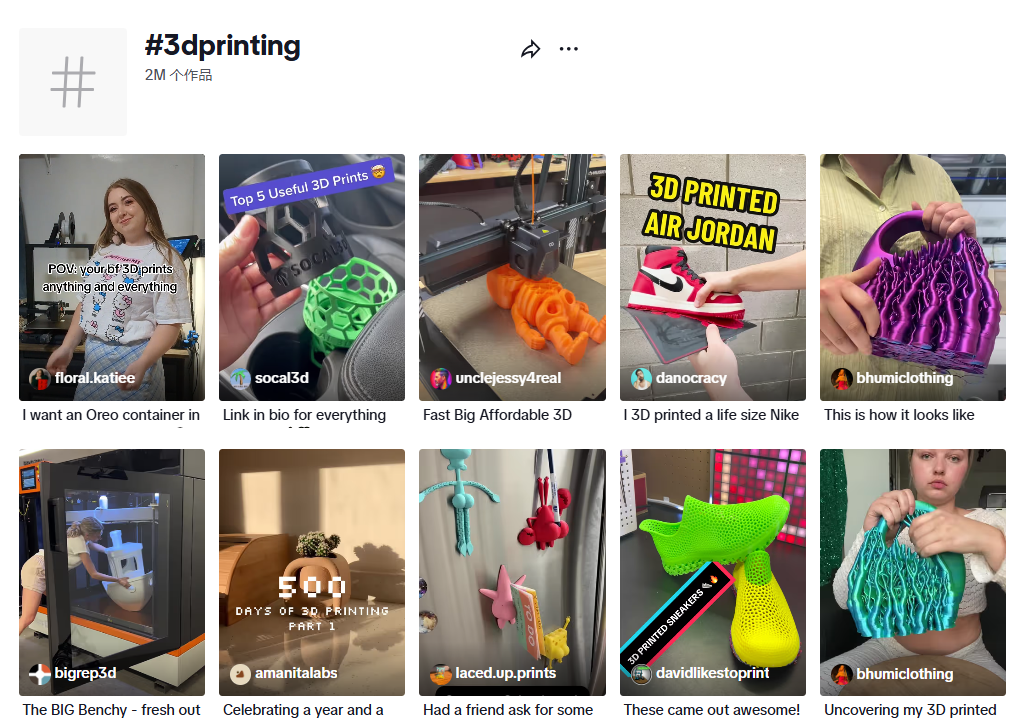
Quelle: TikTok
Ein weiterer Hashtag #3dprint hat 556.600 Videos, 9 Milliarden Aufrufe und 367 Millionen Likes.
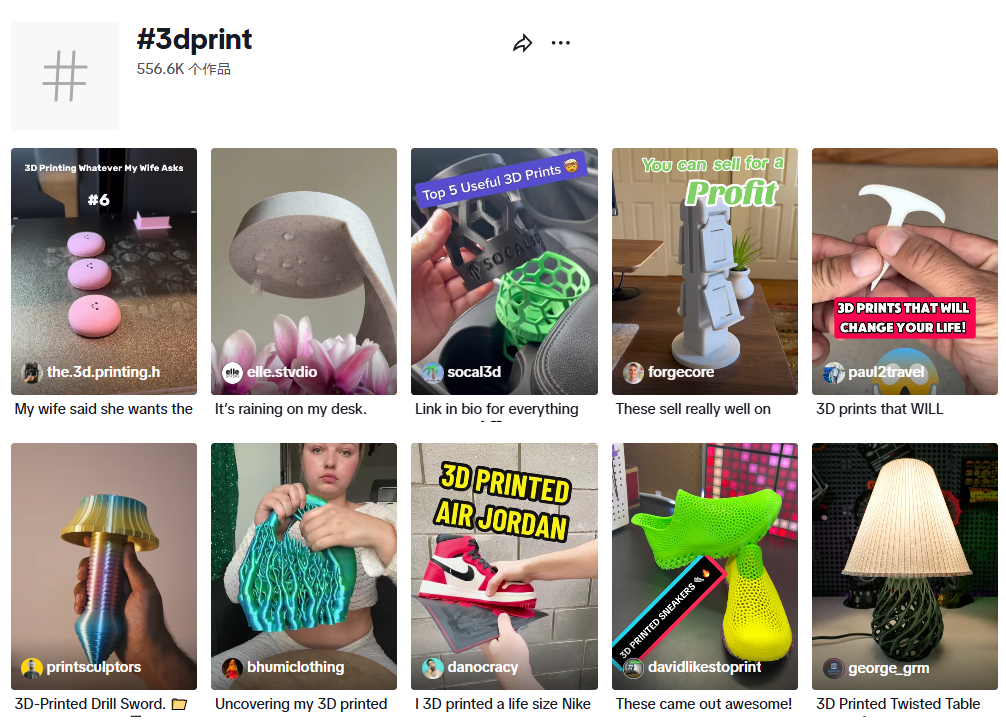
Quelle: TikTok
Was bedeuten diese Zahlen?
Das entspricht jedem Menschen auf der Welt, der sich 3D-Druckvideos dreimal angesehen hat. Die Anzahl der Likes ist höher als der tägliche globale Kaffeeverkauf von Starbucks.
Das erfolgreichste Video-Rezept besteht aus drei Wörtern: befriedigend, schnell, beeindruckend.
Zum Beispiel das Drucken von Spielzeugfiguren mit einem Harzdrucker, der Fluss des Harzes ist wie ASMR; oder ein FDM-Drucker, der Schicht für Schicht ein Architekturmodell aufbaut, bei dem Leute mit Zwangsstörungen ins Schwärmen geraten.
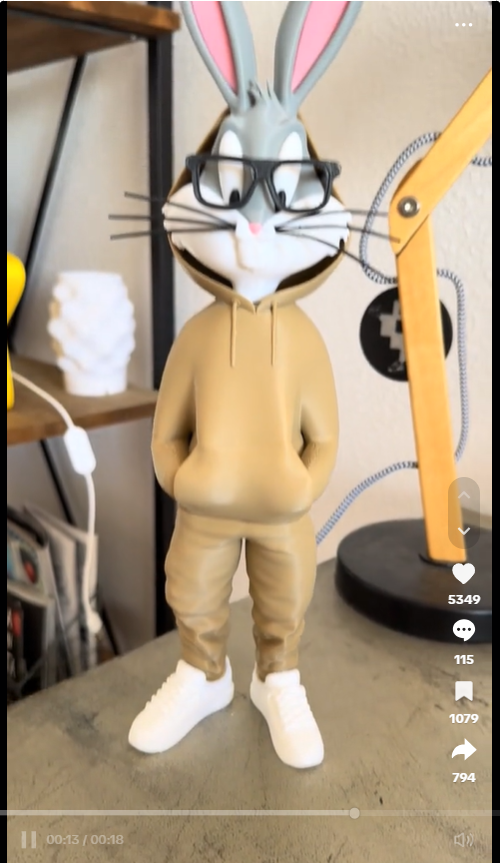
Quelle: TikTok
Warum ist der 3D-Druck plötzlich so populär geworden?
Der Hype um den 3D-Druck ist im Kern ein Triumph der Demokratisierung der Technologie:
Laut Grand View Research erreichte der globale 3D-Druckmarkt 2023 ein Volumen von 20,37 Milliarden US-Dollar und wird in den nächsten sechs Jahren mit einer Rate von 23,5% weiter wachsen.
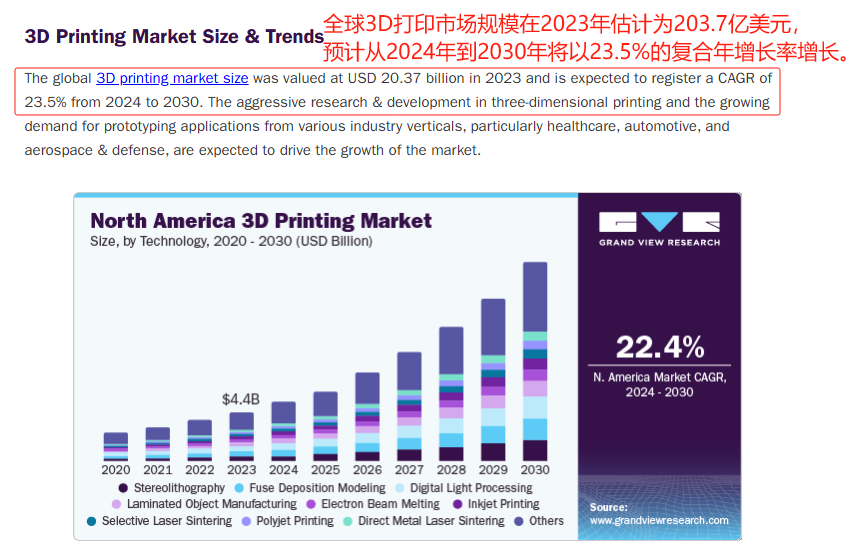
Quelle: Grand View Research
Dahinter stehen drei treibende Kräfte: drastische Preissenkungen (von 200.000 auf 299 US-Dollar pro Gerät), eine Materialrevolution (doppelte Festigkeit von Photopolymerharz bei halben Kosten) und die Creator Economy (TikTok-Blogger verdienen 50.000 US-Dollar pro Monat mit dem Verkauf von Druckvorlagen).
Noch wichtiger ist der Ausbruch der branchenweiten Nachfrage: Mediziner drucken medizinische Modelle, Autofabriken erstellen Rapid Prototypen, und selbst Architekturstudenten nutzen es für ihre Abschlussarbeiten. Der 3D-Druck ist zu einem unvermeidlichen Trend geworden.
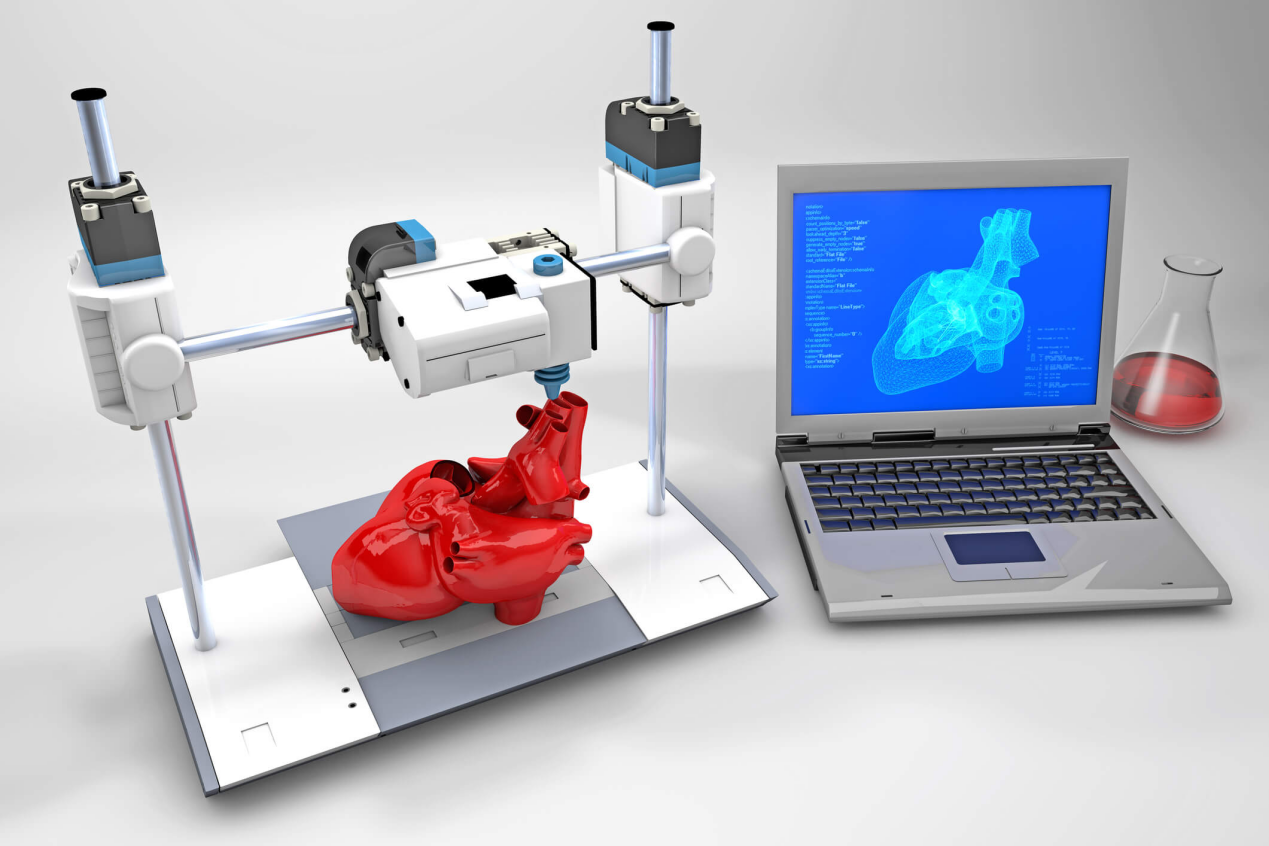
Quelle: Internet
„Schöpfungsfreiheit“ für jedes Zuhause
In der heutigen ELEGOO-Fabrik verlässt alle 90 Sekunden ein Drucker das Fließband.
Ein Mitarbeiter scherzt: „Wir verkaufen keine Maschinen, wir verkaufen ‚Schöpfungsfreiheit‘.“
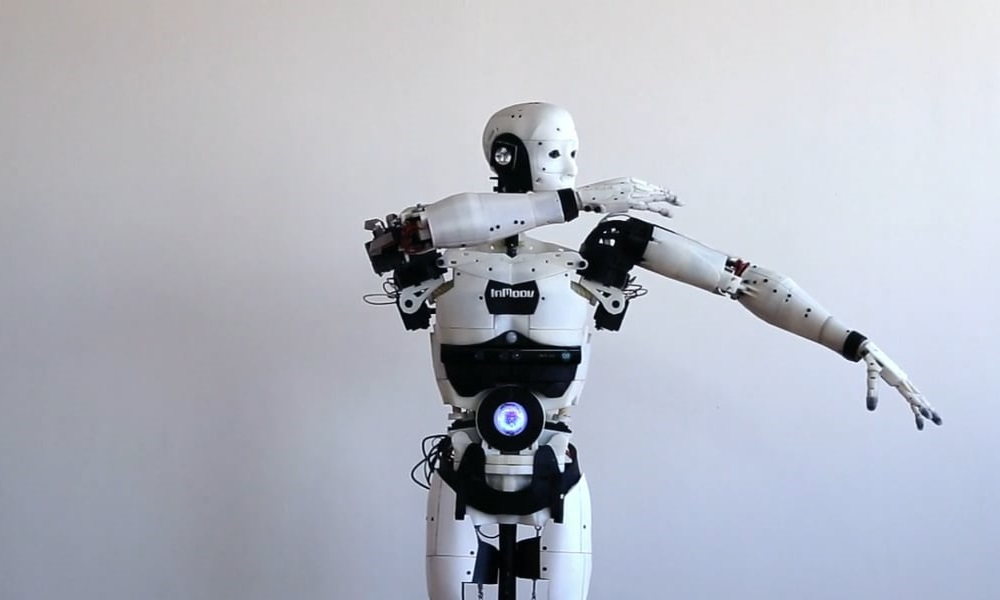
Diese Freiheit wird Realität: In New York druckt jemand eine Statue seines verstorbenen Hundes; in Berlin veranstaltet ein Künstler eine Ausstellung mit 3D-gedruckten tragbaren mechanischen Kunstwerken; in Shenzhen gewinnt ein Oberschüler mit dem Druck von Roboterteilen einen Wissenschafts- und Innovationspreis.
Quelle: Internet
Aber die Herausforderungen nehmen ständig zu. Da immer mehr Unternehmen in den Markt eintreten, wird der Wettbewerb immer intensiver.
Doch die Ingenieure von ELEGOO sind zuversichtlich:
„Wir haben es bereits geschafft, die Kosten für 4K-Bildschirme durch Lieferkettenvorteile auf ein Drittel zu senken, und jetzt können wir auch 6K-Geräte zu einem noch niedrigeren Preis anbieten.“
Vielleicht ist das das Schicksal von „Made in China“: Es gibt keinen ewigen Burggraben, sondern nur ständig fallende Kostenbarrieren.
Wenn 3D-Drucker in Millionen von Haushalten Einzug halten, weiß niemand, was das nächste „gedruckte“ Wunder sein wird.