 2636
2636In den letzten Jahren ist die Geburtenrate zwar gesunken, aber der Markt für Haustierprodukte wächst stetig. Haustierbedarf ist sogar zu einer der Hauptkategorien geworden, aus der viele führende Marken hervorgegangen sind.
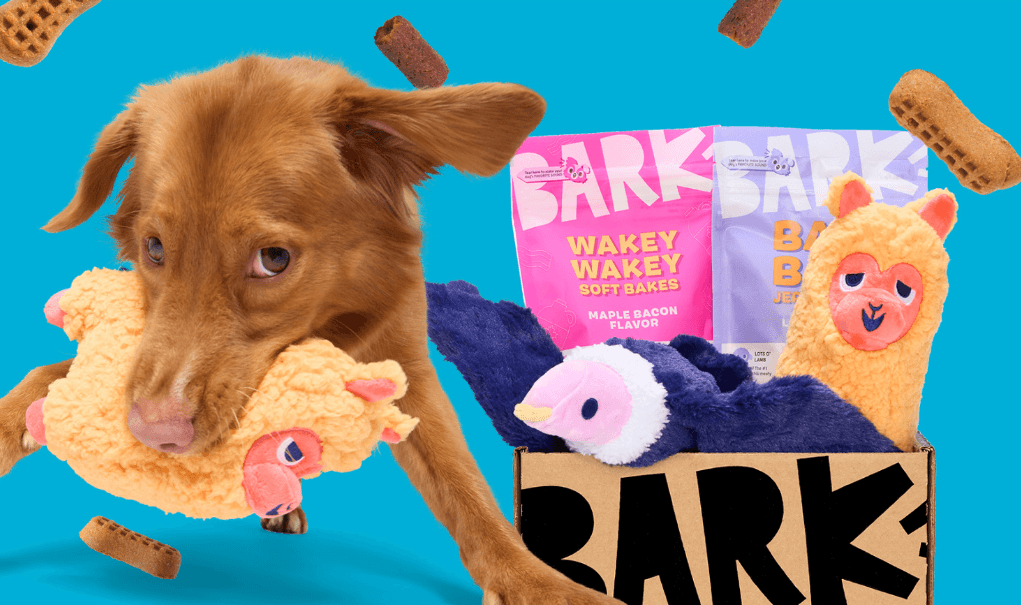
In diesem Trend hat eine Marke den Bereich der Haustierprodukte auf eine neue Art und Weise interpretiert: BarkBox, eine Marke, die sich auf „Überraschungsboxen“ mit Hundezubehör für haustierhaltende Familien spezialisiert hat.
Mit diesem innovativen Modell ist sie zu einer der am schnellsten wachsenden DTC-Haustiermarken in den USA aufgestiegen, erreicht eine Kundenbindungsrate von 95 %, hatte nach dem Börsengang einen Marktwert von 1,6 Milliarden US-Dollar und verzeichnete ein Nettoumsatzwachstum von über 40 %!
Wie hat diese Marke eine einzelne Produktkategorie neu erfunden? Werfen wir einen Blick darauf.
Quelle: Barkbox
Eine „Milliarden-Dollar“-Idee
Die „Hunde-Überraschungsbox“ war ursprünglich nur eine Idee von Matt Meeker, dem Mitbegründer von Meetup, die er 2011 vorstellte, aber zunächst wenig Beachtung fand.
Im Jahr 2012 jedoch setzten der Hundeliebhaber Henrik Werdelin und die ehemalige Uber-Mitarbeiterin Carly Strife diese Idee in die Realität um und gründeten gemeinsam die Marke Barkbox.
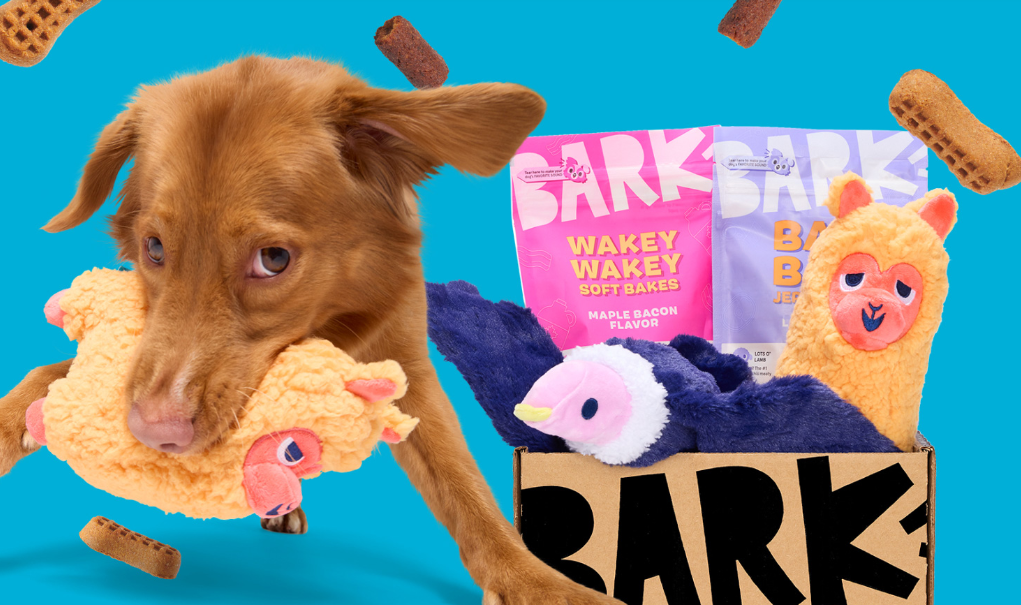
Über eine E-Commerce-Plattform bieten sie Hundebesitzern einen monatlichen Abonnementdienst für Haustiere an. Jeden Monat erhalten die Hunde eine personalisierte Geschenkbox mit Spielzeug, Leckerlis und einem Handbuch.
Dieses innovative Verkaufsmodell sorgte sofort nach seiner Einführung für großes Aufsehen in der Haustier-Community.

Matt Meeker (links) Quelle: YouTube
Innerhalb eines Jahres erreichte die Marke Barkbox 15.000 Abonnenten, und bis 2013 stieg diese Zahl auf 100.000.
Heute hat Barkbox über sechs Millionen Hunde bedient, mit einer Kundenbindungsrate von 95 % und einem Direct-to-Consumer (DTC)-Umsatzanteil von 93 %.
Mit der wachsenden Markenbekanntheit sind ihre Produkte in 23.000 Einzelhandelsgeschäfte, darunter Target und Costco, eingezogen.
Quelle: Barkbox
Finanziell gesehen stieg der Umsatz der Marke Barkbox von 149 Millionen US-Dollar im Jahr 2019 auf 224 Millionen US-Dollar im Jahr 2021, mit jährlichen Wachstumsraten von 54,9 %, 28,7 % bzw. 17,2 %.
Besonders in der ersten Hälfte des Jahres 2021 stiegen die Einnahmen aus neuen Produktlinien im Jahresvergleich um 179 % und übertrafen zeitweise sogar Konkurrenten wie Chewy, Freshpet und Trupanion.
Im Ergebnisbericht für das dritte Quartal des Geschäftsjahres 2025 beliefen sich ihre DTC-Einnahmen auf 106,1 Millionen US-Dollar, bei einem Gesamtumsatz von 126,4 Millionen US-Dollar.
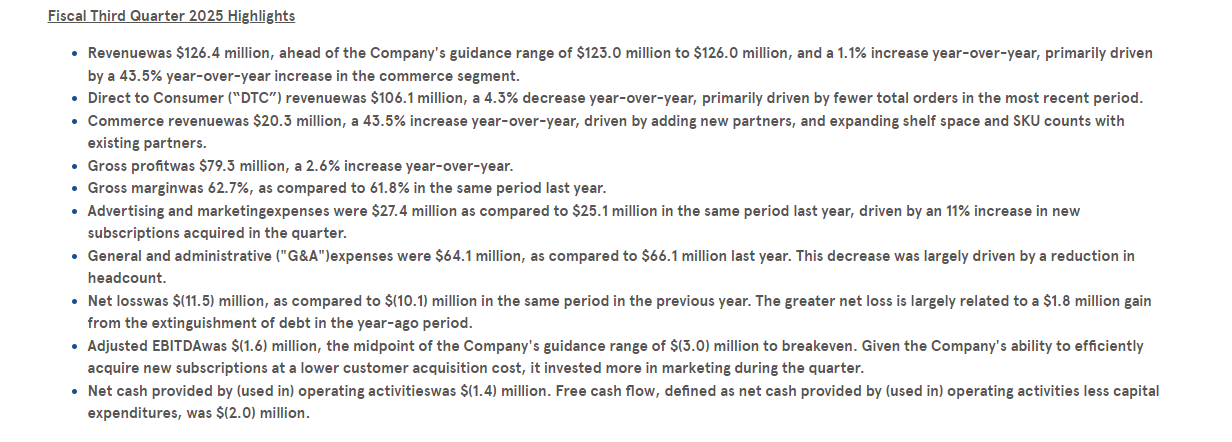
BARK Reports Third Quarter Fiscal Year 2025 Results
Social-Media-Matrix-Marketing
Im Gegensatz zu traditionellen Haustierproduktanbietern ist das Kernprodukt von BarkBox die „Abonnement-Überraschungsbox“. Um Traffic für das Produkt zu generieren, setzen sie auf Social-Media-Plattformen und haben sich für TikTok, Instagram und YouTube entschieden.
Der Aufbau auf diesen Plattformen zeigt bereits erste Erfolge. Am Beispiel TikTok: Bis Februar 2025 hat der offizielle Markenaccount @bark 296.200 Follower gewonnen, insgesamt über 7,4 Millionen Likes erhalten, und 13 kreative Videos haben die Millionen-Marke bei den Aufrufen überschritten.

Quelle: TikTok
Bei der Durchsicht dieser viralen Videos stellt Tuke fest, dass der TikTok-Algorithmus kurze, prägnante Inhalte bevorzugt. Die Videos von BarkBox sind meist zwischen 15 und 30 Sekunden lang und heben den „sofortigen Überraschungseffekt“ hervor. Der Inhalt des Accounts dreht sich fast ausschließlich um den Kernpunkt „echte Reaktionen von Hunden“.
Ob es ein Hund ist, der aufgeregt die Box aufreißt, oder einer, der ein neues Spielzeug nicht mehr loslässt – der Fokus liegt auf emotionalen Reaktionen. Der Vorteil solcher Videos ist, dass sie die Abneigung der Nutzer gegen Werbung verringern und gleichzeitig durch echte Emotionen Resonanz erzeugen, was zu stabilem Traffic führt.
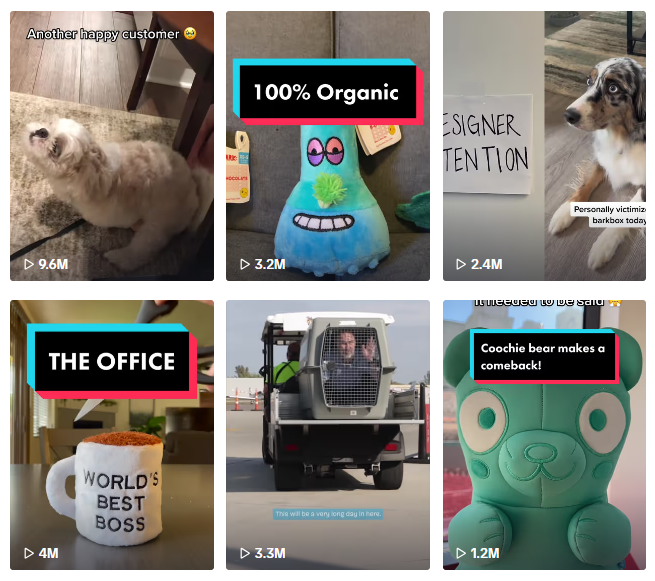
Quelle: TikTok
Neben dem Betrieb des offiziellen Video-Accounts hat die Marke den Hashtag #BarkBoxDay ins Leben gerufen, um Nutzer zu ermutigen, ihre Unboxing-Videos zu teilen und den offiziellen Account zu markieren.
Diese von Nutzern erstellten „Seed“-Videos helfen nicht nur, ein positives Markenimage aufzubauen, sondern ziehen auch mehr Hundeliebhaber zur aktiven Teilnahme und Interaktion an, was dem Produkt einen erheblichen Traffic-Schub verleiht.
Bis heute hat dieser Hashtag 152.000 UGC-Beiträge angesammelt und eine große „virtuelle Hundehaltung“-Community gebildet.
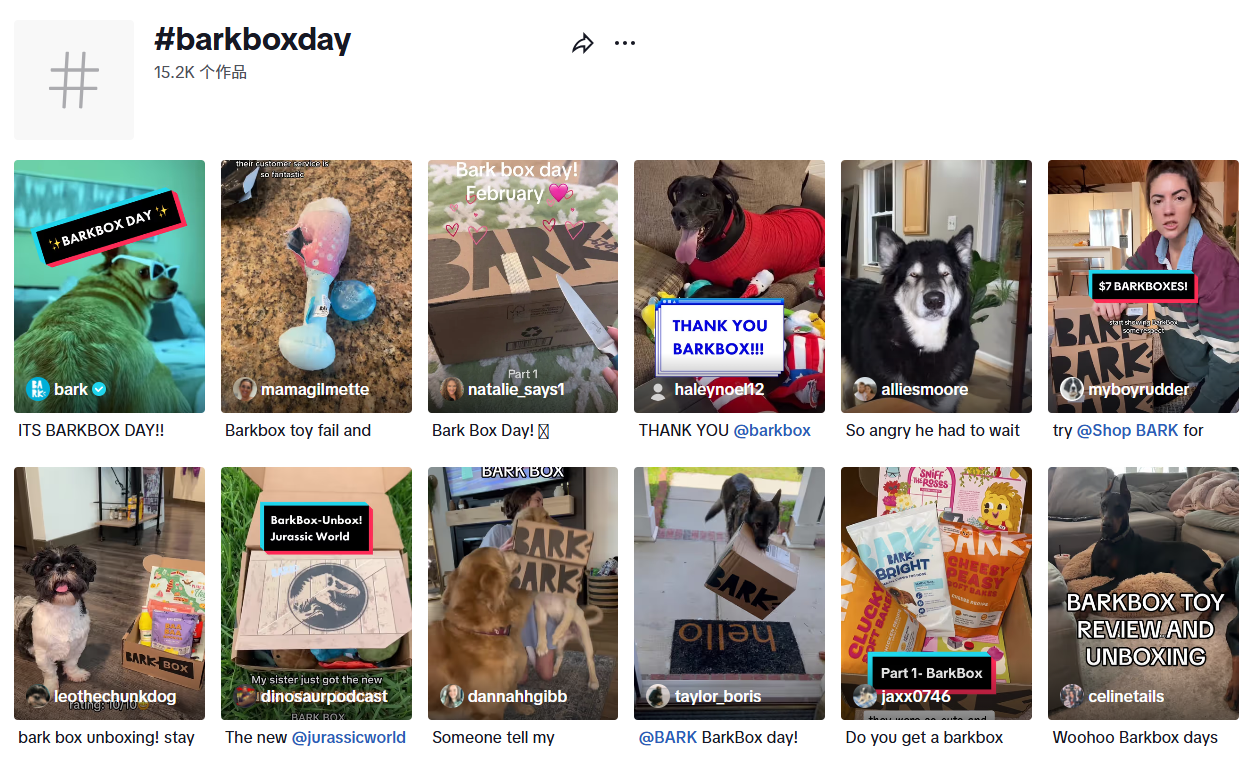
Quelle: TikTok
Während die Kurzvideoplattformen gute Ergebnisse erzielten, fand BarkBox auch auf anderen sozialen Plattformen seine eigene Nische.
Instagram war die erste Plattform, auf der BarkBox aktiv wurde, und hat inzwischen 1,86 Millionen Follower angesammelt. Es ist der zentrale Kanal für die Markenphilosophie und visuelles Marketing.
Neben grundlegenden Produktvorstellungen veröffentlichen sie auf Instagram hauptsächlich Videos und Fotos von niedlichen Hunden, um Hundeliebhaber anzuziehen und ihre Produkte auf subtile Weise zu bewerben.
Dieses Modell ermöglicht es der Marke, ihr Image zu wahren und gleichzeitig einen „sanften, aber stetigen“ Effekt zu erzielen.

Quelle: Instagram
Auf YouTube konzentriert sich BarkBox auf längere Inhalte wie Unboxings, Tipps zur Hundeerziehung, ausführliche Produkttests und interaktive Q&A-Sessions und hat insgesamt 130.000 Abonnenten gewonnen.
Diese vielfältigen Videoformate helfen ihnen, die Bindung zu den Fans aufrechtzuerhalten, und sind auch für den Aufbau des Markenimages und die Förderung der Produktkonversion hilfreich – ein nachahmenswerter Ansatz.
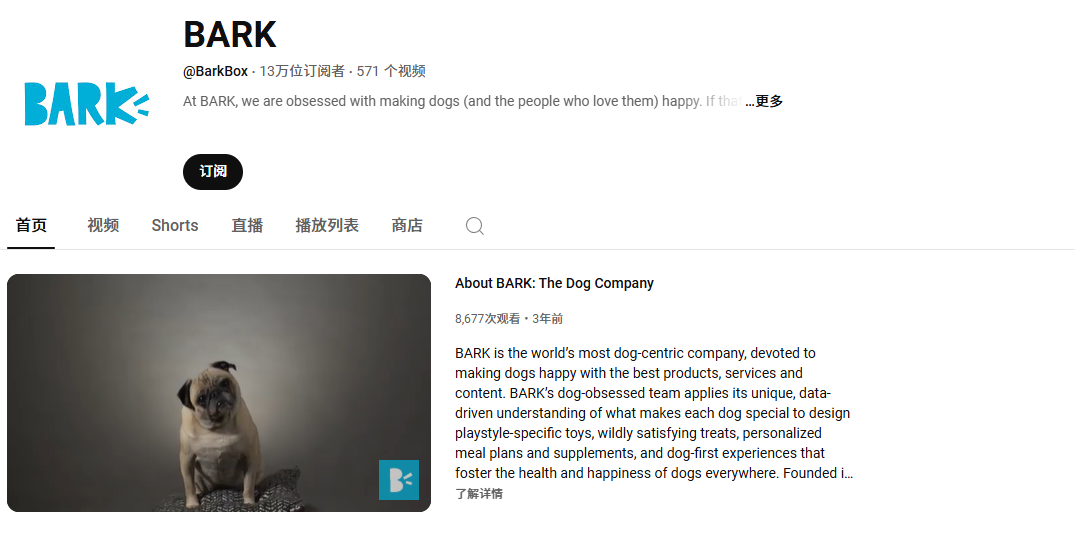
Quelle: YouTube
Boom des Haustierkonsummarktes
Betrachtet man die Entwicklung von Barkbox, so hatte die Marke zweifellos zur richtigen Zeit den richtigen Riecher.
Laut Daten von Drittanbieter-Plattformen, die Tuke eingesehen hat, wird der globale Haustiermarkt bis 2030 voraussichtlich die 500-Milliarden-US-Dollar-Marke überschreiten, wobei Nordamerika einen Anteil von 38 % hält.
Allein in der ersten Hälfte des Jahres 2024 erreichte der Online-Umsatz des globalen Haustiermarktes 242,18 Milliarden Yuan, wobei Nordamerika mit einem Umsatz von 156,73 Milliarden Yuan einen Anteil von 50 % ausmachte.
Hinter diesem Wachstum stehen die Zunahme der Single-Haushalte, der Trend zu höheren Konsumausgaben und der gesellschaftliche Wandel der Rolle von Haustieren von „Tieren“ zu „Familienmitgliedern“. BarkBox hat genau diese Welle erwischt.
Langfristig betrachtet bietet der Haustierkonsummarkt noch viel Raum für Wachstum. Der Aufstieg neuer Märkte und die Verbreitung digitaler Dienstleistungen werden dieser Branche weitere Chancen eröffnen.
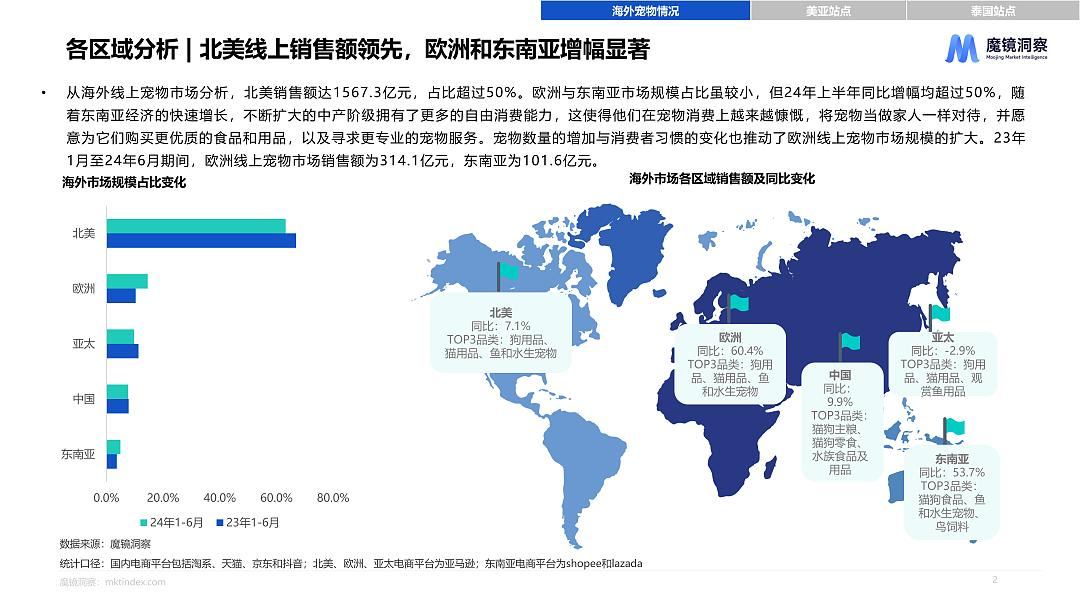
Quelle: Magische Spiegel Beobachtung
Fazit
Der Erfolg von BarkBox beruht nicht allein auf der Popularität des „Überraschungsbox“-Konzepts.
Betrachtet man die Gesamtstrategie, wird deutlich, dass sie präzise Markenwerte vermitteln und die Verbraucher davon überzeugen, dass sie nicht nur ein Paket kaufen, sondern die Freude, die ihr Haustier bei jedem Wedeln mit dem Schwanz empfindet.
Diese Betriebslogik, das Produkt tief in die emotionalen Erinnerungen der Nutzer einzubetten, ist vielleicht der wahre Schlüssel hinter der 95-prozentigen Kundenbindungsrate.
Für Marken, die international expandieren, ist der Haustiersektor noch ein blauer Ozean. Aber nur wer sowohl das Produkt als auch die Menschen versteht, kann sich im Wettbewerb wirklich abheben.