 2990
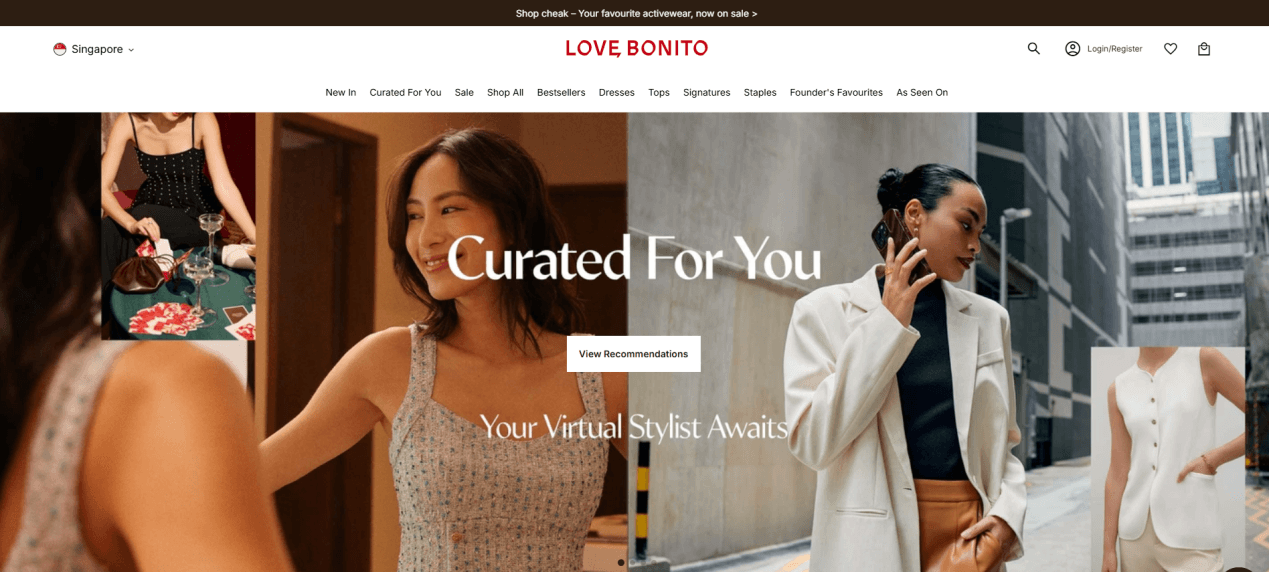
2990In einem hart umkämpften globalen Damenbekleidungsmarkt hat eine Marke aus Singapur die Aufmerksamkeit junger Frauen auf sich gezogen und sich allmählich einen Namen gemacht: Love, Bonito.
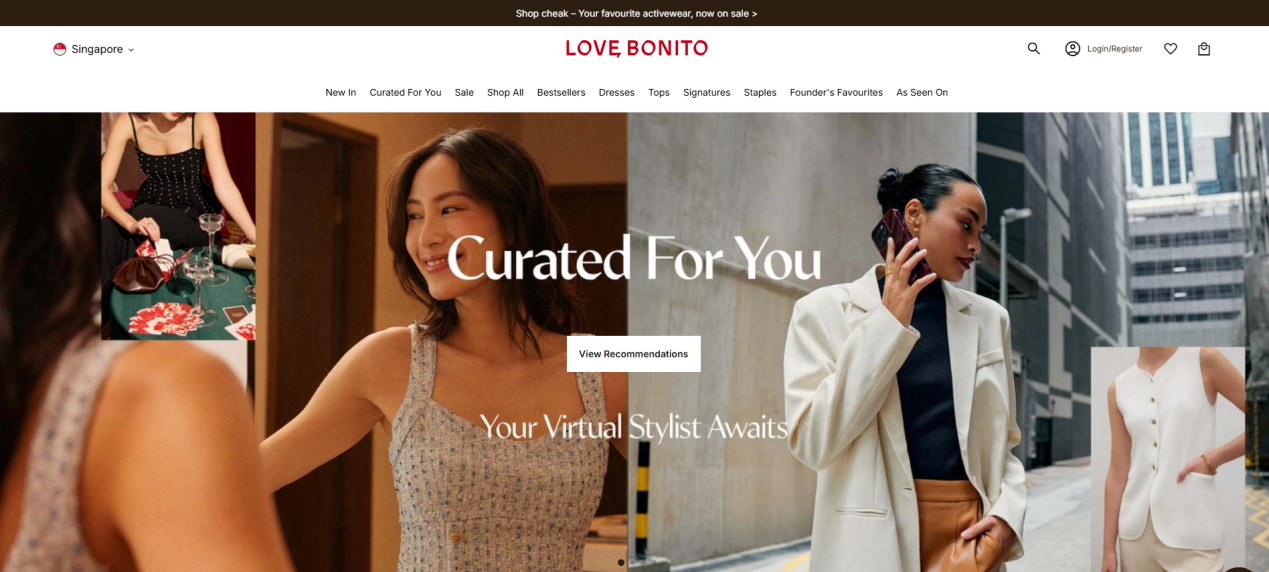
Bildquelle: Love, Bonito
Bekanntlich hat sich diese Marke, die aus einem Second-Hand-Kleidungsblog entstanden ist, zu einer der größten Omnichannel-Damenbekleidungsmarken in Südostasien entwickelt. Im Jahr 2024 übertraf der weltweite Nettoumsatz von Love, Bonito sogar 73,1 Millionen US-Dollar (umgerechnet etwa 530 Millionen RMB). Dabei erzielte die Marke nicht nur in Singapur Rekordumsätze im E-Commerce, sondern der US-Markt wurde zur zweitgrößten Einnahmequelle.
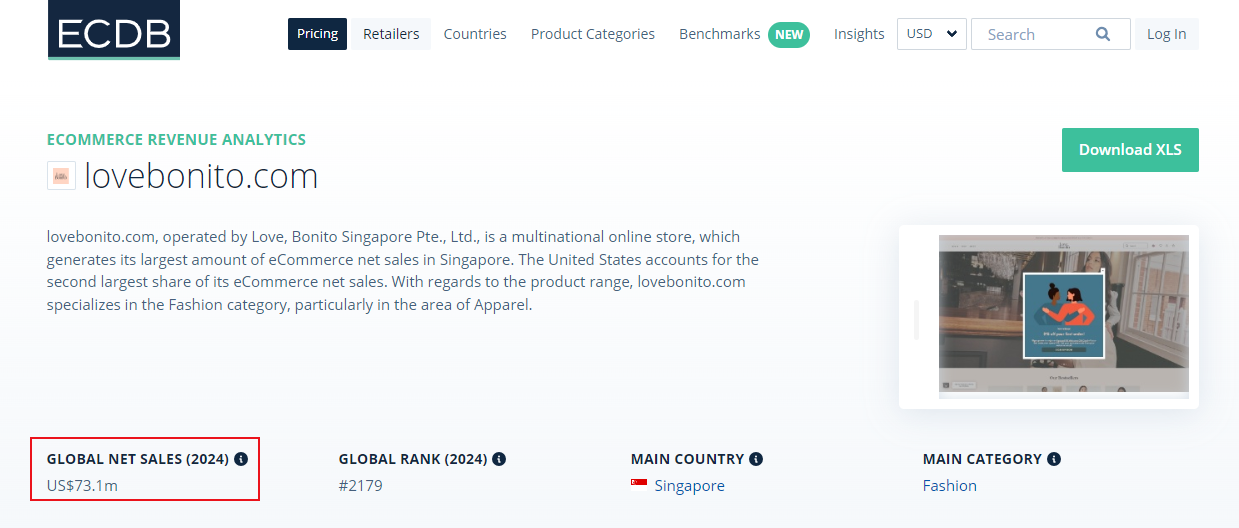
Bildquelle: E-Commerce-Datenanalyseplattform ECDB
Wie hat es die Marke Love, Bonito also geschafft, die Gunst ausländischer Verbraucher zu gewinnen? Folgen Sie Tuke, um in die Geschichte dieser Marke einzutauchen.
Von Null auf Millionen: Das unternehmerische „Abenteuer“ dreier Frauen
Im Jahr 2005 gründeten die 19-jährige Singapurerin Rachel Lim und ihre Freundinnen Viola Tan und Velda Tan den Blog BonitoChico für den Verkauf von Second-Hand-Kleidung, um ihr Taschengeld aufzubessern. Damals verkauften sie online Kleidung aus Thailand und Südkorea und kümmerten sich in ihrer Freizeit um das Geschäft.
Mit dem Aufkommen des südostasiatischen E-Commerce-Marktes erkannten die drei Gründerinnen einen wunden Punkt: Die Passform importierter Kleidung entsprach oft nicht der Figur asiatischer Frauen, und in einem tropischen Klima fehlten berufstätigen Frauen modische und gleichzeitig funktionale Kleidungsoptionen.
Im Jahr 2010 beschlossen sie daher, den Wandel zu vollziehen und die Marke offiziell in Love, Bonito umzubenennen. Sie setzten nicht nur die Ersparnisse ihrer Familien aufs Spiel, sondern Rachel brach sogar ihr Studium ab, um sich Vollzeit dem Unternehmertum zu widmen.
Von der Stoffauswahl bis zum Design und Zuschnitt kümmerten sich die drei persönlich um alles und positionierten Love, Bonito als eine Damenbekleidungsmarke, die „maßgeschneidert für asiatische Frauen“ ist.
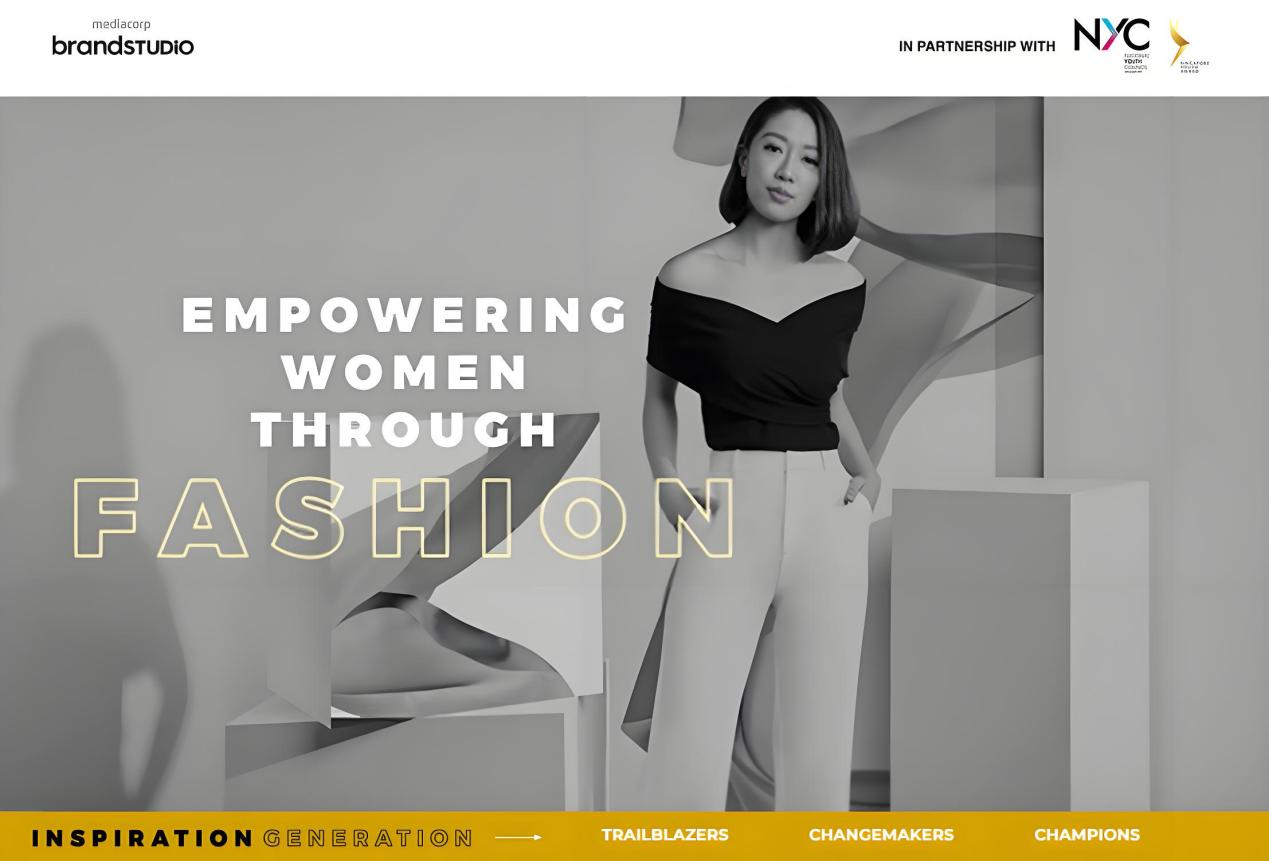
Rachel Lim Bildquelle: CNA
Marktnachfrage: Der unsichtbare Hebel für Wachstum
Der Erfolg der Marke Love, Bonito ist untrennbar mit ihrer tiefgreifenden Erforschung der Bedürfnisse asiatischer Frauen verbunden.
Im Trend der Konsumaufwertung hat sich die Nachfrage berufstätiger Frauen im Alter von 20 bis 40 Jahren nach Kleidung von „niedrigem Preis und praktisch“ hin zu „Qualität und Design gleichermaßen wichtig“ verlagert.
Darauf aufbauend bietet die Marke mit einer niedrigen bis mittleren Preisklasse von 200-500 RMB figurbetonte Schnitte, atmungsaktive Stoffe und Berufskleidung an, die auf asiatische Körperformen zugeschnitten sind. Dies schließt die Lücke zwischen Fast Fashion und Luxusgütern und trifft gleichzeitig die Bedürfnisse berufstätiger Frauen in tropischen Regionen.

Bildquelle: Love, Bonito
Zum Beispiel verwendet die klassische hoch taillierte Anzughose einen knitterfreien Mischgewebe-Stoff, der Formalität und Komfort vereint; die Kleiderserie kaschiert durch dreidimensionale Schnitte die bei asiatischen Frauen häufige birnenförmige Figur.
Diese Strategie der „maßgeschneiderten Anpassung“ hat der Marke im südostasiatischen Markt einen treuen Kundenstamm mit hohen Wiederkaufsraten eingebracht.
Bis 2025 hat die Marke 28 physische Geschäfte in sechs Ländern und Regionen eröffnet, den US-amerikanischen und japanischen Markt durch Pop-up-Stores getestet und ihr Online-Geschäft auf über zehn Länder weltweit ausgedehnt.
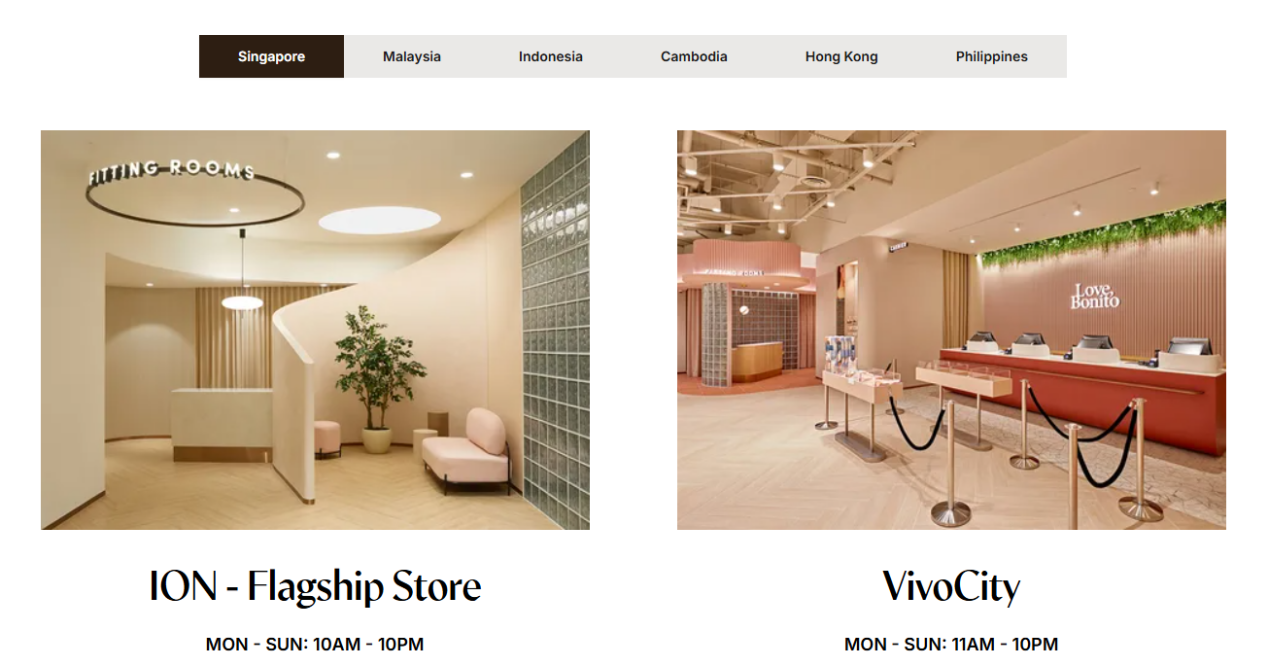
Bildquelle: Love, Bonito
Omnichannel-Strategie: Die Kombination aus TikTok und eigenständiger Website
Im Zeitalter der Dominanz von Traffic ist der Verkaufserfolg der Love, Bonito-Kleidung auch untrennbar mit der sorgfältigen Planung und dem Betrieb hinter der Marke verbunden.
TikTok ist das Hauptschlachtfeld der Marke Love, Bonito. Um verschiedene Nutzergruppen präzise abzudecken, hat die Marke auf TikTok ein Konten-Netzwerk aufgebaut und personalisierte Kommunikationsstrategien basierend auf unterschiedlichen Inhalten entwickelt.
Bildquelle: TikTok
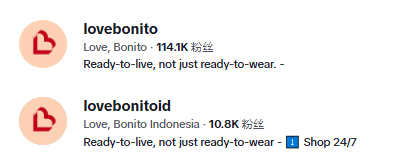
Ihr Hauptkonto @lovebonito konzentriert sich auf den Aufbau des Markenimages und die Präsentation des gesamten Produktsortiments. Es hat bereits 114.100 Follower und 987.500 Likes gesammelt.
Das Unterkonto @lovebonitoid hingegen verwendet hauptsächlich Videos von Laien, die die Kleidung anprobieren und echte Effekte zeigen, um die Nähe zu den Verbrauchern zu fördern. Es hat derzeit 10.800 Follower und 19.000 Likes.
Diese Art von authentischem Inhalt ist ein Schlüsselelement, das Tuke grenzüberschreitenden Verkäufern immer wieder betont. Denn nur durch ausreichende Authentizität können Nutzer das Produkt umfassender verstehen und fundierte Kaufentscheidungen treffen.
Bildquelle: TikTok
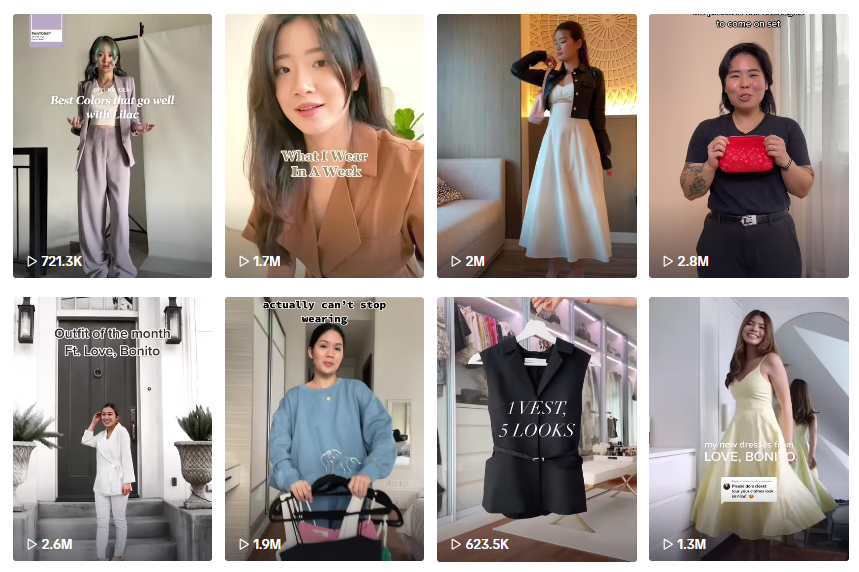
Die Marke Love, Bonito hat auch tiefgehende Kooperationen mit mehreren TikTok-Influencern eingegangen.
Durch die Präsentation echter Outfit-Effekte ermöglichen die Influencer den Nutzern, die Qualität und den Stil der Produkte direkt zu erfassen, was eine hervorragende Werbewirkung erzielt.
Die Influencerin @moonbaby1010 mit 170.900 Followern auf TikTok ist eine der Kooperationspartnerinnen. Ihr Video, in dem sie neue Oberteile und Hosen von Love, Bonito anprobiert, hat nach einiger Zeit auf TikTok 3,2 Millionen Aufrufe und 49.300 Likes erzielt, was der Marke beträchtlichen Traffic eingebracht hat.
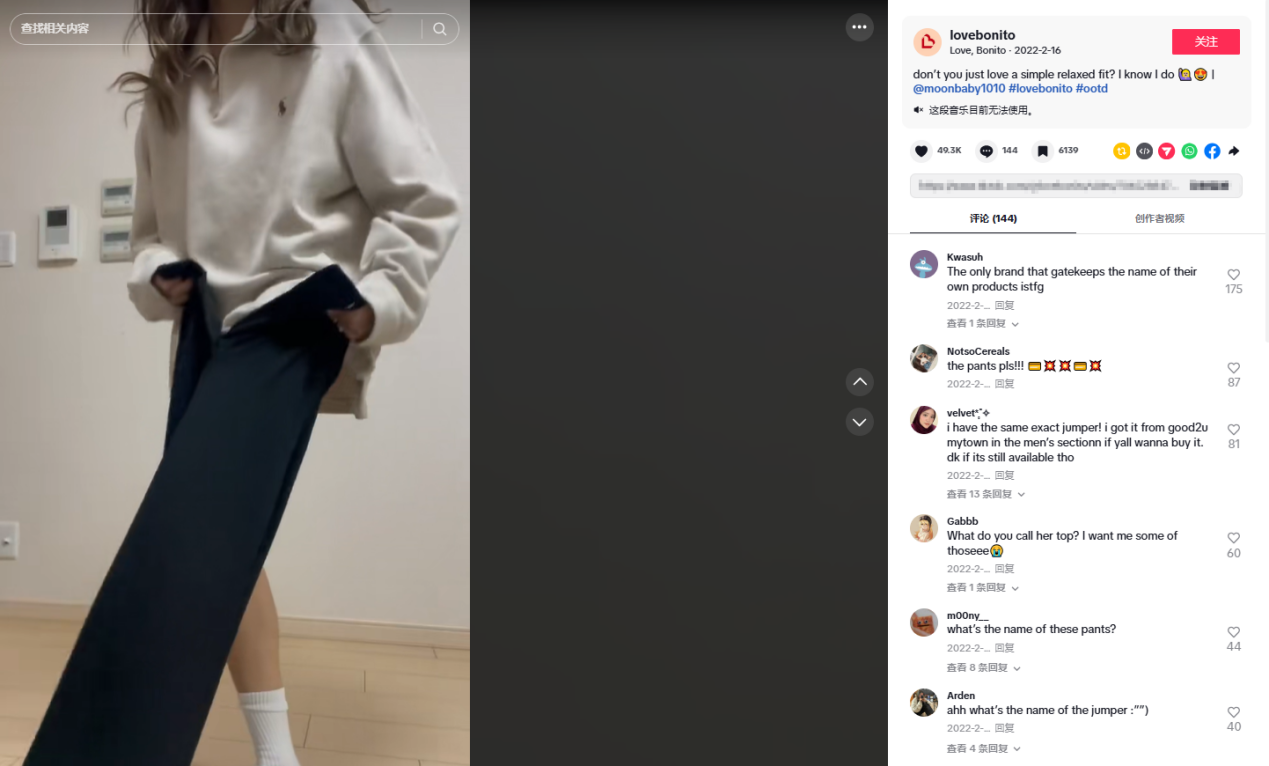
Bildquelle: TikTok
Neben der tiefgehenden Zusammenarbeit mit Influencern hat die Marke Love, Bonito auch durch die Erstellung von Hashtags und die Durchführung von Challenge-Kampagnen die Nutzerbeteiligung und die Markenbekanntheit weiter gesteigert.
Sie haben auf TikTok den exklusiven Hashtag „#lovebonito“ erstellt und die Nutzer aktiv ermutigt, Videos zu teilen, in denen sie Kleidung von Love, Bonito tragen.
Durch die Teilnahme an diesen Hashtag-Challenges können Nutzer nicht nur ihren persönlichen Stil zeigen, sondern auch ein Lebensgefühl von Komfort und Mode vermitteln, was mehr Menschen auf die Marke aufmerksam macht.
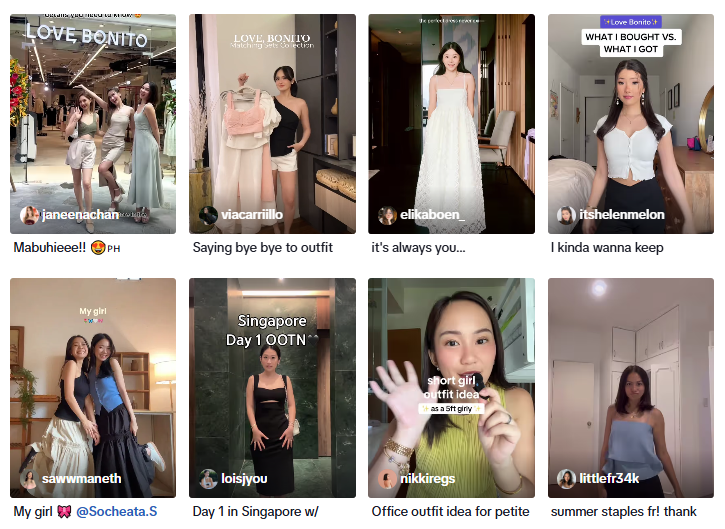
Bildquelle: TikTok
Natürlich ist TikTok nur ein Teil der sorgfältigen Planung und des Betriebs der Marke Love, Bonito. Neben der Präsenz in sozialen Medien hat die Marke Love, Bonito auch eine eigenständige Website aufgebaut, um Traffic zu monetarisieren.
Das Design der eigenständigen Website ist modisch und schlicht, was der Markenpositionierung entspricht und schnell die Zielkunden anzieht, nämlich asiatische berufstätige Frauen im Alter von 20 bis 40 Jahren.
Die Produkte sind klar kategorisiert, z. B. Oberteile, Blusen, Kleider usw. haben eigene Kategorien, sodass Nutzer schnell die gewünschten Artikel finden und direkt online kaufen können, ohne zu anderen Online-Shops weitergeleitet zu werden. Dies erleichtert den Kaufabschluss erheblich.
Darüber hinaus gibt es auf der eigenständigen Website einen Bereich für eine Mode-Community, der Nutzer dazu ermutigt, Tipps zur Berufskleidung zu teilen. Dieses dreidimensionale Modell aus „Inhalt + Social Media + E-Commerce“ kann die Konversionsrate steigern und es der Marke ermöglichen, sich von der Abhängigkeit von Drittanbieterplattformen zu lösen und die Nutzerdaten und die Kontrolle über den Traffic fest in der Hand zu behalten.
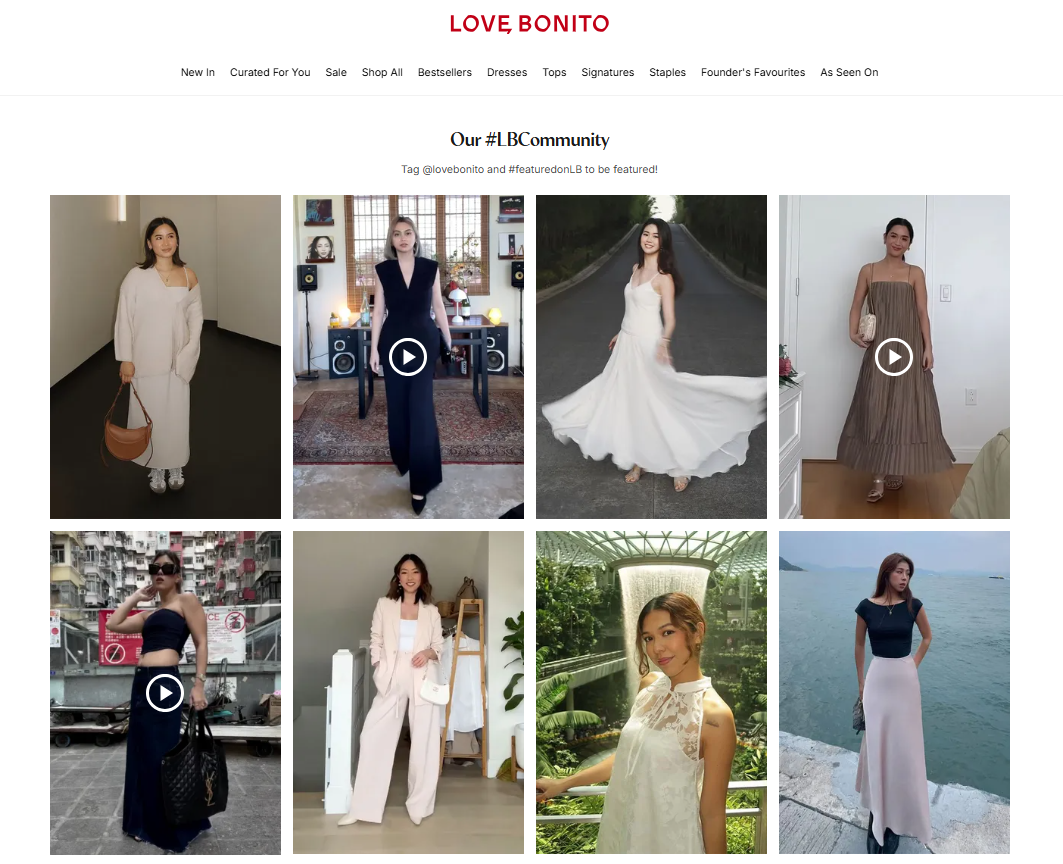
Bildquelle: Love, Bonito
Fazit
Der Fall der Marke Love, Bonito beweist, dass lokale Vertiefung und globale Expansion kein Widerspruch sind. Für inländische Damenbekleidungsmarken ist die Frage nicht mehr „ob man ins Ausland gehen sollte“, sondern „wie man es richtig macht“.
Heute, mit der zunehmend ausgereiften Infrastruktur für grenzüberschreitenden E-Commerce und den anhaltenden politischen Vorteilen wie RCEP, erleben chinesische Marken eine goldene Ära der Internationalisierung.
Vielleicht werden wir im nächsten Jahrzehnt auf der globalen Modekarte noch mehr Namen aus dem Osten sehen!