 2178
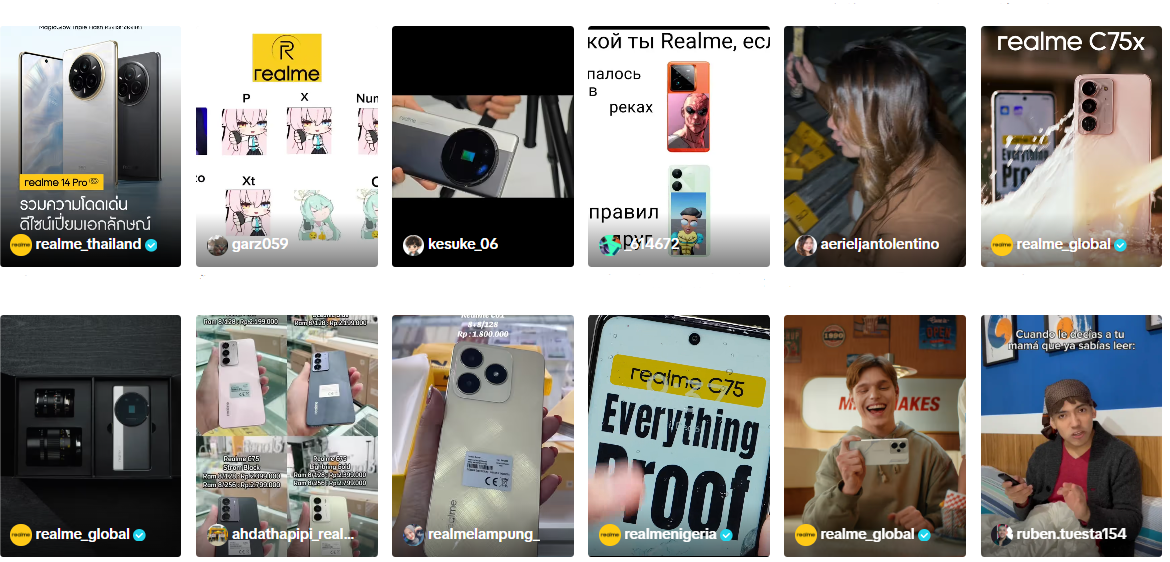
2178Öffne TikTok und suche nach #realme – du findest über 1,1 Millionen Kurzvideos: von indischen Jugendlichen, die mit realme-Smartphones Feuerwerke zu Festen filmen, über brasilianische Influencer, die zum Muttertag Unboxing-Rezensionen machen, bis hin zu indonesischen Nutzern, die Produkt-Challenges starten. Diese Inhalte sind nicht nur spontane Nutzeraktionen, sondern auch ein Spiegelbild dafür, wie eine chinesische Smartphone-Marke den globalen Markt „in umgekehrter Richtung“ erobert.
Quelle: TikTok
Seit ihrer Gründung vor sechs Jahren ist die Marke realme in 61 Märkte weltweit eingetreten. Bis 2024 wurden weltweit über 200 Millionen Smartphones verkauft, wobei 80 % der Nutzer aus Überseemärkten stammen.
Wie hat es diese chinesische Smartphone-Marke geschafft, sich auf dem globalen Markt, der von starken Konkurrenten umgeben ist, zu überholen?
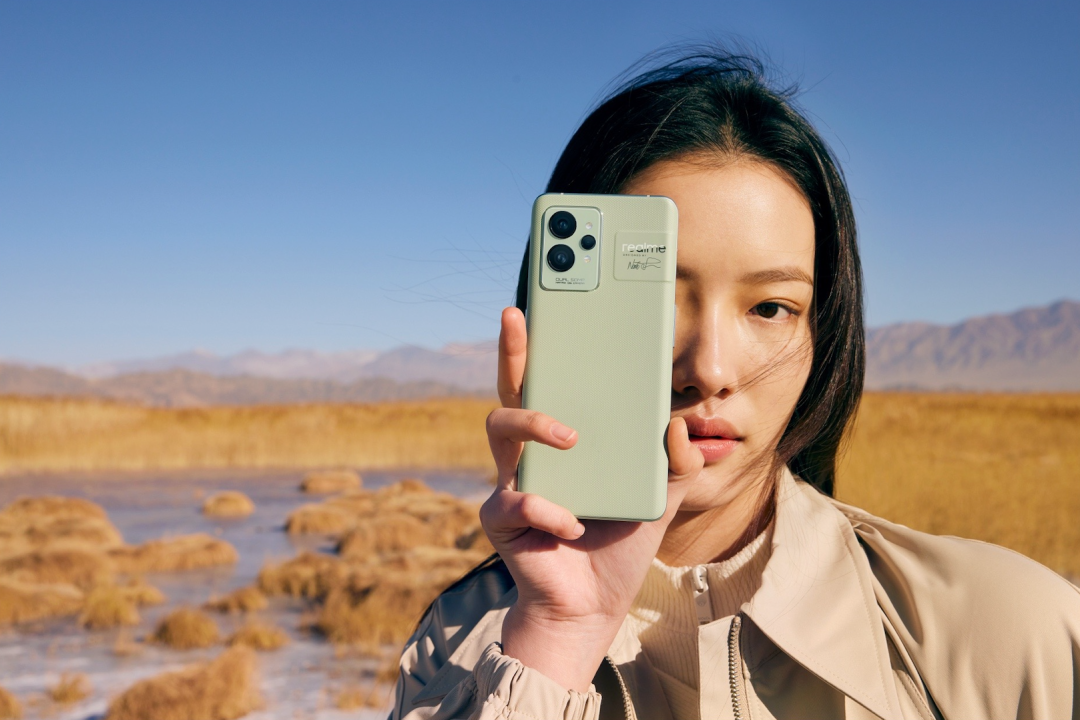
Die Antwort liegt vielleicht in ihrem präzisen Verständnis der Jugendkultur.
Quelle: Internet
Vom „Nischenmarkt“ zum „globalen Überraschungserfolg“
Als Li Bingzhong 2018 OPPO verließ, um realme zu gründen, befand sich der globale Smartphone-Markt in einem erbitterten Verdrängungswettbewerb. Apple, Samsung und Huawei dominierten das High-End-Segment, während Marken wie Xiaomi und vivo im Mittelklassebereich hart kämpften.
Quelle: Internet
Doch der ehemalige OPPO-Überseechef erkannte eine Lücke: Die Nachfrage der jungen Generation nach einem „guten Preis-Leistungs-Verhältnis“ war nicht ausreichend gedeckt. Sie wünschten sich leistungsstarke, modisch gestaltete Produkte, waren aber nicht bereit, einen Aufpreis für den Markennamen zu zahlen.
Basierend auf dieser Erkenntnis wurde der grundlegende Ton der Marke realme festgelegt.
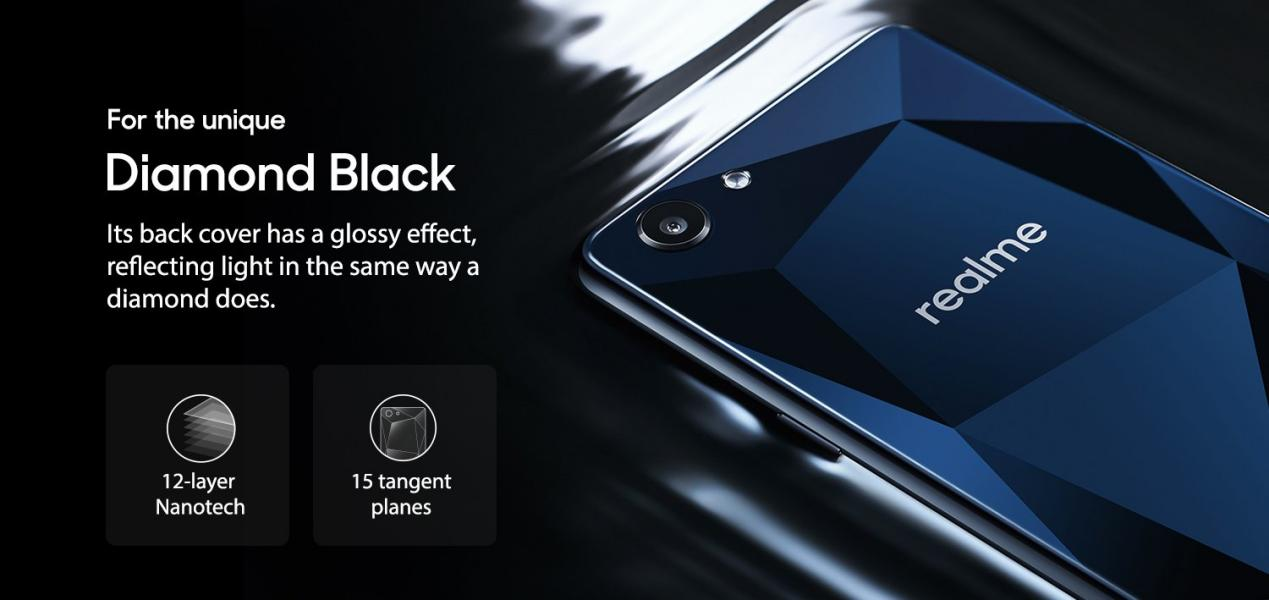
Anfangs bestand das Gründerteam von realme aus nur 40 Personen und die finanziellen Mittel waren so begrenzt, dass „nicht einmal eine Produktvorstellung möglich war“. Dennoch setzten sie alle Ressourcen auf die Produktentwicklung. Nach dem Start des ersten Modells, realme 1, auf Amazon Indien, erreichte es dank des MediaTek P60-Chips, des diamantgeschliffenen Gehäuses und des Preises von rund 1000 Yuan schnell den ersten Platz der „Bestsellerliste“.
Quelle: Amazon
Das im August 2018 veröffentlichte realme 2 stellte auf der Plattform Flipkart einen Rekord auf: „200.000 Einheiten in 5 Minuten ausverkauft“. Diese Strategie des „überlegenen Erlebnisses“ – „Leistung nahe an Flaggschiff-Modellen zu einem Mittelklassepreis zu bieten“ – wurde zum Markenzeichen der Marke.
Danach eroberte die Marke mit einem Tempo von „einem neuen Modell pro Monat“ Südostasien, erreichte 2019 einen Platz unter den Top 7 der weltweiten Auslieferungen und wurde 2021 zu einer der Smartphone-Marken, die am schnellsten 100 Millionen Verkäufe erzielten.
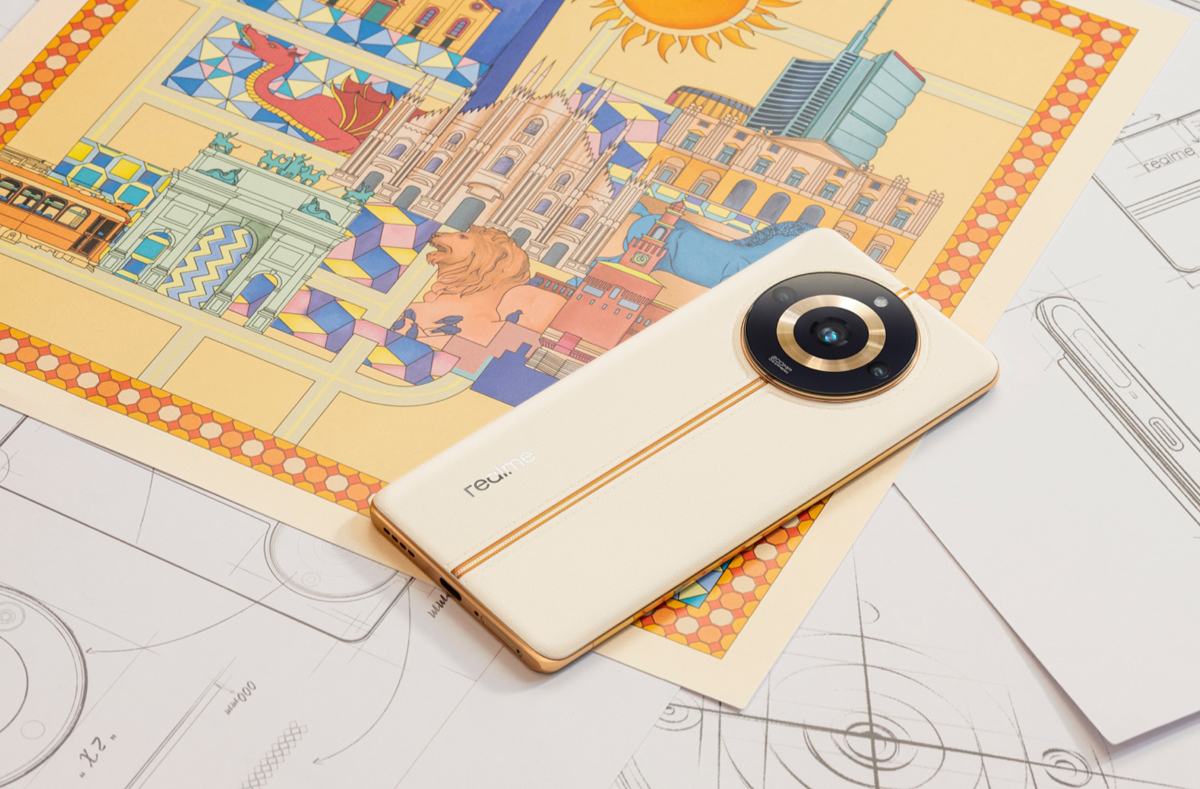
Wie Markengründer Herr Li in einem Interview sagte: „Für realme gibt es im Ausland überall Chancen. Denn der Marktanteil ist noch gering und wartet auf eine Wachstumsphase. Aber der chinesische Markt ist den Überseemärkten um viele Jahre voraus. Wenn wir den chinesischen Markt gut machen, werden wir mehr Vertrauen haben, auch die Überseemärkte gut zu machen.“
Quelle: Internet
Branchenwandel: Doppelter Durchbruch durch Preis-Leistung und soziale Medien
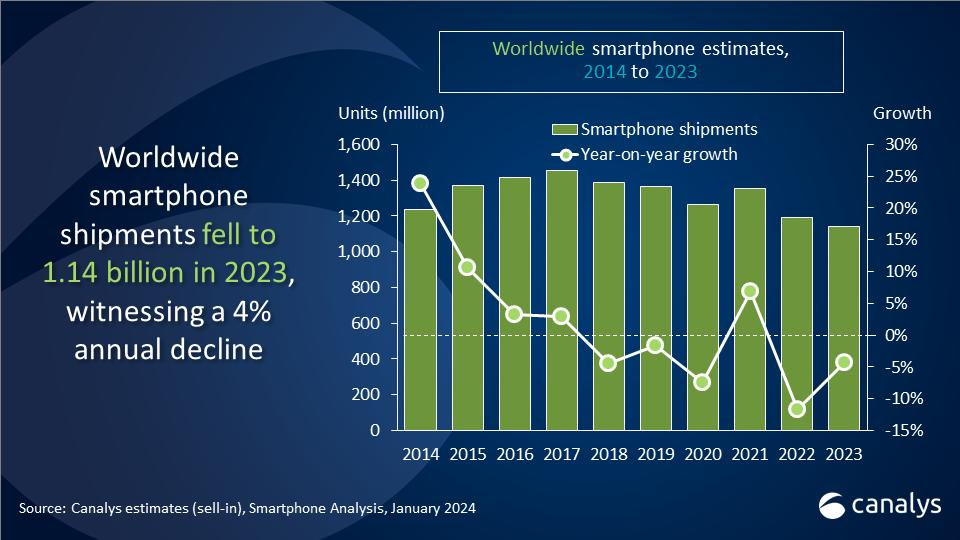
Der Durchbruch der Marke realme fiel mit einer strukturellen Anpassung des globalen Smartphone-Marktes zusammen. Damals schwächelte das Wachstum des globalen Smartphone-Marktes aufgrund verlängerter Austauschzyklen. Laut Drittanbieterdaten sanken die weltweiten Smartphone-Auslieferungen im Jahr 2023 auf 1,14 Milliarden Einheiten, ein Rückgang von 4 % im Jahresvergleich.
Quelle: canalys
Vor diesem Hintergrund traf die „überlegene“ Strategie von realme genau den ambivalenten Wunsch der Verbraucher nach Smartphones in verschiedenen Preisklassen. Technologien wie 65W-Schnellladung, 240W-Sekundenladung und flexible Displays wurden von Flaggschiff-Modellen auf Mittelklasse-Modelle übertragen, wodurch das Vorurteil „niedriger Preis = niedrige Qualität“ durchbrochen wurde.
Noch wichtiger ist, dass die Marke realme das Prinzip „Soziale Medien sind das Schlachtfeld“ versteht. Durch eine Strategie der „Plattformmerkmale + Inhaltsstaffelung“ steigerte sie ihre Interaktionsrate während der Ramadan-Aktion 2023 um 367 %.
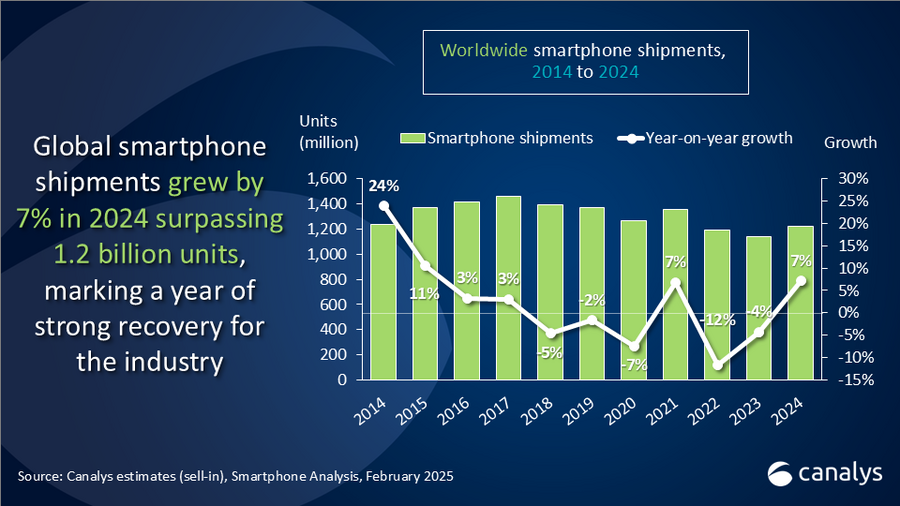
Heute erlebt der Smartphone-Markt ein Jahr der starken Erholung. Die Branche beendet zwei Jahre des Rückgangs, die Auslieferungen werden voraussichtlich auf über 1,2 Milliarden Einheiten steigen – die Aussichten sind vielversprechend.
Quelle: canalys
Hinter diesem Wachstum gegen den Trend verbirgt sich ein strategisches Modell, das für internationale Marken äußerst wertvoll ist. Während traditionelle Unternehmen noch darüber grübeln, „ob sie ins Ausland gehen sollen“, könnten sie sich ein Beispiel an der Social-Media-Strategie von realme nehmen.
Multi-Plattform-Matrix: Von der „Traffic-Ernte“ zur „Markenverankerung“
Gründer Herr Li erwähnte: „In Bezug auf die ‚Markenstärke‘ wird sich realme auf die junge Zielgruppe konzentrieren, den Mechanismus zum Nutzerverständnis vertiefen, sodass die Bedürfnisse junger Nutzer die Produktentwicklung in umgekehrter Richtung prägen können, und ein Markenerlebnis schaffen, das zur Teilnahme und Mitgestaltung einlädt.“
Basierend auf diesem Konzept kombiniert realme die Eigenschaften verschiedener Plattformen, führt vielfältige Strategien ein, erreicht und zieht junge Nutzer effektiv an und steigert so die Markenbekanntheit weiter.
1. TikTok
Als Hauptplattform der Generation Z ist TikTok nach und nach zum zentralen Traffic-Motor der Marke realme geworden.
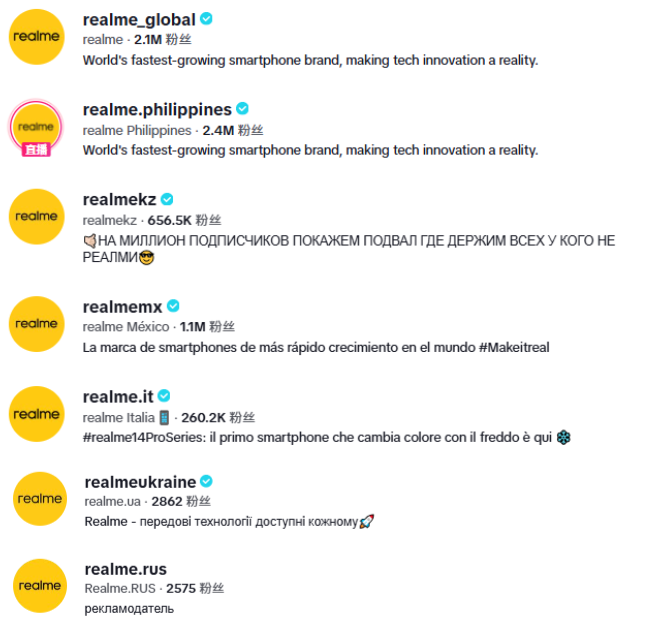
Bis heute hat die Marke insgesamt 7 regionale offizielle Konten auf TikTok eingerichtet, mit insgesamt über 6,52 Millionen Followern, und ein „zentrales Küchen“-System zur Inhaltsverteilung aufgebaut.
Quelle: TikTok
Die Verwaltung über separate Konten reduziert nicht nur das Risiko kultureller Missverständnisse, sondern maximiert auch die Traffic-Effizienz.
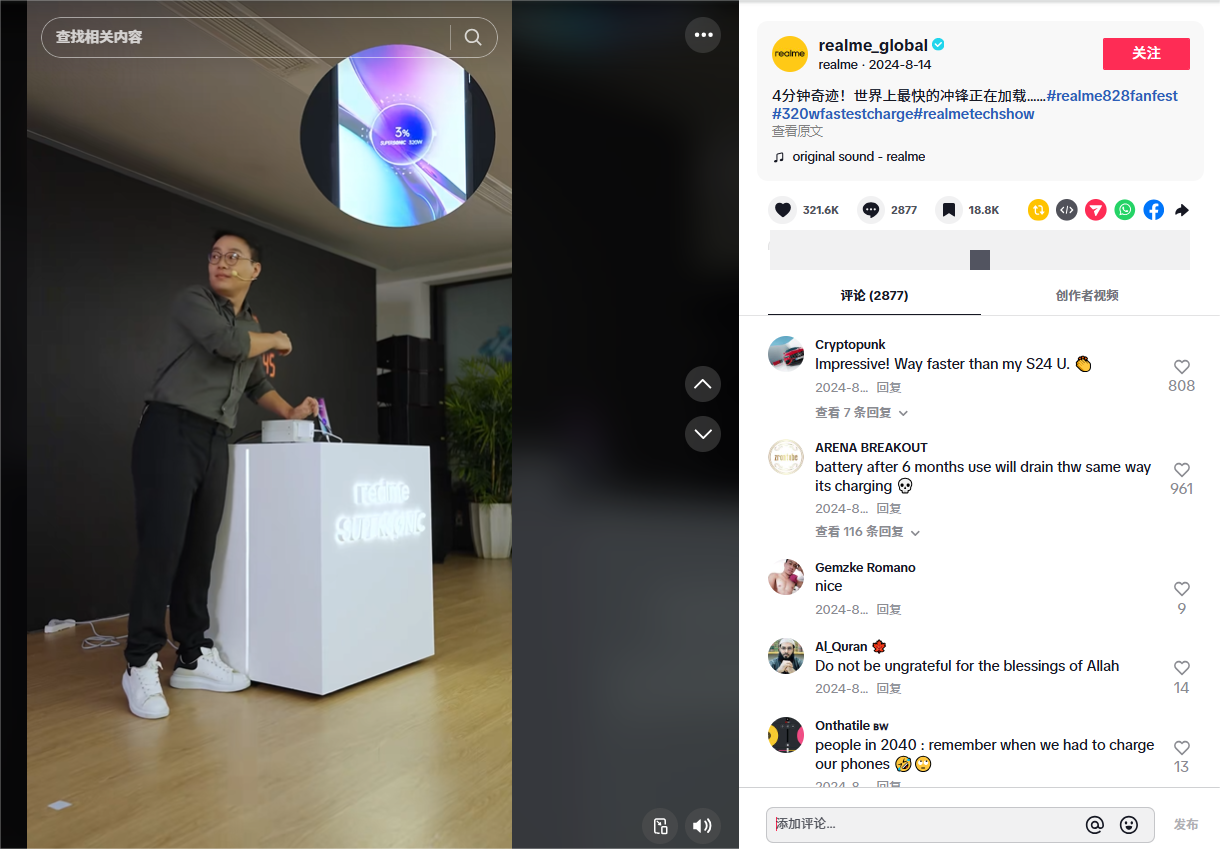
Am Beispiel des europäischen Markenkontos @realmeglobal: Angesichts des großen Interesses europäischer und amerikanischer Verbraucher an Akkulaufzeit und Schnellladetechnologie konzentriert sich dieses Konto bei der Inhaltspräsentation auf die Szenarisierung der Technologie. Das veröffentlichte Video „4 Minuten Superschnellladung“ traf genau den Schmerzpunkt der Nutzer in Europa und Amerika und erzielte nach der Veröffentlichung schnell über 12,4 Millionen Aufrufe.
Diese fein abgestimmte „Ein Land, eine Strategie“-Operation ermöglicht es realme, sowohl eine globale Markenkonsistenz zu wahren als auch inhaltliche Peinlichkeiten durch „kulturelle Unverträglichkeit“ zu vermeiden.
Quelle: TikTok
Neben der Verwaltung eigener Konten arbeitet realme auch intensiv mit einer Vielzahl lokaler KOLs zusammen. Zu wichtigen Zeitpunkten wie der Einführung neuer Modelle oder Feiertagen sind verschiedene Influencer im Einsatz.
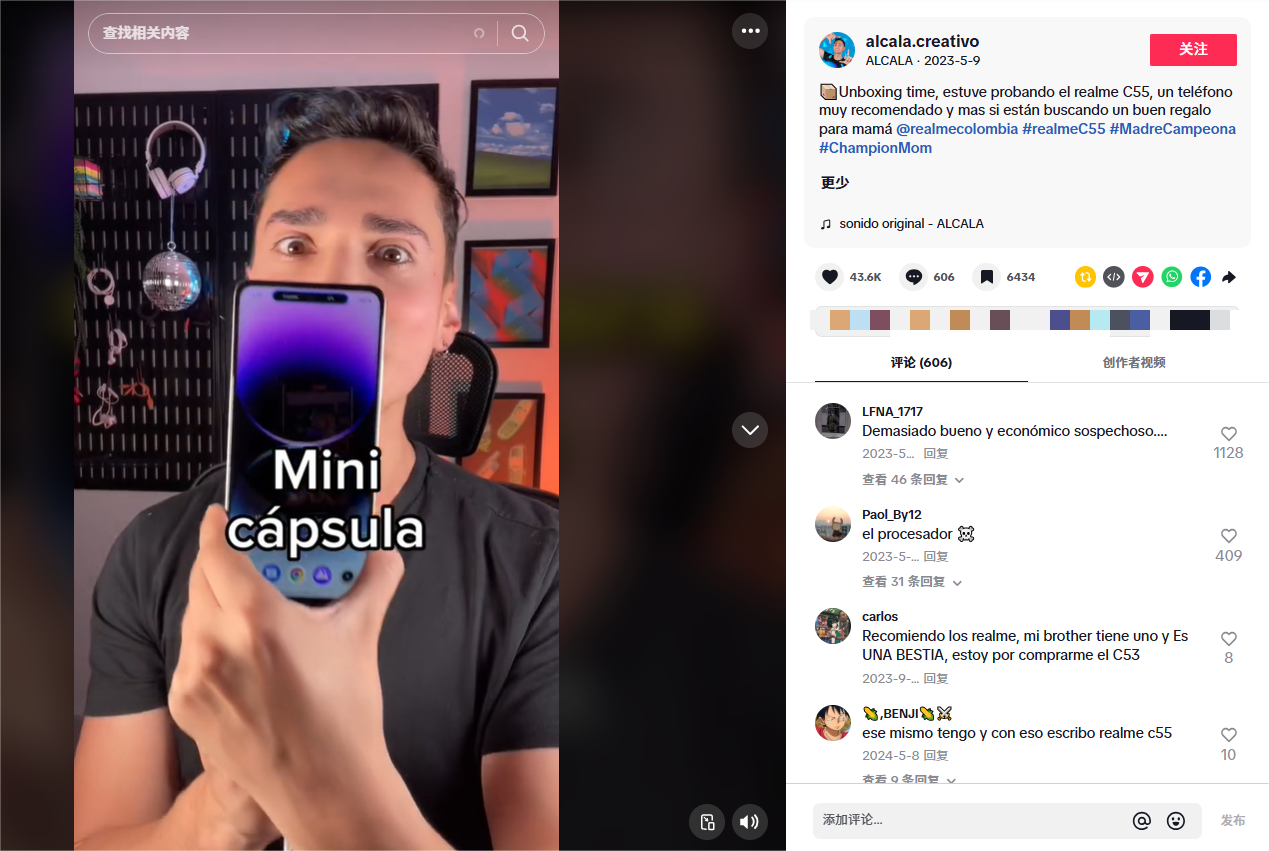
Zum Beispiel lud die Marke zum brasilianischen Muttertag zahlreiche Influencer ein, um herzliche Kurzvideos zu familienbezogenen Themen zu erstellen, und nutzte die Popularität des Feiertagsthemas sowie maßgeschneiderte H5-Seiten, um die Reichweite der Inhalte weiter zu erhöhen.
Der TikTok-Influencer @alcala.creativo war einer von ihnen. Durch eine Kombination aus „Voiceover + Unboxing“ und dem Thema „Geschenk für Mama“ erzielte das Video zum Muttertag 763.100 Aufrufe und brachte der Marke beträchtliche Traffic-Vorteile.
Quelle: TikTok
2. YouTube
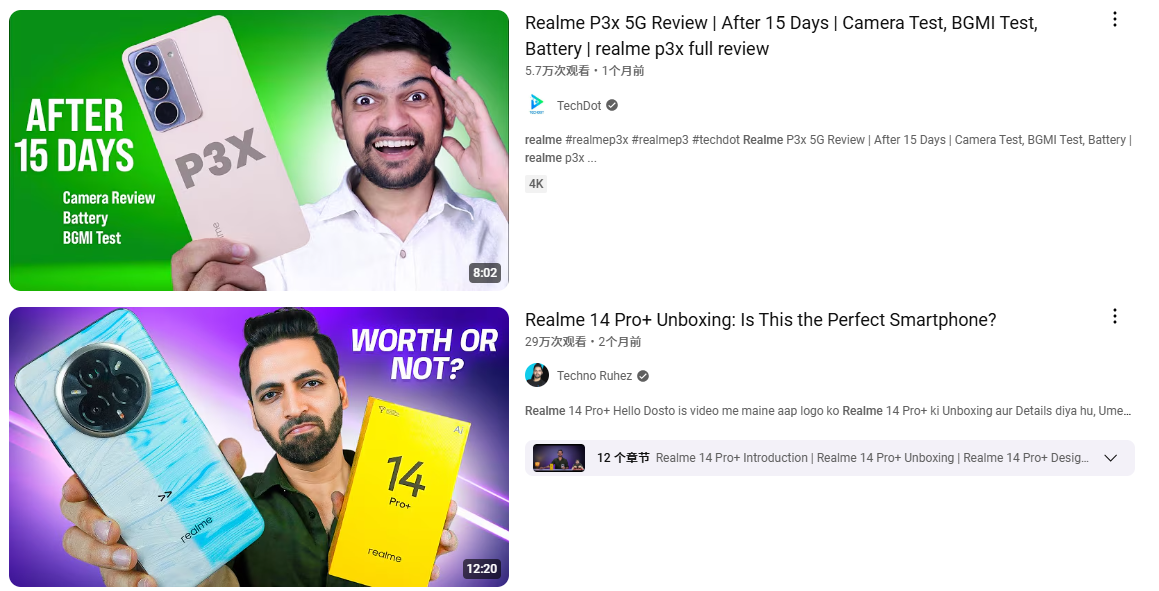
Im Gegensatz zu den schnelllebigen Kurzvideos auf TikTok lädt realme auf YouTube hauptsächlich Tech-Blogger zu ausführlichen Testberichten ein, die sich auf Leistungsparameter und tatsächliche Aufnahmeergebnisse konzentrieren, um den E-Commerce-Umsatz zu fördern.
Quelle: Youtube
Diese Strategie befriedigt nicht nur das Bedürfnis der Nutzer nach einem tiefen Verständnis des Produkts, sondern steigert durch die Fachkompetenz und den Einfluss der Blogger auch die Glaubwürdigkeit und Attraktivität der Marke.
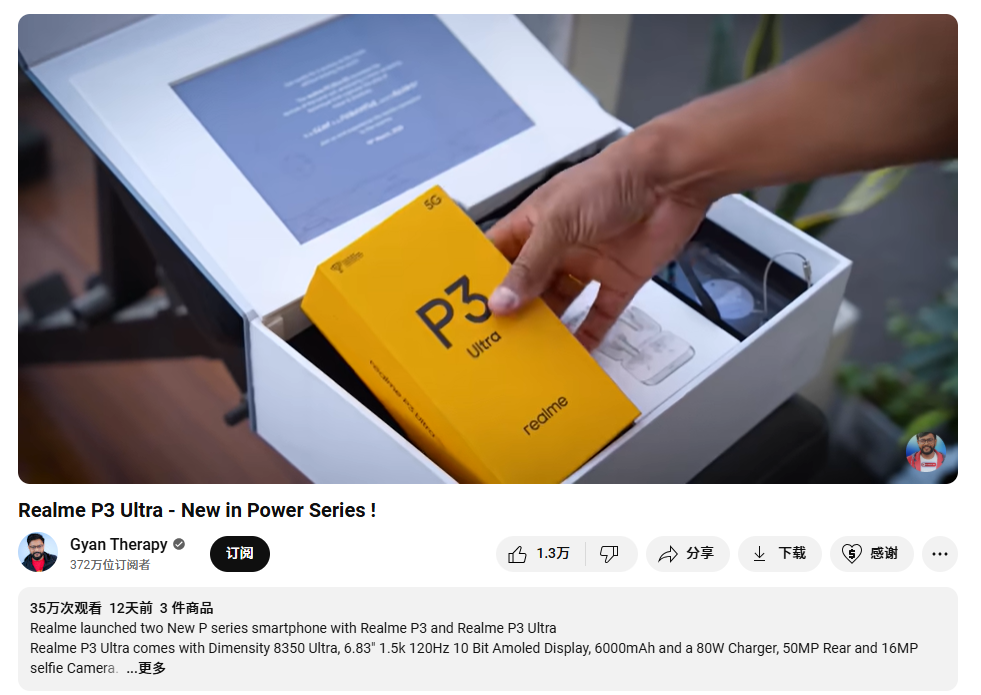
Zum Beispiel brachte ein ausführlicher Testbericht des YouTube-Bloggers @Gyan Therapy über das Realme P3 Ultra der Marke 350.000 Aufrufe und zog eine große Anzahl von Nutzerkommentaren und Interaktionen an.
Quelle: Youtube
3. Instagram
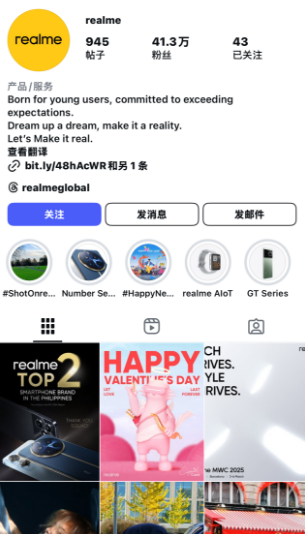
Im Multi-Plattform-Ansatz von realme übernimmt Instagram die Rolle des „Markenästhetik-Zentrums“. Durch hochwertige visuelle Erzählungen wird das Smartphone von einem funktionalen Werkzeug zu einem Symbol der Jugendkultur erhoben. Derzeit hat der globale Hauptaccount @realme 413.000 Follower, während das regionale Account-Netzwerk (wie @realmeglobal, @realmesea) insgesamt über 1,2 Millionen Follower hat und damit ein wichtiger Hebel für die Marke ist, um hochwertige Nutzer zu gewinnen.
Durch den Aufbau eines Account-Netzwerks kann realme nicht nur die Zielgruppe aus verschiedenen Blickwinkeln erreichen und die Markenbekanntheit steigern, sondern auch die visuellen Ausdrucksmöglichkeiten von Instagram nutzen, um das modische und technologische Image der Marke zu stärken.
Quelle: Instagram
Die „nicht standardisierte Antwort“ für den internationalen Markteintritt chinesischer Marken
Der Aufstieg der Marke realme spiegelt die tiefgreifende Logik des Wandels von „Made in China“ zu „Brand from China“ wider: Nicht durch Niedrigpreis-Dumping, sondern durch lokalisierte Erzählungen, die die Herzen gewinnen. Internationalisierung bedeutet nicht nur, Produkte zu verkaufen, sondern auch die Fähigkeit über die gesamte Wertschöpfungskette aufzubauen – vom Produkt über den Service bis hin zur Marke.
Im Jahr 2025 sind Überseemärkte sowohl ein Ausweg für chinesische Unternehmen, dem internen Verdrängungswettbewerb zu entgehen, als auch ein Prüfstein für ihre Innovationsfähigkeit. Wie Herr Li sagte: „Im Ausland gibt es überall Chancen.“