 2370
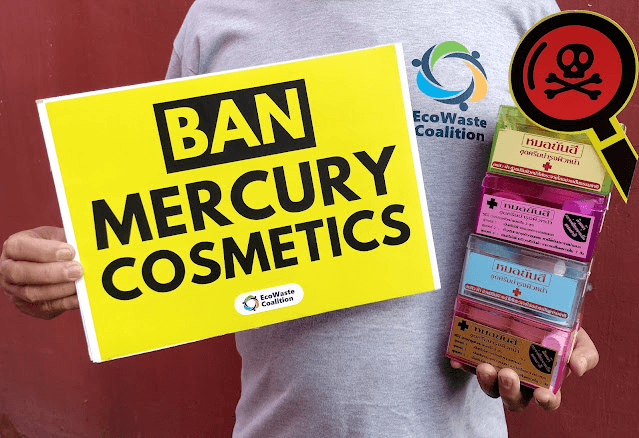
2370Kürzlich kritisierte die philippinische Umweltorganisation Ecowaste Coalition den fortgesetzten Online-Verkauf von quecksilberhaltigen thailändischen Hautpflegekosmetika, nachdem diese von den Gesundheitsproduktaufsichtsbehörden in Thailand und Singapur beanstandet worden waren.
Gleichzeitig wurde kritisiert, dass die Online-Shopping-Giganten Lazada und Shopee möglicherweise nicht ausreichende Maßnahmen ergriffen hätten, um zu verhindern, dass Drittanbieter ihre Plattformen für den Verkauf nicht konformer Produkte nutzen.
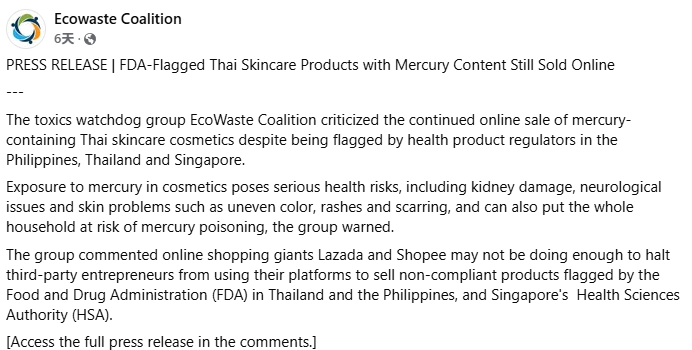
Quelle: Facebook
In den letzten Jahren sind Kosmetika mit überhöhtem Quecksilbergehalt zu einer "versteckten Gefahrenzone" im südostasiatischen grenzüberschreitenden Markt geworden. Laut Ecowaste Coalition können solche Produkte im schlimmsten Fall zu Hautgeschwüren, Pigmentablagerungen, Nierenversagen und Nervenschäden führen.
Der Fall der indonesischen Verbraucherin Nur Lenny Astia veranschaulicht die Risiken der Branche. Durch die zweijährige Verwendung einer bestimmten nicht konformen Gesichtscreme entwickelte sie schwere Pigmentablagerungen im Gesicht und psychische Probleme. Nach Ermittlungen der zuständigen Behörden stellte sich heraus, dass das Produkt bereits 2011 in Indonesien auf die Verbotsliste gesetzt worden war, aber dennoch auf Verkaufsplattformen erschien.
Angesichts des aktuellen Chaos auf dem Markt hat die philippinische Regierung gemeinsam mit Zoll, Gesundheitsbehörden und anderen Abteilungen eine spezielle Überprüfung eingeleitet. Grenzüberschreitende Verkäufer, die gegen Vorschriften verstoßen, riskieren mehrere Sanktionen. Nach indonesischem Recht drohen rechtswidrig handelnden Unternehmen bis zu 12 Jahre Haft.
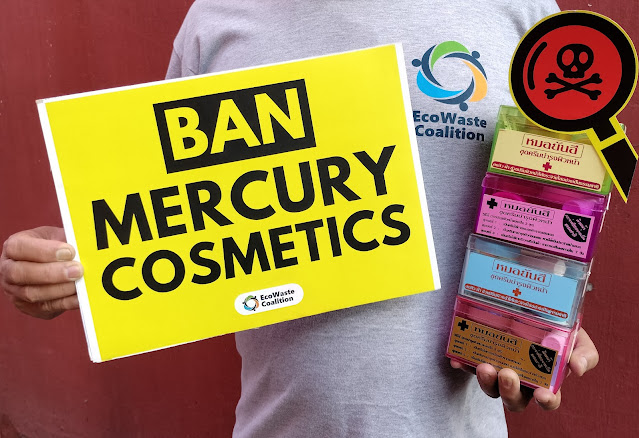
Quelle: Ecowaste Coalition
Neben der Quecksilberkrise bedrohen auch gefälschte Kosmetika das Ökosystem der Branche. Die Polizei in Hanoi, Vietnam, beschlagnahmte im Juni letzten Jahres fast 30 Tonnen gefälschte Schönheitsprodukte im Wert von 575 Millionen VND (etwa 168.000 RMB). Thailändische Verbraucher erlitten Augeninfektionen durch die Verwendung minderwertiger Mascara, und vietnamesische Käufer wurden nach der Verwendung von Produkten ohne Kennzeichnung mit allergischer Dermatitis ins Krankenhaus eingeliefert.
Diese Vorfälle spiegeln systemische Risiken im grenzüberschreitenden E-Commerce wider, wie Kontrollverlust in der Lieferkette bei der Produktauswahl, schwache grenzüberschreitende Regulierungszusammenarbeit und Verletzungen geistigen Eigentums.
Da Kosmetika direkt mit der menschlichen Haut in Kontakt kommen, kann jedes Inhaltsstoffproblem (wie illegal zugesetzte Hormone, Schwermetalle oder verbotene Rohstoffe) Gesundheitskrisen und rechtliche Auseinandersetzungen auslösen, weshalb diesem Thema ausreichend Aufmerksamkeit geschenkt werden muss.
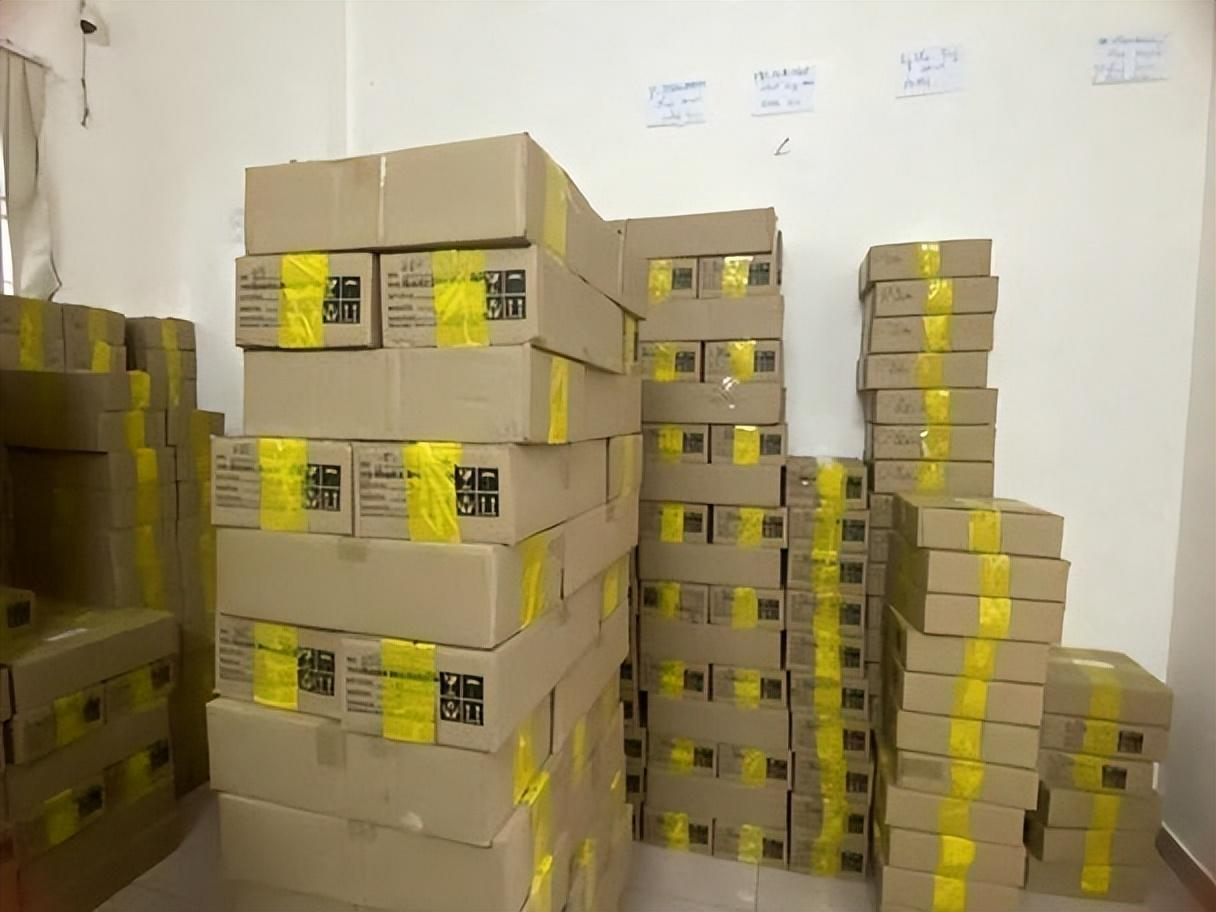
Fast 1.250 Kartons mit etwa 30 Tonnen gefälschter Waren Quelle: Internet
Angesichts der schwerwiegenden Probleme, die gefälschte und minderwertige Kosmetika für die Verbrauchergesundheit und die Marktordnung darstellen, haben sich die E-Commerce-Plattformen nun darauf geeinigt, die strenge Überwachung der Kosmetikbranche als wichtige Aufgabe zu betrachten.
Im März dieses Jahres unterzeichnete die philippinische Kosmetikindustrie-Kammer (CCIP) gemeinsam mit 18 führenden Unternehmen eine Absichtserklärung (MOU) für den elektronischen Handel, um dem Umlauf gefälschter Kosmetika entgegenzuwirken.
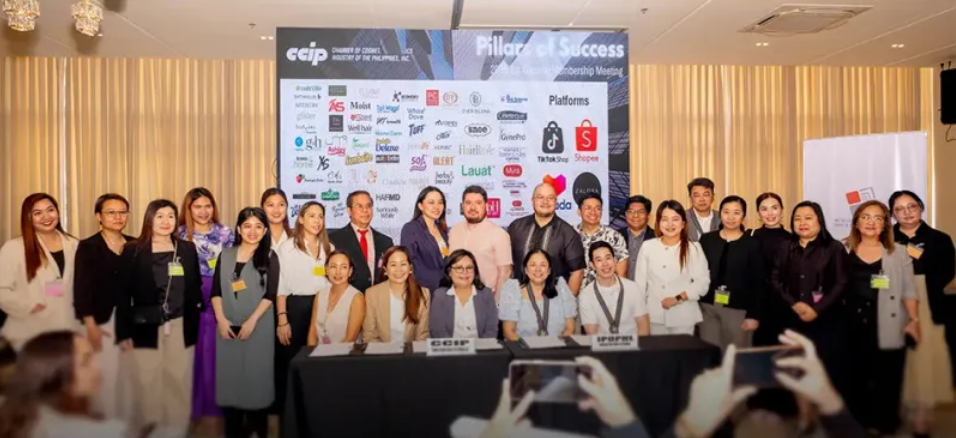
Quelle: IPOPHL
Derzeit durchläuft der südostasiatische Schönheitsmarkt eine "Compliance-Prüfung".
Angesichts dieser Situation wird Verkäufern empfohlen, sofort eine Selbstprüfung durchzuführen: Erstens die Quecksilbergehaltsberichte von aufhellenden und fleckenentfernenden Produkten zu überprüfen, zweitens Produkte von der FDA- und den Arzneimittelbehörden der ASEAN-Länder auf der schwarzen Liste zu nehmen und drittens ein Rückverfolgungssystem für die Inhaltsstoffe der Lieferanten einzurichten.
Schließlich ist ein gesetzeskonformer Betrieb der langfristige Weg, während "widerrechtliches Handeln" sowohl anderen als auch sich selbst schadet und daher nicht zu empfehlen ist.
(Anmerkung: Die Informationen in diesem Artikel stammen aus öffentlichen Berichten und Plattformdaten; die tatsächliche Situation basiert auf offiziellen Angaben.)