 2779
2779In den letzten Jahren ist der globale Markt für Reinigungsprodukte kontinuierlich gewachsen. Laut Daten von IMARC Group erreichte der weltweite Markt für Haushaltsreinigungsprodukte im Jahr 2024 ein Volumen von 38,7 Milliarden US-Dollar, wobei die Kategorie der umweltfreundlichen Reinigungsmittel ein deutliches Wachstum verzeichnete.
In diesem Marktumfeld schaffte es eine von einer asiatischstämmigen Frau gegründete Marke – Blueland – mit ihrem innovativen Konzept der „Null-Kunststoff-Verpackung“ in nur vier Jahren in den Fokus der Branche.
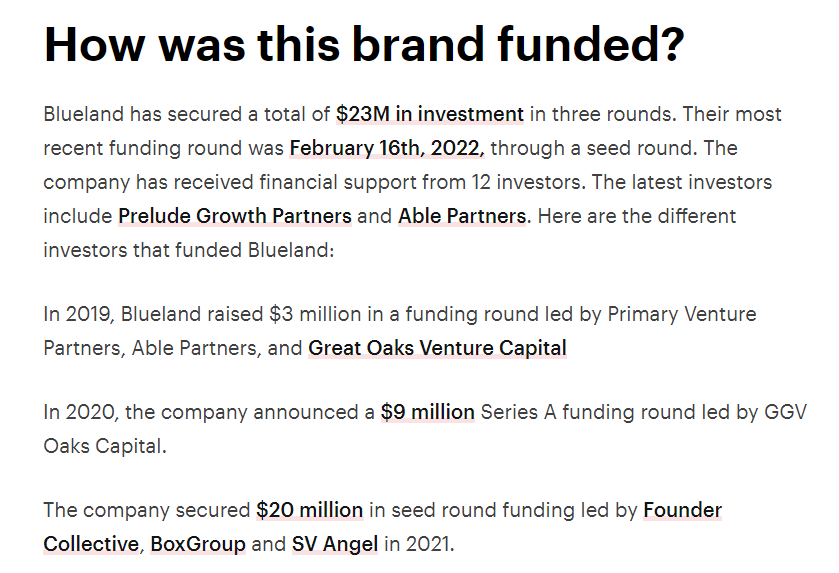
Seit ihrer Gründung im Jahr 2019 hat die Marke Blueland insgesamt über 40 Millionen US-Dollar an Finanzierungen eingesammelt, ist bei Einzelhandelsriesen wie Target und Walmart gelistet und hat sich zu einer Phänomen-Marke im Bereich der umweltfreundlichen Reinigung entwickelt.
Quelle: Blueland
Mütterliche Liebe geht über die Familie hinaus
Die Erfahrung von Sarah Paiji Yoo, der Gründerin von Blueland, ist ein Paradebeispiel für „Mütter, die ein Unternehmen gründen“.
Laut Informationen stellte sie beim Versuch, Babynahrung für ihren Sohn zuzubereiten, fest, dass Leitungswasser und Flaschenwasser in den USA weit verbreitet mit Mikroplastik belastet sind. Zudem bestehen 90 % der handelsüblichen Reinigungsmittel aus Wasser, die jedoch in Einweg-Plastikflaschen verkauft werden und letztendlich eine Umweltbelastung darstellen.
Daraufhin war sie entschlossen, eine Alternative zu Reinigungsprodukten ohne Plastikverpackung zu finden, und so wurde die Marke Blueland offiziell ins Leben gerufen.

Sarah Paiji Yoo und ihre Familie Quelle: Internet
Sarah und ihr Mitgründer John Mascari suchten auf LinkedIn nach Chemikern, die ihnen bei der Umsetzung der Idee von Reinigungstabs halfen, und gewannen auch einen ehemaligen Direktor eines großen Naturreinigungsunternehmens für das Team.
Nach intensiver Forschung und Entwicklung wurde das Reinigungs-Basisset der Marke Blueland im April 2019 offiziell eingeführt. Bereits sieben Monate nach dem Start erzielte die Marke einen Umsatz von bis zu 42 Millionen US-Dollar.
Danach strömte das Kapital herbei: 3 Millionen US-Dollar in der Seed-Runde, 9 Millionen US-Dollar in der Serie A, weitere 20 Millionen US-Dollar im Jahr 2021 ...
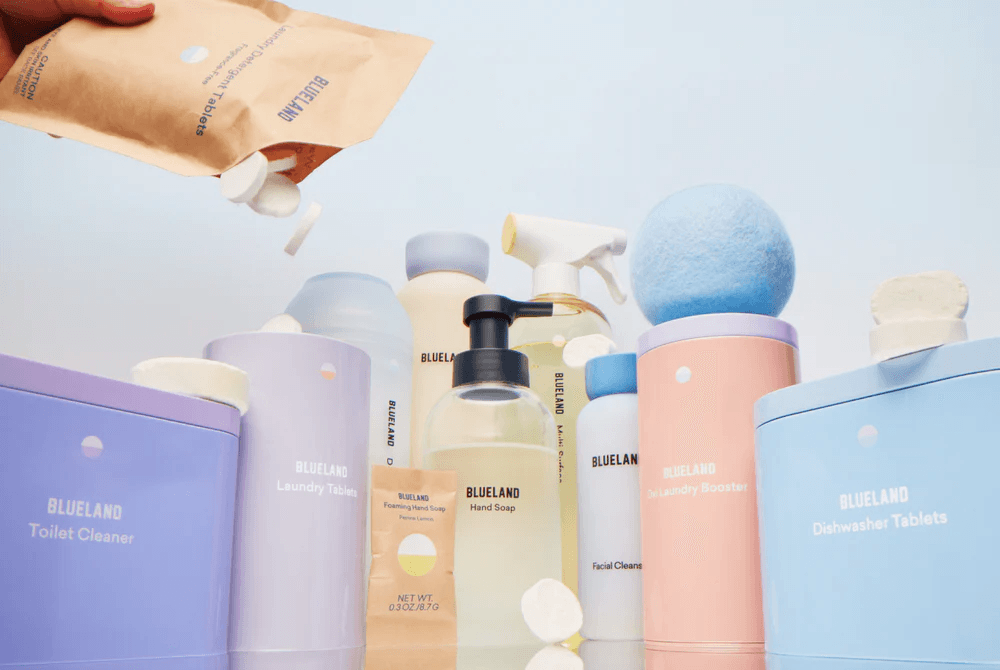
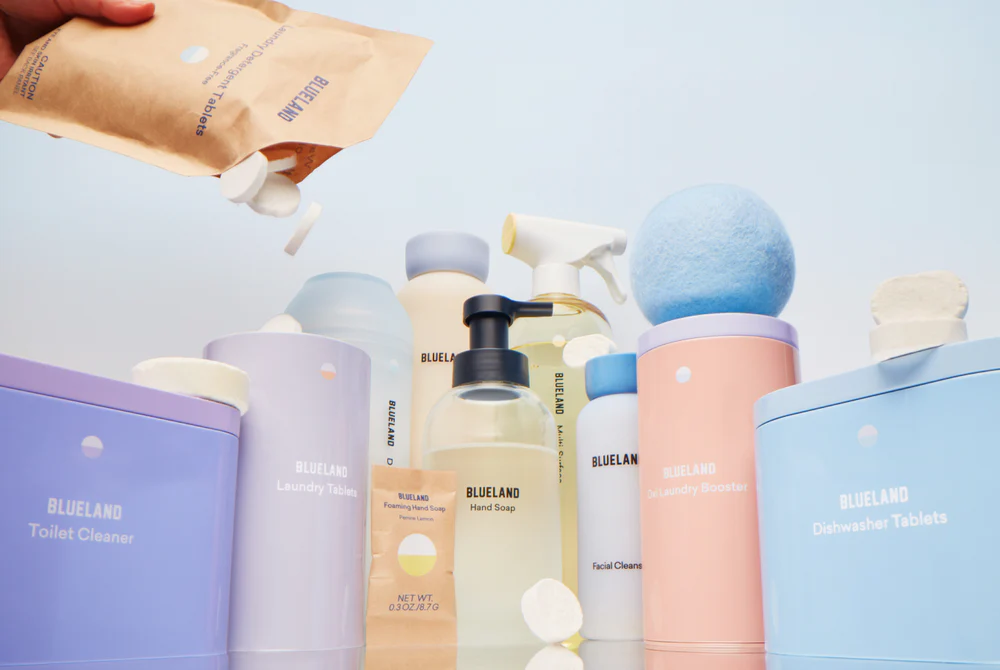
Derzeit hat die Marke Blueland Dutzende von Produkten auf den Markt gebracht, verfügt über über eine Million Mitglieder und verkauft ihre Duschgelprodukte in 250 Target-Filialen in den gesamten USA.
Quelle: Capitalism
Die „grüne Revolution“ hinter einem Markt von über 30 Milliarden US-Dollar
Der Aufstieg der Marke Blueland fällt genau in die Boomphase des globalen Marktes für umweltfreundliche Reinigungsprodukte. Am Beispiel des chinesischen Marktes: Der Markt für Fleckentfernungspulver erreichte 2023 ein Volumen von 8,6 Milliarden Yuan, ein Anstieg von 8,3 % im Vergleich zum Vorjahr, und wird voraussichtlich bis 2025 die 10-Milliarden-Yuan-Marke überschreiten.
Verbraucherumfragen zeigen, dass 46,4 % der Nutzer „Umweltfreundlichkeit“ als Kernkriterium bei der Auswahl von Haushaltsreinigungsprodukten angeben, gefolgt von „Inhaltsstoffsicherheit“ und „Effizienz und Bequemlichkeit“.
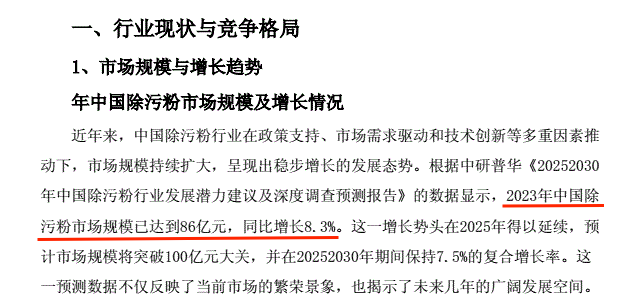
„Forschungsbericht zu Entwicklungstrends und -aussichten des chinesischen Fleckentfernungspulvermarktes 2025-2030“
Dieser Trend ist auf den europäischen und amerikanischen Märkten noch deutlicher. Der globale Markt für Haushaltsreinigungsprodukte erreichte 2024 ein Volumen von 38,7 Milliarden US-Dollar. Verbraucher geben sich nicht mehr mit „Unbedenklichkeit“ zufrieden, sondern streben nach einer ganzheitlichen Umweltfreundlichkeit über den gesamten Lebenszyklus, d. h. pflanzliche Formulierungen, Konzentrattechnologie und abbaubare Verpackungen.
Die Reinigungstabs der Marke Blueland treffen genau diese drei Hauptprobleme: Jeder Tab muss nur mit Wasser aktiviert werden, die Papierverpackung ist vollständig biologisch abbaubar, und die Kosten pro Anwendung sind 30 % niedriger als bei herkömmlichen Produkten. Diese „Innovation durch Weglassen“ führte dazu, dass die Marke in der ersten Woche nach der Listung bei Target 80.000 Sets verkaufte und breite Unterstützung erhielt.
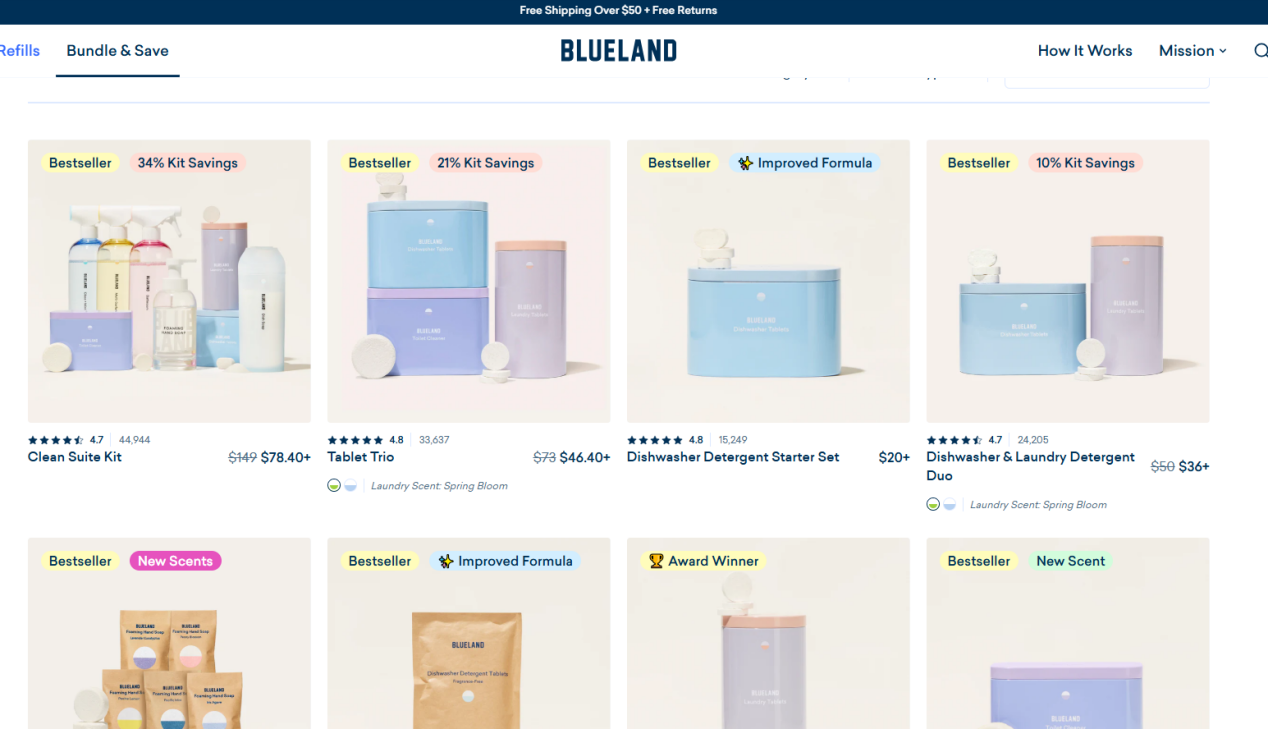
Quelle: Blueland
Der Schlüssel zum Traffic: „Umweltfreundliche Vergesellschaftung“ hinter Millionen von Aufrufen
In den Überseemärkten mit hohen Traffic-Kosten hat die Marke Blueland eine mehrdimensionale Marketing-Matrix aufgebaut.
1. TikTok
Auf TikTok verfolgt die Marke Blueland eine Content-Strategie, die sich auf drei Kernpunkte konzentriert: „Visualisierung von Problemen, Szenario-Penetration und emotionale Resonanz“.
Obwohl der offizielle Account @blueland nur 101.000 Follower hat, erzielen seine harten wissenschaftlichen Erklärvideos wie „Auflösungsprozess von Reinigungstabs“ und „Echtaufnahmen von Plastikverschmutzung“ immer wieder Millionen von Aufrufen.
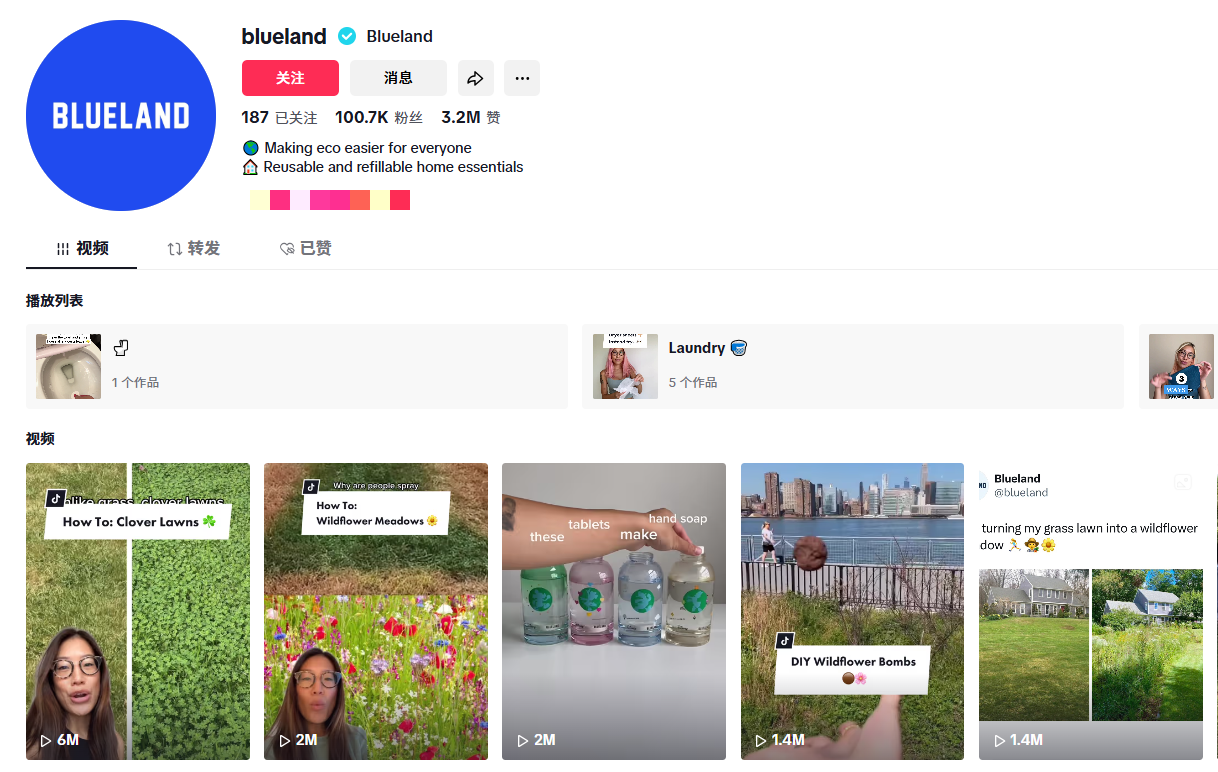
Quelle: TikTok
Zum Beispiel erzielte ein im April 2023 veröffentlichtes Erklärvideo mit dem Titel „Waschmittel-Pods sind nicht biologisch abbaubar“ 2,5 Millionen Aufrufe. Die Kommentarspalte war voller verschiedener humorvoller Anmerkungen, was der beworbenen umweltfreundlichen Produktlinie beträchtlichen Traffic und Aufmerksamkeit einbrachte.
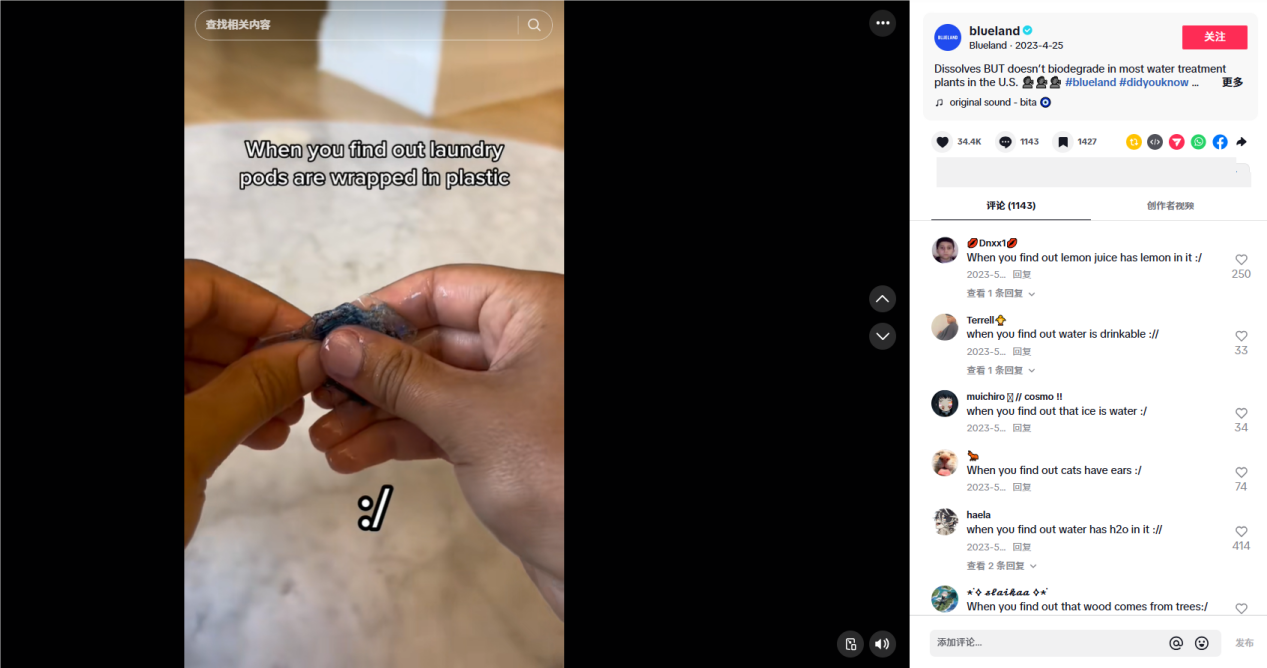
Quelle: TikTok
Darüber hinaus arbeitet die Marke Blueland auch mit TikTok-Influencern zusammen, um die Markenbekanntheit zu steigern.
Zum Beispiel veröffentlichte die TikTok-Influencerin @krystalynngier (50.700 Follower) im März 2024 ein Werbevideo. In dem Video integrierte sie die Markenvorteile auf subtile Weise durch einen „Frage-und-Antwort“-Ansatz, was nicht nur die Werbewirkung abschwächte, sondern auch das Markenimage stärkte. Das Video erzielte schließlich 347.800 Aufrufe.
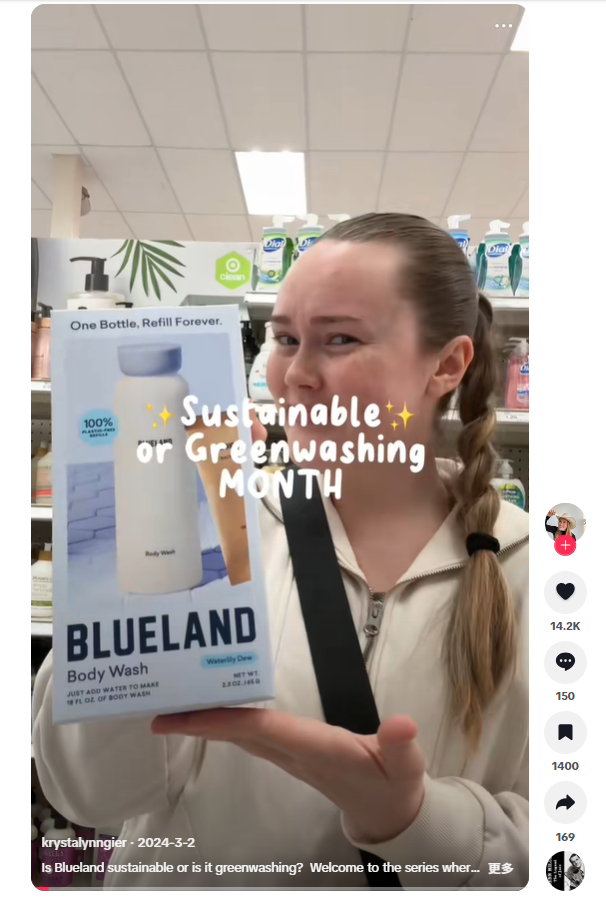
Quelle: TikTok
2. Instagram
Im Gegensatz zur Positionierung als „Umweltexperte“ auf TikTok reduziert die Marke Blueland auf Instagram die direkte Produktwerbung und konzentriert sich stattdessen auf indirekte Werbung durch Inhalte wie „Life Hacks“ und „Umwelttipps“.
Obwohl diese Inhalte nicht direkt mit dem Gebrauchswert der Produkte selbst zusammenhängen, ermöglichen sie es den Nutzern durch die Vermittlung von Umweltbewusstsein und Lifestyle-Inspiration, einen nachhaltigeren Lebensstil zu erfahren und so die Identifikation mit dem Markenwert zu stärken.
Derzeit hat der Instagram-Account der Marke @Blueland 453.000 Follower, was im Vergleich zu anderen Marken in derselben Branche ein beachtlicher Erfolg ist.
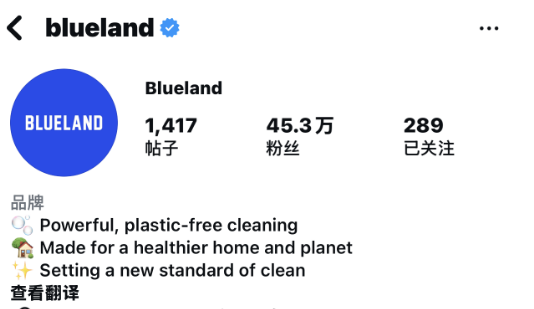
Quelle: Instagram
3. Eigenständiger Online-Shop
Der eigenständige Online-Shop ist das Kernstück der Marke Blueland. Durch ein Abonnementmodell für die regelmäßige Lieferung von Reinigungstabs und ein Mitglieder-Punktesystem hat die Marke die Kundenbindung effektiv erhöht.
Daten zeigen, dass der Anteil der Nutzer aus den USA 86,22 % beträgt, wobei 71,27 % der Verbraucher weiblich und zwischen 25 und 34 Jahre alt sind, was einen stabilen Kernkundenstamm bildet.
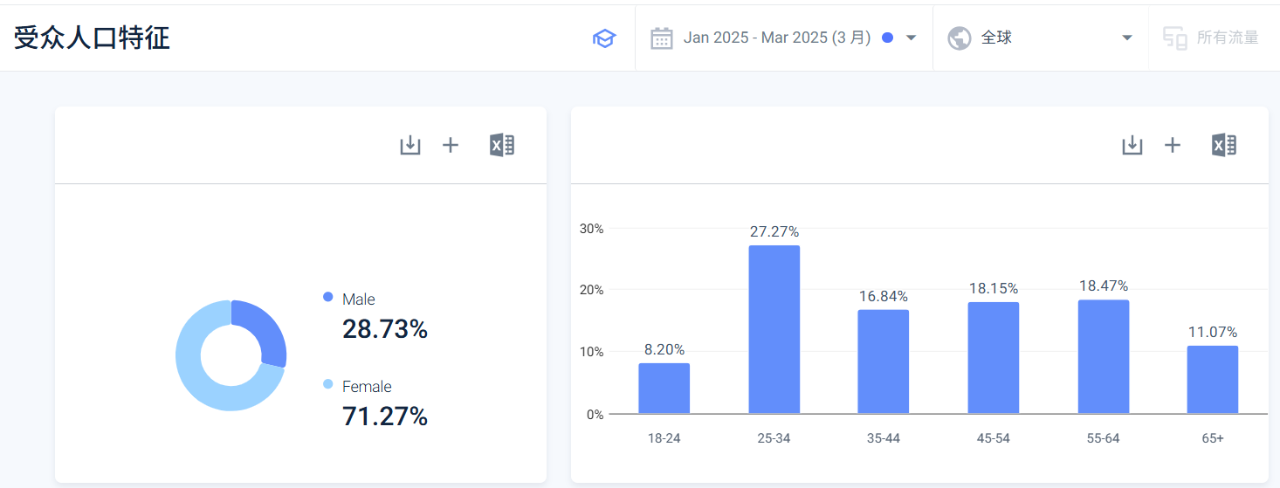
Quelle: SimilarWeb
Dieses Betriebsmodell senkt nicht nur die Kosten für die Kundenakquise, sondern schafft auch nachhaltige Kundenbeziehungen.
Laut einer Drittanbieterplattform erreichte der eigenständige Online-Shop von Blueland zwischen Februar und März 2025 eine monatliche Besucherzahl von 1,119 Millionen, wobei der Anteil des direkten Traffics 47,68 % und der des organischen Traffics 28,91 % betrug.
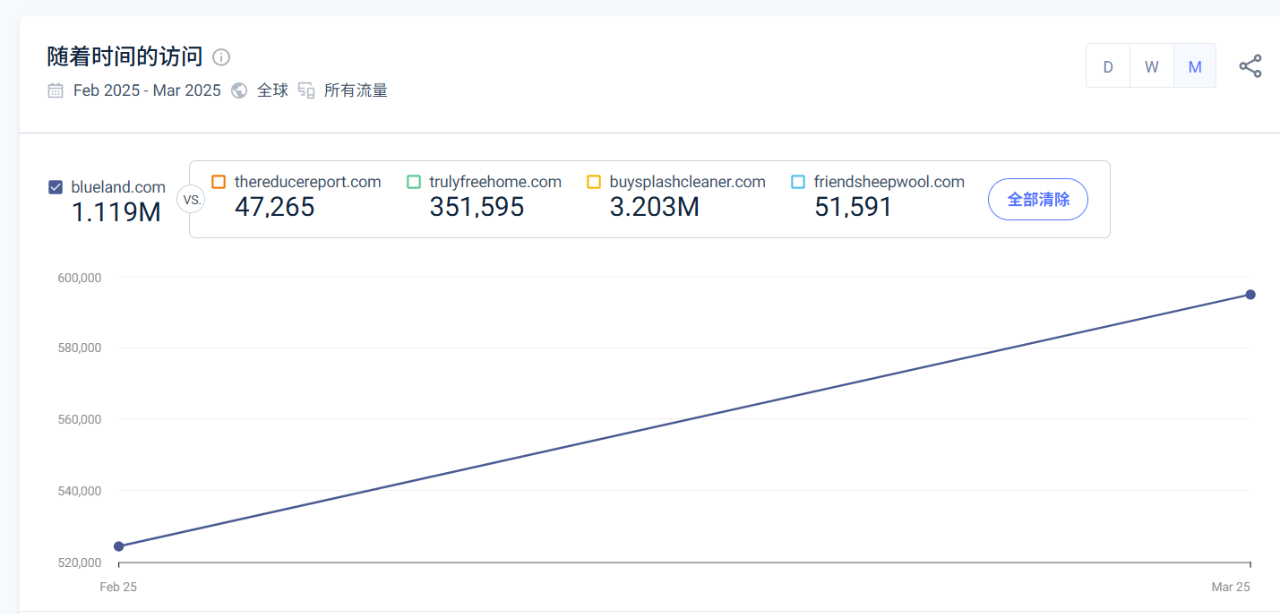
Quelle: SimilarWeb
Fazit: Das nächste blaue Meer für chinesische Unternehmen
Aus der Entwicklung der Marke Blueland wird deutlich, dass die reine Produktfunktion nicht mehr der einzige Wettbewerbsvorteil ist. Markenwerte und Kundenerfahrung werden zu entscheidenden Faktoren für die Kaufentscheidung der Verbraucher.
Für chinesische Unternehmen mit einer ausgereiften Lieferkette bietet sich hier ein seltenes Gelegenheitsfenster. Durch die Kombination von Fertigungsvorteilen mit innovativen Konzepten können chinesische Marken auf den Überseemärkten eine differenzierte Positionierung erreichen.
Heute warten immer mehr Nischenbereiche – von Umwelttechnologie bis hin zu Smart Home – darauf, von chinesischen Marken mit globaler Vision erschlossen zu werden. Dies könnte der entscheidende Durchbruch für die Globalisierung chinesischer Marken im nächsten Jahrzehnt sein.