 2257
2257In den letzten Jahren hat der globale Markt für 3D-Druck ein enormes Entwicklungspotenzial gezeigt.
Laut Daten von grandviewresearch wurde der globale 3D-Druckmarkt im Jahr 2023 auf 20,37 Milliarden US-Dollar geschätzt. Es wird erwartet, dass er zwischen 2024 und 2030 mit einer durchschnittlichen jährlichen Wachstumsrate von 23,5 % wächst. Bis 2030 könnte der globale 3D-Druckmarkt voraussichtlich 34,5 Milliarden US-Dollar erreichen.
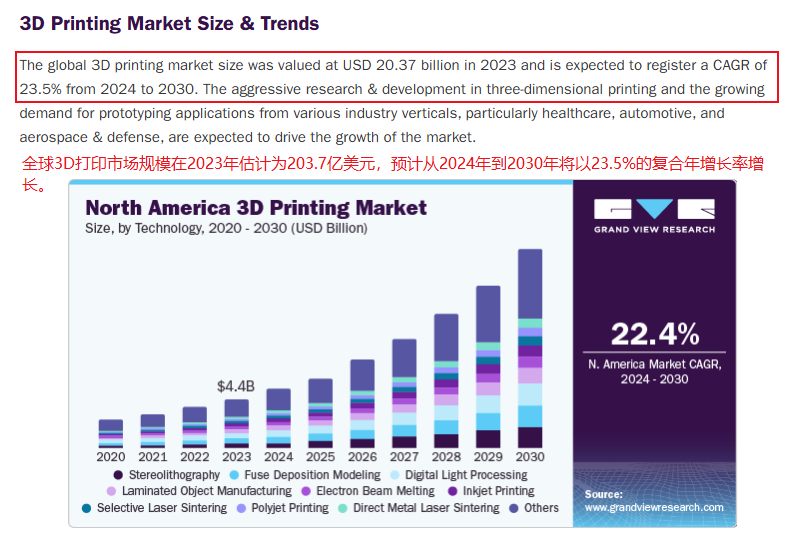
Quelle: grandviewresearch
Mit der kontinuierlichen Weiterentwicklung der Technologie und der zunehmenden Diversifizierung der Marktnachfrage, insbesondere in den europäischen und amerikanischen Märkten, hat die Verbreitung der Geek-Kultur 3D-Drucker zu begehrten „neuen Spielzeugen“ gemacht und das schnelle Wachstum dieses Nischenmarktes vorangetrieben. Heute hat sich der Markt für 3D-Druck im Verbraucherbereich zu einer neuen goldenen Spur für den grenzüberschreitenden E-Commerce entwickelt, und die 3D-Drucktechnologie bewegt sich allmählich von traditionellen industriellen Anwendungen hin zu alltäglichen Verbraucheranwendungen.
Vor diesem Branchenhintergrund hat eine 3D-Druckmarke aus Jinhua, China, die Gelegenheit geschickt erkannt. Mit einem präzisen Verständnis der Markttrends und einer soliden Produktstärke hat sie schnell die Chancen auf dem Überseemarkt ergriffen, sich im grenzüberschreitenden E-Commerce etabliert und einen beträchtlichen Marktanteil erobert.
Laut Daten von rocketreach.co erzielte die Marke im Jahr 2024 einen Gesamtumsatz von über 15,4 Millionen US-Dollar, was etwa 110 Millionen RMB entspricht. Das Geschäft erstreckt sich über mehr als 200 Länder und Regionen weltweit, mit über 1.000 Markenhändlern und einer vollständigen Industriekette, die 3D-Designsoftware, Drucker, Verbrauchsmaterialien und Dienstleistungen umfasst.
Es ist Flashforge.
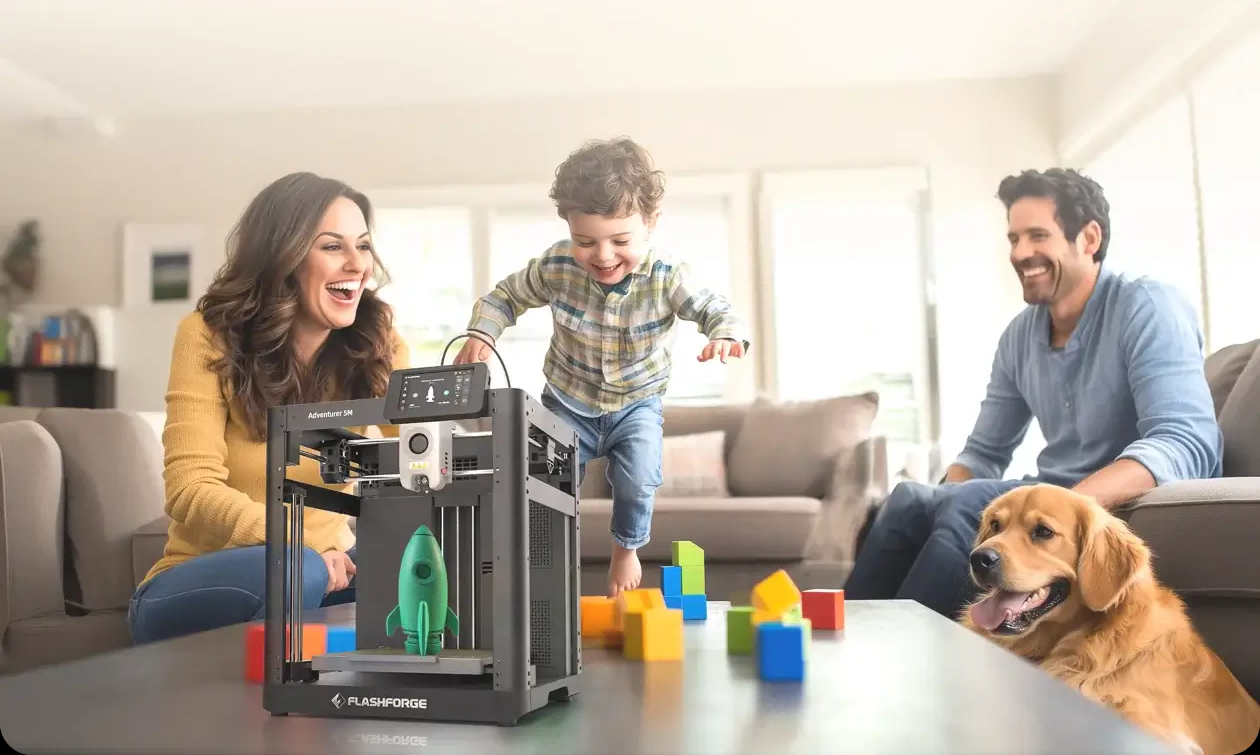
Quelle: Flashforge
Die Geburt der Marke: Vom Technik-Enthusiasten zum globalen Player
Wie bekannt ist, ist Flashforge ein weltweit bekannter 3D-Druckhersteller aus Jinhua, China, der 2011 gegründet wurde. Obwohl das Gründungsteam keinen professionellen Hintergrund hatte, gelang es ihnen dank ihrer Leidenschaft und Beharrlichkeit für Technologie, durch Eigenentwicklung, Zerlegung ausländischer Geräte und Teilnahme an Technologieforen, kostengünstige 3D-Drucker erfolgreich auf den Markt zu bringen.
Seit 2012 richtete Flashforge seinen Blick auf den Überseemarkt und beschleunigte die globale Expansion. Mit dem Preis-Leistungs-Vorteil seiner Produkte gelang der Marke der Eintritt in wichtige Märkte wie Europa und Amerika, die Überseeverkäufe stiegen schnell an und machten bald zwei Drittel des Gesamtumsatzes der Marke aus.
In den folgenden zehn Jahren investierte die Marke kontinuierlich in Forschung und Entwicklung, baute automatisierte Produktionslinien und professionelle Labore auf und verband Produktiterationen eng mit den Marktanforderungen. Durch ständige Innovation und Optimierung festigte sie ihre führende Position auf dem globalen 3D-Druckmarkt und bot globalen Nutzern Produkte und Dienstleistungen, die besser auf ihre Bedürfnisse zugeschnitten sind.
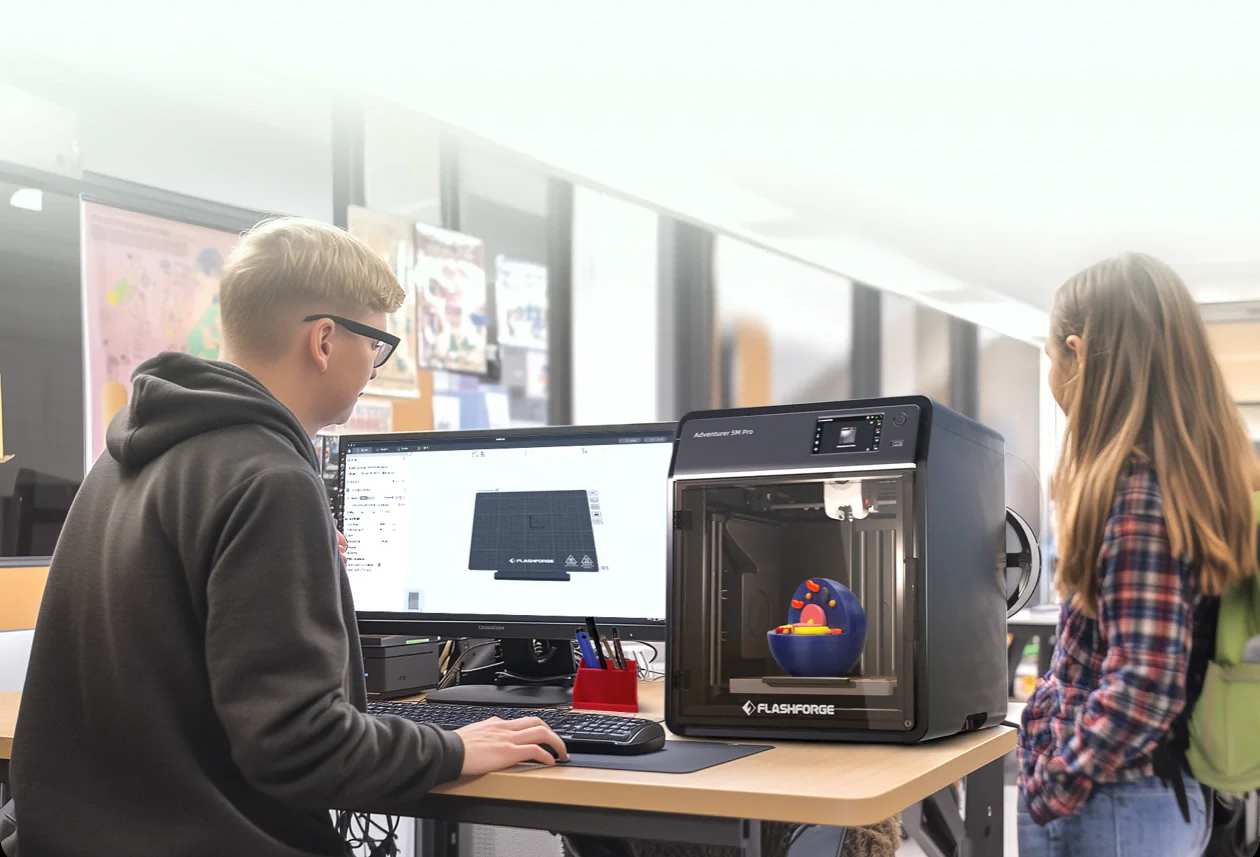
Quelle: Flashforge
Durchbruch durch Produktstärke: Wie Technologie in die Sprache der Nutzer übersetzt wird
Im Bereich des 3D-Drucks sind hohe Präzision und Benutzerfreundlichkeit die Kernanforderungen der Nutzer. Die Lösung von Flashforge besteht darin, durch technologische Innovation die professionelle Hürde zu senken, damit auch Laien problemlos 3D-Druck nutzen können.
Am Beispiel der 2025 veröffentlichten R-Serie: Die integrierte Digital Light Processing (DLP)-Technologie erreicht eine Genauigkeit von ±65 μm, was dem Durchmesser eines Haares entspricht. Der größere Bauraum ermöglicht das gleichzeitige Drucken mehrerer kleiner Teile, und die Vier-Achs-Gantry-Struktur verbessert die Positioniergenauigkeit um 30 %, wodurch die Details selbst erstellter Modelle realistischer werden.
Darüber hinaus macht Flashforge Industrietechnologie für Verbraucher zugänglich, indem über 20 Sensoren den Druckprozess in Echtzeit überwachen und Parameter dynamisch anpassen. Nutzer benötigen keine professionelle Schulung, sondern können das Gerät einfach einstecken und verwenden. Diese Philosophie, „das Komplizierte den Ingenieuren zu überlassen und das Einfache den Nutzern“, hat der Marke schnell einen guten Ruf in der internationalen Geek-Community eingebracht.
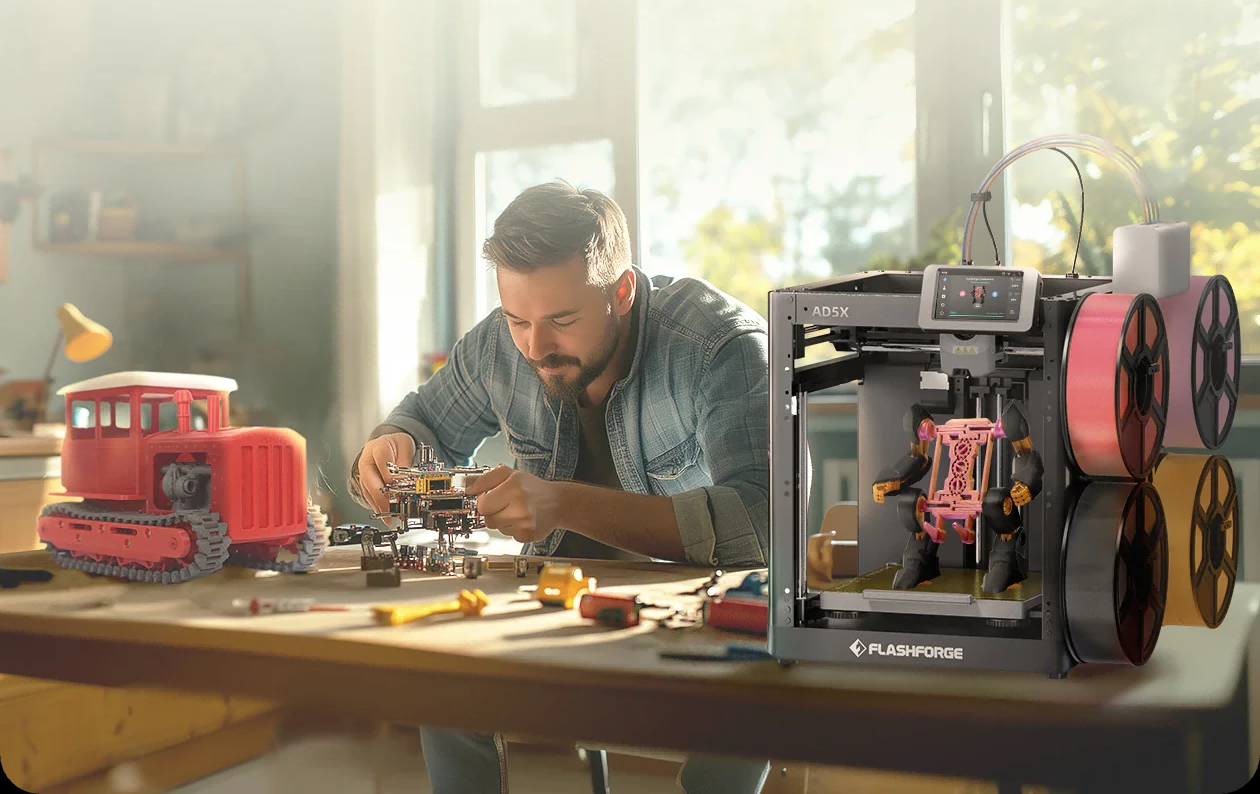
Quelle: Flashforge
Social-Media-Marketing: Mit echten Szenarien globale Nutzer begeistern
Die Überseemarketingstrategie von Flashforge konzentriert sich darauf, „das Produkt für sich selbst sprechen zu lassen“.
1. TikTok: Doppelter Angriff durch Kurzvideos und Live-Streaming
Flashforge nutzt die phänomenale Social-Media-Plattform TikTok als zentralen Kanal, um junge Verbraucher anzusprechen. Bislang hat der offizielle TikTok-Account @flashforge_official 14.100 Follower und 130.100 Likes gesammelt.

Quelle: TikTok
Die auf diesem Account veröffentlichten Inhalte bestehen hauptsächlich aus kreativen Kurzvideos, die die Produktfunktionen demonstrieren. Der Inhalt ist sehr einfach: Durch die intuitivste Bedienung und Nutzungserfahrung wird den Nutzern eine Kernbotschaft vermittelt: Mit dem 3D-Drucker von Flashforge können Nutzer je nach Bedarf problemlos verschiedene Alltagsgegenstände herstellen, wie z. B. Handyhalter, Stressabbau-Spielzeug, Obstmesser, Gürtel, Getränkehalter, Untersetzer, Holzkämme usw.
Diese authentischen und lebensnahen Inhalte helfen der Marke, die Interessen und Bedürfnisse der Nutzer zu treffen, ihnen ein tieferes Verständnis der Produktfunktionen zu vermitteln und so die Aufmerksamkeit potenzieller Nutzer zu gewinnen.
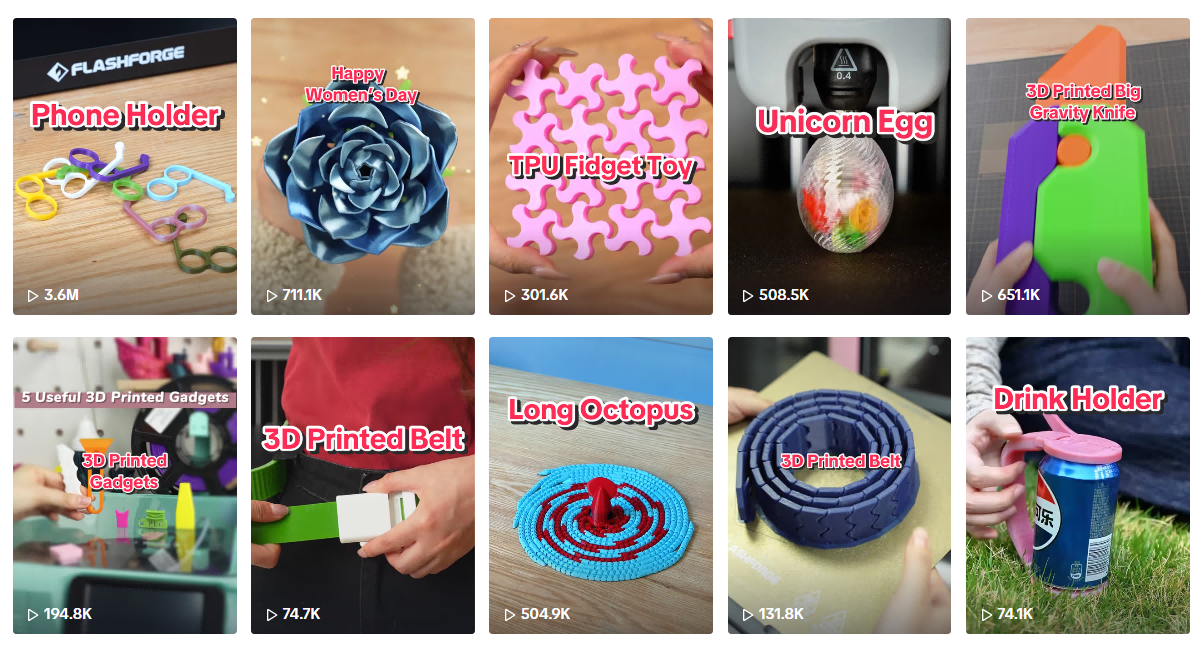
Quelle: TikTok
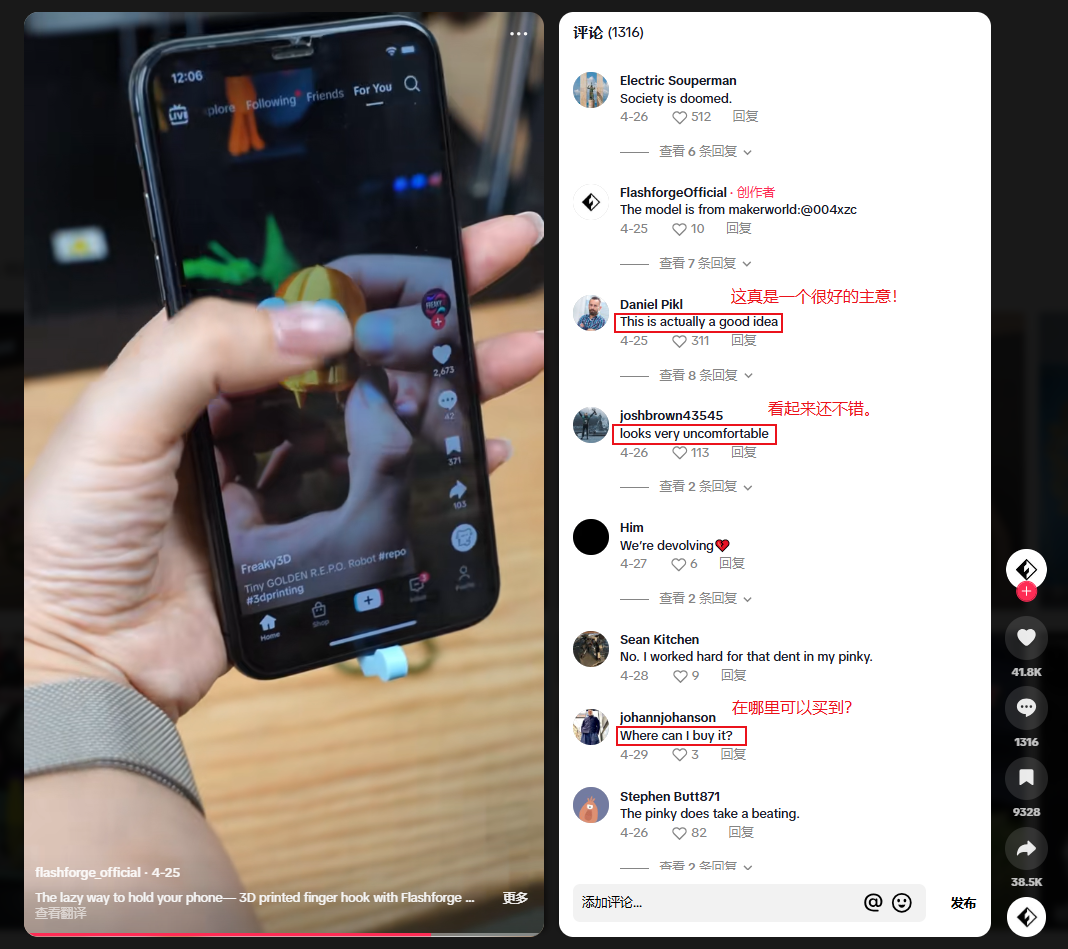
Am Beispiel des Videos mit den meisten Aufrufen auf dem Account: Das Video zeigt einen Verbraucher, der mit einem 3D-Drucker von Flashforge einen praktischen Handyhalter herstellt. Bislang hat es 3,6 Millionen Aufrufe und 41.800 Likes erhalten. Viele Nutzer zeigten Interesse und kommentierten: „Das ist eine wirklich gute Idee!“ „Sieht nicht schlecht aus.“ Auch viele potenzielle Verbraucher wurden erfolgreich angesprochen und fragten direkt: „Wo kann ich das kaufen?“
Quelle: TikTok
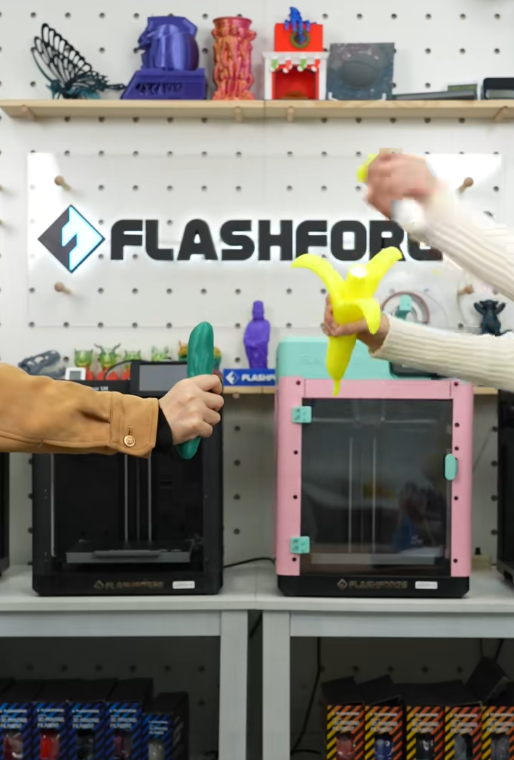
Neben der Gewinnung potenzieller Nutzer durch kreative Kurzvideos nutzt Flashforge auch aktiv Live-Streaming, um die Nähe zu den Verbrauchern weiter zu vertiefen.
Während des Live-Streamings zeigen die Moderatoren den Nutzern detailliert den Herstellungsprozess, die Verwendungsmethoden und kreativen Anwendungen der 3D-Druckprodukte. Gleichzeitig bietet die Marke Anreize wie zeitlich begrenzte Rabatte, Mengenrabatte und Geschenke, um die Kaufbereitschaft der Zuschauer zu steigern.
Diese „Sehen ist Glauben“-Marketingmethode ermöglicht es den Verbrauchern, den praktischen Wert der Produkte direkt zu erleben und stärkt so ihr Vertrauen in den Kauf.
Quelle: TikTok
2. YouTube: Influencer-Bewertungen erschließen die Fach-Community
Auf YouTube arbeitet Flashforge für die anspruchsvollere Geek-Zielgruppe mit Influencern aus den Bereichen 3D-Druck, Lasergravur und Modellbau zusammen. Durch Unboxing-Videos, Testberichte und die Nutzung der Produkte für kreative Projekte wird die Zielgruppe präzise erreicht.
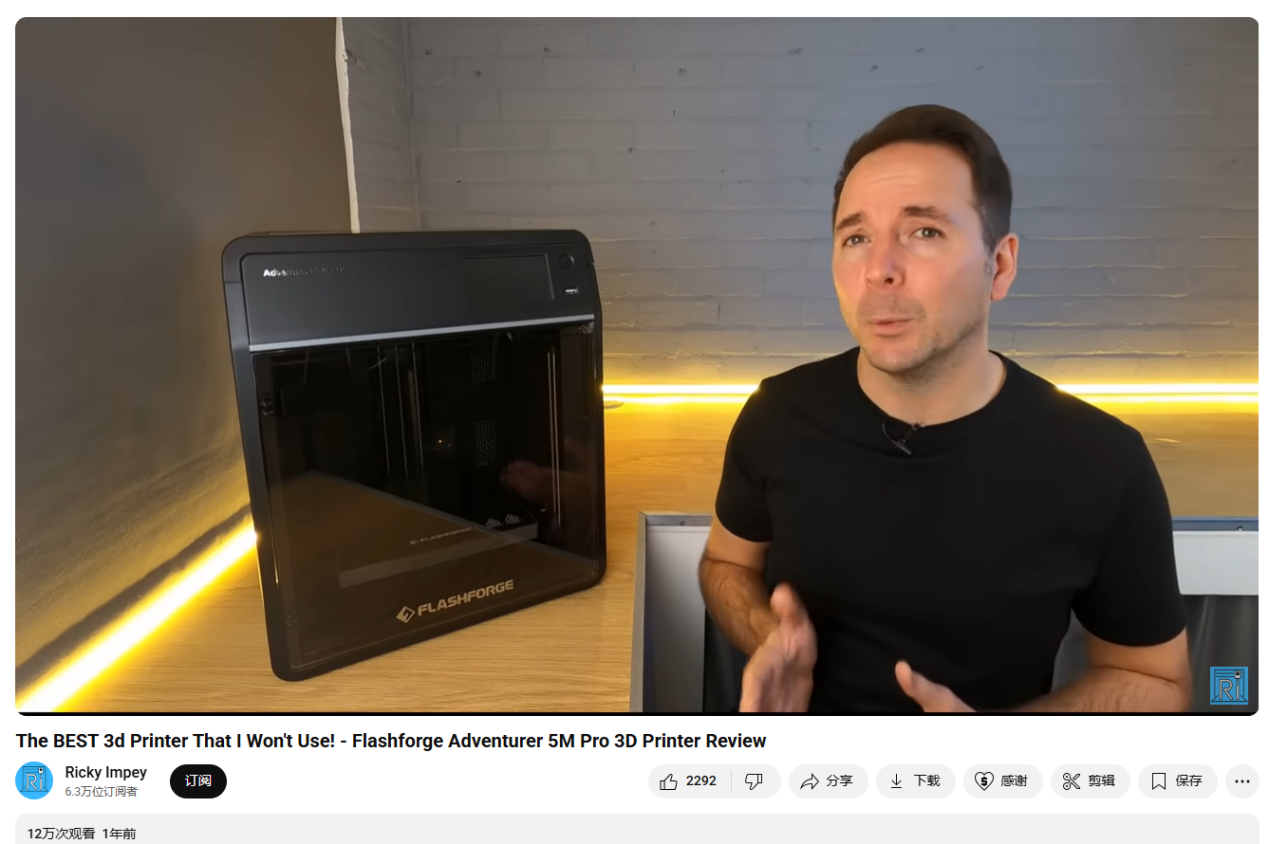
Zum Beispiel arbeitete die Marke mit dem Tech-Blogger Ricky lmpey, der 63.000 Abonnenten hat, zusammen, um ein sehr detailliertes Unboxing- und Testvideo für den 3D-Drucker Flashforge Adventurer 5M Pro zu drehen, das 120.000 Aufrufe erzielte.
Quelle: YouTube
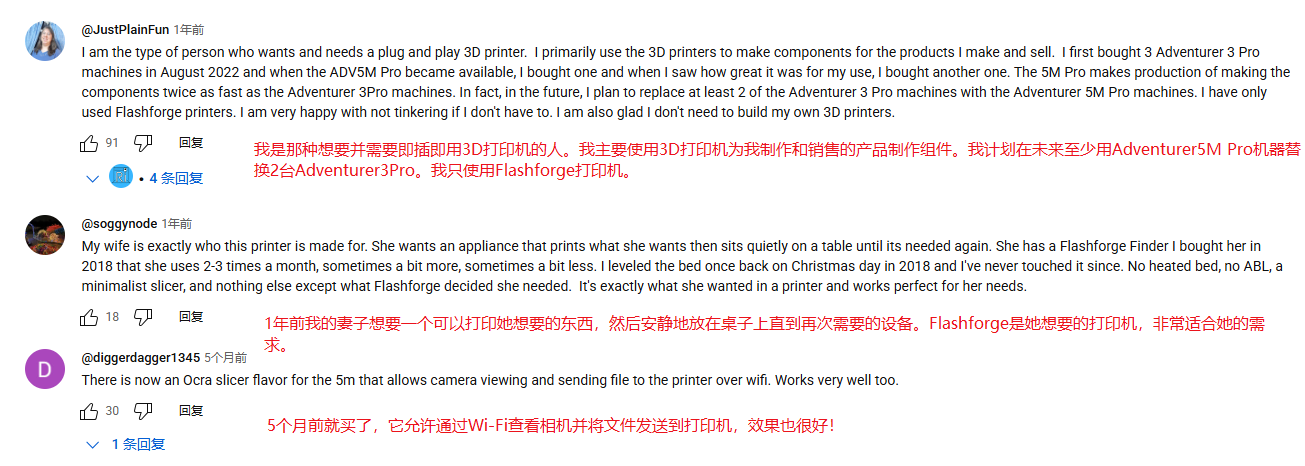
Viele Nutzer hinterließen Kommentare im Video:
„Ich bin der Typ, der einen Plug-and-Play-3D-Drucker will und braucht. Ich verwende 3D-Drucker hauptsächlich, um Komponenten für Produkte herzustellen, die ich herstelle und verkaufe. Ich plane, in Zukunft mindestens 2 Adventurer3 Pro durch Adventurer5M Pro Maschinen zu ersetzen. Ich verwende nur Flashforge-Drucker.“
„Vor einem Jahr wollte meine Frau ein Gerät, das das drucken kann, was sie möchte, und dann leise auf dem Tisch liegen bleibt, bis es wieder gebraucht wird. Flashforge war genau der Drucker, den sie wollte, und er passt perfekt zu ihren Bedürfnissen.“
Sogar ein Nutzer, der das Produkt bereits gekauft und verwendet hat, sagte: „Ich habe es vor 5 Monaten gekauft. Es ermöglicht, die Kamera über Wi-Fi zu sehen und Dateien an den Drucker zu senden, und das funktioniert auch gut!“
Dies zeigt, dass diese Art der Promotion durch Drittanbieter-Influencer die Nutzer eher dazu bringt, das Produkt auszuprobieren und zu kaufen.
Quelle: YouTube
Eigene Website: Von der Abhängigkeit von Plattformen zur Kontrolle des Vertriebswegs
Um sich auf dem Überseemarkt zu etablieren, hat Flashforge eine diversifizierte Vertriebskanalstrategie verfolgt. Neben der aktiven Expansion auf globalen E-Commerce-Plattformen wie Amazon und eBay hat die Marke auch sorgfältig ihre eigene unabhängige Übersee-Website aufgebaut.
Auf der Startseite der eigenen Website präsentiert Flashforge umfangreiche Produktinformationen wie 3D-Druckfarmen, bietet professionelle Whitepaper und umfassende Support-Services. Gleichzeitig werden durch die Darstellung zahlreicher Kundenfallstudien die Leistung und der Wert der Produkte veranschaulicht und durch Vergleiche mit ähnlichen Produkten die eigenen Vorteile hervorgehoben, um die Bedürfnisse der Nutzer präzise zu treffen.
Darüber hinaus bietet die eigene Website der Marke eine zusätzliche Sicherheit. Wenn es auf Drittanbieter-E-Commerce-Plattformen zu Kaufbeschränkungen oder anderen Problemen kommt, können die Nutzer nahtlos auf die eigene Website wechseln, um Bestellungen aufzugeben, was ein reibungsloses Einkaufserlebnis gewährleistet.
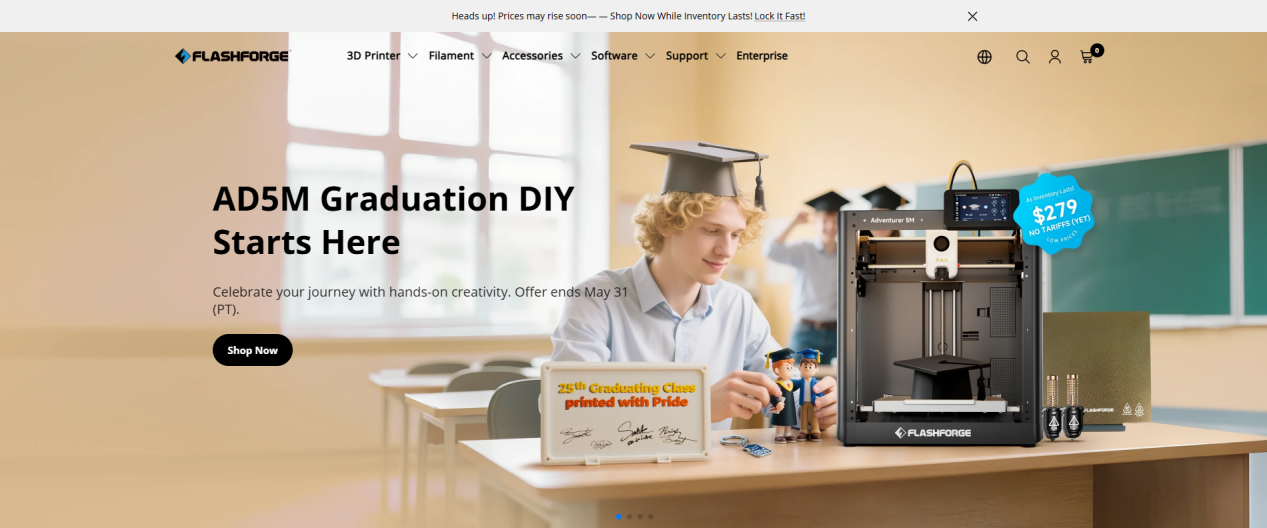
Quelle: Flashforge
Fazit
Die Erfolgsgeschichte von Flashforge auf dem Überseemarkt ist im Kern ein Beweis für pragmatische Innovation. Wenn die chinesische Fertigung nicht mehr im Preiskampf gefangen ist, sondern durch technologische Tiefe und nutzerorientiertes Denken ihre Wettbewerbsfähigkeit neu aufbaut, stehen ihr die Türen zum globalen Markt stets offen.
Für inländische Marken gilt: Anstatt sich im roten Ozean zu verzetteln, sollten sie den Blick auf das breitere Übersee-Schlachtfeld richten. Dieser Weg könnte breiter sein, als man denkt!