 2318
2318Lasergravierer werden in China nicht so häufig genutzt, aber im Ausland sind sie bereits seit langer Zeit beliebt. Immer mehr ausländische Verbraucher beginnen, ihre eigenen DIY-Gegenstände zu gestalten.
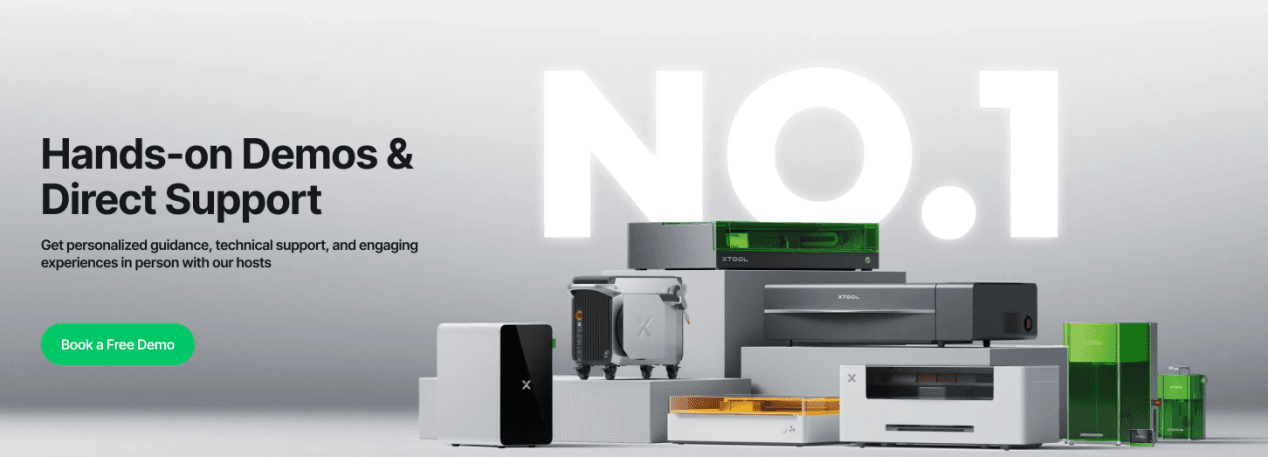
Ein Laserunternehmen namens xTool aus Shenzhen entdeckte, dass dieser Nischenmarkt vielversprechende Entwicklungsmöglichkeiten und Chancen bietet, und wechselte daher vom Bildungssektor zu Lasergravierern für Verbraucher. Heute ist es zum führenden Unternehmen in diesem Marktsegment geworden.
Im Jahr 2023 betrug der Markenumsatz von xTool 1 Milliarde Yuan; im Jahr 2024 verdoppelte sich der Umsatz direkt und überstieg 2 Milliarden Yuan, wobei er bei etwa 2 bis 3 Milliarden Yuan lag.

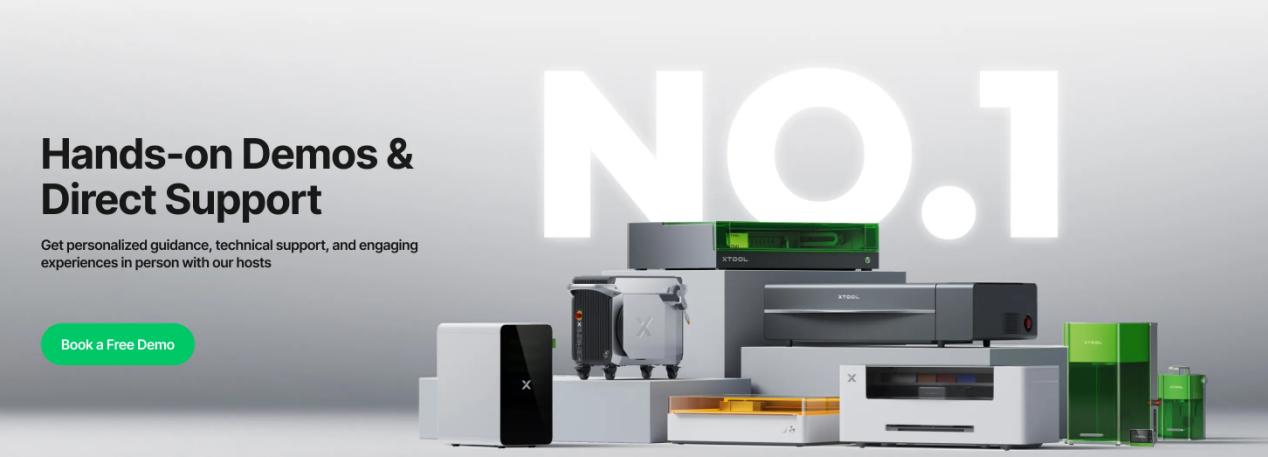
Quelle: xTool
Vom Bildungssektor zur Laserindustrie
Bekanntlich studierte der Gründer der Marke xTool, Herr Wang, Flugzeugdesign. Im Jahr 2013 gründete er die Maker-Werkstatt Makeblock, die sich hauptsächlich auf STEAM-Bildung konzentrierte. Die hergestellten Robotik-Lehrmittel wurden in Grund- und Mittelschulen in über 60 Ländern weltweit verkauft und waren bei den örtlichen Bildungsgemeinschaften sehr beliebt. Das Unternehmen erhielt sogar Finanzierungen von über 1 Milliarde Yuan von Institutionen wie Sequoia China und Shenzhen Capital Group, und die Zukunft sah vielversprechend aus.
Diese Situation hielt jedoch nicht lange an. Nach 2018, aufgrund der Auswirkungen der Pandemie und der „Doppelreduktions“-Politik, veränderte sich die Bildungsbranche erheblich. Makeblock geriet in betriebliche Schwierigkeiten, verlor jährlich über zehn Millionen Yuan und stand vor großen operativen Herausforderungen.
Der Wendepunkt kam im Jahr 2020, als das Team des Gründers bei der Marktanalyse eine neue Chance entdeckte: Die Nachfrage von DIY-Enthusiasten im Ausland nach Lasergraviergeräten wuchs schnell, aber der Markt bot entweder teure Industrieanlagen oder minderwertige Spielzeugprodukte. Verbraucherfreundliche Lasergeräte, die ihren Anforderungen entsprachen, waren kaum zu finden.
Daraufhin änderte Herr Wang die Richtung und gründete 2021 die Marke xTool, die sich auf den Markt für normale Verbraucher konzentrierte. Sie brachten erschwingliche und einfach zu bedienende Lasergeräte auf den Markt und begannen, sich auf den Überseemarkt zu konzentrieren.


Quelle: xTool
TikTok Social-Media-Marketing: Das Produkt für sich sprechen lassen
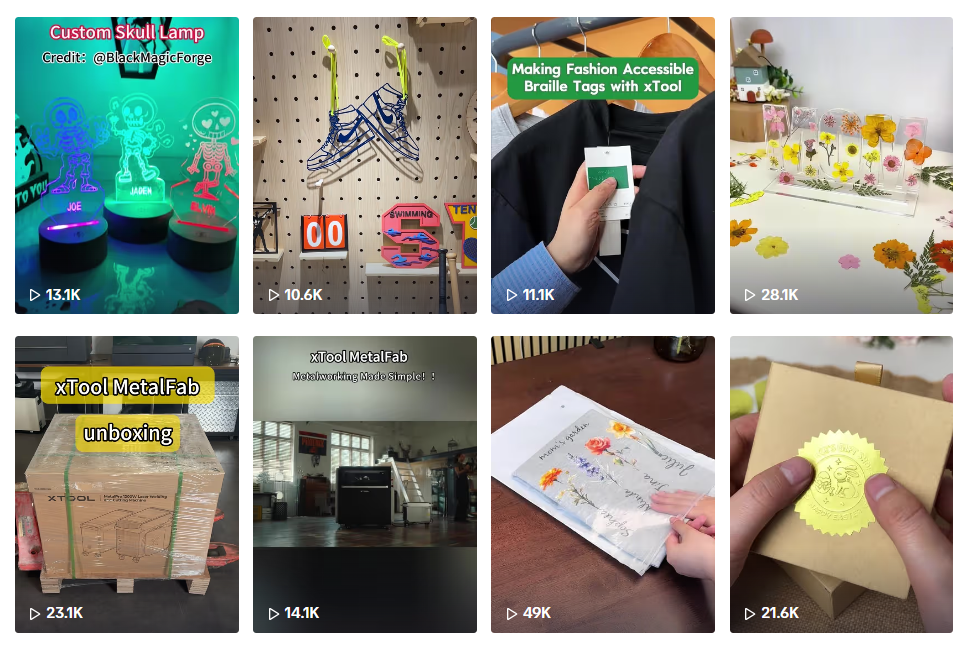
Laserschneidemaschinen sind keine Alltagsgegenstände. Verbraucher müssen in der Regel verstehen, was sie konkret herstellen können, bevor sie sich für einen Kauf entscheiden. Daher setzt die Marke xTool auf der Social-Media-Plattform TikTok nicht direkt auf Werbung, sondern zeigt Videos von Benutzern, die mit der Lasermaschine handwerkliche Arbeiten durchführen, wie das Gravieren von Holz oder die Herstellung von Kunsthandwerk, um die spezifischen Funktionen und Anwendungsergebnisse des Produkts zu demonstrieren und potenzielle Kunden anzuziehen.

Quelle: TikTok
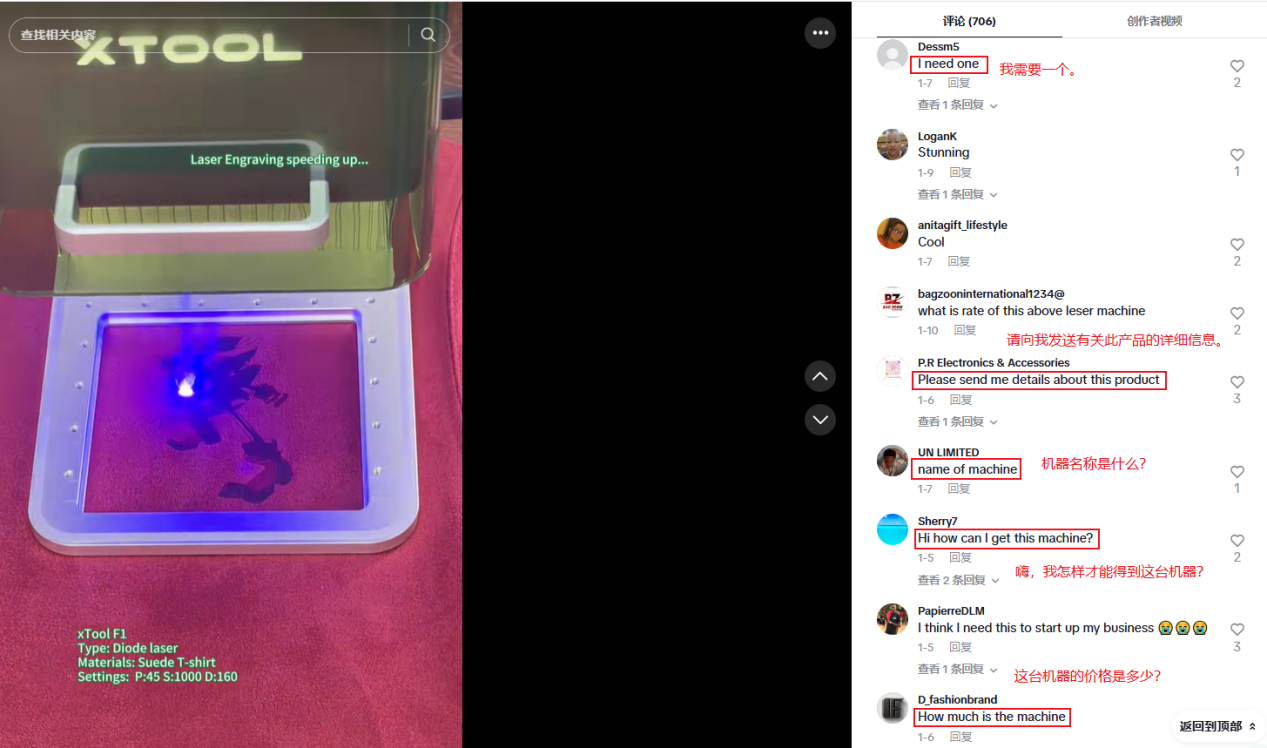
Zum Beispiel erreichte ein Video, in dem ein Benutzer mit der xTool-Lasergravier-Maschine ein selbst entworfenes Muster auf Kleidung erstellte, bereits 2,1 Millionen Aufrufe. Viele Zuschauer äußerten daraufhin Kaufinteresse und hinterließen Kommentare wie:
„Sag mir, wie ich dieses Produkt kaufen kann.“
„Wie heißt die Maschine?“
„Wie kann ich diese Maschine kaufen?“
„Wie viel kostet diese Maschine?“
Solche einfachen, authentischen Inhalte lenkten zweifellos die Aufmerksamkeit vieler Zielkunden auf die Marke und trugen wesentlich dazu bei, Traffic in Verkäufe umzuwandeln.

Quelle: TikTok
Neben der Veröffentlichung vieler alltagsnaher Kurzvideos auf dem offiziellen TikTok-Konto nutzte die Marke xTool auch die Funktion des Live-Shoppings auf TikTok sehr effektiv.
Während der Live-Übertragungen erklärten ihre Moderatoren dem Publikum die Einsatzmöglichkeiten der Lasergeräte, zeigten, wie man sie bedient, und demonstrierten live den Gravurprozess auf Materialien wie Holz und Metall. So konnten die Nutzer die Ergebnisse des Produkts direkter sehen.

Quelle: TikTok
Derzeit hat der TikTok-Account der Marke xTool, @xtoolofficial, bereits 271.700 Follower und 938.200 Likes gesammelt, was die Social-Media-Marketing-Ergebnisse recht beeindruckend macht.


Quelle: TikTok
Eigener Onlineshop: Die Kontrolle über die Kunden behalten
Viele Marken, die ins Ausland gehen, sind auf E-Commerce-Plattformen wie Amazon angewiesen, aber die Marke xTool beschränkte sich nicht auf Drittanbieter-Plattformen und baute frühzeitig einen eigenen Onlineshop auf. Die Vorteile davon sind vielfältig.
Bei der Preisgestaltung auf Amazon müssen die Plattformregeln eingehalten werden, aber im eigenen Onlineshop können Werbeaktionen basierend auf den Gewohnheiten der Verbraucher in verschiedenen Regionen durchgeführt werden. Zum Beispiel bevorzugen europäische Nutzer personalisierte Weihnachtsgeschenkboxen, während amerikanische Universitätsclubs gerne Gruppenrabatte nutzen. Dies bietet mehr Flexibilität bei der Preisgestaltung.
Der eigene Onlineshop ermöglicht auch die direkte Erfassung von Daten wie E-Mail-Adressen und Surfverhalten der Nutzer, was spätere präzise Marketingkampagnen erleichtert. Darüber hinaus kann der eigene Onlineshop mit sozialen Medien und Drittanbieter-Plattformen zu einem Kreislauf verbunden werden. Wenn ein Nutzer ein interessantes Kurzvideo sieht, kann er direkt auf einen Link klicken, um zum eigenen Onlineshop zu gelangen und dort zu kaufen, was den Kaufprozess erheblich vereinfacht.

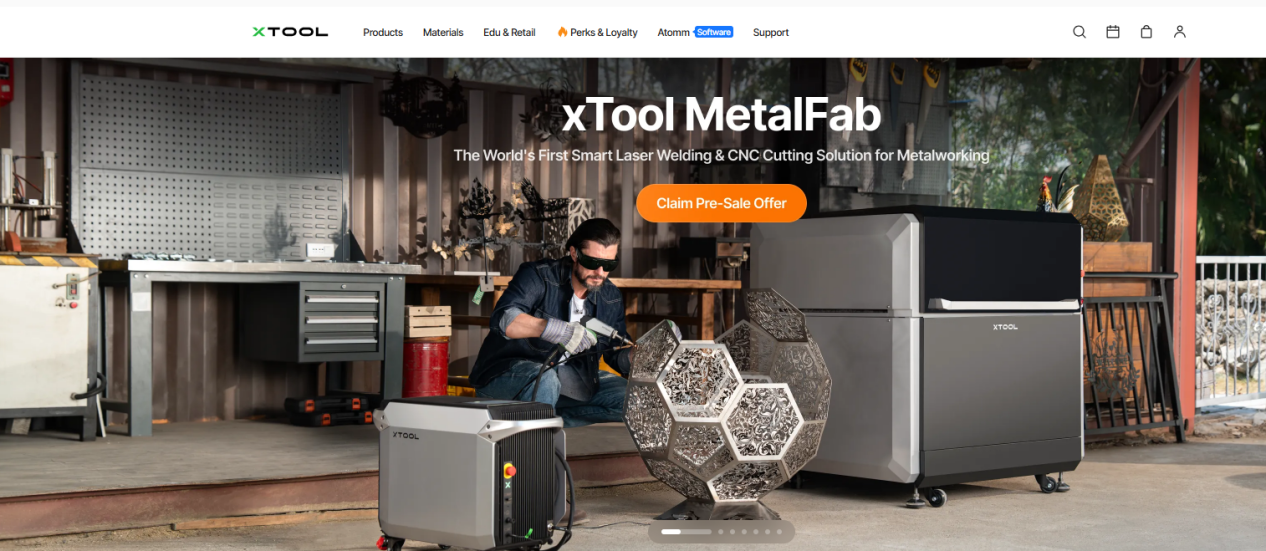
Quelle: xTool
Internationalisierung ist keine Option, sondern eine Methodik
Dem Überseemarkt mangelt es nie an Chancen, sondern nur an dem Mut, es zu versuchen, und der Fähigkeit zur praktischen Umsetzung.
Für inländische Unternehmen, die ebenfalls ins Ausland gehen möchten, zeigt der Weg der Marke xTool, dass chinesische Marken durchaus in der Lage sind, von Nischenmärkten aus durch Produktinnovation und präzise Marktstrategien die Gunst globaler Nutzer zu gewinnen.
Unabhängig von der Branche sind die Chancen der Globalisierung stets vorhanden. Der entscheidende Punkt ist, ob man wie die Marke xTool in der Lage ist, globale Probleme mit lokalem Denken zu lösen und im praktischen Prozess durch wiederholte Versuche den eigenen Weg zu finden.