
 3990
3990War in den letzten Jahren das Schlagwort der chinesischen Content-Branche „Bestandswettbewerb", so suchen 2025 immer mehr Unternehmen nach neuen Wachstumsfeldern, und die Auslandsvermarktung von Kurzserien erweist sich zunehmend als ein erfolgreich getesteter Weg.

Quelle: Internet
Laut dem von Sensor Tower veröffentlichten „2025 Short Drama Overseas Market Insights Report" erleben die Einnahmen und die Nutzerzahlen von Kurzserien-Apps weltweit ein explosionsartiges Wachstum.
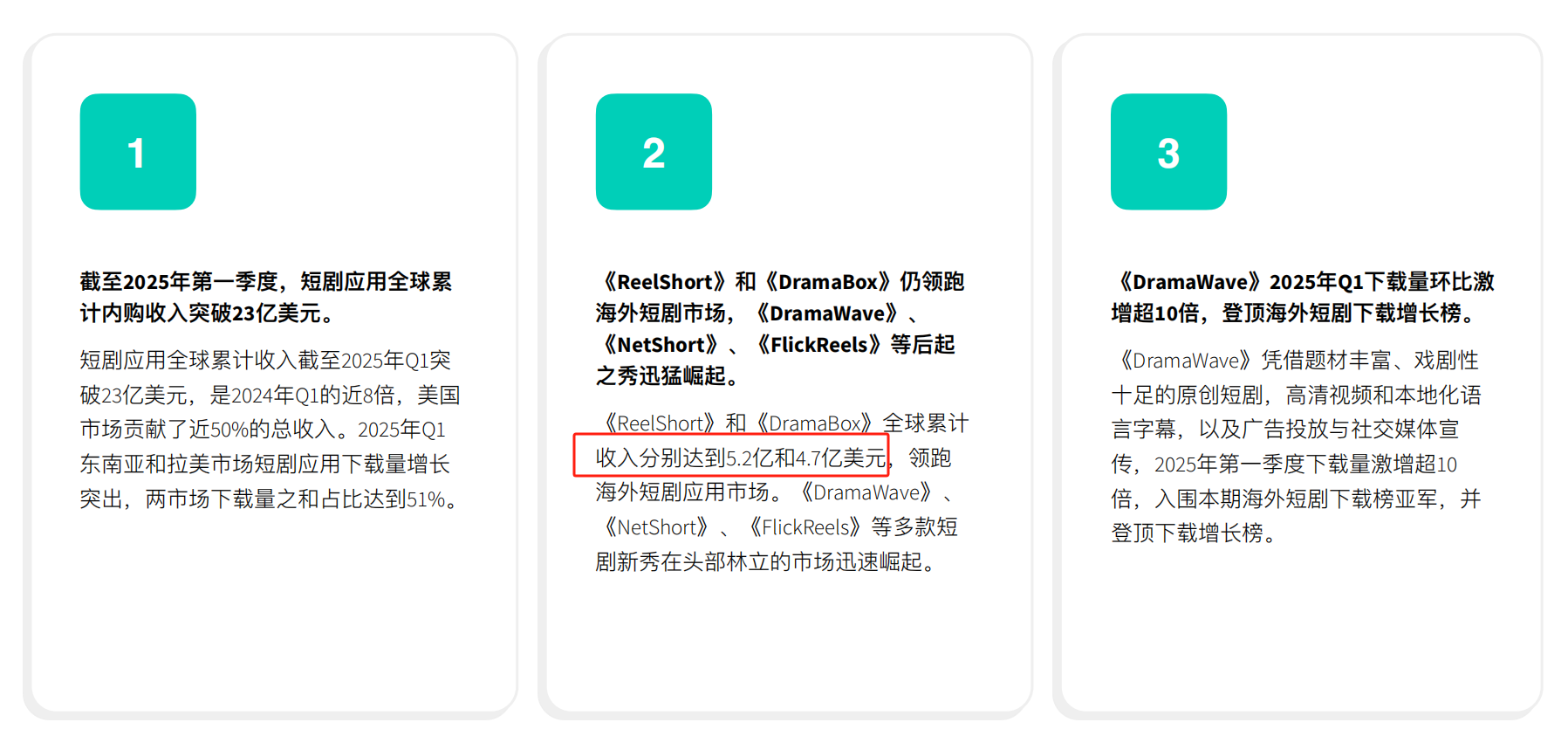
Bis zum ersten Quartal 2025 haben die weltweiten In-App-Käufe von Kurzserien-Apps ein kumuliertes Volumen von 2,3 Milliarden US-Dollar erreicht, allein im Q1 2025 betrugen die Einnahmen 700 Millionen US-Dollar – ein Anstieg um fast das Vierfache gegenüber Q1 2024.
Gleichzeitig stiegen auch die Downloads rasant an: Im Q1 2025 wurden über 370 Millionen Downloads verzeichnet – das 6,2-fache des Vorjahreszeitraums.
Dahinter steckt eine völlig neue Content-Form, die weltweit rasant vordringt und kulturelle, sprachliche und technologische Grenzen überwindet.
Im Gegensatz zu traditionellen Langvideos, die aufwändig produziert, hohe Investitionen erfordern und geringe Veröffentlichungsfrequenzen aufweisen, realisieren Kurzserien-Apps durch hochverdichtete Handlungsstränge, leichtgewichtigere Produktionsformen und klarere Monetarisierungsmodelle die Geschäftslogik von „schnellem Content + schnellem Feedback".

Quelle: Sensor Tower „2025 Short Drama Overseas Market Insights Report"
USA als Monetarisierungsmarkt, Lateinamerika als Traffic-Quelle: Differenzierung der Betriebsstrategien nach Regionen
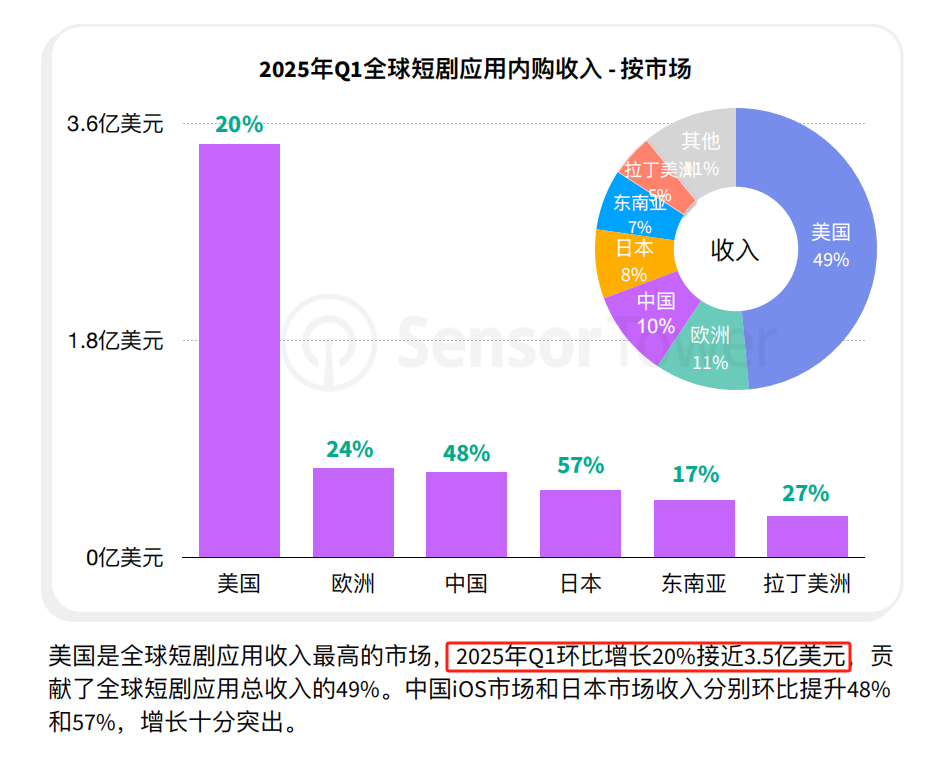
Unter allen Märkten sind die USA derzeit die wichtigste Einnahmequelle für Kurzserien-Apps: Im Q1 2025 betrugen die In-App-Käufe 350 Millionen US-Dollar, was 49 % der weltweiten Gesamteinnahmen entspricht. Das relativ ausgereifte mobile Bezahlumfeld und die Gewohnheit der Nutzer, für Inhalte zu bezahlen, erleichtern Produkten, die in den USA einen erfolgreichen Zahlungsweg etabliert haben, den Zugang zu Kapital und operativer Unterstützung.
In den Märkten Lateinamerika und Südostasien hingegen ist die allgemeine Zahlungsbereitschaft zwar begrenzt, aber die Nutzerzahlen und das Wachstumstempo sind vielversprechend. Der Bericht zeigt, dass die Downloads in Lateinamerika im Q1 2025 gegenüber dem Vorquartal um 69 % und in Südostasien um 61 % gestiegen sind; zusammen machen diese beiden Regionen 51 % der weltweiten Downloads von Kurzserien-Apps aus.
Die App-Anbieter verfolgen in verschiedenen Märkten deutlich unterschiedliche Strategien: In Märkten mit hohem ARPU wie den USA und Japan setzen sie auf VIP-Abonnements, Einmalkäufe und andere hochfrequente IAP-Logiken (In-App-Käufe); in Lateinamerika und Südostasien hingegen verlagert sich der Schwerpunkt auf Werbemonetarisierung und die Aufrechterhaltung einer hohen täglichen aktiven Nutzerzahl. Die modulare Content-Struktur von Kurzserien-Apps bietet ihnen dabei große Anpassungsspielräume.
Quelle: Sensor Tower „2025 Short Drama Overseas Market Insights Report"
Mehrere Apps im Wettbewerb: Erste Kopfstruktur zeichnet sich ab, bleibt aber volatil
Im Q1 2025 bleiben „ReelShort" und „DramaBox" die Spitzenreiter bei den Einnahmen und aktiven Nutzern auf dem internationalen Kurzserien-Markt.
Dabei erzielte ReelShort kumulierte In-App-Käufe von 520 Millionen US-Dollar und DramaBox von 470 Millionen US-Dollar, womit sie unangefochten den ersten und zweiten Platz der Einnahmen-Rangliste belegen. Beide zeichnen sich durch einen frühen Markteintritt, einen stabilen Content-Vorrat und eine inzwischen aufgebaute gewisse Markenbekanntheit bei den Nutzern aus.
Gleichzeitig holen eine Reihe neuer Marktteilnehmer rasch auf. Die Quartalseinnahmen von „FlickReels" stiegen im Jahresvergleich um 375 %, auch „NetShort" und „StardustTV" verzeichneten bemerkenswerte Zuwächse bei Downloads und Einnahmen.
Diese Produkte wurden größtenteils in der zweiten Jahreshälfte 2024 gelauncht, zeichnen sich durch schnelle Produktiterationen und aggressive Werbestrategien aus – klassische Beispiele für „Späteinsteiger, die die Nase vorn haben".
Quelle: Sensor Tower „2025 Short Drama Overseas Market Insights Report"
„DramaWave": Ein standardisiertes Durchbruchsbeispiel
Am Beispiel von „DramaWave": Dieses vom chinesischen Team SKYWORK AI veröffentlichte Produkt hat seit seinem Launch im September 2024 bis Ende April 2025 53 Millionen Downloads und kumulierte In-App-Käufe von 47 Millionen US-Dollar erzielt.
Sein rasantes Wachstum beruht auf zwei Faktoren: Erstens die dramatische Spannung der Inhalte und die Strategie lokalisierter Untertitel; zweitens die zentralisierte Steuerung auf der Werbeseite.
Im Q1 2025 stammten über 73 % seiner Downloads aus bezahlter Akquise, wobei 98 % der Anzeigenauslieferung über die Unity-Plattform erfolgten.
Interessanterweise entfielen 72 % der Gesamt-Downloads von „DramaWave" auf die beiden Schwellenmärkte Südostasien und Lateinamerika.
In diesen Regionen ist die Verbreitung von Android-Geräten hoch, daher stammten 86 % der Downloads vom Android-Betriebssystem. Diese Daten untermauern indirekt, dass Schwellenmärkte zu wichtigen Stützpunkten für mittelschwere Content-Produkte werden.

Quelle: Internet
Soziale Medien und Werbekanäle als neue Hebel für die Expansion
Bei der Vermarktung von Apps setzen Kurzserien-Produkte zunehmend auf soziale Plattformen zur Nutzerdurchdringung. Soziale Medien wie TikTok bieten Kurzserien-Apps einen zusätzlichen Verstärkungseffekt.
Daten von Sensor Tower zeigen, dass die Werbezielgruppe von „DramaWave" in den USA auf TikTok eine doppelt so hohe Anzeigenaktivität aufweist wie die Durchschnittsbevölkerung. Auch führende Produkte wie „DramaBox" und „ReelShort" haben längst eine Millionen-Fan-Basis auf sozialen Plattformen aufgebaut.
Allerdings sind soziale Medien nur ein Teil des Puzzles. Wichtiger bleibt der Abgleich zwischen Inhalten und Werbeaussteuerung.
Laut dem Bericht waren die zehn führenden Kurzserien-Apps im ersten Quartal 2025 allesamt stark werbegetriebene Produkte. Die meisten von ihnen nutzen Werbenetzwerke wie Unity und IronSource, um initialen Traffic zu generieren, und erzielen dann durch gezielte Content-Auswahl eine Bindung und Konversion der Nutzer.

Quelle: Internet
Content-Struktur entwickelt sich zur Plattform: Modell „Serie in der Serie" bietet langfristige Flexibilität
Die Entwicklung von Kurzserien-Produkten verlagert sich von einzelnen Blockbuster-Serien hin zu einer plattformbasierten Content-Betreuung. Plattformen wie „GoodShort" und „ShortMax" haben bereits über ein Dutzend „Serien in der Serie" online, die Nutzer durch horizontales Wischen frei wechseln können.
Der Bericht weist auch darauf hin, dass solche Content-Plattformen häufig Echtzeit-Datenfeedback-Mechanismen einsetzen, um die Inhalte auf der Startseite je nach Klickrate, Sehdauer und Conversion-Rate in verschiedenen Märkten schnell anzupassen.
Dieses System bietet im Vergleich zu traditionellen Film- und Fernsehprodukten eine höhere Reaktionsgeschwindigkeit und eine bessere Anpassungsfähigkeit an lokale Gegebenheiten. In gewisser Weise sind Kurzserien-Produkte nicht mehr nur „Content-Going-Global", sondern nähern sich eher einem „Betriebssystem-Going-Global" an.

Quelle: Internet
Going Global ist kein Endpunkt, sondern eine Herausforderung für systemische Fähigkeiten
Auch wenn die Daten eine beeindruckende Welle der Kurzserien-Auslandsvermarktung zeigen, ist die dahinter liegende Zerbrechlichkeit nicht zu übersehen: Der bisherige Erfolg beruht größtenteils auf stark konzentrierter Nutzerakquise, häufigen Updates und intensivem Betrieb, hat aber noch nicht wirklich die Phase des „Markenaufbaus" erreicht.
Wie man unter verschiedenen kulturellen und rechtlichen Rahmenbedingungen kontinuierlich die Produktvitalität aufbaut und die Nutzerloyalität steigert, wird eine Frage sein, der alle Going-Global-Unternehmen nicht ausweichen können.
Insbesondere vor dem Hintergrund verschärfter globaler Marktregulierung, steigender Werbekosten und zunehmender Inhaltsunterschiede stehen chinesische Kurzserien-Teams vor weit mehr als technischen und werblichen Herausforderungen – es geht darum, ob sie langfristig gesunde Produktstrukturen und Lokalisierungsstrategien entwickeln können.
In Zukunft wird nur der Übergang vom „Blockbuster-Denken" hin zum „Systemaufbau" einen besseren Stand auf dem globalen Markt ermöglichen.