 2312
2312Früher dachten viele bei Saudi-Arabien sofort an das „Königreich des Öls“, einen nahöstlichen Staat mit den größten Ölreserven der Welt und enormem Reichtum.
Doch mit der fortschreitenden Umsetzung der „Vision 2030“ lockert sich dieses traditionelle Bild zunehmend. Weitere nicht-ölbasierte Industrien werden gefördert, und immer mehr ausländische Unternehmen richten ihren Blick auf das Land.
Für chinesische Unternehmen ist Saudi-Arabien derzeit kein neuer Markt, aber einer, der neu verstanden werden muss.
Wenn man vor einigen Jahren nach Saudi-Arabien expandierte, bedeutete das meist, geschäftlich mit Energie zu tun zu haben. Heute hingegen finden Bereiche wie neue Energien, KI, intelligente Fertigung, Elektrofahrzeuge, Gesundheitswesen, Fintech, Bildung und Ausbildung sowie sogar E-Commerce- und Lieferplattformen alle ihren Einstiegspunkt in Saudi-Arabien.
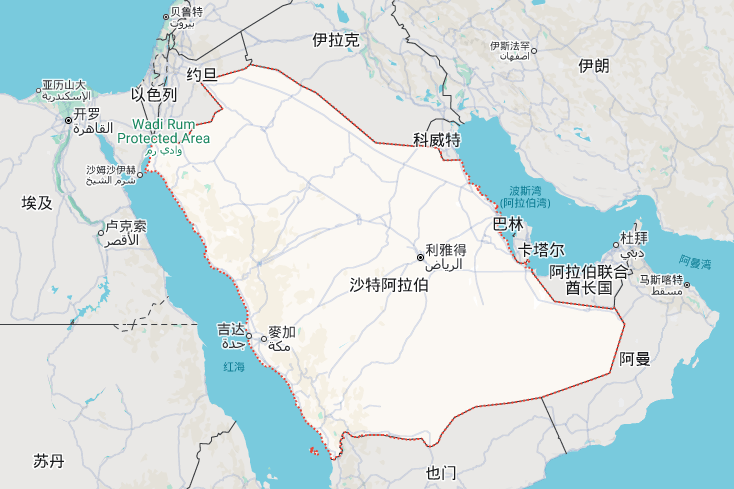
Abbildung: Google Maps
Hinter der Politik der Offenheit steckt ein struktureller Umbau
Aus makropolitischer Sicht reformiert die saudische Regierung den nationalen Wirtschaftsrahmen mit einer Haltung der „offenen Türen“. Maßnahmen wie „100 % ausländisches Eigentum“, „fünfjährige Steuerbefreiung“ und „Vergünstigungen bei Grundstücken und Zöllen“ sind zu Markenzeichen der Investitionsattraktivität Saudi-Arabiens geworden.
Dies ist kein leeres Versprechen: Das saudische Investitionsministerium (MISA) wurde als zentrale Anlaufstelle für die One-Stop-Genehmigung von Investitionsprojekten etabliert. Die Zugangswege für verschiedene Branchen sind klarer geworden: Wer im Finanzsektor tätig sein möchte, muss sich an die SAMA wenden; wer mit Energie zu tun hat, kommuniziert mit dem Energieministerium; die meisten aufstrebenden Industrien können sich direkt an das MISA wenden.
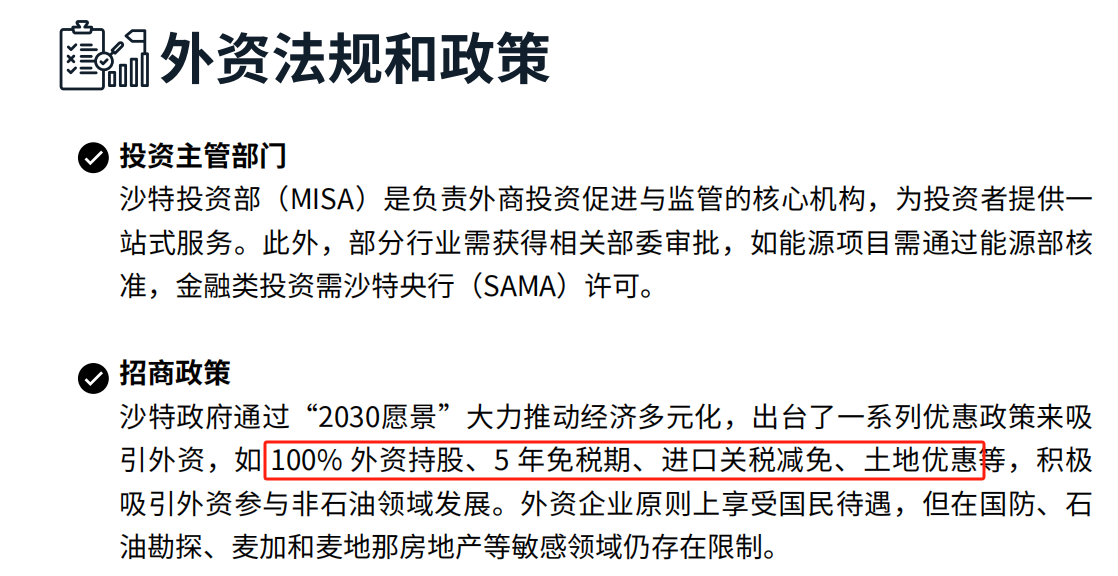
Abbildung: Horizons „2025 Saudi-Arabien-Expansions-Whitepaper“
Compliance ist die erste Hürde beim Markteintritt
Bei der Niederlassung in Saudi-Arabien müssen Unternehmen zwangsläufig eine zentrale Frage klären: Wie gestaltet sich die Compliance bei der Beschäftigung?
Laut Arbeitsrecht gibt es in Saudi-Arabien zwei Arten von Arbeitsverträgen – befristete und unbefristete. Die meisten ausländischen Unternehmen wählen in der Anfangsphase befristete Verträge mit einer maximalen Laufzeit von zwei Jahren, die einmal verlängert werden können. Nach mehr als vier Jahren müssen sie jedoch in unbefristete Verträge umgewandelt werden.
Alle Verträge müssen auf Arabisch verfasst werden, eine englische Version kann beigefügt werden. Gleichzeitig gibt es strenge gesetzliche Vorschriften zu Kündigungsmechanismen während der Vertragslaufzeit, Überstundenbegrenzungen und Gehaltszahlungszyklen.
Diese Details sind nicht kompliziert, aber wenn man sie ignoriert, können im tatsächlichen Betrieb unnötige Compliance-Risiken entstehen.
Obwohl es in Saudi-Arabien keine Einkommensteuer gibt, müssen Arbeitgeber eine Reihe von Kosten übernehmen, darunter Sozialversicherung, Visa und Arbeitserlaubnisse. Insbesondere für ausländische Mitarbeiter können die direkten Beschäftigungskosten pro Person und Jahr bis zu Zehntausende Riyal betragen.
Darüber hinaus müssen Unternehmen, die mehr ausländische als einheimische Mitarbeiter beschäftigen, eine „Ausländerkontingentgebühr“ von 9.600 Riyal pro Person zahlen.
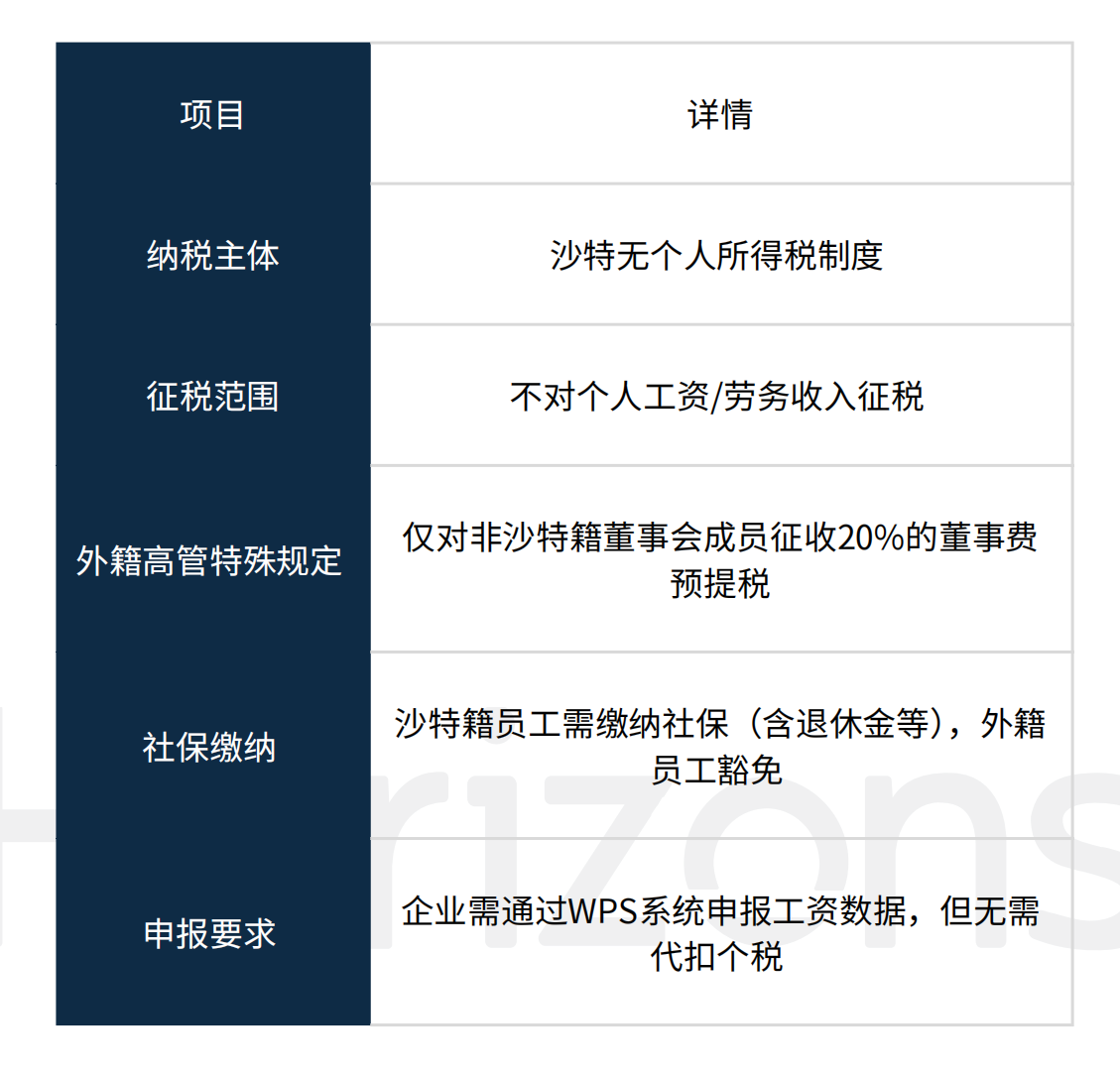
Abbildung: Horizons „2025 Saudi-Arabien-Expansions-Whitepaper“
Kulturelle Anpassungsfähigkeit bestimmt die Stabilität der Organisation
Kulturelle Anpassung ist eine weitere häufig übersehene Herausforderung. Obwohl Saudi-Arabien in den letzten Jahren viele gesellschaftliche Reformen durchgeführt hat – wie die Zulassung von Frauen zum legalen Autofahren und zur Erwerbstätigkeit – ist die Gesellschaft insgesamt weiterhin tief von islamischen Traditionen geprägt.
So müssen Arbeitszeiten beispielsweise Gebetspausen beinhalten; während des Ramadan müssen Regierungsbehörden und Unternehmen zum Fastenbrechen pausieren; und in manchen beruflichen Kontexten ist die Geschlechtertrennung immer noch eine informelle Norm.
Ausländische Mitarbeiter, die diese ungeschriebenen Regeln nicht kennen, können leicht unbeabsichtigt Grenzen überschreiten.
Darüber hinaus gibt es auch bestimmte Gepflogenheiten beim Fotografieren am Arbeitsplatz, bei der Kleidung in Meetings und bei der Hand, mit der man Visitenkarten übergibt.
Wenn also ein chinesisches Unternehmen ein Team in Saudi-Arabien aufbaut, muss nicht nur der HRBP die Vorschriften kennen, sondern das operative Team sollte auch über ein grundlegendes Verständnis und die Fähigkeit verfügen, angemessen mit der lokalen Kultur umzugehen.
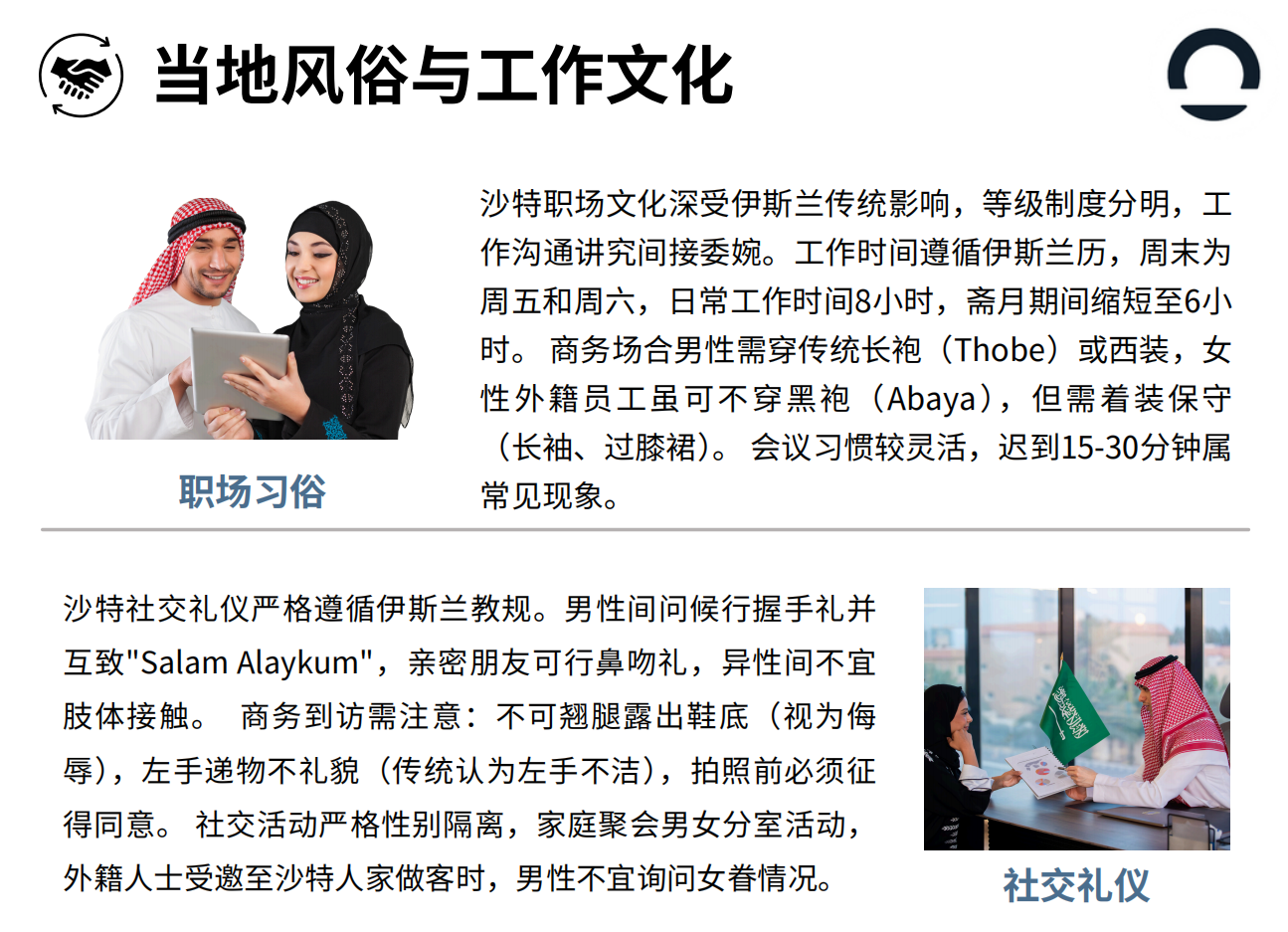
Abbildung: Horizons „2025 Saudi-Arabien-Expansions-Whitepaper“
System für das Mitarbeiterleben: Warten Sie nicht, bis Probleme auftauchen, um es zu beachten
Auch auf der Ebene des Lebens gibt es einige praktische Hürden. Beispielsweise sind Zahlungssysteme wie Mada-Karte, Apple Pay und STC Pay zwar bereits weit verbreitet, aber für neu eingereiste Mitarbeiter ist die Beantragung einer lokalen Bankkarte, die Einrichtung einer Handynummer und die Erlangung des Iqama-Aufenthaltsstatus weiterhin ein komplexer und aufwändiger Prozess mit vielen Überprüfungsschritten.
All diese Dienstleistungen basieren wiederum auf der Voraussetzung, dass das Verhältnis zwischen Mitarbeiter und Arbeitgeber legal und konform ist, die Unterlagen vollständig und die Informationen einheitlich sind.
Nach saudischem Recht müssen Unternehmen für ihre ausländischen Mitarbeiter eine Krankenversicherung abschließen, mit einer Mindestdeckungssumme von 100.000 Saudi-Riyal. Die Basisvariante deckt nur staatliche Krankenhäuser ab; mittlere und gehobene Policen umfassen auch private Kliniken und Notfallversorgung.
Staatliche Krankenhäuser sind zwar kostengünstig, haben aber oft längere Wartezeiten. Wenn ein Unternehmen Mitarbeiter für längere Zeit nach Saudi-Arabien entsendet, empfiehlt es sich, bereits vor Dienstantritt die passende Versicherungsstufe und eine Liste empfohlener Krankenhäuser festzulegen, um in Notfällen nicht unvorbereitet zu sein.
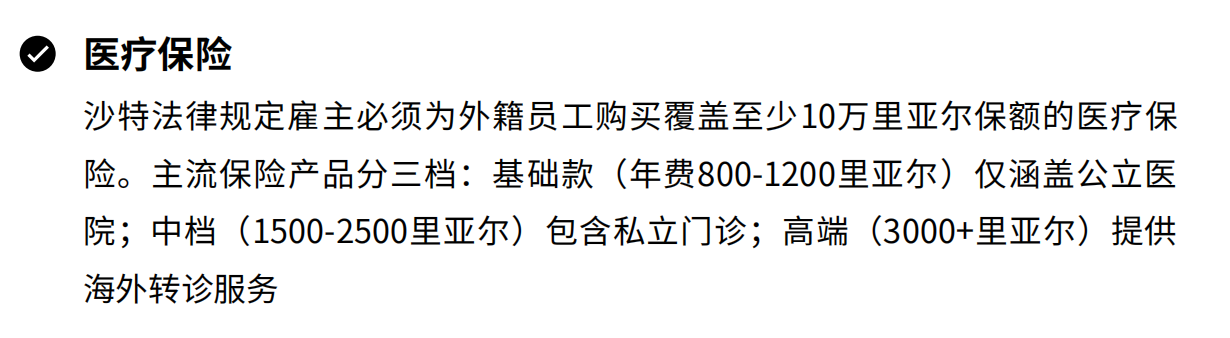
Abbildung: Horizons „2025 Saudi-Arabien-Expansions-Whitepaper“
Was den städtischen Verkehr betrifft, sind Uber und Careem (lokale Ride-Hailing-Plattform) bereits weit verbreitet. Allerdings müssen weibliche Mitarbeiter bei Fahrten in manchen Regionen kulturelle Sensibilitäten berücksichtigen. Der kürzlich von Careem eingeführte „Frauenfahrer-Service“ wird von vielen Unternehmen als erste Wahl für ausländische Mitarbeiterinnen empfohlen.
Darüber hinaus gilt zwar in Saudi-Arabien Rechtsverkehr und die Straßen sind breit, aber die Fahrweise der Einheimischen ist oft aggressiv. Hinzu kommen häufige Sandstürme. Daher empfehlen Unternehmen neuen Mitarbeitern, zumindest anfangs das Selbstfahren zu vermeiden und sich auf professionelle Fahrer oder Ride-Hailing-Dienste zu verlassen.

Abbildung: Horizons „2025 Saudi-Arabien-Expansions-Whitepaper“
Saudi-Arabien ist eine Marktkarte, die man „lesen“ muss
Insgesamt ist Saudi-Arabien ein Markt, der sowohl Herausforderungen als auch enormes Potenzial bietet.
Es ist nicht so „vertraut“ wie Südostasien und auch nicht so „institutionalisiert“ wie die Märkte in Europa oder den USA. Aber es bietet politischen Spielraum, demografische Dividenden und einen echten Bedarf an industriellem Wandel.
Ob man hier Fuß fassen kann, hängt oft weniger von der Marketingfähigkeit ab, sondern von einem tiefen Verständnis und der Fähigkeit, die Dimensionen Mensch, Kultur, Politik, Compliance und Leben zu koordinieren.
Zukünftige Unternehmen, die ins Ausland expandieren, exportieren nicht nur Produkte und Kapital, sondern auch eine umfassende Anpassungsfähigkeit. Entscheidend ist die Fähigkeit, die Resilienz und Effizienz des Unternehmens im fremden institutionellen, kulturellen und gesellschaftlichen Kontext zu bewahren.