2014
2014As the global e-commerce landscape continues to evolve,Tuke Shop, as an emerging force, is reshaping the cross-border trade chain with innovative steps.
Recently,Tuke Shop officially opened European logistics fulfillment services to Asian sellers, and established local warehouses in Germany, France, Italy, and Spain, marking a brand new stage in its European strategy.

Image source:Google
Strategic Layout: Building a New Fulfillment Foundation with European Warehousing Network
The core of Tuke Shop's logistics layout in Europe is the establishment of a localized fulfillment warehouse network in four key markets: Germany, France, Italy, and Spain. The main function of this network is to realize the shift to a “fulfilled by Tuke” model.
In the past, Asian sellers selling to European consumers often had to handle a series of complex issues themselves, such as international logistics, customs clearance, last-mile delivery, and after-sales returns, resulting in high costs, long lead times, and difficulty ensuring a good experience.
Now, merchants only need to send their inventory in advance tothe designated European local warehouses of Tuke Shop, and subsequent warehousing management, order sorting and packaging, “last mile delivery,” and even consumer returns processing will be fully handled by the platform.
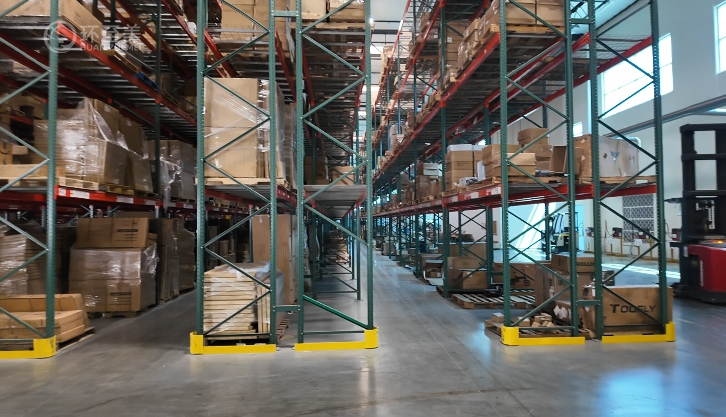
Image source:Google
The advantages of this model are obvious. For consumers, delivery speed will be greatly improved, the shopping experience will be closer to local e-commerce, and returns and exchanges will be more convenient, directly boosting consumer confidence and satisfaction.
ForTuke Shop itself, centralized control of the logistics process helps optimize the efficiency of the entire chain, ensures unified service standards, and accumulates valuable local operational data, laying the foundation for refined operations in the future.
This is not only an improvement of infrastructure, but also a key step for the platform to deepen local operations and enhance overall competitiveness in the European market.
Empowering Sellers: Dual Benefits of Cost Reduction, Efficiency Increase, and Marketing Upgrade
For Asian sellers eager to expand into the European market, the launch of this new service is undoubtedly a strong tailwind.
It significantly lowers the threshold and complexity of cross-border operations. Sellers no longer need to build their own warehouses in Europe or deal with multiple local logistics providers, allowing them to focus more on core business areas such as product development, supply chain optimization, and market insights.
With the platform responsible for logistics fulfillment, the stability and reliability of delivery times are also enhanced, helping to reduce negative reviews and disputes caused by logistics issues, and improving store reputation.
More importantly, this service goes beyond pure logistics and cleverly integrates withTuke's core advantage—its content ecosystem.
The platform will assist Asian sellers in connecting with European local content creators,MCN agencies, and other marketing resources. Sellers can send samples directly from European local warehouses to these influencers, making collaborative promotion more efficient and authentic.
This combination of pre-positioned inventory+ localized content marketing enables sellers not only to sell faster, but also more accurately, effectively reaching target customers and building brand influence.

Image source:Google
Seller Response Strategies
Faced with this new opportunity, Asian sellers also need to actively adjust their strategies to maximize the benefits.
First, sellers need to reassess their product selection strategies, combining the consumption preferences and regulatory standards (such asCE certification, GDPR, etc.) of the four European countries to optimize their product structure.
Second, they should make full use of the local marketing matching services provided by the platform, actively learn and integrate into European content marketing practices, and establish long-term win-win partnerships with local creators.
Furthermore, although logistics is handled by the platform, sellers still need to closely monitor inventory management and data feedback, use platform data tools to accurately forecast demand, avoid out-of-stock or slow-moving items, and achieve agile supply chain response.
Image source:Google
Conclusion
In summary,Tuke Shop's opening of European logistics services to Asian sellers is a precise strategic extension based on its own advantages.
By strengthening logistics infrastructure and empowering the content ecosystem, it creates real value for sellers and injects strong momentum into the platform’s global expansion.
As cross-border e-commerce moves toward refined operations, this move will undoubtedly drive the entire industry toward greater efficiency, integration, and localization.