 41
How many units can a small food processor sell overseas?
On TikTok Shop in Indonesia, a 600ml food processor from the SAMONO brand has achieved cumulative sales of 68,300 units. This is just one of the brand's many products.
In the first half of 2026, the brand's revenue more than doubled year on year. Its share of the own-brand revenue of parent company Wook rose from less than 5% three years ago to 21.6%, with a gross margin of 46.8%, making it the No. 1 contributor to raising overall gross profit.
Today, let's talk about the story of SAMONO.
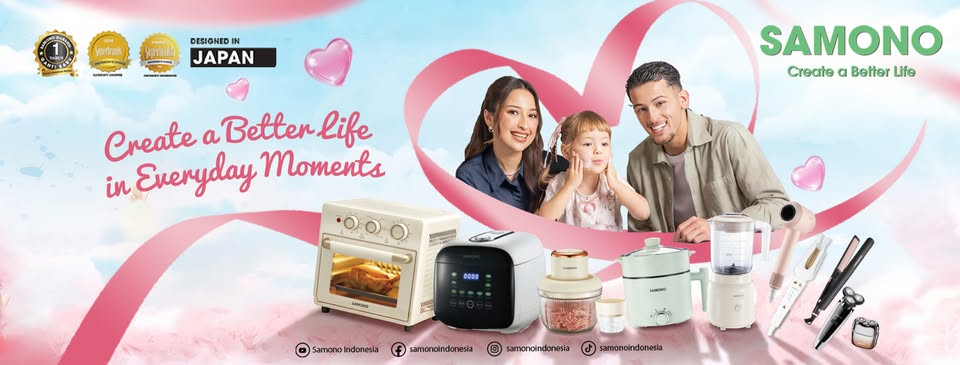
Image source: Facebook
Who is Samono: A 'supporting role' that grew into the protagonist
First, a brief introduction.
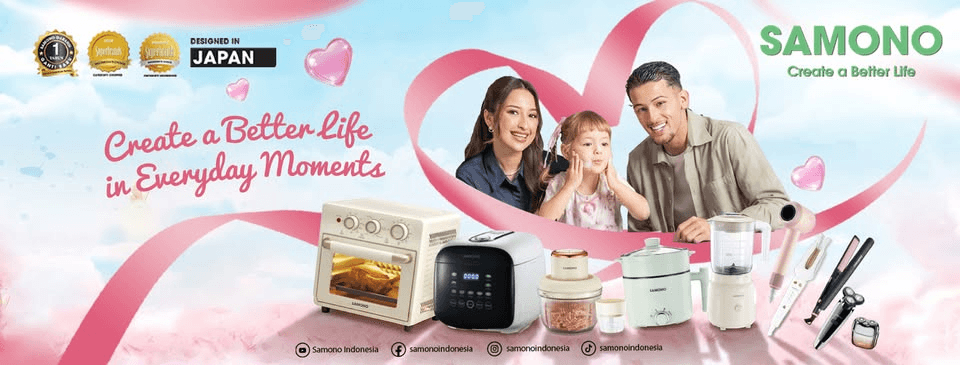
SAMONO is one of Wook's own brands that has been refined in the Indonesian market for several years. Its positioning is very clear: small kitchen appliances, categories such as choppers, ovens, and air fryers.
The name is taken from the Japanese word 'さいこうもの' (saikou mono), meaning 'high-quality item', targeting the consumer mindset of Indonesia's younger generation, who want 'a bit of lifestyle quality on a small budget'.
Image source: wook
In May 2021, SAMONO officially entered the Indonesian market, initially focusing on small kitchen appliances.
According to a March 2023 report by Indonesian tech media Trendtech, two years after SAMONO entered the Indonesian market, cumulative sales had reached hundreds of thousands of units, and the brand's growth rate reached 200%.
In 2024, SAMONO won the Superbrands-certified chopper category award and, together with two other brands under the parent company, received 'Super Brand' level recognition.
Of course, the brand's development achievements go far beyond these. What we can see is that Samono is no longer just a supporting role in the Wook system; it is becoming a new leading player supporting growth.
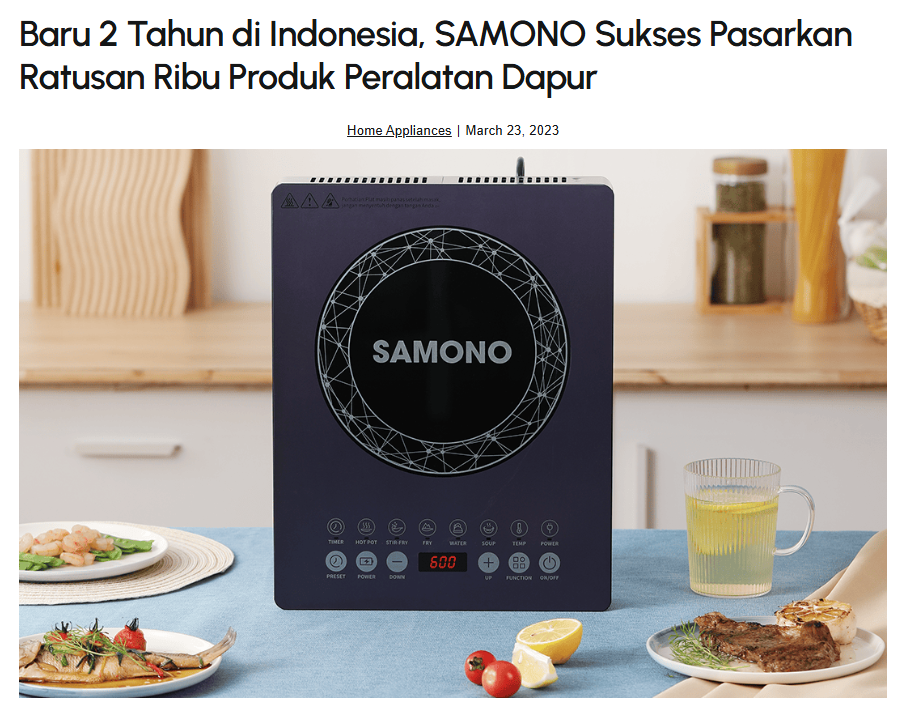
Image source: Trendtech
Behind the 22.46 million units sold, is TikTokmulti-category business
According to Wook's prospectus, its small home appliance brand SAMONO achieved cumulative revenue of approximately RMB 457 million from 2023 to the first half of 2026.
The latest FastMoss store data also shows that the store currently has 874 products on sale, with a historical product count of 1,452, ranking 5th in the home appliance category.
What is most noteworthy about this set of data is not how well a single product sells, but that SAMONO has already formed a fairly rich product matrix.
After all, home appliances are not like daily consumables such as snacks and tissues; to keep generating sales, relying on a single hit product is clearly not enough.
SAMONO's approach is to continuously expand its products around family life.
Among them, the food processor is a product worth watching.
Taking the SAMONO SW-MC600 600ml food processor as an example, the data shows that,the cumulative sales of this product reached6.8310,000 units, with 2,811 associated promotion creators and 6,982 sales videos。
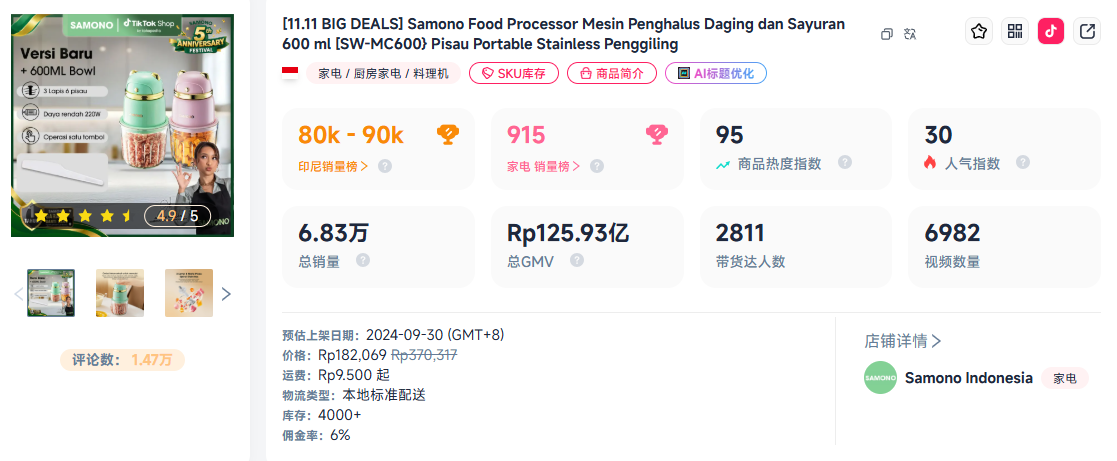
Image source: FastMoss
The characteristics of this type of product are that its functions are not complicated, but its usage scenarios are very clear. Cutting meat, chopping vegetables, making minced meat, and preparing baby food can almost all become content display materials for it.
This also provides convenience for its spread on TikTok.
Short videos contribute 71% of sales, and creator distribution has become an important boost
From the FastMoss store overview, SAMONO has accumulated 185,100 sales videos, 176,300 sales livestreams, and 39,600 creators participating in sales.
This is not a small-scale content attempt, but a fairly large content supply network.
Further breaking down specific products, clearer operational characteristics can be seen.
For example, in the transaction sources of the SW-MC600 food processor, the creator alliance contributes 48%, the store account contributes 34%, and product cards contribute 18%.
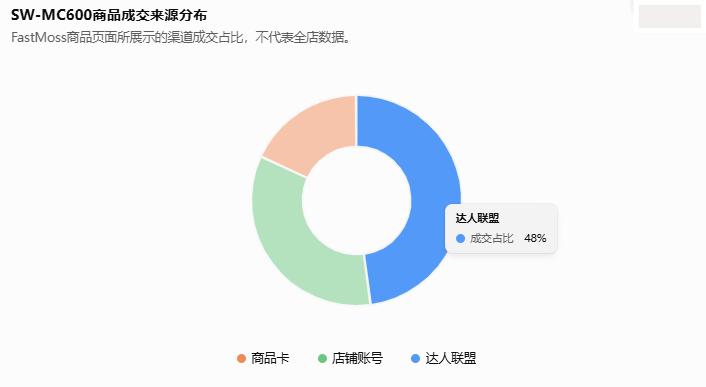
In other words, nearly half of the transactions for this product come from creator promotion.
This shows that SAMONO has not put sales entirely on official accounts, but uses third-party creators to bring products to more consumers.
For small kitchen appliances, this approach has certain advantages.
The same food processor, in the hands of different creators, can present completely different usage scenarios.
For example, @r.andianii's video leans more toward maternal and baby lifestyle scenarios. She connects the food processor with baby food preparation, and through processing fruit ingredients and displaying finished products, integrates the product into daily parenting life.
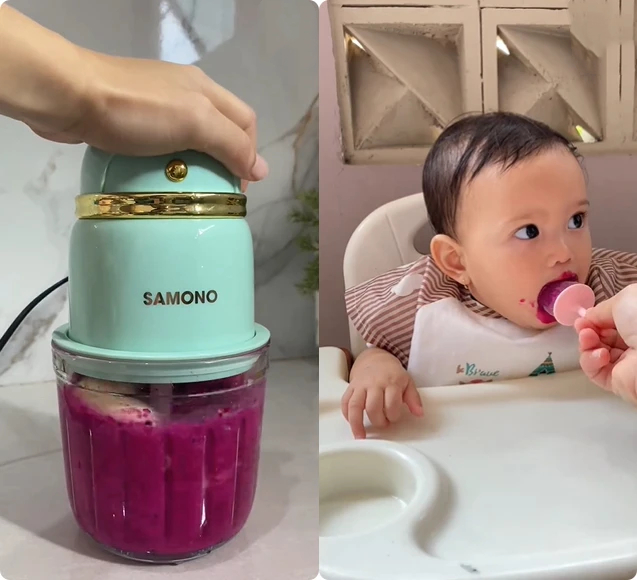
Image source: TikTok
And @yuyun_apriani focuses more on product display and practical reviews. From unboxing and accessory display to blade structure and machine power introduction, the entire video revolves around product functions, allowing consumers to intuitively understand its operation method and usage effects.
One starts from family parenting needs, and the other starts from product functions and usage experience. Two different forms of content expression also allow the same food processor to reach different consumption scenarios.
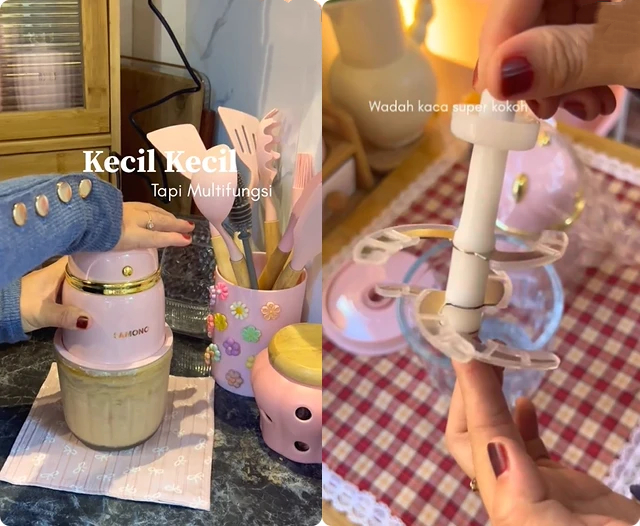
Image source: TikTok
At the same time, SAMONO has not simply chased big influencers in its creator selection.
Taking a 250ml portable food processor as an example, among the 3,242 associated creators shown by FastMoss, there are 2,440 creators with follower counts below 5k, accounting for about 7.32%; there are 289 creators with follower counts between 10k-5k, accounting for about 9.04%.
For small appliances, this promotion method can help brands reach more different types of potential consumers.
Of course, a large number of creators does not mean every creator can bring transactions.
What brands really need to focus on is still whether the creator's content matches the product, and whether the video can clearly explain the product's value in use.
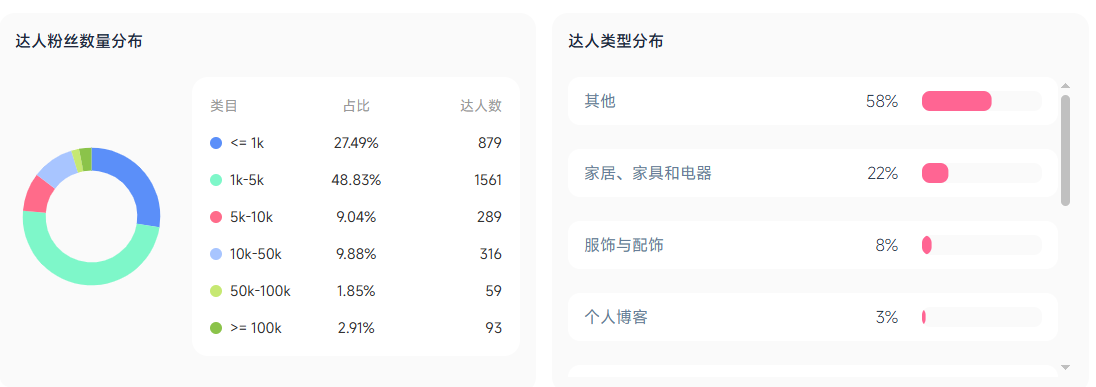
Image source: FastMoss
What else can cross-border brands see?
In SAMONO's case, what is worth noting is not just how many sales it achieved on TikTok Shop, but more importantly how it combined products, channels, and content.
For Chinese brands that want to enter the Southeast Asian market, this point is especially worth considering.
Going overseas has never been just about listing products on overseas platforms and then waiting for traffic to come knocking. Products must meet local needs, content must be understandable to local consumers, and channels must be able to handle actual purchases.
SAMONO's experience at least shows one thing: when the product matrix, creator content, and sales channels can work together, TikTok is not just a window for displaying products; it can also become an important base for brands to sustainably operate in overseas markets.