 2176
2176Many sellers of 3C products in TikTok US are troubled by the same thing this year: Can magnetic charging banks still be made? Anker holds the high-end market, while Huaqiangbei white-label products are priced at $9.99 with free shipping. The mid-range seems to have no way out. High-end has brand barriers, low-end has price competition, and brands stuck in the middle seem to be in a dilemma.
But one overseas brand, XMWUS, has "killed" it here.
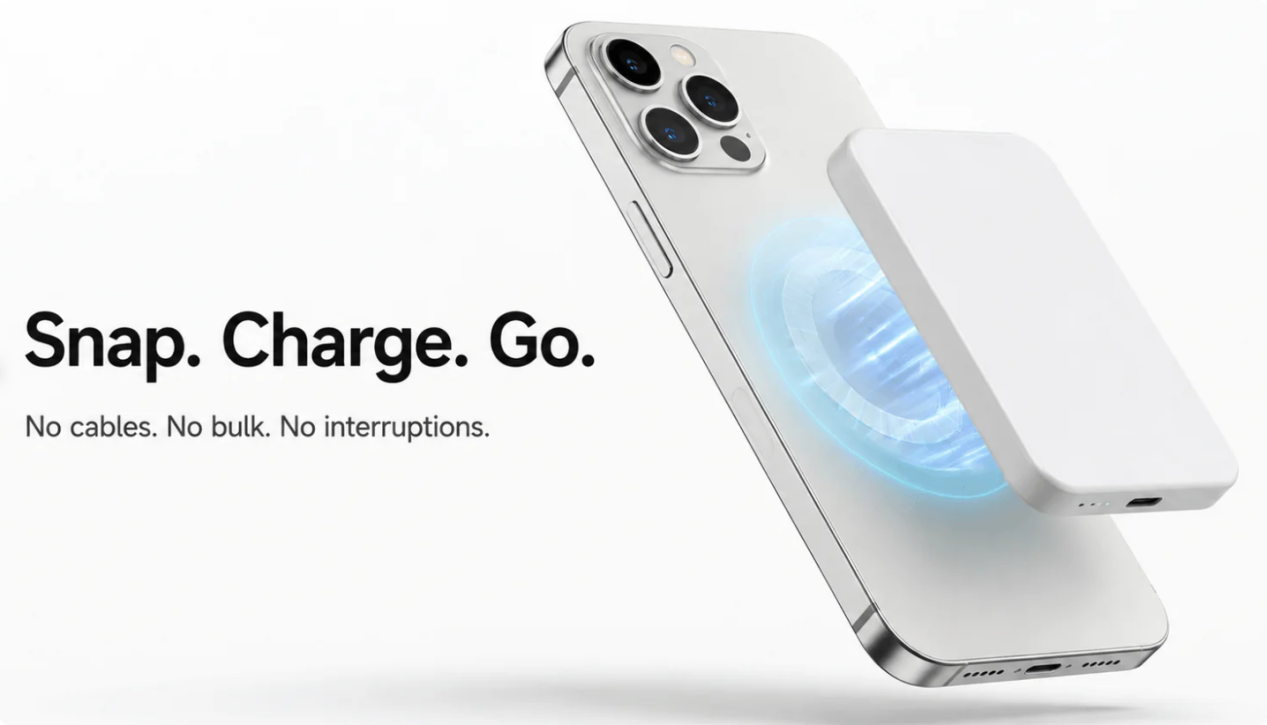
Image source: XMWUS
According to third-party platform statistics, XMWUS successfully topped the relevant sub-category ranking on TikTok Shop. Its core hit product "5000mAh magnetic power bank" sold over 301,600 units in about half a year after launching on TikTok Shop US, with total GMV of the single product reaching $3.4237 million.
In the fiercely competitive 3C accessories track, a relatively young brand achieving such numbers is indeed worth taking apart and analyzing.
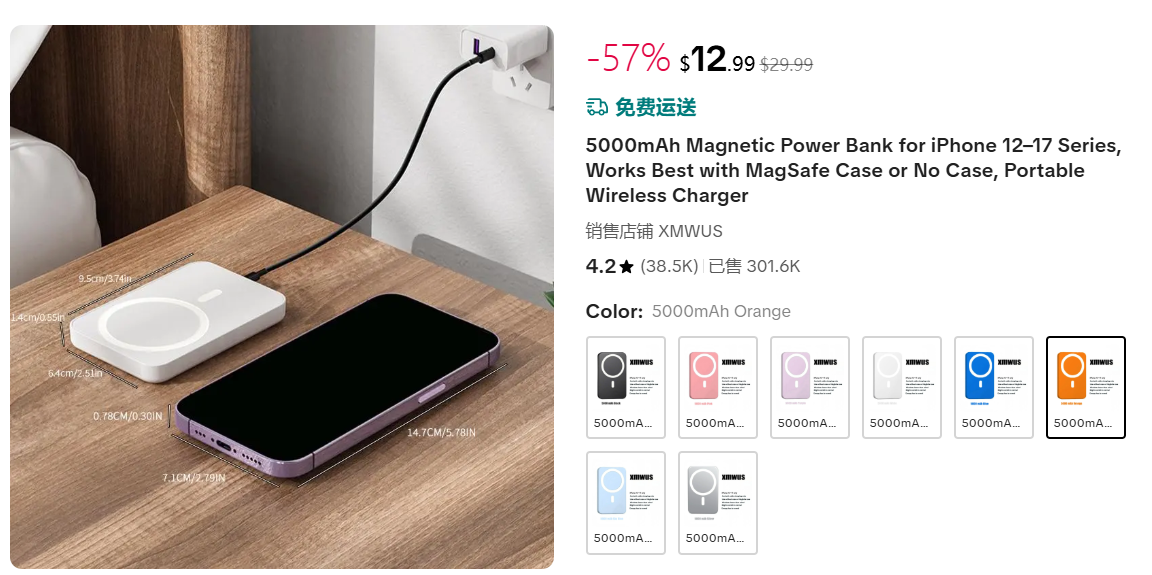
Image source: TikTok Shop
Starting from pain points, redefining "modern lightweight travel"
XMWUS's starting point is actually an observation of user pain points: Modern people rely more and more on mobile power, but many traditional power banks on the market are still heavy and bulky, not easy to carry around, and do not match aesthetically pleasing phones like iPhones.
Therefore, the brand focused on "thinner, lighter, more like a phone accessory rather than a burden" and built its product line around ultra-thin magnetic power banks.
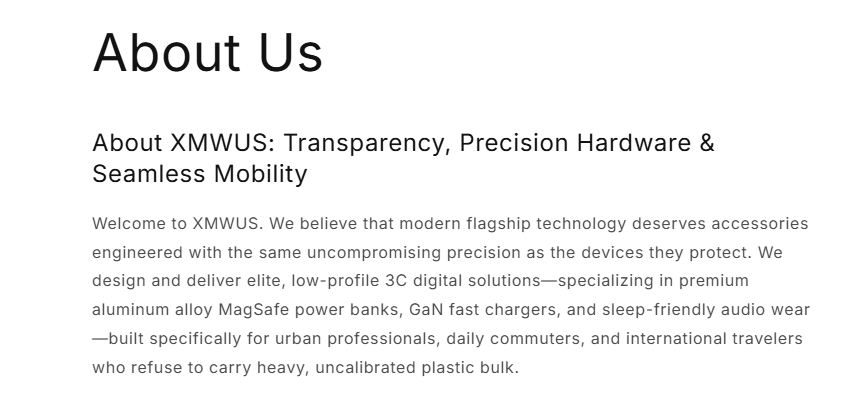
Image source: XMWUS
From the brand narrative perspective, XMWUS does not present itself as a pure specs player, but places itself in high-frequency life scenarios such as commuting, travel, going out, and mobile work. Public materials mention that it emphasizes aerospace-grade aluminum alloy material, 10mm ultra-thin standard, N52 neodymium magnets, and active temperature control chips. The core idea is to make the product a portable tool better suited for modern travel.
This product logic is actually very clear: instead of competing with traditional high-capacity power banks on "which is bigger", it answers "which is lighter, easier to hold, and more suitable for daily carry". In the 3C track, this positioning often makes it easier to penetrate niche audiences and is also more suitable for being seen on content platforms.
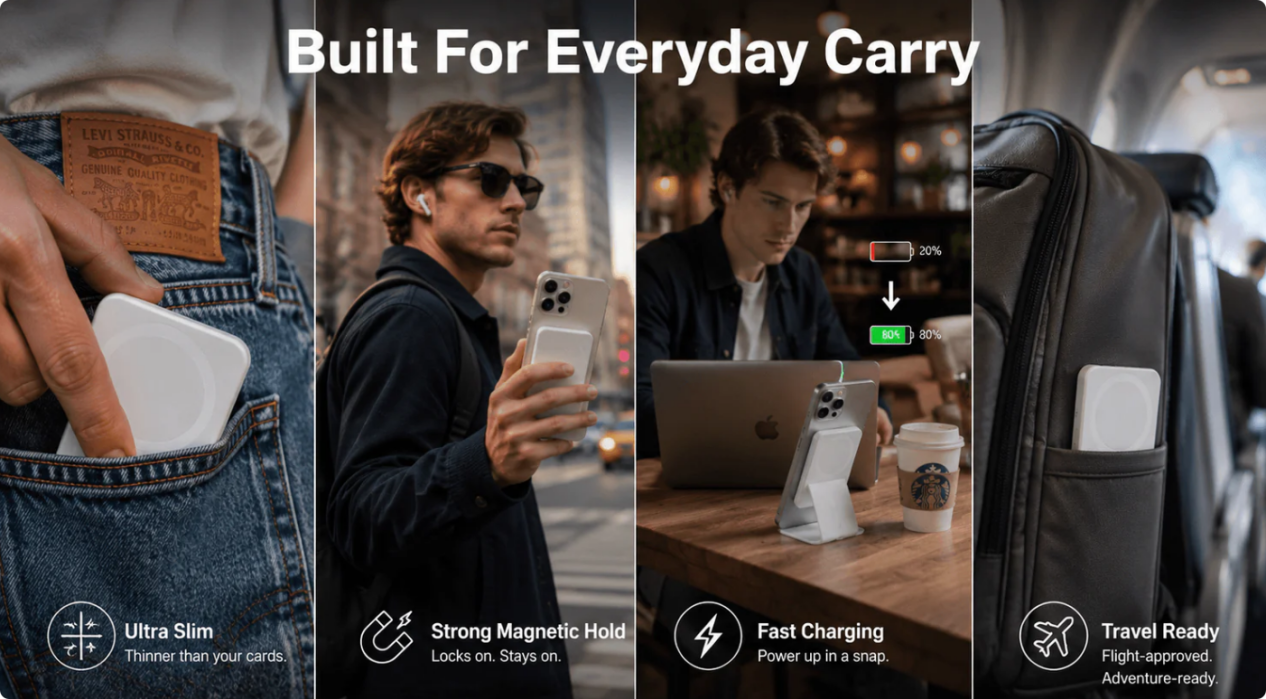
Image source: XMWUS
TikTok marketing practice: How does the brand take away traffic?
XMWUS's approach in the TikTok US market can be summarized in two words: volume. But it's not blind volume; it's strategic "scenario-based volume".
1) Compress the selling point into a sensory signal
In content creation and distribution, XMWUS shows high media sensitivity.
They did not focus on hard-core and boring traditional technical parameters such as battery capacity, power, and conversion efficiency. Instead, they continued content distribution through intuitive selling points such as "fast charging, portable, cable-free".
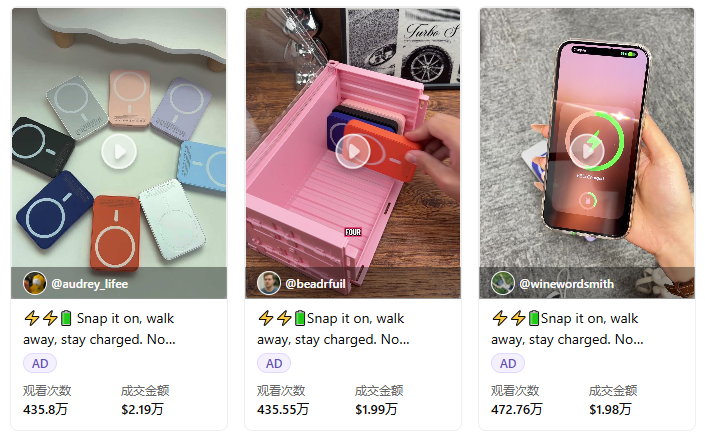
Image source: Kalodata
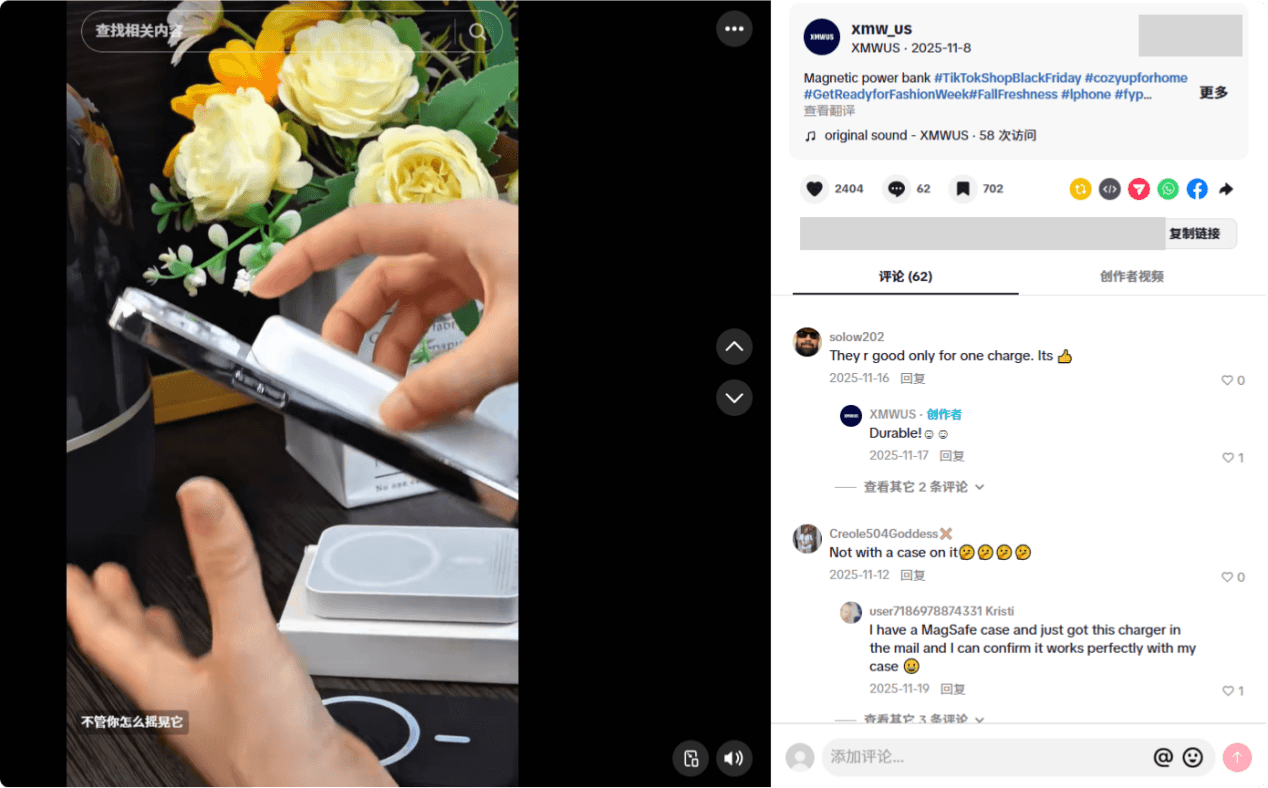
For example, the official account @xmw_us has a representative video: The scene is very simple, just shaking the phone with a hand to show how stable the magnetic power bank attaches, plus a price anchor of "under $13". No complex storyline, just top-down shots, side shots, and close-ups, with sound effects synchronized to the visual rhythm. This video achieved 1.7 million views and brought in $20,300 in sales.
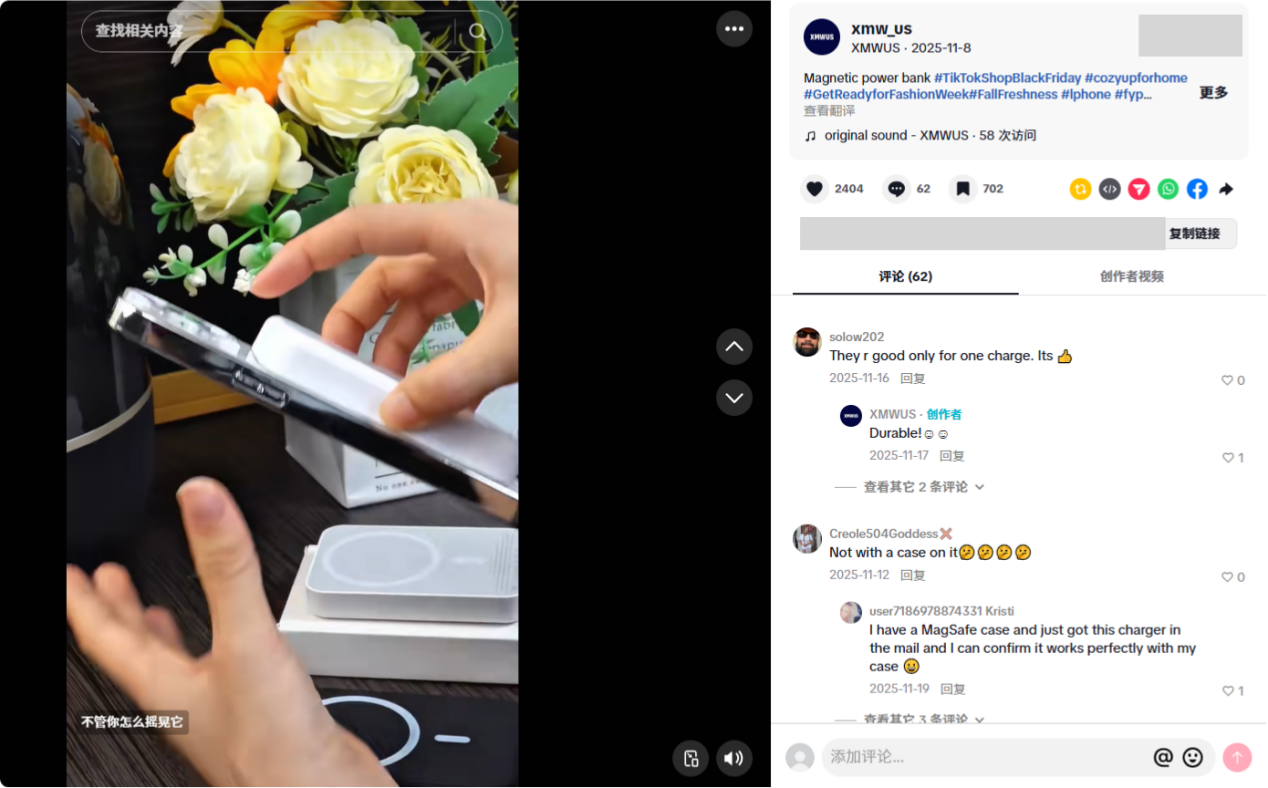
Image source: TikTok
The entire official account currently follows this approach, steadily outputting this type of functional demonstration content, and has accumulated 16.9k followers.
The advantage of this approach is straightforward: low production threshold, high completion rate, and users can understand what it does at a glance. On a platform like TikTok that relies on algorithmic recommendations, content that is "understandable at a glance" is naturally easier to push out, and the conversion path is shorter.
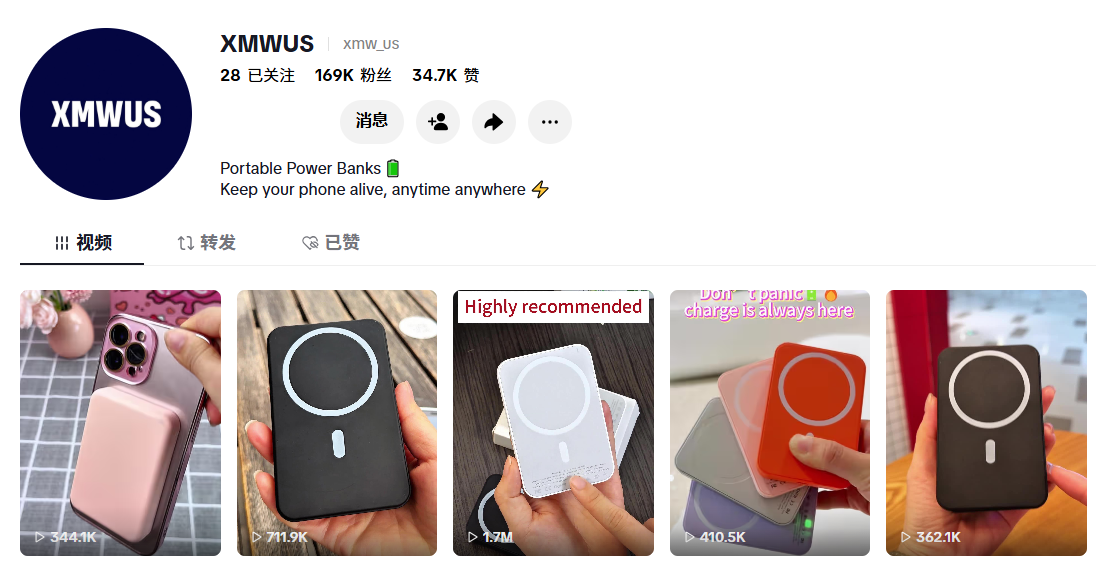
Image source: TikTok
2) Abandoning head influencers, betting on waist and grassroots matrix
In terms of influencer strategy, XMWUS has abandoned high-cost head influencers and instead focuses on long-tail and waist influencers.
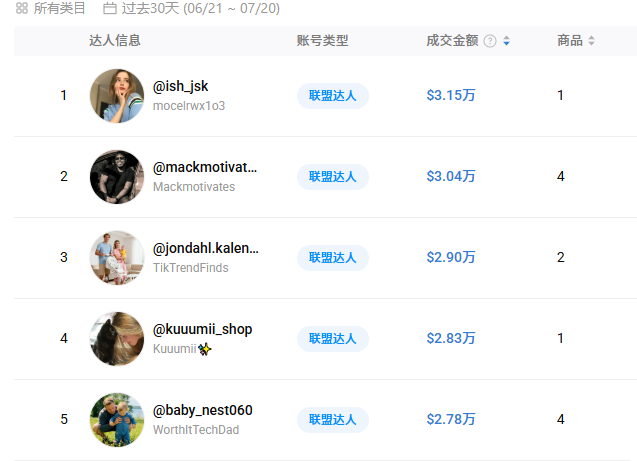
More notably, its influencer collaborations are not limited to tech and digital bloggers; it has extensively connected with lifestyle, travel, campus, and even beauty bloggers, showcasing the portability of ultra-thin power banks in real-life scenarios such as 'clubbing at night', 'late-night traveling', and 'commuting to class'.
Source: kalodata
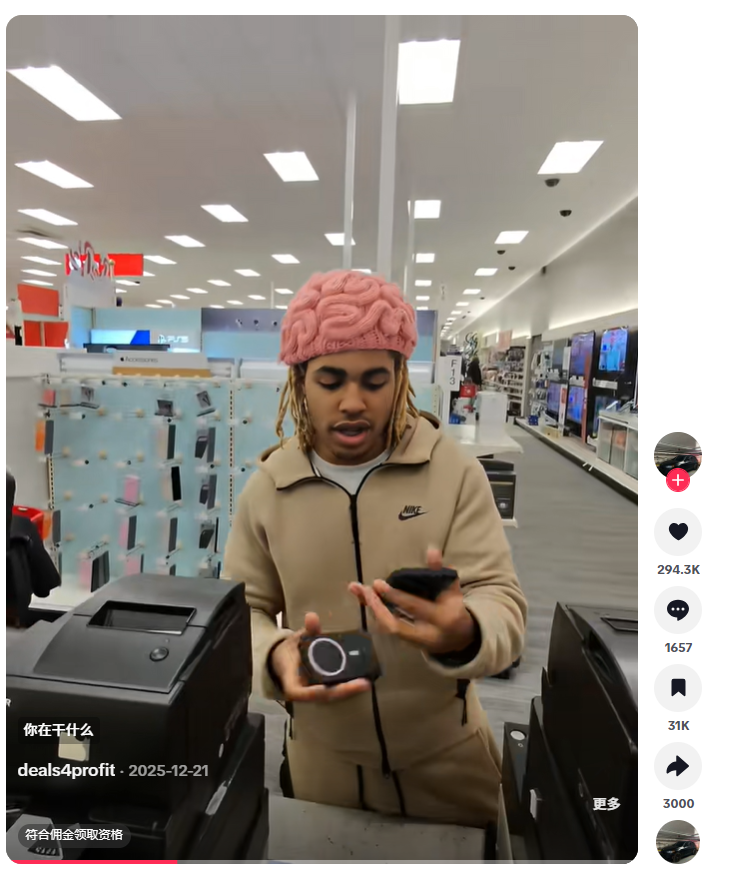
Taking influencer @deals4profit as an example, this account has only 25,700 followers, with a follower profile mainly consisting of ordinary consumers seeking value for money.
A short video posted by him from a first-person perspective cleverly constructs a highly immersive scenario: the protagonist is in a hurry to participate in a competition, but his phone runs out of battery and he can't pay, leading to an awkward situation. Just when he is at his wit's end, the store clerk calmly pulls out an XMWUS ultra-thin magnetic power bank, clicks it onto the phone, and the problem is instantly solved.
This video precisely hit the high-frequency pain point of 'emergency charging'. With a realistic and humorous plot and clear value demonstration, it ultimately achieved 16.64 million views and generated over $116,000 in sales from a single video.
Source: kalodata
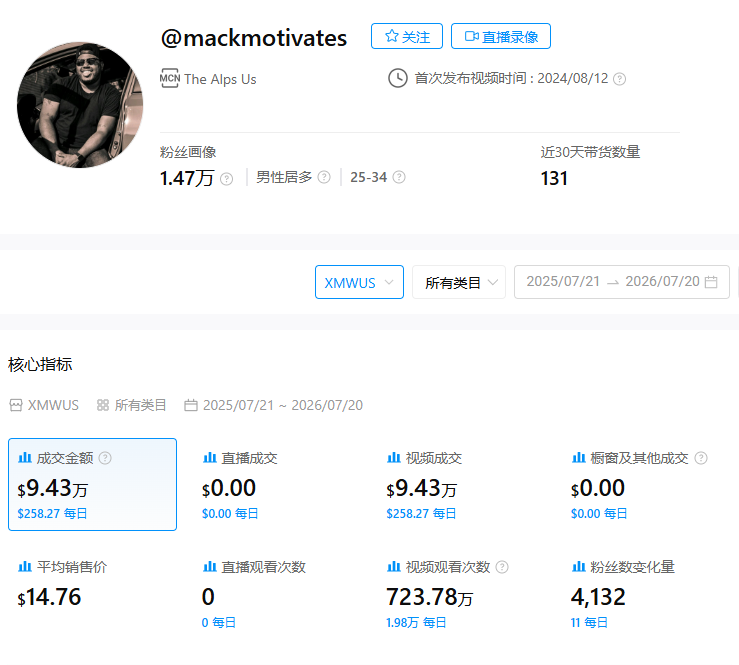
Another noteworthy collaboration case is @mackmotivates.
This account focuses on car culture and lifestyle, with about 14,700 followers, and its core audience is men aged 25–34. Through a simple product review of XMWUS, this influencer generated $94,300 in sales within the last 30 days, with total video views exceeding 7.23 million.
Such vertical influencers seemingly unrelated to 3C actually achieve extremely high conversion efficiency due to their precise audience targeting.
Source: kalodata
This tactic of 'crowd strategy + cross-circle coverage' allowed the brand to accumulate a large amount of UGC content in a short period, building strong search and recommendation authority.
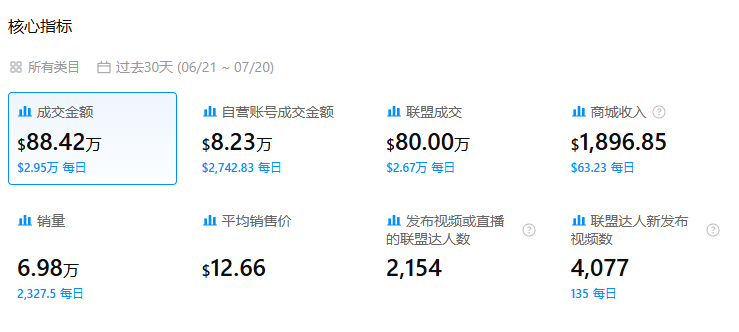
According to public data, in the last 30 days, the brand has collaborated with 2,154 overseas influencers. Through methods such as free sample sending and high commission incentives, they have enabled hundreds of influencers to speak simultaneously on TikTok, ultimately achieving a transaction amount of over $800,000.
Source: kalodata
The magnetic ecosystem is a real trend, not a pseudo-demand
Writing about a brand cannot be separated from its track. The reason XMWUS can succeed is that the magnetic power bank category itself is still in an expansion channel.
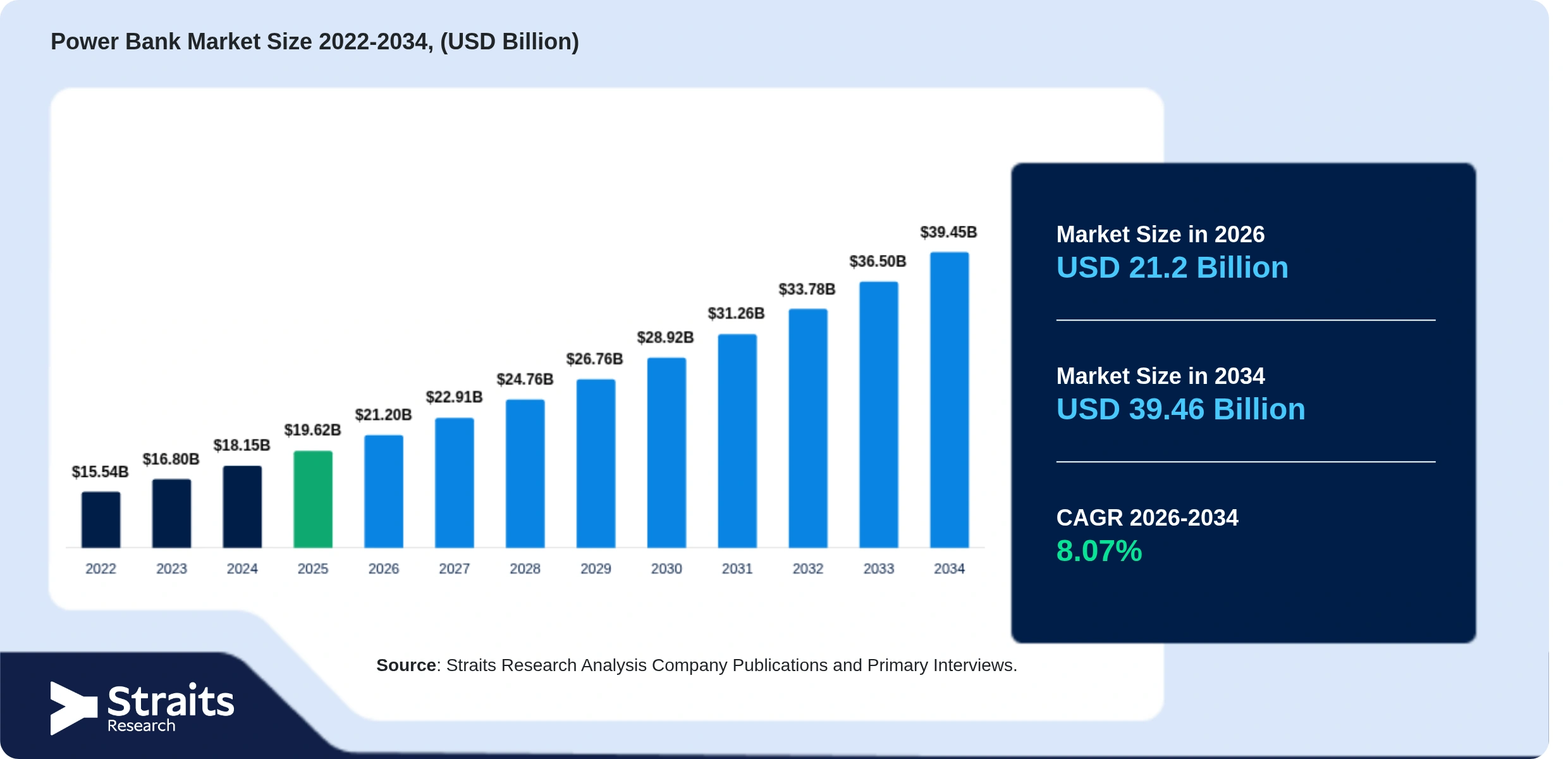
According to Straits Research data, the global mobile power bank market size in 2025 is approximately $19.62 billion, and it is expected to grow to $39.46 billion by 2034, with a compound annual growth rate of about 8.07%. Among regions, North America is one of the fastest-growing.
This means two things: first, the overall market level is continuously rising, and user demand for mobile power banks is far from fully satisfied; second, in an incremental market, new brands have more room to maneuver, rather than only competing with established players for existing market share.
XMWUS happens to stand at the intersection of 'category expansion + rise of interest-based e-commerce'. TikTok pushes the product out, and the market's own growth inertia catches the conversion.
So in the end, it's not that XMWUS created a hit product out of nowhere, but that it chose a track that is still growing and used the right way to reach users.
Source: straitsresearch
Conclusion
In the past, when we talked about going overseas, we meant selling products. Now it's different; what we talk about is building a brand.
The emergence of platforms like TikTok has essentially lowered the barrier for brands to directly reach consumers, making the journey 'from 0 to 1' more feasible than ever before.
Of course, not every brand can replicate XMWUS's path. But its practice at least illustrates a principle: in a highly competitive market, differentiation is not an optional choice but a prerequisite for survival.