 43
43In the global luggage and bag market, brands of all kinds crowd together and dazzle consumers, making it hard to stand out.
But there is a brand that never targets mass consumers, focusing only on a small group of people, and still does booming business,with annual revenue steadily exceeding $200 million.
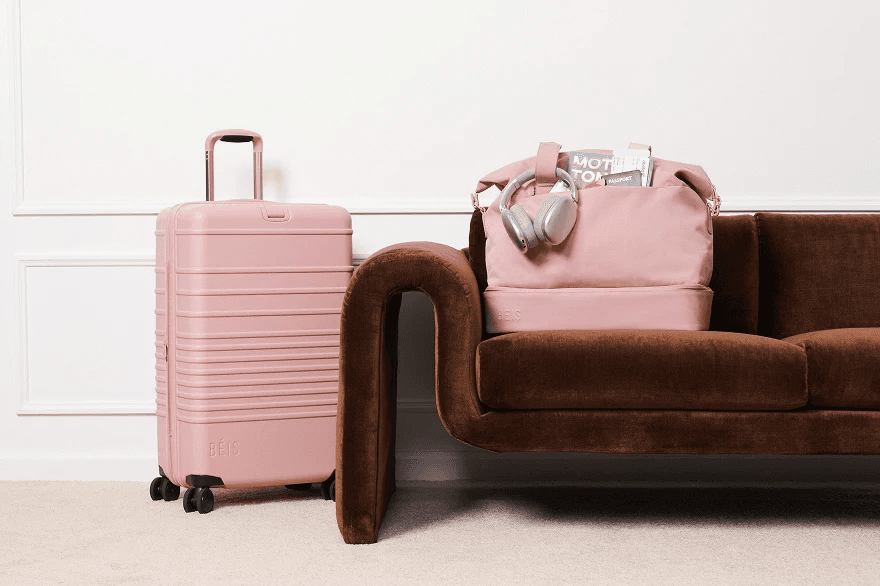
It isBÉIS。
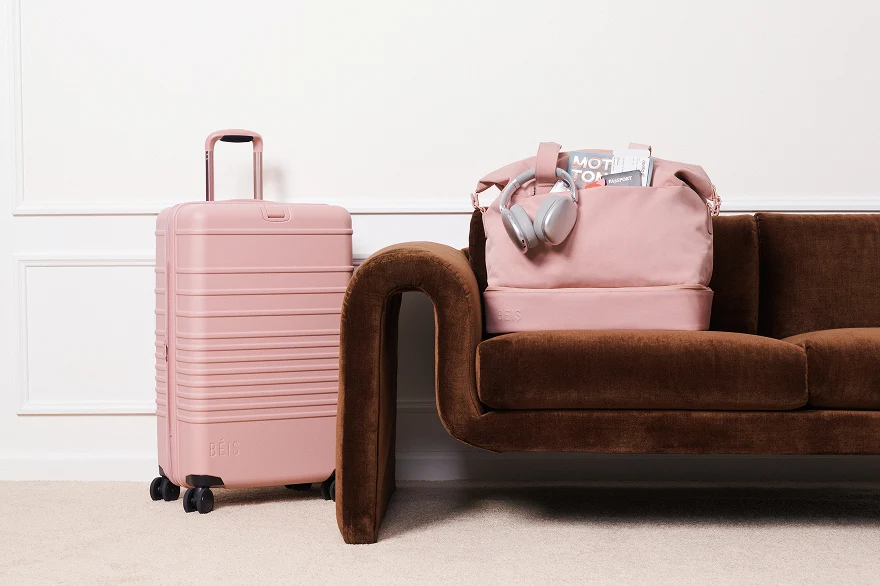
Image source: Google
Now let's take a look at how this brand built a big business by thoroughly understanding a small group of people?
It makes whatever the market lacks
When it comes to the origin of BÉIS, it started as a celebrity side business. The founder is Canadian actress Shay Mitchell, who starred in Pretty Little Liars.
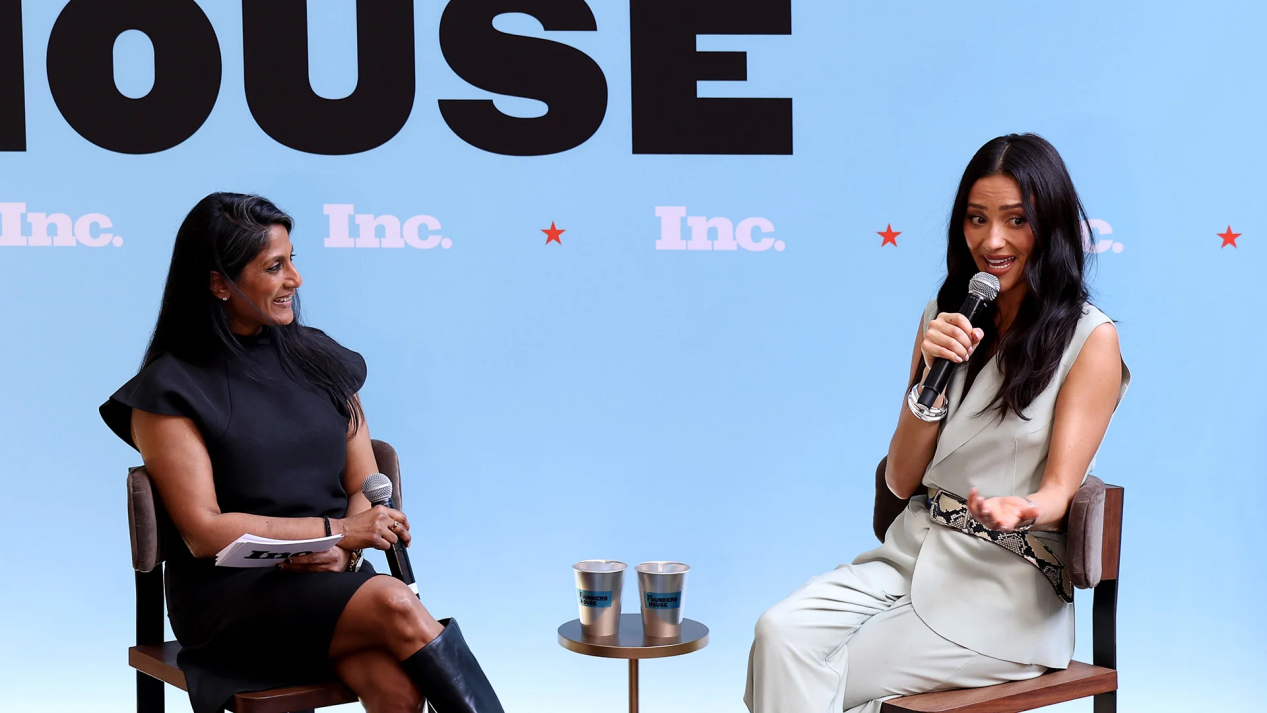
Image source: Google
After years of filming and traveling around the world for work, she found that although there were many luggage and bag brands on the market, there was a lack of styles designed specifically for female travelers.
There was no fixed area for shoes, no clear place for makeup, no dedicated laptop compartment... These details that men might consider unimportant were exactly the pain points for female travelers.
Just like that, Shay came up with the idea of founding her own brand and hand-drew the first-generation product sketches on a cocktail napkin on a plane.
In 2018, the BÉIS brand was officially born, positioned as women's travel lifestyle bags that combine good looks + practicality.
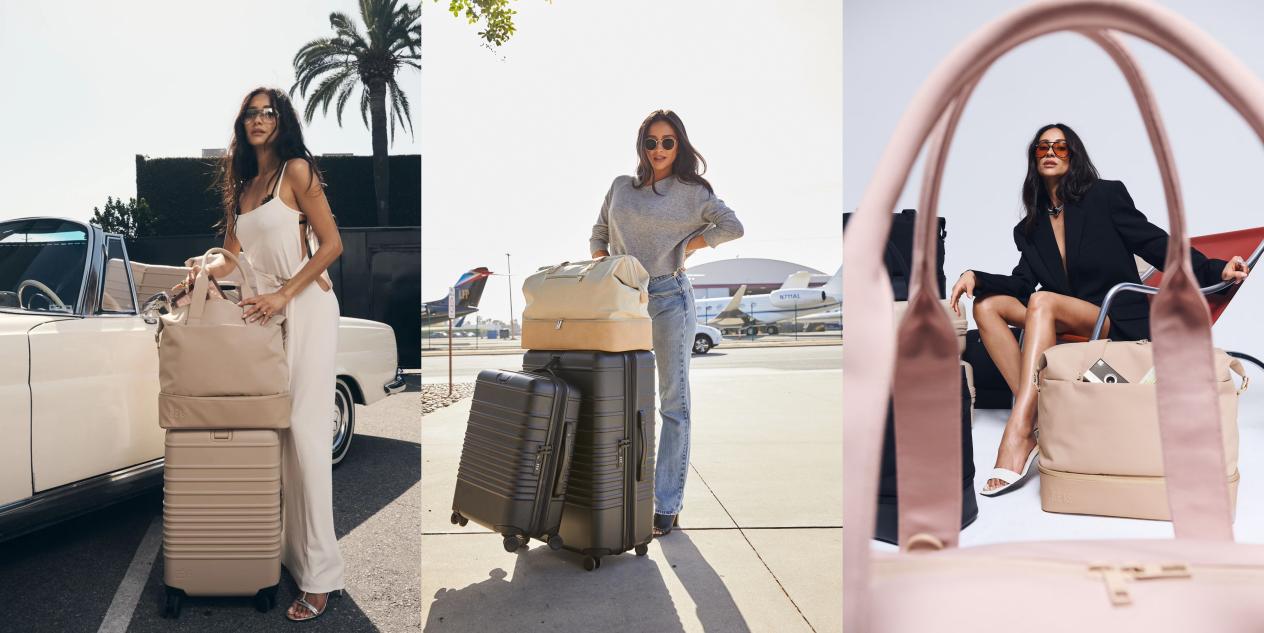
Image source: Google
The brand's debut products, such as hard-shell suitcases and the Weekender weekend bag, fully leveraged online channels from the start, selling simultaneously on its own standalone site and through the e-commerce channel Nordstrom.
In just its first year, BÉIS generated about $20 million in revenue because it understood women better, and its flagship tote bag sold out within 6 minutes of launch.
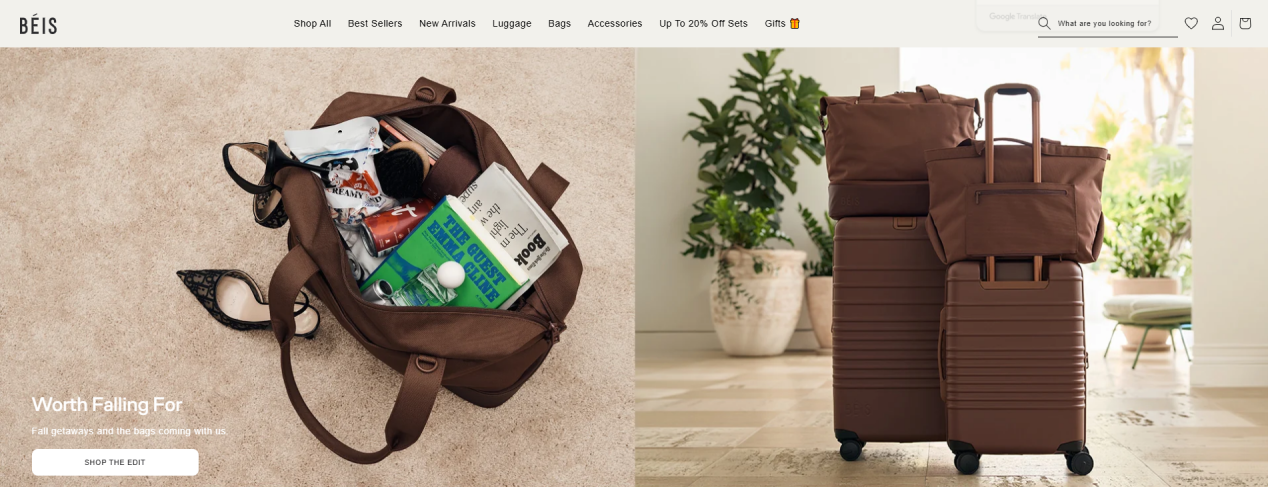
Image source: BÉIS
It expands into whatever sells well
But the boom did not last. When the COVID-19 pandemic hit, international travel came to a halt for a time, and BÉIS, whose main products were suitcases, was suddenly put on the back foot, and its original positioning took a big hit.
To break through and save itself, Shay decided to broaden the product line. It expanded from long-distance suitcases and travel totes to categories such as makeup bags, commuter bags, diaper bags, and kids' luggage.
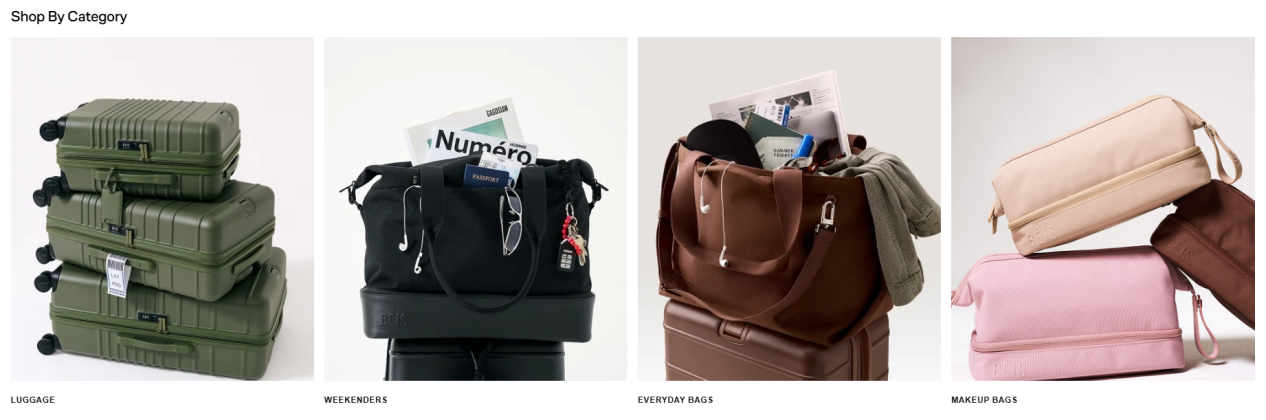
Image source: BÉIS
It turned what were originally travel bags into all-purpose bags for multiple scenarios such as commuting, weekend getaways, fitness, and maternity/baby use, blurring category boundaries to hedge against the risk of a downturn in the travel industry.
Thanks to this, in 2020, when other brands generally saw declining performance, BÉIS instead achieved counter-trend growth through category expansion and weathered the crisis.
It collaborates with whatever is trending
After the pandemic, the global travel market recovered, and BÉIS also entered a new window of growth. But existing products can hardly sustain repeated sales; without new twists, consumers can easily experience aesthetic fatigue.
To this end, BÉIS's solution was to launch co-branded collections, attracting consumers to buy repeatedly because of a favorite IP.
In selecting collaboration partners, it has been quite flexible and has explored many areas.
1. Film and TV IP
In 2023, the brand reached a collaboration with the Barbie movie, which was also its first truly breakout film and TV co-branding.
As soon as the iconic Barbie hot pink carry-on, weekend bag, makeup bag, passport holder, luggage tag, etc. launched, they quickly sparked traffic thanks to the Barbie craze.
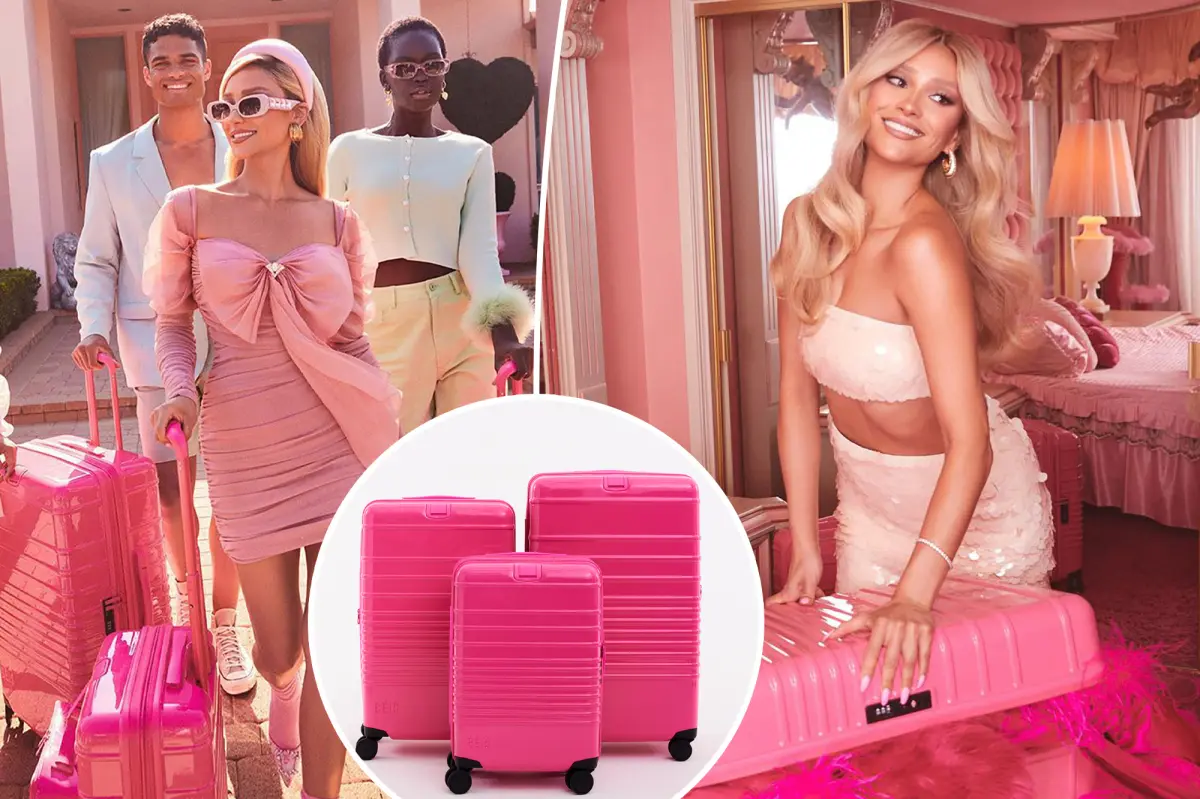
Image source: Google
2. Classic Cartoon IP
BÉIS also collaborated with Disney's Mickey IP, simultaneously launching adult and children's suitcases; this is currently the brand's largest classic cartoon IP collaboration by scale.
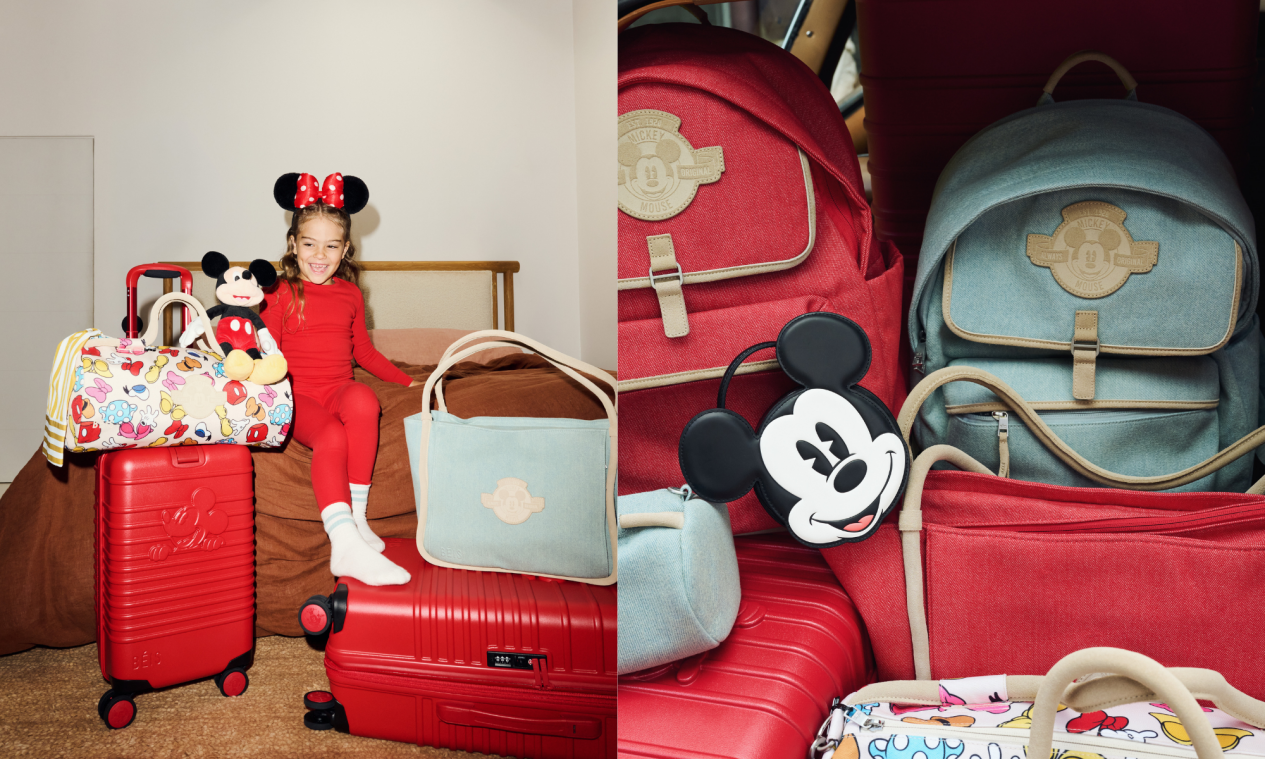
Image source: Google
3.Diverse Cross-Industry CollaborationsIP
In addition, to continuously attract new users, it also partnered with art streetwear brand KidSuper Studios, beauty brand Rare Beauty, classic apparel Gap, influencer sparkling water Poppi, and Mexican fast-food brand Chipotle for co-branded collections.
BÉIS's collaboration logic is very clear: film/TV and classic cartoon IPs are used to tap into mass traffic, art streetwear brands are used to elevate brand positioning, and cross-industry brands in beauty, beverages, and fast food focus on fun, helping the brand break out of the luggage category.
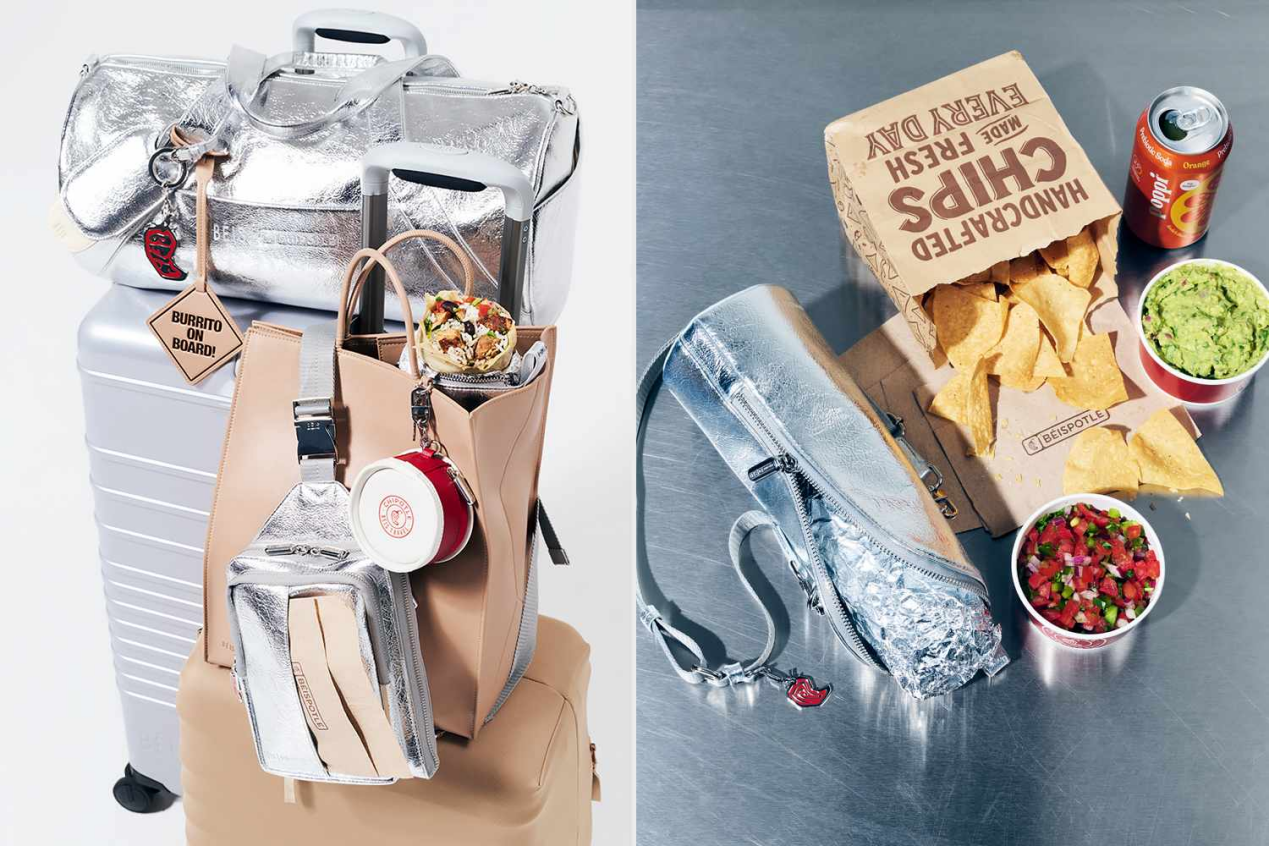
Image source: Google
It is precisely this strategy that has made a steady stream of consumers become loyal BÉIS users.
According to industry media reports, in 2023, its annual revenue reached $200 million, directly 10 times that of its first year on the market; in 2025, BÉIS's net sales also remained around $210 million, with very stable revenue and a solid core customer base.
Whatever is trending, it releases.
With the rise of lifestyle consumption, in the eyes of Gen Z, bags are no longer just storage tools, but part of their outfit.
BÉIS focuses on low-saturation macaron color palettes, which are naturally photogenic and perfectly match young people's habit of taking photos and sharing them on social platforms.
Seeing this, the brand accordingly expanded onto platforms such as TikTok to continuously amplify its influence.
The first surprise social media brought BÉIS was a steady stream of spontaneous UGC.
A large number of users voluntarily post and share their orders, which is what the industry calls 'tap water,' helping the brand save a lot on marketing costs and greatly reducing customer acquisition pressure.
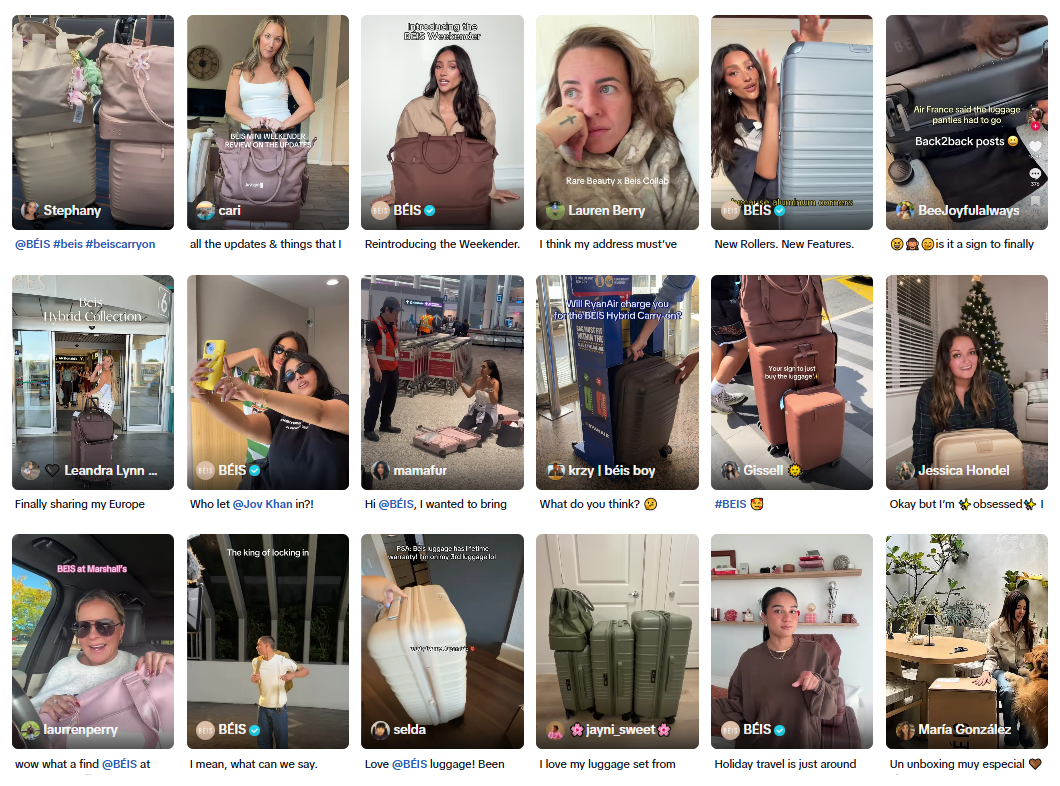
Image source: TikTok
Of course, relying only on users' spontaneous recommendations is not enough; BÉIS's official channels cannot fall behind either.
It first built the brand account @BÉIS, which has now gained 634,200 followers and as many as 15.5 million likes.
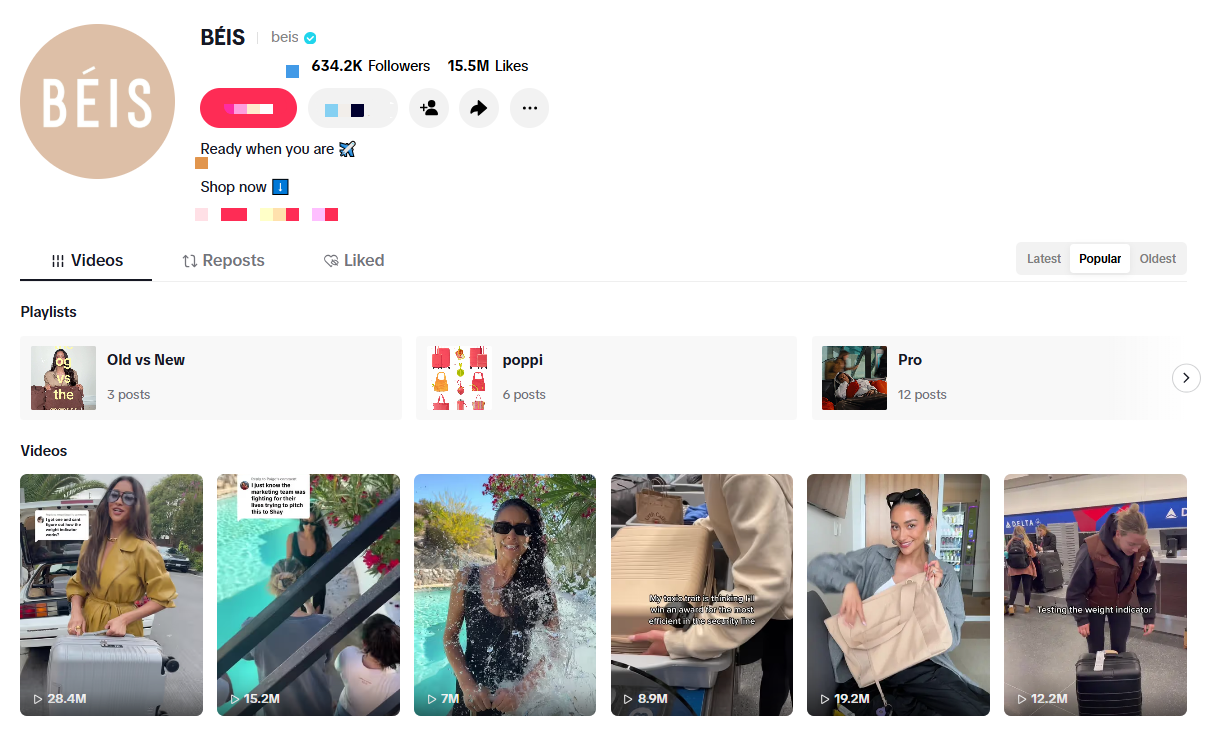
Image source: TikTok
To keep the account content from being dull and give it brand character, BÉIS chose the VLOG format that is extremely popular among young people today.
It posted many VLOGs of brand founder Shay Mitchell's daily travels and business trips.
Using one video after another to learn about the world and unlock the lifestyles and fun of different regions, it also softly placed BÉIS products, showing the internal compartment design of products such as suitcases and tote bags, quietly imprinting the impression of being useful and thoughtful in users' minds.
This lifestyle-oriented content has no hard-sell feel, so users accept it more readily, and the recommendations are subtle and seamless.
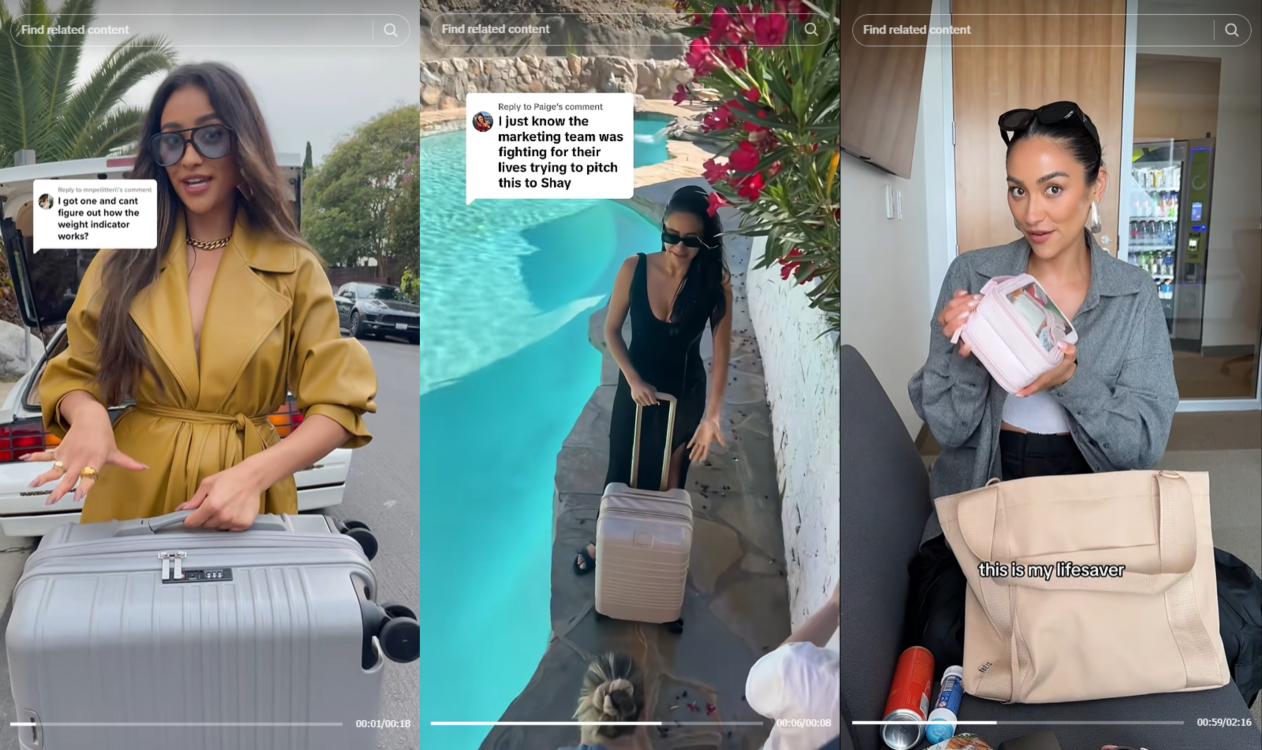
Image source: TikTok
In addition, influencer collaboration is also a core strategy for BÉIS. The promotional videos it published also covered 2 different promotional directions.
For example, the short video posted by lifestyle-sharing creator @Eloise focuses on travel outfits, appearing with BÉIS luggage to highlight aesthetics and vibe; while product recommendation creator @Madison Denise makes in-depth unboxing videos, breaking down the internal structure and explaining the product's practicality.
Regardless of the format, they all achieved excellent reach and made BÉIS a shared favorite of both the practicality-focused camp and the social-attribute-display camp.
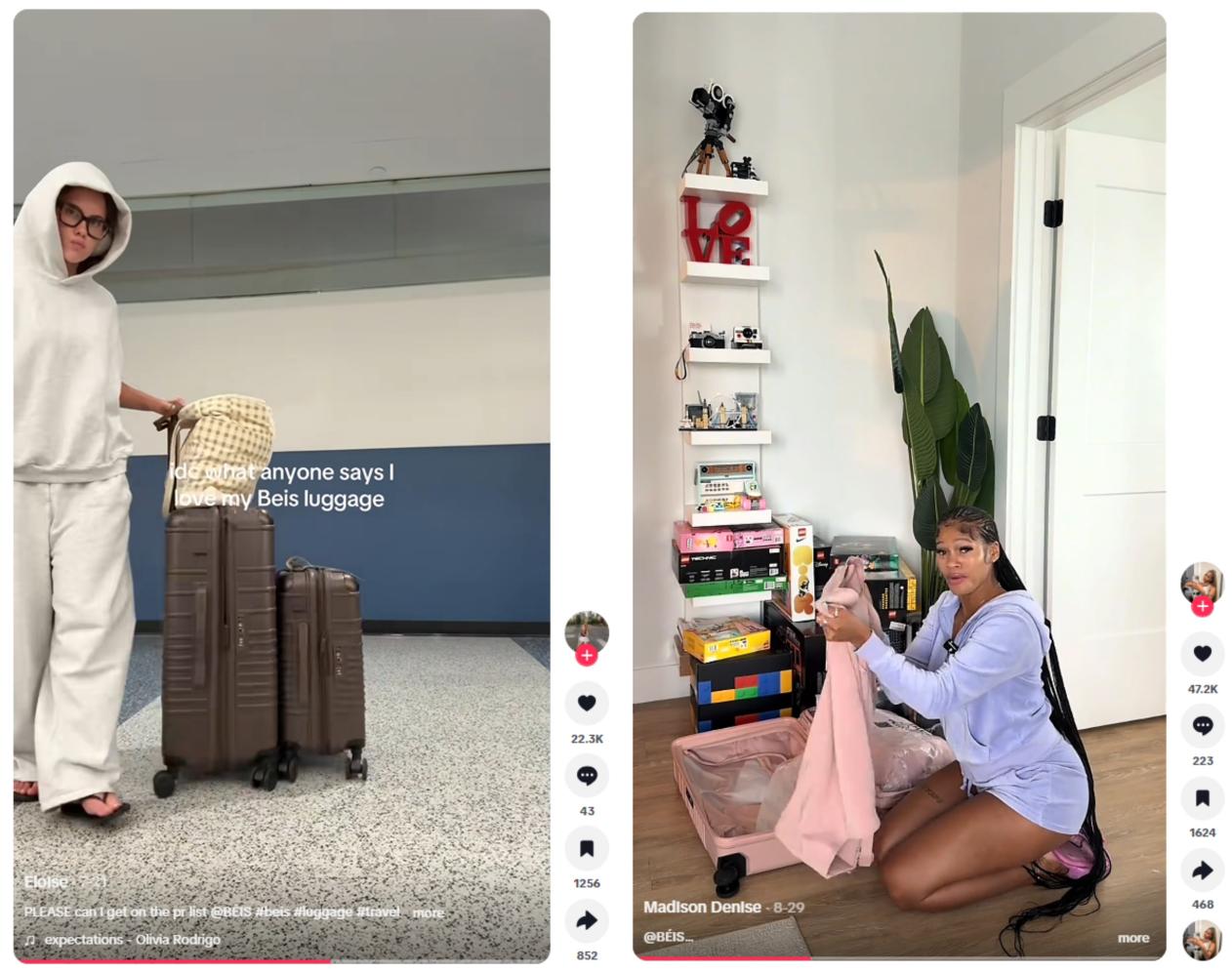
Image source: TikTok
Final thoughts
The reason BÉIS could break out in the fiercely competitive bags and luggage market is that from the start it accurately identified the real needs of a small group of people.
This also serves as a reminder to other brands:Don't rush to let everyone know you; first make a small group of people unable to live without you.
Overseas markets are large, and segmented needs are abundant. Rather than blindly expanding the overall market, it is better to first find the niche track ignored by big players and make the product resonate with users' hearts.