 40
40“World furniture looks to China; Chinese furniture looks to Foshan.”
Behind this statement lies a massive manufacturing industry, and also the predicament that countless furniture companies once faced together: products went from factories to overseas markets, but profits and brands stayed in the hands of channel distributors.
OVIOSThe founder once mentioned this question: “Foreigners buy from me and sell them themselves; why don’t I sell them myself?”
It was precisely this unwillingness to accept things as they were that opened the comeback chapter of a traditional Foshan contract manufacturer. In three years, it pushed sales from 30 million to 500 million; in five years, revenue exceeded 1 billion; along the way, it collaborated with Porsche Design Studio and appeared on the Nasdaq big screen in New York’s Times Square!
01
From Foshan furniture manufacturing to an overseas brand
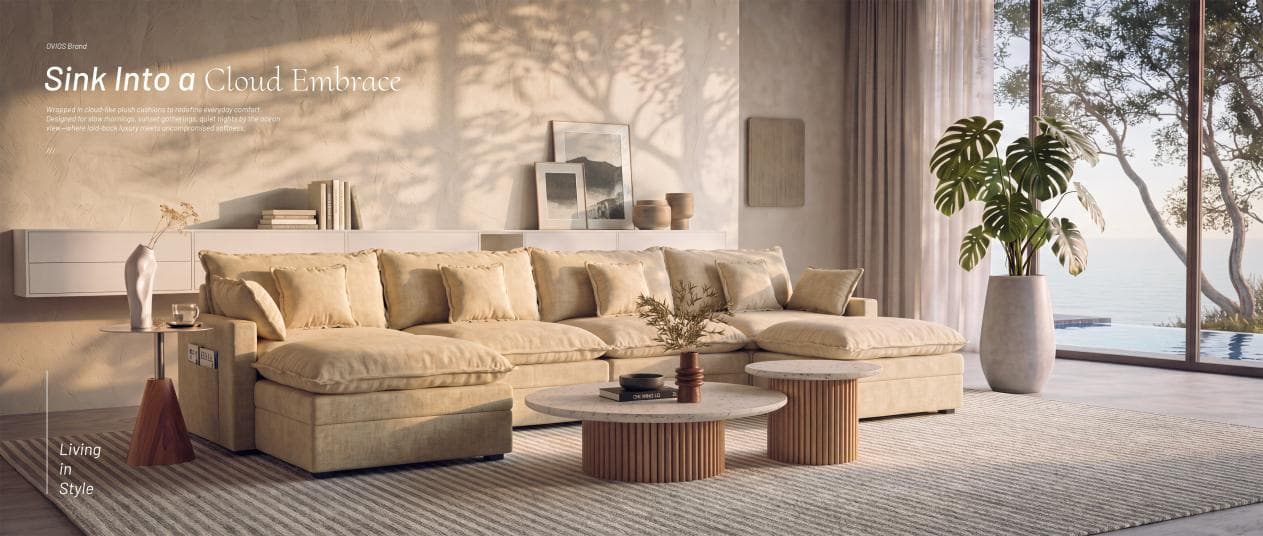
OVIOS's starting point was a typical Foshan OEM story.
Public reports show that OVIOS's sales had already reached 45 million yuan in 2017, and it formed a cross-border e-commerce team in 2018, becoming one of the earlier Foshan furniture companies to enter Amazon.
At that time, cross-border e-commerce for furniture was far less crowded than it is today. OVIOS understood both furniture and manufacturing, and happened to seize the platform’s early dividends.
Then when Amazon’s dividends gradually faded, new problems emerged.
More and more Chinese furniture sellers entered overseas markets, and European and American consumption also began to come under pressure; relying solely on platform traffic became increasingly difficult. So OVIOS began expanding toward multiple platforms, multiple brands, and independent websites.

Image source: OVIOS
02
Why is furniture increasingly suited to “content e-commerce”?
The online shift of the furniture industry is actually nothing new.
Technavio data shows that the U.S. online home furniture market is expected to increase by approximately 6.45 billion USD from 2024 to 2029, with a compound annual growth rate of about 4.4%. The convenience of online shopping, the mobile shopping experience, and increasingly abundant product choices are all pushing consumers to reduce their reliance on traditional stores.
What is more noteworthy is that furniture itself is becoming increasingly “content-ized.”
Especially products such as modular sofas, cloud sofas, and boneless sofas have a very obvious difference from traditional sofas: whether they look good can be seen at a glance; whether they are comfortable can also be shown in videos; how they can be combined can even be filmed directly.
For furniture brands, this means new answers are emerging to a problem that was once difficult to solve.
What OVIOS seized is precisely this change.
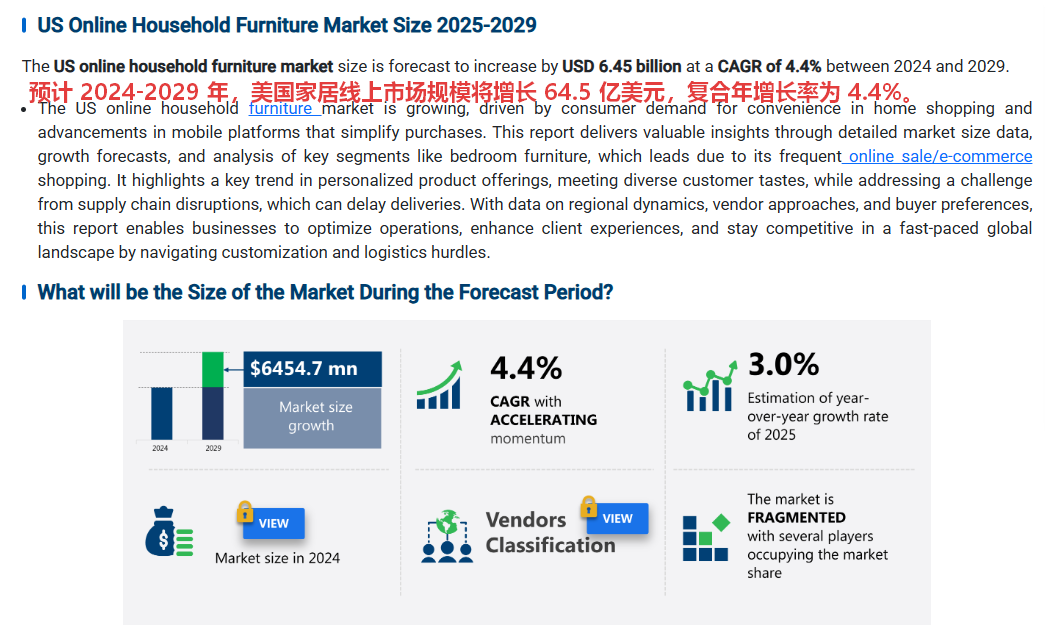
Image source: Technavio
03
Born for the TikTok lensofFurniture
In May 2025, OVIOS used TikTok Brand Day to launch a new Indoor Collection and directly offered a very interesting brand expression:
Designed for Real Life. Styled for TikTok. (Designed for real life, born for the TikTok lens.)
This sentence may seem like just copy, but it actually reveals a change in the brand's marketing logic.
The furniture business of the past was:
Produce furniture → list it → find consumers
Now it has become:
Design furniture → design content scenarios → let users see it → then complete the purchase
OVIOS's new indoor collection emphasizes modularity, ease of movement, and easy reconfiguration, while visually adopting shapes, materials, and colors better suited to on-camera expression. The brand even directly incorporates content creators' shooting scenes into its product expression.
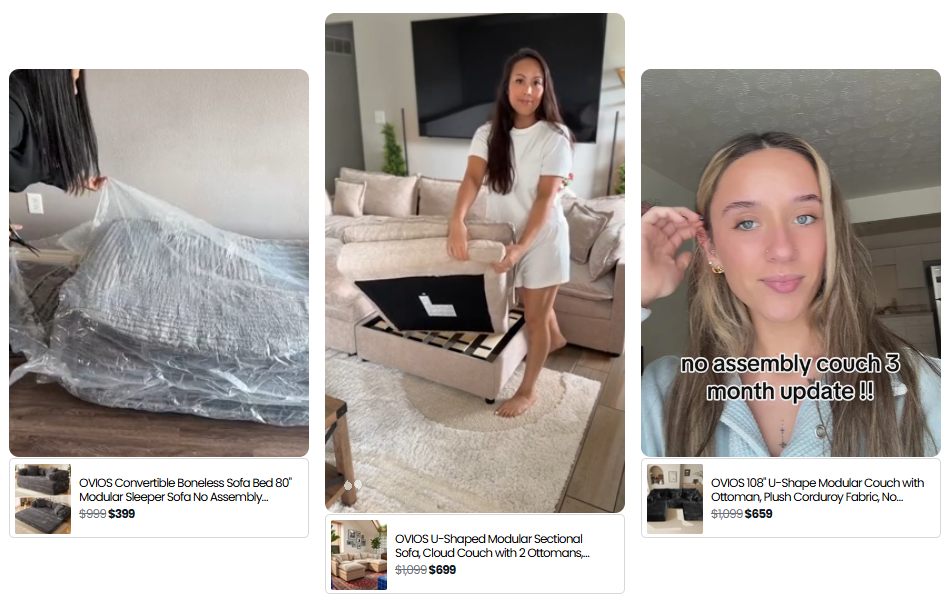
Image source: OVIOS
Then the question arises.
04
What kind of furniture is suitable for being shot for TikTok??
Judging from the current sales structure of TikTok Shop, the answer is already very obvious.
As of now,OVIOSThe official TikTok Shop store in the U.S. has over 32.8ten thousand followers, about 7.69ten thousand items sold and1130videos,total sales are approximately 23.4 million USD。
Among them, the 106-inch modular Cloud Couch sold about 11,100 units, the 108-inch U-shaped modular sofa sold about 8,100 units, and the 49-inch Oversized Boneless Chaise Lounge also sold about 4,900 units.
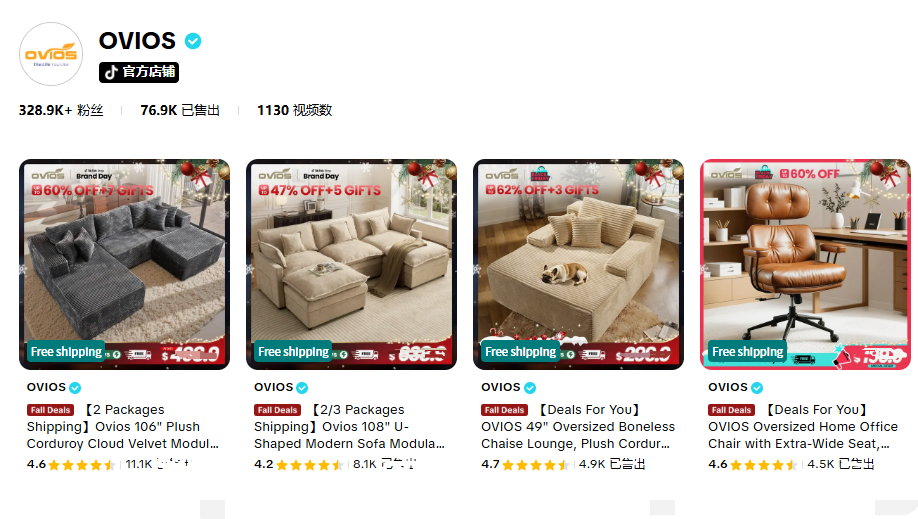
Image source: TikTok Shop
Why exactly these products? Because they have a lot of drama.
After the compressed packaging is opened, the sofa gradually regains its fluffiness; different modules can be combined into an L shape, U shape, or even other spatial forms; an originally empty room, once the sofa is placed, immediately takes on a different look.
Traditional furniture advertising may need to tell consumers “high-density foam, deep-seat design, modular structure”.
TikTok only needs to film one line: “Look what happened after I opened the box.”
The product itself starts speaking.
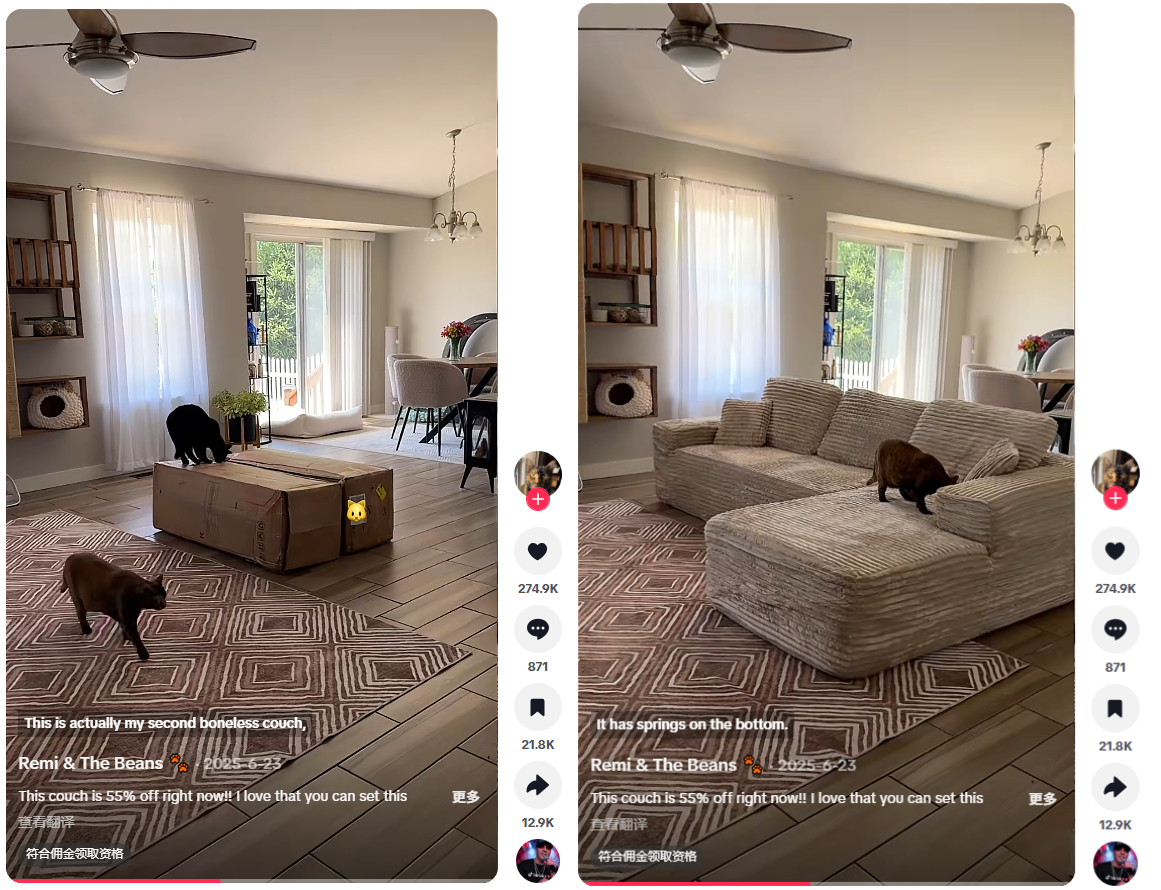
Image source: TikTok
Video source: TikTok account @remi.and.the.beans
This is also the most noteworthy part of OVIOS's current TikTok strategy for other furniture brands to reference.
——It is not about forcing traditional products into short videos, but about prioritizing finding the product's own content actions.
05
Letcreators move furniture into different people's lives
OVIOS also specifically set up a Creator Community page on its independent site to openly recruit collaborative creators.
The page clearly lists collaboration methods such as Affiliate Marketing and Discount Codes, while also offering collaboration benefits such as gifting.
This means it has not turned TikTok entirely into a showcase window for the brand's official account, but is trying to build a creator distribution system.
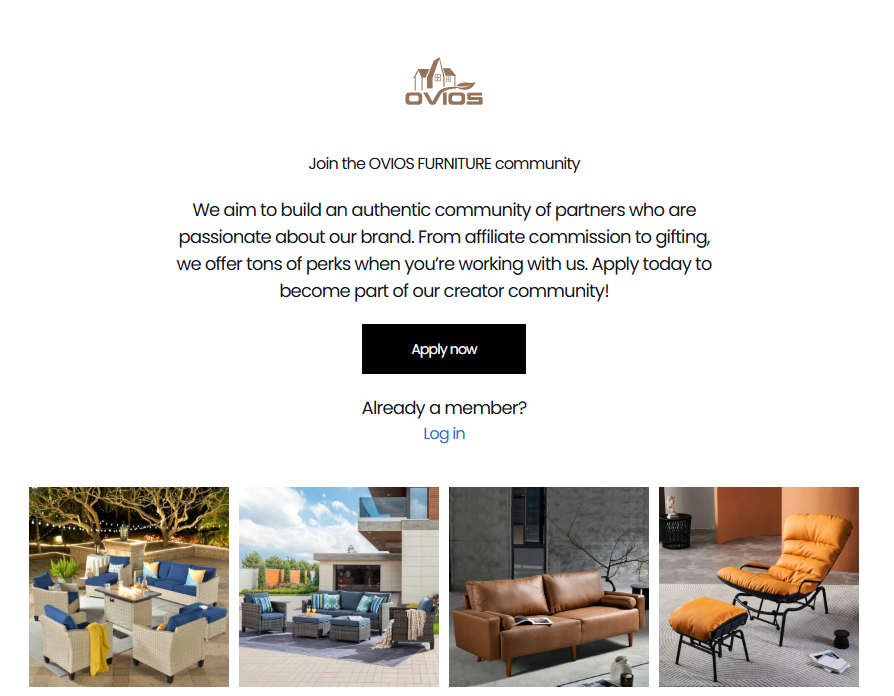
Image source: OVIOS
This is especially important for the furniture category.
The brand provides the same sofa, but creators provide different answers for life. And this is precisely the biggest difference between TikTok interest-based e-commerce and traditional furniture advertising.
For example, creator @michellesyribouth has long shared content about family, pets, and home goods. When promoting OVIOS, she integrated the sofa into family life scenes, turning the product from simple furniture into part of a pet-friendly home and everyday leisure space.
Lifestyle creators like @that_plus_size_girl, on the other hand, tend to showcase the product through angles such as space arrangement and home experience, letting consumers see how a large-size sofa fits different body types and lifestyle needs.
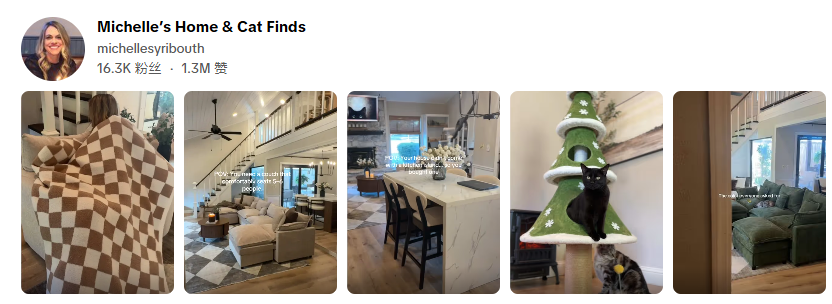
Image source: TikTok
Judging from OVIOS's data over the past 30 days, this content-driven sales model has already reached scale:The store's total transaction value was about USD 1.6056 million, of which affiliate creators contributed about USD 1.186 million, accounting for more than 70%.
In other words, creators have become OVIOS's main growth engine on TikTok, and this distribution system has truly been proven viable.
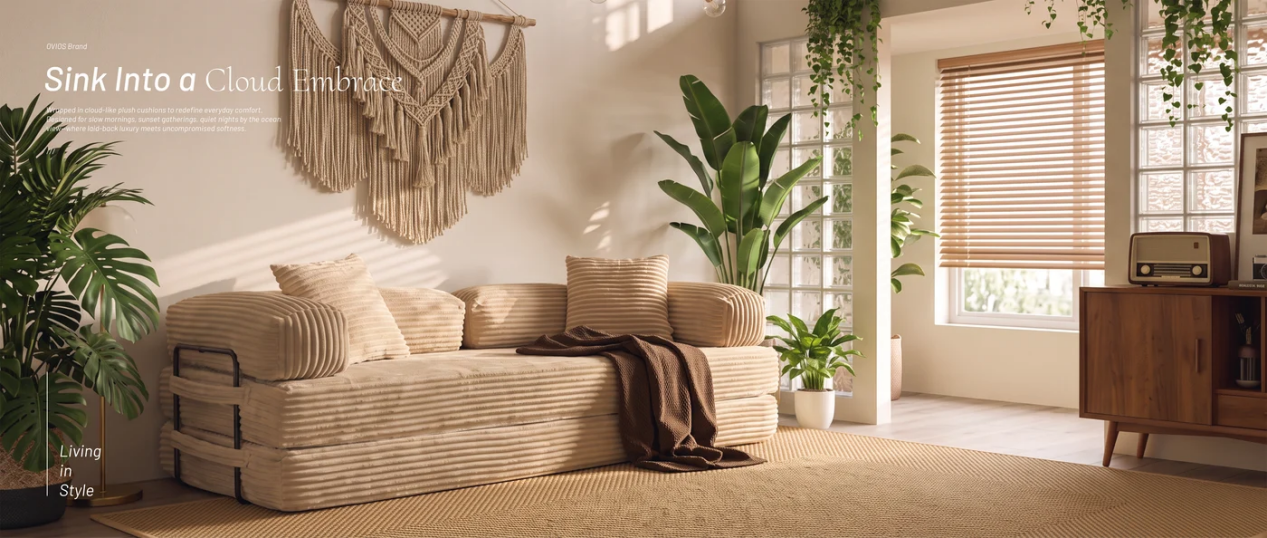
Image source: OVIOS
Final thoughts
The interesting part of OVIOS's story is not simply that a Foshan furniture company 'successfully went global.'
What it truly completed was three identity transformations:
First a manufacturer, then a cross-border seller, and finally it started to become a brand.
Furniture was originally a category that was very heavy, very slow, and very difficult to buy on impulse.
But Aowisi is trying to make it a little lighter.
It is not about actually making the sofa lighter, but about letting consumers imagine, within the few dozen seconds after they come across a video, how it would look in their own home.
This may also be the most thought-provoking thing for traditional manufacturing companies doing TikTok:
Real content e-commerce is not about finding a few videos to shoot for a product; it is about thinking clearly, from the very moment the product is born, about why it is worth being filmed.