 75
An Unpromising Category—He Made It a Success
Did you know? In the United States, thousands of infants die from SIDS (Sudden Infant Death Syndrome) every year, and related topics have long been highly sensitive in parenting circles.
Persistent panic and anxiety have caused demand among new parents for baby health monitoring to surge, also giving rise to a sizable niche category.
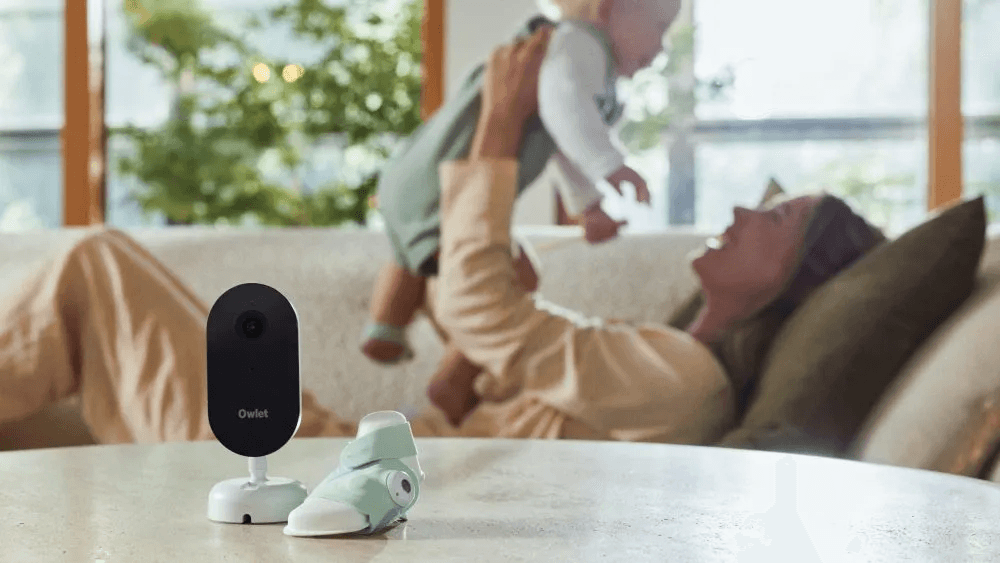
What we are breaking down todayOwlet, is exactly a representative brand that broke out by seizing this pain point. Relying on a pair of smart baby monitoring socks,it surpassed RMB 700 million in annual revenue.
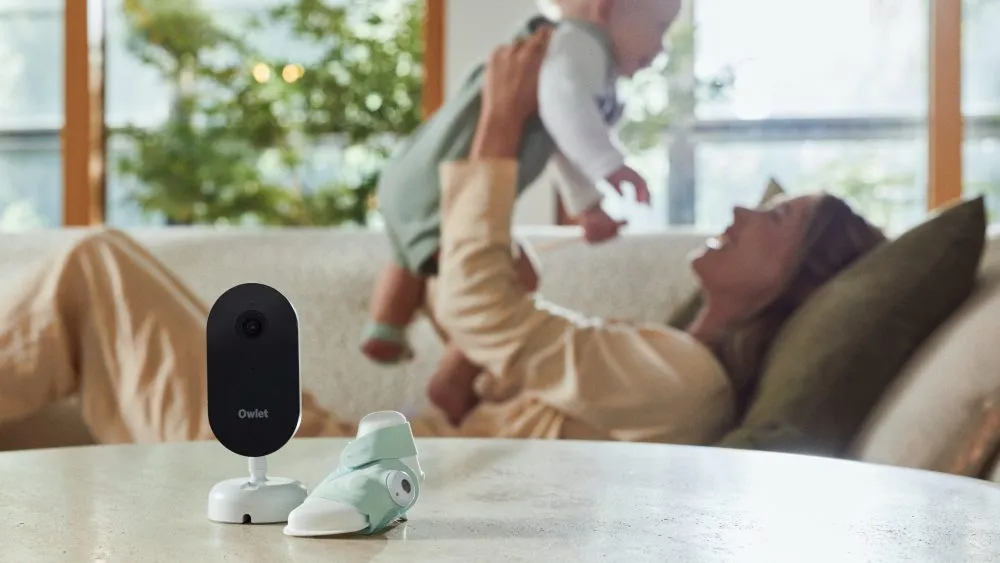
Image source: Google
From a New Dad's Original Intention
The story of Owlet's birth comes from founder Kurt Workman's personal experience.
As an expectant father, because his cousin's child had lost their life to SIDS (Sudden Infant Death Syndrome), he was extremely worried about whether his baby could grow up healthily.
Monitoring equipment in hospitals is reliable, but bulky and unsuitable for all-night use at home. This inspired him with the idea of starting a business: transform the medical pulse oximetry solution, which can only be used fixed at the bedside in hospitals, into a home device that babies can wear all night.
So he teamed up with 3 alumni from the same school to start a business, and in 2013 formally founded Owlet Baby Care.
The original intention behind developing the product was not to create novel maternal and baby toys, but to effectively solve new parents' parenting sleep anxiety and alleviate everyone's fear of infant SIDS risk.

Image source: Justin Brady
Questioned and Warned
But for products of this kind with medical monitoring attributes, the entrepreneurial path was not smooth.
Because competitors in the category had obtained capital earlier, investors generally had doubts about this direction, so financing in the project's early stage was very difficult.
The team immediately adjusted its path: first validating market demand through crowdfunding pre-sales, then joining the Techstars accelerator and gradually securing financing.
In 2015, the first-generation Smart Sock was officially launched. The product adopts a thin, lightweight sock form and is equipped with pulse oximetry monitoring technology; it can track an infant's heart rate, blood oxygen, and sleep status in real time and push alerts to parents through the App.
Brand research shows that the vast majority of users reported relief from parenting anxiety and improved nighttime sleep experience. This emotional essential need cannot be replaced by ordinary medical monitoring devices and naturally generates word-of-mouth diffusion.
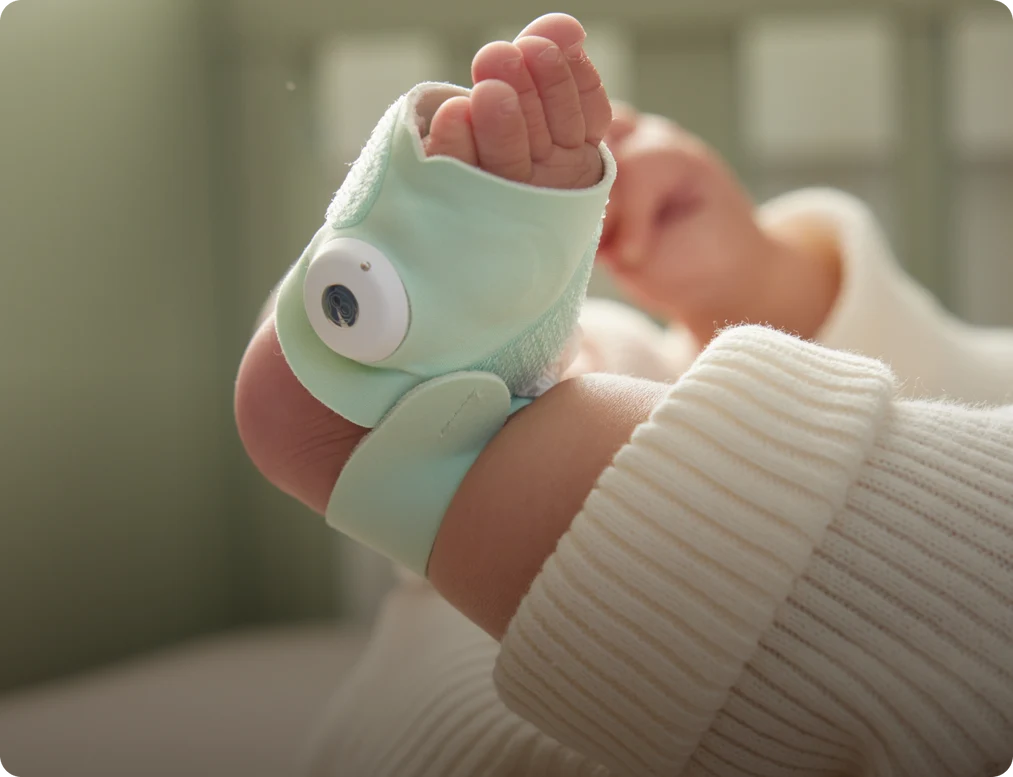
Image source: Google
Relying on word of mouth within circles, Smart Sock quickly became popular in overseas maternal and baby circles.
According to industry media (Forbes-related reporting), in 2016 Owlet's revenue reached USD 19 million (about RMB 120 million). By 2017, the brand had cumulatively sold nearly 150,000 pairs of Smart Sock.
But by 2021, there was a small episode. Owlet received a warning letter from the FDA; Smart Sock was deemed non-compliant because it had not obtained medical device marketing authorization, and the brand immediately voluntarily suspended sales of the product in the U.S. market. Its stock price came under pressure, and it encountered the biggest crisis since its founding.
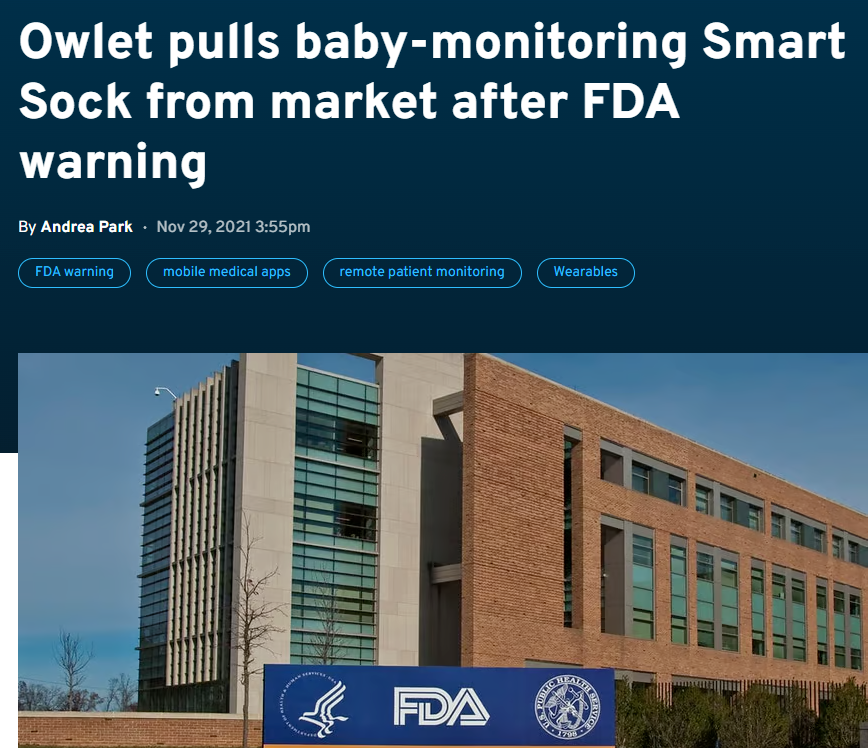
Image source: Fierce Biotech
After the incident, Owlet quickly adjusted its strategy and invested substantial resources in preparing for medical device applications.
In November 2023, the newly launched Dream Sock received FDA De Novo authorization, becoming the first approved Class II OTC infant pulse oximetry and heart rate monitor, establishing a compliance barrier and regaining market trust.
Hardware + subscription, building a growth moat
Although the product's breakout success and compliance barrier opened up market awareness for Owlet, such products naturally have weak repurchase rates, and it is difficult to raise the brand's overall LTV (customer lifetime value) relying solely on the product itself.
To this end, Owlet devised many response strategies.
On the product line front, in addition to its smart sock, it launched the Owlet Cam, using high-definition video streaming and two-way audio to enable parents to remotely view their baby's room.
At the same time, around its core business, it completed surrounding accessories such as swaddles, sock replacements, and travel cases, extending a single purchase into one-stop shopping and continuously improving user stickiness and repurchase rates.
The most important point is that it also built the Owlet360 subscription service. It no longer relies solely on one-time hardware sales revenue, but adds a software subscription model, generating continuous revenue by providing subscription services such as sleep reports, trend analysis, cloud storage, and pediatric consultations.
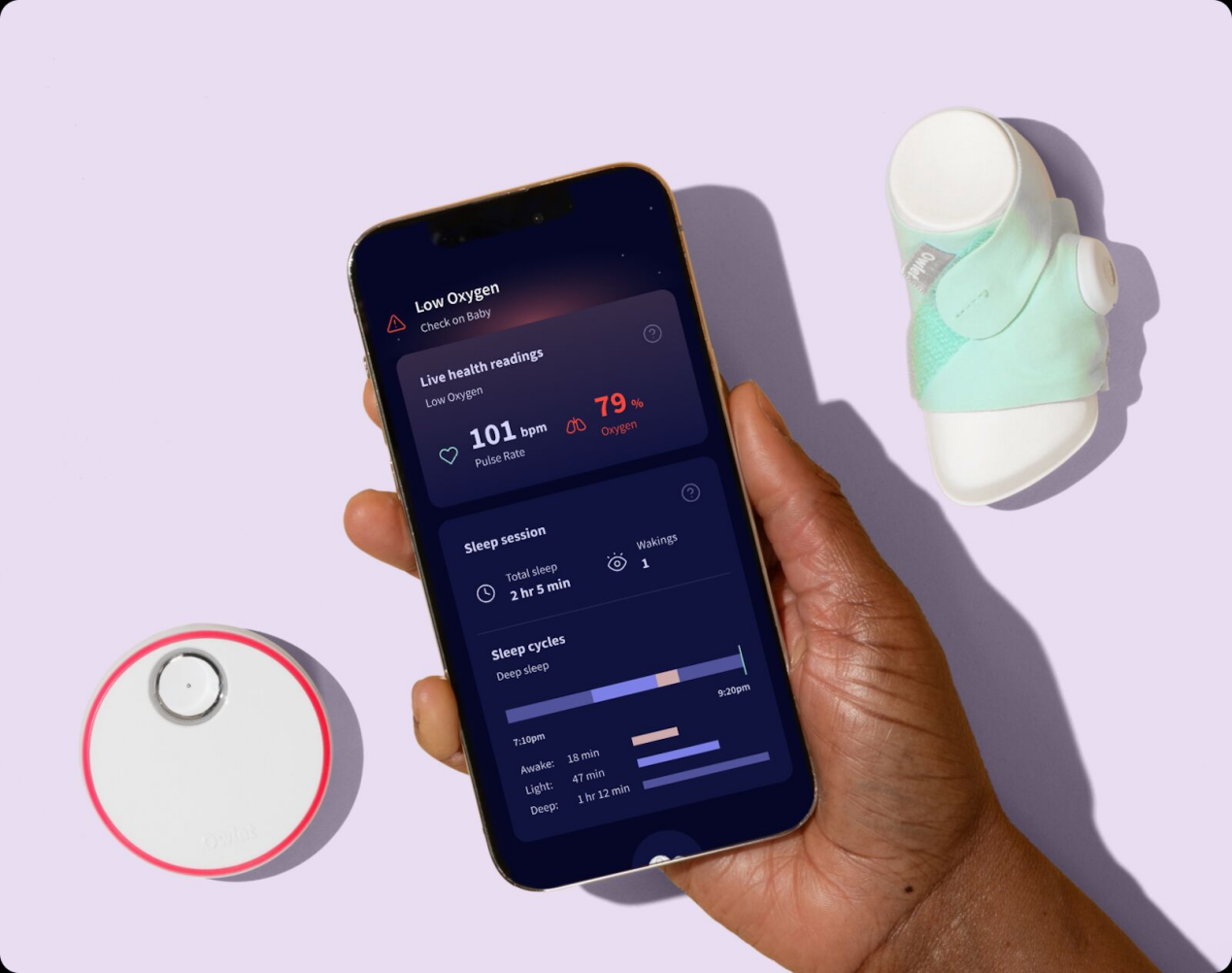
Image source: Google
Public data from the company's SEC annual report also confirms the strong boost the subscription model has given Owlet's growth:
After the Owlet360 subscription model officially launched in January 2025,year-end paid subscribers reached 98,000; in fiscal year 2025,the company achieved revenue of US$105.7 million (approximately RMB 700 million), an increase of 35.4% compared with 2024, becoming the year with the strongest financial performance for the brand.
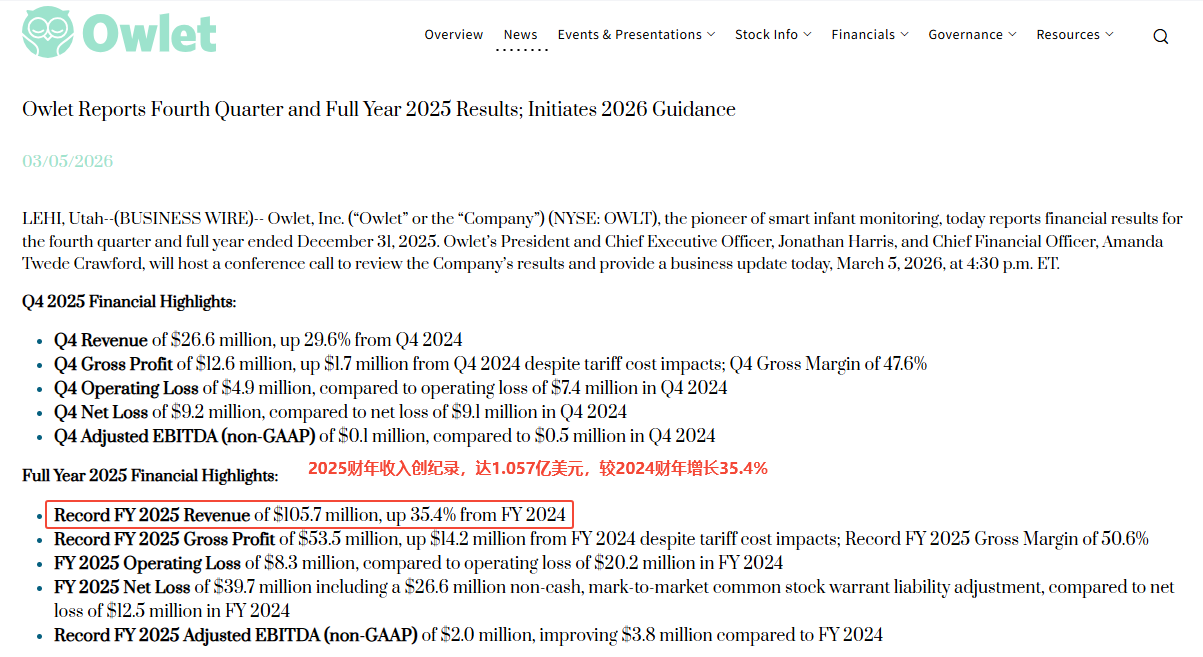
Image source: Owlet
Expanding both online and offline channels
In addition, channel deployment is also a core lever for brand overseas expansion and local implementation.
Owlet regards its independent website as its core base, with new product launches, exclusive bundles, and the Owlet360 subscription service mainly handled on the independent site; at the same time, it has entered mainstream platforms such as Amazon, Target, and Walmart to drive volume, leveraging the platforms' inherent trust endorsement to capture search-traffic buyers.
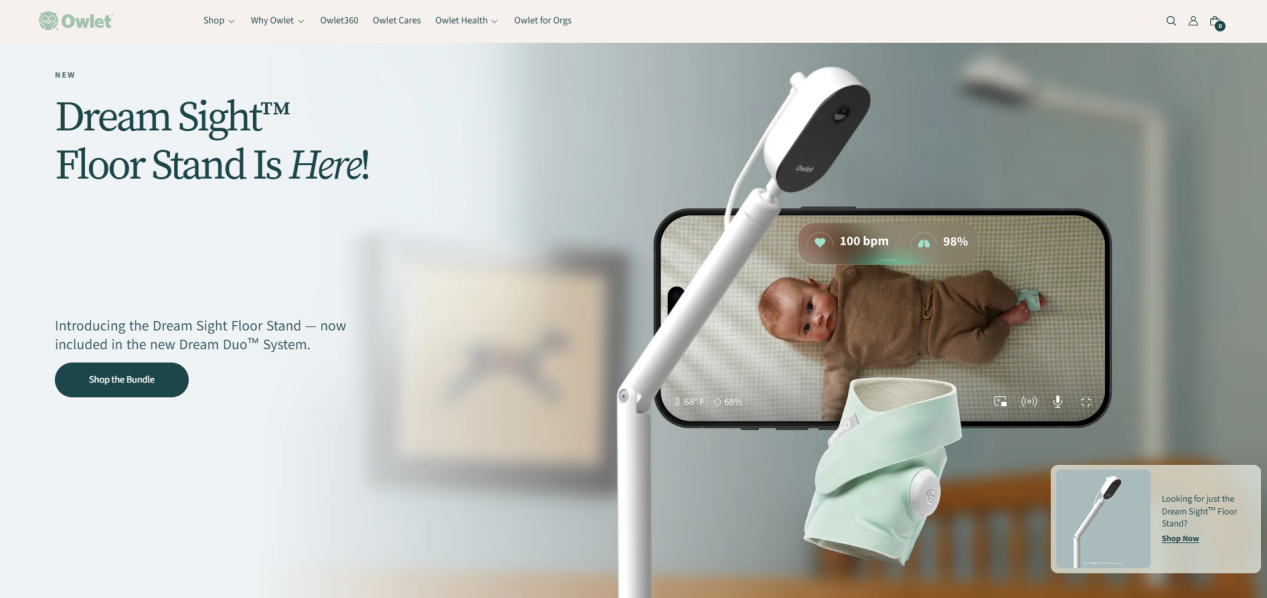
Image source: Owlet
In offline channels, the products have been placed in many large maternal and infant chain systems and high-end maternal and infant specialty stores. It has also carried out professional science popularization cooperation with pediatric clinics, fertility centers, and midwifery institutions, and worked with industry exhibitions and maternal and infant industry events to continuously consolidate its professional medical image, offset online controversies over the product being an "IQ tax," and supplement physical trust support for high-ticket products.
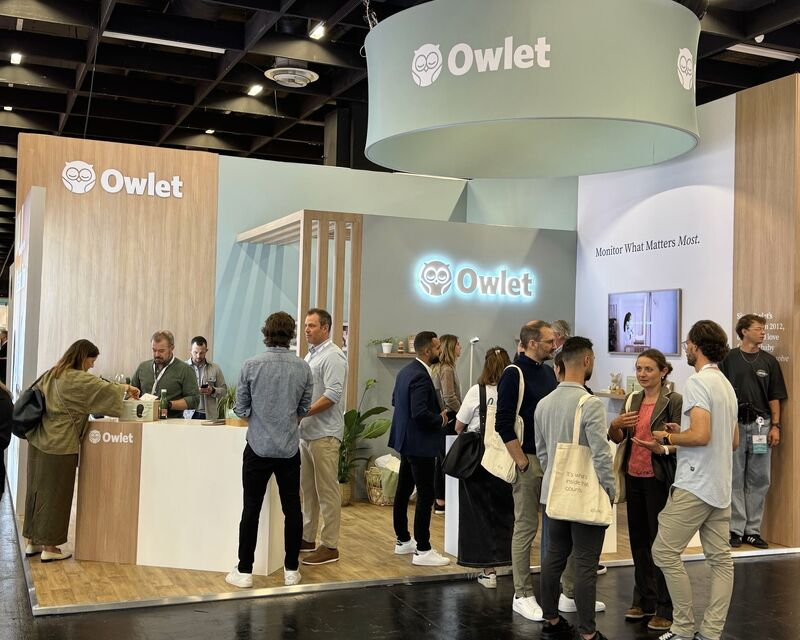
Image source: Google
Soft social media communication, achieving conversion through emotional resonance
To reach more new parents in need, Owlet also made extensive use of social media channels for promotion.
However, because the product is highly professional, its social media approach avoided hard advertising and direct sales, focusing on genuine emotional stories and using everyday parenting scenarios to seed interest, while avoiding the compliance risks of medical promotion.
On TikTok, for example, the brand established an official account @Owlet. As of now, it has 93,500 followers and 2.7 million likes.
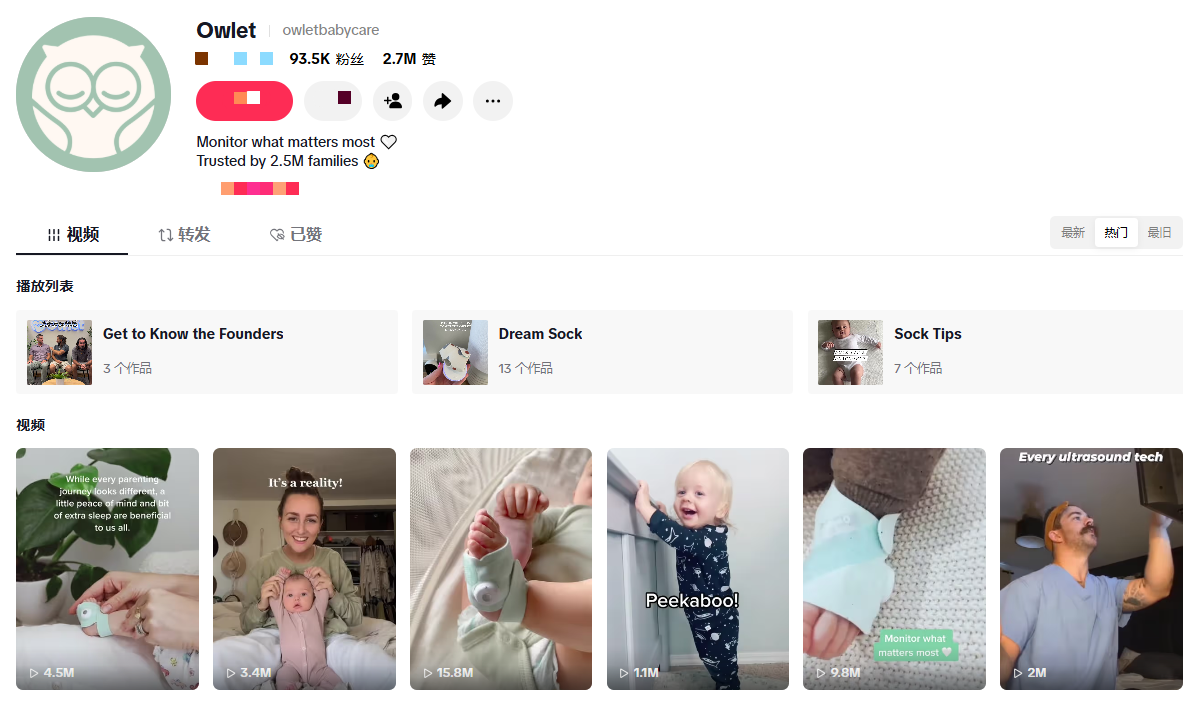
Image source: TikTok
Most of the account's content is drawn from the real daily lives of ordinary new parents: staying up late to soothe babies to sleep, baby sleep records, and comparisons of feelings before and after use, moving users with family-affection scenarios.
In addition, it includes lightweight educational content about the product, such as how to put on the sock, where to place the sensor, and how to read App warnings. It does not exaggerate efficacy, only answers questions that potential consumers care about, and gently builds trust.
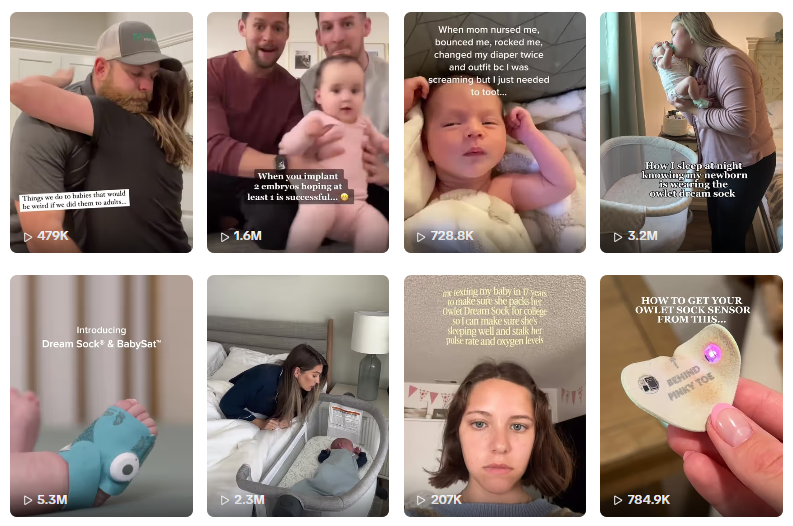
Image source: TikTok
Owlet also collaborated with many active creators on TikTok. In its creator selection strategy, it did not limit itself to vertical maternal and baby bloggers, but adopted a tiered creator matrix.
It collaborated in large numbers with new-parent bloggers, whose content has the strongest authenticity and outstanding conversion results; it collaborated in small numbers with general-family, dad bloggers, and pregnancy bloggers, using resonant content such as ultrasound exams and pregnancy daily life to capture the audience first, then softly place the product.
For example, new mom blogger @meesrisa is one of the creators Owlet collaborated with.
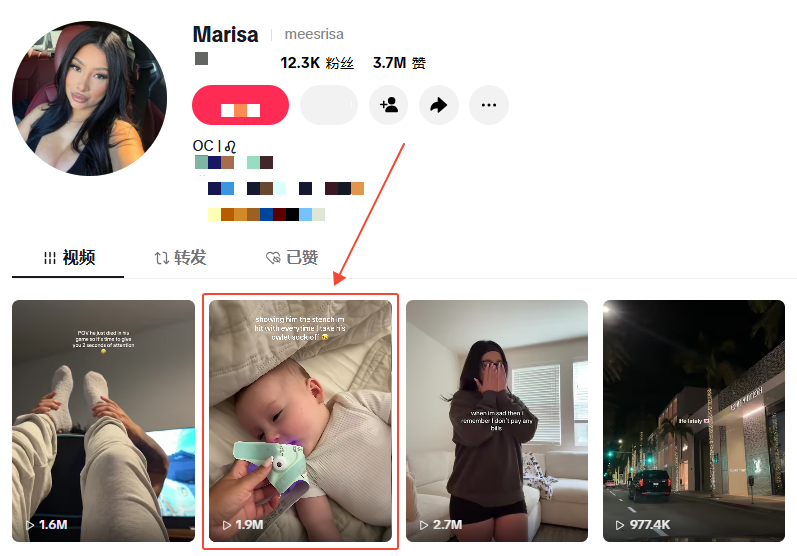
Image source: TikTok
In a video only 12 seconds long, there was no pileup of promotional rhetoric; it only recorded the warm moment of a baby accompanied by Owlet smart socks.
Such images easily strike a chord with new mothers and trigger strong resonance. Although the creator's follower base is relatively small, only 12,300, the video received 1.9 million views and 183,300 likes.
This also confirms:Content that moves users emotionally is more readily accepted and more effective at driving conversion.
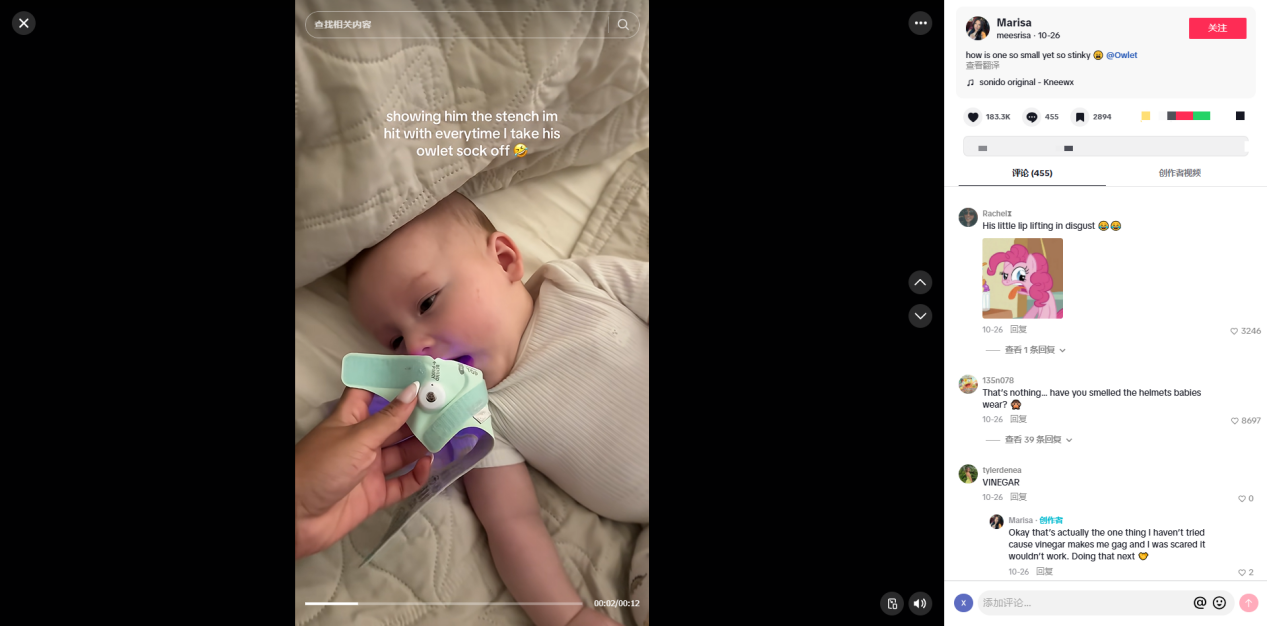
Image source: TikTok
Final thoughts
By the time Owlet's story is broken down to this point, it is no longer just the growth record of a niche brand. It is more like a mirror, reflecting the demand gaps in overseas markets that have not yet been filled by big companies.
When domestic companies enter overseas markets, they do not necessarily have to squeeze into the liveliest tracks, nor do they have to wait until the product is perfect before starting.
First solve one specific problem thoroughly and accumulate the trust of a group of people, and channels and traffic will naturally find a place to land.