 1678
1678
For cross-border sellers who are paying attention to European content e-commerce,Tuke Shop has released another signal worth noting.
On May 21, Tuke official Newsroom announced thatTuke Shop Ireland is opening platform access to more Irish businesses. Previously, Irish businesses mainly entered Tuke Shop by invitation; now, the platform states that all eligible Irish businesses can apply to join.
This means that the Ireland site has moved from early selective trial operation to a more open platform stage. For the European market, this is not an isolated move, but a reflection of the platform's continued expansion of connections among local merchants, local influencers, and local consumption scenarios.

Image source:Google
Influencer growth600%, the platform ecosystem is being strengthened
According to official data, the content e-commerce ecosystem of the Ireland site has seen significant growth.Tuke states that since the platform launched, the number of active creators in the Tuke Shop Ireland affiliate program has grown by 600%, and the number of sellers has also achieved triple-digit growth. Meanwhile, Tuke Shop has paid over 2 million euros in commissions to Irish creators.
The platform also held a creator-brand matchmaking event in Dublin, attracting25 brands and over 150 creators to participate.
This information shows thatTuke Shop in Ireland is not simply expanding the number of sellers, but is simultaneously building an influencer distribution, brand cooperation, and in-platform transaction system. Influencers, merchants, and commission incentives form a cycle, so the platform can move from “can buy things” to “users are willing to discover products here.”
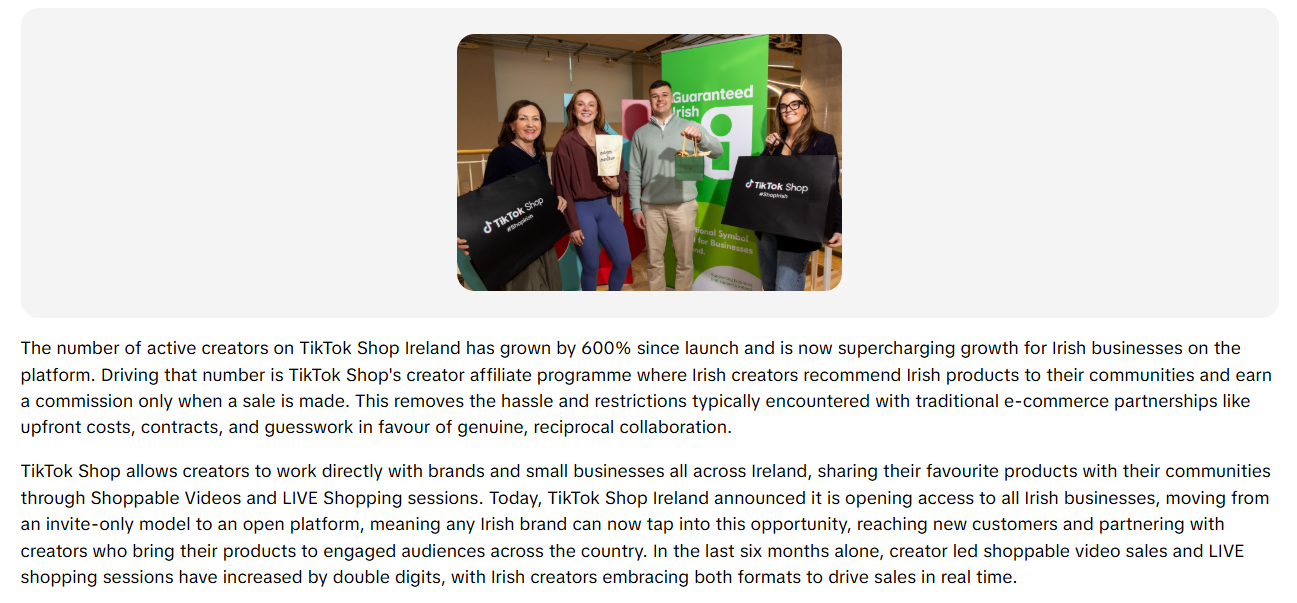
Image source:newsroom
Cross-border sellers should not only focus on store opening opportunities
Ireland is not the most familiar European e-commerce market for Chinese sellers, and its scale cannot be compared with the UK, Germany, or France. But this opening is still worth paying attention to, because it reflectsthe underlying logic of Tuke Shop's European expansion: the platform is not only introducing cross-border supply, but also accelerating support for local businesses and local creators.
This also means that in the future, entering European sites, competitors will not only be other Chinese sellers, but also increasingly more local brands familiar with local language, culture, and consumption habits.
If sellers still stay at the thinking of“listing, stocking, waiting for traffic,” they may lose initiative in content competition. The core of Tuke Shop is not shelf display, but generating purchase interest through short videos, live streaming, and influencer content.
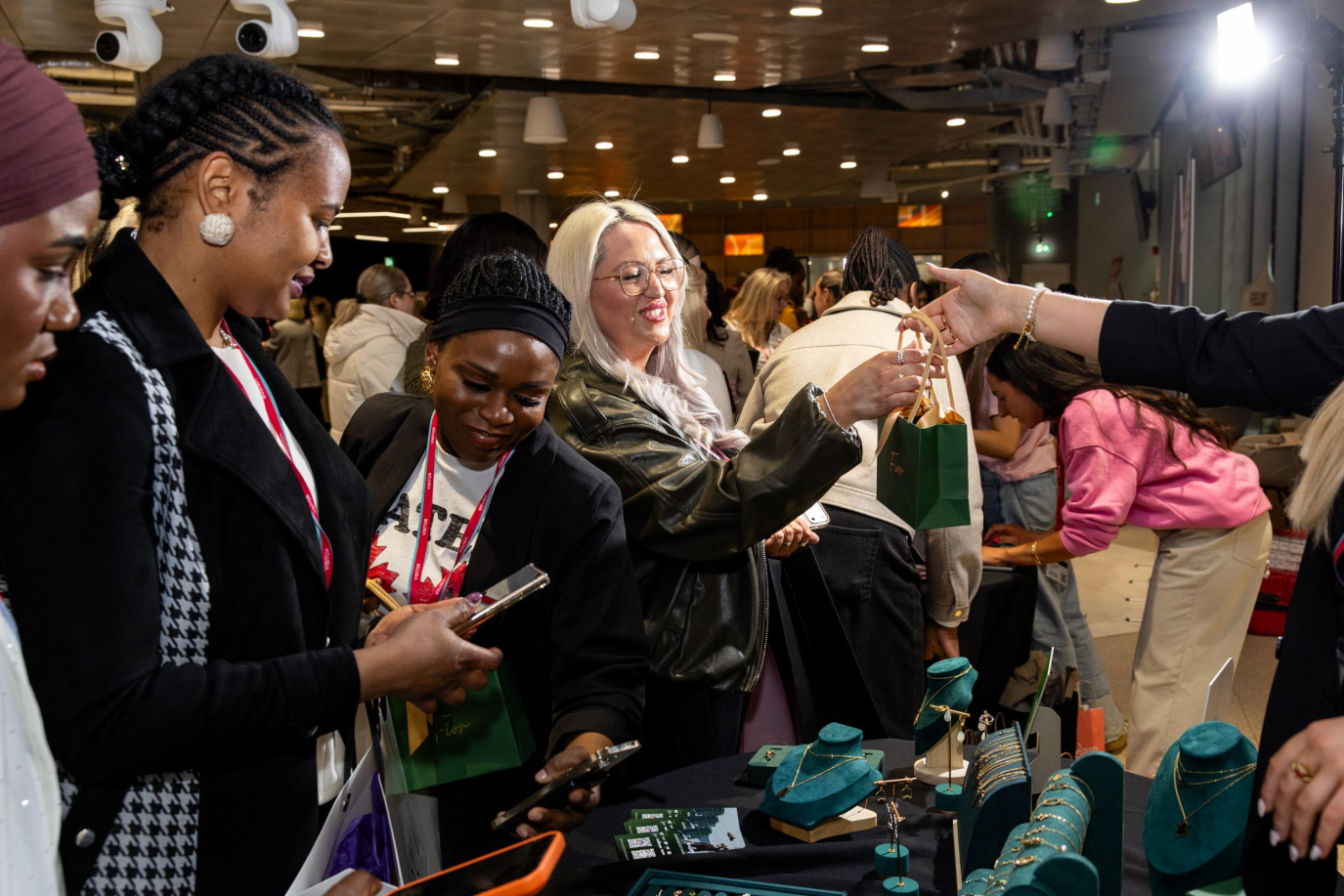
Image source:newsroom
European site thresholds are rising, localization ability becomes key
From the seller's perspective, opening the Ireland site to more businesses will bring richer product supply and a more active influencer cooperation atmosphere. For Chinese sellers already in the UK or European market, Ireland can be a window to observe strategies for small European markets.
But opportunity does not equal low threshold. The European market has higher requirements for compliance, taxation, logistics, after-sales, and product certification, and consumers pay more attention to brand credibility and fulfillment experience. Local merchants have natural advantages in language expression, influencer communication, and local trust.
Therefore, what sellers really need to prepare is not just applying for a store, but building local operational capabilities. Whether you can find local influencers for genuine reviews, whether you can explain product selling points in ways local consumers are used to, and whether you can provide stable inventory and predictable logistics, will all become the dividing line in competition.

Image source: Internet
Conclusion
Overall,Tuke Shop Ireland opening up to more local businesses seems like just an update for a small European site, but behind it is a clear signal of platform ecosystem upgrade. Content e-commerce is moving from early traffic dividends to a stage that values local merchants, local influencers, and local fulfillment.
For cross-border sellers, there are still opportunities in the European market, but the opportunities are no longer for those who simply spread products widely. Whoever adapts to the rules earlier and improves content, localization, and compliance capabilities will be more likely to remain in the next round of competition.