 1807
1807If you are doing cross-border e-commerce in Europe, after July 1st, you may need to rethink your shipping logic.
First, look at a set of numbers. In 2025, low-value cross-border parcels entering the EU reached 5.8 billion, an increase of more than four times compared to 2022. About 90% of them came from China. On average, over 15 million small parcels flow to Europe every day.
So many packages that customs simply cannot handle them. What's more troublesome is that the EU estimates about 65% of packages have issues of underreporting or concealing to avoid taxes. The EU loses up to 5 billion euros in tax revenue each year due to this.
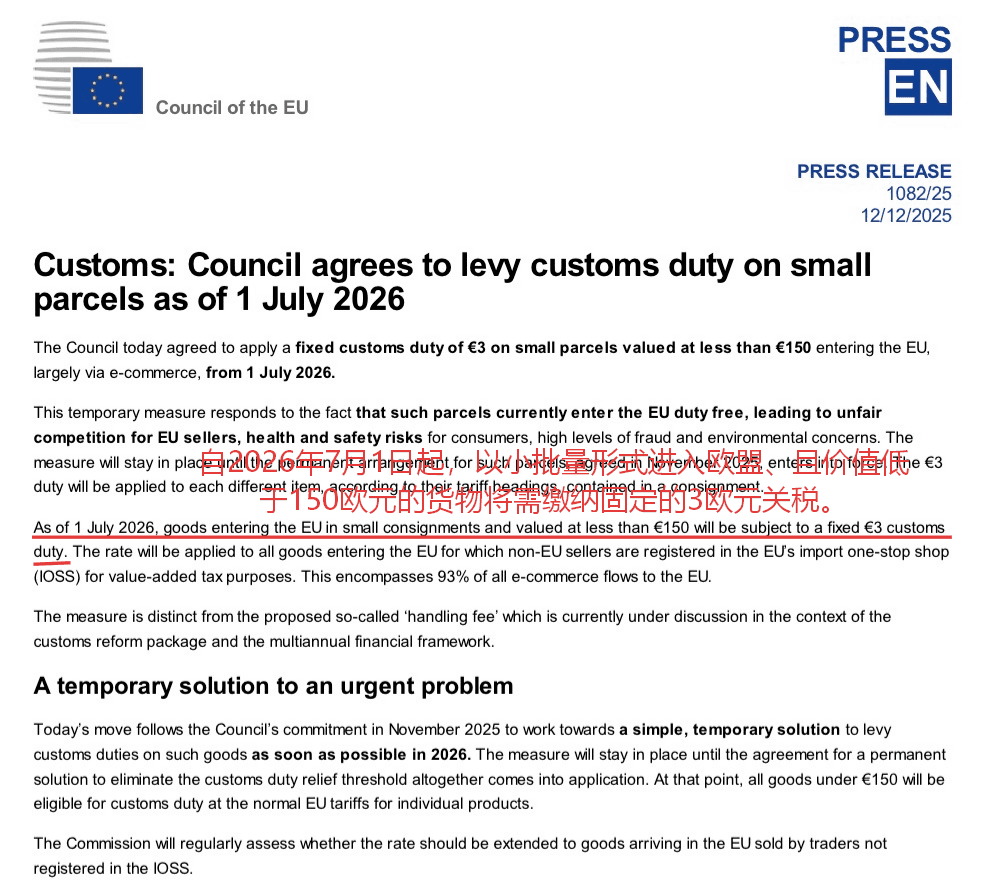
Therefore, in December 2025, the EU officially adopted a decision: starting July 1, 2026, the tariff exemption policy for low-value imported parcels under 150 euros will be abolished. All cross-border parcels shipped to the EU from outside the EU with a value not exceeding 150 euros will be subject to an import fee.
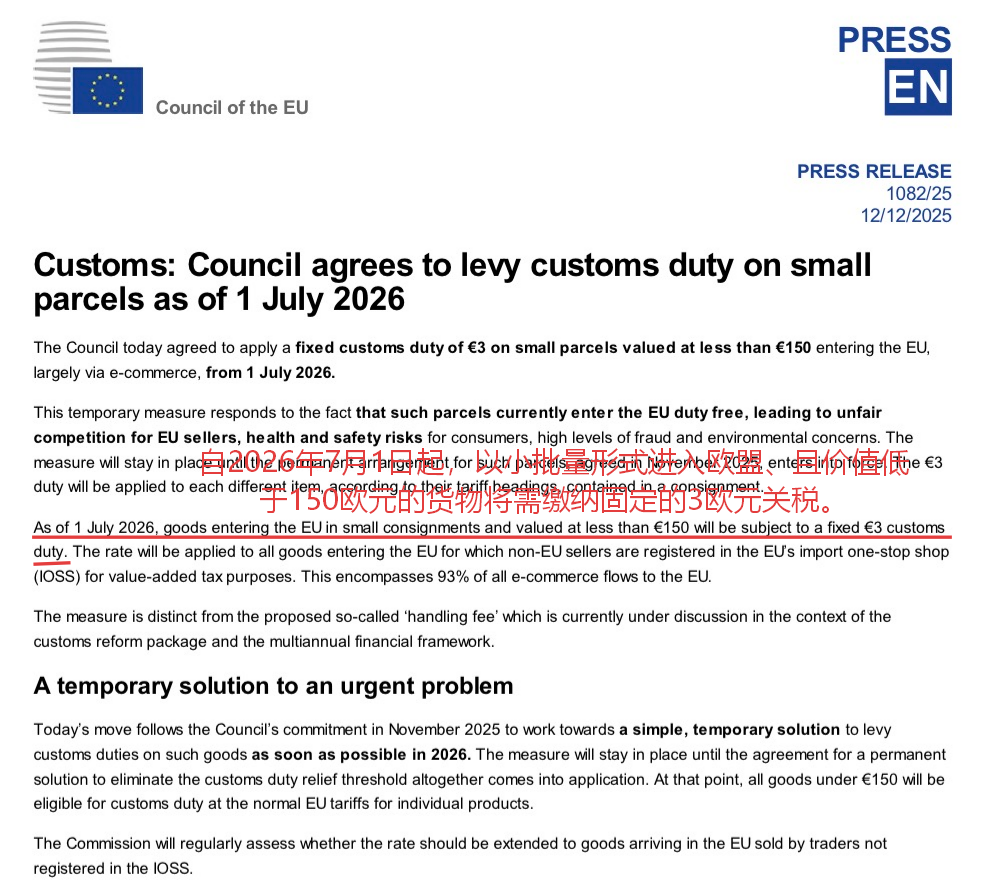
Image source: European Union
3 euros is not calculated by package, but by category.
Many sellers' first reaction is: paying an extra 3 euros per package seems acceptable.
But the actual rules are not calculated this way. This 3 euro fee is charged by "product category"—specifically, by customs HS code. For each different HS code category in the same package, you pay 3 euros.
For example, it might be easier to understand. Three identical T-shirts, if they fall under the same HS code, would only cost €3 in duties after consolidated declaration. However, if a package contains one pair of jeans and one wool sweater, belonging to two different HS codes, the duty would be €6. If there are five different categories, the duty directly goes up to €15.
For the same package, some people pay 3 euros while others have to pay 15 euros; the only difference lies in the declaration method.
Another detail worth noting: products requiring CE certification, such as electronics and toys, cannot go through the simplified declaration channel and must be taxed per item. The more diverse the categories and the higher the number of SKUs, the more the taxes stack up.
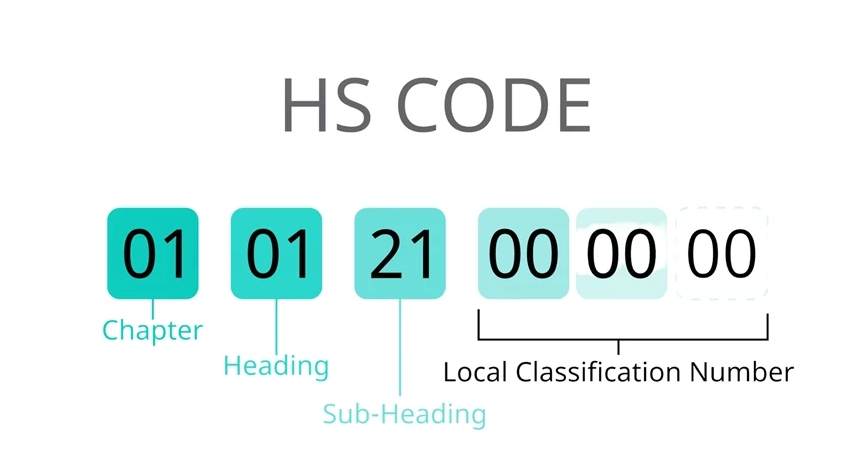
Image source: Internet
There is also a second cut in November.
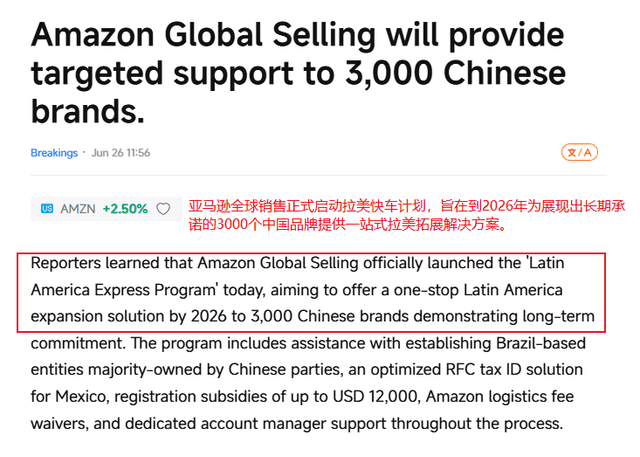
The 3 euros in July is just the first step. From November 1, 2026, FBA shipments to the EU will be charged an additional 2 euros customs handling fee.
The combination of these two fees, plus the existing IOSS VAT, will increase the total cost per package for direct mail sellers by about 5 to 8 euros.
The situation for FBA sellers is slightly different. For the €3 tariff in July, Amazon will directly add it to the product's front-end price, borne by the buyer. However, the €2 handling fee after November is also likely to be reflected in the selling price. Once the price rises, the conversion rate will be affected to some extent.

Image source: Amazon Seller Central
A Few Things You Can Do Now
In the face of this change, there are a few things that can be prepared in advance.
First, reorganize the commonly used HS codes, and try to merge declarations for similar goods to save as much as possible.
Second, calculate clearly the impact of "tax calculation by HS code" on actual profits. For those with diverse categories and many SKUs, taxes may double directly after July. You need to first calculate whether profits are sufficient and whether to adjust prices.
Third, reassess the feasibility of overseas warehouses. Direct shipping costs an extra 5 to 8 euros per order, and calculating how much more expensive it is than overseas warehouse storage fees over a month will make it clear.
As for methods like false reporting or messing up tax numbers, they won't work.
The days of 5.8 billion parcels flooding into the EU are coming to an end. It's much more cost-effective to sort out HS codes and declaration methods early than to bear several times the taxes and fees later.